News
IMOKE: How to tackle insecurity, energy deficit, digital economy in Nigeria

*Says alleged ‘$16b wasted on electricity’ mere political tool to criticize power sector reforms
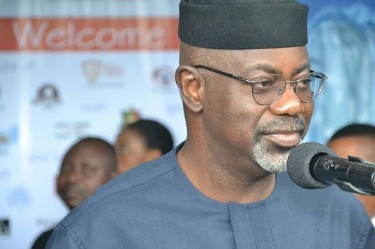
Former Cross River State Governor, Sen Liyel Imoke on Thursday proffered solutions to the security challenges facing Nigeria as well as how to fix electric power deficit and seeing the nation transiting to a digital economy.
Delivering the keynote speech at the 8th Guild of Corporate Online Publishers (GOCOP) annual conference in Lokoja, Kogi State, he said, Nigeria in the 21st Century faced challenges that not only impede growth but also compromise its global competitiveness.

Speaking on the theme of the conference Nigeria’s Path Forward: Tackling Insecurity, Electric Power Deficit, And Transitioning To A Digital Economy, he said tackling insecurity, solving the electric power deficit, and transitioning to a digital economy were three intertwined challenges that Nigeria must address to unlock its potential.
“The road ahead is long, but it is not insurmountable. With the right policies, investments, and collective efforts from both the public and private sectors, Nigeria can emerge as a leader in Africa and the world,” he said.
The former Minister of Power during the Obasanjo regime said while Nigeria had made some strides in reducing insurgency and addressing maritime insecurity, the country continued to face significant security challenges, especially related to banditry, kidnapping, and communal clashes.

“Addressing these challenges will require a multifaceted approach involving better governance, regional cooperation, security sector reforms, and sustainable development programs aimed at tackling the root causes,” he said.
Among the recommendations he listed include strengthening Local Security Architecture through Community Policing and decentralization of security; Improving the Condition of the Economy; Implementing Comprehensive Rural Development Programs, Deploy Advanced Technology for Intelligence Gathering; Implement Sustainable Peace and Mediation Programs; Enhance Funding for Security Agencies; Strengthening Legal and Judicial Systems; Bolstering Regional and International Cooperation; Border Control and Arms Regulation; and Rehabilitation and Reintegration Programs.
“I’m an advocate for expanding community policing programs and integrating local vigilante groups into formal security operations,” he said.
“This will improve intelligence gathering, foster trust between security forces and communities, and ensure a more proactive response to local threats.”
To address the root causes of banditry, kidnapping, and farmer-herder conflicts, he said the government should implement development initiatives that target rural poverty, job creation, and resource management.
“Special focus should be placed on providing education and employment for young people vulnerable to criminal groups,” he said.
“Resolving the farmer-herder crisis requires a combination of short-term security measures and long-term resource management. The government should establish dialogue platforms between herders and farmers and promote sustainable grazing reserves and agricultural policies that reduce competition over land and water.”
On Nigeria’s electric power deficit, he said the electricity supply in Nigeria remained one of the most significant constraints to economic growth as the country’s electricity generation and distribution remain grossly inadequate with several power sector reforms since 1999.
“With an estimated population of over 220 million, Nigeria’s current installed capacity of around 13,000 MW only manages to deliver 4,000-5,000 MW on average,” he said.
“This is far below the demand of over 20,000 MW, leading to frequent blackouts and reliance on expensive diesel generators.”
He said to reduce Nigeria’s power deficit would require a comprehensive approach that addresses generation, transmission, and distribution constraints.
“The solutions involve infrastructure investments, regulatory reforms, increased private sector participation, and the adoption of new technologies such as renewable energy and decentralized systems. By tackling these challenges holistically, Nigeria can significantly improve its electricity supply, support economic growth, and improve the wellbeing of its citizens.”
The former Minister of Power specifically blamed a previous $16 billion power probe for the delay in the execution of some of the reforms in the power sector, claiming that actual spending during his tenure was estimated to be around $2–$3 billion.
He said, “While these reforms laid the foundation for eventual privatization and restructuring, the actual execution of some of these reforms faced challenges, one of which was the undue and unnecessary delays in the implementation of the NIPP and other projects as a result of a phantom $16 billion power probe.
“The claim that $16 billion was spent on the power sector has been repeated without sufficient verification by media outlets and critics, often creating the impression that the money was “wasted” during my tenure.
“However, subsequent investigations have revealed that much of the criticism was based on incomplete or inaccurate information regarding how the funds were managed.
“It is on record that actual spending during my tenure is estimated to be around $2–$3 billion, much of which was targeted toward the launch of the NIPP and other infrastructure upgrades.
“The $16 billion figure has been repeatedly used as a political tool to criticize power sector reforms, but it lacks proper context and a breakdown of actual expenditures.
“Unfortunately, these delays led to huge cost overruns, largely due to inflation and breaches in contract terms caused by the effusion of time. It is important to note that the delays led to at least a doubling of the various contact costs and the overall cost of the NIPP. Furthermore, many of these projects were not completed until several years later and several of them are still ongoing as I speak.
“However, overall, these reforms were instrumental in steering Nigeria’s power sector toward modernization, deregulation, and private sector participation, even though many of the challenges of the sector persist to this day.”
On the way forward in address Nigeria’s power deficit, he called for Expand and Diversify Generation Capacity; Strengthen Transmission Infrastructure; Improve Distribution and Metering; Address Gas Supply Issues; Ensure Cost-Reflective Tariffs; Encourage Private Sector Investment; Improve Governance and Accountability; Leverage Decentralized Solutions; and Enhance Regional Power Integration.
“Nigeria needs to invest in expanding its gas pipeline network, ensuring more stable gas supply to power plants. This will require collaboration between the government and private sector, as well as improving security in the Niger Delta to reduce pipeline vandalism,” he said.
“Significant investment is required to upgrade and expand the transmission grid. This includes the construction of new transmission lines, upgrading existing ones, and increasing substation capacity. The government should prioritize public-private partnerships (PPPs) to mobilize financing for transmission projects.
“The government should review and update gas pricing policies to make them more cost-reflective, ensuring that power plants can access affordable and reliable gas supplies. This could involve revising the domestic gas obligations and introducing incentives for gas producers to prioritize the domestic market.”
On the transitioning to a digital economy he listed notable challenges to include Digital Infrastructure; Digital Literacy Gap; Regulatory and Legal Framework; Access to Finance; and Cybersecurity Risks.
The way forward for transition to digital economy he said will require Government Commitment and Policy Framework; Investing in Infrastructure Development; Digital Literacy and Workforce Development; Support for Startups; Promotion of Fintech and Digital Financial Inclusion; Government Initiatives; Enabling Regulatory Environment.
“Although Nigeria boasts a young and dynamic population, digital literacy remains low, limiting the ability of the workforce to participate in the global digital economy,” he said.
“The absence of robust laws governing data protection, cybersecurity, and intellectual property creates an environment of uncertainty for tech entrepreneurs and investors.
“Many tech startups in Nigeria struggle to access the financing necessary to scale their businesses and compete globally.”
“Partnerships with the private sector and international organizations can enhance STEM education (Science, Technology, Engineering, and Mathematics) at all levels of education and boost training programs for tech and non-tech industries.
“The government should create a more favourable environment for tech startups by providing access to venture capital, tax incentives, and incubation hubs. Partnerships with international tech companies and organizations can further bolster the growth of Nigeria’s digital sector.
“To foster a thriving digital economy, Nigeria needs a modern legal and favourable regulatory framework that supports innovation while safeguarding data privacy and cybersecurity. This is crucial for fostering innovation. Regulatory clarity around emerging sectors like cryptocurrency, e-commerce, data protection, and cybersecurity is necessary to build investor confidence and protect consumers.
“Nigeria’s transition to a digital economy holds immense potential for transforming its economic landscape, creating jobs, and driving inclusive growth. To fast-track this transition, the government must prioritize infrastructure development, digital literacy, favourable regulations, and indigenous innovation. “While challenges such as poor internet access, regulatory uncertainty, and cybersecurity risks remain, the opportunities in fintech, e-commerce, agritech, and digital services present significant growth potential. With the right policies, partnerships, and investments, Nigeria can become a digital leader in Africa.”













A 23-year-old student of the Nigerian Law School has died in a suspected suicide incident at the school’s hostel in Victoria Island, Lagos.
The incident occurred in the early hours of Friday, Aug. 7, 2026, when the deceased, identified as Alayande Faith Ajoke, was found dead within the hostel premises.
According to sources, the Chief Matron of the Law School, Mrs. Igbokwe Juliana, reported the incident at the Victoria Island Police Division at about 6:30 a.m.
The report stated that at about 4:30 a.m., a student who had just completed her internship, Ojo Abisoye Tinuola, informed the matron about a suspected suicide involving her roommate, Alayande.
The matron subsequently proceeded to the scene, where the deceased was found lying on the ground within the hostel premises.
Preliminary observations indicated that the deceased may have jumped from the rooftop of the four-storey hostel building.
Police sources said preliminary investigation further revealed that the deceased allegedly left behind two notes addressed to her stepfather and roommate.
Following the report, a team of police detectives visited the scene, documented the area and took photographs of the scene and the body.
The remains were subsequently evacuated to the Mainland General Hospital Mortuary, Yaba, for preservation and autopsy.
The police said investigation into the circumstances surrounding the death is ongoing. (Zagazola)
…Accuse subversive elements of reign of terror, blackmail, anti-state activities
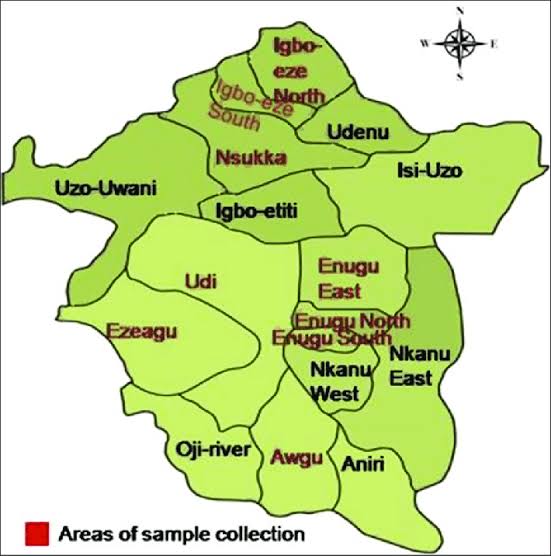
Community leaders and stakeholders of Enuogu Autonomous Community, Nkerefi, Nkanu East Local Government Area of Enugu State, have launched a rebuttal against what they described as a calculated campaign of blackmail, intimidation and misinformation targeted at the leadership of the community and the Enugu State Commissioner for Chieftaincy and Town Union Matters, Dr. Charles Egumgbe.
The leaders as well as other stakeholders in the community alleged that the recent publications accusing the Commissioner of bias and alleging marginalisation of Ihuezeofia Village was not only false but formed part of a long-standing pattern of subversive activities orchestrated by individuals determined to plunge the community into perpetual crisis for selfish political interests.
In a statement jointly signed by the Traditional Ruler of Enuogu Autonomous Community, Igwe Emmanuel Onukwube, the Chairman of the Caretaker Committee, Mr. Isaac Ugbor, the Committee Secretary, Barr. Abel Ani, and other prominent stakeholders, the community called on security agencies to investigate what it described as “dangerous acts of impersonation, incitement and sustained attempts to undermine constituted authority.”
The leaders urged members of the public and the Enugu State Government to disregard the publications, insisting that those behind it neither represented Ihuezeofia Village nor possessed the mandate to speak on behalf of Enuogu Autonomous Community.
According to the statement, the individuals behind the petition were “known crisis merchants and skeletal moles” whose stock-in-trade had become sponsoring petitions, false narratives and propaganda each time government interventions or development projects were attracted to the community.
“The alarmists are invidious impostors claiming to be what they are not. They do not have the mandate of Ihuezeofia Village or Enuogu Autonomous Community. They are not recognised officers of the Town Union and therefore cannot speak for the people.
“Every time government, non-governmental organisations or public-spirited individuals attract development to Enuogu, these same elements immediately manufacture crises, circulate falsehoods and attempt to frustrate progress. Their objective is neither justice nor development, but personal relevance through instability,” the statement declared.
The stakeholders further accused the purveyors of the fake news of deliberately distorting history by alleging marginalisation of Ihuezeofia Village despite what they described as overwhelming evidence of equitable distribution of opportunities and government patronage.
They recalled that the village had produced elected and appointed office holders, including a Councillor of the electoral ward, Financial Secretary of the Town Union, Deputy President-General and other strategic officers, while also benefiting from government-backed infrastructure, including electricity transformer and other electric infrastructure, road improvements, healthcare interventions and employment opportunities.
“It is therefore astonishing that those who have benefited immensely from the collective goodwill of the community now seek to deceive the public by painting a false picture of exclusion,” the statement noted.
The stakeholders also questioned the credibility of some of the petitioners’ signatories, alleging that they deliberately adorned themselves with academic and political titles they neither possessed nor earned in order to mislead government officials and members of the public, challenging them to produce their credentials.
They added that the deliberate use of false titles amounted to impersonation capable of misleading public institutions and undermining confidence in legitimate processes.
The community leaders equally dismissed allegations that the Ministry of Chieftaincy Affairs had imposed a caretaker committee or manipulated the affairs of Enuogu, explaining that the committee was lawfully constituted by the state government in March 2026 as a temporary peace-building mechanism after intelligence reports indicated a looming breakdown of law and order from the said subversive elements.
They alleged that one Mr. Edeson Chukwudi had openly recruited armed youths and mobilised thugs with threats to unleash violence should the suspended Town Union election fail to produce him as president of the town union.
According to the statement, the armed displays and repeated threats created widespread fear within the community, forcing elders and stakeholders to petition the state government to suspend the election and intervene before lives were lost.
“The intervention of government prevented what could have degenerated into bloodshed. The caretaker committee was not created to favour anybody but to restore peace and create an atmosphere conducive for a free, fair and violence-free election.
“It is therefore both mischievous and irresponsible for those who precipitated the crisis to now turn around and accuse the Commissioner of bias simply because government refused to surrender to intimidation,” the leaders stated.
The stakeholders further alleged that the same individuals had consistently rejected constitutional processes because they realised they lacked the popularity required to emerge victorious in a transparent election.
Rather than submit themselves to democratic contest, they alleged, the petitioners had resorted to blackmail, false accusations, media propaganda and attempts to discredit respected community leaders and government officials.
The stakeholders further raised fresh security concerns, alleging that Edeson and members of his armed group had openly marked out and compiled the names of certain community leaders and prominent individuals whom they had allegedly vowed to “deal with” over the leadership dispute.
They described the alleged threats as disturbing and capable of igniting violence if left unchecked, warning that the lives of the affected leaders and members of their families were now under serious threat.
Consequently, they called on security agencies to immediately place Edeson and his associates under close surveillance and hold them accountable should any attack, harassment, disappearance, injury or other harm befall any of the named community leaders or their relatives.
According to the stakeholders, “those issuing threats should bear full responsibility for any breakdown of law and order, as well as any violence directed against innocent members of the community.”
The statement also raised concerns over what it described as anti-government tendencies among the principal actors, alleging that one of the arrowheads of the campaign was pursuing personal political ambitions through clandestine opposition activities aimed at dragging the community into needless confrontation with the Enugu State Government.
While reaffirming their confidence in Dr. Charles Egumgbe’s neutrality and commitment to due process, the stakeholders commended Governor Peter Mbah’s administration for acting swiftly to preserve peace in the community.
They maintained that the matter had gone beyond mere political disagreement, insisting that it had assumed dangerous security dimensions requiring urgent intervention by law enforcement agencies, appealing to the police, the Department of State Services (DSS) and other security agencies to investigate the alleged threats, protect vulnerable community leaders and ensure that those accused of issuing violent threats were prevented from carrying them out.
The statement stressed that any future attack on any community leader, stakeholder or member of their families should not be treated as an isolated incident but viewed within the context of the alleged threats already brought to the attention of the authorities.
The community leaders also reaffirmed that Enuogu Autonomous Community remained united, committed to constitutional democracy, fairness among its constituent villages and the pursuit of peace, warning that no amount of propaganda or intimidation would derail the community’s determination to protect law, order and sustainable development.
They appreciated the governor for his efforts in transforming Nkerefi, pointing at the massive road infrastructure, bridges, Smart Green Schools, healthcare facilities, rural electrification, human capital development and appointments of the people of the community into various sectors of his administration, pledging continuous support and loyalty.
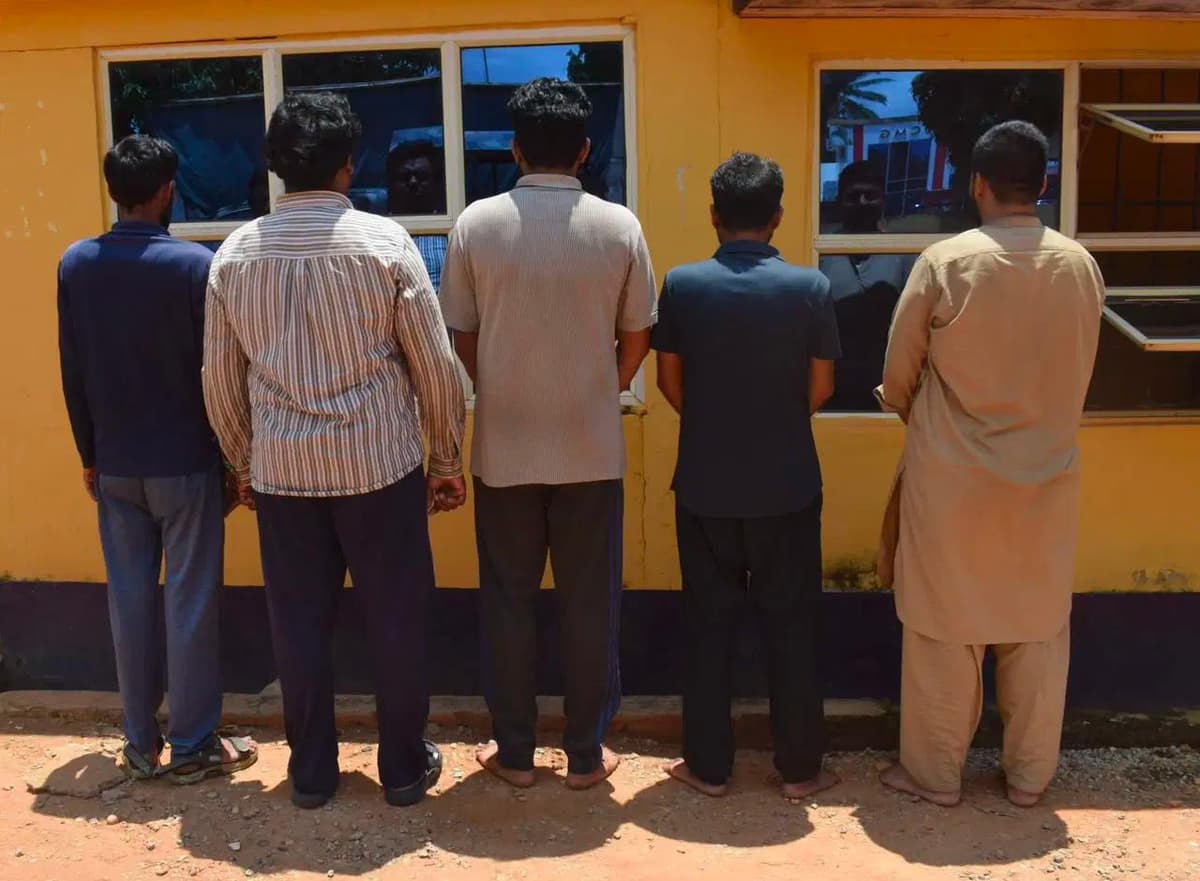
The Benue State Police Command has arrested five Pakistani nationals and recovered 35 mobile phones in separate intelligence-led operations in Otukpo and Ugbokolo areas of the state.
The arrests, according to the Command, followed credible intelligence received on the activities and movements of the foreigners in the state.
The Police Public Relations Officer, DSP Peter Aondongu, disclosed this in a statement, saying three of the suspects were arrested on August 4, 2026, at Adoka Motor Park in Otukpo Local Government Area, LGA.
Those arrested were identified as Younas Mohammad, 36; Ahmad Nunil, 38; and Aslam Muhammad, 46.
Aondongu said the suspects were intercepted while attempting to board a vehicle to Adoka village, adding that they told the police during preliminary questioning that they were in Otukpo to market cosmetics and mobile gadgets.
He, however, said none of the claimed products was found in their possession, making their explanation, activities and movements in the area suspicious and requiring further investigation.
In a separate operation on August 5, the PPRO said two other Pakistani nationals, Juma Sharif, 30, and Muhammed Sharif, 25, were also arrested at a hotel in Ugbokolo following credible intelligence.
According to him, the two suspects claimed to be dealers in Android phones, but a search of their belongings led to the recovery of 11 Tecno Camon 50 Pro mobile phones.
He said further investigation and operational follow-up led to the recovery of an additional 23 Tecno Camon 50 Pro phones and one Infinix Hot 60 phone, bringing the total number of recovered devices to 35.
The Command said the five suspects had been transferred to the State Criminal Investigation Department, SCID, Makurdi, where “discreet and comprehensive investigations are ongoing” to establish the circumstances surrounding their presence, activities and movements within the state.Vanguard
-
 News2 days ago
IGP appoints new Police Commissioners
-
News1 day ago
Atiku raises alarm over ‘mysterious’ payment into his private bank account
-
News1 day ago
Gunmen invade Kogi communities, kill residents
-
News2 days ago
Court remands Ex-DSS Officer in Kuje Prison over alleged support for IPOB
-
News1 day ago
Court remands man for allegedly hacking SunTrust Bank Server, diverting N800 million
-
News1 day ago
PFIPC probe: ICPC uncovers two more fake agencies linked to Adeyemi
-
Uncategorized2 days ago
FG to forge stronger partnership with Catholic Bishops, others — Akume
-
News3 days ago
Army arrests two soldiers over alleged illegal duty at Peller’s wedding