News
How intelligence, security agencies uncovered plan to hijack protest – DSS


The Spokesman for the Department of States Services (DSS), Dr Peter Afunanya, said the intelligence and security agencies uncovered and exposed plans by subversive groups and vandals to hijack the nationwide protest.
Afunanya said this during the monthly news conference organised by The Strategic Communication Interagency Policy Committee (SCIPC) hosted by the DSS, on Monday in Abuja.

He said the nation had been experiencing unusual times with the past weeks characterised by notable threats of protests.
According to him, as envisaged, the outcome was the wanton destruction of property across multiple states.
Afunanya said that the security agencies have made concerted and frantic efforts to restore calm to the affected areas, successfully re-establishing order.

“While the right to protest is constitutionally guaranteed and remains a cornerstone of democratic governance in Nigeria, however, in the lead-up to these protests.
“The Nigerian intelligence and security agencies uncovered plans by subversive groups and vandals to hijack the process.
“This triggered engagement at both policy and strategic levels with traditional and religious leaders, youth groups, members of the civil society and leaders of thought.
“This is with the aim of appealing to the conscience of the organisers to reconsider their plans in national Interest, but these pleas went unheeded.
“Over this period, security personnel have remained resilient and dedicated and they have also responsibly discharged their duties,” he said.
Giving update on the activities of the military, security and responses agencies, Afunanya said the DSS had in the last one month, heightened its intelligence-gathering and dissemination efforts.
This, according to him, was to drive security operations and law enforcement; ensure protection of citizens’ rights as well as maintain public safety and order.
He said the service, in collaboration with other stakeholders, conducted several operations, which led to arrests, disruption of criminal networks and recovery of various incendiary items.
“Within the month of July, the service sustained proactive intelligence acquisition and dissemination of same action agencies.
“This led to the arrest of criminal elements involved in oil theft, kidnapping, burglary and theft of electrical installations, human trafficking, armed robbery, cult related activities, terrorism and insurgency.
“Similarly, some high profile terrorist leaders, logistic facilitators, gunrunners and IED experts were also apprehended.
“During the operations, the following items were recovered: Semi-automatic double barrels, cartridges, pump action rifles, locally made pistol, IED initiators, AK47 rifles, magazines, submachine guns amongst others.
“Additionally, economic saboteurs involved in diverting palliatives and agrochemicals were also apprehended.
“1,200 (25kg) bags of palliative rice and 48 bags of rice kit were recovered in one of such operations in Katsina,”he said.
Afunanya said the Nigerian armed forces had in July, neutralised a total of 572 terrorists, apprehended 790 suspects and rescued 479 kidnapped hostages as well as recovery of large cache of arms and ammunition.
He added that the Nigerian Security and Civil Defence Corp (NSCDC) also made significant strides in combating various criminal activities, particularly focusing on protecting the nation’s critical assets and infrastructure during the month.
He said that more than 70 suspects were apprehended in Rivers and Bayelsa States for illegal bunkering, pipeline vandalisation, and operating illegal refineries.
According to him, the NSCDC’s Anti-Vandal Squad and CG Intelligence Monitoring Team spearheaded these efforts, leading to the dismantling of numerous illegal refineries and the seizure of significant quantities of adulterated AGO.
Afunanya said that NSCDC also tackled cases of armoured cable vandalism, illegal mining, and rail track vandalisation, with hotspots in Zamfara, Katsina, Kaduna, Abia, and Kogi States.
According to him, collaborative efforts with other agencies led to the transfer of certain cases, such as a firearms manufacturing operation in Abuja, highlighting the NSCDC’s comprehensive approach to national security.
“The NSCDC secured over 20 convictions during this period, although some are under appeal, such as notable cases in Akwa Ibom.
“Borno, with over 80 pending court matters, has the highest number of ongoing cases related to theft, vandalism, breach of trust, and financial crimes,” he added.
The DSS spokesman said the National Drug Law Enforcement Agency (NDLEA) apprehended 1,250 arrests (1,116 males and 134 females), charged 364 suspects, and secured 225 convictions, including asset forfeitures in July.
He said the agency also located and destroyed 38.44 hectares of cannabis farms across four states.
According to him, treatment and rehabilitation efforts saw 700 individuals receive care at the agency’s facilities.
“Through our prevention programmes, including the War Against Drug Abuse (WADA) campaign, the NDLEA educated 204,661 people in various settings about the dangers of drug abuse,” he said.
Afunanya said the Nigerian Customs Service (NCS), exceeded its revenue target with a collection of approximately N467.14 billion, marking a nine percent increase over the monthly goal.
He said the service had also intensified its anti-smuggling efforts, conducting numerous successful operations resulting in significant seizures and arrests.
According to him, the NCS made a total of 2,442 seizures with a duty paid value (DPV) of N25.5 billion from January to June.
He said the Nigerian Immigration Service (NIS) had achieved the rollout of an advanced electronic passport with improved security features and the implementation of the New Visa Policy.
He added that new passports could now be processed within six weeks while renewal would take three weeks from the date of online payment.









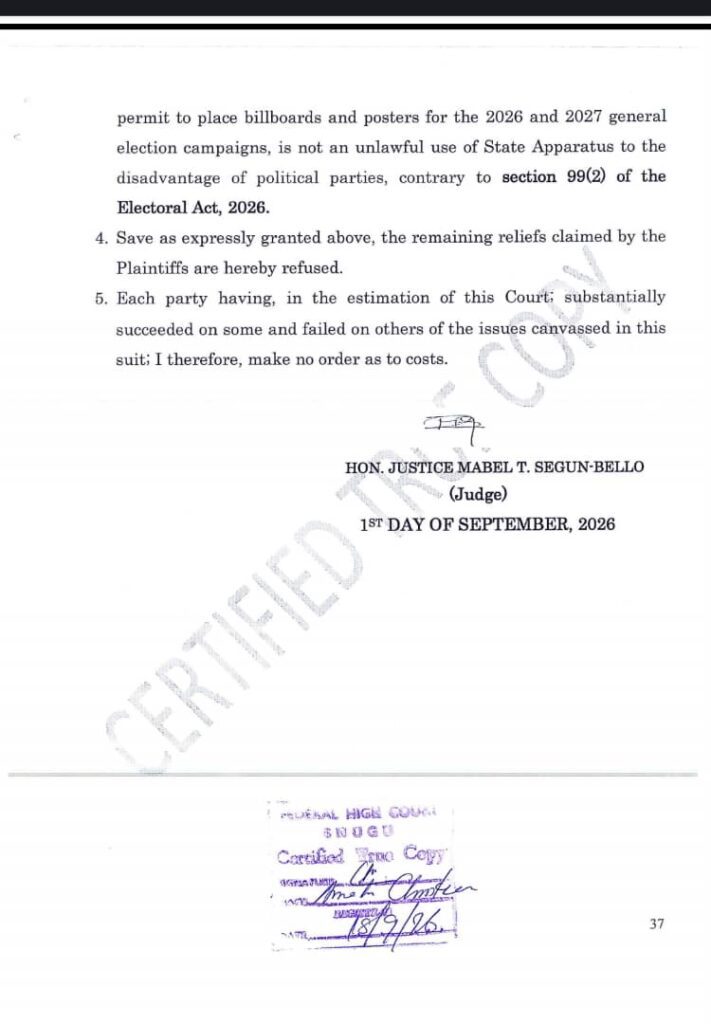
Contrary to false and misleading reports on social media that a Federal High Court (FHC) sitting in Abuja had nullified the N150 million fee prescribed by the Enugu State Structures for Signage and Advertisement Agency (ENSSAA) for political campaign billboards, findings have revealed that the court actually ruled in favour of the agency, upholding its powers to prescribe the fee.
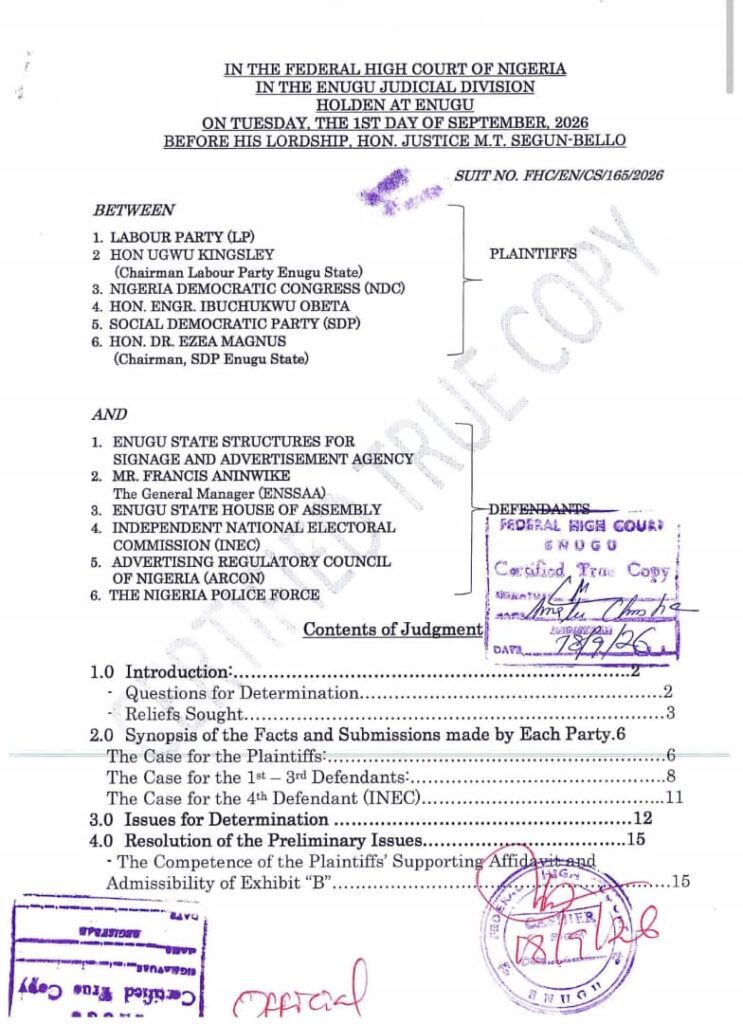
According to a certified true copy (CTC) of a judgment of FHC sitting in Enugu, the court had on September 1, 2026, dismissed a suit by opposition parties and figures challenging ENSSAA’s authority to impose a mandatory N150 million fee on each political party seeking to erect campaign billboards or display posters ahead of the 2027 general election.
The judgment rendered by Justice Mabel Segun-Bello held that it was within the legislative competence of the Enugu State House of Assembly to make laws on outdoor advertising and for ENSSAA to exercise powers donated to it by state law.
The suit marked FHC/EN/CS/165/2026 had the Labour Party; Chairman of the Labour Party (LP) in Enugu, Hon. Kingsley Ugwu; Nigeria Democratic Congress (NDC); NDC factional state Chairman, Engr. Ibuchukwu Obetta; the Social Democratic Party (SDP) and its state Chairman, Hon. Magnus Ezea, as plaintiffs, while ENSSAA; its General Manager, Mr. Francis Aninwike; the Enugu State House of Assembly; Independent National Electoral Commission (INEC); Advertising Regulatory Council of Nigeria (ARCON); and Nigeria Police Force were the respondents or defendants.
The plaintiffs had in June 2026 approached the court seeking a declaration that, by virtue of Sections 99 (1) and (2) of the Electoral Act, 2026, and Section 153 of the 1999 Constitution, which donated exclusive powers to INEC to regulate electoral campaigns of political parties in Nigeria, it was ultra vires the powers of ENSSAA and its General Manager to make executive decisions and publications imposing a mandatory payment of N150 million by political parties and their candidates in the state as an advertisement permit fee for the placement of billboards for the council election and the 2027 election.
They equally sought a declaration by the court that it was unlawful and ultra vires the legislative powers of the Enugu State House of Assembly to make laws regulating the advertisement of political campaigns in the state.
Consequently, the plaintiffs sought an order of the court setting aside the mandatory N150 million fee, as well as an injunction restraining the agency and its GM, the Enugu State Government, its agents and representatives from enforcing ENSSAA’s executive directive.
They finally sought an order of the court mandating the Nigeria Police Force to protect political parties in Enugu State against possible harassment for the placement of billboards and posters for the council election and the 2027 elections.
However, delivering her judgment in September, after a careful consideration of the totality of the affidavit evidence, the exhibits, and submissions by both parties, the presiding judge, Justice Mabel Segun-Bello, held, among other things, that the National Assembly does not hold exclusive legislative powers over outdoor advertising.
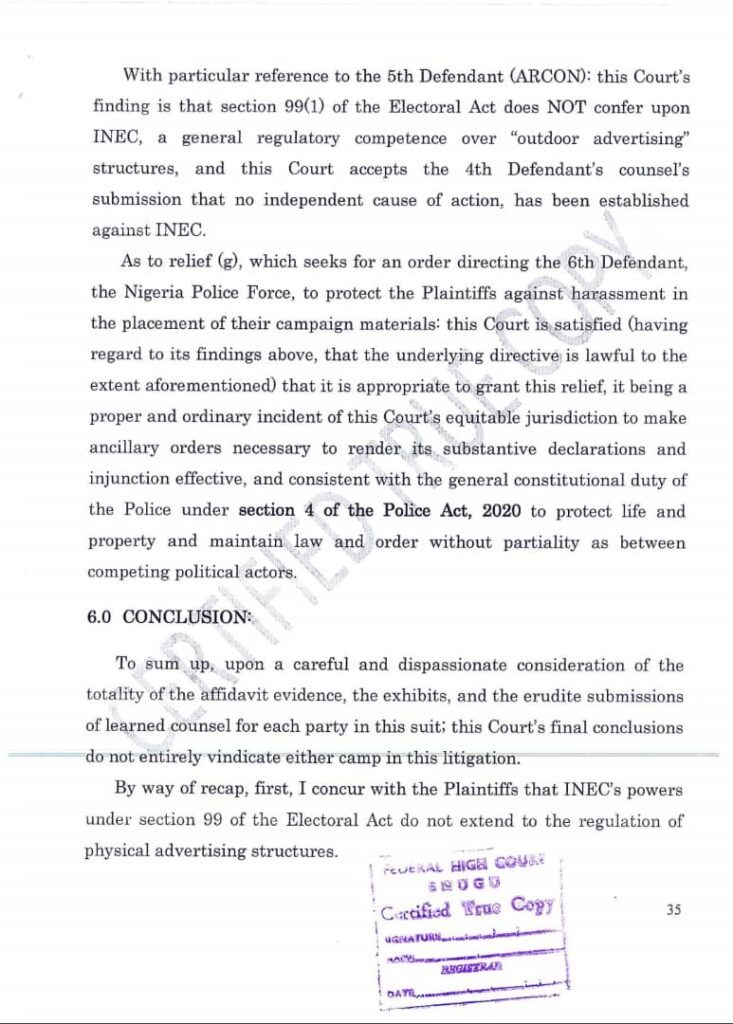
“I accede to the 1st, 2nd and 3rd Defendants’ contention that the subject matter of ‘outdoor advertising’ is NOT reserved exclusively to the National Assembly or to ARCON.
“Rather, ‘outdoor advertising’ falls within the purview of the primary functions of the Local Government, which may (where properly delegated) be validly exercised by a State agency such as the 1st Defendant (ENSSAA).
“Third, I am satisfied that on the basis of the evidence before this Court, the 1st Defendant has established it had a validly delegated authority to issue the directive it gave on 9th February, 2026, for the regulation of advertisement of political campaigns,” she stated.
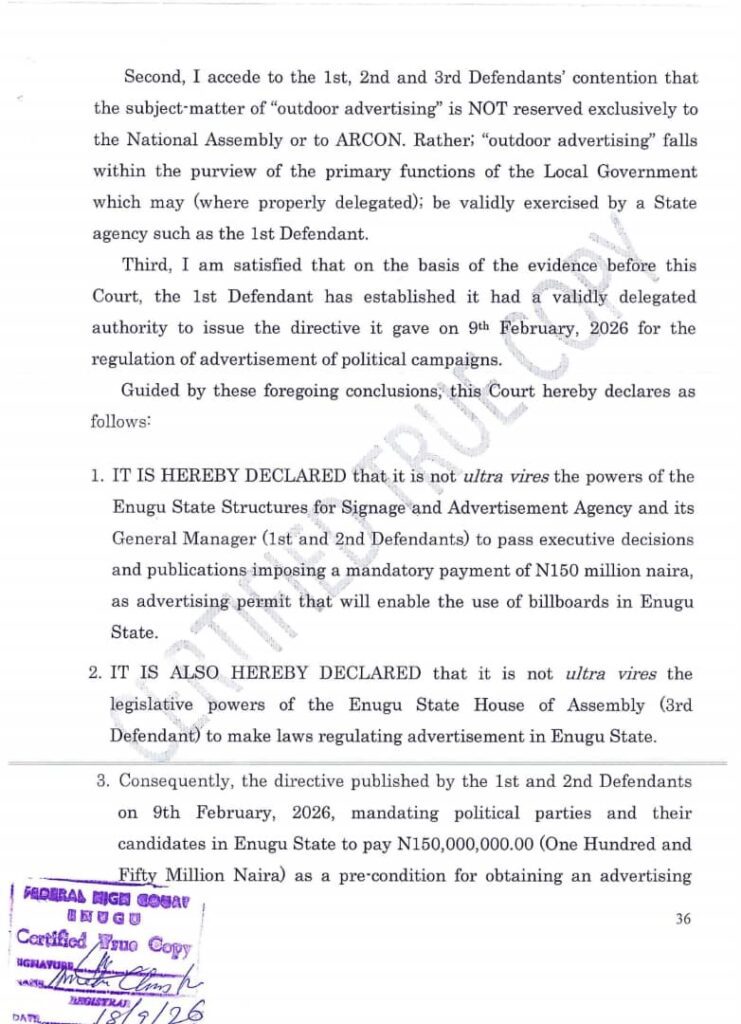
Guided by these foregoing conclusions, Justice Segun-Bello held that “it is not ultra vires the powers of the Enugu State Structures for Signage and Advertisement Agency and its General Manager (1st and 2nd Defendants) to pass executive decisions and publications imposing a mandatory payment of N150 million naira, as advertising permit that will enable the use of billboards in Enugu State.”
Continuing, she said, “It is also hereby declared that it is not ultra vires the legislative powers of the Enugu State House of Assembly (3rd Defendant) to make laws regulating advertisement in Enugu State.
“Consequently, the directive published by the 1st and 2nd Defendants on 9th February, 2026, mandating political parties and their candidates in Enugu State to pay N150,000,000.00 (One Hundred and Fifty Million Naira) as a pre-condition for obtaining an advertising permit to place billboards and posters for the 2026 and 2027 general election campaigns, is not an unlawful use of State Apparatus to the disadvantage of political parties, contrary to Section 99(2) of the Electoral Act, 2026.
“Save as expressly granted above, the remaining reliefs claimed by the Plaintiffs are hereby refused.”
Meanwhile, the Enugu State Government says that unlike the practice in most states, the N150 million fee is for each political party, not for candidates, as misrepresented on social media and by some commentators.
The Secretary to the State Government, Prof. Chidiebere Onyia, made the clarification recently while fielding questions from Government House correspondents in Enugu, adding that there was no court judgment on the fee by any FHC in Abuja, as falsely circulated.
In a related development, finding show that the Abia State Structures for Signage and Advertising Agency (ABSSAA) prescribed feea for candidates ranging from N20 million for State House of Assembly candidates to N200 million for presidential candidates.
Imo State fees range from N3.55 million for each House of Representatives candidate to N55 million for each governorship candidate, while the permit fees range from N300,000 for local council candidates to N150 million for presidential candidates.
The campaign permit fee ranges from N100,000 for each councillorship candidate to N50 million for each presidential candidate, while Kwara State fixed its fees at N2 million for each House of Assembly candidate and N100 million for presidential candidates.
The Certified True Copy of the Court Judgement :
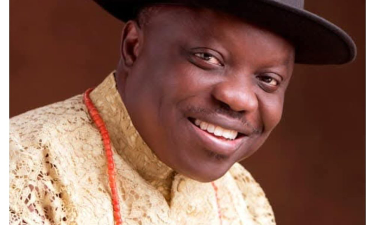
Former Delta State Governor, Dr Emmanuel Eweta Uduaghan, has died.
The former governor reportedly passed away on the morning of Monday, October 19, 2026, according to a statement issued by the Uduaghan family.
The family announced his death with deep sorrow, describing him as a beloved father, brother, uncle and patriarch whose life and service touched many people across Delta State and Nigeria.
Uduaghan, who governed Delta State from 2007 to 2015, held several key positions in the state government before becoming governor.
He served as Commissioner for Health between 1999 and 2003 and later as Secretary to the Delta State Government from 2003 to 2007.
During his years in public service, he was involved in the administration and development of the state, with emphasis on human and infrastructural development.
The family described his death as a significant loss, saying he was a source of strength and a respected elder whose contributions and memories would remain cherished.
It expressed gratitude to God for his life and service, while praying for the repose of his soul and strength for relatives, friends, associates, former colleagues and others mourning his death.
The statement concluded with a prayer for his peaceful rest, adding that his legacy would endure through the lives he touched.
The announcement was signed by the Uduaghan family.
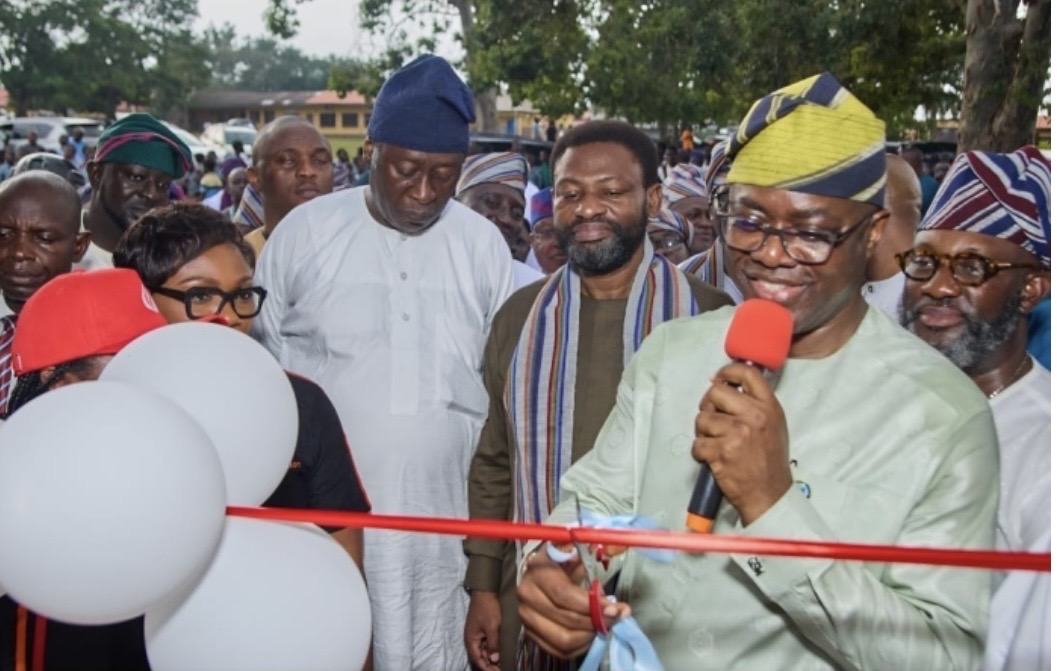
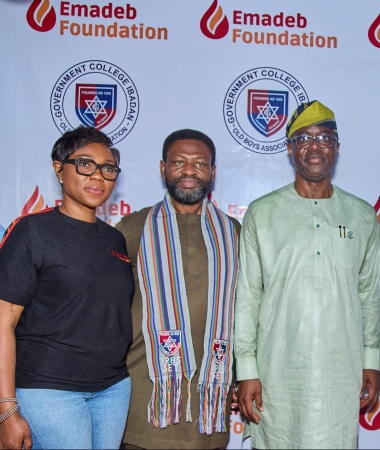
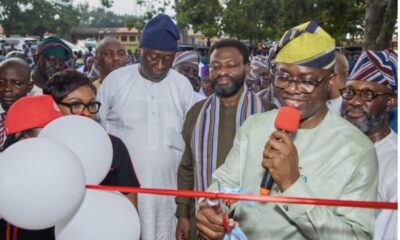
From left: Executive Director of Emadeb Energy and Emadeb Development Foundation, Mrs Olugbesoye Olujimi, Group CEO of Emadeb Energy, Mr Adebowale Olujimi, and Oyo State Governor, Seyi Makinde, after the commissioning of the renovated/equipped multi-million naira Chemistry and Physics Laboratories donated to Government College, Ibadan by Mr Olujimi, a member of Class of 1985, through Emadeb Development Foundation last Saturday
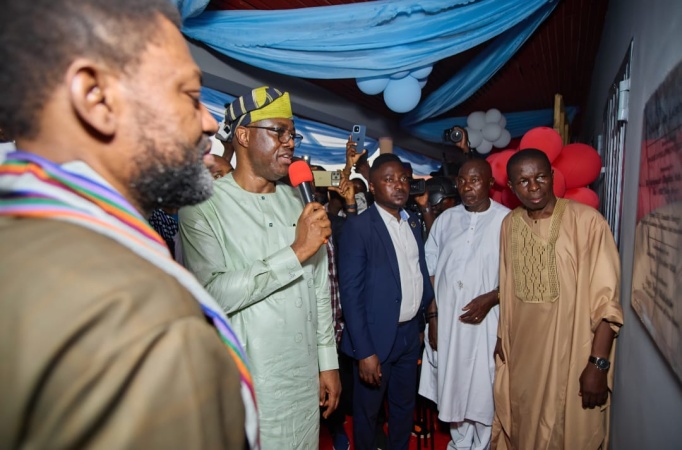
Oyo State Governor, Mr Seyi Makinde unveiling the plaque at commissioning of the renovated/equipped multi-million naira Chemistry and Physics Laboratories donated to Government College, Ibadan by Mr Adebowale Olujimi (left), member of Class of 1985 and Group CEO of Emadeb Energy, through Emadeb Development Foundation, at the 2026 AGM and reunion of Government College Ibadan Old Boys Association, GCIOBA, on Saturday

Interior of the 24KVA solar-powered renovated/equipped Chemistry and Physics Laboratories donated to Government College, Ibadan by Mr Adebowale Olujimi, member of Class of 1985 and Group CEO of Emadeb Energy, through Emadeb Development Foundation, the CSR and philanthropic arm of Emadeb Energy Group
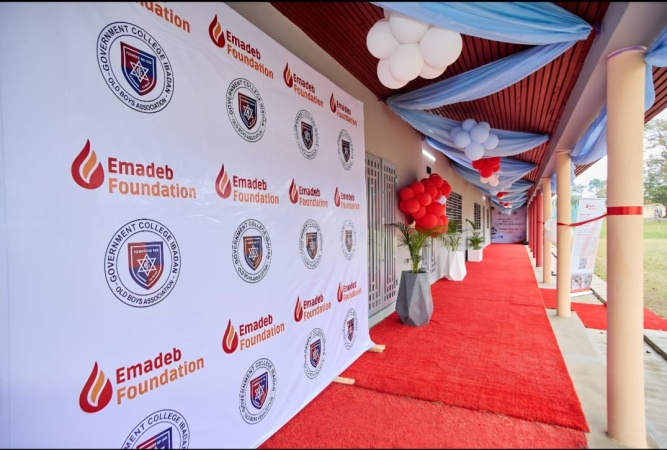
Exterior of the 24KVA solar-powered renovated/equipped Chemistry and Physics Laboratories donated to Government College, Ibadan by Mr Adebowale Olujimi, member of Class of 1985 and Group CEO of Emadeb Energy, through Emadeb Development Foundation, the CSR and philanthropic arm of Emadeb Energy Group.
-
 Faith1 day ago
Awka Anglican Diocese Rejects Ibezim’s Suspension, Threatens to Leave Church of Nigeria
-
News2 days ago
BREAKING: Mbah Extends Enugu Movement Restriction to 10pm, Scraps Keke Ticketing
-
Politics1 day ago
Nigeria’s Weak Opposition and the Cost of One-Party Dominance: Can the Opposition Rebuild Before 2027?
-
News2 days ago
2027: Keke Riders Endorse Mbah, Tinubu
-
News2 hours ago
JUST IN: Former Delta Governor, Uduaghan, dies
-
News3 days ago
Enugu Approves ₦32bn Legacy Gratuity Payment, Begins Disbursement Next Week
-
News21 hours ago
Catholic priest dies as crucifix falls on him during Mass
-
News15 hours ago
Corruption turning Nigerian Courts to ‘market stalls’ — Retired Justice Augie