News
NNPC Ltd’s state of emergency on crude oil production yields 1.61mbpd in July 2024 despite operational challenges

The declaration of a state of emergency by the Nigerian National Petroleum Company Limited [NNPC Ltd] on crude oil production has yielded a positive outcome with the increase recorded in daily production from 1.25 million barrels per day [mbpd] in June to 1.61mbpd as of July 23, 2024.
Group Chief Executive Officer of NNPC Ltd, Mr Mele Kyari had declared the state of emergency at the end of June/early July in a speech at the 2024 Nigeria Oil and Gas (NOG) Energy Week in Abuja.

Mr Kyari said the move was directed towards increasing Nigeria’s crude oil production and growing its reserves.
According to him “We have decided to stop the debate. We have declared war on the challenges affecting our crude oil production. War means war. We have the right tools. We know what to fight. We know what we have to do at the level of assets. We have engaged our partners. And we will work together to improve the situation.”
He had explained that a detailed analysis of assets showed that Nigeria could conveniently produce two million barrels of crude oil per day without deploying new rigs, but the major impediment to achieving that remained the inability of players to act in a timely manner.

“War will help NNPC Ltd and its partners to speedily clear all identified obstacles to effective and efficient production such as delays in procurement processes, which have become a challenge in the industry,” he said.
And about a month after, the Nigerian Upstream Petroleum Regulatory Commission (NUPRC) has just announced the increase in the daily crude oil production in the country from 1.25 million barrels per day (mbpd) in June to 1.61 mbpd as of July 23rd.
The increment in output, according to the Commission, was in spite of significant operational challenges especially affecting terminals at Bonny, Brass, and Forcados, prompting the Commission to employ end-to-end production monitoring and a mass balance methodology to accurately account for losses and differentiate them from operational losses.
The announcement by the NUPRC has generated positive sentiments in the oil sector of the national economy with its potential for more revenue accretion to the federal government’s coffers.
Chief Executive Officer of the Commission, Engineer Gbenga Komolafe dropped the piece of good news at the House of Representatives’ Special Committee’s Two-Day Public/Investigative Hearing on Oil Theft/Losses in Abuja at the weekend.
An elated Komolafe said that Nigeria remained Africa’s largest producer of crude oil, boasting proven reserves of 37.50 billion barrels and a production capacity of approximately 2.19 million barrels per day (mbpd).
According to him: “Nigeria is facing significant challenges, especially affecting terminals at Bonny, Brass, and Forcados. This has prompted the Commission to employ end-to-end production monitoring and a mass balance methodology to accurately account for losses and differentiate them from operational losses.
“The NUPRC has introduced several innovative measures to enhance transparency and accountability.”
He listed other innovations towards accountability to include the Advanced Cargo Declaration (ACD) Regulation that ensures no crude oil is exported without proper accounting and that assigns a unique identification number (UIN) to each cargo; the Upstream Metering Regulation, which mandates reliable metering systems to account for all hydrocarbon production and exports; and, real-time cargo tracking and digital documentation to improve visibility and efficiency in cargo operations.
He explained that with a mandate to oversee the exploration, development, production, and lifting operations of crude oil and natural gas, “the NUPRC regulates both the technical and commercial aspects of operations in the nation’s Upstream Petroleum Sector, ensuring optimal tax revenue generation, royalty collection, and cost benchmarking.
“Other areas of major focus for the Commission include ensuring business continuity and production sustainability at low costs, accurate measurement and timely payment of royalties, uninterrupted crude oil and natural gas supply to the domestic market, and maintaining safety, health, and environmental standards.
“The Petroleum Industry Act 2021 grants the Commission several statutory mandates in the areas of calibration and certification of metering systems and equipment, publication of reports and statistics on upstream operations, regulatory oversight and issuance of quality and quantity certificates for exports, and determination of fiscal prices for crude oil and condensate.”
Komolafe stated that the strategies of the Commission aimed to optimise production, enhance regulatory oversight, and ensure accurate measurement and accounting.
He further said that the Commission had prioritised improving rig availability and reducing non-productive time through unlocking heavy crude oil reserves via industry workshops.
“These initiatives also support new Petroleum Prospecting License (PPL) awardees to achieve their first Oil, among other initiatives,” he explained.
He reaffirmed NUPRC’s commitment to continued engagements with stakeholders to optimise Nigeria’s Oil production and maintain its leadership position in Africa’s energy sector.













Tension has gripped parts of Kwara State following the reported abduction of members of the Iru Ekun Security Group, a security outfit spearheaded by Yoruba nation agitator Sunday Adeyemo, popularly known as Sunday Igboho.
The assailants reportedly abducted the security operatives and forced them to renounce their activities of protecting communities in the state.
According to reports, the abducted members pleaded for their release and were compelled to renounce their community protection activities.
The Iru Ekun Security Group was established to protect Yoruba communities in Kwara State against terrorist attacks and kidnappings.
The reported abduction has sparked fear among residents who rely on the group for protection against insecurity in their communities.
As of the time of filing this report, Igboho had yet to issue a statement on the reported abduction of the security group members.
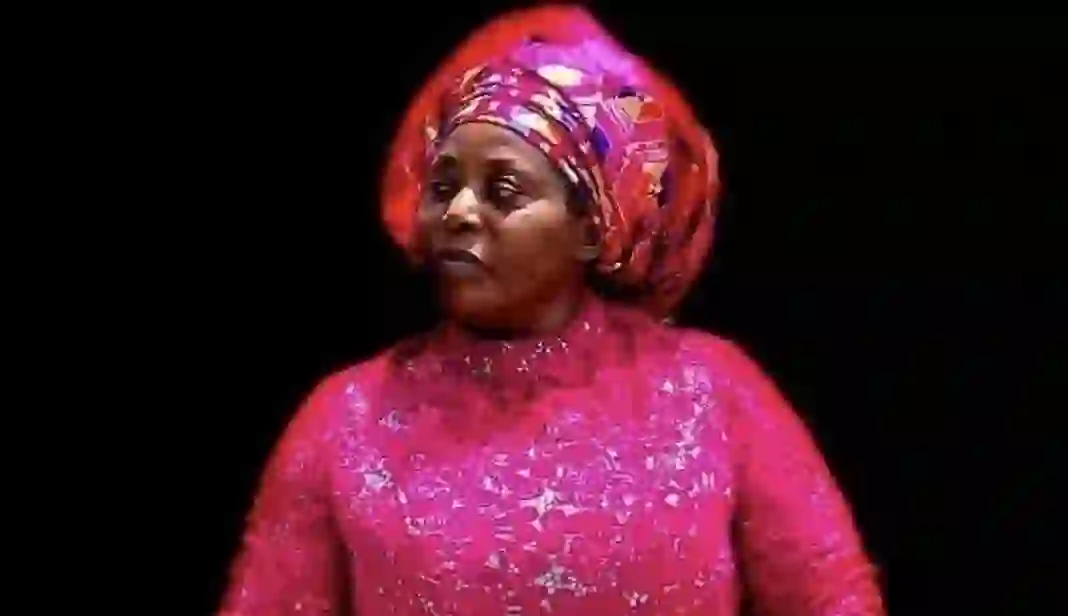
Fidelia Ezinwanne Chigbogu, the immediate elder sister of the late Senator Ifeanyi Ubah, has died at the age of 61.
Mrs Chigbogu, fondly called “Darling” by her husband, reportedly slumped and died on Sunday morning in Lagos while preparing to attend church.
Her husband, Chudi Chidinma Chigbogu, a native of Nnewi in Nnewi North Local Government Area of Anambra State, described her death as a devastating shock, saying she had shown no signs of illness before the incident.
“It was like a shock to me because, even as I am talking to you now, I never believed it,” he said.
Narrating the circumstances surrounding her death, Mr Chigbogu said the family had experienced an electrical incident the previous Thursday when their electricity meter exploded and burnt their changeover room.
He said they had contacted officials of the electricity distribution company, who promised to visit on Monday to replace and relocate the meter.
“We were busy waiting for them. My wife said she would give testimony in church on Sunday, and we were preparing for that,” he said.
According to him, his wife woke up on Sunday morning without any apparent health complaints and was preparing to leave for church when the incident occurred.
“That Sunday morning, she woke up. There was nothing like a headache, nothing like fever, nothing. She finished bathing and was preparing to go to church. She usually leaves home between 7 a.m. and 7:30 a.m. because of the roles she plays in the church,” he said.
Mr Chigbogu explained that he was washing his car because of dust when he became concerned that his wife had not come downstairs.
“I went to wash the car because of dust. Around 8 a.m., I called my son and said, ‘Why has mummy not come down? Go and check.’
“Only for the boy to go and start screaming that he called his mummy and she did not answer. He lifted her hand, and her hand dropped,” he recounted.
He said he immediately rushed upstairs and found his wife lying unresponsive on the bed.
“I called her names, no way. I alerted neighbours, and we carried her to six hospitals. Anywhere we went, they would take me aside and say I didn’t bring her on time, that she had passed on.
“I said no, it was not possible, until we got to Navy Hospital, where they refused to admit her,” he said.
Mr Chigbogu said prayers continued at their home for several hours as the family struggled to come to terms with the tragedy.
He recalled that around 4 p.m., someone told him she had seen his wife in a vision, moving swiftly without looking back, which she interpreted as a sign that the deceased had made it to heaven.
“That was when I changed my mind and allowed an ambulance to come. She left here after 6 p.m. and got to the village around 7 a.m. the next day,” he said.
Describing his late wife, Mr Chigbogu said she was a natural leader, peacemaker and philanthropist who played a significant role in her family, church and community.
“Aside from calling her Darling, I called her many names because she was a leader. No matter the case in the family, she would settle it.
“She is the founder of a women’s group, played a very big role in the church and was known for her charitable work. Before her passing, she was working on her orphanage.
“Even though she is no more, I will not let her down. I will make sure that project comes to pass,” he said.
On her family background, Mr Chigbogu said her parents had seven children—three boys and four girls—and that his late wife was the second daughter.
He added that she was also one of the trustees of the Ubah family.

By Tony Edike
Enugu State Governor, Dr Peter Ndubuisi Mbah, has pledged to sign into law a proposed amendment to the state’s Landlord and Tenant Law aimed at curbing excessive agency and legal fees imposed on prospective tenants.
Mbah gave the assurance while speaking at a recent town hall meeting, where he outlined his administration’s plans to address housing challenges in the state through legislative reforms and increased housing supply.

Enugu Housing scheme
The governor said his administration was working with the Enugu State House of Assembly to ensure the proposed legislation was passed within four weeks, promising to sign it as soon as it was transmitted to him.
He said the government could effectively regulate charges imposed by property agents and lawyers but warned against imposing rent controls that could discourage investment in the housing sector and worsen accommodation shortages.
“One thing that government can regulate effectively is controlling the cost an agent charges as commission, controlling the legal fees. You can clearly make laws to guide that,” Mbah said.
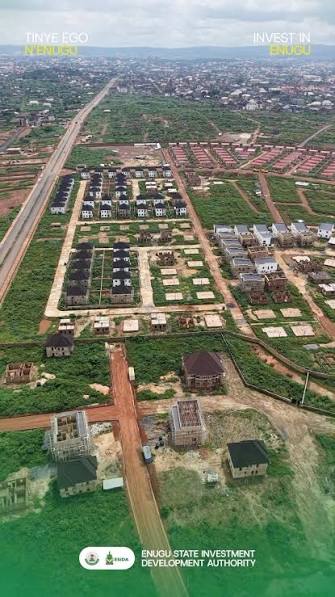
The Enugu Smart City
He explained that fixing a ceiling on the rent landlords could charge might discourage people from investing in residential property, potentially reducing housing supply and pushing rental prices even higher.
“It is extremely difficult to make laws to cap the fee the rent a landlord charges because once you do that, what you’re going to see is scarcity,” he said.
The governor added that his administration was adopting a supply-driven approach to addressing the housing crisis by expanding the city, developing new residential areas and increasing the availability of housing units.

Proposed structures at the Enugu Smart City
“So what we do as government is to try and push supplies in the market to see that we build new houses to ensure that there are enough homes so that that supply would drive down the rent,” he stated.
Mbah said his administration was working with the legislature to regulate tenancy-related fees while protecting residents from excessive charges.
“I’m committing to you that we’re going to work with the House of Assembly to ensure that within the next four weeks we’ll ensure that bill is passed into law, and I’ll be in a hurry to sign it so that we can protect Ndi Enugu,” the governor added.

Housing units ready for relocation of slum residents
The proposed amendment to the Landlord and Tenant Law, Cap. 101, Revised Laws of Enugu State, 2004, was disclosed by the Speaker of the House of Assembly, Rt. Hon. Uche Ugwu, in a Facebook post on Monday, October 26, 2026.
According to Ugwu, the executive bill seeks to establish clearer rules for tenancy transactions, regulate estate agents, limit agency and legal fees, and provide a structured mechanism for handling caution fees and refunds.
The proposed legislation also seeks to reduce disputes between landlords and tenants over property damage through joint inventories and professional valuations where necessary, check arbitrary rent increases and create a more transparent framework for tenancy-related charges.

Screenshot
The executive bill comes after an earlier bill sponsored by the member representing Nkanu East State Constituency, Hon. Okey Mbah, which had passed its first and second readings, with a public hearing also conducted by the House.
While advocating the earlier bill in March 2025, Okey Mbah raised concerns about the high costs prospective tenants were required to pay, including agency commissions, legal fees, caution fees and other charges.
He argued that the absence of effective regulation had created opportunities for exploitation, with some individuals allegedly posing as property agents to collect money from unsuspecting accommodation seekers without providing the promised services.
The earlier proposal sought to limit agency and legal fees to a maximum of 10 per cent of the rent, prohibit caution fees and introduce safeguards against irregular and fraudulent evictions. However, the final provisions will depend on the version of the legislation passed by the House.
Ugwu said the renewed legislative effort aligned with Mbah’s vision of making Enugu a preferred destination for business, investment, tourism and residential living.
The proposed amendment comes amid persistent complaints about the rising cost of accommodation in Enugu, where prospective tenants often face substantial additional charges beyond the rent demanded by landlords.
If passed and signed into law, the legislation could introduce greater transparency into tenancy transactions and provide a regulatory framework for the activities of property agents, while helping to protect tenants from excessive fees.
However, the effectiveness of the proposed reforms will depend on the final provisions of the law, the establishment of appropriate enforcement mechanisms and compliance by landlords, estate agents and legal practitioners.
-
 Features2 days ago
Mmesoma Umeorini: When Love Turns Deadly, and a Young Woman Pays With Her Life
-
Features2 days ago
Why Igbos Celebrate New Yam Festival Worldwide: The History, Cultural Significance and Lessons For The Younger Generation
-
News1 day ago
Kogi Police Probe Alleged Murder-Suicide Involving Two Officers
-
News10 hours ago
BREAKING: Tension as Video Shows Islamic Group Members Allegedly Calling for AK-47 to Kill Christians in Enugu, Jos
-
News3 days ago
Mbah: Why We Built 268 Smart Green Schools Across Enugu State
-
News1 day ago
NCDC Reports Two Suspected Ebola Cases as Contacts Rise to 53
-
News3 days ago
Anambra Police Arrest Suspect Over Murder of 23-Year-Old Woman in Uga
-
News1 day ago
Enugu Traders Pledge Support for Mbah’s Second Term, Cite Market Reforms