Connect with us

News

CJN swears-in 22 appeal court judges, tasks them on cleaning ”augean stable”

Published

on

Spread the love

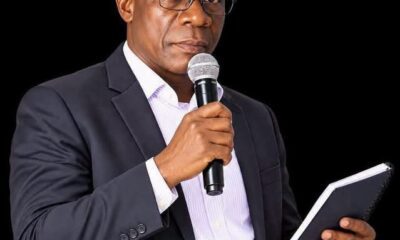
The Chief Justice of Nigeria (CJN), Justice Olukayode Ariwoola, on Wednesday, said the enormous task of cleaning the ‘Augean stable’ rests squarely on the shoulders of the new judges.

Ariwola, therefore urged them to fasten their belts and roll up your sleeves to face the challenges head-on.

He made this known at the swearing-in ceremony of the newly appointed 22 Justices of the Court of Appeal in Abuja.

”In other words, you should hit the ground speeding at a supersonic velocity; and not just running.

”There are several unfathomable crimes being committed in the country, aside from the usual political matters that have made litigations to go on alarming rise.

“You must redouble your pace to catch up with the expectations of the sprawling community of litigants. As judicial officers, you have a divine mandate on earth that you must discharge with unveiled honesty and sincerity.

Maduka College Advert

“Above all, you must give good account of yourselves to justify your elevation to the Court of Appeal,’’ he added.

He reminded the judges of the need to be diligent in the discharge of their duties even as they face two governorship elections in Edo and Ondo States, respectively.

“As usual, the courts will be besieged with plethora of petitions. It is our statutory duty to hear all matters that come before us and adjudicate according to the laws of the land.

“We must not falter; and we must not tread the path of infamy.

“Yes, it is true that we cannot please everyone through our actions and work, but with the right application of the law and the constitution of the land, which we all have collectively pledged to uphold; we can go a long way to do those things that our conscience will be very proud of; and the generality of the Nigerian citizens will equally be happy about.

“Every position we attain in life always avails us that unique opportunity to do something novel and impactful, especially if there was any previous act of wrongdoing or misapplication of discretion.

“With your lordships’ elevation to the higher bench today, you have to be very mindful of the enormous confidence the public is now reposing in you vis-a-vis these expectations’’.

He lamented the fact that the judiciary has been treated to an unpalatable cocktail of misleading and conflicting judgments as well as frivolous interlocutory orders emanating from courts of coordinate jurisdictions.

“These have literally attempted to make a mockery of our judicial system and flagrantly desecrate the revered temple of justice.

“Several cases of such abound across the length and breadth of the country. This is, largely, an embarrassment to our jurisprudence, and we win never handle it with levity.

“Punitive measures must definitely be meted out to such erring Judges.

“We have already activated the process of reining-in such errant Judges with a view to making them face the consequence of their despicable and odious conduct’’.

He reminded the judges that they are not occupying their respective positions to serve ourselves, but the Nigerian masses.

“And the best way we can serve them is by doing what will make them feel safe in our hands and also trust us to always deliver the right judgments that will not be tainted by sentiments, emotions or other clandestine considerations’’.

The new Justices are: Abdullahi Muhammad Liman from Nasarawa State; Abiodun Akinyemi from Ogun State; Olukayode Adeniyi from Oyo State; Zainab Abubakar from Kebbie; Isaq Sani from Kaduna State and Lateef Lawal-Akapo from Lagos State and Ngozika U. Okaisabor from Imo.

Others are Donatus Okorowo from Enugu State; Ruqayat Ayoola from Kogi; Polycarp Kwahar from Benue; Eberechi Nyesom-Wike from Rivers; Fadawa Umaru from Borno, Oyewumi Oyebiola from Oyo State; Ntong Festus Ntong from Akwa Ibom; Nehizena Afolabi from Edo; and Nnamdi Dimgba from Abia.

The rest are Abdu Dogo from Federal Capital Territory, Abuja; Abdulazeez M. Anka from Zamfara; Owibunkeonye Onwosi from Ebonyi; Asma’u Akanbi-Yusuf from Kwara; Victoria Nwoye from Anambra State; and Enenche Eleojo from Kogi


News

EBOLA: Tinubu approves ₦10bn for emergency, establishes task force

Published

on

President Bola Tinubu
Spread the love

President Bola Tinubu has approved the establishment of a Presidential Task Force on Ebola Virus Disease Preparedness and Emerging Public Health Threats and ordered the immediate release of N10 billion as emergency intervention funding.

The fund will strengthen the operational preparedness of the National Centre for Disease Control and Prevention (NCDC) and support critical national public health emergency response activities.

A statement by the presidential spokesman, Bayo Onanuga, explained that the Presidential Task Force on Ebola will be chaired by the Chief of Staff to the President, Rt. Hon. Femi Gbajabiamila, with membership drawn from relevant Ministries, Departments, and Agencies (MDAs) and State representatives.

Ebola has recently resurfaced in the Democratic Republic of Congo (DRC) and Uganda, both neighbouring countries.

According to the statement, “The President’s approval followed a stakeholder meeting convened under the chairmanship of the Chief of Staff to review Nigeria’s preparedness and develop strategies against the possible importation of Ebola into Nigeria.”

Other critical stakeholders at the meeting included representatives from the Ministry of Interior, the Federal Airports Authority of Nigeria (FAAN), the Nigeria Immigration Service (NIS), the Nigerian Civil Aviation Authority (NCAA), the Lagos State Government, and others.

Maduka College Advert

President Tinubu also directed all States hosting international airports and international border corridors, as well as relevant MDAs, to submit their plans, funding requirements and intervention needs for consideration and coordinated implementation.

Additional measures to be put in place by the Task Force are: Intensification of passenger screening at all international airports, including enhanced temperature checks and crowd-control protocols; Enhanced monitoring of passengers arriving through high-risk airline routes including Air Uganda, Rwanda Air, Air Tanzania, Air Angola, Kenya Airways, and Ethiopian Airlines; and Immediate activation of referral and isolation centres at Lagos and Abuja international airports, with other airports to follow.

Others include: Mandatory activation of QR code-based pre-arrival health declaration systems for passengers originating from or transiting through designated high-risk countries, and disinfection of departure halls, cargoes, baggage areas, and airport facilities as precautionary environmental measures.

The President mandated that the advisory group consult with security, diplomatic, and aviation bodies with a view to regulating flights from affected and designated high-risk countries.

The Task Force is further directed to designate specific airports or terminals for high-risk flights to enable controlled screening and isolation procedures, and to consider adjusting flight timings to minimise interaction between high-risk passengers and others.

Continue Reading

News

Nigerian Army officer, six soldiers killed as suspected terrorists ambush patrol team in Kaduna

Published

on

Spread the love

A Nigerian Army officer and at least six soldiers were reportedly killed on Monday evening after troops came under a deadly ambush by suspected terrorists during a patrol operation in the Chikun Local Government Area of Kaduna State.

The attack occurred amid intensified military operations that have, in recent weeks, significantly degraded the operational capabilities of armed groups operating within the Kaduna-Zaria corridor and surrounding communities.

It was gathered from security sources that the troops had earlier embarked on a routine operational patrol following a series of successful clearance missions that led to the neutralisation of several terrorist kingpins and their foot soldiers in the area.

Sources disclosed that the soldiers were returning from the operation when they were ambushed by heavily armed attackers, triggering a fierce exchange of gunfire.

Although the troops reportedly fought back and inflicted casualties on the attackers, the ambush resulted in the loss of one officer and six soldiers.

The latest incident has come as a surprise to security observers, given the recent gains recorded by troops operating under the 1 Division Nigerian Army in the area.

Maduka College Advert

Over the past few weeks, security forces have sustained aggressive patrols, intelligence-driven raids, anti-kidnapping operations and clearance missions across communities along the Kaduna-Zaria Expressway and adjoining forests.

A security operative told PRNigeria that the operations led to the elimination of several bandit leaders, disruption of criminal hideouts, rescue of kidnapped victims, arrests of gunrunners and a noticeable reduction in attacks on commuters and residents.

Chikun is a large, densely populated, and rapidly urbanising local government area in central Kaduna State, Nigeria. Its headquarters are in Kujama, though much of its economic activity and development are closely linked to the expanding Kaduna metropolis. The area has remained a major hotspot for armed banditry and kidnappings, prompting sustained military operations led by Nigerian Army troops. As a result, Chikun continues to be one of the key focal points for national security deployments in the North‑West region.

The ambush underscores the continuing threat posed by armed groups despite recent military successes and highlights the determination of security forces to sustain pressure on criminal networks operating in the region.

As of the time of filing this report, military authorities had yet to issue an official statement on the incident.

However, sources indicated that reinforcement operations had been launched in the area, while efforts were ongoing to track down the attackers and prevent further security breaches.

The attack comes at a time when security agencies have intensified coordinated operations across Kaduna and neighbouring states to dismantle terrorist and bandit enclaves and restore lasting peace along major transportation routes.

Continue Reading

News

‘Service chiefs should honourably resign if they can’t fix insecurity’ – Reps

Published

on

President
President Bola Tinubu
Spread the love

The House of Representatives has warned the service chiefs to step down honourably if the country’s deteriorating security situation persists and public confidence in the government’s efforts is not restored within a clearly defined period.

It also urged President Bola Tinubu to come up with a comprehensive and aggressive security strategy to flush out bandits, terrorists and kidnappers from their hideouts in Nigeria.

The call followed the adoption of a motion of urgent public importance moved by Rep. Ibe Osonwa, who represents the Arochukwu/Ohafia Federal Constituency of Abia, during plenary on Tuesday.

The motion is titled, “A Call for Immediate Executive Action on the Surge in Banditry, the Daily Abduction of Schoolchildren and the Perilous Security Situation in Nigerian Schools and Places of Worship.”

Osonwa, however, reiterated calls on the president by several other sources to restore safety across the country amid worsening insecurity.

He expressed concern over the escalating wave of kidnappings, banditry, terrorism and attacks on vulnerable communities nationwide.

Maduka College Advert

Osonwa reminded the federal government of its constitutional responsibility to protect citizens, citing Section 14(2)(b) of the 1999 Constitution (as amended).

The lawmaker explained that the section as cited provides that “the security and welfare of the people shall be the primary purpose of government.”

He lamented the growing trend of attacks on schools, noting that “the abduction of schoolchildren across several parts of the country has disrupted education and deepened Nigeria’s out-of-school children crisis.

According to him, thousands of children have been forced out of classrooms due to fear of attacks, while many families continue to grapple with the trauma of kidnappings.

Osonwa decried the systematic targeting of schools and places of worship by criminal elements, warning that institutions traditionally regarded as safe havens have increasingly become soft targets for bandits and kidnappers.

He said worshippers across the country now face the risk of attacks, abductions and killings while observing religious activities, which undermines citizens’ constitutional rights to freedom of thought, conscience and religion.

The lawmaker also painted a grim picture of the economic consequences of insecurity, stating that “many businesses have shut down, farming communities have been deserted and families plunged into poverty.”

Osonwa argued that the current security response appeared largely reactive and insufficient to stem the operations of criminal groups.

He warned that the apparent inability to decisively confront bandits and terrorists had created the impression that the government was losing control of parts of the country to criminal elements.

Following deliberations, the House condemned in “the strongest possible terms” the continued banditry, mass abductions and attacks on schools and churches across Nigeria.

The lawmakers resolved to transmit “an urgent and solemn appeal” to President Tinubu, as Commander-in-Chief of the Armed Forces, “reminding him of his oath to protect the lives and property of Nigerians”.

The House specifically demanded the immediate deployment of “an aggressive, unrelenting and comprehensive security strategy” to dismantle bandits’ strongholds, secure vulnerable schools and places of worship.

They also pledged to ensure the unconditional release of citizens held captive by criminal groups.

The House also mandated its Committees on Defence, National Security and Intelligence and the Army to intensify oversight of the implementation of the resolutions and report back within two weeks for further legislative action.

NAN reports that Nigeria has continued to battle multiple security challenges, including banditry, terrorism, kidnapping for ransom and communal violence, particularly in parts of the North-West, North-Central and North-East zones.

In recent years, mass abductions of students from schools in Kaduna, Niger, Zamfara and other states have drawn widespread national and international concerns.

This has prompted repeated calls for stronger security measures to protect educational institutions and vulnerable communities. (NAN)

Continue Reading

Trending

Maduka College Advert