News
Why insecurity persists —Service Chiefs, list challenges

Chief of Defence Staff, General Christopher Musa, on Tuesday, revealed that Boko Haram members held in prisons across the country still carry out their criminal operations through the help of some prison warders.
General Musa made the disclosure, yesterday, during the sectoral debate with service chiefs organized by the House of Representatives at plenary in Abuja.

At the parley, the service chiefs gave reasons the security agencies appeared to be under-performing, their challenges and how to overcome and secure the country.
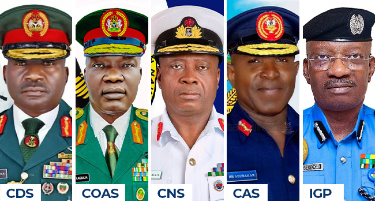
The service chiefs present included Chief of Defence Staff, CDS, General Christopher Musa; Chief of Army Staff, COAS, Lt-General Taoreed Lagbaja; Chief of Air Staff, CAS, Air Marshal Hassan Abubakar; Chief of Naval Staff, CNS, Vice Admiral Emmanuel Ogalla; and Inspector General of Police, Kayode Egbetokun.
The House had rescheduled the meeting from last week to Tuesday after the security chiefs could not appear for the debate in person.

Boko Haram plan operations from prisons with aid of warders
According to Musa, in the North-East, while debriefing some of the Boko Haram elements, they confessed how from the prisons they could plan operations and pass funds to the field through the help of some prison warders.
He said: “They passed funds across and we asked how. They told us they use some of the warders. We are not saying all of them are bad, but they use some of the warders’ accounts to transfer money and the deal is anybody whose account it is transferred shared it 50-50. Those are the challenges.”
Armed forces under-funded
Speaking further on purchase of equipment, Musa lamented that the high dollar rate had hampered the purchase of relevant equipment needed to fight insecurity.
According to him, all the items procured are bought with hard currency, none in naira, and that most times when funds are converted, only very little could be bought.
His words: “We don’t produce what we need in Nigeria and if you do not produce what you need, that means you are at the beck and call of the people that produce these items.
“For example, during the last regime, about $1 billion was set aside for defence procurement. Out of that amount, over $600 million was for the procurement of aircraft. So, the whole money had gone.
“So many times when people see that funds are being released to the armed forces, they think it is so much but by the time you convert them to dollars you do not get much.
“One precision missile for our drone costs $5,000. So imagine how many we would be able to use and how many we can procure. So, those are the challenges.”
Leveraging new military tech, AI
He said there is need for the Armed Forces to leverage emerging military technologies, such as artificial intelligence, and robotics.
Musa said: “Similarly there is need to exploit the contemporary global shift in the utilisation of space technology and cyber warfare for national defence and security.
‘’We have initiated the process of establishing a joint cyber warfare intelligence command where such emerging technologies will be exploited to enhance the capabilities of the Armed Forces of Nigeria.
“Security is not only the responsibility of security forces. Everybody has a responsibility to play. We cannot be everywhere. So, we need education and sensitisation programmes to educate Nigerians that security is everybody’s responsibility.
‘’If you see it, you talk about it. You just don’t keep quiet and say it is for the Police. Everybody has a role. In our neighbouring countries, if you enter there as a visitor, I give you 30 minutes, they would know you are a visitor. Before you know it, the gendarmes are after you.
“People tend to think it is not their responsibility. We are not magicians. We need to have a system where we train from schools, let every Nigerian understand that they should take ownership of security.
Good governance, best weapon against insecurity
“We have realized that the magic wand to address insecurity is good governance. Anywhere you have good governance, insecurity goes down. The security forces can only produce 30 per cent. We can only provide an enabling environment. If other aspects are not addressed, it is a problem.
“People can’t eat. People are hungry. No matter how you tell them to keep the peace, they will not because they have to eat and it aids criminality.
‘’So, we must have good governance and everybody should have belief in the country that this is their country.”
Activities in Judiciary as factors
He also fingered delayed prosecution as a challenge in the war against insecurity, adding that some terrorists found wanting had not been prosecuted.
His words: “For keeping them for a lengthy period, people are accusing the Armed Forces of keeping them against their human rights but we cannot prosecute.
“I have been in the North-East, there were a lot of Boko Haram elements that were captured and kept. We have kept them for five or six years. We in the Armed Forces cannot prosecute; we can only provide protection for them.
“Another aspect of the judiciary is this, you take risks, make an arrest, you hand-over, but before you enter your vehicle, the man has been released. Now you have risked yourself in doing that.
“By the time he is released, he goes to tell your family members that you are at risk. So, it gets to a stage where the security forces are not even willing to do anything.”
Ekpa, a threat to security in S-East, Nigeria
On the South-East, the CDS stated that Simon Ekpa had become a serious threat to the country, adding that the government must act fast, diplomatically, to tame him.
“Simon Ekpa has become a menace to this country. The country must act on it diplomatically. Finland is having a free way encouraging him to be doing what he is doing. His utterances and actions are affecting what is happening in Nigeria.
“We should never allow that. Our foreign service needs to step in to address the issue. It is either we invite the ambassador or somebody. They must explain why they are protecting him. He is doing us more harm with his utterances. A lot of people are being killed. We cannot sit back and keep quiet.”
Troops’ challenges – CAS
On his part, the Chief of Air Staff, Hassan Abubakar, outlined challenges hampering the Nigerian Air Force from attaining its operational objectives.
The challenges include rising cost of aviation fuel and introduction of surcharges.
According to him, the situation continues to worsen with the cost of Jet A-1 fluctuating at N1,150 per litre, against the budgeted N360 per litre.
He said there is need for an intervention fund for the Nigerian Air Force as an independent importer of Jet A-1 fuel to sustain air operations.
He also lamented delays in release of funds for procurement, noting that about 85 per cent of Nigerian Air Force capital budget is for procuring military hardware abroad.
“Since hardware by original equipment manufacturers are time-bound, delay in budget funding may lead to late delivery due to late payment. Timely disbursement of approved funds would surely solve this challenge,” he said.
Complexity in targeting terrorists among populace
He also identified the problems of terrorists living among the populace and Nigeria’s porous borders.
“The Nigerian Air Force’s kinetic operations are supported by credible intelligence to minimize undesired casualties.
“The country’s land borders, including those with Niger, Chad, Cameroon, Benin and Togo, spanning about 4,000km, are mostly insecure and poorly manned. These porous borders exacerbate arms proliferation and illegal movement of people and goods, which contribute to the problem of insecurity and further enable insurgents to operate freely.”
On manpower challenges, given the recent acquisition of new platforms, he and a three-year sustained training plan has been put in place beginning from 2024, “as long as the National Assembly expeditiously facilitates smooth passage of our increased training and operations requirements.”
Police operating in difficult environment – IGP Egbetokun
For the Nigeria Police, IGP Kayode Egbetokun said that the Police were operating in a very difficult environment with inadequate manpower, noting that he met a battered force.
“The United Nations Police ratio of 1 to 400 is not attainable in Nigeria as of today. The ratio in Nigeria is one to 1,000, which suggests that we have to double the manpower.
“We have 1,537 police divisional headquarters across 774 local government areas. But getting operational vehicles for the divisions is difficult. Each of these divisions requires at least four functional patrol vehicles. But we have divisions which don’t have any patrol vehicles as of today.
“Training in the police is still inadequate. The welfare of personnel is nothing to write home about. Funding is critical to achieving the mandate of the Nigerian Police. Unfortunately, the citizens are not interested in our excuses for under-performance. They want us to serve them. We are ready to serve them. We need your cooperation. We need funding. We need more manpower.
“In spite of these inadequacies, the police have been doing so well. We have been doing our best to protect lives and property across the country. No agency can perform beyond the limit of resources available to it.
“In the last five months, we have made a lot of arrests. We have made a lot of recovery of illicit weapons. Some of these suspects are undergoing prosecution, as we speak. But no amount of arrest that we make will solve our security problem.
“It is not possible to arrest all the criminals and recover all the weapons. But within the environment we function, the police have done so well and we are still doing so much.
“We appeal that Nigerians should please support the police. We are implementing community policing strategies in all our communities. We want to take into consideration the peculiarities of each community in the strategies that we employ in policing a particular community.
“Recently, I announced the establishment of a special intervention squad, a standby unit of at least 1,000 men in each of the states. These men will be specially trained. They will be specially equipped and remunerated and ready for deployment at shortest notice to any area of the country where there are crises.
“This way we intend to join the military in fighting terrorism in the North- East; armed banditry in the North-West and North-Central; kidnapping, and armed robbery across the country and ensure that we reduce violent crime in our country to the barest minimum.”
Speaking earlier during his opening remark, Speaker Tajudeen Abbas said that for the 10th House, the sectoral debate marked a significant milestone in the implementation of its legislative agenda.
“The sectoral briefs will provide us with an opportunity to scrutinize the policies, activities and plans of each MDA. It will also allow the House and members to understand better the challenges facing government agencies, their programmes and areas for legislative interventions,” he disclosed.
He said further: “Let me emphasize from the onset that appearance in person for all invited heads of MDAs are required throughout this sectoral briefing. As such, the House shall not accept proxy representation for any reason whatsoever. Notices are sent well in advance to forestall any excuses.’’
Insecurity’ll soon history in Nigeria, says defence minister
However, the Minister of State, Defence, Bello Mohammed Matawalle, assured that the insecurity bedevilling the country would soon be over.
The minister, who gave the assurance while speaking to newsmen at his Maradun town residence, Zamfara State, said the ministry had procured helicopters and other fighting equipment, to fight banditry, insurgency and other criminal activities in Nigeria.
“In fact, the Federal Government, under President Bola Tinubu, made arrangements for what is needed to fight insurgency, banditry activities and all sorts of crimes in the country,’’ he said.
According to him, a few days after their swearing-in as ministers, President Bola Ahmed Tinubu gave them a marching order to rid the country of insecurity.
He added: “I assure you that the issue of insecurity in the country would be history because very soon our military will commence manufacturing their weapons in the country.”
Matawalle said he had inspected the military equipment provided by the Federal Government to security personnel, especially the Army, adding that what was being awaited was a positive result. (Vanguard)









News
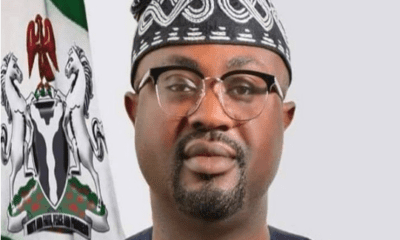
Court Orders Interior Minister Tunji-Ojo to Respond to Suit Seeking Release of His NYSC Records
The Federal High Court in Abuja on Monday ordered the Minister of Interior, Olubunmi Tunji-Ojo, to respond to a suit seeking to compel the release of records of his National Youth Service Corps (NYSC) scheme.
Justice Salim Ibrahim gave the order when the matter came up for hearing.
The Incorporated Trustees of Pathway to Equity and Charity Foundation had filed the suit, marked FHC/ABJ/CS/1812/2026.
The group prayed the court to compel the NYSC to disclose documents supporting the minister’s claim that he completed the mandatory one-year national service.
The foundation also sought an order of mandamus directing the Federal Capital Territory Administration (FCTA), the 2nd respondent, to produce records showing that the minister did his primary assignment at the FCTA.
When the case was called, counsel to the applicant, Chief Solomon Akuma, SAN, told the court he was ready to proceed with the hearing.
However, Abiola Olaniji, who appeared for the minister, said he had filed an application for Tunji-Ojo to be joined as the 3rd respondent.
Olaniji said the applicant (foundation) had responded with a counter affidavit raising serious issues, to which he needed time to reply.
The lawyer stated that the minister was ready to take part in the proceedings as an interested party.
But Akuma opposed the application, arguing that the minister was not a proper party.
He said the suit only sought an order of mandamus compelling the respondents (NYSC and FCTA) to produce documents that are not in the minister’s custody.
Justice Ibrahim directed the minister to file and serve his reply to the applicant’s counter affidavit, which opposed his application to be joined as a party in the suit before the next hearing date.
The judge then adjourned the matter until Oct. 18 for hearing.
The applicant had sought from the NYSC the mobilisation or call-up letter issued to Tunji-Ojo in 2006 or any other year; the posting letter to the FCTA in 2006 or any other year; and his application for mobilisation.
It also sought the evidence of approval of his remobilisation by the NYSC’s Director-General; evidence of payment of allowances to him; the record of his Community Development Service and his discharge certificate.
The foundation equally sought from the FCTA, the mobilisation or call-up letter, the posting letter, his attendance record during the service year, evidence of any allowance paid to him, among others.
It said the application was brought under Section 14 of the Federal High Court Act, Order 34 Rules 1, 2 and 5 of the Federal High Court (Civil Procedure) Rules 2019.
It also cited Sections 20, 21 and 25 of the Freedom of Information (FOI) Act, 2011.
(NAN)

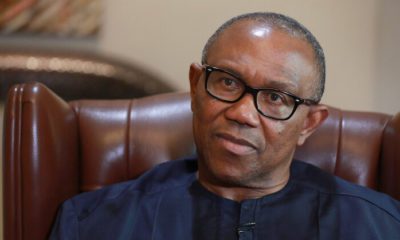
The presidential candidate of the Nigeria Democratic Congress, Peter Obi, has advised Nigerians residing in the United Kingdom to stop sending money to people who seek financial help at home.
Obi also advised them to urge their relatives to vote for productive leaders.
He made the remarks at a town hall meeting with diaspora supporters in Manchester, United Kingdom, on Sunday.
He stressed that Nigeria’s prevailing economic hardship resulted from bad leadership, arguing that continuous financial assistance only cushions the effects of poor governance without addressing the root causes.
“You have people at home in Nigeria today who are begging you for money. Tell them no!” he said.
The former Anambra State governor insisted that his record in public office distinguished him from other governors, claiming none of them matched his achievements in saving public funds.
“I’m not saying I’m a saint, but I saved money. I’ve not seen one governor who has saved 10 per cent of what I saved. No governor has done it.
“Let’s start with this one that is less corrupt. That’s how other countries change.”
He maintained that his conversations with the people reinforced the need for collective responsibility, stressing that building a new Nigeria would require citizens to take an active role in addressing challenges facing the country.
Obi also urged Nigerians to take the 2027 election seriously, describing the contest as a critical moment for the nation.
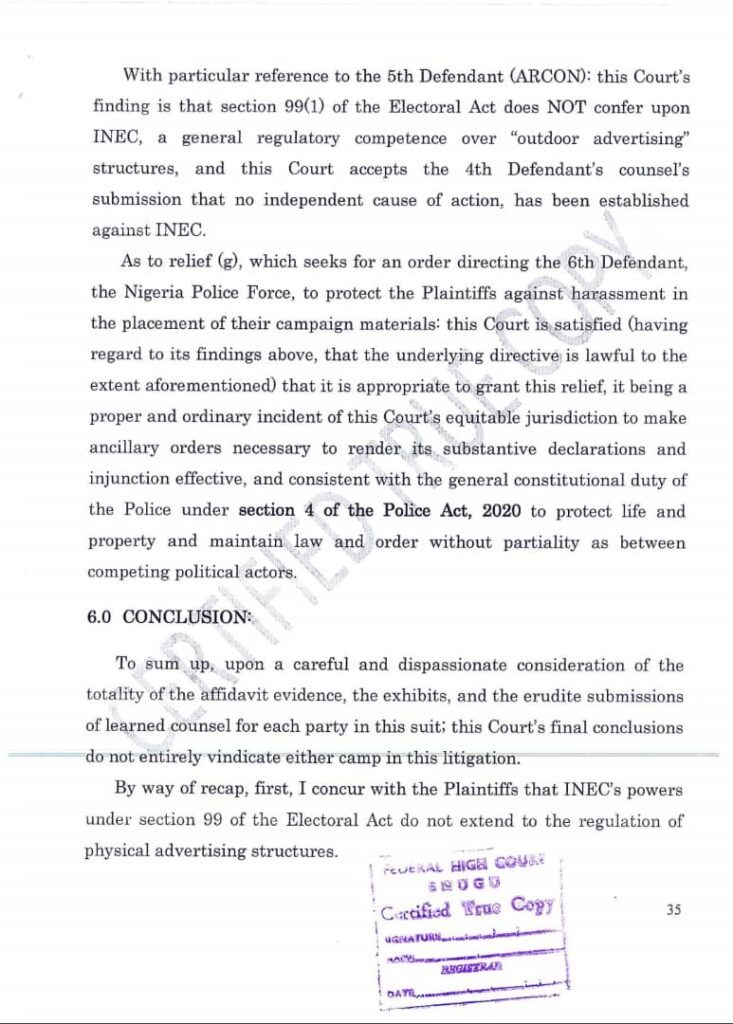
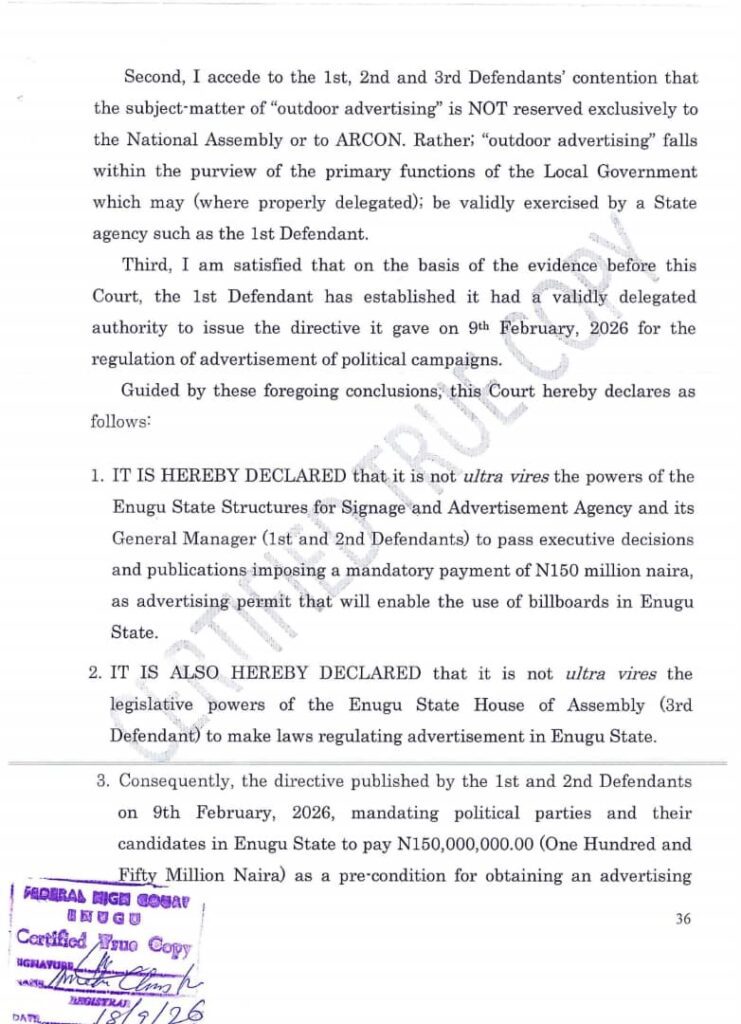
Contrary to false and misleading reports on social media that a Federal High Court (FHC) sitting in Abuja had nullified the N150 million fee prescribed by the Enugu State Structures for Signage and Advertisement Agency (ENSSAA) for political campaign billboards, findings have revealed that the court actually ruled in favour of the agency, upholding its powers to prescribe the fee.
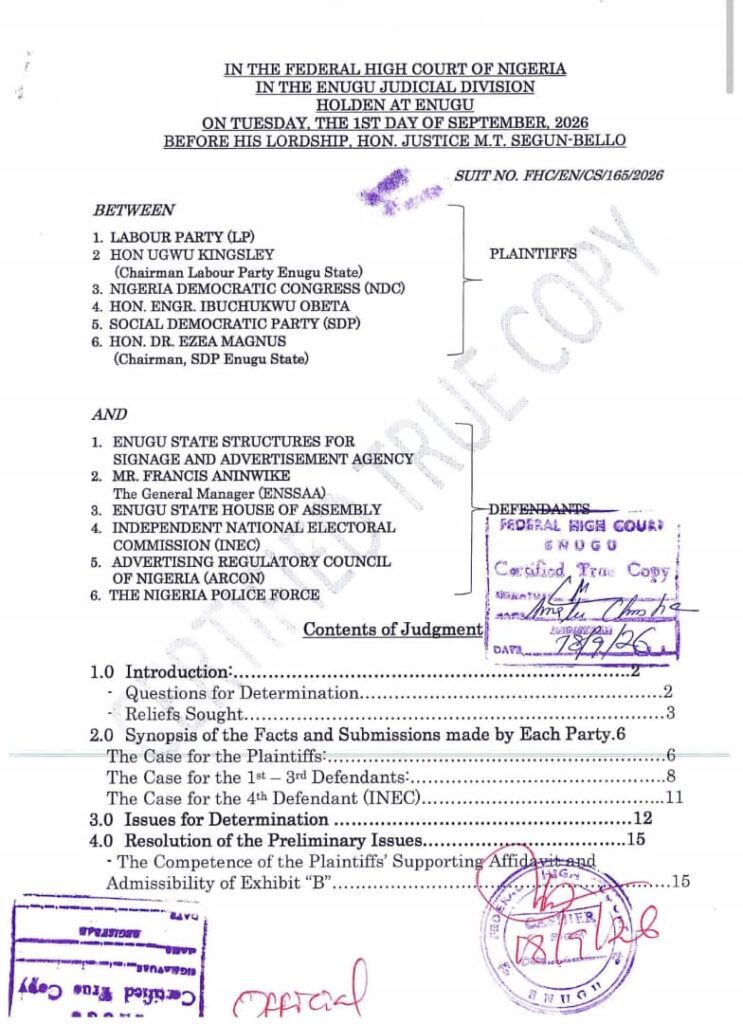
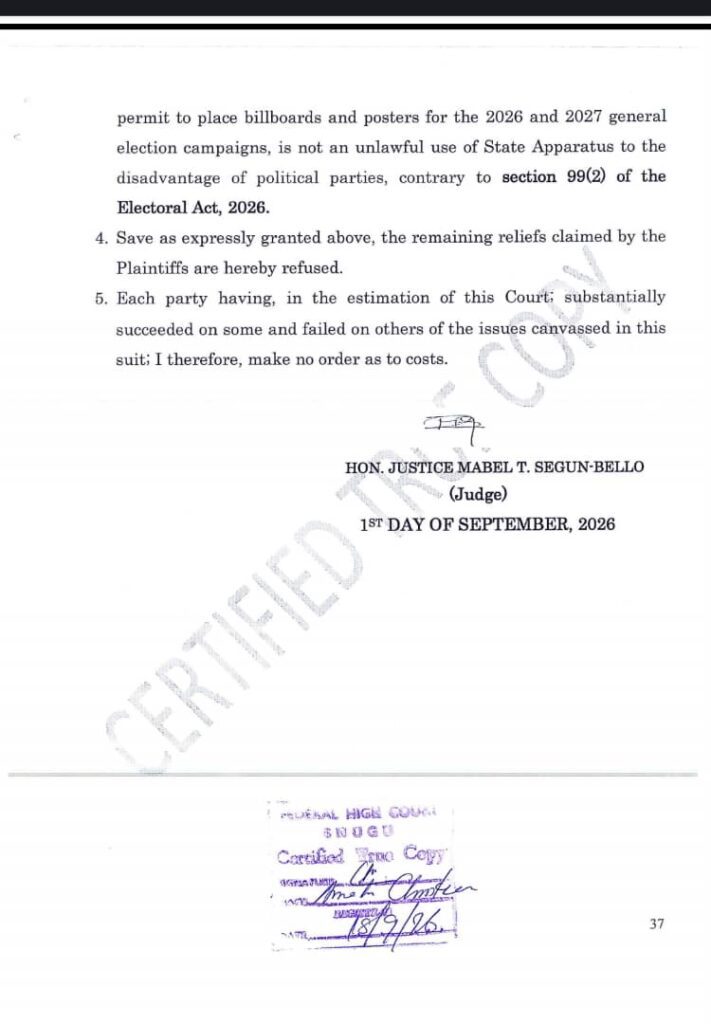
According to a certified true copy (CTC) of a judgment of FHC sitting in Enugu, the court had on September 1, 2026, dismissed a suit by opposition parties and figures challenging ENSSAA’s authority to impose a mandatory N150 million fee on each political party seeking to erect campaign billboards or display posters ahead of the 2027 general election.
The judgment rendered by Justice Mabel Segun-Bello held that it was within the legislative competence of the Enugu State House of Assembly to make laws on outdoor advertising and for ENSSAA to exercise powers donated to it by state law.
The suit marked FHC/EN/CS/165/2026 had the Labour Party; Chairman of the Labour Party (LP) in Enugu, Hon. Kingsley Ugwu; Nigeria Democratic Congress (NDC); NDC factional state Chairman, Engr. Ibuchukwu Obetta; the Social Democratic Party (SDP) and its state Chairman, Hon. Magnus Ezea, as plaintiffs, while ENSSAA; its General Manager, Mr. Francis Aninwike; the Enugu State House of Assembly; Independent National Electoral Commission (INEC); Advertising Regulatory Council of Nigeria (ARCON); and Nigeria Police Force were the respondents or defendants.
The plaintiffs had in June 2026 approached the court seeking a declaration that, by virtue of Sections 99 (1) and (2) of the Electoral Act, 2026, and Section 153 of the 1999 Constitution, which donated exclusive powers to INEC to regulate electoral campaigns of political parties in Nigeria, it was ultra vires the powers of ENSSAA and its General Manager to make executive decisions and publications imposing a mandatory payment of N150 million by political parties and their candidates in the state as an advertisement permit fee for the placement of billboards for the council election and the 2027 election.
They equally sought a declaration by the court that it was unlawful and ultra vires the legislative powers of the Enugu State House of Assembly to make laws regulating the advertisement of political campaigns in the state.
Consequently, the plaintiffs sought an order of the court setting aside the mandatory N150 million fee, as well as an injunction restraining the agency and its GM, the Enugu State Government, its agents and representatives from enforcing ENSSAA’s executive directive.
They finally sought an order of the court mandating the Nigeria Police Force to protect political parties in Enugu State against possible harassment for the placement of billboards and posters for the council election and the 2027 elections.
However, delivering her judgment in September, after a careful consideration of the totality of the affidavit evidence, the exhibits, and submissions by both parties, the presiding judge, Justice Mabel Segun-Bello, held, among other things, that the National Assembly does not hold exclusive legislative powers over outdoor advertising.
“I accede to the 1st, 2nd and 3rd Defendants’ contention that the subject matter of ‘outdoor advertising’ is NOT reserved exclusively to the National Assembly or to ARCON.
“Rather, ‘outdoor advertising’ falls within the purview of the primary functions of the Local Government, which may (where properly delegated) be validly exercised by a State agency such as the 1st Defendant (ENSSAA).
“Third, I am satisfied that on the basis of the evidence before this Court, the 1st Defendant has established it had a validly delegated authority to issue the directive it gave on 9th February, 2026, for the regulation of advertisement of political campaigns,” she stated.
Guided by these foregoing conclusions, Justice Segun-Bello held that “it is not ultra vires the powers of the Enugu State Structures for Signage and Advertisement Agency and its General Manager (1st and 2nd Defendants) to pass executive decisions and publications imposing a mandatory payment of N150 million naira, as advertising permit that will enable the use of billboards in Enugu State.”
Continuing, she said, “It is also hereby declared that it is not ultra vires the legislative powers of the Enugu State House of Assembly (3rd Defendant) to make laws regulating advertisement in Enugu State.
“Consequently, the directive published by the 1st and 2nd Defendants on 9th February, 2026, mandating political parties and their candidates in Enugu State to pay N150,000,000.00 (One Hundred and Fifty Million Naira) as a pre-condition for obtaining an advertising permit to place billboards and posters for the 2026 and 2027 general election campaigns, is not an unlawful use of State Apparatus to the disadvantage of political parties, contrary to Section 99(2) of the Electoral Act, 2026.
“Save as expressly granted above, the remaining reliefs claimed by the Plaintiffs are hereby refused.”
Meanwhile, the Enugu State Government says that unlike the practice in most states, the N150 million fee is for each political party, not for candidates, as misrepresented on social media and by some commentators.
The Secretary to the State Government, Prof. Chidiebere Onyia, made the clarification recently while fielding questions from Government House correspondents in Enugu, adding that there was no court judgment on the fee by any FHC in Abuja, as falsely circulated.
In a related development, finding show that the Abia State Structures for Signage and Advertising Agency (ABSSAA) prescribed feea for candidates ranging from N20 million for State House of Assembly candidates to N200 million for presidential candidates.
Imo State fees range from N3.55 million for each House of Representatives candidate to N55 million for each governorship candidate, while the permit fees range from N300,000 for local council candidates to N150 million for presidential candidates.
The campaign permit fee ranges from N100,000 for each councillorship candidate to N50 million for each presidential candidate, while Kwara State fixed its fees at N2 million for each House of Assembly candidate and N100 million for presidential candidates.
The Certified True Copy of the Court Judgement :
-
 Faith2 days ago
Awka Anglican Diocese Rejects Ibezim’s Suspension, Threatens to Leave Church of Nigeria
-
News2 days ago
BREAKING: Mbah Extends Enugu Movement Restriction to 10pm, Scraps Keke Ticketing
-
News11 hours ago
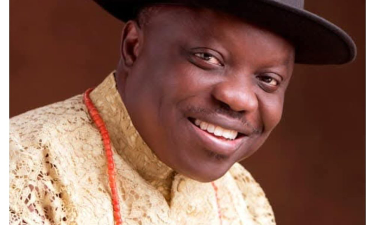
JUST IN: Former Delta Governor, Uduaghan, dies
-
Politics2 days ago
Nigeria’s Weak Opposition and the Cost of One-Party Dominance: Can the Opposition Rebuild Before 2027?
-
News2 days ago
2027: Keke Riders Endorse Mbah, Tinubu
-
News1 day ago
Catholic priest dies as crucifix falls on him during Mass
-
News1 day ago
Corruption turning Nigerian Courts to ‘market stalls’ — Retired Justice Augie
-
News10 hours ago
Federal High Court Upholds ENSSAA’s N150m Political Campaign Billboard Fee, CTC Reveals