News
How coupists killed my father as governor and visiting Head of State, Ironsi — Donald, Fajuyi’s eldest son


Tell us about the Adekunle Fajuyi family.
The Colonel Adekule Fajuyi family consisted of my late father, his now late wife, and his six children namely myself Donald; my late brother, Dayo; my late sister, Dupe; Desola; Solape and Francisca.

What childhood experiences with your dad do you still remember?
I have lots of memories of him. I was an only child in the family up to a stage. My memories of him are evergreen. He built the character I have today. I don’t know whether it was his military training, but my dad was somebody, who would lay down the ground rules, if you contravened them, you would be punished. If you did anything wrong, own up quickly, if it was a mistake, it would be seen to be a mistake. He would never condone pretense or lies. When he wanted to punish you, he would ask you to go and get the cane, it must be of the correct length and thickness. He gave me corporal punishment when he wanted me to remember the incident. So many instances but let me tell you one. It was at Enugu, I was maybe five going to six years of age. I had a white boy; he was the son of an officer. We used to play around in the barracks. The barracks was safe. Nigeria was safe then, six-year- old could roam all over the place and nothing would happen to them. We were just playing around when we saw a pile of beer bottles, it must have been a thousand bottles or so, we didn’t know, we were little children, and we were fascinated by the piles. I do not remember who fired the first shot whether myself or my friend, but somebody threw a stone, and a bottle exploded and we liked that sound. So we started until we demolished the whole pile. It was fun, we enjoyed ourselves. We pretended to be throwing grenades. My father had already returned from work when I got home. As soon as I entered, he said, ‘Donald, where are you coming from?’ I said ‘oh, from all over the place’. He queried, “What did you do?’ I said, ‘We had fun’. He asked me to tell him what we did specifically, and then I told him, ‘Well, we saw a pile of bottles somewhere, then we smashed everything’. I did not know that the owner saw us, recognized us, and went home to my dad to report. My dad said, ‘So you didn’t know that somebody put those bottles there. Next time, when you see something like that, you should know’. He told me to go and get my cane and gave me six strokes of the cane I never forget. Till today, I never forget that you don’t touch or damage other people’s things.
How and why was he killed?

Everything is in the news. My dad never believed that the military should stay long in governance. His firm belief was that once the military corrected whatever they wanted to correct, try whoever had to be tried, they would restore democracy. What we gathered later was that some core Northern officers were discontent that most of the victims of the January 1966 coup were Northerners, whether it was a deliberate act or whether it was by accident, I do not know. But that was their belief. The second coup in July 1966 was a kind of revenge coup in which Southern officers removed all top officials and officers of the North like Sardauna of Sokoto, Tafawa Balewa who were killed during the first coup. What we were made to understand was that they did not want Aguiyi Ironsi as Head of State.
Aguiyi Ironsi was touring Nigeria, he had toured the East, and he had toured the North. He now toured the West and wanted to settle the Western Region crisis at that time; to put a stamp of approval on what the military governor was doing to quell all those uprisings at the time. He met with the Council of Chiefs at the Secretariat, Ibadan. He came by helicopter from Lagos to Ibadan. They had a full-day session. In the evening, when he wanted to go back to Lagos, somehow, the helicopter developed a fault. It did not start. They radioed to Lagos to send another helicopter. It was then Fajuyi said that as the Head of State, Ibadan was his jurisdiction and persuaded him to sleep overnight, finish his business the following day, and then the issue of returning to Lagos would be addressed. Ironsi bought the idea and that was how he slept over in Ibadan. But a group of soldiers, led by Theophilus Danjuma, struck in Ibadan that night and captured Ironsi. Fajuyi insisted he should be taken along with the Head of State wherever he was to be taken.
We learned that coupists had gone to wait for Ironsi at the helicopter pad at Dodan Barracks in Lagos that night, by the time they waited till 10 pm and the helicopter did not arrive, they deducted that he was sleeping over in Ibadan and since they had already launched the coup, they decided to go to Ibadan to arrest him.
I think it was the insinuation of maybe he knew about the incident or that he had hands in it that made Fajuyi insist that wherever the people were taking Ironsi to, he had to go with them because he had to clear himself that he was not party to it.
We were now able to piece together the story of what happened after Ironsi and Fajuyi were taken away from the Government House.
Although Danjuma said in his book that their mission was not to kill, that he regretted the killing, that he was not a party to it, and that after Ironsi and Fajuyi had been arrested, he was supposed to take them to a location which he did not know, but that he did not go with them. It was the junior ranks that drove Fajuyi and Ironsi towards Lalupon. Lalupon is a satellite village in Ibadan, not too far, they got to a point, where the men asked where they were going and what they would do with Ironsi and Fajuyi. They took Ironsi to the bush, shot him, dug a shallow grave, put his body there, and covered him. They left in their vehicle. After a few metres, they stopped. Then they began to argue among themselves what they would do with Fajuyi. It was at that point that one of them grabbed his gun, corked it, and shot him in the chest. That was how Fajuyi was killed.
How much of his growing up period do you know and what were some of the positions he occupied?
It is only that most of his mates are now dead. If he were alive today, he would be about 97, or 98 years. He died at 40 about 60 years ago. There was one Pa Akerele who died three or four years ago, I just stumbled on the man when I went to serve a tenant with a quit notice in his house. One of Pa Akerele’s children contracted me to serve the notice. It was then the old man came out and when I introduced myself, he was excited to find out I was Adekunle Fajuyi’s son. He told me that my dad was his very good friend. He sat me down and began to tell me stories about my late father. When they were young, according to Pa Akerele, Adekunle was a sportsman. He said my dad was very good in all sports they engaged in – that he was a good long-distance runner and a good wrestler. In those days, Okesa boys would go and challenge Ijigbo or Odo Ado or Irona boys to a wrestling tournament..
How did he become governor?
I was in my final year at Christ’s School, Ado Ekiti. He came home for Christmas; we had spent the Christmas period when all of a sudden, on January 26 or something close to that in 1966, he got a message to report back to base. He had just returned from Congo, so he had to report to Army Headquarters in Lagos. The adventure he went through driving from Ado Ekiti to Lagos is another story. But on getting to the meeting room in Lagos, Gen. Aguiyi Ironsi had assumed power as the Head of State and he appointed military governors for regions. Lt Col. Fajuyi for the Western Region, Lt Col. David Ejoor for the Midwest, Lt Col. Hassan Katsina for the North and Lt Col Odumegwu Ojukwu for the East. That time, he was putting up a building at Textile Road, Ado Ekiti, but when he was made governor, he sent a message home that they should stop the project since he had become a public figure. He did not want any insinuation that he was using public funds to a build private residence. That was how the building was stopped at that foundation level. It was the estate that completed the building later. In fact, it took over 30 years; before I completed the top part of the building. That was part of my dad’s legacies, which unfortunately we overlook today and has been the reason for so much corruption in the country.
The West had just come out of what was known as ‘Wetie e period’ when he became governor. The Western Region had exploded into an orgy of violence arising from political differences. That was what triggered the military coup because the army said if they did not contain it, it was likely to spread to other parts of the country. The soldiers added other things such as corruption etc.
When my dad became governor, he swung into action and took many measures that endeared him to the people. Whenever he gave you any work to do, he would make sure he supervised it. He was very frugal with funds, there was no ostentatiousness about him. It was after his death that we knew the depth of the love people had for him. Wherever I went people were saying ‘Fajuyi, Fajuyi’. He was a great man.
The love must have translated into goodies for the Fajuyi family…
But I must tell you I have grouses. Apart from my being made a commissioner, which I have the late General Oladipo Diya to thank, only two people remembered the Fajuyi family. One, Asiwaju Bola Tinubu. That is why I am partial to him. I am not a politician, he is the one who came to Ado Ekiti, and saw the old house. This is not the building my father built, he built the house before I was born. It had four rooms upstairs, and four rooms downstairs, which was ‘ile olowo’ in the 1940s. But Tinubu came here, said it was not befitting for their hero, and rebuilt it. Asiwaju did that and the Fajuyi family are eternally grateful to him. The other person who had done anything for the Fajuyis is Otunba Adeniyi Adebayo. I think it was during the 37th anniversary or something around that, they did a remembrance for Fajuyi at Premier Hotel, Ibadan involving the five South-West states. According to Otunba Adebayo, only Ekiti State paid the full N5m that each state was supposed to pool for that remembrance.
Over the years, governments would be spending millions on remembering Fajuyi, nobody remembers the family. Not one kobo. So, when the state government(s) budget(s) millions to remember Fajuyi, and the money is spent, the money goes into people’s pockets; some people collect it, and they provide services, provide goods, but nobody remembers the family. Only Niyi Adebayo, that particular year… He told me that after the ceremony, they had N1m left, and because it was a committee of the states, he told other states, “Gentlemen, we have spent so much money, nobody remembers the family, I will give this N1m to the family on our behalf”. That is the whole money we have ever received from anybody.
People do things and make so much money from Fajuyi’s story, but nobody remembers the family. Fajuyi died alongside Ironsi. Ojukwu’s wife was made minister, and Ironsi’s son was made ambassador. Nobody from the Fajuyi family has been appointed anything at the federal level there. Awa l’okan (it’s our turn). Is it that we are not qualified? I am not happy. Fajuyi has been short-changed, and the family has been short-changed.
What is your impression of the Ekiti Elders’ Hall of Fame which your late dad was inducted into recently?
I am so happy, I am so proud that after all these years, we are talking about 60 years and Fajuyi is still being remembered and honoured. At this rate, he will still be remembered up to a hundred years. There are some people you will go to and talk to about Fajuyi and they will be so interested, there are some when you mention Fajuyi, who will say no, you will know that such people do not sink with the ideals of Fajuyi and what he stood for. I earlier mentioned his legacies of honesty, integrity, and loyalty. There are many Nigerians who do not value all these. All they are after is themselves. Ekiti State Governor Biodun Oyebanji said during the staging of a play titled, “Fajuyi” as part of activities for his one year in office that Fajuyi’s ideals are what Ekiti stands for and these are what he wants to enshrine – truthfulness, loyalty etc.
How did you receive the news?
I was in my final year at Christ’s School. We were in school, I was in the dormitory, and my father had given me a shortwave radio, so I was always listening to BBC. It was on BBC that I heard that there was a coup in Nigeria that the Head of State and the Western Region Governor had been kidnapped and taken to an unknown destination. I was in school, I could not go out. The following morning was a Saturday, I was doing compound work when I got a message to report to the Waiting Room of the dormitory. I got there and I met members of my extended family – my uncles, about six of them. I welcomed them, they all greeted me and they asked hope nothing, I said ‘I am okay’. They did not tell me anything; they said they only came to check on me. They had heard of the incident. Meanwhile, my mother, who was that night attending a marriage party in Ado here when the news broke that the governor had been kidnapped, left the party and rushed back to Ibadan. That Fajuyi was kidnapped was all I heard until I took my exam.
With my mental and psychological conviction, I knew that Fajuyi was well-loved by his men, I was convinced that any soldier under him would fight for him, they would not want to do him harm, I had that belief that nothing was wrong. I believed that all the kidnapping thing was the soldiers doing their thing, maybe he was holed up somewhere. I had resumed higher school when they discovered and exhumed the bodies. My uncle, Theophilus Fajuyi, had gone to identify Adekunle’s body. A letter was written by the new Head of State, Yakubu Gowon, to the family stating that they were sorry to inform us that the body of our late husband and father had been discovered and so on. I read it and of course, tears came out upon confirmation that he was dead. Arrangement was made for the funeral which was done later. They were kidnapped in July 1966, what I have just told you happened sometime later. All that time, they were looking for them. My mother wrote so many letters to the federal and regional governments. My mother wa worried about all the people. I remember when Gowon, after his retirement, was touring to pray for Nigeria, he came to Ekiti State. I was a commissioner (for Commerce) then, and we were lined up with Colonel Inuwa Bawa as our governor at the stadium. When the governor introduced me, Gowon stopped and looked at me and asked, ‘Donald, are you the one who was writing letters to me at that time?’ I said ‘yes’. He remembered that we were writing letters worrying them about the whereabouts of my father.
Can you recall when the name opened doors for you?
I just told you of the outpouring of love after he had died! Where did I not find favour? I would board public transport from Ayetoro (Ogun State) to Abeokuta, Abeokuta to Ibadan, and Ibadan to Ado, I always had somebody to pay for me on recognizing I was Fajuyi’s son. I was getting favour because of the name even in London when I was registering at the London School of Accountancy. Favour was always following me around with the name.
Did the name play any part in your being appointed commissioner in Ekiti State?
It was General Oladipo Diya, who was Chief of General Staff, who remembered me after the creation of Ekiti State. I was in Lagos, there was a boy from Ekiti here who was a friend of Diya’s younger brother. According to him, General Diya, who fondly called the boy, Ekiti came home one day and asked him whether Fajuyi’s son (me) was still around and the boy said yes. He said the boy should look for me. The boy located me. So, I went to see Diya in his house, incidentally at Fajuyi Street, Ikeja. He welcomed me and asked about my well-being. I told him I was in my law practice. He asked whether there was anything he could do for me, and I said anything he wanted to do for me. He asked for my CV. The next thing I knew was that Col. Bawa invited me to his office and said that my name was included on the list of the first set of Ekiti commissioners. That was how I became a commissioner. (The PUNCH)










…Says shared prosperity follows
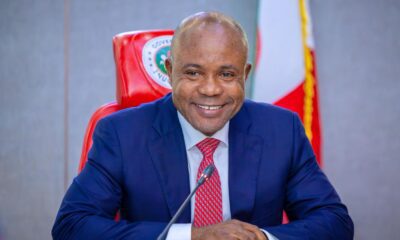
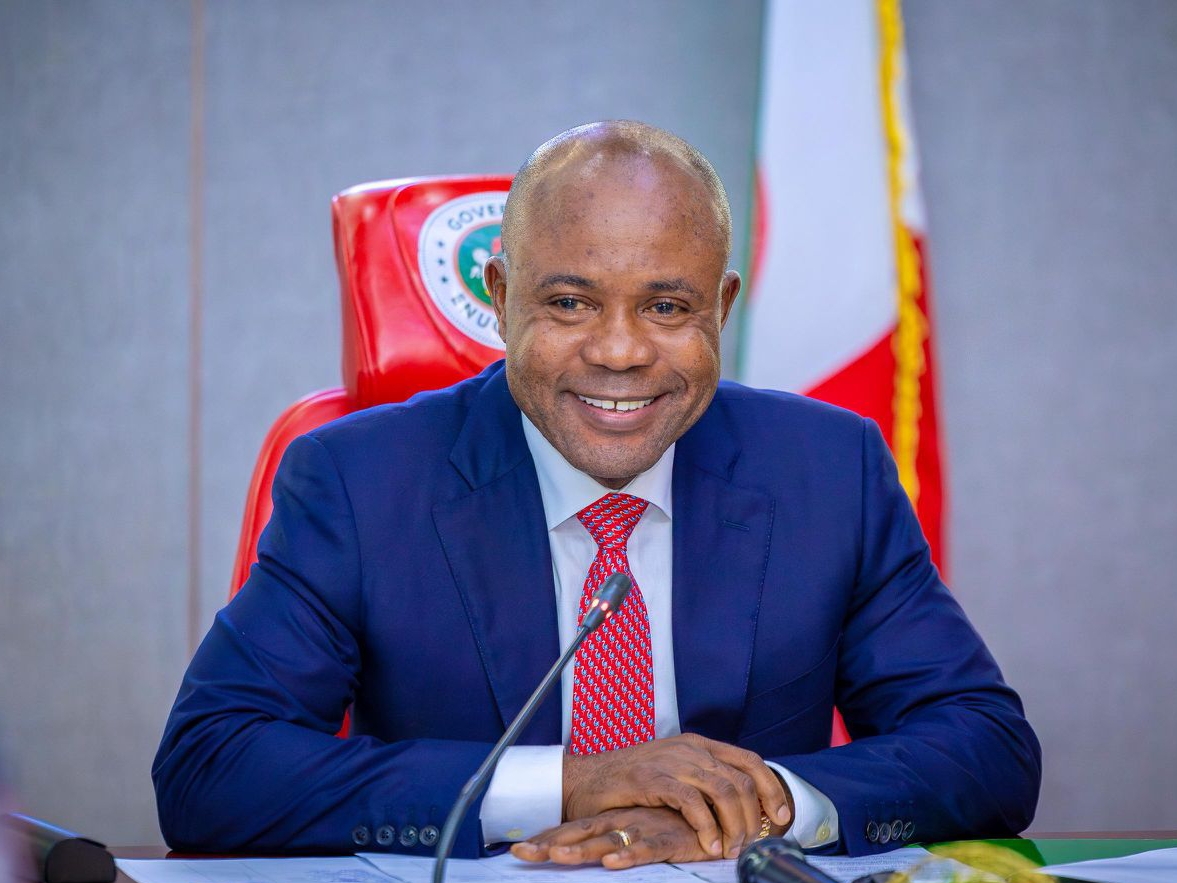
Governor of Enugu State, Dr. Peter Mbah, says Nigeria would have suffered total economic collapse but for President Bola Tinubu’s courageous reforms, arguing that the removal of fuel subsidy and floating of the naira only waited until the President’s assumption of office in 2023 because the nation delayed the ‘evil day’ and lived on borrowed time.
He gave the insights at the weekend during the launch of “As Tinubu Mbah Moves” (ATM), a support group convened by the Minister of Innovation, Science and Technology, Dr. Kingsley Udeh (SAN), and dedicated to the re-election of President Tinubu and Governor Mbah in Enugu.
Speaking to the mammoth crowd, he said, “It would have been a lot easier for any leader to just continue with the status quo and carry on on the basis of business as usual. But for Bola Ahmed Tinubu, it was business unusual that led to the bold initiatives.
“As a person who had played very actively in the oil and gas sector, I had written quite a lot of features and articles arguing against the fuel subsidy regime long before now, for it was clear to me, even from the point of a major player in that sector, that the subsidy regime was not sustainable because of the economic devastation it was causing to us as Nigerians. We were just basically postponing the evil day.
“We were just digging our poverty pits continually. We were actually digging deeper into that pit of poverty. And it would have taken a very courageous leader in his first term to say, ‘Look, if we have to build for the future, if we have to think about our children, then we must take out the subsidy and we must also unify the exchange rate regime.’”
Mbah took a swipe at the foreign exchange regime before the floating of the naira by Tinubu, describing it as a cesspool of corruption.
“We got to a point in this country where even salary earners, once they get paid, would run to the bureau de change to change it rather than hold their salary in naira. Confidence was completely eroded in the naira. Nobody wanted to touch it with the tip of their finger. And that was the recipe for a failed nation.
“If you wanted to do a study or research of any failed nation, it is when the country, the citizens themselves, begin to lose confidence in their currency. And that was the environment that this President inherited.
“It was a major cesspool of corruption. The arbitrage was obvious and people were being taken advantage of. What was happening between the official and the parallel market was terrible. And some people were benefiting from that arbitrage at the expense of the economy. But it took this President’s understanding of the economy to be able to make those bold decisions,” he explained.
Continuing, he said that the stabilisation of the nation’s macroeconomic indicators by the Tinubu administration had encouraged Foreign Direct Investments (FDIs) necessary for improving Nigeria’s microeconomic indices, such as household incomes and employment.
“This essentially is something that is largely driven by private capital. But government enables it by policies because I can tell you that private capital does not go to where you do not have stability.
“If your macro indicators are under pressure; if you have not addressed your foreign reserve, your foreign exchange regime, your inflationary rates, and all that, you do not have any chance of attracting private capital because private capital is blind. It is not emotional. It goes to where it makes return on investment, where it can be guaranteed some high level of security.
“Because we did not have all those before now, private capital was not coming. So, what the bold policies and initiatives this President took have done is that those macro pressures have largely been eased. And what you are now witnessing in our economy is a growth trajectory.
“So, private capital is now looking towards our country. You can see quite a number of FDI deals being closed – not MoA (Memorandum of Agreement) or MoU (Memorandum of Understanding). These are final investment decisions being made across different sectors, particularly in the oil and gas sector. You can see billions of dollars coming towards this direction today.
“People who have dollars are now going back to exchange their dollars because that confidence has been restored.
“So, now that we have stabilised our macro indicators, we have now started witnessing growth, albeit not to the level we aspire.
“The next thing is going to be shared prosperity because you are going to see that growth cascade. You are going to see it get to the households. You are going to see it create employment. So, our unemployed youths would be gainfully employed. That is the way it works,” he explained.
Citing Enugu State as an example, Mbah also credited the President with freeing funds that could have been sunk into subsidy, thus arming states with resources to embark on massive development projects that impact the lives of the people.
The Governor, therefore, urged Nigerians to vote en masse for the President to complete the job he started, saying it was the only realistic option.
“Nations are not built by abandoning challenges halfway through. If we have gone through this whole process of difficult periods when it appeared as if all was doomed to a point where we are beginning to see the light at the end of the tunnel, we cannot abandon what has been started. No great sailor abandons his ship because of a rough sea, mid-sea. You have to sail to get to your destination,” he said.
He urged ATM members to take the message of the successes of Tinubu’s reforms and the President’s various infrastructural and policy interventions in the South East to the electorate.
Meanwhile, Dr. Udeh (SAN) said the support group would focus its mobilisation efforts on non-members of the All Progressives Congress (APC) across the 4,145 polling units of Enugu State ahead of the 2027 general elections, deploying technology to register members, track their participation and monitor its mobilisation activities through an online registration portal.

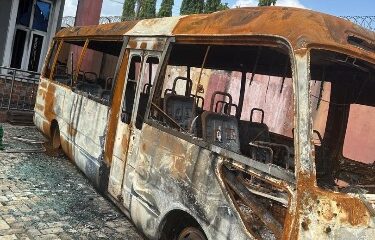
The convoy of former Kano State Governor and former presidential candidate, Senator Rabiu Musa Kwankwaso, was reportedly attacked by suspected political thugs in Bichi Local Government Area of Kano State on Sunday, leaving several vehicles damaged and some members of his entourage injured.
The incident reportedly occurred as Kwankwaso and his supporters were leaving the area after touring several local government areas as part of their political engagements across the state.
The spokesperson for the Kano State governorship candidate of the Nigeria Democratic Congress, Comrade Aminu Abdussalam Gwarzo, Ibrahim Garba Shuaibu, confirmed the attack in an interview with Arewa Update.
A media aide to Kwankwaso, Saifullahi Hassan, also drew attention to the incident in a Facebook post.
Shuaibu disclosed that the delegation had visited Tofa, Rimin Gado, Kabo, Gwarzo and Shanono local government areas before arriving in Bichi, where they held a political meeting despite an earlier disturbance.
He alleged that the attackers struck as the delegation was preparing to leave, emerging from a location to assault vehicles conveying members of the entourage.
According to him, between six and seven vehicles had their windscreens smashed, while some members of the convoy sustained injuries.
“Senator Kwankwaso told us to enter the town without fear or retreat. When we arrived, there was a sign of disturbance and stone-throwing, but we held our meeting peacefully,” Shuaibu said.
He added: “It was on our way out that some people emerged from a location and started attacking our vehicles, smashing windscreens.”
Despite the incident, Shuaibu insisted that the group would not abandon its political activities, saying the attack would not weaken their resolve.
He described the incident as an indication of fear among their political opponents and reaffirmed the group’s commitment to its political objectives.
As of the time of filing this report, the Kano State Police Command had yet to issue an official statement on the alleged attack.
The state chapter of the All Progressives Congress (APC) had also not reacted to the incident.
Bandits have killed a Senior Special Assistant (SSA) to Zamfara State Governor, Dauda Lawal, in Kaura Namoda town, Zamfara State.
The governor’s aide, Hon. Nasiru Sani Kaura, was reportedly shot dead when the bandits attacked the Low cost area of Kaura Namoda in the early hours of Sunday.
Residents said the attackers stormed the neighbourhood while Muslims were observing the early morning Subh (Fajr) prayer, shooting sporadically and forcing people to flee for safety.
Nasiru, a grassroots politician and community leader, was reportedly killed during the attack.
His death has triggered grief in Kaura Namoda and other parts of the state, with sympathisers describing his killing as a great loss to the community.
His funeral prayer was subsequently observed in accordance with Islamic rites.
The killing has also renewed concerns over the security situation in Kaura Namoda and other parts of Zamfara North, where communities have continued to experience bandit attacks, killings and abductions.
Residents have called on the state government and security agencies to intensify efforts to protect lives and property, particularly in residential communities.
In a separate development, the Zamfara State Police Command said it had rescued 19 kidnapped victims, comprising women and children, after 22 days in bandits’ captivity.
The victims were abducted from Tungar Haki Village, through Wanke, in Gusau Local Government Area, and taken to a bandits’ hideout around Kungurmi Village.
The police said the victims were rescued on Saturday, November 14, at about 10am during a coordinated operation involving operatives of the Anti-Kidnapping Unit, police personnel attached to Government House, operatives of the Department of State Services (DSS) and local hunters.
The operation followed credible intelligence on the whereabouts of the victims.
A statement issued by the Police Public Relations Officer, DSP Yazid Abubakar, said all 19 victims were found unharmed and had since been reunited with their families.
The Commissioner of Police, Ahmad Muhammad Bello, commended the joint security team for their courage, professionalism and collaboration, which led to the successful rescue.
He reaffirmed the command’s commitment to combating kidnapping and other criminal activities, while urging residents to provide security agencies with timely and credible information.
The two incidents came amid persistent security challenges in Zamfara, particularly in communities in the northern part of the state, where banditry has continued to threaten residents and disrupt normal activities.
-
 News2 days ago
UNN Party Horror: ‘I Woke Up At 9pm To Find My Friends Lying Lifeless’ – Survivor
-
News1 day ago
Police Arrest Three, Including Governor’s Wife’s Orderly, Over Her Unauthorised Departure from Kano Government House
-
News3 days ago
Angry Nigerians Confront INEC Chairman’s Convoy In UK Protest
-
News1 day ago
Kano Governor’s Second Wife, Zainab Kwankwaso, Files for Divorce, Offers to Refund Dowry
-
Politics2 days ago
Obi Defies Lagos Attack, Vows To Campaign Across Every Part Of State As Reps, Police Launch Probe
-
News12 hours ago
10 Killed or Missing, 2,000 Displaced as Communal Clash Destroys 150 Houses in Anambra – NEMA
-
News2 days ago
Archbishop Ibezim Withdraws Lawsuit Against Primate Ndukuba, Dean Enyindah, Signals Move Towards Reconciliation
-
News2 days ago
MACBAN Commends Mbah’s Inclusive Leadership, Urges Calm Over Alleged Killing of 62 Cattle in Enugu