News
CSU: Why Supreme Court can’t accept Atiku’s fresh evidence — Tinubu


Tinubu argued among others, that the Supreme Court could no longer, at this stage, assume trial jurisdiction in the case since the 180 days allocated for the hearing of election petition has lapsed.
He added that not only are the said new evidence strange to the proceedings having not been presented by the trial court, Atiku and the Peoples Democratic Party (PDP), who were joint petitioners at the Presidential Election Petition Court (PEPC), did not challenge the outcome of the last presidential election on ground of forgery before the PEPC.

Also, the Majority Leader of the Senate, Opeyemi Bamidele noted the Atiku and the PDP never pleaded, before the PEPC, any document or deposition from the CSU in support of the their fourth ground, which spoke about Tinubu’s alleged non-qualification.
Bamidele said if they had done so, Tinubu would have had the opportunity to respond appropriately, including raising the discrepancies in Atiku’s credentials.
These are contained in the counter affidavit and written address filed by Tinubu, through his team of lawyers, led by Chief Wole Olanipekun (SAN) in response to the application by Atiku and his party seeking the permission of the Supreme Court introduce fresh evidence in their appeal.

Atiku and the PDP had appealed the September 6 judgment of the PEPC, dismissing their petition, challenging Tinubu’s victory at the February 25 presidential election.
Tinubu, in the written address, argued that the Supreme Court cannot accept the written deposition of the Registrar of the CSU, who was not a witness before the the PEPC and whose written statement was not activated through oral evidence as required under Section 41(1) of the First Schedule to the Electoral Act 2022.
“The mode of oral examination is provided for in paragraph 41(3) of the First Schedule to the Electoral Act, to wit: adoption of written deposition.
“Where a written deposition is not activated by oral examination of the deponent before the court, same will not be acted upon by a court.
“It is not in doubt that the deponent of the deposition sought to be introduced as additional evidence was not orally examined at the lower court.
“The appellant has not made a case for the court to override the provision of Paragraph 41(1) of the First Schedule to the Electoral Act or referred to any law permitting the use of the deposition outside the confines of Paragraph 41(1) of the 1st Schedule.
“Appellants are attempting the impossible – thus, they have not stated whether the evidence is documentary or oral evidence because it fits into neither.
He also argued that the Supreme Court no longer has the power to assume trial jurisdiction on the petition by Atiku and the PDP because the 180 days allowed by the Constitution for the hearing of election petion lapsed on September 17 in respect of this petition.
“In the circumstance, this honourable court is without the vires to consider the said deposition either as oral or documentary evidence, moreso when same was not considered by the court of first instance within the 180 days timeframe provided by the Constitution of the Federal Republic of Nigeria.
He argued that the case presented by Atiku and the PDP is worse than the situation in the case of Tofowomo v. Ajayi (SC/CV/1526/2022 where the apex court, in a judgment delivered on January 27, 2023, declined to invoke its power under Section 22 of the Supreme Court Act as being sought by Atiku and his party in their latest application.
“The court will note that the above decision presented more valid basis than this application for the Supreme Court’s intervention, because therein, the issues had been raised at the lower court without resolution.
“The situation of this application is worse because, admittedly, it relates to fresh evidence obtained after the judgment of the lower court and the date of the filing of the motion was/is outside 180 days of the filing of the petition.
“Admission of fresh evidence can only proceed from the combined provisions of sections 22 and 33 of the Supreme Court Act.
“The provisions of Order 2 Rule 12(1) of the Rules of this honourable court, pursuant to which appellants’ motion has been brought, circumscribe the receipt of fresh evidence within the circumference of section 33 of the Supreme Court Act.
“Hence, for this honourable court to be able to give effect to Section 33 of the Supreme Court Act, which is the bedrock for Order 2 Rule 12(1), the jurisdiction of the lower court must be alive.
“Unfortunately for the appellants, however, this jurisdiction died as far back as 17th September, 2023, upon the expiration of 180 days from the date of filing of the petition by the appellants.
“In recent times, even in very dire and pathetic situations, this honourable court has been faced with supplications from parties to consider the merit of their actions which was left unattended by the trial court after consideration of threshold issues.
“However, being bound by the provision of section 285(6) of the Constitution , this honourable court has consistently declined.”
Tinubu, who is listed as the 2nd respondent in the appeal, contended that the application by Atiku and the PDP did not satisfy the condition in which the court can accept fresh evidence from the appellants.
“We reiterate that the new document/deposition was neither pleaded nor listed at the lower court. Even in regular civil proceedings, the court will still be required to fall back to originating processes in assessing the extent of its powers.
“Five conditions/requirements must co-exist before this court can grant this type of application, as decided in a host of authorities.
“In summary, the conditions are that: the fresh evidence could aot have been obtained with reasonable diligence at trial; such evidence, if admitted would have important effect on the subject of the appeal; such evidence, er facie, is apparently capable of being believed; such evidence would have influenced the judgment of the lower court in favour of the appellants, had it been available; and if such evidence is admitted, further evidence from the opposing party will not be needed.
“Aside from the fact that there was no pleading whatsoever in the appellants’ petition before the lower court relative to the fresh evidence, which they seek to adduce, may we refer the court to paragraph 14(iii) of the counter affidavit, where the 2nd respondent had reiterated the fact that no issue was joined as between him and the appellants on this purported evidence which they seek to tender.
“This is in addition to the fundamental issue of fair hearing contained in paragraph 14 (iv) to the effect that the respondent will have no opportunity of reacting to this fresh evidence.
“A person who alleges that his right to fair hearing is being or likely to be breached does not need to prove any special damage.
He accused Atiku and his party of deliberately misrepresenting facts before the Supreme Court in relation to their claim that he was not qualified to contest the election.
“In addition to the foregoing, is the misleading posture of the appellants, attempting to mislead the apex court in ths land through Ground 1 of their application, that ‘one of the grounds of the appellants/applicants’ petition before the court below is that the 2nd respondent was not qualified at the time of the election to contest the election as required by section 137(1)(j) of the Constitution of the Federal Republic of Nigeria 1999 (as amended)’, whereas, the only ground (Ground D) of their petition relating to disqualification reads thus: ‘The 2nd respondent was, at the time of the election, not qualified to contest the election.’
“While this application, for whatever it is worth, seeks the equitable jurisdiction of this honourable court, it is obvious that the applicants have not come with clean hands; they have come with a deceitful disposition ex facie (on the face of it).
“This honourable court cannot pay heed to this type of applicants, even if they had had a good cause, owing to their attitude.
Tinubu argued that the Supreme Court can equally not admit the deposition by the CSU’s Registrar and an additional document (marked Exhibits C and D) because the deposition was not made before a court, but in the office of Atiku’s lawyer.
“Exhibits C and D are not admissible in their current form. Starting from page 1 of Exhibits C, it reads: ‘This is the discovery deposition of Caleb Westerberg taken in the above titled cause before Gwendolyn Bedford, a Certified Shorthand Reporter…taken at the offices of Dechert LLP…’
“The purported deposition was made, not before a court, but before a shorthand reporter, in a law office of the 1sz appellant’s (Atiku’s) counsel.
“In essence, the appellants seek to tender as fresh evidence, before the Supreme Court of Nigeria, statements made by a third party by name Caleb Westerberg, in the presence of lawyers and a shorthand reporter , without calling him as a witness. It is at best hearsay, which is of no evidential value in the absence of the alleged deponent, Caleb Westerberg. See section 83 of the Evidence Act.
“While we are not oblivious that the procedure adopted is as prescribed by 28 U.S.C. § 1782 and the Federal Rules of Civil Procedure in the USA, we dare submit that these body of laws do not have extra-territorial application and cannot bind this honourable court, which is by no means of equal or subordinate status to the United States District Court for the Northern District of Illinois or more ridiculously, the law office of 1st appellant’s US counsel, Dechert LLP, where the deposition took place.”
He argued that there is no connection between the appeal and the documents that Atiku and the PDP went to the US to obtain and which they seek to tender before the apex court.
“It is our further submission that in the most unlikely event that this honourable court considers Exhibits C and D admissible, they will be of no utility or affinity to the appellants’ appeal, for several reasons, including the fact that there is no ground of appeal upon which they can be structured, as well as there being no accommodative issue for determination.
“The law is trite that an appeal is not only a continuation of hearing, it is also circumscribed by matters heard and determined at the trial court.
“Thus, the Supreme Court cannot exercise any jurisdiction that the Court of Appeal is incapable of exercising.
“We refer your Lordships to the brief of argument filed by the appellants, and submit that no issue for determination thereof, can accommodate Exhibits C and D, yet, appeals are decided on issues for determination, which must be predicated on the grounds of appeal.
“None of the seven issues for determination presented by the appellants has any proximity to the disqualification of the respondents on the ground of forgery of any certificate whatsoever.
“Equally, there is no relief in the petition, seeking the disqualification of the respondent on the ground of forgery.”
Citing the Supreme Court’s earlier judgment in that case Saraki v. Kotoye (1992) 9 NWLR (Pt. 264) 156 at 188, Tinubu submitted that the latest application by Atiku and the PDP “is meant to harass, irritate and annoy the respondent (Tinubu),” adding that “it is reckless and frivolous, and there is no iota of law supporting it.
“From the foregoing, it is safe to submit that this application is a crass abuse of the processes of this honourable court.
“Arising from the foregoing, we urge the Supreme Court to resolve the sole issue formulated in this address against the appellants/applicants and in favour of the respondent.
“In conclusion, and for the reasons and arguments advanced in this address, we urge the Supreme Court to dismiss this application.”
Bamidele, in the counter affidavit, stated that he only fact Atiku and the PDP pleaded in support of ground (d) of the petition, relating to qualification was where they stated that: “The petitioners aver that the 2nd respondent was, at the time of the election, not qualified to contest the election, not having the constitutional threshold.”
He noted that the ‘deposition on oath from the Chicago State University’, which the appellants are now praying the Supreme Court for permission to supply, “is not one of the documents listed by the appellants as petitioners, in their petition and list of documents accompanying the petition.
“The respondents vehemently objected to the introduction by the petitioners of fresh allegations of forgery of academic certificates and dual citizenship through their reply on diverse grounds, including the fact that they were not pleaded; that there was no ground in the petition to connect them; that they could not bring in those fresh allegations through a reply; that the time for them to introduce new facts had elapsed by statutory and constitutional imperatives.”
He accused Atiku and the PDP of misrepresenting facts in their application
“In ground 1of the appellants’ application, the appellants deliberately set out to mislead this honourable court by stating thus: ‘one of the grounds of the appellants/applicants’ petition before the court below is that the 2nd respondent was not qualified at the time of the election to contest the election as required by section 137(1)(j) of the Constitution of the Federal Republic of Nigeria 1999 (as amended).’
“Based on this gross misrepresentation of the appellants, they approached the US District Court for the deposition which they now pray this honourable court to admit as fresh evidence.
“It is this misleading information that the appellants have been bandying in the press as well as the social media.
Bamidele added that even when the appellants were aware of the documents, they now seek to tender, before the filing of their petition at the PEPC, they chose to wait for the election court to conclude its proceedings before seeking to present them..
“It was only on 2nd of August, 2023, that the 1st appellant commenced his action against the Chicago State University at the U.S. District Court for the Northern District of Illinois – in re: Application of Atiku Abubakar for on Order Directing Discovery from Chicago State University Case No. 23-CV-05099.
“2nd August, 2023, when the appellants commenced their application … is a period of 155 days from the date the 2nd respondent (Tinubu) was announced as winner of the presidential election on 1st March, 2023; 134 days from the date the appellants filed their petition on 21th March, 2023; 40 days from the date the appellants closed their case before the lower court on 23rd June, 2023; and 24 hours after parties adopted their addresses before the lower court on 1st August, 2023.
“180 days from 21th March, 2023, when the appellants filed their petition, expired on 17th September, 2023.
Bamidele stated that the appellants deliberately went silent on the date the commenced their case before the US court because they knew they were acting outside the time allowed by the Electoral Act.
“Throughout the supporting affidavit to the appellants’ motion, they deliberately
Omitted/left out the day they commenced their action against the Chicago State University at the US District Court.
“On 7th September, 2023, a day after the lower court delivered its judgment, the 1st appellant (Atiku) held a press conference, whereat, he described the decision of the lower court as being ‘bereft of substantial justice.’
Bamidele stated that he testified as Tinubu’s second witness before the PEPC and knew that Atiku and his party never raised issue of forgery against Tinubu, which would have afforded him the opportunity to respond.
The Senate Majority Leader stated that if the issue was raised at the lower court, Tinubu would have had the opportunity to demonstrate that it is only Atiku that has discrepancies in his secondary school certificate, which he has failed to explain.
“It is the 1st appellant’s acclaimed Primary School certificate, bearing the name ‘Atiku Kojoli’ and his purported 1965 West African School Certificate and General Certificate of Examination bearing the name “Siddiq Abubakar ‘ (as opposed to the name “Atiku Abubakar”, which he claims to Nigerians and INEC to be his) that are yet to be explained by Jeda Primary School Adamawa (which he claimed to have attended), the University of Cambridge Local Examinations Syndicate, West African Examination Council or such other credible institution with the capacity to so do.
“If the appellant had made a case of forgery in his petition at the lower court, the respondent would have put the appellant’s said alleged West African School Certificate and General Certificate of Examination in issue.
“There are so many allegations against the 1st appellant in the public domain, and to which he has access, but that since the appellants as petitioners before the lower court did not make any iota of allegation against him regarding forgery in their petition, he did not join Issues with them in his reply, as he could only reply to what hey pleaded in their petition.
“There is no singular ground of appeal against the decision of the lower court, touching on its resolution of the issus of forgery, which the appellants attempted to introduce at the lower court, despite not being part of their petition.
“The appellants have also consequently, not formulated any issue in respect of any subject bordering on forgery in their brief of argument filed on 2nd October, 2023.
“The appellants are not praying this honourable court for leave to raise new issue on appeal, either in their notice of appeal or brief of argument.
“It is improper for the appellants to maintain any form of ex-parte correspondence with this honourable court as they confess to have done, without putting other parties, including the 2nd respondent in copy/notice of same.
“The 1 and 3nd respondents (INEC and the APC) were not present at the proceedings in the US and they never had the opportunity of examining or cross-examining the witness whose deposition and record of proceedings, the appellants seek to tender herein.” (The Nation)



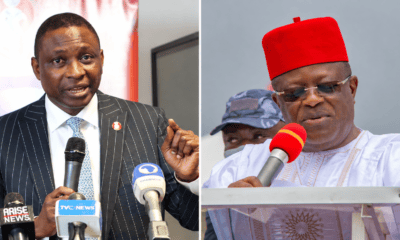









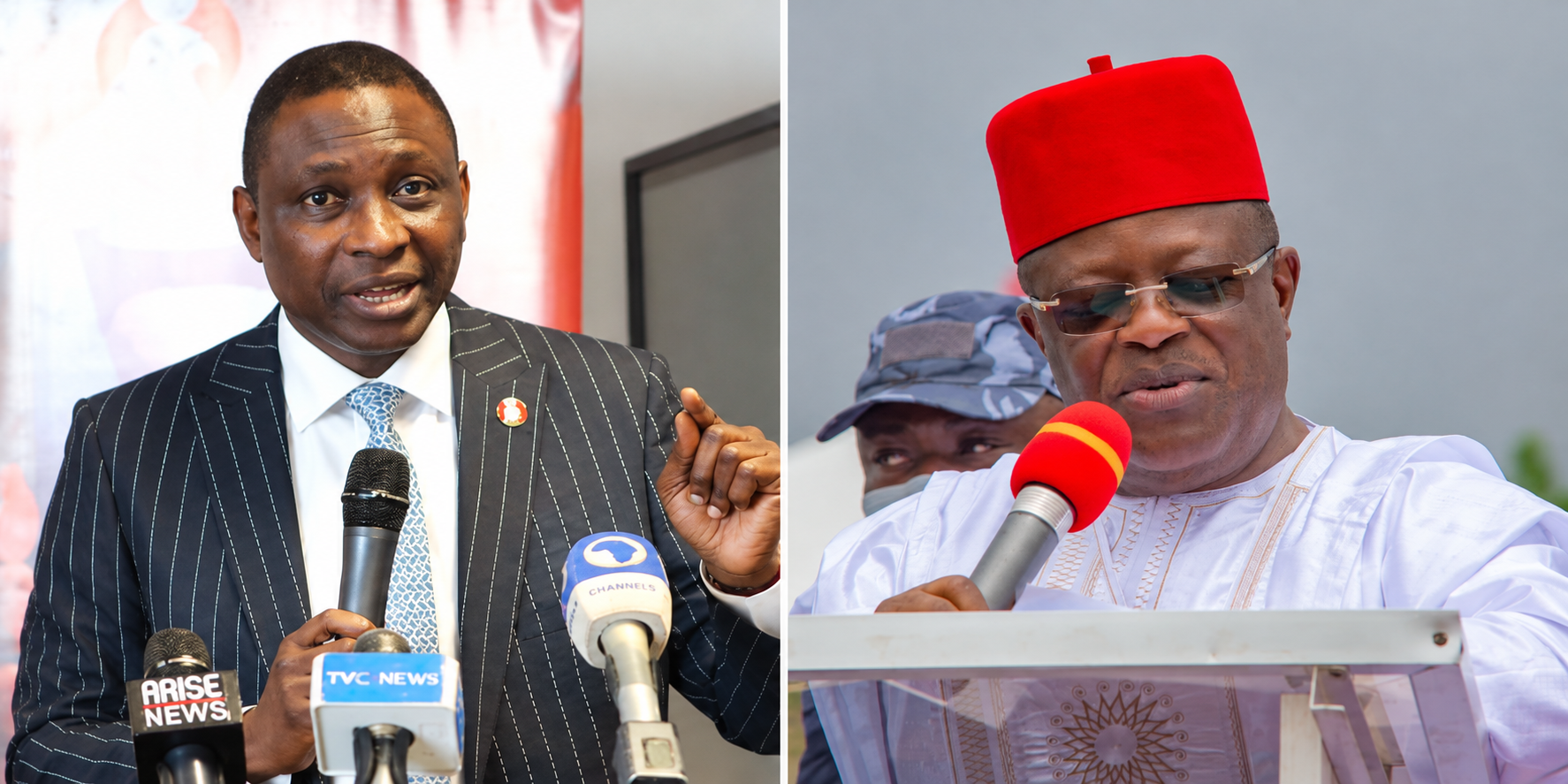
The Minister of Works, Chief David Nweze Umahi, has urged Nigerian journalists to promote democracy and maintain impartiality by avoiding bias towards political parties or candidates ahead of the 2027 general elections.
Umahi, a former Governor of Ebonyi State, gave the charge on Thursday evening while delivering a lecture at the Nigeria Union of Journalists (NUJ), Enugu Correspondents’ Chapel Press Week.
The event was themed, “Strengthening Democracy Through Responsible Journalism: 2027 Polls in Focus.”
Represented by his media aide, Emmanuel Uzor, the minister said journalists should not take sides in the political process or determine which candidate has the best manifesto.
He noted that as the watchdog of society and the Fourth Estate of the Realm, the media must discharge their constitutional responsibilities impartially, without favouring one political party or candidate over others.
While acknowledging the media’s critical role in holding leaders accountable, Umahi cautioned against partisan reporting and urged journalists to remain objective in their coverage of political activities.
“Journalists should not take sides. 2027 is here, and every party and all the candidates are presenting their manifestos. It is not your duty to say that this candidate or that candidate is better,” he said.
He maintained that the media had a responsibility to bridge the gap between leaders and the people, stressing that democracy thrives when journalists discharge their duties professionally.
Umahi, however, observed that journalists often face hostility when they hold those in authority accountable, adding that they are more readily accepted when they engage in praise-singing.
He warned journalists against abandoning their professional responsibilities, urging them to continue serving as a link between the government and the governed.
“You should fill in the gap between the leaders and the led,” he said.
Olukoyede Tasks Media on Anti-Corruption Fight
In his keynote address, titled “The Role of Media and Other Critical Stakeholders in Sustaining the Fight Against Corruption,” the Chairman of the Economic and Financial Crimes Commission (EFCC), Mr Ola Olukoyede, underscored the importance of the media in combating corruption and financial crimes.
Olukoyede, who was represented by the EFCC’s South Zonal Director, Mr Daniel Isei, said the media had continued to play a critical role in promoting good governance and building a better society.
He urged journalists to sustain their efforts in holding public officials and institutions accountable.
According to him, the Nigerian media deserve commendation for their contributions to sanitising society and promoting accountability.
“The media in Nigeria deserve their flowers for the critical roles they play in ensuring good governance and a better society.
“You have been playing your watchdog role, and that is holding the people and institutions accountable,” he said.
The EFCC chairman noted that the importance of the media’s watchdog function was recognised by the framers of the Nigerian Constitution, who assigned the press the responsibility of holding the government accountable to the people.
However, he cautioned journalists against losing focus or allowing cynicism to undermine their anti-corruption reporting.
“In fighting corruption, the media should not amplify public cynicism of the facts,” he warned.
Ani Emphasises Fact-Checking
The Chairman of the occasion, Chief Anthony Ani, SAN, also acknowledged the media’s significant role in society.
Ani urged journalists to verify information thoroughly before publishing or disseminating it to the public, stressing the importance of accuracy and responsible reporting in strengthening democracy.
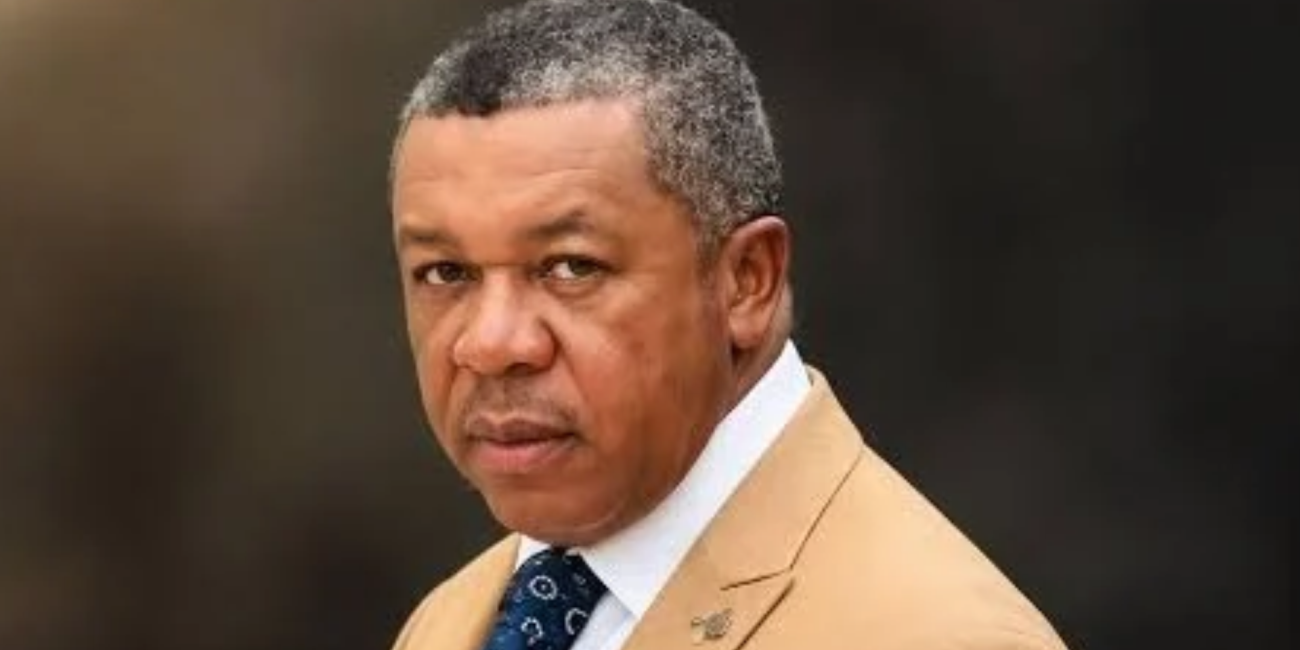
Veteran Nollywood actor Francis Duru has died at the age of 57 following a brief illness, his family has announced.
The family disclosed his death in a statement posted on the actor’s official Instagram page in the early hours of Friday, expressing gratitude to fans, colleagues and well-wishers for their prayers and support.
“We, the family of Francis Duru, regret to announce his passing following a brief illness.
“We appreciate your prayers, love, and understanding. May his soul rest in perfect peace. Amen,” the statement read.
The family did not disclose the nature of the illness or announce funeral arrangements as of the time of filing this report.
Duru’s death comes months after he dismissed reports that he was battling a life-threatening illness. In June, a video showing him looking frail circulated on social media, raising concerns among fans and colleagues.
The actor subsequently released a video on Instagram, describing the footage as “fabricated and malicious” and dismissing the claims about his health.
Early Life and Education
Born Francis Ogide Duru on July 27, 1969, in Cameroon to Nigerian parents from Imo State, the actor spent his formative years in the Central African country, where he completed his primary and secondary education.
He later returned to Nigeria to pursue his university education at the University of Port Harcourt, Rivers State, where he studied Theatre Arts and graduated with a Bachelor of Arts degree in 1996.
His academic background in theatre helped lay the foundation for a career that spanned more than three decades, during which he established himself as one of Nollywood’s recognisable performers.
Rise to Fame in Nollywood
Duru began his acting career in 1989 with Missing Mark, a film directed by the late filmmaker Ndubuisi Oko.
However, his breakthrough came in 1995 when he played Ahanna in Rattlesnake, an action-comedy produced by the late filmmaker Amaka Igwe.
The film became a defining production in the history of Nollywood, and Duru’s performance helped bring him wider recognition among Nigerian audiences.
His portrayal of Ahanna remains one of the roles associated with his rise during the formative years of Nigeria’s home-video film industry.
Over the years, Duru demonstrated his versatility by featuring in films across different genres, including drama, crime, family stories and comedy. He worked alongside several established actors and filmmakers, building a reputation for his ability to interpret diverse roles.
Notable Movies
Throughout his career, Duru featured in numerous Nigerian films and productions. Some of his notable screen credits include:
- Missing Mark (1989)
- Rattlesnake (1995)
- Blood Money (1997)
- Narrow Escape (1999)
- Home in Exile (2010)
- Nnenda (2009)
- Stigma (2013)
- Mortuary Gate (2014)
- Lipstick (2016)
- Who Killed Chief? (2017)
- Merry Men: The Real Yoruba Demons (2018)
- Why Not? (2019)
- The Good Husband (2020)
- Mboputa (2020)
- The Locals (2021)
- Blood Vessel (2023)
- Abigail’s Memoir (2024)
- Ugly Bird (2024)
His extensive filmography reflected his ability to remain relevant across different generations of Nollywood productions, from the industry’s early video-film era to more recent cinematic releases.
Awards and Industry Contributions
Duru received several honours in recognition of his contributions to the Nigerian entertainment industry.
In 2007, he was named a United Nations Ambassador of Peace in recognition of his positive influence on young people.
He was appointed interim president of the Actors Guild of Nigeria (AGN) in 2010, reflecting his involvement in the affairs of the professional body representing Nigerian actors.
In the same year, he received a nomination for Best Actor in a Supporting Role at the Africa Movie Academy Awards.
In 2020, he won the Best Actor in a Leading Role in an Igbo-language film category at the Best of Nollywood Awards for his performance in Mboputa.
Beyond his acting career, Duru was also associated with humanitarian and youth-development initiatives, contributing to efforts aimed at improving the welfare and opportunities available to young people.
Family Life
Duru married his wife, Adokiye, in 2003, and they had four children together.
The family suffered a devastating loss in August 2024 when their son, Ifeanyi, died at the age of 15.
The actor publicly mourned his son at the time, attracting messages of sympathy and support from colleagues, fans and members of the entertainment community.
His death on Friday marks the loss of a veteran performer whose career connected different generations of Nigerian cinema.
With memorable roles in productions such as Rattlesnake, Blood Money and Mboputa, Duru leaves behind a body of work that reflects his contribution to the growth and development of Nollywood over more than three decades.
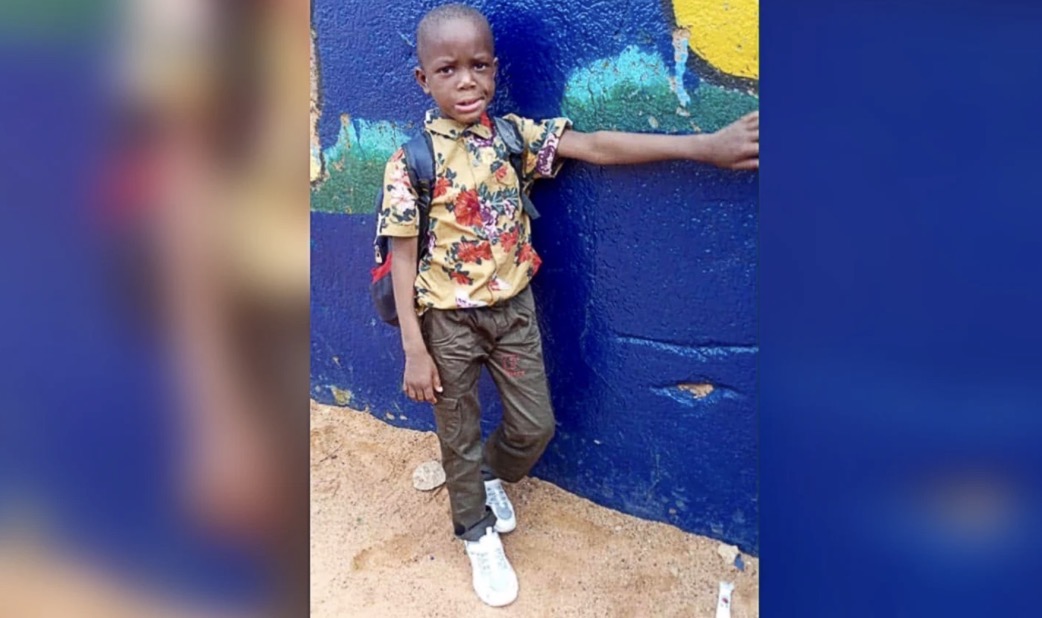
A seven-year-old boy, Abdullahi Rabi’u, has been found dead hours after suspected kidnappers abducted him in the Majema area, along Ring Road in Jos North Local Council of Plateau State and demanded a N2.5million ransom.
The boy was reportedly abducted on Monday evening after being sent on an errand to a neighbour’s house.
Narrating the incident, his uncle, Sukairaj Danladi Me Gado, said Abdullahi delivered the message but failed to return home, prompting the family to search for him.
He said their efforts to locate the boy proved unsuccessful until Tuesday morning, when the family received a call from an unidentified number.
According to him, the caller demanded N2.5million as ransom and informed the family that the boy had been kidnapped.
Me Gado said the family had agreed to pay the ransom in the hope of securing the child’s release.
However, their hopes were shattered later on Tuesday when they learnt that his body had been found in a narrow passage near their residence.
The discovery plunged the family and residents of the neighbourhood into mourning.
The grieving uncle expressed sorrow over the killing and alleged that the perpetrators might be familiar with the neighbourhood.
He called on security agencies to investigate the incident, apprehend those responsible and ensure they were brought to justice.
Efforts to obtain the reaction of the Plateau State Police Command were unsuccessful, as its spokesman, SP Alfred Alabo, did not respond to journalists’ inquiries as of press time. (Guardian)
-
 News3 days ago
FG confirms Ebola case in FCT, identifies 44 contacts
-
Features22 hours ago
Kogi’s Kidnapping Crisis: Why Do Forests Remain Safe Havens for Criminals Under Ododo’s Watch?
-
News2 days ago
“It’s not debatable, we can’t go back,” Mbah Backs Tinubu on Fuel Subsidy Removal
-
News22 hours ago
Kidnappers kill seven-year-old boy after ransom demand
-
News3 days ago
Afenifere leader, Fasoranti, dies at 100
-
News2 days ago
Mbah: Enugu Now Produces 120 Million Litres of Water Daily, Expands Agricultural Investment
-
Politics2 days ago
Mike Igini: Politicians Infiltrate Agencies Responsible for Election Personnel as Electoral Laws Go Unenforced
-
Politics1 hour ago
2027: Atiku, Obi, Duke, Others in Talks on Single Opposition Candidate – Coalition