News
Mining: Enugu committed to supporting genuine investors, sets up environmental remediation, security trust funds


…vows to go after illegal miners, says acts contravene state laws
Following the continuous clampdown on illegal mining activities in the state, the Enugu State government has reiterated its unwavering commitment towards supporting genuine investment activities through the provision of investment enablers for ease of doing business such as adequate security infrastructure, attractive tax regime and road projects.
While disclosing this, weekend, shortly after the State Executive Council Meeting, the Attorney General and Commissioner for Justice, Dr. Kingsley Udeh, said the state had resolved to establish the Environmental Remediation Trust Fund (ERTF) and the State Security Trust Fund (SSTF) where miners legally sanctioned by the government with genuine licenses would contribute an agreed sum of money into the fund for remediation projects that will help to safeguard the environment, ensure that health hazards resulting from the mining activities are mitigated and also enable adequate security of lives and property.

The commissioner, who chided illegal miners for destroying the environment and contaminating people’s sources of living, said the state will stop at nothing in ensuring that all illegal mining sites were shut down and culprits brought to book for their crimes, as their activities contravened the provisions of the state laws.
He further accused them of environmental, economic and security sabotage against the people of the state, adding that those with the desire to invest in mining activities should approach both the federal and the state governments for proper licensing, certification and compliance processes.
“The illegal mining activities are causing huge environmental damage. A lot of our people are exposed to risks associated with water pollution and some of the channels of water now contain carcinogenic elements that are cancerous and exposing our people to ill-health,” he said.

According to him, the state decided to come up with measures, such as the establishment of the ERTF, the SSTF and other collaborative initiatives after receiving the reports of independent assessment on the activities of legal miners, which posed severe threats to the environment and health of the citizens, to cushion the effects of the challenges and to also call the legal or genuine miners to their corporate social responsibilities.
“These legal miners will have to participate in human capital development so that they do not just come and mine in these localities, but also discharge their corporate social responsibility. This will be in the form of collaboration with the state on the establishment of Vocational Training Schools, to train our people to acquire technical skills and develop capacity to work in area of mining and other engineering related works,” the AG added.
Dr. Udeh, while highlighting the revenue generation efforts of the state and its commitment to achieve a zero percent in the poverty headcount, while moving the state economy from $4.4 billion to $30 billion, noted that the miners would have to pay taxes for their truck haulage of tons of coal on the state road, as the deadweight of their trucks damage the roads, stressing that it would help the state to continue to maintain roads and make them accessible for the citizens.
The AG also added that the SSTF would be used to maintain and provide additional security infrastructure for the safety of the investors, miners and the entire Enugu people.



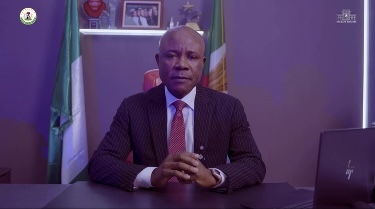
Enugu State Governor, Dr Peter Mbah, has called for a thorough and impartial police investigation into the recent violence surrounding a political gathering in the state, assuring that anyone found responsible will face the law regardless of political affiliation.
Mbah, in an address to the people of Enugu State, expressed concern over reports of violence, particularly a shooting incident that left a citizen injured.
The governor said his immediate concern was the welfare of those injured, residents who experienced fear during the incident, and families affected by the violence.
He assured the victims and affected residents that their safety and well-being remained a priority for his administration.
“I know how much our people value the peace and security we have worked so hard to establish in Enugu. Incidents such as these cause anxiety and deserve our full attention,” the governor said.
Mbah stressed that every citizen, irrespective of political affiliation, must be able to exercise their political rights without fear, intimidation or violence.
He reiterated the state government’s commitment to protecting lives, upholding the law and ensuring that justice was served without favour.
The governor also stated that, in view of the preliminary findings regarding the incident, he expected the police to conduct a comprehensive and impartial investigation to establish the circumstances surrounding the violence and identify those responsible.
According to him, anyone found culpable would be held accountable through the appropriate legal process, irrespective of their political connections.
“The Enugu State Government has made its position clear regarding allegations of involvement in this violence,” Mbah stated, reaffirming his administration’s responsibility to maintain peace and security across the state.
The incident has raised concerns over political tolerance and the safety of citizens participating in political activities in Enugu State.
The governor’s call for an impartial investigation underscores the need for the relevant security agencies to establish the facts surrounding the shooting and ensure that those responsible are brought to justice.
He concluded his address by thanking the people of Enugu State and praying for God’s continued blessings upon the state.
Enugu APC urges NDC to apologise for observing a minute silence
All Progressives Congress (APC) has picked holes in the reaction of the Nigeria Democratic Congress (NDC) to the position of the Enugu State Government on the airport and party secretariat incidents involving the NDC at the weekend.
The party said that “persons and institutions that lay claim to integrity should be able to admit their mistakes, confess their transgressions, and apologise to the people.”
The Enugu NDC had, at a press conference addressed by its State Party Chairman, Emmanuel Chukwujekwu Nebo, in Enugu faulted some of the positions of the Enugu State Government on the weekend incident as were marshalled by the Secretary to the Enugu State Government (SSG), Prof. Chidiebere Onyia, on Sunday.
Principally, the NDC claimed that it had only planned an airport reception for its governorship candidate, Chinyeaka Ohaa, not a ‘Grand Statewide Campaign Flag-off’ at the airport as stated by the government.
The party added that it notified various law enforcement agencies of its plans and made payments to the Federal Airports Authority of Nigeria (FAAN).
On the alleged shooting at NDC’s state secretariat, the party said that the NDC was “still verifying the final medical status of all injured persons.”
However, responding to NDC, the state Publicity Secretary of Enugu State chapter of the APC, Chief Uche Obute, insisted the NDC must tender unreserved apologies to the people of Enugu and Nigerians in general “for lying to them for political gains.”
“The question is: since the NDC was still verifying the final medical status of person or persons injured in their party fracas, how come they declared and observed a minute’s silence to mourn the living?
“The answer is simple: it was true to the factionalised Enugu NDC’s pattern to orchestrate violence among themselves and attribute it to Enugu APC to extract cheap political capital.
“It is also a validation of the commonly held view among the people that the Enugu State NDC and their governorship candidate, Chinyeaka Ohaa, would stop at nothing in their quest for power,” Obute said.
The party’s spokesman equally faulted NDC’s claim that it only planned to hold an airport reception, not a mega rally.
Supporting the party’s position with a screenshot of a Facebook post by NDC’s governorship candidate, Chinyeaka Ohaa, Obute said, “Promotional materials and posts by Ohaa clearly read, ‘Grand Statewide Campaign Flag-off 2026. Date: Saturday, 10th October 2026; Venue: Akanu Ibiam International Airport, Enugu; Time: 9:00am,’” he added.
The party commended the Governor Peter Mbah Administration for upholding the freedom and democratic rights of the good people of Enugu State, irrespective of political affiliation.
“Rather than stoking political tension to undermine the security and peace built by the Mbah Administration, we advise the Enugu opposition parties to present their manifestoes and campaign on them,” he stated.
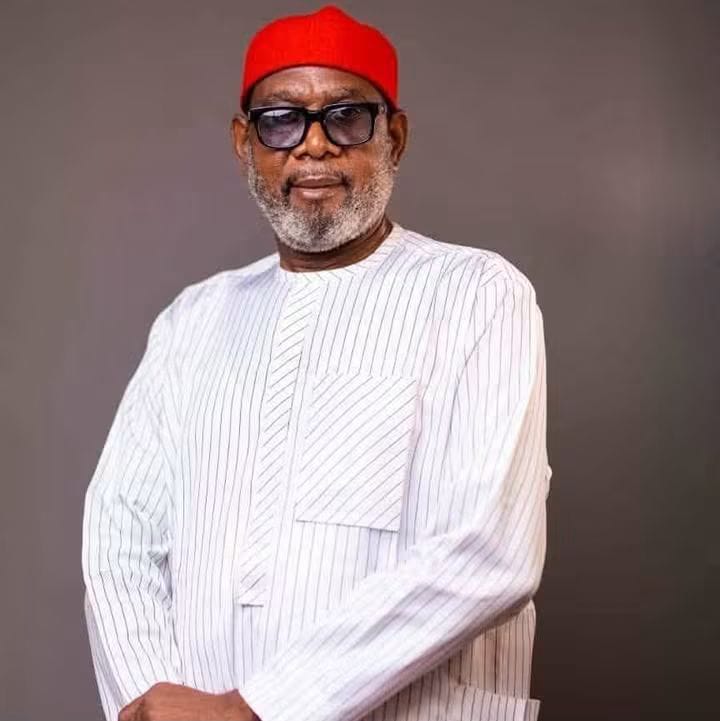
Hon. Chief Barrister Lucky Chukwu, Senior Special Assistant on Public Affairs to Enugu State Governor Peter Mbah, has died
His death was announced in October 2026 by the office of his younger brother, Senator Kelvin Chukwu, who represents Enugu East Senatorial District.
Lucky Chukwu was an elder brother of the late Labour Party senatorial candidate, Oyibo Chukwu, and Senator Kelvin Chukwu, a former member of the Enugu State House of Assembly.
He was appointed Senior Special Assistant on Public Affairs to Governor Mbah in August 2026, having previously been involved in political activities in the state.
Following his elder brother’s death, Senator Kelvin Chukwu suspended his political activities and engagements for one week to mourn the loss.
The senator’s office announced the temporary suspension in a statement issued on October 11, 2026.
The death is another loss for the Chukwu family, which had earlier lost Oyibo Chukwu, who was the Labour Party’s candidate for the Enugu East Senatorial District in the 2023 general election before he was assassinated during the campaign.
Following Oyibo Chukwu’s death, Kelvin Chukwu emerged as the Labour Party’s replacement candidate and went on to win the senatorial election.
-
 News2 days ago
Why UK varsities are cancelling Nigerians’ admission — Report
-
News2 days ago
2027: Enugu Accuses Opposition of Plotting to Import Armed Thugs, Bandits
-
News3 days ago
US asks American business executives to be wary of insecurity, corruption, detention risk in Nigeria
-
News2 days ago
Alleged Magistrate Court Order To Arrest Araraume, Okorocha Is Fake, Non-Existent — Imo First Group
-
News2 days ago
2027: Over 30,000 Enugu Teachers Endorse Mbah, Tinubu, List Welfare, Increased Education Funding
-
News2 days ago
Benue APC Delegation Involved in Ghastly Accident En Route to Rally
-
News2 days ago
Why men with braids, tattoos were banned from mosque, Ogun Chief Imam clarifies
-
News2 days ago
Man stabs wife in Anambra community, kills himself with poison