News
Stay away from partisan politics – Group tells Soyinka

Human Rights Writers Association of Nigeria (HURIWA) has described as disgusting, cheapening of his high reputation and pedestrian, the decision of foremost writer and Nobel laureate, Professor Wole Soyinka, to continuously interject in political issues and to keep dabbling with unsubstantiated claims to support the manipulated result of the February 25th Presidential Election which was awarded to the APC.
HURIWA is worried that at such an advanced stage when he ought to be a statesman, Professor Soyinka is speaking as if he is now the agent hired by the President Bola Ahmed Tinubu to defend the contested election result of the highly manipulated February 25th Presidential Election.

“It is despicable, reprehensible and disrespectful to the massive respect that most young people have about him going by the body of works that he has so far achieved by way of scholarship and literature,” the group stated.
HURIWA condemned the statement credited to the Nobel Laureate that the Labour Party was aware that Obi did not win the February 25 election, dismissing the tendency of Professor Soyinka to continuously engage in unnecessary altercation with his imaginary enemies whom he identified as OBIDIENTS or supporters of the Presidential candidate of the Labour Party in the 2023 poll, Mr. Peter Obi.
Soyinka made the comment while speaking at the 2023 ‘Africa in the World’, which brought together the world’s most innovative thinkers and top leaders to platform invigorating ideas for fresh changes and sustainable solutions for African people.

It started on Tuesday, September 12 and is scheduled to end on Saturday, September 16, 2023 at Stellenbosch, South Africa.
In March, the Nobel Laureate had disagreed with the comment credited to the LP vice-presidential candidate, Datti Baba-Ahmed, shortly after INEC declared President Bola Tinubu as the winner of the election.
In a programme on Channels Television, Baba-Ahmed asked former President Muhammadu Buhari and the then Chief Justice of Nigeria, Justice Kayode Ariwoola, to stay away from the May 29 handover ceremony because of the poor conduct of the election by the Independent National Electoral Commission (INEC).
The party has vowed to take its opposition to the outcome of the election to the Supreme Court following the dismissal of its petition by the presidential election petition tribunal last week.
At Wednesday’s event, Soyinka lamented that the LP leadership had been trying to mobilise young people in the country to protest against the outcome of the election on the “banner of lies and deceit.”
Although the playwright accused the party of taking over the organised labour movement before the election, however, he commended Obi for breaking the dominance of the All Progressives Congress (APC) and the Peoples Democratic Party (PDP).
He said: “This recent election – two things happened first of all. One party took over the labour movement, which is not my favourite movement, and then it became a regional party.
“Whereas it was a marvellous breach into the established two camps, Peter Obi achieved something remarkable there, that he broke that mould. However, he did not win the election.
“I can say categorically that Peter Obi’s party came third not even second and the leadership knew it but they want to do what we call in Yoruba ‘gbajue’, that is a force of lies.
“They were going to send some of the hardliners, proud young people into the street to demonstrate. I’m also ready to be among such demonstrators but only on the banner of truth not on lies, and deceit.
“This party wanted a demonstration to happen on the basis of a lie and we find this vice-presidential candidate on television boasting, insisting, threatening and trying to intimidate both the judiciary and the rest.”
HURIWA speaking against the backdrops of what it tagged highly biased and politically jaundiced position of Soyinka, asked him to respect his age and status and stay away from politics just as the Rights group accused Soyinka of seeking to legitimise the ridiculous and ludicrous judgment of the Presidential election petition tribunal which dismissed the petitions of both the PDP and LP challenging INEC’s return of the APC’ Bola Ahmed Tinubu as the winner of the highly contentious February 25th Presidential Election.
”Is Soyinka happy that we now have a President who does not know the road to both his primary and post primary schools?
“Is it not a shame that Wole Soyinka has become a tribal bigot to an annoying extent that he now wants to turn himself to the Supreme Court of Nigeria by reaching a determination of the appeal before the nation’s apex court by Peter Obi of the Labour party against the Tribunal’s controversial, sold and bought judgment that validated Tinubu as winner of the February 25th Presidential Election.”



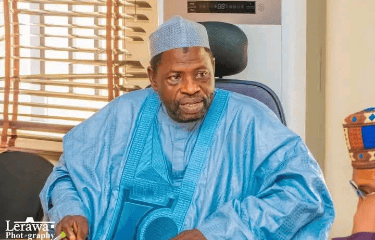






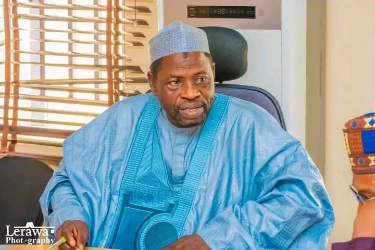
Alhaji Ibrahim Ladan Duguri, the Executive Secretary of the Bauchi State Health Contributory Management Agency (BASHCMA), has lost his life alongside those of four of his children in an accident at Yalwan Duguri in Alkaleri Local Government Area of the State.
Governor Bala Mohammed, who confirmed the tragedy, expressed profound sorrow and deep grief.
The governor described the death of Alhaji Ibrahim Ladan Duguri as a monumental loss to Bauchi, particularly the health sector, “where he distinguished himself through dedication, commitment, and an unwavering passion for improving access to healthcare services for the people”.
In his condolence message signed by his Special Adviser on Media and Publicity, Mukhtar Gidado, the governor equally saddened by the tragic circumstances surrounding the incident and extends his heartfelt sympathy to the immediate family of the deceased, the Duguri Emirate Council, friends, associates, colleagues, and the entire people of Bauchi over the loss.
He also prayed for the full recovery, strength, and comfort of Suleiman, one the deceased’s son who reportedly survived the accident .
Mohammed said, “As Executive Secretary of BASHCMA, the deceased played an important role in advancing the state’s health contributory management system and supporting efforts to make healthcare more accessible to the people, especially the less privileged. His dedication was also evident in his contributions to the state’s medical team during pilgrimage exercises in the Kingdom of Saudi Arabia, where his commitment to the health and well-being of pilgrims was widely valued.
“Beyond his professional accomplishments, Alhaji Ibrahim Ladan Duguri was a close personal friend, and classmate of Governor Bala Mohammed. His death, therefore, represents not only the loss of a valued public servant but also the painful departure of a beloved family member and trusted companion whose life was marked by service, loyalty, and dedication to humanity.”
He acknowledged that no words can adequately express the pain and anguish of the bereaved family at this difficult moment.
Mohammed prayed that Almighty Allah, in His infinite Mercy, would forgive the shortcomings of the deceased, accept their good deeds, and grant Alhaji Ibrahim Ladan Duguri and his beloved children eternal rest in Aljannatul Firdaus.
The governor called on all well-meaning citizens of Bauchi to remember the bereaved family in their prayers and to offer them the necessary compassion, and solidarity during this moment of profound grief.
The funeral prayer for the deceased will be conducted at the palace of the District Head of Yalwan Duguri by 11:00am, on Sunday.
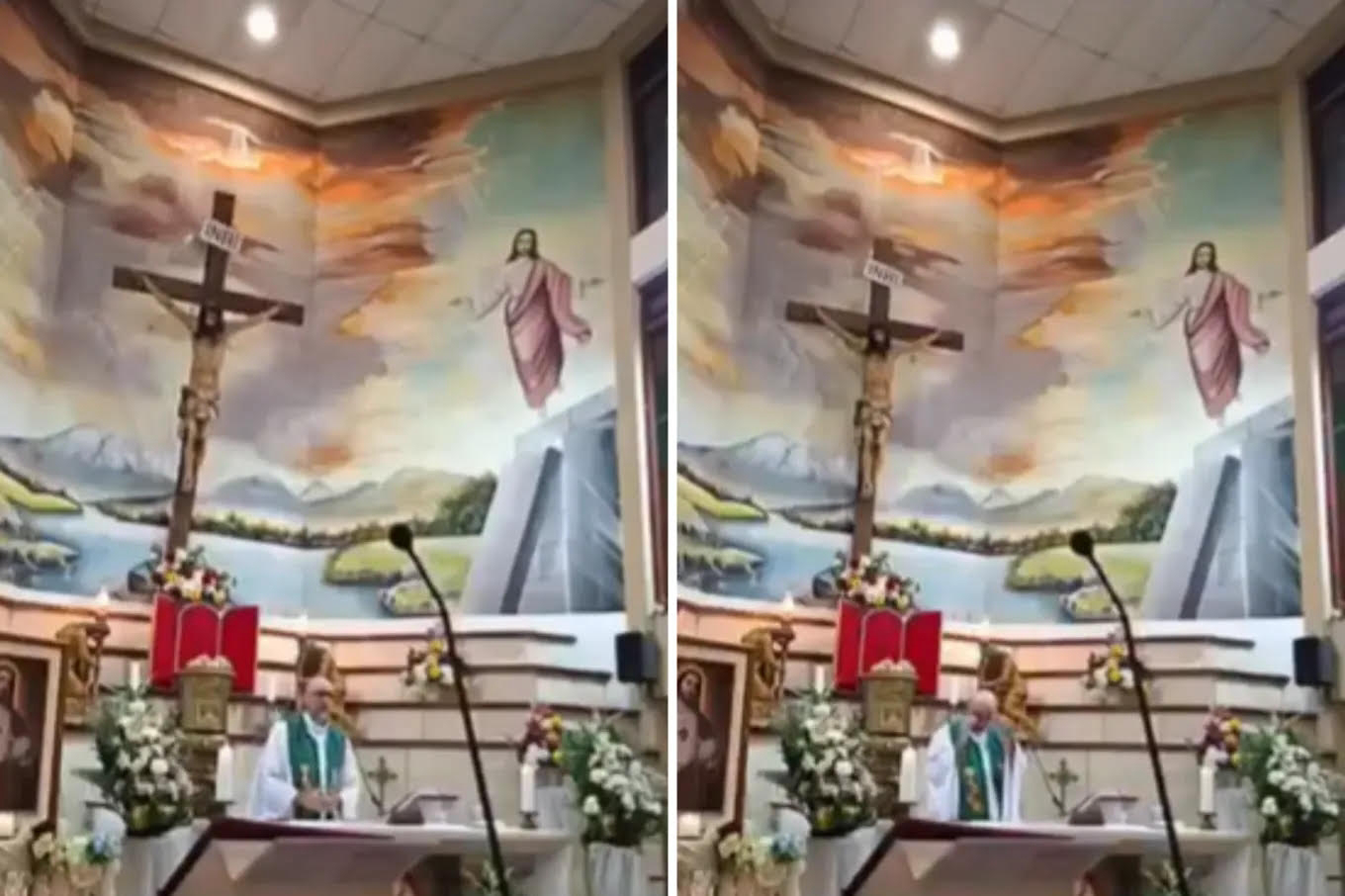
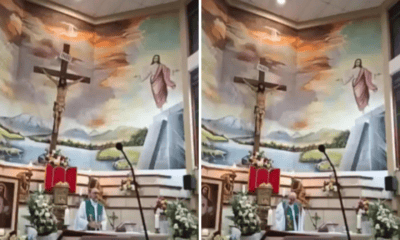
A Catholic priest has died after a crucifix fell on him while he was celebrating Mass in Guayaquil, Ecuador.
The priest, identified as Father Patricio Alfredo Sánchez Molinari, was conducting the service on Saturday when the incident occurred.
The ceremony was being streamed live, with footage of the incident later circulating widely on social media.
Videos showed Molinari addressing worshippers inside the church before the crucifix fell on him, disrupting the religious service.
The Archdiocese of Guayaquil confirmed the priest’s death in a statement published on its social media platforms on Sunday.
The archdiocese said Molinari served as parish priest of Our Lady of Perpetual Help Church in the Central Vicariate.
“We announce that our beloved Fr. Patricio Alfredo Sánchez Molinari, CSsR., who served as parish priest of Our Lady of Perpetual Help Church in the Central Vicariate, has departed for the Father’s House to rejoice in His presence and glory,” the statement read.
The archdiocese prayed for the repose of his soul, saying, “Eternal rest grant unto him, O Lord. And let perpetual light shine upon him. May he rest in peace. Amen.”
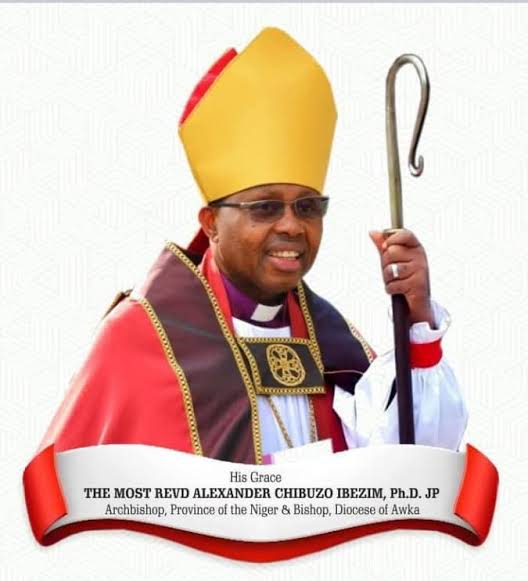
…Insists Archbishop remains in office, warns against interference by Ezeofor
By Tony Edike
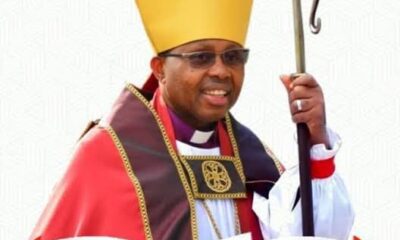
The Diocesan Board of the Diocese of Awka, Anglican Communion, has rejected the six-month compulsory leave imposed on the Archbishop of the Province of the Niger and Bishop of Awka Diocese, Most Rev. Alexander Chibuzo Ibezim, by the Primate of the Church of Nigeria, Most Rev. Henry C. Ndukuba.
The board also rejected the appointment of Bishop Samuel C. Ezeofor as Supervising Bishop of Awka Diocese and Coordinating Bishop of the Province of the Niger, describing the decisions as unlawful, unjustified and contrary to the church’s governing provisions.
The resolutions were contained in a communiqué issued after an emergency meeting of the Diocesan Board held on Friday, October 16, 2026, at the Chapel of Divine Favour, Anglican Village, Ifite Awka, Anambra State.
The meeting deliberated on a letter dated October 13, 2026, issued by Ndukuba directing Ibezim to proceed on six months’ compulsory leave and appointing Ezeofor to oversee the diocese and province during the period.
The board argued that the Primate lacked the constitutional authority to compel Ibezim to proceed on leave or transfer his episcopal responsibilities to another bishop.
It maintained that neither the Constitution and Canons of the Church of Nigeria (Anglican Communion) 2020 nor the Constitution and Regulations of the Diocese of Awka 2023 empowered the Primate to take such action.
According to the communiqué, Section 29(1) of the church’s constitution, which the Primate reportedly cited in his letter, did not authorise the compulsory leave or the appointment of another bishop to assume Ibezim’s duties.
The board further argued that the decision violated Ibezim’s constitutional rights, including the presumption of innocence under Section 36(5) of the 1999 Constitution of Nigeria, as amended, and the right to freedom of thought, conscience and religion under Section 38(1).
Cites pending court cases
The board also faulted the Primate’s decision on the grounds that several cases involving Ibezim and allegations against him were pending before the High Court of Anambra State.
It listed three cases: Suit No. A/Misc. 446/2025, involving Ibezim and the Economic and Financial Crimes Commission; Suit No. A/Misc. 494/2026, involving Ibezim and the Inspector-General of Police and others; and Suit No. A/371/2026, involving Ibezim, Ndukuba and another defendant.
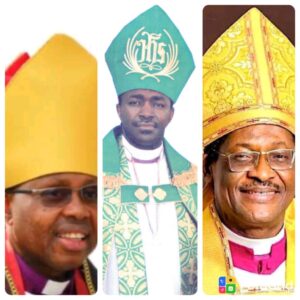
Archbishop Ibezim, Bishop Ezeofor and Primate Ndukuba
The board argued that the matters were sub judice and that the church authorities should refrain from taking actions capable of interfering with the issues before the court.
It further alleged that injunctions granted on September 9, 2025, against the EFCC and Prince Echezona Bonti Onuigbo were renewed by consent of the parties on October 14, 2025.
The communiqué also referred to pending motions seeking to restrain the Primate from issuing suspension letters or taking further steps that could affect Ibezim’s tenure as Archbishop of the Province of the Niger and Bishop of Awka Diocese.
The board maintained that the appointment of a supervising bishop while the legal proceedings remained unresolved amounted to an attempt to pre-empt the outcome of the cases.
Questions inquiry process
The Diocesan Board also challenged the explanation that Ibezim’s compulsory leave was intended to facilitate an impartial inquiry into the affairs of the diocese and promote peace and reconciliation.
It alleged that Ndukuba had previously constituted two panels to investigate allegations against Ibezim but had withheld their reports.
According to the communiqué, the first panel was established through a letter dated August 13, 2025, and headed by Justice Babashola Ogunade, while the second was constituted on June 17, 2026, under the leadership of Archbishop Blessing Enyindah.
The board argued that the failure to release and process the reports violated provisions of the Church of Nigeria’s Constitution and Canons, particularly Sections 75 and 76, which it said prescribe procedures for submitting, considering and ratifying the findings and recommendations of inquiry panels.
It maintained that the reports should be considered by the Episcopal Synod, with the relevant recommendations subjected to the prescribed approvals of the Standing Committee and General Synod.
Reaffirms confidence in Ibezim
Despite the allegations against Ibezim, the board expressed confidence in his leadership and insisted that he remained the duly recognised Bishop of Awka Diocese and Archbishop of the Province of the Niger.
It urged him to continue discharging his episcopal responsibilities, adding that the diocese remained peaceful, united and progressive.
The board also dismissed allegations of financial impropriety against the archbishop, insisting that no diocesan funds had been missing, stolen, misused or misappropriated by him.
It further claimed that neither of the two inquiry panels had indicted Ibezim for financial misconduct.
The board commended the archbishop for what it described as massive infrastructural development in the diocese and urged him not to be distracted by the controversy.
These assertions represent the position of the Diocesan Board as stated in the communiqué.
Warns Ezeofor, threatens withdrawal
The board warned Ezeofor against interfering in the affairs of Awka Diocese, urging him to concentrate on his responsibilities as Bishop of Aguata Diocese.
It cautioned that it would not accept any attempt to destabilise the diocese and threatened to seek legal remedies and involve law enforcement agencies if its warning was ignored.
The communiqué also directed all organs of Awka Diocese to remain loyal to Ibezim and continue their lawful activities, while rejecting what it described as interference or directives from Ezeofor.
It warned that members or diocesan organs that failed to comply with the directive could face appropriate sanctions.
In its strongest warning, the board threatened that Awka Diocese could withdraw from the Church of Nigeria (Anglican Communion) and continue under the Church of England if Ndukuba and Ezeofor persisted in what it described as unlawful interference in the diocese’s affairs.
The communiqué was signed by Sir B.E.I. Nwofor, SAN, Lord Chancellor of the Diocese of Awka; Ven. K.E.N. Chukwukamma, PhD, Synod Secretary; and Mr Eugene Chukwudi Okonkwo, Lay Synod Secretary.
The development marks a further escalation of the leadership dispute within the Anglican Church, with the Diocesan Board openly challenging the Primate’s directive and threatening a possible separation if the disagreement is not resolved.
The Primate and Bishop Ezeofor could not be reached for comments as of the time of filing this report. Their responses will be included in subsequent updates if made available.
-
 Faith2 days ago
BREAKING: Anglican Church Places Archbishop Ibezim on Six-Month Leave, Bars Him From Church Duties
-
News2 days ago
Tinubu Orders Rescue of Kidnap Victims, Demands Peaceful 2027 Elections
-
News2 days ago
Gunmen Abduct Catholic Priest in Benue, Police Launch Rescue Operation
-
News1 day ago
BREAKING: Mbah Extends Enugu Movement Restriction to 10pm, Scraps Keke Ticketing
-
Faith17 hours ago
Awka Anglican Diocese Rejects Ibezim’s Suspension, Threatens to Leave Church of Nigeria
-
News1 day ago
2027: Keke Riders Endorse Mbah, Tinubu
-
Politics15 hours ago
Nigeria’s Weak Opposition and the Cost of One-Party Dominance: Can the Opposition Rebuild Before 2027?
-
News2 days ago
Enugu Approves ₦32bn Legacy Gratuity Payment, Begins Disbursement Next Week