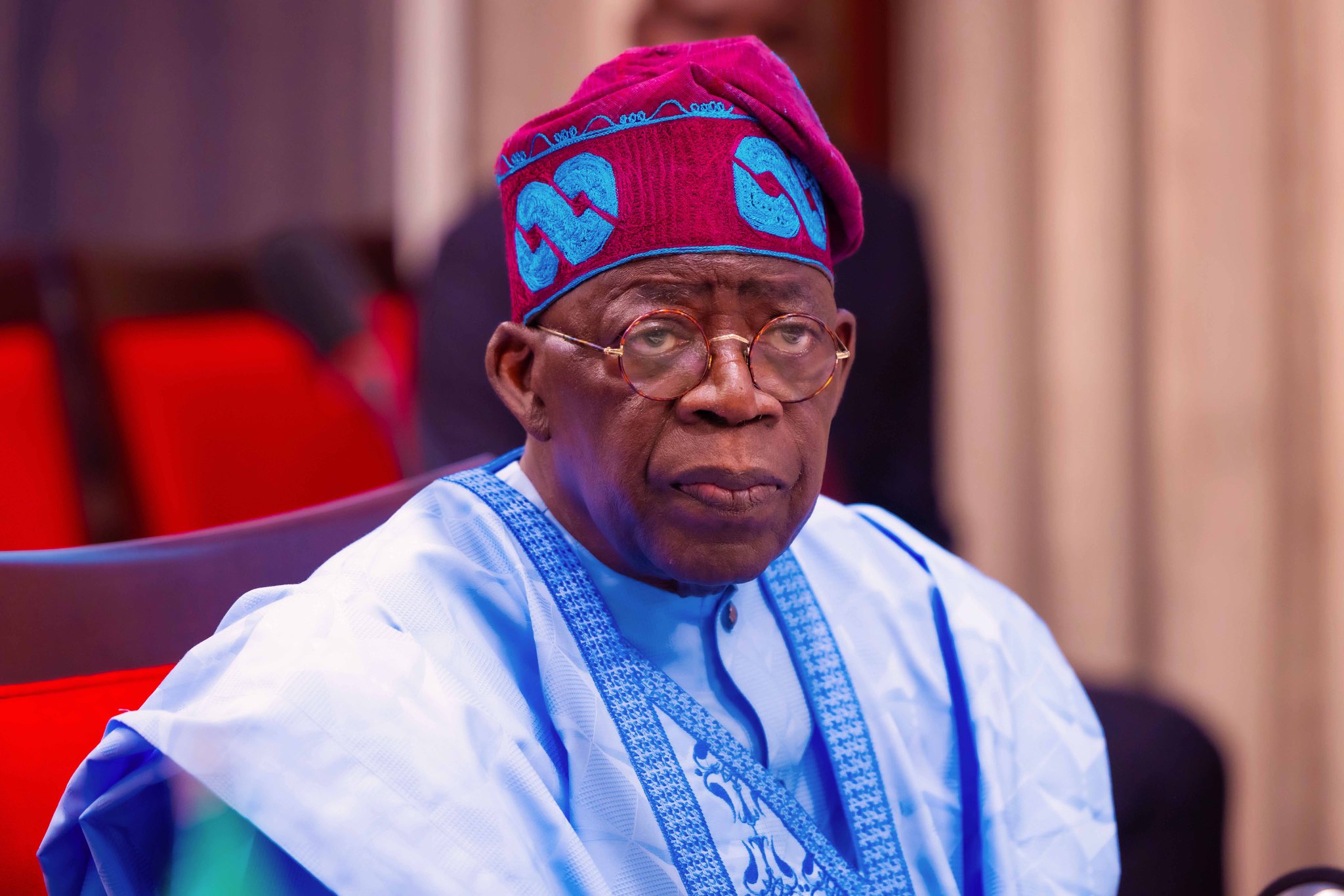
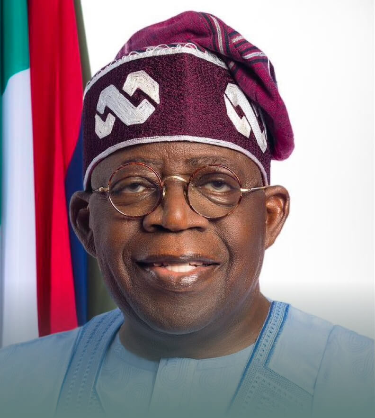
President Bola Tinubu has directed heads of security agencies to rescue all abducted persons and ensure that no terrorist or bandit camp remains anywhere in Nigeria, the Minister of Defence, Gen. Christopher Musa (retd.), said on Thursday.
Musa, who spoke to State House correspondents after a security meeting presided over by the President at the Presidential Villa, Abuja, said Tinubu also asked the service chiefs and other security heads to guarantee a safe environment for Nigerians to vote in the elections scheduled for January.
The minister said the meeting was convened to brief the President on the security situation ahead of the polls, with all heads of security agencies in attendance.
“The directive from the President is: all of us must go all out to fish out and rescue all those that have been abducted, kidnapped, wherever they are.
“There shouldn’t be any camp of any terrorists or bandits anywhere in Nigeria,” he stated.
Musa said Tinubu made it clear that he wanted a free, fair and credible election, and assured political parties that the security forces would not take sides.
Musa stated, “Mr President made it very clear he wants a free, fair and credible election. We must do everything possible to ensure that the country is safe and secure for the citizens to go out and vote.
“We are going to ensure that we give everybody the opportunity to go and serve, so they have nothing to worry about, nothing to be afraid of, and nobody is going to intimidate them for whatever reasons.”
He added that it was “important for all other political parties to understand that the security forces are going to be neutral.”
The minister rejected suggestions that underage persons were being recruited into the armed forces, saying the concern related to the use of children by terrorists.
According to Musa, “There is nobody that is underage that is being brought here. I think the discussion that was made was that the accusation was on the terrorists using underage.
“We know that we don’t have control over what they do, and that’s why we need to understand that we must not allow them to remain wherever they are.”
On efforts to boost the capacity of the security forces, Musa cited increased recruitment, training and procurement.
He said Tinubu would soon inaugurate about 10 newly acquired aircraft and helicopters.
“Mr President is coming to commission a set of new aircraft and helicopters that have been bought.
“I think almost about 10 of them in number, and to show Nigerians that despite the economic issue, the issue of security is on the front burner of Mr President’s view,” he announced.
He pointed to the recent salary increase for members of the armed forces and said improvements for the police, other agencies and pensioners were being addressed.
“Nobody is going to be left behind,” he said.
On August 4, Tinubu approved salary increases of between 30 and 80 per cent for about 250,000 armed forces personnel, effective September 1.
Privates to staff sergeants got the highest rise, at 80 per cent, while officers above the rank of colonel got 30 per cent. The yearly salary bill rose from N660bn to N924bn.
In October 2025, the Defence Ministry said 24 aircraft, including 10 AW109 Trekker attack helicopters and M-346 fighter jets, were being built for Nigeria by Leonardo in Italy, for delivery in four batches.
The minister urged Nigerians to support the security agencies, including by reporting wrongdoing by security personnel.
He argued, “Security is everybody’s responsibility. It’s not only for members of security forces. Everyone has a role to play.
“Whatever you see that is going wrong, even with our members that are not doing what is right, please don’t hesitate to report. Action will be taken.”
The meeting was attended by the National Security Adviser, Nuhu Ribadu; the Minister of Police Affairs, Ibrahim Gaidam; the Minister of State for Defence, Bello Matawalle; and the Special Adviser to the President on Homeland Security, Maj Gen Adeyinka Famadewa (retd.).
Others present were the Chief of Army Staff, Lt Gen Waidi Shaibu; the Chief of Naval Staff, Vice Adm Idi Abbas; the Chief of Air Staff, Air Marshal Sunday Aneke; the Chief of Defence Intelligence, Lt Gen Emmanuel Undiandeye; the Inspector-General of Police, Olatunji Disu; the Director-General of the National Intelligence Agency, Mohammed Mohammed; and the Director-General of the Department of State Services, Adeola Ajayi.
Thursday’s meeting comes 90 days before Nigerians head into the January 2027 general elections, with the presidential poll scheduled for January 16.
Impeccable sources familiar with the discussions held at the meeting told our correspondent that the President ordered the deployment of forest guards in all reclaimed territories from terrorists and bandits, to prevent them from reoccupying areas from where the military had dislodged them.
The sources also said the council discussed the designation of power facilities as critical national assets, following repeated vandalism, and that the President asked for a review of possible restrictions to stem the risk of Ebola entering Nigeria.
One of the sources said the military, by the nature of its operations, clears areas and moves on, often leaving retaken swaths of land open for reoccupation by terrorists.
“The President has directed that we deploy forest guards to hold the grounds that the military has taken. The military does not hold ground. They simply clear the place and move.
“When the military clears the place, these insurgents, they run. And once we take it, we can’t stay there, so they come back.
“The plan now is to deploy forest guards to hold some of these territories,” one high-ranking official stated.
However, the official did not say how many guards would be deployed, in which states, or when.
The Presidential Forest Guards Initiative, coordinated by the Office of the National Security Adviser, was launched in May 2025.
It was conceived in February 2024 after a meeting with state governors, who were asked to recruit between 2,000 and 5,000 guards each.
On December 10, 2025, Tinubu directed the NSA, Nuhu Ribadu, to begin the “immediate training, arming, and deployment of additional forest guards nationwide.”
The President said, “We need all the forces we can utilise.”
On December 27, 2025, more than 7,000 guards graduated after three months of training and were deployed in seven states including Borno, Sokoto, Yobe, Adamawa, Niger, Kwara and Kebbi.
Ribadu described them as a “force multiplier” and said they would “identify hot spots” in forests.
He stated that the Department of State Services and the National Park Service will handle operational coordination.
After the May 15, 2026 abduction of pupils and teachers in Oriire Local Government Area of Oyo State, the Federal Government said Tinubu had approved the recruitment of 1,000 more guards for the state.
In August, the programme grew to 10 states, with over 2,000 more trained in Kaduna, Edo and Kogi, reportedly bringing the total to about 9,000.
On February 19, 2016, the Chief of Defence Staff, Gen Olufemi Oluyede, inaugurated Operation Savannah Shield in Kwara, vowing that forests and ungoverned spaces “will no longer serve as safe havens” for terrorists.
Another official familiar with Thursday’s deliberations said the council discussed attacks on electricity infrastructure.
“Because of the problems of vandalism of power facilities, we are already working to designate it as a critical national asset. It was brought up at the meeting to be designated.
“It has to be designated before we can now take appropriate action on it,” the official said.
On June 24, 2024, Tinubu signed the Critical National Information Infrastructure Order, which listed power generation and distribution among 13 sectors and tasked the NSA with protecting them.
In October 2024, vandalism of the Shiroro–Kaduna line plunged about 17 northern states into darkness.
Tinubu at the time said the government would no longer tolerate sabotage of public utilities and ordered security cover for repair crews.
A third source said the council also reviewed the Ebola outbreak in Central Africa, which he said was rising.
According to the official, “We looked into this Ebola crisis. We have to look at it because it’s rising. Beyond what we’re doing now, the President said we have to look at it and see whatever restrictions we might need to make to safeguard Nigerians. We cannot afford to fold our arms.”
When pressed for specific measures to be taken by the Federal Government, the official declined to speak. (Punch)