

News
The Tragedy Of Kogi State At 32 Years – By J S Okutepa SAN


“Kogi state is the least developed state in Nigeria. The capital city of the state Lokoja is a glorified village. Nothing to show that Lokoja is capital city”, writes the Legal Luminary
By J S Okutepa SAN
Kogi State was created on the 27th of August 1991. That is exactly 32 years ago today. A child born 32 years ago is fully an adult. The same thing Kogi State is now an adult State. It is no longer a new state. But go to that state and weep. It is a state that has the best human and natural resources but the most backwards in terms of physical and human capital developments.

Being old state one expects to see significant developments in all spheres of the state. The reason for creation of state is for development. Kogi state is the least developed state in Nigeria. The capital city of the state Lokoja is a glorified village. Nothing to show that Lokoja is capital city. Everything in the capital Lokoja seem to be in total dilapidation.
No good roads. In fact social amenities in the capacity city are completely non-functional.
No good roads. No infrastructural developments. No significant building to show that Lokoja is different from what it was when it was made the state capital on the 27th August 1991.

The tragedy of Kogi State is that it is the state where the best of the best are from but has been led since the creation by its worst 11. The tragedy of Kogi state is that it is either was led by leadership that was so authoritarian or an adolescent leadership that has no regards for the feelings of the people or leadership that is so distanced from the people.
It is a state where democracy doest not make sense to those who forced themselves on the people. It is a state where dictatorship and despotic show of force are equated with democracy. It is a state where exercising your freedom of choice is taken as act of terrorism.
You can be charged for it and those who have the duties and responsibilities to checkmate despotic tendencies are scared of doing so for their dare lives. It is a state where those whose tomorrow are being destroyed are ready to be used as tools to perpetuate evils against the people. That is the tragedy of Kogi State at 32.
The state has had bad leaders who have no ideas of what good governance entails. That is why over the years the state remains a glorified hamlet/ village. Nothing works in that state. The only thing one sees in abundance in leadership is lack of vision and directions.
Virtually all the leaders that has led that state have had one funny acronyms or the other. Of all the leaders that have led that state, the leadership of Yahaya Bello as governor is the worst. Apart from personal development, Yahaya Bello as Governor has not developed Kogi state. There is nothing good in that State.
The administration of Yahaya Bello has achieved more in impoverishment of Kogi people than all the previous leaders. Salaries are not paid. No new industries. No new roads.
Democracy in Kogi State under Yahaya Bello has been characterized by democratic thuggery and thugs. Leadership has assumed childish behavior in the most extreme in the state.
Lies have been elevated to truth so much so that even the blinds can see that there is no truth in the propaganda of falsehood always dished out to the people.
The tragedy of Kogi State at 32 is that it is a state blessed with abundant human and natural resources but lack decent leadership that has capacity for good governance. That is the tragedy of my state.
It is a state where the elders are virified and insulted by those in power. It is a state where political actors have colonised the state as their estate. It is a state where elders are afraid of those in power because of the propensity of those in power using thugs and thuggery to kill. That is the tragedy of Kogi State.
It is a state where the security agencies have conspired with those in power based on primordial partisan selfish interest to oppress the people. That is the tragedy of Kogi State at 32.
As Kogi State clocks 32 years today, I hope those who are aspiring to lead the state will have the humane dispositions to turn the misfortune of that state to fortune and then harness the natural and material resources of the state for the good of the vast majority of Kogi People.



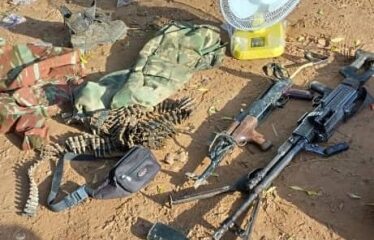









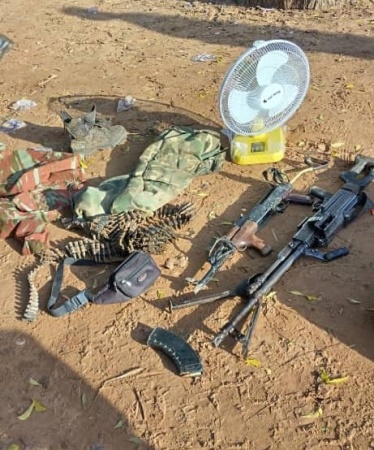
The Kebbi Police Command, in collaboration with the military, has neutralised some suspected terrorists and recovered rifles, ammunition, motorcycles, and other items during a clearance operation in Gumki Forest, Kangiwa.
The Police Public Relations Officer (PPRO), SP Bashir Usman, disclosed this in a statement issued on Monday in Birnin Kebbi.
He said the operation was conducted at about 6:05 a.m. on Monday, adding that Gumki Forest, Arewa Local Government Area, was a known route used by bandits and Lakurawa elements operating in the area.
He said the joint security team successfully engaged the terrorists during the operation and neutralised some of them.
According to him, the operation also led to the recovery of one PKT rifle with 174 rounds of live ammunition and one AK-47 rifle with 14 rounds of live ammunition.
Other items recovered, he said, included a pair of military camouflage uniforms, a pair of boots, two mobile phones, charms, and four motorcycles.
“The area remains relatively calm, while joint operations are ongoing to further clear the area and rid the state of criminal elements,” he said.
Usman quoted the Commissioner of Police, CP Umar Hadejia, as commending the operatives for their gallantry and dedication to duty.
Hadejia reiterated the command’s commitment to sustaining coordinated and intelligence-led operations with other security agencies to counter banditry, terrorism, and other forms of criminality in the state.
He also urged members of the public to continue providing timely and credible information to security agencies to support ongoing efforts to safeguard lives and property.
The commissioner assured residents of the command’s determination to work with other security agencies to maintain peace and security across the state. (NAN)
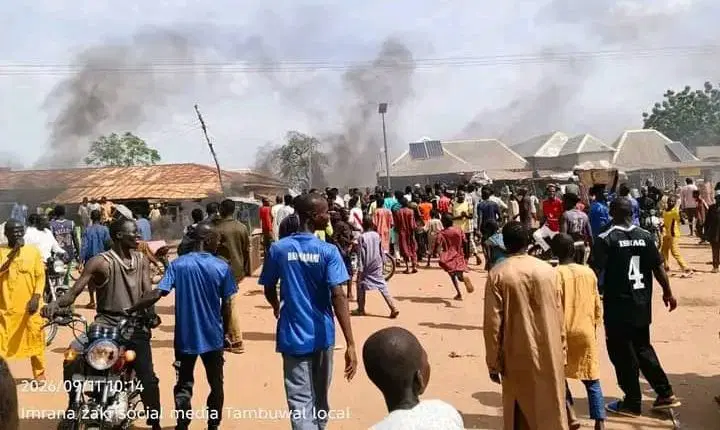
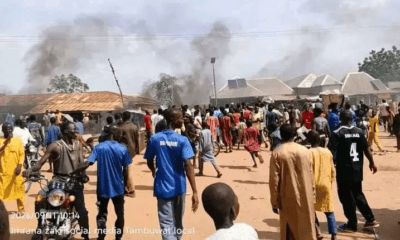
Youths in Tambuwal Local Government Area of Sokoto State have reportedly attacked and set fire to some offices belonging to the All Progressives Congress (APC) amid growing anger over insecurity and worsening economic conditions.
The youths reportedly took to the streets to protest the security challenges affecting communities in the area, as well as the rising cost of living and other difficulties facing residents.
During the protest, some APC offices were vandalised and reportedly set ablaze, while major roads were blocked, disrupting the movement of motorists and other road users.
Video footage from the incident showed a large crowd of youths gathered on a major road, with some of them involved in the destruction of properties.
The development has raised concerns over the growing frustration among residents in parts of Sokoto State, particularly communities affected by attacks and other criminal activities.
The protest came shortly after reports of renewed threats by terrorists operating in neighbouring Zamfara State.
Residents of Talata Mafara Local Government Area had reportedly been given a seven-day deadline by terrorists to provide ₦50 million, 50 cattle and 50 sheep or risk another attack.
The terrorists reportedly entered an open market in the area and issued the demands to residents. The threat followed several attacks allegedly carried out by the group against communities in the area.
Residents had blamed the repeated attacks on what they described as inadequate action by the government and security agencies.
According to residents, the terrorists had previously attacked communities, taken over farmlands and rustled cattle belonging to villagers without facing enough resistance from security forces.
The latest threat has therefore caused renewed fear among residents, who said the attackers had become increasingly bold in their activities.
The situation is also linked to a deadly attack on communities in Sauna Ward, Talata Mafara, in July.
Terrorists reportedly killed 22 farmers who were working on their farmlands during the attack.
The attackers were said to have travelled in large numbers on motorcycles after crossing the Anka–Mayanchi highway. They reportedly moved through communities including Ruwan Gora, Zauren Gora, Tulluwa, Unguwar Shanu, Tsangaya and Tundun Namali before reaching Sauna.
The journey reportedly covered nearly 50 kilometres as the attackers moved through several communities.
Residents said the attack occurred during the day, starting at about 2pm and continuing until around 5pm.
The terrorists were also reportedly involved in cattle rustling during the incident, although the exact number of animals taken was not immediately known.
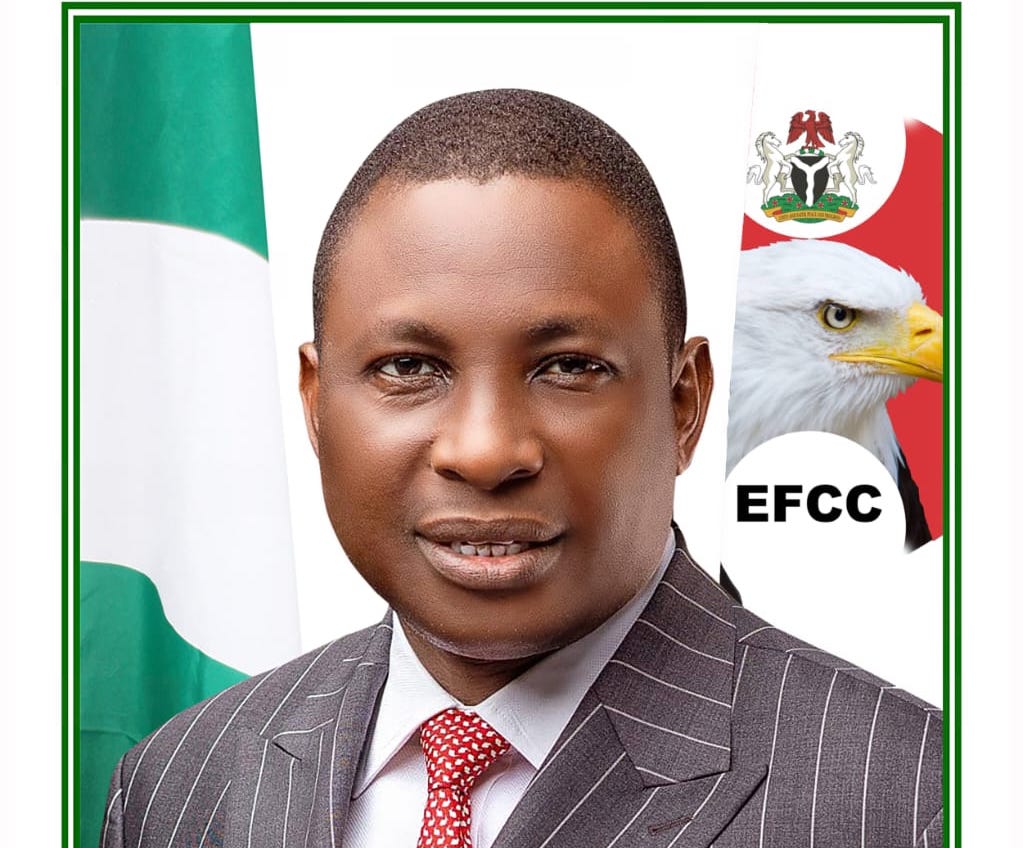
Despite the Executive Chairman of the Economic and Financial Crimes Commission (EFCC), Ola Olukoyede, championing a zero-tolerance policy on internal corruption, a senior managerial officer in the rank of Assistant Commander (ACE) of the Commission has been accused of extensive corruption, abuse of office, obstruction of justice, and unexplained wealth.
The allegations are contained in a six-page petition submitted to the EFCC Chairman on July 9, 2026, by the Network for Justice Association of Nigeria (NJAN), a copy of which PRNigeria obtained.
The petition comes amid heightened scrutiny of alleged misconduct within the anti-graft agency, including a separate investigation involving a sectional head over a reported $400,000 corruption allegation.
Olukoyede has repeatedly emphasised internal cleansing as essential to the credibility of the Commission’s anti-corruption campaign, with the EFCC sanctioning and dismissing personnel found culpable of fraud, misconduct and other breaches.
However, the latest petition raises serious allegations against a senior officer reportedly close to the Commission’s leadership and whose monthly remuneration is said to be between N800,000 and N900,000.
The petition, signed by NJAN President, Adedeji Sunday Ajala, was also copied to the Attorney-General of the Federation, Director-General of the Department of State Services (DSS), Chairman of the Independent Corrupt Practices and Other Related Offences Commission (ICPC), and Chairman of the Code of Conduct Bureau (CCB).
NJAN listed 21 allegations against the officer, ranging from abuse of office and extortion to interference with investigations, unauthorised access to financial intelligence and acquisition of assets allegedly inconsistent with his legitimate income.
PRNigeria has not independently established the allegations, and the petition did not provide evidence of any conviction or formal finding of wrongdoing against the officer.
According to the petition, individuals who supplied some of the information requested anonymity because of alleged fears of victimisation within the Commission. NJAN, however, maintained that the claims were based on what it described as “consistent accounts and observable patterns” capable of being independently verified.
One of the central allegations is that the officer presents himself as the “lifeline” of the EFCC Chairman and allegedly invokes his purported closeness to the leadership to wield influence within the Commission.
The petitioners alleged that the officer sometimes bypasses established operational procedures by obtaining approvals directly from the Chairman without routing matters through relevant supervisory channels, including the Head and Director of Operations.
They further claimed that the officer allegedly demands as much as 10 per cent of sums involved in some petitions before investigations commence and, in certain instances, secures approval for petitions without subjecting them to the Commission’s normal vetting process.
Another allegation concerns the purported acquisition of confidential banking information. NJAN alleged that the officer works with contacts in the financial sector to obtain information on individuals and companies, which is subsequently used for extortion rather than legitimate investigation and prosecution.
The group also accused the officer of holding undisclosed meetings with high-profile suspects inside and outside EFCC premises, where unofficial settlements and “soft landings” were allegedly negotiated.
The petition claimed that some of the alleged encounters were recorded and could be investigated. Among the most serious accusations are claims that the officer received substantial sums in local and foreign currencies through proxies in exchange for favourable treatment of suspects.
The petition also alleged that some individuals were falsely informed they had been placed on security watchlists to extract money from them. It further accused the officer of conspiring with politicians to use EFCC processes against political opponents, including alleged interference with administrative bail in return for financial inducements.
The petitioners also urged scrutiny of the officer’s assets, which they claim are far beyond his legitimate earnings. They cited luxury vehicles, duplexes allegedly acquired through a construction firm, and Dubai properties reportedly purchased through a real estate company.
NJAN alleged that over $1 million in cash was used for some of the overseas acquisitions, including a purported $300,000 transaction in June 2026 — claims PRNigeria has not independently verified.
The petition further questioned the officer’s frequent business-class trips to the United States and alleged ownership of property there, calling for checks on immigration and financial records. A poultry business linked to the officer was also flagged for investigation over suspicions that it may serve as a front for trade-based money laundering, though the petition cited no formal findings by any competent authority.
NJAN also alleged that the officer maintains relationships with influential political and business figures whose interests could intersect with his official duties. In one instance, the petition claimed that a prominent South-East businessman allegedly engaged the officer to influence a case before the Commission, including a reported visit to the businessman’s Abuja residence on June 1, 2026, where an undisclosed sum in USD was allegedly paid to suppress a matter.
The petition similarly alleged contacts with political figures in northern Nigeria, including individuals reportedly linked to cases under the officer’s purview. It warned that, if proven, such relationships could compromise the EFCC’s credibility, weaken public confidence in anti-corruption enforcement and demoralise officers who carry out their duties professionally.
They consequently called on Olukoyede to institute an independent and comprehensive investigation into the allegations, secure relevant documentary and electronic evidence, protect potential witnesses and take appropriate action where wrongdoing is established.
“A thorough investigation and decisive action will reinforce public confidence in the Commission’s commitment to accountability and send a clear message that no officer, regardless of rank or influence, is above the law,” the petition stated.
When contacted, EFCC spokesperson Dele Oyewale told PRNigeria that the Commission maintains a strict zero-tolerance stance on internal corruption. He said over 40 staff members were recently dismissed following thorough, independent investigations.
Oyewale said internal disciplinary reviews are continuous but noted that he was not yet aware of the latest petition specifically targeting the officer. (PRNigeria)
-
 News1 day ago
2027: Obi’s credentials under probe as LP chieftain sues WAEC, UNN, NYSC
-
News7 hours ago
Youths set APC offices ablaze, block highways
-
Editorial3 days ago
60 Years After: The Enduring Legacy Of Sir Odumegwu Ojukwu
-
News2 days ago
More hardship for Nigerians as petrol, diesel prices rise again
-
News1 day ago
Senior EFCC Officer faces allegations of abuse of office and unexplained wealth
-
News1 day ago
Four rescued, one feared dead as uncompleted building collapses in Enugu
-
Politics3 days ago
APC welcomes mass defection, promises full integration of 10,000 new members
-
Politics2 days ago
2027: Tinubu, Atiku, Obi, 15 others make INEC final presidential candidates’ list


