News
Anambra: 25,000 poultry birds lost to flood in Ogbaru Community, residents send S.O.S to FG, State Govts

• Over 400 company workers rendered jobless
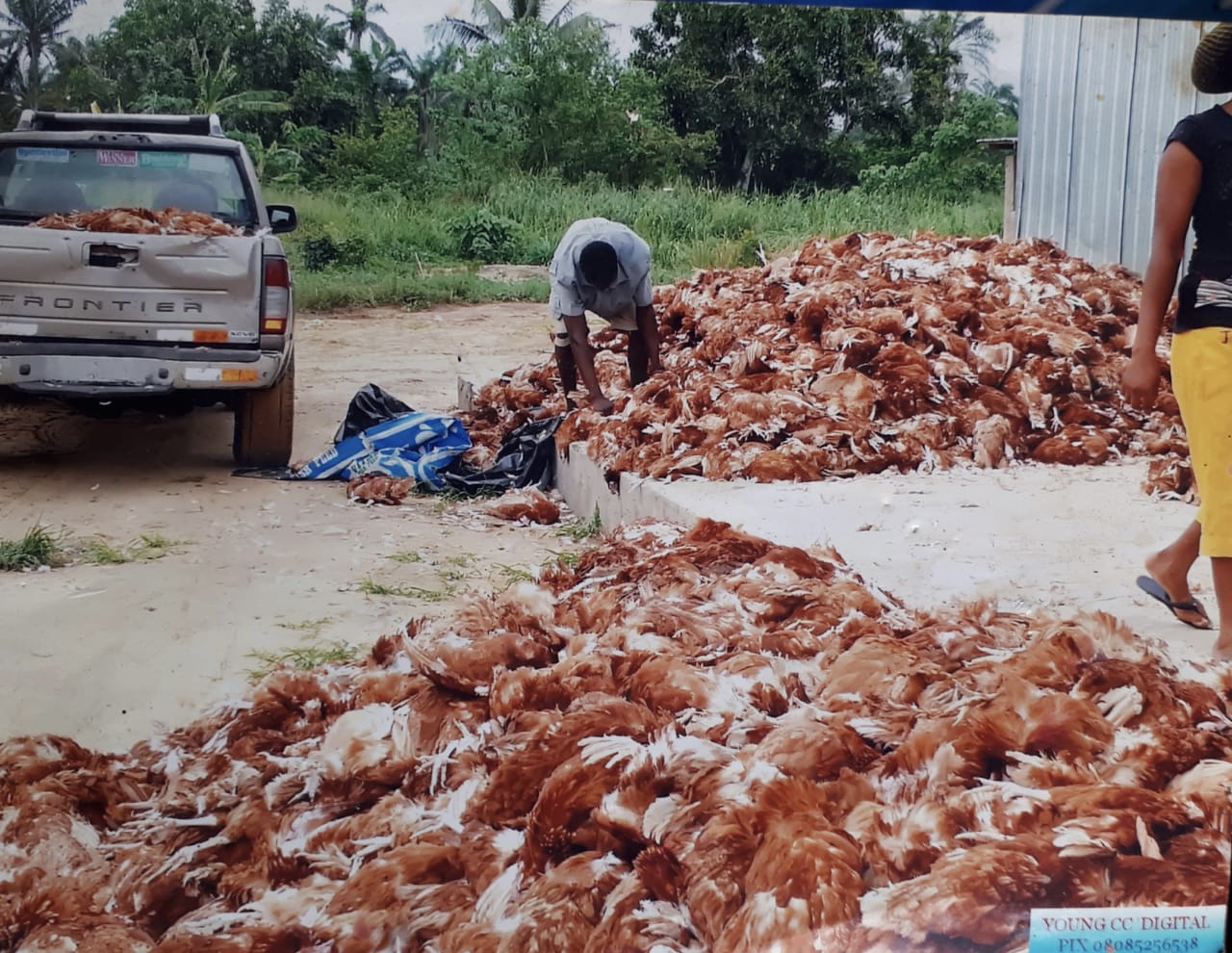
Ogbaru local government area of Anambra state, a major food producing area of the South East zone of Nigeria, has been ravaged by a devastating flood again destroying about 25,000 poultry birds, farms and property worth several millions of naira.
The development has thrown the people of the agrarian community into another round of agony, pain, anguish, huge losses and severe economic hardship just as many have lost their homes and sources of livelihood.
The victims have therefore cried out to the Federal and Anambra state governments as well as relief agencies to urgently come to their rescue.
Ogbaru is a local government area of Anambra State that lies along the coastal area, East of the River Niger and arguably the third longest River in sub-sahel.
Ordinarily, the people of Ogbaru Local Government Area of Anambra State ought to be thrilled during rain season but due to perennial flood which ravages the area has continued to put them on precarious position each year.
To the locals, the ecological challenge is perceived as a huge curse, hence the rain season is a wish they never want to bear successive years.

Little wonder, Mrs. Ujunwa Akpati, an indigene and teacher at Shining Light Academy, Odekpe, in the community was apprehensive as rain season approaches.
Ironically, Ogbaru which has a reputation for being the food basket of the country is prone to flood menace which washes away roads, bridges, farms, schools, churches and residential houses.
Findings show that Ogbaru clan is made up of 15 indigenous communities. They are Odekpe Ohita; Atani; Akili Ozizor; Ochuche Umuodu; Umuzu; Amiyi; Ogbakuba.
Others are Mputu, Umunankwo, Ogwuaniocha; Ossomala; Obeagwe; Akili Ogidi; Ogwuikpele, and one non-indigenous community).
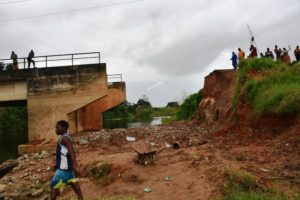
One of the bridges destroyed by flood in Ogbaru
Further checks revealed that the communities are rich in agricultural produce which can feed the nation. Yam, cassava, maize, rice, potato, beans and okro are harvested in large quantum.
Interestingly, Ogbaru hosts the eight viable oil wells in Anambra State, a development that has naturally and logically caused Anambra to be admitted into the enviable league of oil producing states.
Little wonder, the proximity of Ogbaru to River Niger makes it susceptible to flood especially when the river overflows its banks, and there has been several incidents of flooding in the area over the years – with its accompanying devastation of farmlands, buildings, roads, bridges, schools, hospitals, and churches.
A visitor to Ogbaru will see that recently, flood destroyed the multi-billion-naira automated Matucci Farms Limited located at Agbobo Umuoga Ossomala community, leading to the shutting down of the company.
Speaking to newsmen at Ossomala, the Director of the farm, Sir (Dr) Patrick Sule Ugboma (Ide of Ogbaru) disclosed that the farm lost about 25,000 poultry birds to the recent flood in the area, while properties worth several millions of naira were also destroyed.
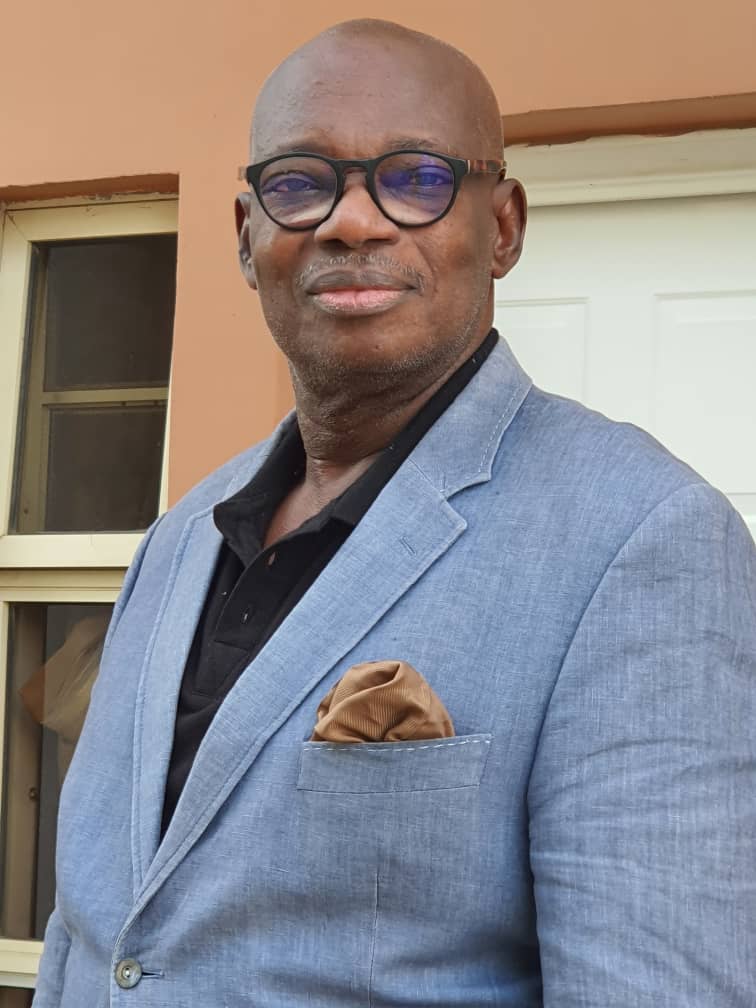
Sir (Dr) Patrick Sule Ugboma (Ide of Ogbaru), Director, Matucci Farms Limited, Agbobo Umuoga Ossomala community
Dr Ugboma said that over 400 workers of the company lost their jobs following the flood disaster.
The Ide of Ogbaru noted that the ugly development has adversely affected the economy of Ogbaru in particular, and the state in general.
It could be recalled that a major flood disaster which struck Ogbaru clan in 2022 led to the loss of lives, and submerging of farmlands, residential buildings, schools, churches and health facilities.
Sunday Mesiobi, 70, a native of Ogbe-Akpoma, Atani community was reportedly found dead in his abode following a deluge that surged into his house and drowned him apparently while he was asleep.
That was not all. A fatal boat mishap which occurred at Umunnakwo community that same year and period, claimed 76 lives. The victims were reportedly escaping from the menacing flood that swept through various Ogbaru communities when the boat in which they were travelling in capsized.
Meanwhile, basic infrastructure in Ogbaru especially roads, bridges, electricity, schools, and farmlands have been destroyed due to the constant flooding of the area, and other ecological challenges; eliciting appeals by Ogbaru people to both the state and federal governments; relevant government agencies, to come to their rescue.
For instance, on behalf of the community, Sir Ugboma passionately urged the Niger Delta Development Commission (N.D.D.C) to consider the construction of the Onitsha-Atani-Ossomala-Ogwuikpele-Ase Azaga-Ndoni Road, which is in a state of total collapse.
Sir Ugboma noted that “this vital economic impactful road will link the Ogbaru LGA in Anambra State with their kith and kin in Delta, Imo and Rivers States,” stressing that the agriculture, which is the main stay of the people’s economic life has suffered unduly by the neglect of the community by successive state and Federal Governments.
“The Ogbaru people in Anambra, Delta, Rivers and Imo constitute the food basket of these states and the central road connecting the clan, the Onitsha – Atani – Ossomala – Ogwuikpele – Ase azaga – Ndoni road is in total collapse. We therefore presently find it extremely difficult to move our cash crops from the farms to the hinterland,” he lamented.
He explained that Ogbaru, in generic terms, is a clan of people of identical culture, language and way of life, remarking that the people, who are mainly spread along the coasts of the River Niger and across the four states are mainly farmers and fishermen.
While remarking that the communities in Ogbaru are largely agrarian, the community leader, and renowned philanthropist regretted that although the terrain is very fertile for crop production and fishing, the area is very prone to perennial flooding due to its proximity to the River Niger.
“These perennial floods have badly affected farming activities and further impoverished the people. Most of the communities have become inaccessible due to the decrepit state of the only road leading into all the communities.
“Furthermore, about a half of these communities have been in total darkness for upwards of ten years in most cases. Ogbaru Local Government has been totally neglected by successive Local, State and Federal Governments despite its food-basket status.
“It is equally noteworthy that Ogbaru hosts the eight viable oil wells in Anambra State which had conferred Oil- producing status of the state. Despite the oil revenue accruable to Anambra State from the Ogbaru Oil Wells, basic infrastructure is nearly non-existent, the few existing ones are in total collapse, while poverty among the people is on continuous, upward rise,” he cried out.
Daily News Nigeria reporter who visited the area observed that some portions of the Onitsha-Atani, Ossomala-Ogwuikpele-Ase azaga-Ndoni road, have failed, while several bridges on that same road especially the Ossomala bridge at Umunnakwo community, have collapsed following a combination of flooding and erosion menace.
Some of the residents going either to Ogwuikpele from Umunnakwo or travelling from Ogwuikpele to neighbouring communities were seen crossing the river by wooden boats following the collapse of the Umunnakwo bridge.
In an interview, some residents wondered why despite being the food basket of the country, as well as an oil producing area, both the state and federal governments had over the years neglected Ogbaru town.
“Ogbaru people have been marginalized for too long by the state and federal governments. We don’t have good road network; our communities have been despoiled by flood, and all this marginalization is taking place despite our being food and oil producing areas,” laments Chief Daniel Nwabueze, a community leader in Atani,
Chief Nwabueze urged the federal government to repair the dilapidated roads in Ogbaru, as well as dredge the River Niger to obviate the flooding of the area due to the overflow of the river during heavy rainfall.
He also called on the Anambra State Government to promptly supply yam seedlings, and other farming implements to farmers in the area to boost agricultural production.
“Since we are a food producing area, the Anambra state government should come to our rescue by giving us money to farm; give us farming incentives on time. We don’t want government to give us mattresses, pillow, bread, rice, each time we have flood here in Ogbaru. We want net to catch fish since we’re fishermen.
Mrs. Akpati, also complained about the yearly flood that wreaks havoc in the community, especially the destruction of farmlands, roads and houses, saying this has deeply affected the economy of the clan.
“Even though we produce yam, cassava, pepper beans, rice in large quantities, we don’t have good roads to take our farm produce to the markets, and this development has impoverished both farmers and residents here,”
“We are having serious problem of flood in this area. About this time las year, everybody living in this community (Odekpe) relocated to the upland because the flood we witnessed then submerged several buildings and farmlands. And so, we’re calling on the government to come to our rescue”, she added.
Also speaking, Chief Okwudili Ozegbe, chairman, Odekpe Community Vigilante, decried the longstanding neglect of the area by both the federal and state governments.
He appealed to the two levels of government to come to the rescue of the town by finding a lasting solution to the constant flooding of the area as well rebuilding the dilapidated roads in Ogbaru LGA.to enable farmers convey their farm produce to neighbouring towns.
“We are facing several challenges in this community, but the major ones are flood and bad roads, and so we are appealing to the federal and state governments to come to our rescue.
“We are farmers and also fishermen, but unfortunately we’re unable to carry our farm and aquatic produce to Onitsha market and the various markets in our neighboring communities due to bad road,” Chief Ozegbe bemoaned.
Suffice it to postulate that there is an urgent need to salvage what is left of Ogbaru town, and only governments prompt intervention can heal the wounds.











The General Overseer of the Redeemed Christian Church of God (RCCG), Pastor Enoch Adeboye, and Founder of Living Faith Church Worldwide, Bishop David Oyedepo, have praised the United States President, Donald Trump, for taking recent military actions against terrorism and called for more of such action to stem the tide of the unrelenting terror attacks by extremists in Nigeria.
They spoke to a packed audience drawn from a cross section of activists of all races and cadres from across the United States.
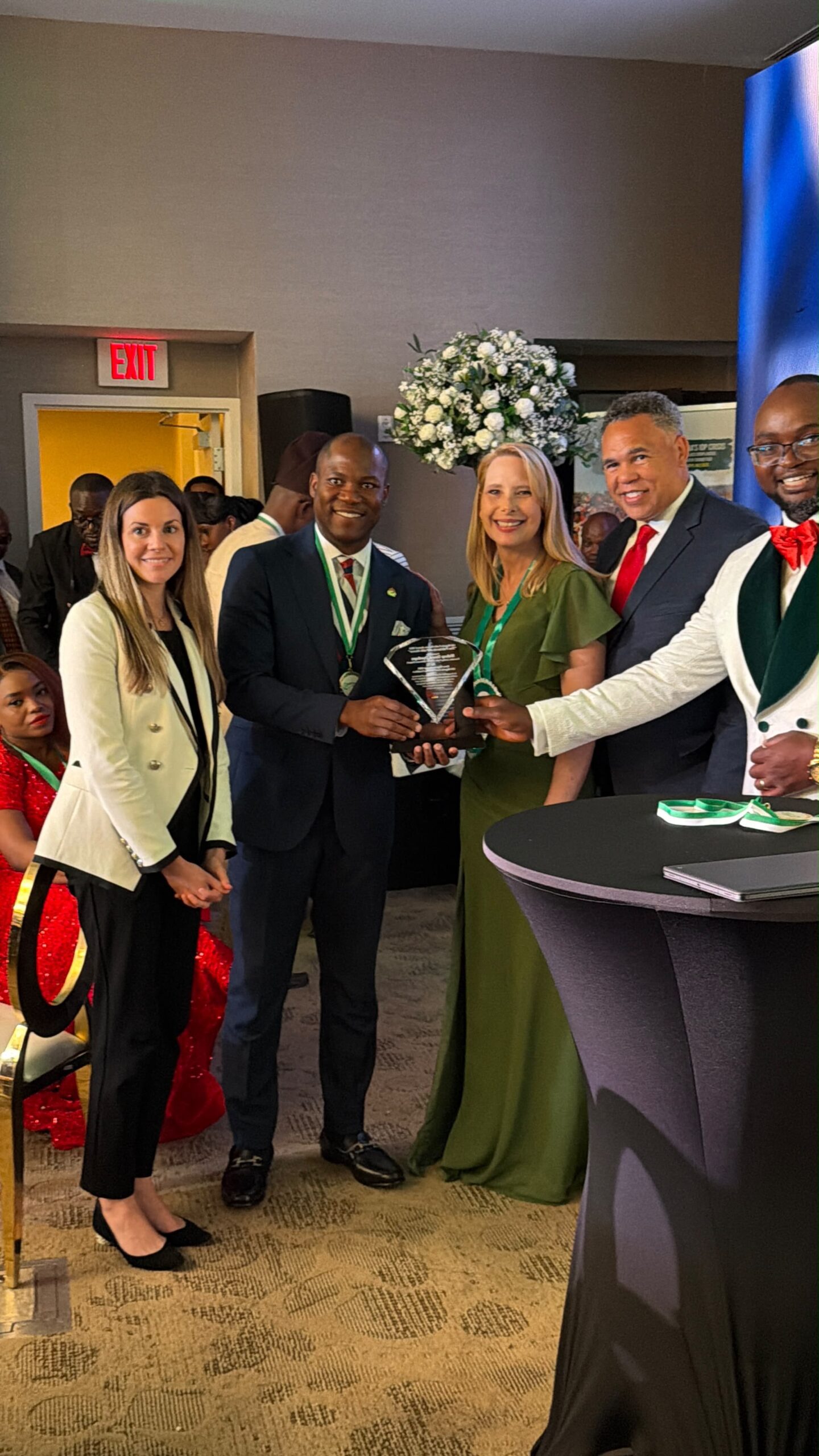
The event was in Washington DC during an award night for President Trump, two Congressmen: Rep. Chris Smith and Rep. Riley Moore, both of whom have tabled a bill seeking to end terrorism in Nigeria by punishing the sponsors, and other activists who have championed the cause of religious freedom in Nigeria.
The RCCG leader also spoke on the criticism that he had maintained a stoic silence while extremists carried out the killing and kidnap of Christians and other vulnerable communities across Nigeria, noting that as an elder religious leader, he embarked on a “spiritual warfare” rather than scream to escalate tension with concomitant reactions.
Bishop David Oyedepo delivered his keynote address at the gala night represented by 4 persons- Pastor Deji Akin Abiri, Pastor Dayo Ojo, Apostle Jacob Sharpe and Pastor Seyi Adeyeri
According to him it was not a surprise when President Trump intervened, having followed events and warned of dire consequences for the perpetrators of the violence.
The grand event, tagged: “Faith Heroes Award Gala.” was organised by the Save Nigeria Group, USA with the participation of the US-Nigeria Civil Society Coalition at the Hilton Garden Inn, Capitol Hill, Washington, D.C.Nigerian lifestyle content
Adeboye, who rued that “terrorism is now at my doorstep,” appealed for a global coalition, led by the United States and its Western allies, to help defeat terrorism in Nigeria, while cautioning that the violence that has consumed communities across the country was no longer distant from him.
The appeal came as former United States Ambassador-at-Large for International Religious Freedom, Sam Brownback, and Dr. Katrina Swett, a prominent advocate for human rights, religious freedom and international justice, criticised Nigerian authorities for failing to protect citizens of all faiths from extremist violence.
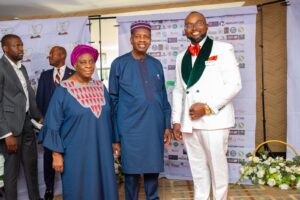
In an emotion-laden address after receiving an award at the gala, Adeboye said terrorism had worsened since the December attacks on terrorist camps in northern Nigeria.
He said the United States and other Western powers would need to take more decisive action if peace was to return to Nigeria.
Drawing from Isaac Newton’s first law of motion, he said Nigeria was trapped by what he described as a structure of untouchables, powerful actors who make the fight against terrorism difficult from within.
He said: “There are certain people in my country that, I regret to say, are untouchable, and only God can deal with them.
“If you want to help us, help us more.
“No matter who is in office in Nigeria, only God can help us.
“Use your influence to help us.”
Adeboye thanked President Trump and the United States Government for what he described as assistance to Nigeria. Nigerian lifestyle content
But he said the work had not gone far enough.
He said Nigeria needed the combined effort of countries such as the United States, Britain, Australia, and other Western allies to help confront terrorist groups and restore peace.
While acknowledging that people of different religions have suffered from terrorist attacks, Adeboye said Christians had become the prime targets of many of the killings.
He added that none of the major ongoing attacks could be traced to Christians.
The cleric also responded to criticism that he had not done enough because much of the violence was concentrated in northern Nigeria.
He said the scale of the crisis had moved beyond what any religious leader or local institution could address alone.
He warned that without external support, Nigeria might not know peace, saying terrorists were emboldened and communities were being overrun.
Adeboye said his church had established an internally displaced persons camp to help victims of terrorist violence.
He said victims were being provided food and relief, and that plans were underway to establish a secondary school for young people in the camp, along with skills training for adults.
The crisis, he said, had created an estimated 11 million displaced persons, many of whom had lost homes, livelihoods, and access to education.
Adeboye, however, said he did not support sweeping accusations that the administration of President Bola Tinubu was doing nothing to fight terrorism. Executive Branch
He said, like Trump, Tinubu’s role as commander-in-chief was to give instructions to the military, but the effectiveness of those instructions depended on execution.
He also said he had advised Tinubu to meet with Trump to demonstrate seriousness in the fight against terrorism before the December military action.
Though Adeboye said he does not agree with everything Trump says, he described the American president as the best politician he had ever known because, according to him, Trump acts on his promises.
“To be a good politician, you must be able to speak two different things from the same mouth,” Adeboye said, adding: “And I like him because when he says: ‘I want to do this,’ you better get ready.”
He said that as Trump winds down the Iran war, he should complete what the cleric described as the good work he started in December against terrorist camps in Nigeria.Nigerian lifestyle content
He said the terrorists were mocking the faith of their victims.
“They are asking: ‘Where is their God?’” Adeboye said, adding that he had gone to God in agony and deep prayer several times over the crisis.
Brownback, a former Governor of Kansas, who also served in the United States Senate and House of Representatives, said it was painful that Nigeria was still bleeding, making apparent reference to the latest killings of 22 persons in Plateau State by suspected Islamist terrorists.
He warned that Nigeria risked losing the nation if terrorists were allowed to overrun it.
He said the United States wanted to help Nigeria defeat terrorism so that Nigerians could fulfil the promise of their country.
He described Nigeria as being “out in the fork” and urged Nigerians and their allies to subdue terrorist networks, including Fulani terrorist groups, and resist any attempt to turn the country into a caliphate.
Swett, in her remarks, described Nigeria as a country of extraordinary people and said America must do more to help Nigeria fight terrorism.
“Yes, the future is in the hands of Nigerians, but America has powerful leverage to do more,” she said.
She expressed satisfaction that the Trump administration was placing Nigeria at the centre of international discussion on religious freedom and terrorism.
In his remarks, Stephen Osemwegie, President of Save Nigeria Group USA and convener of the US-Nigeria Civil Society Coalition, said the mission would not be complete until the entire terrorist network in Nigeria was dismantled.
“Terrorism is not a Nigerian or American issue,” Osemwegie said, adding: “We need global support to establish global peace.”
He urged both chambers of the United States Congress to speedily pass H.R. 7457, the Nigeria Religious Freedom and Accountability Act of 2025, and send it to President Trump for signature.Nigerian lifestyle content
Osemwegie paid tribute to two members of Congress, Christopher Smith of New Jersey’s 4th Congressional District and Riley Moore of West Virginia’s 2nd Congressional District, for their sustained efforts in keeping terrorism in Nigeria on the American policy agenda.
He also praised Rev. Ezekiel Dachomo and Leah Sharibu, describing them as symbols of Christian resilience in the face of persecution.
The event, which organisers called: “Thank You, America,” brought together religious leaders, Nigerian diaspora advocates and American human rights voices pressing for stronger action against terrorism and religious persecution in Nigeria.
Among those honoured with the Faith Heroes Award was Bishop Oyedepo, who was represented at the event.
For the organisers, the Washington gathering was both a tribute and a warning: a tribute to those they say have stood for persecuted Christians in Nigeria, and a warning that without global intervention, the crisis could further unravel Africa’s most populous nation.
My Heart Bleeds — Oyedepo
Echoing the profound urgency in a powerful keynote address, Bishop Oyedepo, who extended his apologies for his physical absence, but whose words resonated deeply through the hall, declared that Nigeria is “virtually at the brink of collapse.”
The fiery Chancellor of Covenant University threw his weight behind a monumental legislative move unfolding in Washington: “Nigeria Religious Freedom and Accountability Act of 2026.”
Citing the horrific data compiled within the US Congressional findings, Oyedepo confronted the stark reality of Nigeria’s bleeding landscape.
The findings reveal that between 2009 and 2025, an estimated 50,000 to 125,000 Christians have been martyred, with over 19,000 churches destroyed.
Shockingly, the report confirms that Nigeria alone accounts for a staggering 72 percent of all Christians martyred worldwide.Nigerian lifestyle content
Pointing directly to the operations of Fulani-ethnic militias, Boko Haram, and ISWAP, Oyedepo backed the US legislative framework seeking to designate these militant groups as Foreign Terrorist Organizations (FTOs) under international law, referencing the brutal massacres in Benue and Plateau States that claimed over 9,500 lives between 2023 and 2025 alone.
“From the above, you can see that the happenings in our country today call for urgent action from all stakeholders and well-meaning individuals to prevent a situation of total anarchy,” he warned, adding: “The intervention of the United States of America in Nigeria’s affairs is a most welcome one.”
He expressed deep gratitude to President Trump for his passionate concern.
He added: “My heart bleeds as I put down these few lines.
“We look forward to a nation that will be safe, peaceful, and prosperous again.”
Diaspora Ignites Washington
The Gala Night capped off a week of intense advocacy by Save Nigeria USA, which began on Saturday with a massive, roaring Save Nigeria Rally at MacPherson Square, just steps away from the White House.
With 26 civil society groups united under a single banner, the diaspora community has made it clear: they will no longer remain silent while their homeland bleeds.
Oyedepo was represented by Pastor Deji Akin Abiri, Pastor Dayo Ojo, Apostle Jacob Sharpe, and Pastor Seyi Adeyeri.
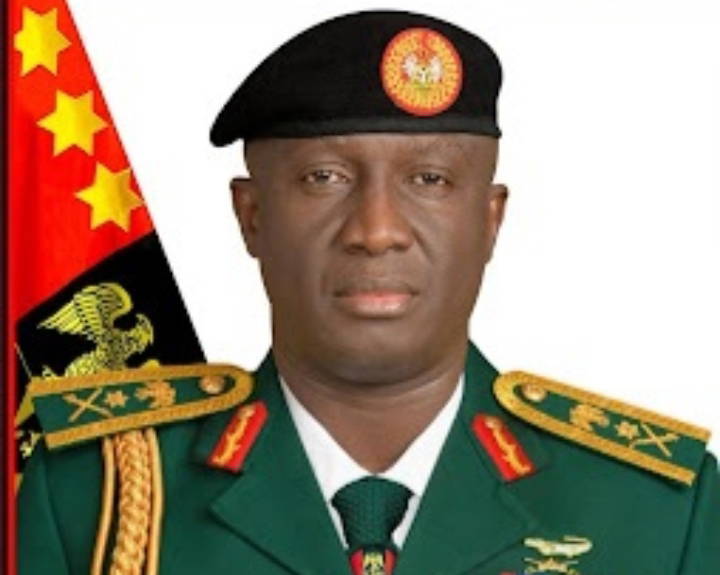
The Chief of Army Staff (COAS), Lieutenant General Waidi Shaibu, has approved the appointment of new General Officers Commanding for 6 Division, Port Harcourt and 3 Division, Jos, as well as a new Commander for Army Headquarters Garrison.
Acting Director, Army Public Relations, Col Appolonia Anele, in a statement on Saturday, said the “strategic reshuffling of senior officers across key operational, command, training and staff appointments within the Nigerian Army (NA) is part of ongoing efforts to enhance operational effectiveness, strengthen national security and consolidate the Army’s capacity to address emerging security challenges across the country.”
In the new posting, Major General WM Dangana has been appointed General Officer Commanding 3 Division Nigerian Army and Commander Joint Task Force Operation Enduring Peace, replacing Major General EF Oyinlola.
Major General EI Okoro takes over as General Officer Commanding 6 Division Nigerian Army and Land Component Commander Joint Task Force South-South Operation Delta Safe, replacing Major General EE Emeka.
Major General JR Lar has been appointed Commander Army Headquarters Garrison, while Brigadier General OM Oyekola assumes office as Acting Military Secretary (Army). Brigadier General I Waziri remains in the Office of the COAS as Chief of Staff.
Also, as part of efforts to deepen operational leadership and force readiness, Brigadier General IB Buhari has been appointed Commander Headquarters 63 Brigade, while Brigadier General K Rabiu takes command of Headquarters 31 Artillery Brigade.
Major General SA Emmanuel has been appointed Commander Nigerian Army Space Command, reinforcing the Army’s growing focus on emerging domains of warfare and technology-driven security operations.
Major General O Adegbe has also been appointed Director of Intelligence and Security at Defence Headquarters.
In the area of professional military education and institutional development, Major General KE Chigbu has been appointed Deputy Commandant of the National Defence College while Major General SD Makolo has been appointed Commandant of the Nigerian Army Armour School.
Major General SO Adejimi becomes Commandant of the Nigerian Army School of Supply and Transport, and Major General FS Etim has been appointed Chief of Training at Headquarters Training and Doctrine Command Nigerian Army (TRADOC NA). Brigadier General U Ahmad takes over as Commandant, Depot Nigerian Army, Zaria.
‘How 7 Boko Haram, ISWAP commanders were arrested while returning from Hajj’
Sunday Igboho: Nigeria’s New General, by Ugoji Egbujo
Osun 2026: Don’t harbour criminals, DIG Fayoade warns politicians
Other appointments include Major General KO Ukandu as Managing Director/Chief Executive Officer of Post Housing Development Limited (PHDL) and Major General AI Allison as Managing Director of Defence Properties Limited.
The COAS charged the newly appointed senior officers to justify the confidence reposed in them by demonstrating exemplary leadership, professionalism, innovation and unwavering commitment to the Nigerian Army’s constitutional mandate of defending Nigeria’s sovereignty, protecting its territorial integrity and supporting civil authority in maintaining peace and security across the nation.
“The Nigerian Army remains resolute in its transformation drive and commitment to building a highly professional, combat-ready and people-oriented force capable of effectively addressing contemporary and future security challenges in pursuit of Nigeria’s national security objectives,” the statement said.

A man, Mr Monday Atabo, on Friday dragged his wife. Grace, before an Upper Area Court in Masaka, Nasarawa State for denying him his conjugal rights.
Atabo, is seeking dissolution of his marriage to Grace, a businesswoman.
He also accused his wife of infidelity.
His words: “I married Grace according to Igede customs and tradition of Benue in 2010 at the Upper Area Court.
“We have four children. My wife is short tempered and does not respect me.
“She denies me of my conjugal rights. She started using family planning medication without my knowledge and consent,” he said.
He averred that all efforts made for the respondent to change, failed.
Atabo said he wants a divorce because the union has broken beyond repair.
“I am seeking this divorce based on lack of trust. If she doesn’t swear to Aleku (traditional deity) I will not allow her in my house because I don’t want to die,” he said.
Responding to the claims, Grace, denied all allegations against her by her husband saying he married her at the age of 17 but later changed.
“He started suspecting me of infidelity because I started a business in 2021.
“I was cleared after performing the ritual before the Aleku,” she said.
Grace told the court that she was no longer interested in the marriage.
She also claimed joint ownership of the house they lived in.
The News Agency of Nigeria (NAN) reports that both parties are seeking custody of the children.
The judge, Salisu Mohammed, granted them the divorce based on their prayers.
He adjourned the matter of custody until July 9 for hearing. (NAN)
-
 News1 day ago
BREAKING: Court nullifies NDC’s registration, overturns earlier ruling that directed INEC to register party
-
News14 hours ago
Xenophobia Crisis: 700 Nigerians stranded in South Africa as June 30 deadline sparks anxiety
-
News1 day ago
NDC: “They cannot stop me, they will fail” — Peter Obi
-
News16 hours ago
7 suspected Boko Haram, ISWAP Commanders arrested during return from Hajj
-
News3 days ago
Senate passes state police bill, empowers govs to appoint commissioners
-
News2 days ago
BREAKING: FG completes handover of Enugu Airport to Concessionaires, extols Mbah’s role
-
News1 day ago
Remi Tinubu sparks debate after urging Nigerians to start akara, corn businesses
-
News7 hours ago
Army appoints new GOCs, principal staff officers in major reshuffle