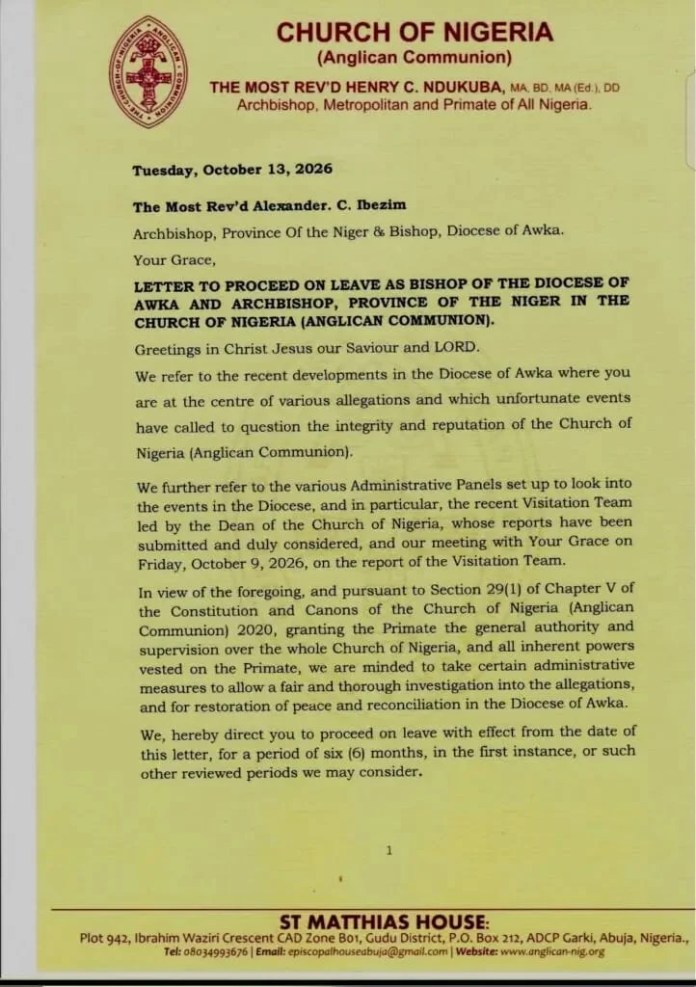
Connect with us

News

How U.S Federal Agents successfully Linked Bola Tinubu to drug Trafficking Ring in Chicago

Published

on

Spread the love

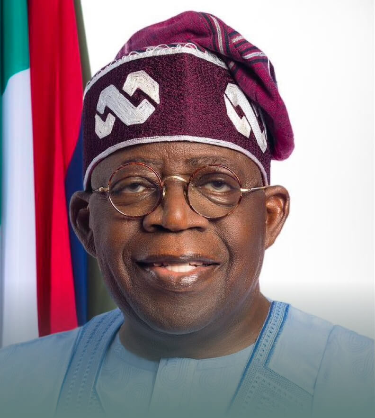
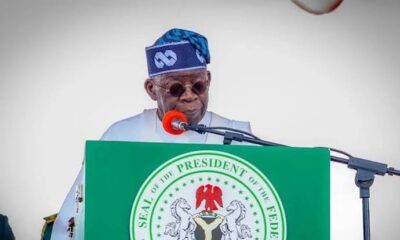
On 11 April, lawyers representing the All Progressives Congress (APC) at the Presidential Election Petitions Court, Abuja, insisted that Bola Tinubu, the party’s candidate at the February 25 presidential election, was never indicted for any drug-related offenses.  Due to a 1993 Illinois court judgment, Tinubu forfeited $460,000 in two of his bank accounts.

The forfeiture was the outcome of an investigation that linked over $2 million in several of Tinubu’s bank accounts to proceeds from the heroin trafficking of Adegboyega Mueez Akande and Abiodun Agbele, Chicago drug kingpins.

A certified true copy of the US court judgment resurfaced ahead of the 2023 general elections putting the president-elect’s past trouble with US law enforcement agencies in the spotlight.

In January 1992, Tinubu became the subject of a US federal investigation into heroin trafficking and money laundering in Illinois, Chicago in January 1992.

Signed copies of the US court document obtained in July 1993 showed bank accounts in Tinubu’s name that were linked with drug trafficking and money laundering.

Maduka College Advert

Below is the Investigation Report by U.S Federal Agents that linked Bola Tinubu to a white heroin trafficking network that operated in Chicago:

Facts have emerged that the erstwhile Governor of Lagos state, Asiwaju Bola Tinubu may have been involved in a white heroin trafficking network which operated in Chicago and some parts of Indiana and led by one Adegboyega Mueez Akande between 1988 and 1993. The source of the   white heroine was identified as one Mr.  Lee Andrew Edwards who was incarcerated for attempting to murder a federal agent while the agent was executing a search warrant on him.

According to the Verified Complaint for forfeiture in case No. 93 C 4483 Obtained by SaharaReporters, which was filed on July 26, 1993 before the Hon. Judge Nordberg of the United States District Court for the Northern District of Illinois, the United States Government urged the Court to order the forfeiture of  funds   in accounts Nos. 263226700 held by First Heritage Bank in the name of Bola Tinubu, funds in accounts 39483134, 39483396, 4650279566, 00400220, 39936404 and 39936383 held by Citibank N.A in the name of Bola Tinubu and funds in accounts 52050-89451952,52050-89451952, 52050-89451953 held by Citibank in the name of Bola Tinubu because there was probable cause to believe that the funds in Tinubu’s bank accounts represented proceeds of narcotics trafficking or were monies involved in financial transactions in violations of 18 U.S.C, sections 1956 and 1957 and therefore, was forfeitable to the U.S Government.

However, in a tacit defense of the ownership of the funds, Asiwaju Bola Tinubu averred in Court that the funds belonged to himself, his wife, K.O Tinubu and his surrogate mother, Alhaja Mogaji and warranted that they had exclusive right, title and interest to the funds.

In an affidavit sworn to by Kevin Moss, a Special Agent with the United States Internal Revenue Service, criminal investigation division in support of the verified complaint for forfeiture of Bola Tinubu’s moneys held in various Bank accounts, the agent gave a vivid account of how he came to the conclusion that the funds were proceeds of narcotics transaction in violation of the U.S law.

Mr. Moss averred that prior to and during 1988; the government became involved in the investigation of a white heroin trafficking network operating in Chicago, Illinois and Hammond, Indiana. The investigation disclosed that an individual known as Lee Andrew Edwards was a source of white heroin. The government sources provided information about Lee Andrew Edwards including the identity of a telephone number which activated in electronic pager. This pager according to him was to be called to place an order for white heroin.  According to Mr. Moss, this pager was subscribed to by one Adegboyega Mueez Akande who at that time was a resident of Chicago.

Mr. Moss further averred that during February 1988, an individual named Abiodun  Agbele arrived in the U.S from Nigeria and during investigation by the government, Agbele disclosed that Akande was his uncle who provided him an apartment in Hammond, Indiana.

According to Agbele, Mr. Akande returned to Nigeria in1990; however, before he left, he instructed Agbale to serve as a source of white heroin for Mr. Lee Andrew Edwards as a result of which Agbele sold white heroin for Lee Andrew Edwards on numerous occasions. Following a tip off, Agbele sold one ounce of white heroin to a law enforcement agent undercover on November 28, 1990 for $7,000 and was subsequently arrested. After his arrest, Agbele agreed to cooperate with the law enforcement agents regarding the white heroin distribution and network of Akande.

According to Agbele, Akande controlled the operation of white heroin from Nigeria in conjunction with other individuals in Nigeria and the U.S. One other individual who worked with Akande according to the affidavit was identified as Bola Tinubu who later became the governor of Lagos state from 1999 to 2007.

The investigation also revealed that in December 1989, Akande took Bola Tinubu to First Heritage bank where Bola Tinubu opened an individual money market.  In the account opening application, Tinubu, gave his address as 7504 South Stewart, Chicago, the same address used previously by Akande and his company, Globe-Link. This is the same  address used as the drop-off point for packages from Nigeria that contained the white heroin. According to bank records, Bola Tinubu also opened a joint checking account in his name and the name of his wife, Oluremi Tinubu. Mrs. Tinubu had previously opened a joint Bank account also in the same bank with Abdrey Akande, the wife of the heroin kingpin, Adegboyega Mueez Akande.

Upon opening the account, Tinubu deposited the sum of $1,000 in traveler’s check. However, five days after opening the account, specifically, on January 4, 1990, Tinubu deposited the sum of $80,000 into the account.

According to the federal agent, in a credit application dated January 6, 1990, Bola Tinubu disclosed that he resided at 7504 South Stewart and that Mueez A. Akande was his cousin. Tinubu further stated that he was an employee of Mobil Oil Nigeria Limited, Fairfax, Virginia and his take home pay was $2,400 per month. Additionally, Tinubu stated on the application that he had no other sources of income and listed his wife, Oluremi Tinubu as co-applicant for the application for automobile loan. The loan was secured with the certificate of deposit in the amount of $10,000 which Tinubu had purchased with a withdrawal from the $80,000 deposit in his checking account.

According to the federal agent, Bank records from First heritage Bank disclosed that in 1990 alone, Bola Tinubu deposited $661,000 into his individual money market account and in 1993; he deposited the sum of $1,216,500 into the same money market account. The agent further avers that in 1991, Tinubu began opening accounts at Citibank in the section known as the world-wide personal banking unit where he transferred the sum of $560,000 from his money market account at the First Heritage Bank.

This development prompted the Federal agents to interview representatives from Mobil Oil regarding Tinubu’s employment status and his take-home pay.  The Mobil Oil representatives confirmed to the investigators that Tinubu was employed by the Mobil Oil as a treasurer. Mobil Oil further told the federal agents that this position did not involve the transfer of large amounts of money between banking institutions. Mobil oil representatives also stated that under no circumstance would Tinubu be permitted to retain money belonging to Mobil Oil in accounts bearing Tinubu’s name. Finally, Mobil Oil confirmed that the corporation never had any accounts in banks in the southern suburbs of Chicago.

On January 10, 1992, the federal agents obtained a court Order freezing Tinubu’s accounts at First Heritage Bank and Citibank respectively. Thereafter, Tinubu contacted the First Heritage Bank to transfer money from his accounts and was advised that the accounts had been seized by the U.S Treasury.

On January 13, 1992, Mr. Moss, the Federal agent contacted Bola  Tinubu  in Nigeria by phone using a number provided to the First Heritage Bank by Tinubu himself. Mr. Moss averred that during the course of the interview, Bola Tinubu confirmed that he knew Mueez Adegboyega Akande. Tinubu further admitted during the interview with the federal agent that he had wire transferred $100,000 to Akande’s bank account in Houston and that the $80,000.00 of the funds used to open the account at First Heritage Bank had come from Akande. Tinubu further admitted that he had other accounts in Fairfax, Virginia and London.

Concluding his affidavit evidence, Mr. Moss stated that with all these evidence, there was probable cause to believe that the funds in the accounts held by First Heritage Bank and Citibank, N.A in the name of Bola Tinubu represented property that was involved in narcotics transaction in violation of the U.S law. He therefore, urged the Court to issue an order of forfeiture of the funds.

After a protracted litigation in which Bola Tinubu claimed that the monies legitimately belonged to him, his wife, Oluremi Tinubu and his surrogate mother, one Alhaja Mogaji, Bola Tinubu finally opted for a stipulated settlement with the U.S government. According to the settlement Order dated September 15, 1993; Hon. Judge John A Nordberg ordered that the sum of $460,000 held by Bola Tinubu in The First Heritage Bank account be forfeited to the United States Government. The Court also ordered the release of the funds held in the Citibank account and any money held in excess of $460,000 at the First Heritage account to Bola Tinubu in line with the agreement and stipulation reached by Tinubu with the federal agents.

Ironically, this case came up at the peak of the struggle against the annulment of the June 12, 1993 presidential election by the Gen. Babagida-led military junta during which time Tinubu as a member and one of the leading financiers of the National democratic Coalition (NADECO) made several “pro-democracy” trips to the U.S ostensibly to press for U.S sanctions against the Nigerian junta. It is therefore doubtful whether most of those trips were actually connected with the June 12, struggle after all.

News

Commuters stranded as flood takes over Ore – Benin Expressway

Published

on

Stranded commuters on Ore - Benin Expressway on Thursday
Spread the love

Hundreds of commuters and motorists have been left stranded after floodwaters submerged a section of the Ore-Benin road along the Lagos–Benin expressway, causing massive traffic gridlock and disrupting movement on the busiest highways.

The flooding, triggered by hours of torrential rainfall, forced vehicles to move slowly through the submerged section while many others remained trapped in long queues stretching several kilometres.

Sever videos obtained by the Nation and circulating on social media showed a vast expanse of water covering the affected portion of the expressway, with motorists struggling to navigate the flooded road amid fears of possible accidents and vehicle breakdowns.

Screenshot

Some passengers, in one of the footages, were seen waiting by the roadside while others expressed frustration over the recurring flooding on the strategic highway, which serves as a major gateway linking, Ondo, Lagos and the South-West to Edo State and the South-South region.

Maduka College Advert

One of the stranded motorists, identified simply as Henry in the footages, described the experience as traumatic, calling on government authorities to urgently intervene before the situation deteriorates further.

“Everyone is stuck here. We need urgent government attention right now. We are on our way to Lagos from Ondo State when we saw this. The situation is terrible,” he said in one of the viral video clips.

It was gathered that the flood caused severe delays for travellers, many of whom reportedly spent several hours on the road as drivers cautiously manoeuvred through the flooded section.

The latest flooding has once again highlighted the vulnerability of the Ore axis of the federal highway, particularly during the peak of the rainy season when heavy downpours often overwhelm drainage channels and inundate parts of the road.

The Ore-Benin corridor remains one of Nigeria’s most strategic transport routes, serving as a vital economic lifeline for the movement of goods, petroleum products and passengers between the South-West, South-South and South-East regions.

Continue Reading

News

Fake Agency: HCSF admits due diligence failure in recruitment waiver scandal

Published

on

Fake PFIPC DG, Adeniyi Adeyemi Matthew
Spread the love

Head of the Civil Service of the Federation, HCSF, Mrs. Esther Didi Walson-Jack, on Wednesday, admitted before the House of Representatives Ad-hoc Committee investigating alleged creation of the Presidential Economic Advisory Council, PEAC, and the Presidential Foreign Investment Promotion Council, PFIPC, without legal backing that her office failed to carry out adequate due diligence before issuing key approvals.

This is even as the committee said it uncovered what it described as a web of forged documents used to secure government approvals. Appearing before the committee, Walson-Jack acknowledged that her office relied on documents later discovered to be fake in granting authorised recruitment waiver to the purported agency.

“We now, having seen all the facts and observed all the documents, concede that we ought to have carried out more due diligence in discharge of the duties of the office in issuing an authorised establishment and a recruitment waiver to the PEAC/PFIPC,” she told lawmakers.

The Head of Service explained that officials of the purported agency presented themselves as representatives of a newly established federal body during the 2025 Annual Manpower Budget Defence, accompanied by what appeared to be an Establishment Act and a letter appointing a Director-General.

According to her, under established civil service procedures, newly-created agencies seeking to recruit staff, are expected to present an enabling Act; the appointment letter of the chief executive; and other supporting documents before an authorised establishment and provisional recruitment waiver are issued.

Maduka College Advert

‘We processed requests based on documents presented’

She said her office processed the request based on the documents presented, noting that the case was unprecedented.

“In over almost a century of the Federal Civil Service, we have never encountered a situation like the current one. Criminals always try to be a step ahead of law enforcement,” she said.

However, under questioning by the committee, Walson-Jack admitted that the Establishment Act submitted by the purported agency was not authentic.

“I requested to see the documents myself and I saw that the Establishment Act was not really an authentic Act. I have almost 30 years of legal practice experience and immediately I saw it, I knew it was not,” she said.

She further acknowledged noticing discrepancies in the appointment letter purportedly issued by the Office of the Chief of Staff to the President after comparing it with genuine correspondence.

“I’m not a forensic expert, but I can clearly see that the signatures are not the same,” she stated.

The committee chairman disclosed that forensic analysis by the Nigeria Police had already confirmed the signatures were entirely different.

“The police forensic department has already analysed the signatures and confirmed that those signatures are not the same. In fact, according to them, there was not even an attempt to imitate the signature,” the chairman said.

He added that investigations had established that the appointment letter was fake and that the purported Act establishing the agency was equally fabricated.

“You have clearly stated that you acted on false documents. You have now established, just like we have, that the letter of appointment of the so-called DG is not only forged, it is fake.

“If something is forged, there will be an attempt to imitate the signature. But in this case, the signatures are completely different. So I will not call it forged; I will say it is fake,’’ the chairman declared.

The committee further alleged that the fake Establishment Act lacked all the mandatory features of a valid Act of the National Assembly.

“Our Acts have citation numbers, Supreme Court numbers, Gazette numbers and Gazette titles. The Act presented here has none of those features,” the committee chairman said.

Despite admitting lapses, Walson-Jack maintained that the approvals were granted, following existing procedures based on documents presented to her office.

“Everything was done in accordance with the practice in the office. Out of the 88 ministries, departments and agencies, MDAs, processed, we are really surprised that we were unable to detect that PEAC/PFIPC had actually given us a false Establishment Act and what has now been proved to be a false letter of appointment,’’ she said.

Speaking further, Walson-Jack, who pledged reforms to prevent a recurrence, said: “We take full responsibility and we will definitely review our processes to make them more fraud-proof,”

The committee also questioned officials from the Office of the Accountant-General of the Federation over the issuance of an administrative code granted the purported agency.

Accountant-General’s Office defends procedure, blames individual lapse

A former Director, Consolidation Account, and Director, Federal Projects, Mr. Joshua Patmi Luka, explained that his office received what appeared to be an official request from the State House for an administrative code for the agency.

“As part of our due diligence, what we did was to convey the administrative code to the Permanent Secretary, State House, and not to the so-called agency. The idea was that if it was not genuine, the whole thing would be unravelled,” he said.

However, the committee faulted the process after evidence showed that the response letter never reached the permanent secretary but was instead collected by the alleged fake Director-General.

The chairman said investigations had revealed that the purported Directorate of Administration and Support Services referenced in the correspondence did not exist within the State House.

“There is no Directorate of Administration and Support Services in the State House. That office does not exist,” he said.

He accused the officials of allowing the suspect to intercept official correspondence addressed to the permanent secretary.

“You allowed the fraudulent D-G to come and pick the letter from your office instead of allowing someone from the Permanent Secretary’s office to receive it. If the letter had reached the Permanent Secretary, the fraud would have been unravelled immediately,” the chairman said.

Responding, Luka insisted the lapse was not institutional but attributable to an individual officer responsible for dispatching the correspondence.

“The problem here was not an office lapse, it was an individual lapse. Somebody was supposed to deliver that letter to the Permanent Secretary, State House, and it was not delivered there,” he said.

The committee maintained that evidence before it showed a coordinated use of fake appointment letters, forged legislative documents and fictitious State House offices to obtain official government approvals and budgetary processes.

It said its final report will detail findings and recommendations after concluding the investigation.

Why we failed to produce Adeyemi —IGP

The Inspector General of Police, Olatunji Disu, who was represented by the Deputy Commissioner of Police, DD NPF National Cybercrime Centre, Olufemi Akinola, informed the committee that the D-G of the purported agency, Prince Adeniyi Matthew Adeyemi, could not be produced because he remained in lawful custody under a subsisting court order.

Recall that the ad hoc committee had on Monday, ordered the IGP to produce Adeyemi before it yesterday.

However, the Police assured their lawmakers of their continued cooperation with the National Assembly but explained that any production of the suspect will require an order from a court of competent jurisdiction.

“The Nigerian Police Force may not be able to produce a suspect as requested… in view of the subsisting warrant. The Nigerian Police Force has one of the constitutional oversight powers of the National Assembly and remains committed to cooperate with the committee in the discharge of its mandate.

“However, in this case, it will be appreciated if the reproduction warrant could be sought from the court of competent jurisdiction to enable police comply with this request.’’

Tense hearing

Meanwhile, the public hearing was marked by tense exchanges between the committee and senior government officials.

Throughout the proceedings, the committee chairman adopted an aggressive posture of questioning, frequently cutting short witnesses’ explanations and steering the hearing himself.

On several occasions, officials attempting to provide fuller explanations were interrupted before completing their responses, while other members of the committee had little opportunity to ask questions or seek clarifications.

The committee said it will conclude the clarification stage of its investigation before presenting its preliminary findings to the public next week, ahead of the submission of its final report to the House of Representatives upon resumption from recess.

Continue Reading

News

Ex-Imo Governor Udenwa slams N5bn suit on Kenneth Okonkwo over alleged defamatory comments

Published

on

Chief Achike Udenwa, Kenneth Okonkwo
Spread the love

Former Governor of Imo State, Chief Achike Udenwa, has filed a N5 billion defamation suit against lawyer, politician and Nollywood actor Mr. Kenneth Okonkwo at the High Court of Imo State, Owerri Judicial Division.

The Writ of Summons, dated 24th July 2026 with Suit No. HOW/ /2026, was served outside jurisdiction to Okonkwo at Ofuluonu, Nsukka, Enugu State.

According to court documents, Udenwa is suing over statements Okonkwo allegedly made on 8th June 2026 during Channels Television’s Sunrise Daily programme.

The specific comment quoted in the suit: “That is why the NDC has released a statement that it is only the South East caucus of the party that was involved in such problems. Onyema Ugochukwu, Achike Udenwa, Peter Obi and other leaders of South East caucus were busy extorting the South East aspirants.”

Udenwa, who is described in the filing as a Chartered Accountant, former Governor of Imo State from 1999-2007, and former Minister of Commerce and Industry from 2008-2010, says the statement was broadcast live, later published on Channels TV’s YouTube channel under the title “Kenneth Okonkwo Criticizes Peter Obi, Condemns NDC Primaries”, and further amplified on Okonkwo’s verified X account, Facebook and other platforms.

Maduka College Advert

Udenwa, who pleads that he is currently a member of the Nigerian Democratic Congress (NDC) with no executive role in the party, denies ever extorting any aspirant. The statement of claim states he was never accused of fraud, dishonesty or financial impropriety during his career, played no role in NDC’s 2027 candidate nomination process .

Also, he said that he has never met Onyema Ugochukwu or Peter Obi to “extort” South East aspirants or has not been charged by EFCC, ICPC, or any investigative agency.

He says the allegations caused him “great injury to his credit and reputation” and led to numerous calls from associates seeking explanations.

Udenwa is asking the court for a declaration that the statements are false, malicious, baseless and defamatory,

N5,000,000,000.00 in general damages for injury to reputation, character, integrity, and political standing , an order for Okonkwo to publish a full retraction and apology on Channels TV, its YouTube, and on X, Instagram, Facebook, TikTok, YouTube plus 3 national daily newspapers within 30 days ,an order to delete and remove all related posts, videos and publications , a perpetual injunction restraining Okonkwo from further publishing similar allegations and N25,000,000.00 as counsel’s fees, plus costs.

Legal representation for the plaintiff, Chief Soronnadi Njoku, SAN & Co, declares Okonkwo has 42 days from service to enter appearance, or judgment may be given in his absence. (The Sun)

Continue Reading

Trending

Maduka College Advert