News
Fake Agency: HCSF admits due diligence failure in recruitment waiver scandal

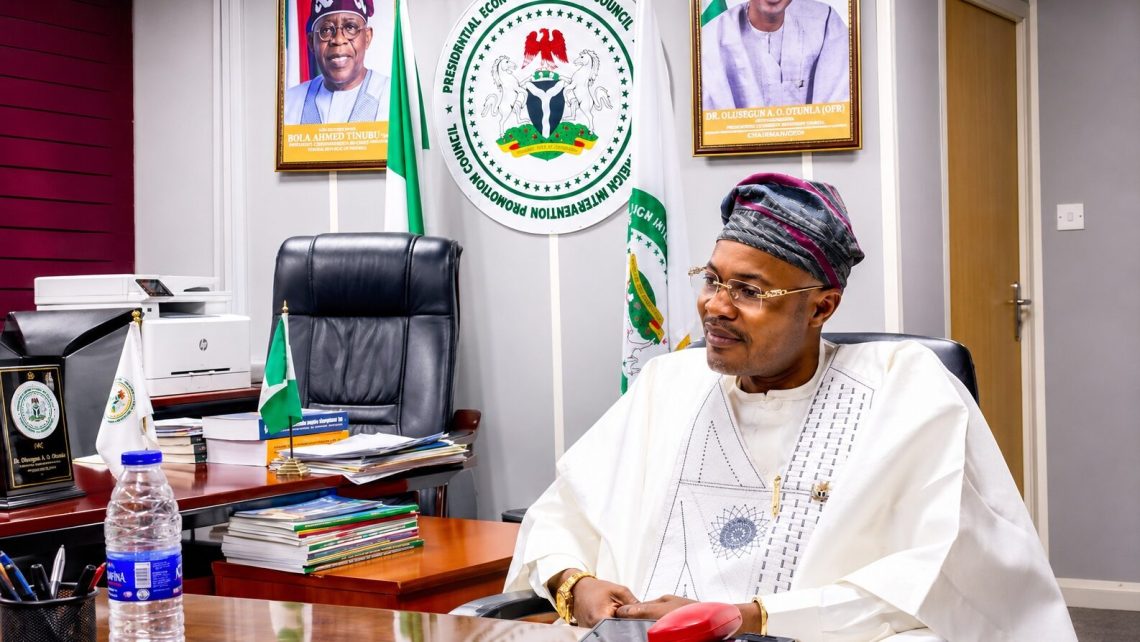
Head of the Civil Service of the Federation, HCSF, Mrs. Esther Didi Walson-Jack, on Wednesday, admitted before the House of Representatives Ad-hoc Committee investigating alleged creation of the Presidential Economic Advisory Council, PEAC, and the Presidential Foreign Investment Promotion Council, PFIPC, without legal backing that her office failed to carry out adequate due diligence before issuing key approvals.
This is even as the committee said it uncovered what it described as a web of forged documents used to secure government approvals. Appearing before the committee, Walson-Jack acknowledged that her office relied on documents later discovered to be fake in granting authorised recruitment waiver to the purported agency.

“We now, having seen all the facts and observed all the documents, concede that we ought to have carried out more due diligence in discharge of the duties of the office in issuing an authorised establishment and a recruitment waiver to the PEAC/PFIPC,” she told lawmakers.
The Head of Service explained that officials of the purported agency presented themselves as representatives of a newly established federal body during the 2025 Annual Manpower Budget Defence, accompanied by what appeared to be an Establishment Act and a letter appointing a Director-General.
According to her, under established civil service procedures, newly-created agencies seeking to recruit staff, are expected to present an enabling Act; the appointment letter of the chief executive; and other supporting documents before an authorised establishment and provisional recruitment waiver are issued.

‘We processed requests based on documents presented’
She said her office processed the request based on the documents presented, noting that the case was unprecedented.
“In over almost a century of the Federal Civil Service, we have never encountered a situation like the current one. Criminals always try to be a step ahead of law enforcement,” she said.
However, under questioning by the committee, Walson-Jack admitted that the Establishment Act submitted by the purported agency was not authentic.
“I requested to see the documents myself and I saw that the Establishment Act was not really an authentic Act. I have almost 30 years of legal practice experience and immediately I saw it, I knew it was not,” she said.
She further acknowledged noticing discrepancies in the appointment letter purportedly issued by the Office of the Chief of Staff to the President after comparing it with genuine correspondence.
“I’m not a forensic expert, but I can clearly see that the signatures are not the same,” she stated.
The committee chairman disclosed that forensic analysis by the Nigeria Police had already confirmed the signatures were entirely different.
“The police forensic department has already analysed the signatures and confirmed that those signatures are not the same. In fact, according to them, there was not even an attempt to imitate the signature,” the chairman said.
He added that investigations had established that the appointment letter was fake and that the purported Act establishing the agency was equally fabricated.
“You have clearly stated that you acted on false documents. You have now established, just like we have, that the letter of appointment of the so-called DG is not only forged, it is fake.
“If something is forged, there will be an attempt to imitate the signature. But in this case, the signatures are completely different. So I will not call it forged; I will say it is fake,’’ the chairman declared.
The committee further alleged that the fake Establishment Act lacked all the mandatory features of a valid Act of the National Assembly.
“Our Acts have citation numbers, Supreme Court numbers, Gazette numbers and Gazette titles. The Act presented here has none of those features,” the committee chairman said.
Despite admitting lapses, Walson-Jack maintained that the approvals were granted, following existing procedures based on documents presented to her office.
“Everything was done in accordance with the practice in the office. Out of the 88 ministries, departments and agencies, MDAs, processed, we are really surprised that we were unable to detect that PEAC/PFIPC had actually given us a false Establishment Act and what has now been proved to be a false letter of appointment,’’ she said.
Speaking further, Walson-Jack, who pledged reforms to prevent a recurrence, said: “We take full responsibility and we will definitely review our processes to make them more fraud-proof,”
The committee also questioned officials from the Office of the Accountant-General of the Federation over the issuance of an administrative code granted the purported agency.
Accountant-General’s Office defends procedure, blames individual lapse
A former Director, Consolidation Account, and Director, Federal Projects, Mr. Joshua Patmi Luka, explained that his office received what appeared to be an official request from the State House for an administrative code for the agency.
“As part of our due diligence, what we did was to convey the administrative code to the Permanent Secretary, State House, and not to the so-called agency. The idea was that if it was not genuine, the whole thing would be unravelled,” he said.
However, the committee faulted the process after evidence showed that the response letter never reached the permanent secretary but was instead collected by the alleged fake Director-General.
The chairman said investigations had revealed that the purported Directorate of Administration and Support Services referenced in the correspondence did not exist within the State House.
“There is no Directorate of Administration and Support Services in the State House. That office does not exist,” he said.
He accused the officials of allowing the suspect to intercept official correspondence addressed to the permanent secretary.
“You allowed the fraudulent D-G to come and pick the letter from your office instead of allowing someone from the Permanent Secretary’s office to receive it. If the letter had reached the Permanent Secretary, the fraud would have been unravelled immediately,” the chairman said.
Responding, Luka insisted the lapse was not institutional but attributable to an individual officer responsible for dispatching the correspondence.
“The problem here was not an office lapse, it was an individual lapse. Somebody was supposed to deliver that letter to the Permanent Secretary, State House, and it was not delivered there,” he said.
The committee maintained that evidence before it showed a coordinated use of fake appointment letters, forged legislative documents and fictitious State House offices to obtain official government approvals and budgetary processes.
It said its final report will detail findings and recommendations after concluding the investigation.
Why we failed to produce Adeyemi —IGP
The Inspector General of Police, Olatunji Disu, who was represented by the Deputy Commissioner of Police, DD NPF National Cybercrime Centre, Olufemi Akinola, informed the committee that the D-G of the purported agency, Prince Adeniyi Matthew Adeyemi, could not be produced because he remained in lawful custody under a subsisting court order.
Recall that the ad hoc committee had on Monday, ordered the IGP to produce Adeyemi before it yesterday.
However, the Police assured their lawmakers of their continued cooperation with the National Assembly but explained that any production of the suspect will require an order from a court of competent jurisdiction.
“The Nigerian Police Force may not be able to produce a suspect as requested… in view of the subsisting warrant. The Nigerian Police Force has one of the constitutional oversight powers of the National Assembly and remains committed to cooperate with the committee in the discharge of its mandate.
“However, in this case, it will be appreciated if the reproduction warrant could be sought from the court of competent jurisdiction to enable police comply with this request.’’
Tense hearing
Meanwhile, the public hearing was marked by tense exchanges between the committee and senior government officials.
Throughout the proceedings, the committee chairman adopted an aggressive posture of questioning, frequently cutting short witnesses’ explanations and steering the hearing himself.
On several occasions, officials attempting to provide fuller explanations were interrupted before completing their responses, while other members of the committee had little opportunity to ask questions or seek clarifications.
The committee said it will conclude the clarification stage of its investigation before presenting its preliminary findings to the public next week, ahead of the submission of its final report to the House of Representatives upon resumption from recess.










News
Court Orders Interior Minister Tunji-Ojo to Respond to Suit Seeking Release of His NYSC Records

The Federal High Court in Abuja on Monday ordered the Minister of Interior, Olubunmi Tunji-Ojo, to respond to a suit seeking to compel the release of records of his National Youth Service Corps (NYSC) scheme.
Justice Salim Ibrahim gave the order when the matter came up for hearing.
The Incorporated Trustees of Pathway to Equity and Charity Foundation had filed the suit, marked FHC/ABJ/CS/1812/2026.
The group prayed the court to compel the NYSC to disclose documents supporting the minister’s claim that he completed the mandatory one-year national service.
The foundation also sought an order of mandamus directing the Federal Capital Territory Administration (FCTA), the 2nd respondent, to produce records showing that the minister did his primary assignment at the FCTA.
When the case was called, counsel to the applicant, Chief Solomon Akuma, SAN, told the court he was ready to proceed with the hearing.
However, Abiola Olaniji, who appeared for the minister, said he had filed an application for Tunji-Ojo to be joined as the 3rd respondent.
Olaniji said the applicant (foundation) had responded with a counter affidavit raising serious issues, to which he needed time to reply.
The lawyer stated that the minister was ready to take part in the proceedings as an interested party.
But Akuma opposed the application, arguing that the minister was not a proper party.
He said the suit only sought an order of mandamus compelling the respondents (NYSC and FCTA) to produce documents that are not in the minister’s custody.
Justice Ibrahim directed the minister to file and serve his reply to the applicant’s counter affidavit, which opposed his application to be joined as a party in the suit before the next hearing date.
The judge then adjourned the matter until Oct. 18 for hearing.
The applicant had sought from the NYSC the mobilisation or call-up letter issued to Tunji-Ojo in 2006 or any other year; the posting letter to the FCTA in 2006 or any other year; and his application for mobilisation.
It also sought the evidence of approval of his remobilisation by the NYSC’s Director-General; evidence of payment of allowances to him; the record of his Community Development Service and his discharge certificate.
The foundation equally sought from the FCTA, the mobilisation or call-up letter, the posting letter, his attendance record during the service year, evidence of any allowance paid to him, among others.
It said the application was brought under Section 14 of the Federal High Court Act, Order 34 Rules 1, 2 and 5 of the Federal High Court (Civil Procedure) Rules 2019.
It also cited Sections 20, 21 and 25 of the Freedom of Information (FOI) Act, 2011.
(NAN)

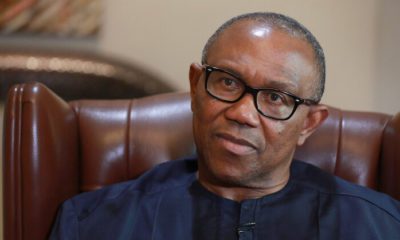
The presidential candidate of the Nigeria Democratic Congress, Peter Obi, has advised Nigerians residing in the United Kingdom to stop sending money to people who seek financial help at home.
Obi also advised them to urge their relatives to vote for productive leaders.
He made the remarks at a town hall meeting with diaspora supporters in Manchester, United Kingdom, on Sunday.
He stressed that Nigeria’s prevailing economic hardship resulted from bad leadership, arguing that continuous financial assistance only cushions the effects of poor governance without addressing the root causes.
“You have people at home in Nigeria today who are begging you for money. Tell them no!” he said.
The former Anambra State governor insisted that his record in public office distinguished him from other governors, claiming none of them matched his achievements in saving public funds.
“I’m not saying I’m a saint, but I saved money. I’ve not seen one governor who has saved 10 per cent of what I saved. No governor has done it.
“Let’s start with this one that is less corrupt. That’s how other countries change.”
He maintained that his conversations with the people reinforced the need for collective responsibility, stressing that building a new Nigeria would require citizens to take an active role in addressing challenges facing the country.
Obi also urged Nigerians to take the 2027 election seriously, describing the contest as a critical moment for the nation.
Contrary to false and misleading reports on social media that a Federal High Court (FHC) sitting in Abuja had nullified the N150 million fee prescribed by the Enugu State Structures for Signage and Advertisement Agency (ENSSAA) for political campaign billboards, findings have revealed that the court actually ruled in favour of the agency, upholding its powers to prescribe the fee.
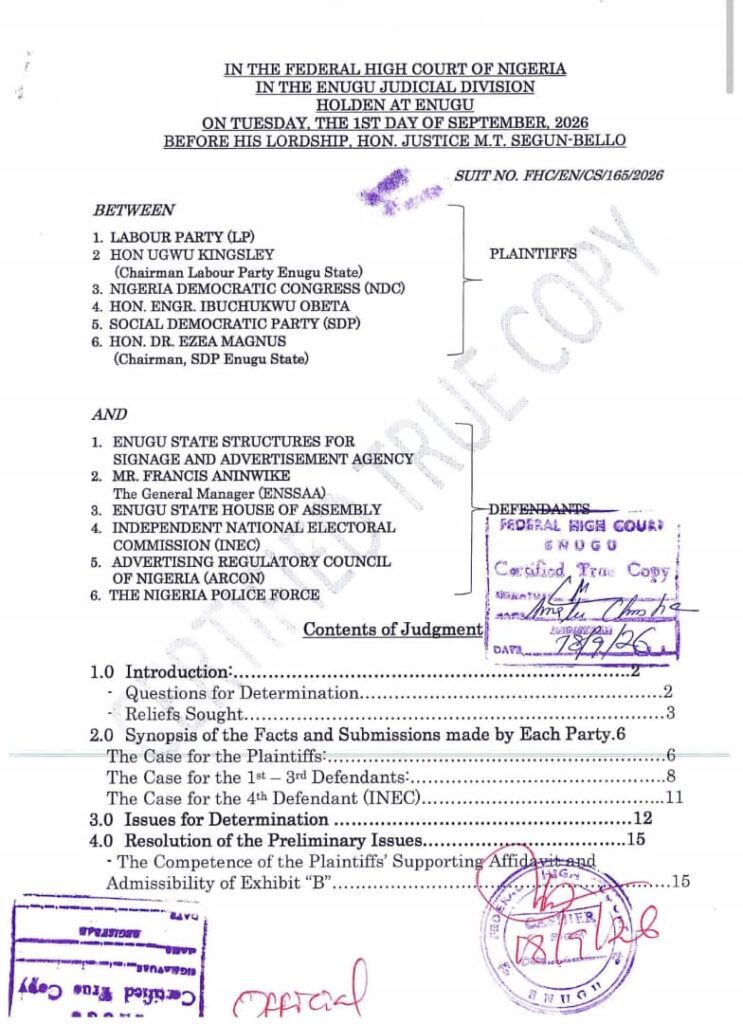
According to a certified true copy (CTC) of a judgment of FHC sitting in Enugu, the court had on September 1, 2026, dismissed a suit by opposition parties and figures challenging ENSSAA’s authority to impose a mandatory N150 million fee on each political party seeking to erect campaign billboards or display posters ahead of the 2027 general election.
The judgment rendered by Justice Mabel Segun-Bello held that it was within the legislative competence of the Enugu State House of Assembly to make laws on outdoor advertising and for ENSSAA to exercise powers donated to it by state law.
The suit marked FHC/EN/CS/165/2026 had the Labour Party; Chairman of the Labour Party (LP) in Enugu, Hon. Kingsley Ugwu; Nigeria Democratic Congress (NDC); NDC factional state Chairman, Engr. Ibuchukwu Obetta; the Social Democratic Party (SDP) and its state Chairman, Hon. Magnus Ezea, as plaintiffs, while ENSSAA; its General Manager, Mr. Francis Aninwike; the Enugu State House of Assembly; Independent National Electoral Commission (INEC); Advertising Regulatory Council of Nigeria (ARCON); and Nigeria Police Force were the respondents or defendants.
The plaintiffs had in June 2026 approached the court seeking a declaration that, by virtue of Sections 99 (1) and (2) of the Electoral Act, 2026, and Section 153 of the 1999 Constitution, which donated exclusive powers to INEC to regulate electoral campaigns of political parties in Nigeria, it was ultra vires the powers of ENSSAA and its General Manager to make executive decisions and publications imposing a mandatory payment of N150 million by political parties and their candidates in the state as an advertisement permit fee for the placement of billboards for the council election and the 2027 election.
They equally sought a declaration by the court that it was unlawful and ultra vires the legislative powers of the Enugu State House of Assembly to make laws regulating the advertisement of political campaigns in the state.
Consequently, the plaintiffs sought an order of the court setting aside the mandatory N150 million fee, as well as an injunction restraining the agency and its GM, the Enugu State Government, its agents and representatives from enforcing ENSSAA’s executive directive.
They finally sought an order of the court mandating the Nigeria Police Force to protect political parties in Enugu State against possible harassment for the placement of billboards and posters for the council election and the 2027 elections.
However, delivering her judgment in September, after a careful consideration of the totality of the affidavit evidence, the exhibits, and submissions by both parties, the presiding judge, Justice Mabel Segun-Bello, held, among other things, that the National Assembly does not hold exclusive legislative powers over outdoor advertising.
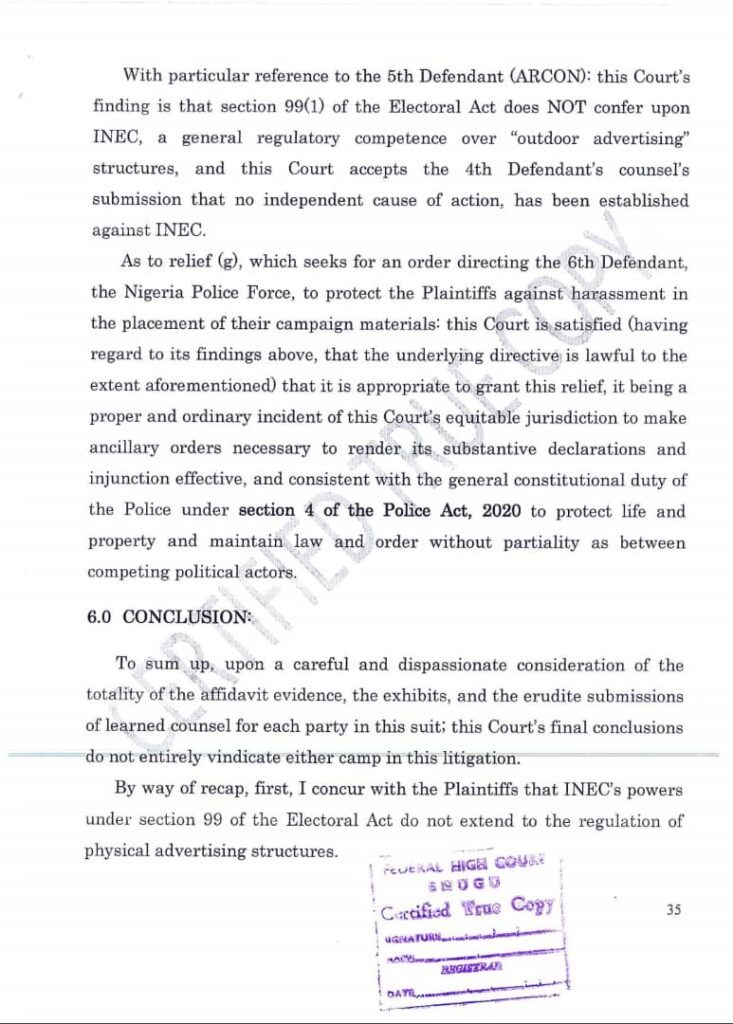
“I accede to the 1st, 2nd and 3rd Defendants’ contention that the subject matter of ‘outdoor advertising’ is NOT reserved exclusively to the National Assembly or to ARCON.
“Rather, ‘outdoor advertising’ falls within the purview of the primary functions of the Local Government, which may (where properly delegated) be validly exercised by a State agency such as the 1st Defendant (ENSSAA).
“Third, I am satisfied that on the basis of the evidence before this Court, the 1st Defendant has established it had a validly delegated authority to issue the directive it gave on 9th February, 2026, for the regulation of advertisement of political campaigns,” she stated.
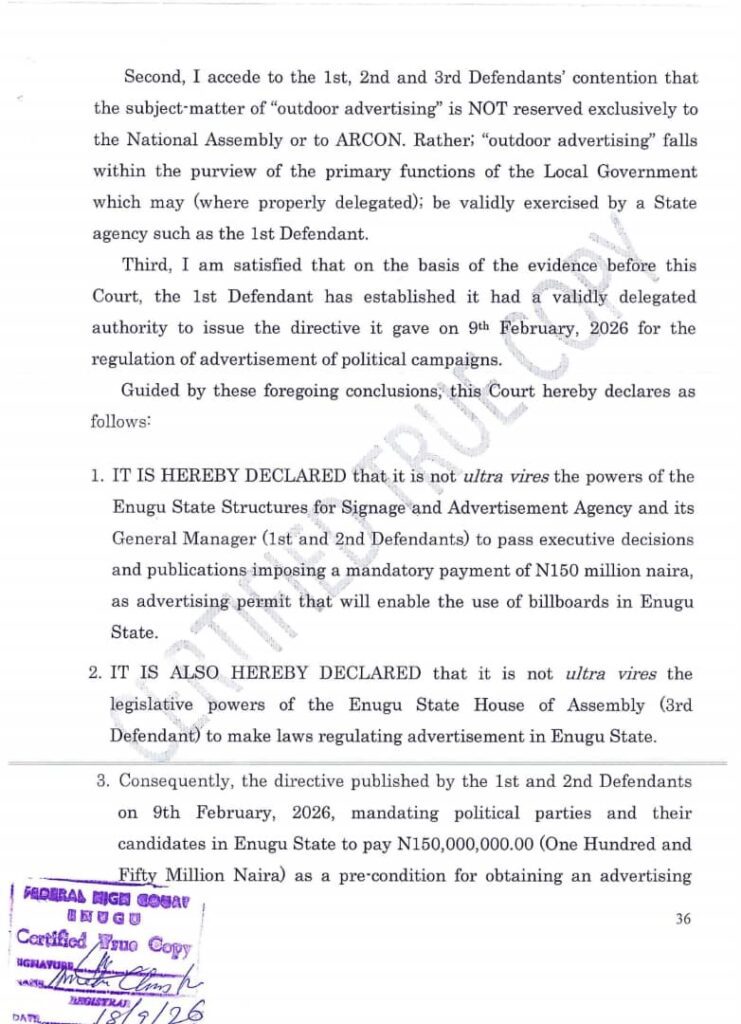
Guided by these foregoing conclusions, Justice Segun-Bello held that “it is not ultra vires the powers of the Enugu State Structures for Signage and Advertisement Agency and its General Manager (1st and 2nd Defendants) to pass executive decisions and publications imposing a mandatory payment of N150 million naira, as advertising permit that will enable the use of billboards in Enugu State.”
Continuing, she said, “It is also hereby declared that it is not ultra vires the legislative powers of the Enugu State House of Assembly (3rd Defendant) to make laws regulating advertisement in Enugu State.
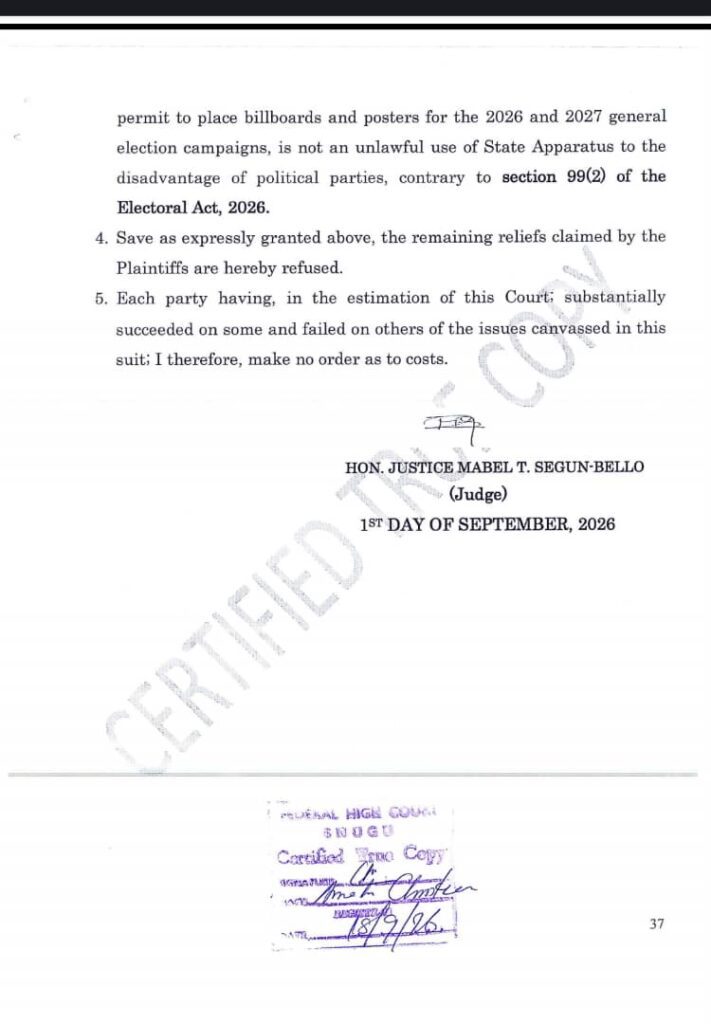
“Consequently, the directive published by the 1st and 2nd Defendants on 9th February, 2026, mandating political parties and their candidates in Enugu State to pay N150,000,000.00 (One Hundred and Fifty Million Naira) as a pre-condition for obtaining an advertising permit to place billboards and posters for the 2026 and 2027 general election campaigns, is not an unlawful use of State Apparatus to the disadvantage of political parties, contrary to Section 99(2) of the Electoral Act, 2026.
“Save as expressly granted above, the remaining reliefs claimed by the Plaintiffs are hereby refused.”
Meanwhile, the Enugu State Government says that unlike the practice in most states, the N150 million fee is for each political party, not for candidates, as misrepresented on social media and by some commentators.
The Secretary to the State Government, Prof. Chidiebere Onyia, made the clarification recently while fielding questions from Government House correspondents in Enugu, adding that there was no court judgment on the fee by any FHC in Abuja, as falsely circulated.
In a related development, finding show that the Abia State Structures for Signage and Advertising Agency (ABSSAA) prescribed feea for candidates ranging from N20 million for State House of Assembly candidates to N200 million for presidential candidates.
Imo State fees range from N3.55 million for each House of Representatives candidate to N55 million for each governorship candidate, while the permit fees range from N300,000 for local council candidates to N150 million for presidential candidates.
The campaign permit fee ranges from N100,000 for each councillorship candidate to N50 million for each presidential candidate, while Kwara State fixed its fees at N2 million for each House of Assembly candidate and N100 million for presidential candidates.
The Certified True Copy of the Court Judgement :
-
 Faith2 days ago
Awka Anglican Diocese Rejects Ibezim’s Suspension, Threatens to Leave Church of Nigeria
-
News2 days ago
BREAKING: Mbah Extends Enugu Movement Restriction to 10pm, Scraps Keke Ticketing
-
News12 hours ago
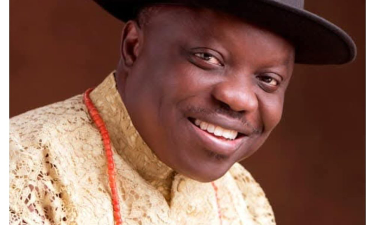
JUST IN: Former Delta Governor, Uduaghan, dies
-
Politics2 days ago
Nigeria’s Weak Opposition and the Cost of One-Party Dominance: Can the Opposition Rebuild Before 2027?
-
News2 days ago
2027: Keke Riders Endorse Mbah, Tinubu
-
News1 day ago
Catholic priest dies as crucifix falls on him during Mass
-
News1 day ago
Corruption turning Nigerian Courts to ‘market stalls’ — Retired Justice Augie
-
News12 hours ago
Federal High Court Upholds ENSSAA’s N150m Political Campaign Billboard Fee, CTC Reveals