Columinsts
Why Buhari is afraid of Buhari’s shadows

The beginning of a thing is not as interesting as its end. All things being equal, last week’s Christmas message would be the last from…
By Tunde Asaju

The beginning of a thing is not as interesting as its end. All things being equal, last week’s Christmas message would be the last from Muhammadu Buhari as Nigeria’s president. This last lap, as it should be, is stocktaking time and the president appeared to have found the meaning of change in the dictionary.
The president seems ready to engage with the nation on the eve of his departure. While he claims to have done his best, he admits that his best might not have been good enough. Rather than talk to Western media, he has granted an interview to a national newspaper, the first in a long while!
Obviously Buhari is afraid of the shadows of his legacy. He says he is committed to handing over to whomever Nigerians chose as their next leader as if he has a choice.

He is silent on the wanton arson targeting electoral offices nationwide. With seven deadly attacks in four months and over 40 so far, there would not be free, fair or credible elections if INEC is incapacitated. Under normal circumstances, INEC has had logistic trouble conducting elections. The problem is doubled with the current attacks.
Buhari wants to hand over to someone that would continue with his legacy. That assertion in itself is filled with double entendre. What legacy is Buhari talking about? A legacy of the Second Niger Bridge is worthy of continuation. It is a good one even when there is no logic in partially opening a completed bridge other than the Nigerian habit of commissioning projects. In commissioning projects, it so often happens that the ceremony costs enough to start a new one. A policy of once completed, start using would curb the gravy train.
The Abuja-Kaduna rail line has reopened for business. Nigerians deserve a judicial enquiry into how the project took off without the security aspect of the masterplan.
Did those who signed the final contract put personal pecuniary interest over the security of users? How could future projects avoid such lacuna? Nigerians deserve to know how its sovereignty was surrendered to bandits who killed several citizens, captured, imprisoned and tortured others without repercussion. The Americans would have sworn that the culprits would never escape justice – what is Nigeria’s attitude?
A substantial part of the Buhari legacy is a plethora of policy somersaults. Its fiscal monetary policy is nothing to write home about. Like a child presiding over a game of thrones, Buhari closed borders without consultation and reopened them without giving account. What did Nigeria gain or lose from that policy?
As things stand, there are many legacies of the Buhari administration that Nigerians would not want to stay with him to his last day. Under Buhari, the Nigerian economy is in shambles. Anybody promising to continue the legacy as is, would be an enemy of the nation. Even for the locust years of his predecessor, the Nigerian currency has never suffered such depreciation as it suffered under Buhari. Yet, rather than look at the underlying reasons, the Buhari regime opted to redenominate, repaint and reprint the naira at a cost worth investing in reasonable ventures.
We should not go to the field of education, where the Buhari legacy is bound to keep Nigeria behind its peers for decades to come. Incessant ASUU strikes due to inconsideration by those in power would do a number on Nigeria’s education for decades.
Buhari claimed to have spent every loan or palliative on poverty eradication, but the country’s bureau of statistics says 133 million or 63 per cent of the population are in poverty with rates of poverty as high as 91 per cent in places like Sokoto State. If majority of Nigerians live in rural areas, 70 per cent of them are poor by the report.
In the field of agriculture, the Buhari regime has lived on lies and subterfuge. Since rice became the staple of most Nigerian families, Buhari has banned, unbanned and resorted to dropping the ball on rice importation. All the while, Buhari was commissioning fake granaries and bogus silos while citizens buy rice at insanely high prices.
If a nation incapable of defending itself against internal strife is a failed state, then Buhari has presided on one. From the technical defeat of Boko Haram to the nepotistic mismanagement of its war on terror, Buhari failed on his promise to rid the nation of insurgency within three months. Instead, he opted for a technical defeat that has left many guessing.
When Buhari was sworn in, IPOB was a paper threat to life and living in the south-eastern part of the country. Today it and its allies are the de jure authority there determining how many days make a work-week and shutting down business as they please sans challenge.
Elected governments in this area barely exert authority beyond their state capitals all these in spite of the capture of Nnamdi Kanu, the self-styled IPOB leader. In that part of the country, federal agents work in fear for their own lives. This is not a legacy worthy of being written on the political epitaph of a retired general.
Buhari could claim to have inherited the trouble in the East. His weakness in negotiating with terrorists rather than people with genuine grievances has emboldened the mushrooming of ethnic militia now extending authority and sphere of influence.
We might need someone who has the president’s right ears to inform him that there is a burgeoning group calling itself in the West agitating for a separate Yoruba Nation. These people have flags and anthems and are openly recruiting members.
At this rate, every village would need to stand-alone. These are the reasons why mathematical soothsayers are saying that if care is not taken, Buhari might be the last president of a nominal Nigeria.
This is a legacy of weakness not worth bequeathing to an inheritor of power. It is a legacy not worth pinning on the epaulet of a general with a master’s degree in strategy, except of course the strategy is to leave it to the successor to tackle.
Need we say that under Buhari, crimes hardly known have become common problems for Nigerians? Violence against women and the elderly has increased, same with ritual killings. Religious bigotry has taken roots and insecurity has made Nigeria a no-go-area for citizens as well as foreigners working or visiting.
Buhari campaigned on the legacy of an anti-corruption czar; he is leaving the space worse than he met it. Apart from the corruption of nepotism that has rendered the state barely functional, corruption has multiplied. Appointments not based on merit have weakened the anti-corruption organs that Buhari inherited.
His inability to discipline errant officers, his general lack of interest in governance has made corruption grow into an untamed monster under his watch. His anti-corruption war is only efficient where his interests are threatened.
There is so much to say about legacies for which most Nigerians would not wait to see this president go; not because they know that something radically different is in the offing, but just for the hope that whatever comes after this could be better.
Daily Trust











THE enchanter recited the incantation with utmost fury: “River Niger and River Benue, the confluence is in Kogi State. Except say River Niger and River Benue no come meet for Kogi; if River Niger and River Benue come meet for Kogi, dem no go fit arrest Bello… Dem dey use EFCC pursue am, dem no go succeed o. Dem go lay siege for im house for Abuja… Except say I no be born of Igala kingdom… EFCC dey front, you dey back; you dey back, dem dey front; you dey left, dem dey right; you dey right, dem dey left; you dey centre, dem come there, you jump dem pass!…a lion cannot give birth to a goat…”
The repertoire is a typical exchange in African rituals. The target was the Economic and Financial Crimes Commission (EFCC), an organization headed by Ola Olukoyede. Olukoyede is said to be a pastor in Enoch Adeboye’s RCCG. The aim is for the de-escalation of the pursuit of Bello by the EFCC, his alleged theft of Kogi State’s N82 billion notwithstanding. Bello’s matter got escalated towards the end of the week when the EFCC chairman alleged that the ex-governor paid in advance, the sum of $845,852.84 to the Abuja school of his children. Bello has made feeble attempt to denounce this from his hiding hole with the ill-logic that it was paid with his hard-earned sweats. Why the rush to pay school fees till 2034 if where the money was got today would remain permanent?
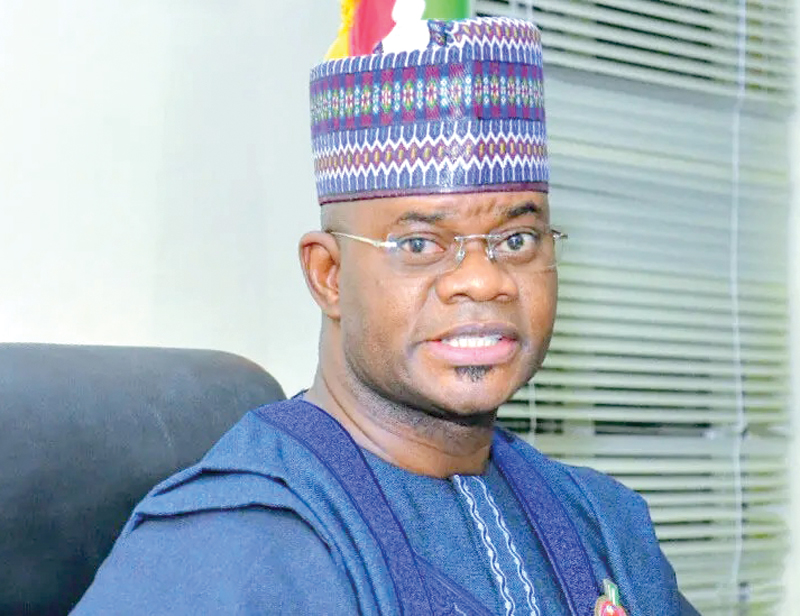
Former Kogi State Governor, Yahaya Bello
Yahaya Bello and his apologists have been spurting out bunkum. They allege that the EFCC is hounding him. Let us assume they are right. First, it is shameful for a self-styled Lion to hide inside a hole like a coyote, thereby eating stale food reserved for effeminate animals. Don’t they say that the leopard, and by extension, the lion, does not eat stale food? (Ekun kii je’ran ikasi). It is thus lawless of Yahaya Bello not to honour the anti-graft body’s lawful invitation. Bello’s 8-year reign was notorious for his naked stomping on opposition’s human rights, running a government fittingly described as an orgy of violence. Why are executioners always afraid when swords are flung in their faces? His is reminiscent of the story of an executioner in Old Oyo Kingdom whose specialty was in decapitating his victims with relish. Upon courting the ire of the Alaafin and was sentenced to death, the ex-executioner suddenly became jittery. When the man about to decapitate him began to do the traditional acrobatics pre-cutting off of his head, jittery, the ex-executioner’s voice shaky, he asked what part of his body would be cut off, “my head or feet?” Celebratory townsmen who had gathered to witness his comeuppance were angered and demanded rhetorically what part of his victims’ bodies he relished in cutting off during his reign of terror.
Late University of Leiden scholar, Stephen Ellis, in a 2001 article, “Mystical Efforts: Some evidence from the Liberian war” (Journal of Religion in Africa, XXX1, 2) described how Monrovians were shocked at how soldiers “(disemboweled) the bodies of their victims and (eat) their flesh or internal organs, particularly the heart.” The art of eating human heart is borne of a residue of practices in Africa. The belief is that, a person’s essence is contained in the heart and the blood. So, once the hearts and blood of these warriors are eaten and drunk, “the one who had just eaten them acquires some of the power formerly possessed by his victim.”
Wherever Bello is at the moment, no one needed to be told that he is engrossed with one or a combination of three elements in the bid to confront the coercive power of the Nigerian state. In the tragedy that is Yahaya Bello, these three elements must be making gross harvests from his calamity. They are, on the one hand, the religious combine made up of Pastors, Alfas and African indigenous religious rituals and magic. The second is, lawyers scrambling to profit from what they perceive as the loot from Kogi. Some shameless ones among them gathered in court last week to protest against the EFCC. The third is bloggers/journalists who by now must have offered to defreeze adversarial comments against him in traditional and social media platforms.
Marabouts have become notorious in the incestuous relationship between politics and religion in northern Nigeria. They are traditionally Muslim religious leaders and teachers who functioned historically as chaplains serving in Islamic army of North Africa, the Sahara, and in the Maghreb.
For very many African heads of state, clerics and known spiritualists were their advisors. Kenneth Kaunda was top among them. As president of Zambia, he had an Indian, Dr Ranganathan, as consultant on power matters. So also did President Mathieu Kerekou of Benin. He had a Malian marabout called Mohamed Amadou Cisse, also known as ‘Djine’ or ‘the Devil’ as his spiritual advisor. Cisse once publicly espoused the Devil. He was hitherto advisor to some other African leaders like Mobutu and Omar Bongo of Gabon. Kerekou later appointed Cisse minister of state whose responsibility in the Beninese government was secret services. President Didier Ratsiraka of Madagascar too had a palace that boasted of an extravagant temple dedicated to Rosicrucian god. So also did Paul Biya of Cameroon and Joaquim Chissano of Mozambique.
Marabouts, herbalists, sorcerers and occult chiefs of the Yahaya Bellos of this world and other African leaders become repositories of highly confidential state information. These get them in the process of spiritual interventions for the captive leaders. Feckless and desperate in the bid to attain and cling on to power, they divulge details of innermost governmental secrets to them. A 1998-published journal article written by Stephen Ellis and Gerrie ter Haar with the title, “Religion and Politics in Sub-Saharan Africa” (The Journal of Modern African Studies, Vol. 36, No. 2, pp. 175-201) discusses how leading marabouts have pre-knowledge of coups d’e tat and other secrets of power. Amadou Cisse, for instance, knew virtually all the secrets of power in Benin.
The moment the Nigerian state allows Yahaya Bello, for whatever reason, to escape the wrath of the law, its last lever of strength will snap off. Whoever kills the proverbial hunchback, the Abuke Osin, should pay dearly for it.
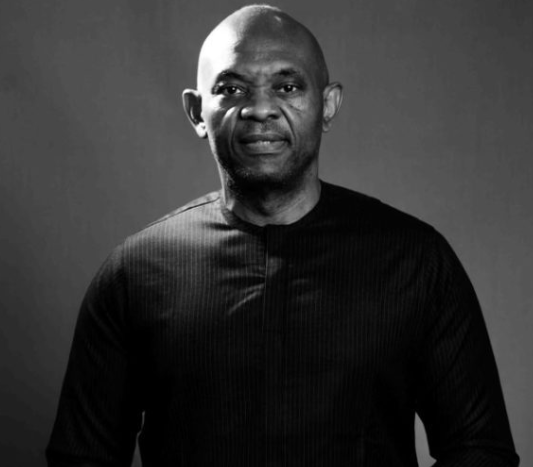
Happy independence everyone!
As we celebrate another year of independence, it is time to reflect, to look in the mirror, for our nation and ourselves.
We know Nigeria, we love Nigeria, Nigeria is one of Africa’s most diverse and dynamic countries. We are a nation that excites, beguiles, and dreams. Yet, amidst our diversity and that potential that we all feel, we have faced so many challenges. These challenges ask us to answer a fundamental question: What is our collective responsibility in nation-building?
The destiny of Nigeria lies firmly in the hands of its people – you and me. I am an optimist and I believe strongly in the potential of our nation. We must work together to create the progress we so desire through innovation, and with unity in diversity.
In August, I spoke to the Nigerian Bar Association Annual General Conference in Abuja. At the time of a new administration – and without doubt some of our toughest times economically, I spoke about our collective responsibility as Nigerians, and what we must do to foster nation-building.
My prescription, my advice, my philosophy is simple:
1. Unity.
We must set our differences aside and be united with one ambition, and one duty – nation-building. Whatever our backgrounds, geographies, religions, and experiences let us ensure that our country experiences a true renaissance.
2. Celebrate our Global Success.
We know the potential of Nigeria.
We know the resources, human and natural, that Nigeria has at her disposal. We must learn to champion the successes of Nigerians globally – in international leadership positions at the WTO, at the UN, at the African Development Bank, at the Afreximbank, in technology, in music and entertainment, in business, in arts and in media, in film, in sports.
We see these replicated at home – what we need to do is unleash our potential, create that enabling environment in Nigeria.
3. Business Excellence.
The Nigerian private sector is showing globally our capability, our ingenuity, our institutionalisation. We have global businesses with Nigerian origins. For instance – UBA, the United Bank for Africa, the only African Bank that operates in the USA, as a deposit-taking bank. We are now in Dubai, Paris, and London – and just as importantly 20 other countries in Africa. Who would have thought 20 years ago, that Nigeria would be home to Africa’s global bank!
The private sector must continue to surpass its own achievements and continue to put Nigeria on the map.
4. Shared Responsibility
Nation-building is a call to arms – a vital task – a necessity.
At its core, nation-building is the intricate process of forging a cohesive, harmonious, and united society, out of diverse individuals, cultures, and ideologies. It is the art of constructing a shared identity.
Transforming Nigeria is a journey that demands our collective dedication, building across political affiliations, ethnic differences, and socioeconomic differences.
One that is not the responsibility of our government alone. Great nations start with great people, not just great leaders.
5. A Shared Ambition Across Our Society.
Our private sector, our philanthropies, our civil society, all citizens must be brought together and be empowered – as real, valued and executing partners for this national renewal, this nation building.
6. Love For Country.
Let Nigeria be at the centre of our hearts. Let us invest in the brand Nigeria.
We have no other place, no other motherland than Nigeria. We must begin to show and share a sense of pride in Nigeria. We must begin to rekindle our hope and have confidence in Nigeria and in our leaders. Let us be proud of Nigeria.
The responsibility of nation-building falls upon each and every one of us. To truly build a strong and prosperous nation, we must be more conscious and dedicated in our efforts.
Let us be inspired by the lessons of history, motivated by the sacrifices of our forefathers, guided by the wisdom of our elders, and energised by the aspirations of our youth.
Together, we can build a nation we can all be proud of.
Celebrate 63!
#TOEWay
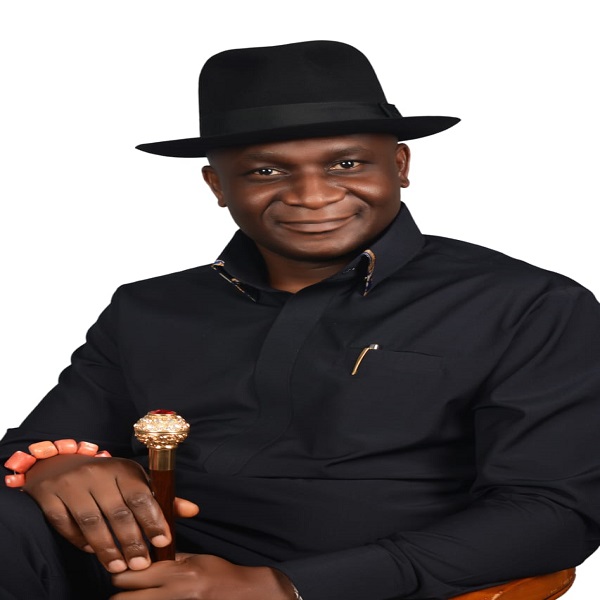
By Ifeatu Agbu
The rapid development of the Niger Delta region, which is the core mandate of the Niger Delta Development Commkisison, NDDC, got an impetus when the current Management, led by Dr Samuel Ogbuku, mounted the saddle at the Commission’s headquarters on January 5, 2023.
From day one, Ogbuku and his team were confronted with the daunting challenges of development in the Niger Delta region. However, the challenges spurred them to begin to look for new ways of achieving results. That inexorably led to the decision by the Commission to begin to do things differently.
In charting a new course, the Commission had to use new strategies, which emphasized transparency and accountability.
The new trajectory takes into account the vision of the NDDC, which is to create an enabling environment for the sustainable development of the Niger Delta region. The Management is also guided by the Commission’s mission, which is: “to facilitate the sustainable, even and rapid development of the Niger Delta, into a region that is socially stable, politically peaceful, economically prosperous and ecologically regenerative.”
The paradigm shifts at the NDDC did not come by chance. It came from good leadership. According to General Collin Powell, former Chairman of the US Joint Chief of Staff [1989-93] and the first African American to be appointed Secretary of State, you have to appoint the right calibre of people to deliver good results.
For him, “the organisation doesn’t really accomplish anything. Plans don’t accomplish anything either. Theories of management don’t matter. Endeavours succeed or fail because of the people involved. Only by attracting the best people will you accomplish great deeds.”
The Executive Management team in NDDC today appears to be hitting the right notes. This started with the solid foundation laid during a four-day Board and Management Retreat at the Ibom Icon Hotels and Golf Resort, Uyo, Akwa Ibom State. This set the tone for a new and re-invigorated journey.
Indeed, the management signaled that it would not be business as usual as it would enthrone transparency in its operations and reverse the resource-curse syndrome in the Niger Delta region.
At the end of the retreat, participants resolved that the NDDC should prioritize key sectors that would have huge impact on the standard of living of the people of the Niger Delta, namely: infrastructure, education, health and agriculture; the NDDC should pay particular attention to the security of lives and property and the protection of the poor and weak in the society; the NDDC should improve its youths and women empowerment programmes; the NDDC should consider implementing legacy projects that have the potential to benefit the people of the region, reduce poverty and improve the conditions of living of the people.
The stakeholders resolved to intensify efforts towards fast-tracking the development of the Niger Delta region. Along this line, they agreed to revisit and review the Niger Delta Regional Development Master Plan, which expired in 2020, to provide sustainable focus for the region.
They further resolved: “That the NDDC in its determination to take the region to greater heights shall engage in Public Private partnership arrangements with State Governments, International Oil Companies (IOCs) as well as International Donor Agencies with a view to executing mega projects for the region.”
To truly make a difference, the management adopted new methods to effectively drive sustainable development in the region. Thus, it decided to espouse the Public Private Partnership, PPP, model to provide alternative sources of funding for key development projects and programmes.
Consequently, a Management Committee on Public Private Partnership was constituted by the NDDC on January 18, 2023. The Commission observed that the only outstanding partnership it has entered into since inception was with respect to the construction of the Ogbia-Nembe Road. The 27-kilometre road, which connects 14 different communities of Bayelsa State, was constructed in partnership with Shell Petroleum Development Company, SPDC.
That multi-billion flagship project illustrates the kind of challenges confronting the Niger Delta. It cuts through the mangrove swamps with many bridges and 99 culverts.
To further explore the possibilities presented by a PPP model, the Commission organised a PPP summit in Lagos on April 25. At the Summit, with the theme: “Rewind to Rebirth,” the Commission signed a Memorandum of Understanding, MOU, with a United States-based firm, Atlanta Global Resources Inc., AGRI to build a railway network that will connect the nine states of the Niger Delta region.
The NDDC management had previously engaged the Nigerian National Petroleum Company, NNPC, Limited to propose a partnership for speedy development of the Niger Delta.
The Group Managing Director of NNPC Limited, Mr. Mele Kyari, agreed to co-fund some of NDDC’s projects tailored towards infrastructural development of the Niger Delta region. The partnership overture to the NNPC came on the heels of similar moves to get the hands of the Shell Petroleum Development Company of Nigeria Limited.
Again, the Commission engaged the members of the Oil Producers Trade Section, OPTS, of the Lagos Chamber of Commerce and Industry during their recent meeting in Lagos. According to Ogbuku, the management “recognizes that the OPTS, which embodies the IOCs, is a critical stakeholder of the NDDC, that is second only to the people of the region.”
Obviously, the NDDC alone cannot handle the task of developing the Niger Delta region. The Commission needs the support of all stakeholders to achieve the goal of developing the region. NDDC funds alone cannot fully develop the region. It needs the partnership of IOCs to achieve this.
Apparently, this prompted the management to step up the collaboration with various stakeholders, including the state governments to end the era of duplication of projects and promote harmony.
The NDDC boss noted that it was important to enhance collaboration between state governors, the NDDC, and other critical stakeholders to drive development through the monitoring and execution of regional projects.
Interestingly, steps are already being taken to strengthen the relationship between the Commission and the State Governments of the Niger Delta, to make them partners and not competitors.
These engagements have improved the visibility and broadened the scope of NDDC’s partnerships. In recognition of this fact, Ogbuku said that “stakeholders’ engagements were critical to the commission’s effectiveness. “We have, therefore, met with the civil society groups, traditional rulers and community leaders.
The traditional institution, being a highly revered group, was given due attention. Thus, the management visited the Olu of Warri, Ogiame Atuwatse III, in his palace in Warri, Delta State and the Amanyanabo of Okochiri, King Ateke Michael Tom in his palace in Okochiri, Okrika Local Government Area
To consolidate on the engagements, the management inaugurated a 2024 Budget Committee to interface with stakeholders in the budget process. The committee was charged with identifying the vision of the NDDC as an interventionist agency in order to prioritise the allocation of available resources.
Ogbuku assured that the Commission would produce a budget that would capture the present realities in the region, insisting that the document must have a clear vision. “This way, in implementing the it, there will be proper guidelines and it will not be distorted when it gets to the National Assembly. To achieve this, the NDDC must have a stakeholder’s conference to reach an agreement,” he said.
The NDDC boss maintained that the 2024 NDDC budget will be an inclusive budget that largely accommodates the interests of stakeholders in the Niger Delta region.
He said: “Stakeholders will have an opportunity to tell the NDDC the kind of projects they want in their areas of operations, so that they can be included in the budget. That is the plan for the NDDC budget for 2024. Henceforth, NDDC will capture every stakeholder in its budget; state governments, the IOCs, traditional institutions, everybody should be included in it. It will be an all-inclusive budget of the people of the Niger Delta.”
However, before coming up with the all-inclusive 2024 budget, the Commission had to deal with what the Managing Director described as a dysfunctional situation. “We met a situation where the Commission had no approved budget for 2021 and 2022.” Thankfully, the budgets for the two years, as well as that of 2023 have now been passed by the National Assembly.
With the budget in place, more projects and programmes will begin to roll out. In the light of this, the new concept developed by the Commission to work with the Niger Delta Chamber of Commerce in the training of youths and young entrepreneurs in the Niger Delta region, has every reason to succeed.
The plan, according to the NDDC boss, was to collaborate with the Niger Delta Chamber of Commerce to support Small and Medium Enterprises in the Niger Delta region.
He said: “For the new scheme to be successful, it will revolve around a Niger Delta Chamber of Commerce that will strengthen young entrepreneurs in the region. The goal is to stop a situation where youths will be at home and be receiving stipends. Hence, the Commission is changing its Youth Volunteer programme to Youth Internship Programme where youths will be attached to organisations for one year to learn skills.”
In the area of education, the NDDC under Ogbuku interacted with Vice Chancellors of four universities in the Niger Delta region and the dominant issue on the table was how to begin partnerships that will encourage research to help in finding solutions to some of the problems bedevilling the society.
Ogbuku said that partnering with universities in academic research will make it possible to produce life-saving vaccines, as well as finding lasting solutions for medical and social problems.
The Management also held a meeting with contractors working for the Commission and called for cooperation from them to resolve issues around the burgeoning debt profile of the Commission.
To find a solution, the NDDC leadership says it is willing to accept solutions that will lead to the reduction of the Commission’s debt profile.
As part of the measures taken to address the challenges posed by a huge debt profile, the Commission started reviewing all disilting contracts before payments were made.
Today, the NDDC has sufficiently watered the grounds for public, private partnerships to flourish alongside contributions from stakeholders to bring about economic prosperity, as well as ensure social and political stability in the Niger Delta region.
According to Ogbuku, the NDDC is assuming its rightful position as a vehicle to drive the socio-economic development of Nigeria’s oil-rich region.
-
 News2 days ago
FG confirms Ebola case in FCT, identifies 44 contacts
-
News1 day ago
“It’s not debatable, we can’t go back,” Mbah Backs Tinubu on Fuel Subsidy Removal
-
News2 days ago
Afenifere leader, Fasoranti, dies at 100
-
News1 day ago
Mbah: Enugu Now Produces 120 Million Litres of Water Daily, Expands Agricultural Investment
-
Features7 hours ago
Kogi’s Kidnapping Crisis: Why Do Forests Remain Safe Havens for Criminals Under Ododo’s Watch?
-
News2 days ago
APC Campaign Council Denies Plot to Assassinate Atiku, Says Security Intact
-
News7 hours ago
Kidnappers kill seven-year-old boy after ransom demand
-
Politics1 day ago
Mike Igini: Politicians Infiltrate Agencies Responsible for Election Personnel as Electoral Laws Go Unenforced