News
2022 Flood Disaster in Ibaji LGA: Over 33 killed, 200 houses destroyed, many displaced – Group

FULL TEXT OF ADDRESS PRESENTED AT A PRESS CONFERENCE ORGANIZED BY IBAJI UNITY FORUM, A SOCIO CULTURAL ORGANIZATION IN IBAJI LOCAL GOVERNMENT AREA, KOGI STATE NIGERIA AT ABUJA TODAY, WEDNESDAY 23RD 2022.
Our invited guests, esteemed friends of Ibaji peopleand gentlemen of the press.

We appreciate your presence at this Press Conference and wish to express our gratitude for sacrifising your precious time to witness this occasion.
IBAJI UNITY FORUM (IUF) is a foremost socio–cultural organization in Ibaji Local Government Areawhich is out to foster Unity and Promote Socio-economic Development of the area.
Ibaji LGA, a terribly neglected food basket of Igala Ethnic Nationality. The people are acknowledged as great farmers who can feed the entire people of Kogi State and other parts of Nigeria.

Ibaji Local Government Council is one of the 774 Local Government Councils of the Federal Republic of Nigeria. Created in 1996 with 10 political wards, with land size of 1,377 square kilometers, over 80 villages and numerous farm settlements with a population of 128,129 as at the 2006 census.
Ibaji LGA is boarderd to the North by Idah Local Government Area and trapped between River Niger to the west and Anambra River to the East.
Gentlemen of the press, we are constrained to address this Press Conference on the total neglect of Ibaji Local Government Area and her people by Federal and State Governments respectively.
Neglect:
The Local Government, since creation lacks all the basic Social Amenities as enshrined in the 1999 Constitution as per right to live etc.
FLOOD/FLOODING:
In the days of old, a season of flood in Ibaji used to be a source of joy since it always came with alluvial soil deposits, fish and other economic benefits. But in the current decade, annual floods have been very devastating; of note was that of 2012 which visited the area with the fury of a tsunami, resulting in human and livestock fatalities, massive destruction of houses, farms and other valuables. The negative effects of this flood on Ibaji People are yet to mellow down ten years after.
The 2022 flood and its devastating effects in Ibaji have downgraded that of 2012 to a child’s play. It is simply a catastrophe; According to reports reaching us, over 33 people have lost their lives to the merciless flood, more than 200 houses were destroyed, leading to the displacement of our people in different parts of Idah and Igalamela/Odolu LGAs of Kogi State, Enugu, Anambra and Edo States, hectares of farm land and crops were also submerged and destroyed.
During the flooding, I went round the entire ten wards with my media team, to carry out an on-the-spot assessment, which culminated in our production of a documentary to project and report the suffering, pain, agony and abandonment of Ibaji people during the flooding, with specific reference to the suffering of women and children. The documentary has been viewed by over 35,000 people as at last check.

At that period, the floodwater was the only source of water the Ibaji flood victims used for both bathing, cooking, and even drinking.
Worried by the situation, we took a sample of the flood water to the FCT water board laboratory for analysis. And the result was not only shocking but deeply disturbing, as the floodwater was said to be unfit even for bathing. Yet, our poor Ibaji people drank it for weeks, making us to have an uncomfortable fear of any water borne disease soon.
During the flooding, there were good spirited persons, kind and compassionate people, who were moved to make donations to Ibaji people. To be honest, we are beyond thankful and we lack words to express our enormous gratitude to these people. Because of your love for humanity, you have somehow made our world a better place with your donations.
In Ibaji which is the worst hit of the Nine local government areas in Kogi state affected by the flood, no portion of the 1, 377 sqkm of land space was not submerged, thus forcing the people to cohabit with desperate and hostile reptiles on locally elevated platforms. Crops and other economic trees were submerged and destroyed.
Our people are in serious perjury and in danger of post flood famine having lost everything. Even those who died during the flood season of natural causes have no place of rest; no land to bury them; their corpses are presently in mortuaries in neighboringstates kind enough to accept our people as refugees. They will continue to stay in the morgues until the invading flood recedes. The future for the people is bleak. Experts on climate change and meteorology have warned that there may be a more devastating flood in 2023. If the prediction materializes, then we can now start preparing for the worst.
INACCESSIBILITY:
Ibaji local government area is the neglected food basket of Kogi state. The absence of motor–able roads in the area has made movement of humans and farm products very hectic and sometimes nearly impossible. The consequences of this for the people are better imagined. Government plans to link the area with the rest of the country has always been there but the political will to execute the projects has remained a major obstacle.
The federal government in the formative years of 4threpublic made a feeble attempt to construct a road that would have passed through the area from Anambra state enroute Abuja. In pursuance of this,contract for the construction of Otuocha-Ibaji-Idah road was awarded to Niger cat Construction Company at a cost of N7.2 Bn 1n 2009. But thirteen years (2009-2002) down the line, the project is yet to commence inspite of cries and appeals by the people. The construction of this interstate road would have cut down travel time from Anambra state to Abuja by more than three hours. It was also to link vast agricultural areas along the route to target markets for sale of agricultural products and ginger up economic social and political developments within the vast agricultural communities in Anambra west, Ibaji and Idah local government areas. Thousands of jobs would have been created, interstate and intrastate socio economic integration would have been encouraged due to enhanced accessibility.
It was also envisaged that the devastating annual floods would be controlled through adequate water channels which would arise from the construction of large and medium sized bridges on the road.However the people’s hopes have been dashed by the government’s abandonment of the road project.
In a similar symbolic manner, Kogi state governor, Alhaji Yahaya Bello awarded a 5 billion naira contract for the construction of Idah-Ibaji road in 2017 and a follow up well publicized flag off ceremony was staged with a thunderous ovation from the entire Ibaji people. But sadly, Six years down the line, construction work is yet to take off.
OIL EXPLORATION IN IBAJI:
Exploration for oil commenced in Ibaji seventy years ago (1952). However, the attention of border villages was drawn to the existence of the black gold on their soil when in the current decade oil rigs started springing up to the admiration of the locals over possible benefits that might accrue from such discovery. Residents of Ibaji border villages soon noticed some encroachment on their land by Anambra border indigenes. Armed hostilities then erupted between the two border communities following the failure of the national boundary commission to delineate the disputed boundary lines over the years.
A temporary respite however appears to have come to the people of the areas in dispute with the declaration of Anambra and Kogi as oil producing states, recognized by the revenue mobilization allocation and fiscal commission (RMAFC) to partake in the 13% derivation fund. Though not equitable to Kogi state, the lopsided attribution of oil wells in Anambra sedimentary basin is a step forward. The RMAFC in its wisdom approved the attribution of eleven oil wells wholly to Anambra state and one only to Kogi. In addition, the two states are to share on 50.50 basis, proceeds from three oil wells named Anamabra river 1,2,3 which are clearly on Kogi soil. This arrangement according to the RMAF, is pending the final delineation of the boundary. As a result of this arrangement, Governor Yahaya Bello announced and confirmed the receipt of the first tranche of the 13% derivation fund from the federation account in October 2022, though not disclosing the amount received. Anambra made a similar confirmation of receiving 268.2m in August, 2022.
Appeals on the issues raised
FLOOD/FLOODING:
The issue of perennial flooding is both a global and national challenge that must by jointly remedied by all levels of government. Flooding and its devastating effects vary from location to location but flood prone areas like Ibaji and other places are usually worst hit. It is therefore not surprising that Ibaji became the first casualty among the nine local government areas in Kogi state affected by the 2022 flood. However, inspite of our vulnerability and proneness to flooding, our people received the least attention and publicity of the extensive damagesinflicted by the flood. It is in this regard that we hereby make appeals to all governments, civil society organizations and all Nigerians to come to the rescue of the people. Our people are currently in danger of starvation, homelessness and all manner of human degradation.
We have heard of donations to the flood victims through the Kogi state government; however the effects of such donations are yet to have an impact. We therefore appeal to the state government to expedite action on the disbursement of the cash and materials so received.
ACCESSIBILITY TO IBAJI:
Accessibility to Ibaji is almost impossible in all seasons. Even during the dry season when accessibility is expected to be much easier, lack of motorable road has made movement very hectic and almost impossible. Attempts by the federal and Kogi state governments have been abortive in this regard. The federal government sponsored Otuocha–Ibaji–Idah road construction would have made a huge difference. The project has not been funded and has been comatose for 13 years. We are therefore calling on the federal government to do the needful and mobilize the contractors to site.
In a similar manner, we urge the Kogi state governor, Alhaji Yahaya Bello to revive the N5 billion Idah- Ibaji road construction project which he flagged off in 2017 but yet to take off after six years.
4.3 13% Oil derivation Fund: In October 2022, Governor Yahaya Bello announced and confirmed the receipt of the first tranche of 13% derivation fund from the federation account allocation, We are happy with this development and wish to congratulate the government, people of Kogi state and Ibaji people in particular, on the long and tortuous but successful journey to the club of oil producing states in Nigeria.
The 1999 Nigeria constitution which created the 13% oil derivation fund is quite unambiguous on the use of it, According to section 162 subsection 2 ofconstitution the fund is to assist oil producing communities in tackling environmental pollution and degradation, provision of basic amenities like healthcare, portable water, road and economic empowerment of community people. Except for the newly qualified oil producers (Anambra and Kogi)all other oil producing states have established oil producing development commissions to execute this constitutional mandate on behalf of Government.
We therefore hereby recommend the immediate creation of oil producing development commission by the state government for ease and transparent utilization of the revenue from the derivation fund. In the interim, we recommend the opening of dedicated account for receiving money from the 13% derivation fund.
As a government of new direction, we expect the Governor to strictly abide by the provisions of the constitution so that the heroes of the struggle would not have died in vain.
CONCLUSION:
Gentlemen of the press, we appreciate your attendance and wish to thank you for listening to us.
Thank you in advance for the publicity given to our cause. Again thank you and remain blessed.



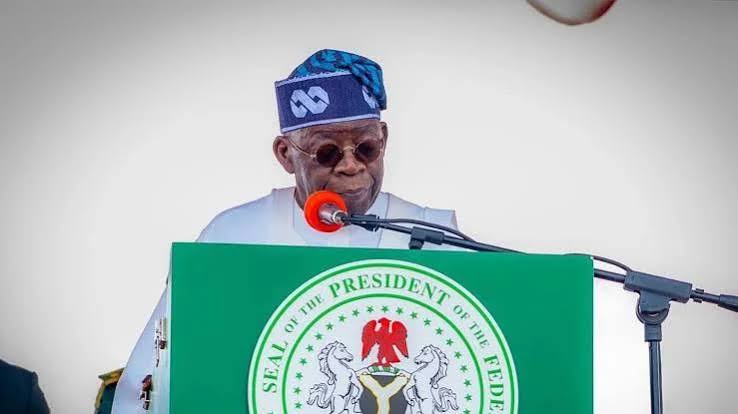
President Bola Tinubu has explained why he will not accompany members of the All Progressives Congress (APC) Presidential Campaign Council to every campaign event ahead of the 2027 general election, saying he must balance the demands of the re-election campaign with the responsibilities of governance.
Tinubu spoke on Wednesday in Abuja during the inauguration of the APC Presidential Campaign Council, where he charged members to take the party’s message to Nigerians across the states and local government areas while he concentrated on running the country.
The President said he agreed with concerns that the rigours of campaigning should not distract him from governance, insisting that Nigeria required his attention at a time when the administration was managing economic responsibilities and international financial obligations.
“You’ve warned me not to allow the rigour of the campaign to distract me from governance, I hear you. I am in full agreement with your decision. Nigeria needs more attention now,” he said.
Explaining further, Tinubu asked campaign council members to excuse him from attending every campaign event, pointing to the need to meet the country’s financial obligations.
“So, you will excuse me from going everywhere with you, we have bills to pay. The American creditors cannot wait,” the President said.
He also emphasised the importance of attracting investors willing to make long-term commitments to Nigeria, arguing that investment was necessary to secure a better future for the country’s children.
“We want those investors to come in, be here to stay, to invest for the future of our children,” he said.
Tinubu, however, assured Nigerians that his decision not to attend every campaign event would not prevent him from engaging directly with voters.
“However, I will still make time to speak directly with Nigerians, even as you lead the campaign in the states and local government areas,” he added.
Describing the inauguration as more than a routine political gathering, the President said the council represented a renewed commitment to Nigerians and the responsibilities entrusted to the APC as the governing party.
“We have not gathered merely to inaugurate a council. We have gathered to renew a covenant. A covenant with Nigerian people and the historic responsibility they have entrusted to us as Nigeria’s governing party,” he said.
He charged council members to communicate the administration’s vision, record and agenda to Nigerians nationwide, expressing confidence in their ability to take the party’s message to every ward.
“This council will carry our vision, our records and our agenda to every Nigerian, and it will carry them to victory every ward of this country,” Tinubu said.
The President also commended APC members for successfully completing the party’s congresses, recalling predictions that the exercise would trigger an internal crisis.
According to him, the party had overcome the challenges and emerged united, with members participating in the process from the ward level to the national leadership.
“They said there will be implosion. We passed through it. We did not fail. You didn’t let us down. We got here together,” he said.
Tinubu’s remarks place governance and economic management at the centre of his stated approach to the coming campaign, while assigning the campaign council the responsibility of coordinating the party’s nationwide mobilisation ahead of the 2027 election.
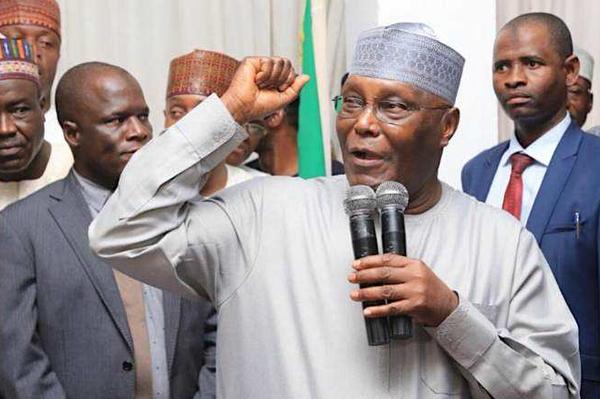
The Economic and Financial Crimes Commission (EFCC) has reopened an investigation into allegations involving former Vice-President Atiku Abubakar following a petition by a former member of the House of Representatives, Hon. Ehiozuwa Johnson Agbonayinma.
The commission acknowledged receipt of the petition, dated August 27, 2026, and received on September 1, 2026, confirming that investigation has commenced.
The former lawmaker through his lawyer, Chief Hannibal Uwaifo (SAN), is seeking a review of the allegations arising from an earlier investigation involving the former vice-president.
As part of the process, the EFCC invited Agbonayinma to its headquarters in Jabi, Abuja, on October 12, where he adopted his petition and responded to questions from investigators.
He arrived at about 9:58 a.m. and left at approximately 4:07 p.m. after the interview.
The commission’s acknowledgement letter, referenced CR:3000/EFCC/HQ/SDC-2/VOL.3/398, forms part of the ongoing investigative process.
He told newsmen that his petition sought to revisit an investigation conducted by the former EFCC chairman, Mallam Nuhu Ribadu, involving Atiku.
He argued that the matter deserved renewed attention in the interest of accountability and the rule of law.
“I want to thank Nigerians, the EFCC and those praying for me in this struggle. The laws are meant for both the rich and the poor. After the EFCC has done a fantastic job, it should not be kept under the table,” he said.
Agbonayinma added that he considered reporting alleged wrongdoing a constitutional responsibility, insisting that nobody was above the law.
He also disclosed that he had written a petition on the matter to United States President Donald Trump, calling for attention to the allegations.

The Senate has passed, for second reading, a bill seeking to establish a national framework for suicide prevention, decriminalise attempted suicide and provide rehabilitation for survivors, despite opposition from Senate President Godswill Akpabio, who insists that the act should remain punishable by imprisonment.
Sponsored by Senator Asuquo Ekpenyong, representing Cross River South, the bill seeks to address what he described as a contradiction in Nigeria’s laws.
Ekpenyong argued that while the National Mental Health Act recognises attempted suicide as a psychiatric emergency requiring treatment, Section 327 of the Criminal Code and Section 231 of the Penal Code still criminalise the act.
He said decriminalisation without accessible care would be incomplete, stressing that suicide has complex causes and requires a humane, health-focused response.
“At the heart of this bill is a simple question: when a Nigerian survives a suicide attempt, should the first response of the state be prosecution or protection?” he asked.
He warned that continued punishment could create a situation in which people experiencing distress feel compelled to ensure their attempts are fatal to avoid prosecution.
The bill proposes replacing imprisonment with mandatory assessment, referral, treatment and follow-up support. It also provides for crisis helplines, training for police officers, teachers and health workers, public education and a national data system for suicide prevention.
However, Akpabio maintained that attempted suicide should remain a criminal offence, arguing that removing the penalties could encourage the act.
“If you attempt suicide, make sure you die. Anyone who attempts and fails will go to jail,” the Senate President said.
Akpabio added that the issue involves both the Criminal Code and the Penal Code, requiring input from State Houses of Assembly during a public hearing to avoid legal conflicts.
The bill has been referred to the Senate Committees on Judiciary and Health for further legislative action and a public hearing.
-
 News2 days ago
Mbah orders impartial Police Probe into Enugu political violence, vows accountability
-
News2 days ago
BREAKING: Soludo, Wike, Adeleke, others appointed member of APC Presidential Campaign Council
-
Features2 days ago
Enugu Political Flashpoint: Mbah orders Impartial Probe as NDC Incidents Trigger Controversy
-
News2 days ago
Rochas Okorocha arrested, released after one-hour Interrogation — Police
-
News2 days ago
Enugu APC demands NDC apology over minute’s silence
-
News1 day ago
Alleged $1bn arms fraud: Funds given to Defence Ministry, not military — Gen. Buratai
-
News2 days ago
Enugu Governor’s Aide, Lucky Chukwu is dead
-
Features9 hours ago
Aguleri/Umuoba Anam Crisis: The Bloody Battle Between Close Neighbours