News
I poisoned my husband because I hate marriage – Fatima, killer housewife

The Borno Police Command said it had arrested a housewife, Fatima Abubakar, 25, for allegedly killing her husband, Goni Abbah with poison.
The Commissioner Of Police, Mr Abdu Umar, who disclosed this to the News Agency of Nigeria (NAN) in Maiduguri, said that the suspect was arrested on October 19 by men of the Command at Anguwan Doki.

Umar said that the victim, who was the Chief Imam of the area, returned from the mosque when the suspect, who was the second wife, allegedly mixed poison in his food.
He explained that as soon as Goni started eating, his condition deteriorated.
According to him, the victim was immediately rushed to the State Specialist Hospital where he was given emergency medical attention, but unfortunately he later died when they returned home.

The commisioner of Police immediately deployed men of the Criminal Investigation and Intelligence Department to arrest the suspect after the incident was reported by the family of the victim at the GRA Police Station.
He noted that on the arrival of the police, they witnessed large numbers of aggrieved youths in the neighbourhood who stormed the home of the victim with the intention to lynch the suspect but the police were able to bring the situation under control.
He added that the suspect, in her statement, confessed to the alleged crime, noting that she bought the poison from Monday Market when she already made up her mind to kill him.
He said that the case had been registered as culpable homicide before the Office of the Director of Public Prosecutions before she would be charged to court.
The suspect, Fatima who was paraded at the command, told NAN that she killed her husband because she was tired of the marriage.
She said: “I never wanted the marriage. Goni was my second husband; I got separated with my first husband because I hate marriage.
“Anytime I wake up with the fact that I am married, it pisses me off. At some point, I had to run to my parent to demand an end to the marriage but they always sent me back, asking me to be patient.
“At some point, two months after I gave birth to my child, I ran away and slept in an uncompleted building for about two weeks. I later returned to my husband’s house.
“Not that he doesn’t treat me well, we are also not quarrelling. We are two in the household, I am his second wife and I have been married to him since 2021. But I just hate when any man comes near me.
“I don’t really know what is wrong with me. Even now that I am speaking to you, I don’t really feel that I was the one who killed him,” the lady said as she broke down in tears following her confession on the poison of her husband. (NAN)



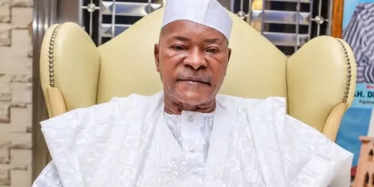
Kogi State has been thrown into mourning as former Governor of the state, Ibrahim Idris, fondly called Ibro, has reportedly died in the United Kingdom at 77.
Sources broke the sad news on Sunday, with details of his passing still sketchy as of press time.
Though details regarding the latest development are still sketchy, family sources said Idris had suffered protracted illness.
Meanwhile, incumbent Kogi State Governor Ahmed Usman Ododo has condoled with the former governor’s family.
In his condolence message, Ododo described the late lawmaker as a man who had made meaningful contributions in politics and business.
The governor also recalled his last meeting with the ex-governor in March 2024 during a visit involving political stakeholders from Omala Local Government Area.
Ibro was not just a governor. He was an institution.
From businessman to political colossus, Idris stormed Kogi politics in 2003 when he floored incumbent Abubakar Audu to emerge governor on the platform of the Peoples Democratic Party.
What followed was a turbulent, dramatic reign.
His 2007 re-election was nullified by the courts after Audu was excluded from the ballot. The Court of Appeal in February 2008 ordered a fresh election. Idris fought back and won the March 2008 re-run, holding on to power until January 2012 when he handed over to Captain Idris Wada.
Born in Idah in 1949, Idris built his name in business before politics — founder of Ibro Trading Company, with tentacles in construction, furniture and hospitality.
He built a furniture factory in Sokoto and Ibro Hotel, reputed to be the first three-star hotel in old Sokoto State.
Fate tested him in 2006 when three of his daughters miraculously survived the ill-fated ADC Airlines Flight 53 crash that killed 96 others. A grateful Ibro called it a “superlative show of mercy” from God.
But tragedy never left him far.
In April 2024, he buried his son, Mohammed Ibrahim Idris, former member of the House of Representatives for Ankpa/Olamaboro/Omala, who died in Abuja shortly after Eid-el-Fitr prayers.
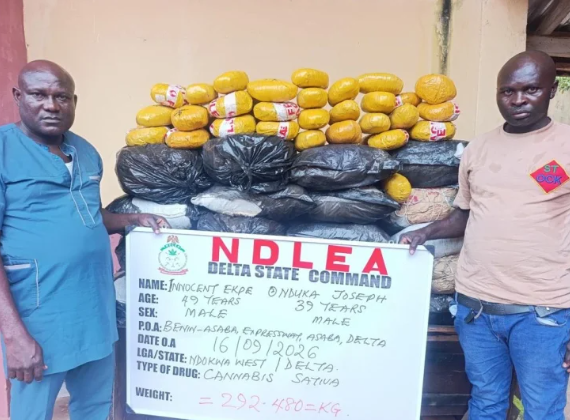
… Records major drug seizures across eight states, FCT
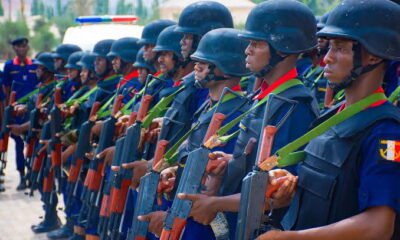
Operatives of the National Drug Law Enforcement Agency, NDLEA, have intercepted more than 1.3 million pills and capsules of tramadol and other opioids, as well as 6,000kg of cannabis, in a series of operations across eight states and the Federal Capital Territory.
The agency said the seizures had a combined street value of more than N3.4 billion.
The operations were conducted in Lagos, Edo, Niger, Delta, Ondo, Gombe and Imo states, as well as the FCT.
The NDLEA Chairman, Brig. Gen. Mohamed Buba Marwa (retd.), commended officers of the various commands for what he described as professionalism and intelligence-driven operations, urging them to sustain the agency’s balanced approach to drug control.
A major highlight of the operations was the interception of 1,200 parcels of Canadian Loud, a potent strain of cannabis, weighing 603.75kg and valued at N1.811 billion.
The operation also led to the arrest of a 49-year-old suspected drug trafficker, Innocent Ekpe, who allegedly impersonated a senior police officer to evade scrutiny at checkpoints while transporting illicit drugs across state lines.
Ekpe was arrested on Wednesday, September 16, along the Benin-Onitsha Expressway in Asaba, Delta State, with 292.48kg of skunk concealed in his silver Toyota Sienna bus.
According to the agency, preliminary investigation revealed that Ekpe allegedly presented himself as Godwin Emeka, a Deputy Superintendent of Police, using a forged police identification card.
A 39-year-old alleged accomplice, Nduka Joseph, was also arrested.
In Edo State, NDLEA operatives acting on intelligence raided a location along Agbor Road, Benin City, where they arrested 45-year-old Matthew Ossai.
The agency said Ossai allegedly used his auto-repair workshop to store illicit drugs.
Operatives recovered 48kg of Canadian Loud, 152 grammes of methamphetamine and a metal box allegedly used to store the substances.
At the Tin-Can Island Port in Lagos, NDLEA operatives placed a 40-foot container shipped from Montreal, Canada, under surveillance after it arrived on September 12.
A joint physical examination conducted with the Nigeria Customs Service and other security agencies on Wednesday, September 16, led to the discovery of 1,200 parcels of Canadian Loud weighing 603.75kg.
The consignment was concealed inside 31 black jumbo bags loaded into two Toyota Sienna vehicles in the container.
In Niger State, three suspects — Bashir Usman, 20; Abubakar Nuhu, 18; and Abdulrahman Abdulwahab, 18 — were arrested on Tuesday, September 15, during a patrol along the Abuja-Kaduna Expressway at Chachi, Tafa Local Government Area.
The suspects were allegedly found with two locally fabricated AK-47 rifles and a magazine, a locally made pistol with a magazine, and nine rounds of 9mm ammunition concealed in a black travel bag.
Two other suspects, Aminu Isyaku, 23, and Jamilu Habibu, 25, were arrested on Friday, September 18, along the Abaji-Abuja Highway.
The agency said more than 1.1 million assorted tramadol tablets and capsules, codeine syrup, methamphetamine and Exol tablets were recovered from them.
The substances were allegedly concealed in eight sacks and were being transported from Onitsha, Anambra State, to Mararaba, Nasarawa State.
In Lagos, NDLEA operatives arrested Onyeka Ofor at his residence in Aguda, Surulere, on Friday, September 18, with 48,900 pills of tramadol 225mg.
Seven cartons of cannabis sativa weighing 59kg were also intercepted at a logistics company in the state, leading to the arrest of a suspect identified as Luke Ugokwe.
In another operation in Lagos, 43-year-old Ibrahim Hudu was arrested at Apongbo on Thursday, September 17, with 998.38kg of nitrous oxide gas.
In Gombe State, a total of 154,480 capsules of tramadol were recovered from two suspects, Sabi’u Umar, 27, and Hassana Muhammad, 19.
The suspects were arrested at the Barunde area and Gombe Main Market respectively on Friday, September 18.
In Imo State, 25-year-old Ifesinachi Godwin was arrested along the Owerri-Onitsha Road on Friday with 43.85kg of skunk.
Similarly, four suspects — Blessing Effiong, Saviour Peter, David Friday Sunday and Ability Peter Sunday — were arrested during a raid on a two-hectare cannabis farm in Ita-Ogbolu Forest, Ondo State, on Tuesday, September 15.
The NDLEA said 5,000kg of skunk was destroyed during the operation, while 48kg of dried and fresh cannabis was recovered from the location.
Meanwhile, commands and formations of the agency continued their War Against Drug Abuse, WADA, sensitisation campaigns across the country during the week.
The activities included enlightenment lectures for students and staff of St. Ferdinand School, Ogbomoso, Oyo State; Unizik Secondary School, Awka, Anambra State; Scholars Nursery and Primary School, Epe, Lagos State; and Government Technical Training School, Jalingo, Taraba State.
The Delta Ports Command also paid a WADA advocacy visit to traditional ruler, King Couple Mackson Oromoni Mobene III, Pere Ama-Okosu of Ogbe-Ijoh Warri Kingdom, Delta State.
The NDLEA said the sensitisation activities were part of its continued efforts to raise awareness about the dangers of illicit drug use and trafficking.

A woman identified as Bilkisu Sani has been arrested in Rogo Local Government Area of Kano State over the alleged killing of her husband, Hafisu Gausu, amid reported plans by the deceased to marry another woman.
According to reports, the incident occurred around 7pm on Friday, September 18, 2026, in the Katsalle area of Rogo town.
A resident, Auwal Kazagi Rogo, said residents rushed to the scene after hearing cries from Bilkisu, who reportedly claimed that her husband had been kidnapped and killed.
Kazagi said residents who arrived at the scene found Gausu with an injury to his head. He explained that contrary to the initial claim that the deceased had been slaughtered, residents allegedly found that he had been struck with an object.
He said the police were immediately contacted and subsequently evacuated the body for investigation.
According to the resident, Gausu had reportedly been planning to marry another woman as his second wife, a decision that allegedly led to repeated disagreements between him and Bilkisu.
Kazagi said the woman had allegedly vowed to prevent the marriage, prompting community elders to intervene in an attempt to resolve the dispute. However, tensions reportedly continued.
The police subsequently arrested Bilkisu as the prime suspect, while investigations into the circumstances surrounding Gausu’s death remain ongoing.
The deceased was buried on Saturday morning in Rogo in accordance with Islamic rites.
Reports indicate that Gausu and Bilkisu had been married for nearly seven years and had two children. Bilkisu is also reportedly pregnant for the deceased.
Sources in the community further claimed that Gausu had asked his prospective bride’s family to bring forward the wedding date by two months because of the reported disagreement with his wife.
The police have yet to conclude their investigation into the incident, and the allegations against Bilkisu remain subject to the outcome of the investigation and any subsequent court proceedings.
-
 Uncategorized3 days ago
Ibaji and the Politics of the Perpetual Road Promise
-
News2 days ago
Soludo frees jailed Akwa Okuko tiwara aki
-
Uncategorized3 days ago
Gunmen kill popular politician
-
News2 days ago
Appeal Court upholds NDC registration, overturns Lokoja ruling
-
Editorial21 hours ago
Why Nigerian Graduates and Youths Are Jobless — and Increasingly Vulnerable to Crime and Other Vices
-
News2 days ago
FG suspends NSCDC Commandant over miners’ deaths in custody
-
Uncategorized3 days ago
NSCDC orders probe as 40 illegal miners die in custody
-
News2 days ago
Lecturer arrested over ‘WhatsApp post’ on Kogi road project