








Connect with us

News

Revealed: Terror alert triggered by arrest of Boko Haram kingpins in Abuja, Kano

Published

on

Spread the love

Before Sunday’s advisory by US Embassy in Nigeria, security forces had been working hard to avert severe attacks on Abuja and its environs by terrorists loyal to the Islamic State West Africa Province (ISWAP), an investigation by Daily Trust revealed.

Credible security sources said many terrorists and their collaborators who have been mapping and strategising on how to launch multiple attacks to attract global attention had been arrested in Abuja and neighbouring communities.

The sources said the advisory issued by the US Embassy in Abuja on Sunday was to emphasise the obvious truth that terrorists and other criminal elements have established several cells, especially in the outskirts of the Federal Capital Territory (FCT).

They said the terrorists were receiving “guidance” from their superiors living within and outside Nigeria on how to perfect “the massive onslaught on the symbol of authority” to prove that they were still strong and could attack anywhere.

It was learnt that their influx into Abuja was sequel to massive aerial reconnaissance and ground operations by Nigerian troops in the far northern Borno bordering Chad, Niger and Cameroon and the Alagarno and Sambosa forests in North East, as well as bombardments in forested areas in parts of Kaduna, Katsina and Zamfara states all in North West that led to the destruction of many cells and bonkers of the terrorists.

Maduka College Advert

Some of our sources said yesterday that some ISWAP commanders and foot soldiers have melted into the civilian population in and around Abuja perfecting plans to launch attacks about the same time.

The sources said most embassies in Nigeria were aware of this and therefore the announcement by the US Embassy might just be one of such advisories as others must have told their citizens quietly to be on the watch.

The US Embassy in Nigeria had warned Americans in the country to be cautious of their movement in response to what it called “elevated risk of terror attacks in Nigeria, specifically in Abuja.”

In the security alert issued on Sunday, the US advised its citizens to avoid all non-essential travels or movements, stay alert and avoid crowds.

“The advisory is true but we have been working on the issue for months, we have been arresting suspects and they are revealing a lot to us,” one of our sources, said.

“We have gone far in securing not only the FCT but Nigeria at large…The terrorists have no hiding place anymore because we are tracking and picking them.

 “We know all their antics. Many of them are working as mechanics, tailors, carpenters, labourers and even experts in some fields…We know what is happening,” he said.

Kingpins picked around FCT 

Daily Trust reports that about two weeks ago, two high-profile terrorists were located at the Tipper garage, along the Kubwa Express Road by Jahi District and security operatives put them on their radar.

And on Thursday, October 20, one Abubakar Dan Borno, an ISWAP kingpin who fled from the Sambisa Forest, was picked at Mararaba, a suburb of Abuja in Nasarawa State after days of trailing. The suspect was reportedly handed over to the military and taken to the Defence Intelligence Agency (DIA) for interrogation.

Our correspondent reports that intelligence has shown that some of the terrorists targeting Abuja live in Kaduna, Kano and other north-western states and only come to Abuja from time to time to have face-to-face interaction with the foot soldiers they planted.

Sources said one Abubakar Musa, an ISWAP logistics facilitator, who was picked yesterday, was trailed and arrested at the Falgore village in Tudun Wada LGA of Kano State.

It was learnt that many others were being trailed and picked as part of efforts to break the circle working hard to wreak havoc on the FCT and other major towns across Nigeria.

“There are many reasons for the desperation by the terrorists,” another source told the Daily Trust last night.

 “The first is to show the world that they are still strong and very much around even though this claim is questionable considering that they have been checkmated and many of their cells destroyed.

“Another source is to simply embarrass the government. You know that President Buhari has said that he will bequeath a safe country by May 2023. Governor El- Rufai also few days ago said they have recorded many days without attacks in Kaduna. These are good stories that those against the Nigerian State would not like to hear,” he said.

New security measures around Abuja 

Daily Trust reports that security has been beefed up in many places in the FCT. Less than 48 hours after the US Embassy raised the red alert, security operatives from the Nigerian Air Force, Department of State Services (DSS), Nigeria Police Force, Nigerian Army and the Nigerian Immigration Services have beefed up security in the nation’s capital.

Our correspondents observed yesterday that fighter and surveillance jets were on the air mapping out potential hideouts of the terrorists, who were planning to wreck havoc. A military officer, who did not want his name in print, explained that the security operatives were already on red alert following an order ‘from the above.’

“Following orders from the above, we, in collaboration with DIA, NIA, DSS and other security forces, have stepped up our games. We will tackle those criminals,” the senior military officer told Daily Trust.

Our correspondents who moved around on Monday also observed heavy deployment of security personnel at soft targets like entry points to the city centre as well as churches, mosques, recreational and business centres.

Soldiers were also in the early hours of Monday deployed near the Nnamdi Azikiwe International Airport.They were seen mounting checkpoints before the entrance of the airport, which restricted the free flow of vehicles.There was also a heavy presence of policemen in the Asokoro area of Abuja, close to the ECOWAS building.

Residents in the FCT, including diplomats, have been increasingly worried about insecurity after a mass jailbreak from Kuje in July, a prison on the outskirts of the city.

The incident, in which more than 400 inmates including dozens of suspected bandits escaped, prompted President Muhammadu Buhari to say he was “disappointed” with his intelligence services.

There was also an attack on personnel of the Presidential Guard, who were on patrol in the Bwari axis of the territory, killing some of the operatives.

There has also been an increase in the activities of bandits operating in most of the satellite towns in the territory, especially around the Abaji, Kuje and Kwali axis.

Daily Trust reports that there have been no fewer than 171 reported cases of kidnappings in the nation’s capital from April till now with about 54 deaths.

Credible sources said while some of the kidnappings were perpetrated by sundry criminals, others were by Boko Haram and ISWAP fighters looking for money.

The police and military said they had beefed up security in and around the city, which is surrounded by mountainous and forested areas and difficult to patrol.

Just last week, troops of the Nigerian Military attached to ‘Operation Restore Sanity’ raided a livestock market hills located in Abuja Municipal Area Council of the Federal Capital Territory.

The troops, according to the military high command, arrested one suspected criminal with packs of substances suspected to be hard drugs at the market.

The Director, Defence Media Operations, Maj.-Gen. Musa Danmadami, said at least two suspected informants and bandits collaborators, who were major suppliers of fuel and other sundry items to the bandits were arrested at Kwaita village in Kwali Area Council of the FCT based on intelligence.

Tight security at government offices in satellite towns 

Our correspondents report that there was also tight security within government offices located across satellite towns of the FCT.

There were thorough checks on motorists entering Immigration’s passport office located along Dukpa road, Gwagwalada, National Mathematical Centre, Sheda, along the Abuja-Lokoja highway, University of Abuja Teaching Hospital, Gwagwalada.

Also, there were thorough checks at the army checkpoint at Giri along the Airport Road, Zuba-Kubwa Express Way and at the Abaji- Abuja-Lokoja highway, as vehicles were completely stopped for a search.

Early yesterday, police patrol teams were seen keeping vigil on the Zuba Central Motor Park, Wazobia popular park in Gwagwalada, along the Abuja-Lokoja highway, while passengers who came with their luggage were thoroughly searched before boarding vehicles.

There were similar reports from Bwari as there was intensive military check-up at the Defence College near Ushafa, along the Dutsen -Bwari Road.

There were also heavy checks at the entrances of the Law School’s headquarters in Bwari as well as the head office of the Joint Admissions & Matriculation Board (JAMB).

Police launch counter-terrorism exercise 

Meanwhile, the Inspector-General of Police, Usman Baba, yesterday announced the immediate commencement of a counter-terrorism Incident Simulation Exercise codenamed “Operation Darkin Gaggawa”.

He said the exercise will hold within the force headquarters and the Police Officers Wives Association School opposite the Force Headquarters, Abuja, between today (Tuesday) and Wednesday.

According to him, the exercise will involve the diversion of traffic, use of blank ammunition, and other operational manpower and assets, and is designed to improve interoperability and synergy between different Units and Formations of the Force in response to terrorist incidents and other violent crimes. The IG ordered the Commissioner of Police in charge of the Federal Capital Territory, heads of tactical squads domiciled in the FCT, and other State Command CPs to restrategiSe security management within their jurisdictions.

The top cop said the force headquarters would continually avail them with the required support, logistics and deployments necessary for providing safety to all and sundry in Nigeria, adding that it would work closely with other security agencies.

“The NPF will continually work with other security agencies to make every part of Nigeria safe, especially the FCT,” the police chief said in a statement issued on his behalf by the force spokesman, Olumuyiwa Adejobi.

The police also allayed the fears of the general public not to panic at the sounds of explosives and gunshots during the exercise.

FCTA directs installation of CCTV in public places 

There was a special security meeting by officials of the FCT Administration and some security chiefs in the territory.

Daily Trust learnt that shortly after the meeting on Thursday, the Federal Capital Territory Administration (FCTA) directed that all public places within the nation’s capital be provided with Close Circuit Television (CCTV) without further delay.

The Coordinator of the Abuja Metropolitan Management Council (AMMC)), Umar Shuaibu, who spoke after the meeting, said the measure was to check the activities of criminals in the nation’s capital. He listed the affected public places to include government offices, schools, health facilities, recreational and motor parks, mosques, churches, organised private offices and other places where people converge.

He said the administration was concerned about the security situation in the country and would from time to time take security measures to protect lives and property.

Residents ask government to be proactive 

Some residents of the territory, who spoke with Daily Trust, expressed fear over the US alert, appealing to relevant authorities to, as matter of urgency, put in place security measures in case of an eventuality.

Mr Ayuba Shedrack, a resident of Gwagwalada, appealed to the federal government to take the alert by the US serious by putting the security apparatus in a proactive position.

Another resident, Mrs Blessing Ebuka Nwachukwu, specifically appealed to the FCT administration to, as a matter of urgency, put in place security measures at worship centres, parks, schools, markets and other public places. (Daily Trust)

News

Enugu Governor’s Aide, Lucky Chukwu is dead

Published

on

Spread the love


Hon. Chief Barrister Lucky Chukwu, Senior Special Assistant on Public Affairs to Enugu State Governor Peter Mbah, has died

His death was announced in October 2026 by the office of his younger brother, Senator Kelvin Chukwu, who represents Enugu East Senatorial District.

Lucky Chukwu was an elder brother of the late Labour Party senatorial candidate, Oyibo Chukwu, and Senator Kelvin Chukwu, a former member of the Enugu State House of Assembly.

He was appointed Senior Special Assistant on Public Affairs to Governor Mbah in August 2026, having previously been involved in political activities in the state.

Maduka College Advert

Following his elder brother’s death, Senator Kelvin Chukwu suspended his political activities and engagements for one week to mourn the loss.

The senator’s office announced the temporary suspension in a statement issued on October 11, 2026.

The death is another loss for the Chukwu family, which had earlier lost Oyibo Chukwu, who was the Labour Party’s candidate for the Enugu East Senatorial District in the 2023 general election before he was assassinated during the campaign.

Following Oyibo Chukwu’s death, Kelvin Chukwu emerged as the Labour Party’s replacement candidate and went on to win the senatorial election.

Continue Reading

News

Why kidnappers target NYSC members —  Security experts 

Published

on

Spread the love

•About 40 abducted in one year

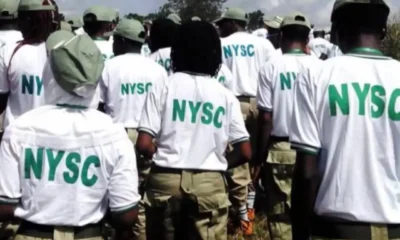
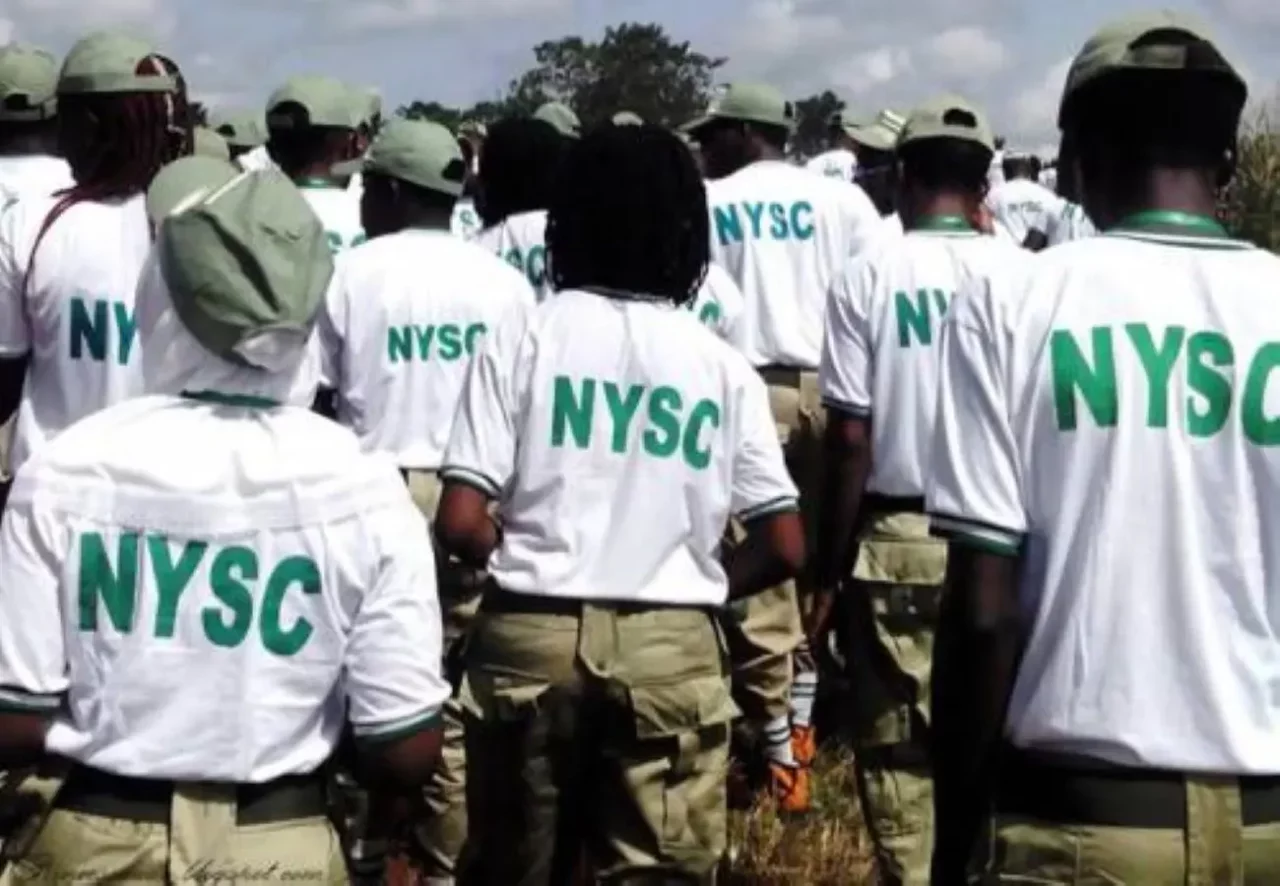
The abduction of 20 prospective members of the National Youth Service Corps, NYSC, in Imo State has brought into sharper focus the growing danger facing young Nigerians travelling to or from orientation camps and places of primary assignment.

The 20 graduates, who were travelling from Ibadan, Oyo State, to orientation camps in Abia and Akwa Ibom states, were abducted on October 1 along the Owerri-Onitsha Road in Imo State. They were rescued on October 7, after seven days in captivity, in a joint operation involving the police, military, Department of State Services, DSS, and other security agencies. The victims were subsequently taken for medical examination and treatment.

The Imo incident came barely weeks after another mass abduction involving NYSC members in Kogi State. On August 26, 16 corps members returning from the NYSC orientation camp in Bayelsa State to Abuja after completing their orientation were abducted along the Aloma-Egane axis in Ofu Local Government Area of Kogi State. All 16 were later rescued after a coordinated operation involving the Armed Forces, police, DSS and local vigilantes.

The two incidents have renewed concerns over the safety of corps members whose national service often requires them to undertake long journeys through unfamiliar parts of the country and, in some cases, known kidnapping corridors.

They also form part of a wider pattern recorded over the past year.

Maduka College Advert

According to findings by Sunday Vanguard, not less than 40 corps members and prospective corps members have been reported abducted in separate incidents, including the January abduction of prospective corps member, Binuyo Lateefah, in Kogi State while travelling to Taraba; the April abduction of prospective corps member, Gift David Samiya, on the Akwanga-Jos road while travelling to Maiduguri; the April abduction of LASU graduate, Ogunlana Adetola Sodiq, while travelling to an orientation camp in Osun State, and the May abduction of serving corps member, Eunice Ameh, in Abuja.

Lateefah was reportedly held for 10 days after her abduction on January 22, while her abductors demanded N30 million. Ameh, an Abuja-based lawyer and corps member, was abducted in Maitama on May 6 and released four days later after money was reportedly paid, although the amount was not disclosed.

In the Kogi case, one of the rescued corps members, David Ayodele, later recounted that the abductors beat and kicked their captives and threatened to keep them in the forest for a month and kill them.

The Imo victims also spent a week in captivity before their rescue. Police said security operatives had earlier located the kidnappers’ camp through drone surveillance but delayed moving in after intelligence indicated that the area had been mined with improvised explosive devices.

The Imo State Commissioner of Police, Audu Bosso, has since said he was not aware that ransom was paid for the release of the corps members, saying the kidnappers eventually succumbed to pressure from security forces operating in the forest.

Predictability of deployment 

For security governance expert, Prof. Al Chukwuma Okoli, the vulnerability of corps members is linked to the predictability of their deployment and movement.

He said: “The vulnerability arises from predictable posting to high-risk rural areas that are grossly under-policed. Corps members travel on hazardous highways bereft of real-time security.

“Posting corps members to volatile areas without contingency plans to secure their movements through convoy tracking and risk-map deployment poses a challenge.”

He argued that the Federal Government, NYSC and security agencies should jointly develop a system for protecting corps members from the point of departure to their destination.

 “Government and NYSC authority need to work closely with security agencies to jointly fund safe transit protocols, secure corps members’ lodges, and ensure that there is a rapid-response mechanism to rescue victims when an attack occurs.”

Okoli also linked the difficulty in rescuing victims and bringing kidnappers to justice to the absence of effective state security presence in some of the areas where the attacks occur.

“Such kidnappings occur in areas with limited coercive state presence and inadequate security, making rapid rescue response challenging”, he said adding that prosecution had also suffered from “weak inter-agency collaboration in case treatment.”

Weakness of intelligence systems

For Alfred Ononugbo, a forensic investigator and criminal intelligence specialist, the wider problem is rooted in the weakness of Nigeria’s intelligence and policing systems.

According to him, “the crime of kidnapping has lingered due to the absence of credible intelligence, national crime database and ineffective policing.”

Ononugbo said the absence of reliable crime data makes it difficult for security agencies to understand patterns of kidnapping across states and communities and deploy appropriate responses.

“No reliable data to provide peculiar crime behaviours with states and communities within the country in order to develop necessary security responses to such crime patterns”, he said noting that criminals tend to identify victims who are vulnerable and capable of generating quick ransom payments.

“The intending corp members may have been victims of opportunistic attack or informants considering that they may have given away their identities as a uniformed group on transit. The criminals often target the most vulnerable and beneficial victims to generate quick revenues and escape from the consequences of their crimes.”

He said stops made during long journeys could also provide opportunities for criminals to gather information about the passengers.

“They may have attracted attention at locations where they stop during the trip and this made it possible for the information to be passed to the kidnappers.”

He recommended a more deliberate security arrangement for corps members travelling in groups. “Considering the challenge of attacks by criminals, an armed security escorts for the young graduates should have been appropriate for such movement.

Fundamentally evidence-driven

Ononugbo also criticised the country’s capacity to investigate and prosecute kidnapping cases, saying criminal prosecution is fundamentally evidence-driven. “With science and technology, forensic evidences provides accurate evidence harvesting, handling and presentations in courts to help prosecutors and the courts.”

But he said the police face serious difficulties in conducting actionable investigations, citing inadequate training, weak exposure to modern intelligence techniques and deficiencies in evidence gathering. “Modern technology and digital solutions must be inculcated in the training of our policemen and women.”

He further identified alleged collusion and compromise as another obstacle to fighting kidnapping. “Collusion and compromise is another setback to minimising kidnapping crimes as some of the financial evidence are often tempered with by unprofessional and poorly disciplined personnel”, he alleged.

Ononugbo called for improved training, better remuneration and greater use of technology, while urging government to involve traditional institutions and town development associations in community policing.

“We must improve on training, capacity building and the use of modern technology in combating kidnapping and other forms of crimes”, he added.

National concern 

For Okechukwu Nwanguma, Executive Director of the Rule of Law and Accountability Advocacy Centre, RULAAC, the recurring abduction of corps members should concern the country because national service is compulsory.

He pointed out that the obligation placed on young graduates by the NYSC scheme creates a corresponding responsibility for the government to protect them.

 “The recurring kidnapping of National Youth Service Corps members should concern every Nigerian because these are young citizens undertaking a compulsory national assignment. If the State requires young graduates to travel across the country in the service of national integration, then there is a corresponding duty to take reasonable measures to protect them from foreseeable harm”, Nwanguma stated.

Deployment pattern

He explained that corps members face the wider security problems affecting Nigerian highways, but their deployment pattern creates additional exposure, stressing that the recent Imo incident demonstrated the problem.

 “They frequently travel long distances to unfamiliar parts of the country, sometimes using ordinary commercial transport and passing through roads with known histories of kidnapping and armed attacks.

“The problem therefore goes beyond advising corps members to ‘be security conscious.’ Government needs a systematic risk assessment of routes used by prospective and serving corps members.”

He called on NYSC to work with the police, DSS and other security agencies to identify kidnapping hotspots and establish safer travel arrangements during mobilisation and demobilisation.

“Where a route presents a demonstrably high security risk, government should consider coordinated transportation from designated departure points, security-supported movement during peak mobilisation periods, or alternative deployment arrangements.”

According to him, graduates should not be forced into a choice between obeying their NYSC call-up instructions and exposing themselves to known security threats.

“Young Nigerians should not be compelled to choose between obeying an NYSC call-up instruction and exposing themselves to a foreseeable risk of kidnapping.”

Nwanguma also called for a joint security protocol involving the Federal Government, NYSC, state governments and security agencies. Such a protocol, he said, should cover prevention, emergency response, communication with families, rescue operations and post-rescue care.

“NYSC should maintain a constantly updated security map of deployment and travel routes and communicate specific warnings to corps members before they travel.

“Reporting dates should also take account of travel distances so that prospective corps members are not pressured into unsafe travel schedules.”

The RULAAC director said security agencies needed stronger intelligence coverage and patrols along identified kidnapping corridors, while state governments should improve roads and support intelligence gathering in vulnerable communities.

The Imo incident, he said, illustrated why prevention and intelligence gathering should receive as much attention as rescue operations.  “That underscores why prevention and intelligence must receive as much attention as rescue operations after people have already been abducted.”

Nwanguma also warned that the consequences of kidnapping do not end when victims regain their freedom. “There should also be proper psychosocial and medical support for rescued victims. Kidnapping can leave serious psychological consequences even after physical freedom has been regained.”


On prosecution, he described accountability as one of the weakest parts of Nigeria’s response to kidnapping.

“Public attention understandably concentrates on securing the victims’ release, but there is often much less information afterwards about identifying, arresting and successfully prosecuting the perpetrators”, he said.

According to him, the difficulty of operating in forests and remote communities, movement across state boundaries, the use of disposable telephones and the need to prioritise hostages’ lives can complicate investigations.

But he also pointed to institutional weaknesses.

“Weak intelligence coordination, poor preservation of evidence, difficulties securing witnesses, inadequate forensic capacity and delays in investigation and prosecution can undermine accountability”, he said.

According to him, there is an important difference between rescuing a hostage and dismantling a kidnapping network.

Hos words: “Recovering a kidnapped person is an immediate humanitarian success, but dismantling the criminal network requires identifying the kidnappers, their informants, financiers, ransom collectors, arms suppliers and other collaborators, and then assembling evidence capable of sustaining prosecution.”

He urged the government to publish anonymised data showing kidnapping cases investigated, suspects arrested, prosecutions and convictions. “This would allow Nigerians to assess whether criminal networks are actually being dismantled rather than simply displaced.”

For the experts, the answer lies in moving security planning beyond the orientation camps to the roads corps members must use to reach them and return home.As Nwanguma put it, the central issue is the responsibility of the state to protect those it requires to serve.


“The objective should not merely be to rescue corps members after they have been abducted. It should be to make their abduction far less likely in the first place and to ensure that those who attack them face credible investigation, prosecution and punishment”, he stated. (Vanguard)

Continue Reading

News

2027: Enugu Accuses Opposition of Plotting to Import Armed Thugs, Bandits

Published

on

Spread the love

…Denies government involvement in NDC airport, secretariat incidents

_Says Mbah’s performance more than enough to win free, fair election

The Enugu State Government said it has uncovered alleged plans by some opposition elements to import armed thugs and bandits into the state to create panic and a false sense of insecurity ahead of the 2027 general elections.

The Secretary to the State Government (SSG), Prof. Chidiebere Onyia, made these known on Sunday while addressing a press conference at the Government House, Enugu, on the incidents involving the Nigeria Democratic Congress (NDC) at the Akanu Ibiam International Airport and the party’s state secretariat in Enugu on Saturday.

Enugu SSG, Prof Chidiebere Onyia briefing journalists in Enugu on Sunday

Onyia denied any involvement of the government or the Governor’s Chief Security Officer, Ifeanyi Osondu, in both incidents, describing the airport confrontation as a matter between the NDC and federal authorities, while noting that the shooting incident at the party’s secretariat was under police investigation.

According to the SSG, the government’s preliminary findings indicated that the airport incident followed the NDC’s attempt to hold what it described as a “Grand Statewide Campaign Flag-off 2026” at the facility without securing the necessary approval from the Federal Airports Authority of Nigeria (FAAN).

Maduka College Advert

He said the party had published notices inviting its members and supporters to the event, including on the Facebook page of its governorship candidate in the state.

Onyia explained that the police had advised the party to obtain FAAN’s approval before security personnel could be deployed to the airport for the event.

“Further findings, however, revealed that the NDC did not secure the approval of FAAN to host a grand statewide rally at its facility. Security agencies, therefore, advised the organisers of the rally to rethink it,” he said.

The SSG alleged that the party proceeded to mobilise its members to the airport and attempted to gain entry into the facility, resulting in a confrontation with airport authorities.

He said security agencies intervened to disperse the “riotous” party members and restore order around the airport, which he described as a strategic national asset.

Onyia added that the state government’s account was consistent with the statement issued by the Enugu State Police Command on Sunday.

NDC Secretariat Shooting

On the shooting incident at the NDC state secretariat in the GRA area of Enugu, the SSG said security reports had established that a violent clash occurred at the party’s office and that the police were investigating the matter.

The SSG disputed reports alleging fatalities, stating that the government’s findings indicated that no death had occurred in the incident.

He disclosed that a 43-year-old man, identified as Ifeanyi Nworie, sustained a gunshot wound and was taken to the Enugu State University Teaching Hospital, Park Lane, where he was stabilised before being transferred to the National Orthopaedic Hospital, Enugu, for further examination.

“We can, therefore, authoritatively report that there were no deaths as falsely claimed by some reports and NDC leaders,” he said.

Onyia also faulted allegations that the Governor’s Chief Security Officer was present at the party secretariat and supervised the shooting, maintaining that the official was with Governor Peter Mbah at the Teachers Grassroots Movement mega rally at Okpara Square, Enugu, at the time of the incident.

The SSG further criticised the reported holding of a minute’s silence for an individual he said was still alive, describing it as an attempt to mislead the public for political advantage.

Reaffirming the state government’s position, Onyia said Governor Mbah had sworn to protect the lives and property of all residents, irrespective of their religious beliefs or political affiliations, and condemned.

He said the administration’s ambition to grow Enugu into a $30 billion economy and make it a preferred destination for investment, business, tourism and living depended significantly on sustained peace and security.

According to him, this informed the government’s substantial investments in security infrastructure and operations over the past three years.

“Consequently, the Enugu State Government strongly condemns in its entirety any form of violence, including politically induced violence in the state. We welcome healthy debate and freedom of association and peaceful assembly,” he said.

He, however, urged political parties and their candidates to exercise restraint and embrace issue-based campaigns ahead of the 2027 elections.

The SSG said democratic rights should be exercised responsibly, arguing that political parties ought to serve as models of decorum and integrity.

He questioned the decision to announce a statewide campaign flag-off at the airport and without the approval of the relevant authorities.

“Without holding brief for FAAN, is it not sheer rascality to attempt to hold a “Grand Statewide Campaign Flag-off 2026” of the NDC at the airport as publicised by the party and its gubernatorial candidate, especially without the approval by the appropriate authorities?

“Is it not equally gross mischief and a sign of political desperation to hold a minute silence for a living person, just to mislead the public for political traction?” he queried.

Onyia accused opposition elements in the state of attempting to create the impression that Enugu was unsafe and that the government was intolerant of opposing political parties.

He alleged that some opposition groups had been attributing internal disagreements and violent clashes to the All Progressives Congress (APC) in the state.

As an example, he cited the September 12, 2026 incident at Obuofia in Nkanu West Local Government Area, claiming that investigations had identified the alleged perpetrators, who were being prosecuted by the police.

The SSG described the opposition as factionalised and alleged that some of its members were seeking to draw the state government into controversies for political relevance.

Onyia also reiterated the government’s allegation that some opposition elements were plotting to bring armed thugs and bandits into Enugu to create panic and undermine public confidence in the state’s security ahead of the 2027 general elections.

“We, however, make bold to say that the peace and security we have achieved in Enugu State in the last three years, and at huge material costs and sacrifices by our security agents, are non-negotiable and irreversible,” he said.

The SSG said the Mbah administration remained committed to protecting citizens’ democratic rights, including the freedom to campaign for and vote for candidates of their choice in the forthcoming elections.

He described the right of residents to elect their leaders through free, fair and credible polls as fundamental to the state’s democratic development.

Onyia added that the government was confident of securing a second term for Mbah based on what it described as the governor’s performance and delivery on campaign promises.

“Indeed, these inalienable rights of Ndi Enugu to elect their leaders in free, fair and credible polls are our surest hope for re-election come 2027,” he said.

He added that the administration had no reason to resort to desperate measures, maintaining that its record in office would be the basis for seeking a renewed mandate from the electorate.

Continue Reading

Trending

Maduka College Advert