News
UNGA77: Buhari urges African leaders to rid continent of corruption

President Muhammadu Buhari Friday in New York challenged his colleagues on the African continent to fight tirelessly to get rid of corruption, lamenting that Africa has remained at the far end of global development index because of its menace.
The President’s spokesman, Femi Adesina in a statement issued Saturday, said Buhari spoke in his capacity as the African Union Champion on efforts to eliminate corruption in the continent.

The meeting was a High-Level side event on ”Food Security Response: Combating Illicit Financial Flows and Securing Asset Returns for Sustainable Development’‘, on the margins of the 77th Session of the UN General Assembly.
The event was co-hosted by African Union Development Agency-New Partnership for Africa’s Development (AUDA-NEPAD) and the Economic and Financial Crimes Commission (EFCC).
While providing his perspectives on the effects of corruption in the continent and the way forward, the Nigerian leader said he was honoured to serve as AU Champion on anti-corruption since 2018.

He said: ”As you are all aware, this will be my last official participation at the United Nations General Assembly as President of the Federal Republic of Nigeria.
”I remain honoured and privileged to be President of Nigeria for two terms and I am grateful to the African Union for making me the Continental Organisation’s Champion on efforts to eliminate corruption nationally and continent-wide.
”Over the years, we came to the painful realisation on how deeply embedded corruption has become in our countries and continent, as well as how corrosive it can be.
”Corruption has dwarfed our growth and tainted our nations and continent.
”Africa remains at the far end of development index and concerted efforts made in the last few years need to be sustained, deepened by good governance and accountability that are guided by the rule of law.
”I have strong faith that Africa and our national governments can do this with strong resolve and commitment to eliminating Illicit Financial Flows.
”We need strong partnerships from our global partners to ensure that these efforts succeed. A developed and stable Africa will not only be a global partner for peace but for sustainable development and progress.”
Buhari, therefore, challenged his colleagues that for the continent to rise to its full potentials, ”we must work tirelessly to get rid of corruption or by fighting it 24/7.
”Our national resources must not find safe-havens around the world. This fight is a necessity and not a choice to give our citizens a better life through economic prosperity, social peace and security.”
The president urged his colleagues to recall the United Nations General Assembly Special Session Against Corruption political declaration of June 2021 and ensure its effective implementation toward global food security and sustainable infrastructural development in the continent.
On food security in Nigeria, the president disclosed that the Nigerian government had financed 2.5million smallholder farmers to cultivate about 3.2million hectares of farmland across the country, creating 10million direct and indirect jobs.
He also acknowledged programmes initiated by the AU and ECOWAS to address food security in the continent.
While apprising that at the Federal level in Nigeria, he said his administration is working with state governments through initiatives such as the Anchor Borrowers Programme, to support local production of rice, maize, cotton and cassava.
He expressed delight that the implementation of such programmes had resulted in a significant decline in the country’s large food import bill, from $2.2billion Dollars in 2014 to $5.9million Dollars at the end of 2018.
The president said rice imports alone dropped from $1billion dollars a year to $18.5million dollars.
”Accordingly, we remain committed to improving productivity of small-scale farmers by promoting equal access to land, technology and markets, sustainable food production systems and resilient agricultural practices across the country and beyond,’’ he said.
The President, however, cautioned that these lofty goals could not be achieved if corruption, illicit financial flows, serious and organized crimes were not effectively addressed.
”Rice, wheat and fertilizer imports were riddled with gross corrupt practices such as over-invoicing and transfer pricing.
”It is only when these crimes are contained that we can secure the recovery and return of illicitly acquired assets to victim-countries, which will then provide the much-needed resources in the immediate term, to address development requirements,’’ he said.
The Nigerian leader recounted that the administration had demonstrated effective utilization of recovered assets with the notable deployment of funds to three use.
He revealed that the projects include: the Lagos-Ibadan Expressway, Abuja-Kano Expressway and the Second Niger Bridge.
The President, therefore, pledged not to relent in efforts to curb illicit financial flows, engender food security and achieve sustainable economic development.
He added that measures had been instituted based on policy advisories by EFCC to block revenue leakages arising from crude oil theft, tax evasion, pension fraud, foreign exchange manipulations, travel document racketeering and tax evasion:
”Furthermore, the Common African Position on Asset Recovery (CAPAR) 2020 was recognized as taking a broader approach to include resources lost through any and all types of Illicit Financial Flows.
”It is therefore our hope, that the CAPAR can be a model for designing a global framework to address Illicit Financial Flows.
”I use this opportunity to call on the African Union to ensure effective implementation of the CAPAR in line with the vision encapsulated in the Agenda 2063,” he said.
While commenting on the global food crisis, which the United Nations estimated that nearly a billion people went hungry in 2021, Buhari described it as ”a collective shame on the world’s conscience,” further exacerbated by increased illicit financial flows.
According to him, criminals are taking advantage of global food crisis to perpetrate illicit financial flows, with the ongoing crisis in Ukraine disrupting energy and food supply chains, thus, negatively impacting the global economy.
”Such developments have been made worse by increased Illicit Financial Flows, arising from a combination of factors, including organized violence and conflict risks, economic downturn, natural hazards and climatic risks, as well as worsening access to humanitarian assistance.
“Such an atmosphere presents criminals and their associates with opportunities to take advantage of information developments that characterize such areas of disruption and conflict.”
He said the crisis in the energy and food supply chains demand urgent response from all leaders in governments, global institutions and businesses to re-think best approaches to address new and old global challenges.
He posited that food crises, illicit financial flows and asset recovery are cross-cutting issues that necessarily need to be addressed holistically.
The president said this should be done through the effective adoption of multilateralism as highlighted in the theme of the 77th United Nations General Assembly: “A Watershed Moment: Transformative Solutions to Interlocking Challenges.“
In her remarks, the Chief Executive Officer of AUDA-NEPAD Nigeria, Gloria Akobundu, said the event “is a continuation of the advocacy on good governance that started in 2017.
She said the forum was adopted in 2018 as an annual event with the objective to promote peer-to-peer learning for best practices and strengthen partnership for good governance.”
She added that, “if Africa’s population and land space are credibly and productively harnessed, it will not only address these challenges but will be a turnaround for world economic boost and sustainable development.”
On his part, Nigeria’s Attorney General and Minister of Justice, Abubakar Malami, said that “reports from law enforcement agencies especially the EFCC showed that illicit financial flows (IFFS) undermine efforts to development including food security.
According to him, the United Nations estimates that $1.6trillion is lost each year due to illicit financial flows, which has a negative impact on global growth and development.
He, however, stated that the Nigerian government had commenced dealing with the situation
Malami said: ”Just this year, Mr President has signed the Money Laundering Prevention and Prohibition Act, (2022), the Proceed of Crimes Act just to mention a few.”
Adesina disclosed that goodwill messages were delivered by representatives of International Organisations as well as Development Partners at the event.




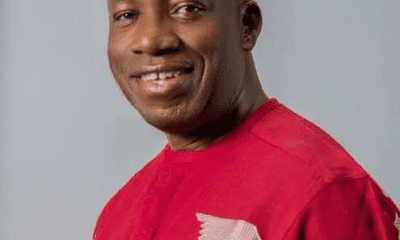




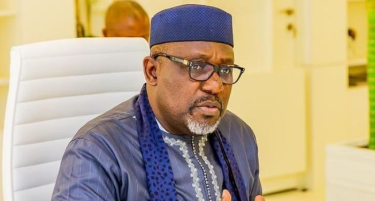
Former Imo State Governor, Senator Rochas Okorocha, was arrested by the Nigeria Police Force (NPF) on Monday night.
The Nigeria Police Force Public Relations Officer, CSP Aniete Iniedu, confirmed the development to Channels Television.
Okorocha, who was arrested at REIZ Continental Hotel in central Abuja, was, however, released on bail by the NPF following an hour of interrogation over allegations of criminal conspiracy, forgery and impersonation.
CSP Iniedu, who confirmed the arrest and subsequent release on bail to our correspondent, noted that the former governor was asked to return to the Force Headquarters on Tuesday for further interrogation as investigations into the allegations continue.
The arrest reportedly followed Okorocha’s failure to honour previous police invitations in connection with the ongoing investigation.
He was initially invited to the Force Headquarters on September 2, but the appointment was rescheduled to September 8 at the request of his lawyers, a date he reportedly failed to honour.
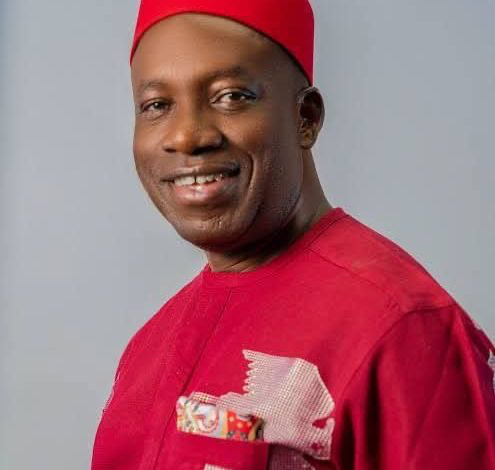
Anambra State Governor, Prof. Chukwuma Soludo, has been appointed a member of the All Progressives Congress (APC) 2027 Presidential Campaign Council list released last night.
This is despite the fact that he is the National Leader of the opposition All Progressives Grand Alliance (APGA).
Similarly, Federal Capital Territory (FCT) Minister Nyesom Wike, the National Leader of the opposition Peoples Democratic Party (PDP) and Osun State Governor, Senator Ademola Adeleke of the opposition Accord Party (AP), are on the expanded and all-inclusive team headed by President Bola Ahmed Tinubu.
Other members include Presidential Adviser on Policy and Coordination, Hadiza Bala Usman, former Ogun State Governor Ibikunle Amosun, former Lagos State Governor Akinwunmi Ambode, Aviation Minister Festus Keyamo, and former House of Representatives member Patrick Obahiagbon.
Also named as members are former Osun APC governorship candidate Bola Oyebamiji, former National Legal Advisers Dr. Muiz Banire and Babatunde Ogala, Chief Ayiri Emami, Victor Giadom, Magnus Abe, and former Ogun State Governor Gbenga Daniel.
The list, according to a report by The Nation, reflects inter-party cooperation and harmony based on the shared vision of propelling the country to the horizon of progress.
The report quoted a statement by APC National Secretary, Senator Ajibola Basiru, as saying that the campaign council will be inaugurated tomorrow in Abuja.
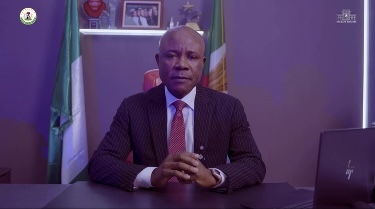
Enugu State Governor, Dr Peter Mbah, has called for a thorough and impartial police investigation into the recent violence surrounding a political gathering in the state, assuring that anyone found responsible will face the law regardless of political affiliation.
Mbah, in an address to the people of Enugu State, expressed concern over reports of violence, particularly a shooting incident that left a citizen injured.
The governor said his immediate concern was the welfare of those injured, residents who experienced fear during the incident, and families affected by the violence.
He assured the victims and affected residents that their safety and well-being remained a priority for his administration.
“I know how much our people value the peace and security we have worked so hard to establish in Enugu. Incidents such as these cause anxiety and deserve our full attention,” the governor said.
Mbah stressed that every citizen, irrespective of political affiliation, must be able to exercise their political rights without fear, intimidation or violence.
He reiterated the state government’s commitment to protecting lives, upholding the law and ensuring that justice was served without favour.
The governor also stated that, in view of the preliminary findings regarding the incident, he expected the police to conduct a comprehensive and impartial investigation to establish the circumstances surrounding the violence and identify those responsible.
According to him, anyone found culpable would be held accountable through the appropriate legal process, irrespective of their political connections.
“The Enugu State Government has made its position clear regarding allegations of involvement in this violence,” Mbah stated, reaffirming his administration’s responsibility to maintain peace and security across the state.
The incident has raised concerns over political tolerance and the safety of citizens participating in political activities in Enugu State.
The governor’s call for an impartial investigation underscores the need for the relevant security agencies to establish the facts surrounding the shooting and ensure that those responsible are brought to justice.
He concluded his address by thanking the people of Enugu State and praying for God’s continued blessings upon the state.
-
 News3 days ago
Why UK varsities are cancelling Nigerians’ admission — Report
-
News2 days ago
2027: Enugu Accuses Opposition of Plotting to Import Armed Thugs, Bandits
-
News2 days ago
Alleged Magistrate Court Order To Arrest Araraume, Okorocha Is Fake, Non-Existent — Imo First Group
-
News2 days ago
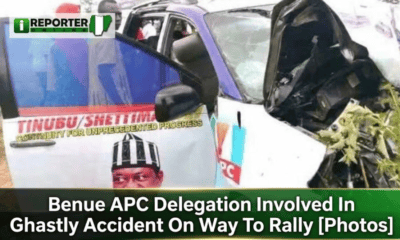
Benue APC Delegation Involved in Ghastly Accident En Route to Rally
-
News2 days ago
2027: Over 30,000 Enugu Teachers Endorse Mbah, Tinubu, List Welfare, Increased Education Funding
-
News3 days ago
Why men with braids, tattoos were banned from mosque, Ogun Chief Imam clarifies
-
News3 days ago
Man stabs wife in Anambra community, kills himself with poison
-
News3 days ago
EFCC recovers $105,000 for US-based businesswoman