News
KIDNAPPING: North East Governors raise alarm over worrisome trend

•Members of the North East Governors’ Forum
Members of the North East Governors’ Forum have raised alarm over the new trend of kidnapping in the region which they described as worrisome.

Governor Babagana Zulum of Borno State and Chairman of the forum stated this on Friday in his opening address at the meeting of the governors held at the Government House in Gombe.
“Since its establishment two years ago here in Gombe, the forum has become a formidable avenue for social cohesion and a rallying point for us in the North East to collectively discuss and identify our common challenges and proffer pragmatic and viable ways and means of addressing these challenges,” he said.
He added that, “As we have comprehensively articulated in our earlier meetings, the most prominent of these daunting challenges include insecurity – largely characterised by the Boko Haram insurgency, the issue of banditry and kidnapping which unfortunately is assuming a worrisome dimension, cattle rustling and other forms of criminality, as well as endemic socio-economic issues like youth restiveness, massive unemployment, and extreme poverty, among others.”

According to the Borno State governor, the Boko Haram trend is gradually fizzling away due to some deliberate steps informed by credible intelligence that some of the fighters are contemplating repentance and surrender
He explained that the governors took advantage of the death of the terrorists’ leader, Abubakar Shakau, to adopt a non-kinetic policy of ending the insurgency by encouraging and incentivizing remorseful fighters.
The governor stated that while the non-kinetic approach was successful and led to the surrendering of thousands of terrorists, there was a need to take the fight to the unrepentant ones.
He regretted that the people of the region have just begun to heave a sigh of relief after the more than a decade-long insurgency, just for kidnapping to become the new choice of business for criminals.
“There is a compelling need for us to take a more critical look at the emergent issue of kidnapping, which has become a crime of choice for criminals, and is becoming rampant and widespread.
“It is, therefore, a matter of strategic necessity to essentialise the issue of kidnapping and come up with implementable measures to deal with this element of criminality before it is too late. In this respect, we will obviously be guided by our respective attorneys-general, who should initiate the appropriate legal framework to deal with the problem,” Zulum stated.
The North East region is made up of six states namely Adamawa, Bauchi, Borno, Gombe, Taraba, and Yobe.
Below is the full text of the governor’s address at the meeting:
Protocols:
It has been a matter of profound delight and considerable pleasure for me to welcome Your Excellencies and other distinguished guests to yet another meeting of the North East Governors’ Forum.
Since its establishment two years ago here in Gombe, the forum has become a formidable avenue for social cohesion and a rallying point for us in the North East to collectively discuss and identify our common challenges and proffer pragmatic and viable ways and means of addressing these challenges.
As we have comprehensively articulated in our earlier meetings, the most prominent of these daunting challenges include insecurity – largely characterised by the Boko Haram insurgency, the issue of banditry and kidnapping which unfortunately is assuming a worrisome dimension, cattle rustling, and other forms of criminality, as well as endemic socio-economic issues like youth restiveness, massive unemployment, and extreme poverty, among others.
Equally, we have been able to classify and analyse the best possible ways of dealing with the challenges in both the short- and long-term measures. As we have noted time and again, the concomitant effects of insecurity in the North East region are widespread and pervasive.
In general, the scale of insecurity in the region has displaced hundreds of thousands of our people and adversely affected their socioeconomic live wire, thereby subjecting them to a life of extreme poverty and deprivation. However, since the inception of the forum, we have been able to considerably minimise the level of hardship and sufferance being felt by the people through the dynamic interplay of the various measures we have taken, individually and collectively, to address the issues.
The Boko Haram phenomenon, for instance, has been gradually fizzling away – both in scope and intensity, as a result of some deliberate steps we have taken to that effect. These steps were largely informed by credible intelligence we had received that some Boko Haram members were contemplating repentance and surrender, following the death of their leader, Abubakar Shakau.
We capitalised on this intelligence and immediately set in motion a non-kinetic policy of ending the insurgency by encouraging and incentivising those willing and ready to surrender. Our non-kinetic approach was so successful that from the initial few insurgents who surrendered, the number of those willing to surrender began to increase exponentially.
Today, we have hundreds of repentant Boko Haram members who are surrendering on a daily basis. So, as it is being widely reported, Boko Haram insurgents have been surprisingly coming out of their enclaves and war trenches in droves and willingly surrendering themselves to the authorities.
The situation is as overwhelming in its scope as it is extremely gratifying in its impact. This is the first time, since the deadly insurgency began, that Boko Haram insurgents are, freely and spontaneously, laying down their arms and giving up the fight, which from all indications, appears to be the beginning of the end of the insurgency.
We have already taken various strategic measures to encourage all of them to do so. So far, we have been camping thousands of them in Maiduguri, Bama, and Gwoza, among other places. In all, we have close to a hundred thousand repentant Boko Haram members in the camps.
The Borno State Government is currently considering various alternative ways of effectively reintegrating these repentant insurgents in their respective communities or any other convenient place, without unnecessarily triggering old fears and stoking embers of vengeance from among the people, who obviously had, at one time or another, been the victims of the Boko Haram atrocities.
Furthermore, as the Federal Government is in the process of formulating a national policy on the reintegration of such category of people, the state government is also considering the option of organising an international conference, in collaboration with the Federal Government and the United Nations to deliberate on universally acceptable ways of addressing the issue.
Generally, however, we will continue to express our profound gratitude to the President and Commander-In-Chief of the Armed Forces, Federal Republic of Nigeria, His Excellency, Muhammadu Buhari for his wilful resolve and unquestionable determination to end the insurgency.
We also commend the military and other security agencies for their undeniable sacrifice and relentless efforts to deal with all forms of insecurity in the North East. We would continue to provide all the necessary assistance to them, in form of logistics and other essential requirements they may need.
Even as some of the insurgents are gradually repenting and giving up the fight, there are however thousands of belligerent remnants of the terrorists who are ferociously intent on carrying out their criminal activities with deadly determination.
So, it is strategically imperative for us to renew our resolve to end the insurgency in its totality, in order to rekindle the hopes and confidence of the public and at the same time achieve our collective desire to restore sustainable peace and security in the North East.
As we know, there are some sporadic attacks on soft targets and innocent civilians being perpetrated by some Boko Haram elements, especially in Borno State. It is, therefore, vitally important for us to review our tactical strategies and methods of dealing with the situation and devise more pragmatic and viable procedures of addressing the current security challenges and averting future potential threats.
So our security forces need to consider the kinetic approach and go on the offensive in order to completely root out the belligerent ones. As we are now set to deliberate on matters of common interests and shared responsibilities, there is a compelling need for us to take a more critical look at the emergent issue of kidnapping, which has become a crime of choice for criminals and is becoming rampant and widespread.
It is, therefore, a matter of strategic necessity to essentialise the issue of kidnapping and come up with implementable measures to deal with this element of criminality before it is too late. In this respect, we will obviously be guided by our respective Attorneys-General, who should initiate the appropriate legal framework to deal with the problem.
In addition to this and other issues of insecurity, we should also specifically focus on youth restiveness, massive unemployment, and extreme poverty, by looking at various options of engaging the youths, in a gainful and rewarding way as well as collectively harnessing our vast resources for socio-economic viability and sustainable growth and development of the region.
So far, the forum has been able to positively engage critical stakeholders like the North East Development Commission, the Nigerian National Petroleum Company, the Arewa Research and Development Project, as well as various agencies of the United Nations, in our determined efforts to address the multifarious challenges of the North East.
We have also been able to draw the attention of these stakeholders to the strategic imperative of resuscitating the dilapidated conditions of our infrastructure like the network of roads, especially those linking our various states, in order to facilitate inter-state commercial activities and enhance agricultural production.
In this respect, the forum and the major stakeholders, such as the North East Development Commission, are now operating on the same page, as the projects and programmes being executed by the commission, within the framework of its statutory mandate, are in tandem with our aspirations.
The commission has already launched its strategic development plan for the North East, which is a comprehensive and well-articulated development framework that seeks to address infrastructure deficit and other developmental issues facing the region.
At this juncture, I need to, however, make a passionate appeal to the Federal Government and the National Assembly to incorporate into the 2023 Budget of the Federal Government the reconstruction and rehabilitation of many federal roads in the North East region, which have been in deplorable condition for years.
Although the level of insecurity in the region then was a tenable reason for delaying the reconstruction of the roads, the security situation now has improved tremendously. As it is now, the North East has the least Federal budget allocation for roads construction and it is fair and reasonable for the Federal Government to inject the needed funds for the construction and reconstruction of federal roads within the region.
So, on behalf of my colleagues, I am calling on the National Assembly, particularly the Senators and Representatives from the North East zone to, as a matter of urgent priority, include the repairs and construction of a network of Federal roads within the zone in next year’s budget, in order to achieve some semblance of parity with other zones of the country.
The Forum has so far been concentrating on efforts to prioritise and develop our vast natural resources and other economic potentials to strengthen our financial independence and ensure less dependence on statutory allocations from the Federation Accounts.
Considerable progress has been made in this regard. The Mambila Hydroelectric Power Project, for instance, is set to commence as soon as some legal and administrative encumbrances are cleared.
Our decision to float a commercial airline, known as the North East Regional Air Shuttle Limited, for the region is also coming to fruition as soon as a number of financial and technical requirements are met.
Your Excellencies, distinguished guests, as I have indicated in our previous meetings, the challenges we are facing are daunting but not insurmountable. What is required is our collective resolve and unwavering determination to achieve our pre-set goals and objectives.
It is on this note that I once again welcome Your Excellencies to this session of the North East Governors’ Forum.
Thank you and God bless. (Channels TV)



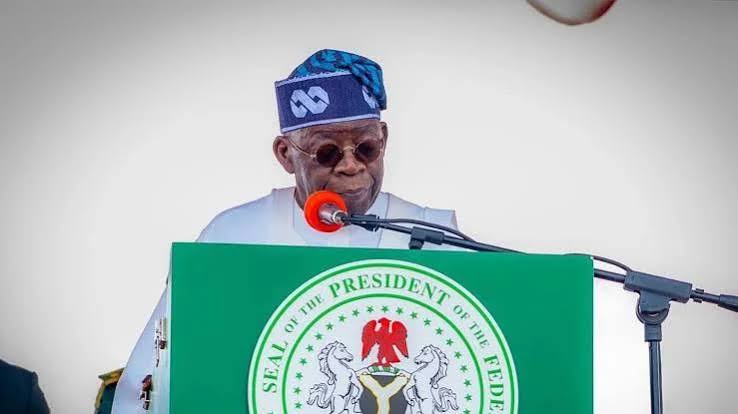
President Bola Tinubu has explained why he will not accompany members of the All Progressives Congress (APC) Presidential Campaign Council to every campaign event ahead of the 2027 general election, saying he must balance the demands of the re-election campaign with the responsibilities of governance.
Tinubu spoke on Wednesday in Abuja during the inauguration of the APC Presidential Campaign Council, where he charged members to take the party’s message to Nigerians across the states and local government areas while he concentrated on running the country.
The President said he agreed with concerns that the rigours of campaigning should not distract him from governance, insisting that Nigeria required his attention at a time when the administration was managing economic responsibilities and international financial obligations.
“You’ve warned me not to allow the rigour of the campaign to distract me from governance, I hear you. I am in full agreement with your decision. Nigeria needs more attention now,” he said.
Explaining further, Tinubu asked campaign council members to excuse him from attending every campaign event, pointing to the need to meet the country’s financial obligations.
“So, you will excuse me from going everywhere with you, we have bills to pay. The American creditors cannot wait,” the President said.
He also emphasised the importance of attracting investors willing to make long-term commitments to Nigeria, arguing that investment was necessary to secure a better future for the country’s children.
“We want those investors to come in, be here to stay, to invest for the future of our children,” he said.
Tinubu, however, assured Nigerians that his decision not to attend every campaign event would not prevent him from engaging directly with voters.
“However, I will still make time to speak directly with Nigerians, even as you lead the campaign in the states and local government areas,” he added.
Describing the inauguration as more than a routine political gathering, the President said the council represented a renewed commitment to Nigerians and the responsibilities entrusted to the APC as the governing party.
“We have not gathered merely to inaugurate a council. We have gathered to renew a covenant. A covenant with Nigerian people and the historic responsibility they have entrusted to us as Nigeria’s governing party,” he said.
He charged council members to communicate the administration’s vision, record and agenda to Nigerians nationwide, expressing confidence in their ability to take the party’s message to every ward.
“This council will carry our vision, our records and our agenda to every Nigerian, and it will carry them to victory every ward of this country,” Tinubu said.
The President also commended APC members for successfully completing the party’s congresses, recalling predictions that the exercise would trigger an internal crisis.
According to him, the party had overcome the challenges and emerged united, with members participating in the process from the ward level to the national leadership.
“They said there will be implosion. We passed through it. We did not fail. You didn’t let us down. We got here together,” he said.
Tinubu’s remarks place governance and economic management at the centre of his stated approach to the coming campaign, while assigning the campaign council the responsibility of coordinating the party’s nationwide mobilisation ahead of the 2027 election.
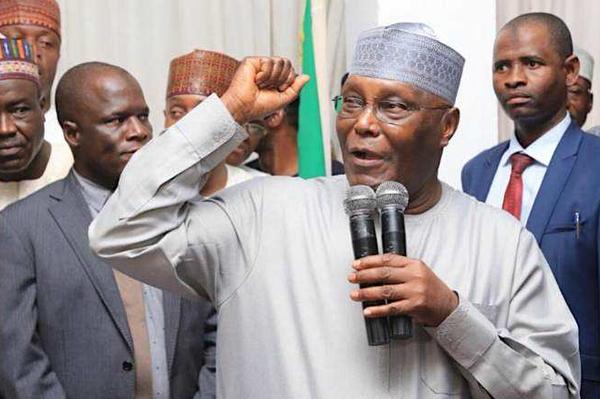
The Economic and Financial Crimes Commission (EFCC) has reopened an investigation into allegations involving former Vice-President Atiku Abubakar following a petition by a former member of the House of Representatives, Hon. Ehiozuwa Johnson Agbonayinma.
The commission acknowledged receipt of the petition, dated August 27, 2026, and received on September 1, 2026, confirming that investigation has commenced.
The former lawmaker through his lawyer, Chief Hannibal Uwaifo (SAN), is seeking a review of the allegations arising from an earlier investigation involving the former vice-president.
As part of the process, the EFCC invited Agbonayinma to its headquarters in Jabi, Abuja, on October 12, where he adopted his petition and responded to questions from investigators.
He arrived at about 9:58 a.m. and left at approximately 4:07 p.m. after the interview.
The commission’s acknowledgement letter, referenced CR:3000/EFCC/HQ/SDC-2/VOL.3/398, forms part of the ongoing investigative process.
He told newsmen that his petition sought to revisit an investigation conducted by the former EFCC chairman, Mallam Nuhu Ribadu, involving Atiku.
He argued that the matter deserved renewed attention in the interest of accountability and the rule of law.
“I want to thank Nigerians, the EFCC and those praying for me in this struggle. The laws are meant for both the rich and the poor. After the EFCC has done a fantastic job, it should not be kept under the table,” he said.
Agbonayinma added that he considered reporting alleged wrongdoing a constitutional responsibility, insisting that nobody was above the law.
He also disclosed that he had written a petition on the matter to United States President Donald Trump, calling for attention to the allegations.

The Senate has passed, for second reading, a bill seeking to establish a national framework for suicide prevention, decriminalise attempted suicide and provide rehabilitation for survivors, despite opposition from Senate President Godswill Akpabio, who insists that the act should remain punishable by imprisonment.
Sponsored by Senator Asuquo Ekpenyong, representing Cross River South, the bill seeks to address what he described as a contradiction in Nigeria’s laws.
Ekpenyong argued that while the National Mental Health Act recognises attempted suicide as a psychiatric emergency requiring treatment, Section 327 of the Criminal Code and Section 231 of the Penal Code still criminalise the act.
He said decriminalisation without accessible care would be incomplete, stressing that suicide has complex causes and requires a humane, health-focused response.
“At the heart of this bill is a simple question: when a Nigerian survives a suicide attempt, should the first response of the state be prosecution or protection?” he asked.
He warned that continued punishment could create a situation in which people experiencing distress feel compelled to ensure their attempts are fatal to avoid prosecution.
The bill proposes replacing imprisonment with mandatory assessment, referral, treatment and follow-up support. It also provides for crisis helplines, training for police officers, teachers and health workers, public education and a national data system for suicide prevention.
However, Akpabio maintained that attempted suicide should remain a criminal offence, arguing that removing the penalties could encourage the act.
“If you attempt suicide, make sure you die. Anyone who attempts and fails will go to jail,” the Senate President said.
Akpabio added that the issue involves both the Criminal Code and the Penal Code, requiring input from State Houses of Assembly during a public hearing to avoid legal conflicts.
The bill has been referred to the Senate Committees on Judiciary and Health for further legislative action and a public hearing.
-
 News2 days ago
Mbah orders impartial Police Probe into Enugu political violence, vows accountability
-
News2 days ago
BREAKING: Soludo, Wike, Adeleke, others appointed member of APC Presidential Campaign Council
-
Features2 days ago
Enugu Political Flashpoint: Mbah orders Impartial Probe as NDC Incidents Trigger Controversy
-
News2 days ago
Rochas Okorocha arrested, released after one-hour Interrogation — Police
-
News2 days ago
Enugu APC demands NDC apology over minute’s silence
-
News1 day ago
Alleged $1bn arms fraud: Funds given to Defence Ministry, not military — Gen. Buratai
-
News2 days ago
Enugu Governor’s Aide, Lucky Chukwu is dead
-
Features6 hours ago
Aguleri/Umuoba Anam Crisis: The Bloody Battle Between Close Neighbours