
News
10 Key Things to Know about Justice Lifu’s Judgment Affecting ADC, Atiku, By Abdulrahman Abdulaziz

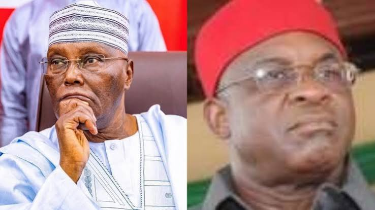
The political landscape has been thrown into fresh turbulence after the Federal High Court delivered a judgment by Justice Peter Lifu that voided the leadership of the African Democratic Congress (ADC) under Senator David Mark and nullified Atiku Abubakar’s presidential candidacy for the 2027 elections.
Here are 10 key things to know about the judgment, the events that led to it, and the underlying political battles.

1. The Core Ruling and Immediate Casualties

Justice Peter Lifu’s judgment nullified the leadership of the Senator David Mark-led National Working Committee (NWC) of the ADC. Alongside sacking the party leadership, the court invalidated the primary elections conducted under their watch, effectively stripping Atiku Abubakar of his 2027 presidential nomination and nullifying the candidacies of other party flagbearers.

*2. Triggered by the North-East Zonal Leadership Dispute*
The legal onslaught against the Mark-led leadership began with a suit marked FHC/ABJ/CS/1819/2025, filed by Nafiu Bala Gombe, the former ADC National Deputy Chairman (North-East). Gombe challenged the legitimacy of the transition process that installed the new leadership after the resignation of the former National Chairman, Chief Ralph Nwosu.
3. The “Haphazard” Takeover by the Atiku Camp
The crisis began with a sudden, intense political realignment that saw the Atiku camp sweep into the ADC. Critics and aggrieved party stalwarts described the influx as a “haphazard takeover,” arguing that political heavyweights hijacked the party’s structures overnight, brushed aside internal party mechanisms, and sidelined foundational stakeholders who had built the platform over the years.
4. The Fierce Battle for Party Control
The takeover triggered an internecine war for the soul and structure of the ADC. Factional leaders and aggrieved members — such as Nafiu Bala Gombe — argued that the installation of Senator David Mark, Ogbeni Rauf Aregbesola (as National Secretary), and other caretaker committee members blatantly violated the party’s constitution and provisions of the Electoral Act. This internal friction morphed into a fierce proxy war over who legitimately controlled the party apparatus.
5. Escalation of Interlocutory Issues to the Supreme Court
As the battle for control intensified, factions rushed to court, triggering a flurry of interlocutory injunctions, counter-injunctions, and appeals. These interlocutory battles moved swiftly through the court hierarchy, eventually landing on the Supreme Court docket as camps sought interim legitimacy or tried to block opponents from running party affairs.
6. The Trial Court Remand Order
At a previous stage of the protracted legal tussle, appellate reviews and procedural assessments led to orders directing parties back to the trial court. Rather than resolving the substantive issues at the appellate level immediately, higher courts returned the matter to the Federal High Court for a proper trial and determination of the core substantive claims regarding leadership rights and structural compliance.
7. Yesterday’s Judgment and Findings on Infractions
Following the procedural trajectory, Justice Lifu took up the substantive case and ruled in the plaintiff’s favour. The court held that the emergence of the Mark-led NWC violated both the ADC constitution and the Electoral Act, making all actions, congresses, and primary elections conducted under their administration legally unsustainable and void.
8. Atiku and the ADC’s Sharp Condemnation
Reacting swiftly to the judgment, Atiku Abubakar (through his campaign organisation) condemned the ruling, labelling it a panicked move by the ruling All Progressives Congress (APC) to weaken the opposition. The ADC similarly rejected the verdict, characterising it as legally indefensible and a coordinated assault on multi-party democracy in Nigeria. The embattled politician, however, remained silent on the undemocratic role he and his colleagues played in stoking the crisis.
9. Jubilation from the Opposing Faction
Conversely, the faction loyal to Nafiu Bala Gombe hailed Justice Lifu’s verdict as a triumph of the rule of law. Proponents of this view argued that political parties cannot treat their internal constitutions with impunity and that leadership must emerge through transparent, lawful processes rather than imposition.
10. The Next Legal Frontier: Heading to the Appeal Court
The legal war is far from over. Representatives of the ADC and affected camps have announced their resolve to challenge yesterday’s judgment at the Court of Appeal. With the 2027 general elections drawing closer, the legal status of the party’s leadership and its presidential ticket hangs in a delicate balance, setting the stage for another high-stakes judicial showdown.
Ultimately, the Atiku camp stands as the true architect of the ADC’s current misfortune. By treating the party’s internal democracy with impunity and arbitrarily hijacking its leadership structures overnight, they sowed the seeds of bitter division and legal vulnerability. By ignoring due process and alienating foundational stakeholders, they have nobody else to blame but themselves for the party’s present ordeals.
Nafiu Bala Gombe had filed an ex parte application and instituted a legal suit at the Federal High Court on 2 September, 2025, challenging the legitimacy of the party’s leadership under the David Mark-led faction.
In late 2025 and early 2026, the case experienced prolonged delays in the Federal High Court under Justice Emeka Nwite, prompting grievances from the plaintiff over the slow pace of hearing the substantive matter. Some of Nafiu Bala Gombe’s supporters alleged that Justice Nwite is close to Peter Obi and that the judge dragged the case to favour him. Mr Obi was a member of the party at the time.
Following the stagnation at the lower court, Nafiu Bala Gombe approached the Court of Appeal to challenge the delays and seek intervention regarding the handling of the judicial process. The court granted status quo ante bellum, which the ADC challenged at the nation’s apex court.
The legal battle then moved to the apex court, which subsequently reviewed the procedural delays and dispute. The Supreme Court directed that the matter be remitted back to the Federal High Court, specifically instructing an expedited trial of the substantive case (which was later reassigned and handled by Justice Peter Lifu).
CHRONOLOGICAL REPORT OF THE PROCEEDINGS IN NAFIU BALA GOMBE v. ADC & ORS., FCT/ABJ/CS 1819/2025
29th July–2nd September 2025: Subject matter and commencement
The suit, filed on 2nd September 2025, arose from the emergence and recognition of national officers at the African Democratic Congress (ADC)’s 99th NEC meeting on 29th July 2025. The Plaintiff alleged that the requisite notice or a democratic election had not preceded their appointment.
The Plaintiff sought declaratory and injunctive reliefs challenging both the disputed ADC leadership and INEC’s recognition of it. He sought declarations that INEC was duty-bound to ensure the lawful constitution of the ADC’s governing bodies; that it could not validate the 99th NEC meeting; that its attendance at the meeting, report, recognition of the challenged NWC officers and validation of their assumption of leadership were unlawful and void; and that it could not deal with, monitor or enable unelected persons to function as executive officers.
He further sought orders nullifying the challenged officers’ acts from 29th July 2025, setting aside the meeting’s decisions and resolutions constituting their NWC membership, and recognising him as the only elected NWC member with a subsisting four-year tenure and entitlement to supervise ADC affairs. He also sought perpetual injunctions restraining INEC from recognising those persons and restraining the 2nd and 3rd Defendants, together with those they represented, from acting as ADC officers or members of its governing bodies.
The Plaintiff filed motions ex parte and on notice seeking interim and interlocutory injunctions. The suit was assigned to Hon. Justice Emeka Nwite for hearing.
4th September 2025–12th March 2026: Interlocutory appeal
On 4th September 2025, the trial Court declined to determine the interim application without notifying the other parties. It held: “I am of the view and I so hold that the interest of justice will be met by putting the other party on notice to show cause why the application should not be granted.”
On 18th September 2025, the 2nd Defendant, despite the plethora of cases decided by the Appellate Courts to desist from pursuing interlocutory appeals aimed at derailing or stalling the smooth flow of the main suit and indeed the course of justice, filed a notice of appeal challenging the above-quoted decision which was entirely made for his benefit.
On 27th January 2026, before the entry of the appeal before the lower Court, the Plaintiff filed a motion on notice seeking to amend his originating summons and thereby deeming the amended originating summons as having been properly filed and served.
On the 6th day of February 2026, 6 months after filing of the notice of appeal, the 2nd Defendant transmitted its record of appeal solely because the Plaintiff filed a motion to amend. The 2nd Defendant circumvented the consideration and determination of the pending motions, including the motion to amend, and indeed the suit.
On 12th March 2026, the Court of Appeal dismissed the interlocutory appeal no.: CA/ABJ/CV/145/2026. The lower Court, guided by the doctrine of necessity, made preservative orders to ensure that the main suit, which is still pending before the trial Court is not rendered nugatory and determined timeously. Thus:
“Finally, it is necessary to make preservatory orders to ensure that the subject matter of the dispute pending before the trial court is not prejudiced, as Courts have inherent powers to control and regulate proceedings to ensure justice… Accordingly, to protect the integrity of the proceedings and the eventual determination of the substantive suit pending before the Federal High Court in Suit No. FCT /ABJ/CS/1819/2025, IT IS HEREBY ORDERED AS FOLLOWS:
-That Suit No. FCT/ABJ/CS/1819/2025, be and is hereby granted accelerated hearing in view of the Electoral Time Table released by the 4th Respondent.
– That the parties are hereby directed to maintain the status quo ante bellum and shall refrain from taking any step or doing any act capable of foisting a fait accompli on the court or otherwise rendering nugatory the proceedings before the trial court.
– Costs of N2,000,000.00 (Two Million Naira) are awarded in favour of the 1st Respondent.”
16th March–30th April 2026: Appeal to Supreme Court
On 16th March 2026, the 2nd Defendant pursued a further appeal to the Supreme Court. Persisting in its actions that prevent a meaningful resolution of the pending motions and the main suit before the trial Court.
On 30th April 2026, in SC/CV/180/2026, Senator David Mark v. Hon. Nafiu Bala Gombe & 4 ors., the Supreme Court affirmed the direction to return to the trial Court thus: “…the order by the court below for parties to return to the trial Court for determination of all pending processes in the 1st Respondent’s suit before it, is hereby affirmed.”
8th May 2026 – 5th November 2026: Return to trial
On 8th May 2026, the trial Court Coram: Hon Justice Emeka Nwite reconvened and the Defendants raised concerns that the Certified True Copy of the Supreme Court had yet to be obtained, thereby applying that the matter be adjourned sine die. Upon their application, the Court adjourned sine die pending receipt of the certified judgment.
On 19th May 2026, the Honourable Chief Judge in the exercise of his administrative powers and owing to the intervening event of the recommendation of Hon. Justice Emeka Nwite by the National Judicial Council for appointment to the Court of Appeal, which could render him functus officio, reassigned the suit to Hon. Justice Peter O. Lifu for accelerated hearing.
Prior to Hon. Justice Peter O. Lifu’s first sitting, the Defendants filed a barrage of about 23 applications, including motions for recusal, stay of proceedings, joinder, interrogatories, discovery, case-stated e.t.c. The Defendants sought to simply frustrate the hearing of the main suit.
On 30 June 2026, the Court, despite attempts by the Defendants to occasion an adjournment proceeded to hear the 23 pending applications. All five defendants moved their motions, and the Plaintiff adopted his responses. Rulings were scheduled for 7th July 2026.
On 7th July 2026, rulings were delivered dismissing the applications. In connection with the 2nd Defendant’s motions of 3rd and 8th June, the Court requested submissions on interrogatories and discovery in proceedings commenced by originating summons, the application of case-stated principles to the reliefs, and any unsettled or recondite legal issues warranting those principles. Only the Plaintiff and the 2nd Defendant were directed to file addresses of no more than two pages each within 48 hours.
On 24th July 2026, rulings were delivered dismissing the motions for interrogatories, discovery and case-stated and the matter was adjourned for hearing.
On 28 September 2026, the Plaintiff was ready to proceed with the hearing, but the Defendants sought strenuously for an adjournment sine die, citing in particular a motion filed at the Court of Appeal for Stay of proceedings Application. The Plaintiff opposed an indefinite adjournment, arguing that no notice of appeal supported a valid stay and that further delay would undermine the Supreme Court’s direction for accelerated hearing. The Court scheduled 5th October 2026 for ruling on the sine-die request and/or substantive hearing.
On 5th October 2026, the Court dismissed the application for an adjournment sine die and proceeded to hear the substantive suits.
*5th November 2026: Judgment and eventual outcome*
The Court granted the reliefs sought by the Plaintiff. Particularly holding that:
– INEC must not recognise the ADC’s 99th NEC meeting for Electoral Act non-compliance;
– INEC must recognise Nafiu Bala as the ADC’s only recognised NEC member.
– Senator David Mark (2nd Defendant) and Ogbeni Rauf Aregbesola (3rd Defendant) have no right to continue presenting themselves as ADC members.
– The meetings, decisions and resolutions reached by the NWC under their control have been set aside.
● Abdulrahman Abdulaziz, a political analyst, is based in Abuja.










• Foreign Affairs Minister raises alarm over Nigerians languishing in foreign prisons, calls for Igbo unity
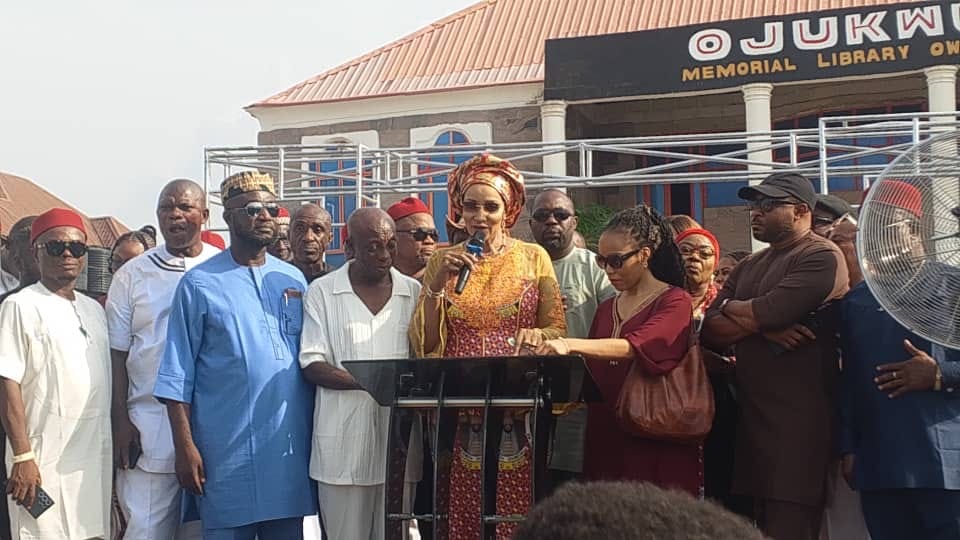
The Minister of Foreign Affairs, Ambassador Bianca Odumegwu-Ojukwu, has urged Nigerians in the diaspora, particularly the Igbo, to be good ambassadors of the country and channel their resources towards investments in their homeland.
She made the call on Thursday while delivering an address at the 15th edition of the Dim Chukwuemeka Odumegwu-Ojukwu Memorial Lecture in Owerri, Imo State.
The minister expressed concern over the growing number of Nigerians, particularly people of Igbo extraction, serving prison sentences in foreign countries, noting that some had fallen victim to circumstances arising from their struggle to earn a living abroad.
She alleged that some Nigerians had been lured into property development arrangements by foreigners, only to be framed up and subsequently dispossessed of their investments.
“Our people are suffering abroad due to the quest to make both ends meet. In some cases, foreigners would encourage them to develop properties and, in the end, frame them up in order to take over these properties,” she said.
Drawing parallels between the historical experiences of the Igbo and the Jewish people before their eventual settlement in their homeland, Odumegwu-Ojukwu urged Ndigbo in the diaspora to embrace the philosophy of thinking home by investing in their ancestral communities.
She disclosed that concerns over Nigerians serving prison terms abroad had prompted her and the Attorney-General of the Federation to approach President Bola Tinubu on the possibility of facilitating the transfer of Nigerian inmates to serve their sentences in the country.
The minister expressed optimism about the future of the Igbo people but stressed that unity, cooperation and collective action were critical to realising their full potential.
Reflecting on the ideals and legacy of her late husband, the former Biafran leader, Dim Chukwuemeka Odumegwu-Ojukwu, she challenged political officeholders, traditional rulers, community leaders, businesspeople and youths to work towards building a united and prosperous Igboland.
“We cannot continue to celebrate Igbo greatness which my late husband represents without working to achieve Igbo unity.
“Let our governors work together and speak with one voice, let our community leaders work for unity, let our businessmen invest at home and let our youths be innovative,” she said.
She added that the legacy of great leaders could only endure when the values they stood for were reflected in the conduct and actions of subsequent generations.
Earlier, the Publicity Secretary of Ohanaeze Ndigbo Worldwide, Dr Ezechi Chukwu, and Prof. Protus Uzoma of the Department of Philosophy, University of Uyo, called for collective efforts to preserve and promote the ideals of the late Ojukwu.
Also speaking, the leader of the Biafra Independence Movement-Movement for the Sovereign State of Biafra (BIM-MASSOB), Chief Ralph Uwazuruike, said the annual lecture was organised to honour the memory and ideals of the late Igbo leader, who died in 2011.
Uwazuruike commended the Foreign Affairs Minister for her efforts on behalf of the Igbo people and appealed to the Federal Government to renew attention to the case of detained Indigenous People of Biafra (IPOB) leader, Mazi Nnamdi Kanu.
He expressed the belief that Kanu’s situation could still be resolved if the government was willing to intervene.
The event attracted BIM-MASSOB members from the five South-East states of Abia, Anambra, Ebonyi, Enugu and Imo, as well as representatives of Igbo communities in Rivers and Delta states, among others.
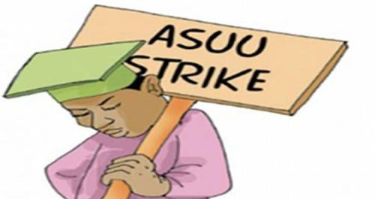
The Academic Staff Union of Universities (ASUU) has threatened an indefinite nationwide strike over unpaid salary arrears and the failure of the Federal and some state governments to implement key provisions of the 2025 agreement with the union.
The ASUU Calabar Zone Coordinator, Prof. Ikechukwu Igwenyi, issued the warning on Thursday during a press conference attended by union leaders from the zone in Abakaliki, Ebonyi State.
Igwenyi said the Federal Government and some state governments had failed to implement critical components of the agreement signed with the union on December 23, 2025.
He listed the outstanding provisions to include the Consolidated Academic Tools Allowance (CATA), Earned Academic Allowances (EAA), Professorial Allowance, university revitalisation, academic freedom and institutional autonomy.
Expressing particular concern over the situation at Ebonyi State University (EBSU), Igwenyi said some academic staff were owed Earned Academic Allowances dating back to 2009.
He added that lecturers were yet to benefit from previously approved 25 per cent and 35 per cent wage awards, consequential adjustments arising from the new minimum wage, CATA and Professorial Allowances.
The coordinator also identified unresolved pension-related challenges as a major concern affecting retired members of the institution.
According to him, lecturers in federal universities were still being owed three and a half months’ salaries withheld following the 2022 nationwide strike, while some EBSU lecturers were owed between three and five months’ salaries.
He said several engagements with the government, including a meeting with the President’s Chief of Staff, Mr Femi Gbajabiamila, had failed to produce positive results.
Igwenyi also faulted the government’s alleged refusal to grant the union’s request for a direct meeting with President Bola Tinubu.
“Why should lecturers be denied salaries for work duly performed?” he queried.
He further expressed concern over outstanding salary shortfalls, third-party deductions and promotion arrears affecting academic staff in several universities.
Igwenyi described the continued establishment of new universities without corresponding investment in existing institutions as a threat to the quality of public university education.
The ASUU coordinator also condemned the alleged victimisation of academic staff and interference in university administration, insisting that university autonomy and academic freedom must be protected.
He said the union had exhausted several avenues of dialogue and constructive engagement with the Federal and state governments.
Consequently, he demanded the immediate payment of withheld salaries, full implementation of the 2025 agreement, settlement of outstanding entitlements and an end to the alleged victimisation of its members.
He specifically urged the governors of Ebonyi, Cross River, Imo, Kogi, Lagos, Anambra and Osun states to resolve outstanding disputes affecting public universities in their respective states.
The union also appealed to President Tinubu, leaders of the National and State Assemblies, traditional rulers, religious leaders, parents and other stakeholders to intervene before the situation deteriorated further.
“The responsibility for preventing another nationwide disruption of academic activities now rests squarely with the federal and state governments,” he said.
Meanwhile, the union refuted allegations that its members deployed by the Independent National Electoral Commission (INEC) were involved in aiding and abetting electoral malpractice.
The News Agency of Nigeria (NAN) reports that the press conference was attended by eight ASUU branch chairpersons from the zone.
News
Davido, Patoranking, Zoro, Cubana Chief Priest Join Anyi Chuks As He Unveils Five-Point Agenda, Promises 180,000 Jobs In Ebonyi
BY TONY EDIKE
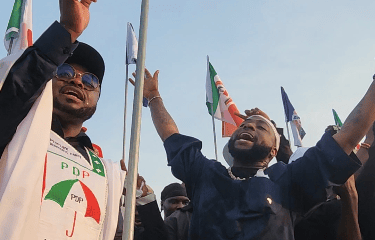
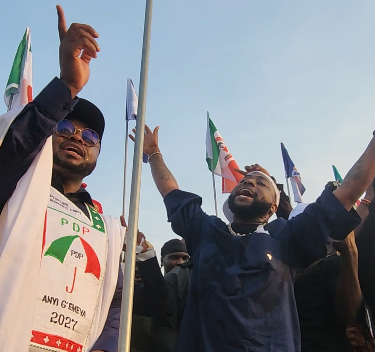
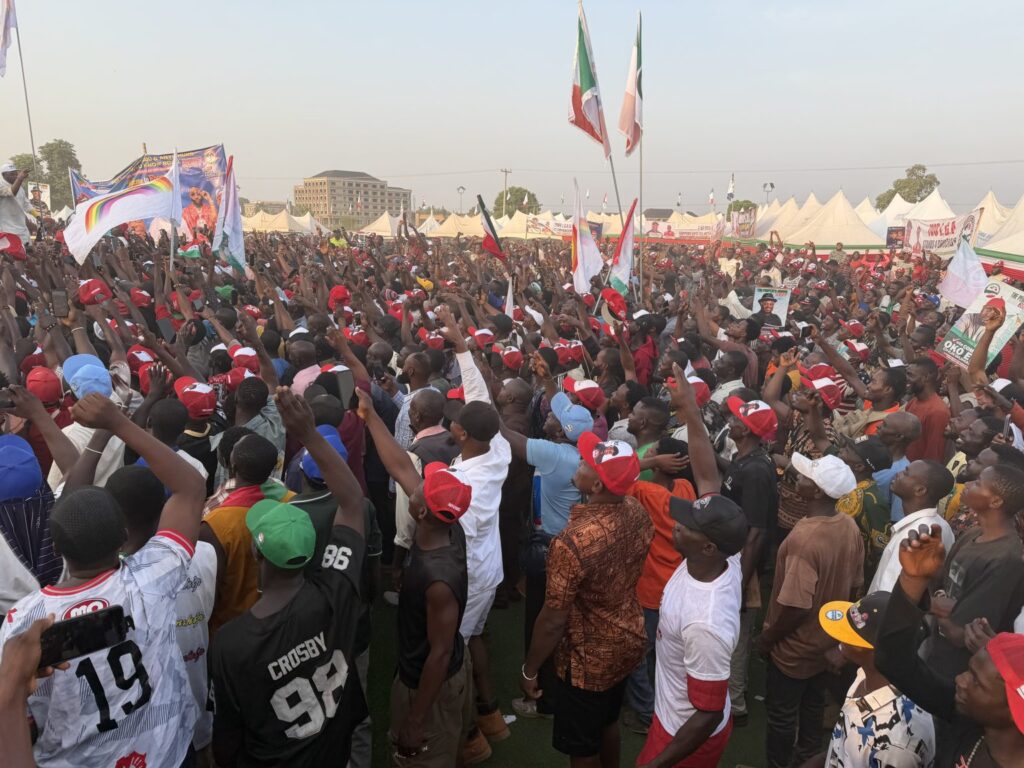
The governorship candidate of the Peoples Democratic Party (PDP) in Ebonyi State, Amb. Dr. Ifeanyi Chukwuma Odii, popularly known as Anyi Chuks, on Thursday officially flagged off his 2027 governorship campaign with a massive rally in Abakaliki, attracting thousands of supporters and prominent entertainment personalities.
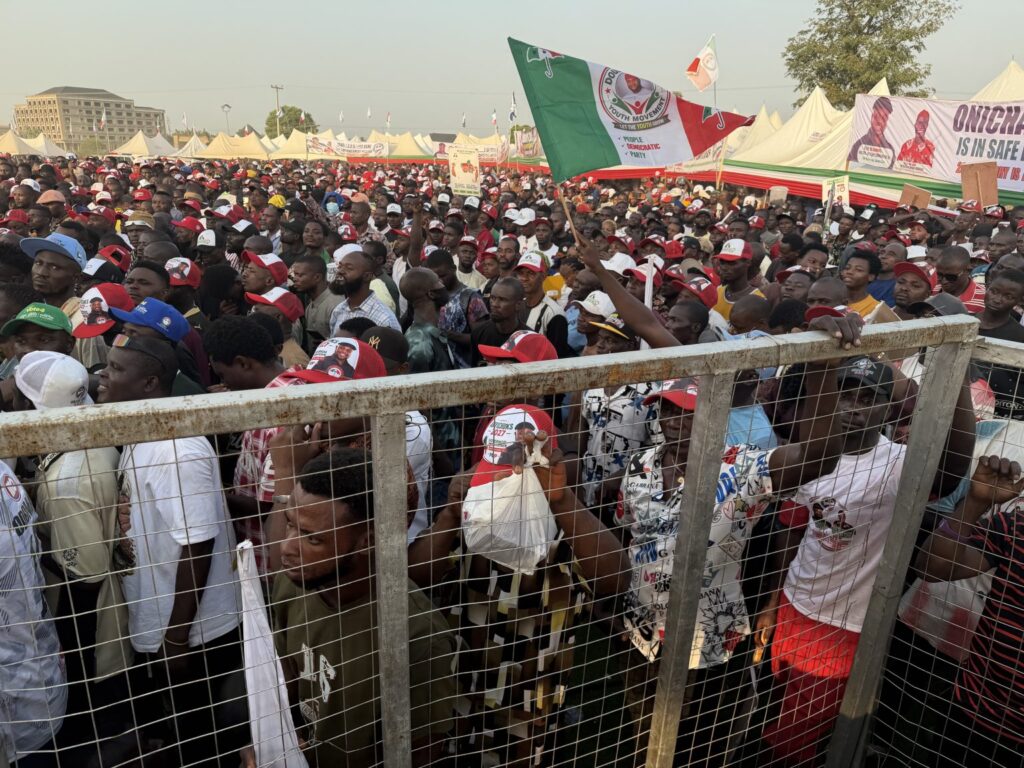
The campaign rally, which featured performances by Nigerian music stars Davido, Patoranking, Humblesmith and Zoro, as well as celebrity businessman and socialite, Cubana Chief Priest, witnessed a large turnout of party supporters and residents from across the state’s 13 local government areas.
The event also provided an opportunity for Odii to unveil his five-point development agenda, anchored on economic transformation and job creation, infrastructure development, human capital development and social inclusion, tourism and hospitality development, as well as security, good governance and institutional reforms.
Addressing the gathering, the PDP candidate promised to create more than 180,000 sustainable jobs if elected governor, declaring that his administration would prioritise economic productivity, wealth creation and improved living conditions.
He said his vision was to move Ebonyi from poverty to prosperity, consumption to production and economic dependency to self-sufficiency.
Odii, who contested the 2023 governorship election, said his previous political experience had strengthened his determination and prepared him better for the 2027 contest.
He noted that although he did not win the previous election, he respected the constitutional process, pursued his case through the judicial system up to the Supreme Court and accepted the final judgment.
Highlighting the state’s economic challenges, the PDP candidate claimed that about 78 per cent of Ebonyi’s population lived in multidimensional poverty, while more than 88 per cent of the state’s revenue depended on federal allocations.
He also put the state’s debt burden at over N168 billion, questioning why the resources that had accrued to Ebonyi over the years had not translated into widespread prosperity, adequate healthcare facilities and employment opportunities.
On job creation, Odii promised to leverage agriculture, manufacturing, mining, commerce, technology, tourism and entrepreneurship to generate employment.
He said his administration would establish agro-industrial processing zones, provide farmers with modern equipment and improved seedlings, facilitate access to financing and connect agricultural production to processing facilities and markets.
He also promised to unlock the state’s mineral resources, particularly the Okposi and Uburu Salt Lakes, through investments in modern extraction, processing, packaging and export.
On infrastructure, he pledged to prioritise the construction and rehabilitation of strategic roads, especially those connecting rural communities, agricultural production centres, markets and industrial hubs.
He also promised urban renewal, improved drainage, sanitation, water supply and broadband expansion, alongside plans to explore independent electricity generation and distribution through appropriate legislation and public-private partnerships.
Free education, improved healthcare
In the education sector, Odii promised to make public primary and secondary education genuinely free, compulsory and functional.
He said his proposed administration would embark on emergency renovation of schools, establish smart schools, strengthen Ebonyi State University and review the state’s tertiary education structure to promote academic excellence, research and innovation.
On healthcare, he pledged to establish and equip functional primary healthcare centres across all 171 electoral wards, improve existing hospitals, provide essential medicines and ensure access to qualified medical personnel.
He also proposed a community-based healthcare system inspired by the general practitioner model, with support from medical professionals and institutions in the United Kingdom and other countries.
To address youth unemployment, Odii promised to support at least 1,000 youth-owned businesses annually through training, mentorship, business development and access to financing.
He further pledged to empower more than 3,000 young people annually through vocational and skills acquisition programmes covering technology, agriculture, manufacturing, creative industries and technical trades.
Promises support for women, elderly citizens
On social inclusion, the PDP candidate promised to expand economic empowerment programmes for women, strengthen support for widows and persons living with disabilities, and establish a functional home for senior citizens without family support.
He also pledged free medical care for eligible retired public servants from their first year of retirement, while promising to address pension and gratuity concerns.
Targets over 43 tourism sites
Odii identified more than 43 potential tourism destinations across Ebonyi State, promising to develop them into investment centres and sources of employment.
Among the locations he mentioned were Amanchor Cave in Edda, Ndibe Beach, Okposi and Uburu Salt Lakes, Oshiri Lake, Green Park, Mkpurukem Cave, Okpuru Lake, Enyigba Salt Lake and Oferekpe Beach.
He said his administration would encourage private-sector investment in hospitality, accommodation, recreational facilities and tourism services while promoting the state’s cultural heritage and traditional festivals.
Promises security, governance reforms
On security, Odii promised to strengthen community-based security structures in collaboration with conventional security agencies, traditional rulers and community leaders.
He also pledged to reform the civil service, improve public procurement and land administration, and establish a Governor’s Delivery Unit to monitor projects and ensure accountability.
According to him, monthly performance evaluation meetings would be introduced for ministries, departments and agencies, while measurable improvements in governance would begin within the first 200 days of his administration.
Addressing political inclusion, he advocated equal opportunities for qualified aspirants irrespective of their senatorial zones, insisting that competence, capacity and performance should determine who governs the state.
He also acknowledged the contributions of the Ezza people to the creation and development of Ebonyi State, disclosing his commitment to handing over power to the zone after his tenure.
Odii said his decision to nominate Ezza sons as running mates in both the 2023 and 2027 election cycles reflected his commitment to political inclusion and equitable representation.
He maintained that his proposed government would be guided by competence, integrity, transparency and merit, declaring that governance would not be treated as a family business.
Calls for credible 2027 election
The PDP governorship hopeful called on President Bola Tinubu, the Independent National Electoral Commission (INEC) and security agencies to ensure a level playing field ahead of the 2027 governorship election.
He urged political actors to reject intimidation, violence, harassment and electoral manipulation, insisting that Ebonyi residents must be allowed to choose their leaders without fear.
Odii also announced that his comprehensive governorship manifesto would be formally presented to the public on December 7, 2026.
He invited traditional rulers, religious leaders, civil society organisations, professional associations, business leaders, youth organisations and women’s groups to attend the presentation, examine his proposals and hold him accountable for his commitments.
Describing the manifesto as a social contract with the people, he urged residents to assess his experience, capacity and development proposals before making their electoral decisions.
Meanwhile, the campaign flag-off was accompanied by significant political mobilisation across Abakaliki, with supporters occupying large stretches of the Enugu-Abakaliki Expressway, from Ishieke Junction to Spera-in-Deo Junction.
The crowd reportedly spilled into adjoining roads following the decision of the campaign team to use a highway location after it was denied access to some popular public venues in the state capital.
The scale of the gathering attracted attention, particularly as Governor Francis Nwifuru also held a campaign-related engagement in Afikpo on the same day.
The presence of Davido, Patoranking, Zoro and Cubana Chief Priest further turned the political event into an entertainment spectacle, adding to the excitement among supporters.
For Odii and the PDP, the rally marked the beginning of an intensified campaign to challenge the incumbent administration and present an alternative political direction for Ebonyi State.
The campaign’s rallying slogan is “ANYỊ G’EMEYA” (We can do it).
-
 Entertainment2 days ago
BREAKING: Veteran Nollywood Actor Pete Edochie Dies at 79 After Battle With Prostate Cancer
-
News2 days ago
Gunshots as Obi, Kwankwaso Arrive Benin for NDC Town Hall Meeting
-
News2 days ago
‘We’ve Lost a Titan, Legend, an Icon’, Gov Mbah Mourns Pete Edochie
-
Politics2 days ago
‘Tinubu Must Go’ Chants As Atiku Takes Campaign To Kogi
-
News3 days ago
APC Mourns Members Killed in Zamfara Road Accident, Condoles with Governor, Families
-
News2 days ago
Mbah Makes Christmas Homecoming Easier, Offers Enugu Indigenes Free Transport
-
International2 days ago
Togolese Caregiver, 24, Shot Dead in US Weeks Before Starting Nursing School
-
News20 hours ago
‘They Shot Me Five Times’ — NDC Supporter Recounts Attack on Omo-Agege’s Campaign Team in Delta