
News
FUEL SUBSIDY: BRINGING IT BACK WILL WORSEN NIGERIA’S ECONOMIC CRISIS – MBAH

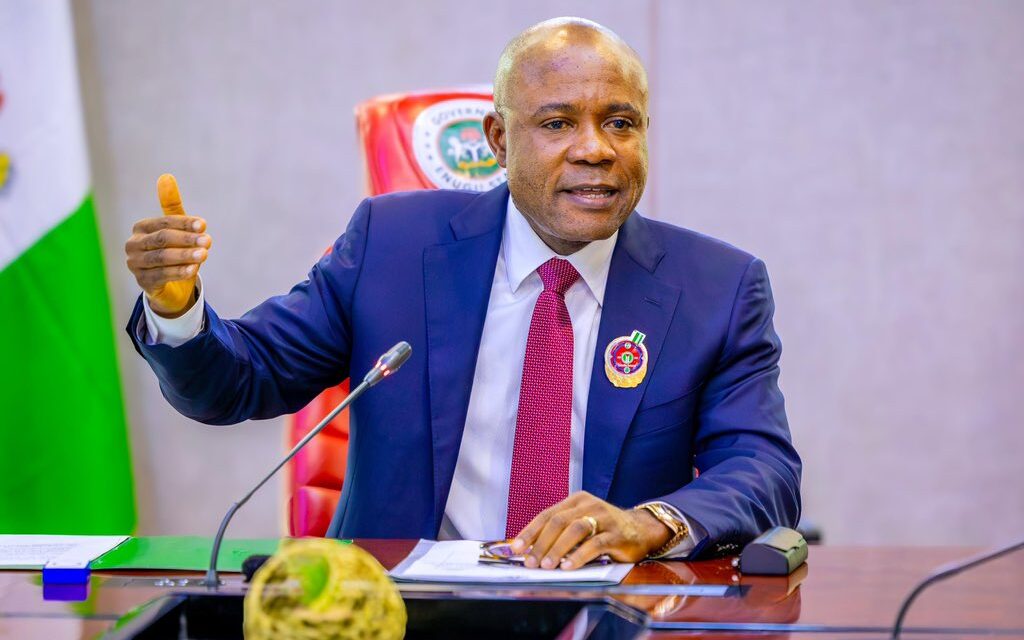
• Enugu needs another four years of my leadership to consolidate gains, says governor; defends Smart Green Schools, taxation, water supply, roads, 660MW power project
By Tony Edike
Governor Peter Mbah of Enugu State has defended the economic reforms of President Bola Tinubu, warning that bringing back the old fuel subsidy regime could worsen Nigeria’s economic challenges, trigger further currency depreciation and deepen poverty.
In this wide-ranging interview, Mbah speaks on his administration’s performance since assuming office in May 2023, explaining its investments in education, healthcare, agriculture, infrastructure, water supply, electricity and security.

He also addresses public concerns over taxation, delays in road construction, structural defects in some Smart Green Schools, the proposed 660-megawatt coal-fired power plant and allegations of marginalisation of Enugu North Senatorial District.

The governor defends his administration’s policies, outlines the challenges confronting some projects and makes a case for continuity beyond 2027, arguing that Enugu needs another four years of his leadership to consolidate ongoing investments and realise its development ambitions.
Looking back at your campaign promises in 2023, do you think the vision you presented to the people is beginning to take shape?
Before the 2023 election, we imagined what Enugu could become and presented that vision during our campaigns. We challenged our people to stretch their imagination and consider what the state could achieve if they gave us their mandate.
We imagined an Enugu where young people could build their futures, businesses would flourish, and children would receive an education that prepares them for the future. We also envisioned a state where people have access to quality healthcare, live securely and take pride in their environment.
I am excited to engage our people and hear whether they believe that ambition is beginning to take shape or whether it still exists only in their imagination. That is why I welcome this engagement.
Look around you. We are sitting in an international conference centre. Imagine an Enugu without such a facility a few years ago. Today, it has opened its doors to Nigeria and the world, creating limitless opportunities for our businesses and people.
Beyond this facility, we have the Enugu International Hospital, which is about to be commissioned; roads connecting our communities; improved transportation; Enugu Air; the revitalisation of existing industries and the establishment of new ones.
Coming from the business world, I understand the importance of performance management reviews, where promises are measured against results. That is essentially what we are doing here: measuring our promises against the results on the ground. I look forward to this engagement.
There has been considerable attention on the Smart Green Schools project. However, focusing on budgetary allocation and performance, what has education received under your administration?
Education was one of the first sectors we prioritised when we assumed office. We examined the data and became concerned about the situation. We recognised that if we wanted to eradicate poverty in the long term, build wealth and make Enugu a place where young people could build their futures, we needed an aggressive intervention in the sector.
Over the last three budget cycles, we have allocated an average of 33 per cent of our total budget to education. The lowest allocation was about 32 per cent.
We made that commitment because we understood the connection between education and development. It was never simply about building Smart Green Schools or creating beautiful physical structures. We recognised that the entire education sector required an intervention similar to an emergency declaration.
We could not continue to allow our children to go through the motions of learning without acquiring the relevant skills required in the modern world.
We have transformed the education system, including how we approach early childhood learning. For the first time in the history of the state, children from the age of three can access early childhood education in public schools on a large scale.
Beyond learning, we are using the same platform to intervene in their healthcare. When a child enters the system at age three, we assess the child’s health profile.
Our Smart Green Schools have clinics, each manned by a registered nurse. This enables us to assess the children’s medical records. Some of them, particularly those from rural communities, may not even have medical records. We help regularise those records and ensure they receive the necessary vaccinations and other preventive healthcare they should have received before the age of three.
We also assess their nutritional status, including stunting and wasting, and monitor their height and weight to ensure proper development.
The children progress through nursery, pre-primary one and pre-primary two before moving into the Basic One to Basic Nine system.
Previously, children attended primary school from Primary One to Primary Six, wrote the common entrance examination and then moved to another school. Parents had to spend additional money to secure admission for them.
We have eliminated that interruption in our Smart Green Schools. A child can start from Basic One and progress to Basic Nine without interruption. Technically, we have 12 years of compulsory and free education.
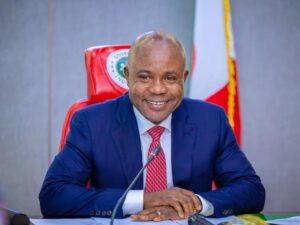
Governor Peter Mbah
And when we say free, we mean genuinely free. There are no registration fees. Parents do not have to buy uniforms because we provide them. Textbooks and notebooks are also provided free of charge.
We have equally transformed the teaching and learning methods. We have moved away from the traditional approach to experiential learning, where children acquire knowledge through practical experience.
Beyond digital skills, our schools have robotics and artificial intelligence hubs, as well as innovation hubs where children learn to build robots and acquire other practical skills.
Learning is no longer a one-way process in which teachers stand in front of classrooms and ask children to memorise and repeat information.
The children now see their classrooms as creativity hubs and themselves as potential problem-solvers. They are exposed to real-life social problems and taught how to develop solutions.
Some Smart Green Schools have reportedly experienced structural problems, including roofs being blown off during heavy rainfall. Are the schools we have today what you envisioned before assuming office?
We are talking about projects of enormous scale. In the last three years, we have built 268 Smart Green Schools. These are outstanding structures, and accomplishing such a feat could ordinarily take 10 to 20 years.
When you fast-track projects of that magnitude, you may encounter teething problems. We are not oblivious to the challenges, and the important question is whether we are prepared to address them. Certainly, we are.
Some of the issues people have observed involve physical defects, including roofs being blown off. These are challenges we are addressing, and we will ensure they are resolved.
We fast-tracked the projects because we wanted to achieve them within a short period. We could not afford to wait indefinitely. In our book, tomorrow is here.
We wanted to execute these projects on a large scale so that no child would be left behind.
We could have built just three Smart Green Schools, one in each senatorial district. That would still have been a significant achievement. We could even have settled for 17, one in each local government area.
But we went further and built 268 schools because we wanted every child in Enugu to have access to quality education.
Regarding the teething problems, including structural defects and roofs being blown off, we are addressing them and will ensure that all the schools are fit for purpose.
Does the decision to fast-track the projects absolve the contractors of responsibility for the defects?
Certainly not.
We have records of all the contractors. Those whose projects have defects are expected to return and fix them. Contractors who have been recalcitrant are blacklisted, and there are consequences for their actions.
We also obtained advance payment guarantees from all the contractors. Where necessary, we have the option of calling up those guarantees.
Your administration promised to revitalise agriculture, particularly palm oil production, and develop infrastructure to support sustainable growth. What has been achieved so far?
When we assumed office, we upgraded the Ministry of Agriculture to the Ministry of Agriculture and Agro-industrialisation. We did not change the name simply for cosmetic reasons. We recognised agriculture’s contribution to our GDP.
Our target was to grow the state’s GDP sevenfold in eight years. We therefore needed to concentrate on the critical sectors driving that growth, and agriculture was number one.
We immediately set out to activate the state’s dormant agricultural assets.
First, we entered into a joint venture with Pragmatic Farm to reactivate United Farm Products Limited, now known as Enugu United Farm Products Limited (EUPPL).
The joint venture is expected to attract an investment of about ₦100 billion into the plantation.
Today, the plantation is active and covers approximately 6,700 hectares. Some of the trees had become unproductive because of their age, but more than 2,000 hectares have now been cultivated and are producing. We have also rehabilitated some of the old trees and returned them to production.
We have equally reactivated what used to be Anambra Vegetable Oil Products (AVOP), now known as Enugu Vegetable Oil Products (EVOP).
We are producing palm oil at the UPPL plantation, and we are taking the process further. We will soon receive equipment for the refinery because we want to process the palm oil into vegetable oil and other related products.
Another example is the former Songhai facility in Heneke, Ezeagu. It was dormant, but today it is active. We are working with a private investor, Tribu, and it is now known as Tribu Songhai Farm. The facility covers about 10,000 hectares.
The Sunrise Flower Mill is another example. It was previously dormant, but it is being reactivated through the cultivation of 10,000 hectares of cassava. The facility is also being upgraded to process cassava in addition to wheat.
We have six pilot farm estates under development. Our plan is to establish at least 260 farm estates, with each ward having a minimum of 200 hectares.
Each estate will have perimeter fencing, warehouses and the necessary machinery. The objective is to help smallholder farmers transition from subsistence farming to mechanised agriculture.
We also have over 167,000 hectares of land available as a land bank for commercial farmers. These are lands freely donated by communities to the government to attract investors, create employment and generate wealth.
We welcome investors interested in our agricultural sector. They are already coming, and we are engaging with several of them. Examples include investments in Isi-Uzo and Adani, as well as our partnership with Ellah Lakes Plc.
We have also established a tractor assembly plant. More than 60,000 farmers are in our database, cultivating over 80,000 hectares of land. We have the geographical coordinates of their farms.
A few months ago, we distributed over 60,000 bags of fertiliser. Unlike some states that charge farmers for such support, we distributed ours free of charge.
We also provided other agricultural inputs, high-yielding seedlings, handheld tractors and equipment to improve production.
However, our focus is not limited to production. We are also investing in processing. We are building agro-transformation centres across the three senatorial districts, in addition to the Special Agro-Processing Zone, which will serve as the main production centre.
We are also building what will become the biggest ranch in the country, with the capacity to accommodate more than 20,000 cattle. It is known as the Integrated Livestock Hub and is being developed around Obahu and Umualo.
Additionally, we secured Federal Government approval for Enugu to be one of three states where an Integrated Poultry Hub will be established. The other states are Kaduna and Oyo.
On water supply, would you say Enugu State now has a reliable system that meets residents’ needs?
I know this question will come up, particularly regarding my 180-day commitment. I promised that within 180 days, water would flow in every household. We made that commitment because we understood how important access to water was to our people.
I recall during my campaign seeing children queuing to fetch water from tankers. I understood that the absence of water could keep a child out of school or prevent the child from doing homework because of the time spent searching for water.
Before making that commitment, I had already begun analysing the situation. Between my election and inauguration, I examined the production segment, particularly the upstream capacity.
I discovered that the state was producing only about two million litres of water daily, whereas Enugu needed approximately 80 million litres to ensure adequate supply across the city.
We immediately front-loaded the procurement process because some of the equipment required were long-lead items. They were not readily available, and some had to be customised. Procuring certain equipment, particularly the major pumps, could take about four months.
By front-loading procurement, we saved at least two months. Two months into our administration, the pumps arrived, and we began increasing production. We also reactivated the Ninth Mile water scheme, which had been dormant for years.
By the 180th day, we had increased production capacity to 120 million litres daily.
However, as production increased, the pipes began to burst. The existing pipes had become brittle and exceeded their design lifespan. We also had to contend with asbestos pipes and situations where buildings had encroached on the pipelines’ rights of way.
We faced a difficult choice: demolish buildings constructed on the rights of way or develop a new distribution network.
We decided that these were our citizens and that we did not want to demolish their buildings. Instead, we began reconnecting the network and establishing new connections.
Today, Enugu has the production capacity to serve the entire city, with a buffer of more than 50 per cent. Our challenge is ensuring that water reaches the last mile.
We have divided the city into approximately 14 zones, and work is ongoing across all of them to establish last-mile connections.
The process is slower because of the obstructions we encounter. We have also procured thrust-boring equipment to enable horizontal drilling, which will eliminate the need to cut open roads in many cases.
We will solve the water problem. I understand its importance to our people, and I receive daily briefings on progress in the sector.
Residents continue to complain about the condition of roads across the state, particularly delays in completing some projects. What is responsible for these challenges?
You can imagine how I feel whenever I notice that the weather is changing and the rainy season is approaching. We have a limited period of dry weather each year during which we can effectively undertake road construction.
If you fail to take advantage of that dry-season window, you may have to wait until the next year. No matter how much pressure you put on contractors, there are certain construction activities they cannot undertake during persistent rainfall without compromising quality.
I have often wondered whether there are innovative ways to undertake road construction even during the rainy season.
Unfortunately, we have barely five months in a year to carry out road construction effectively.
For instance, we expected the dry season to begin early this year. That was why I became disturbed when I saw the rain recently.
We had experienced only two days of dry weather, and I had already informed contractors that the rains were over and that they should return to their sites.
Those roads have been fully cash-backed. They have been fully funded. In fact, for many of the projects, contractors have not even completed work to the extent of the payments already made to them.
It is unfortunate that they cannot proceed while the rains persist because certain construction activities cannot be carried out during the wet season without affecting the quality of the roads.
Poverty eradication, zero hunger and ease of doing business were among the measurable indicators in your 2023 manifesto. However, taxation remains a major complaint among residents, with traders alleging that your administration is overtaxing them. What is your response?
Thank you for raising the issue of taxation because it is one of the allegations that have been repeated so often that some people are beginning to accept them as truth.
I think those who believe we are excessively taxing the people are looking at the growth recorded in our internally generated revenue (IGR). They probably cannot imagine how such growth could have happened within this period, so they conclude that we must have imposed additional burdens on the people.
That is far from the truth.
I have explained this on several occasions. We cannot legislate on taxation in areas outside the state’s constitutional competence. Personal income tax rates, company income tax, value-added tax, withholding tax and other related taxes are legislated upon by the National Assembly.
Perhaps what some people consider taxation may, in a generic sense, be payments for services, such as waste disposal, business premises fees, water charges, Certificate of Occupancy fees, estate management fees and land use charges.
If you examine the fees we charge for those services, you will understand what we have done.
We enacted a state law to consolidate the charges because businesses previously complained about multiple taxation. People were asked to pay different taxes, fees, rates and levies.
We decided to consolidate these payments into one annual charge.
How much did we decide to charge? ₦36,000 annually for businesses. This covers business premises fees and several other rates. Once you make that payment, nobody is permitted to approach you for additional payments for those services.
That amounts to barely ₦100 daily or about ₦3,000 monthly.
When the controversy became intense, I exercised caution and set up a committee, headed by the Secretary to the State Government, to compare our charges with those of other states.
I directed the committee to examine what was obtainable in neighbouring states, Lagos and Abuja. After about three weeks, I received its report, which showed that Enugu charged the lowest rates in the South-East for those services.
Regarding land use charges, before the committee was inaugurated, the fees were around ₦150,000 and, in some cases, ₦200,000. We reduced them significantly.
We also expanded the tax net. When we assumed office, barely 9,000 units were receiving demand notices for land use charges. But a survey showed that there were more than 800,000 billable household units.
I decided that since we were expanding the tax net, we should also reduce the rates to encourage voluntary compliance. We brought the charge down from over ₦100,000 to ₦25,000.
We also received complaints about people going to markets, apparently from local governments, to collect money from traders. I announced that the practice should stop. Nobody should collect ₦100 or ₦200 from our market women.
We have also made recent announcements concerning tricycle operators, although those charges have little impact on our IGR.
So, how have we grown our IGR?
First, we plugged leakages. We were shocked by the extent of financial leakages in the system. Today, nobody collects cash on behalf of the state government. All payments go into the Treasury Single Account.
We have also activated dormant government assets, which are now generating substantial revenue.
Before we came into office, the government was spending money to sustain Nike Lake Hotel and support its management. Today, we earn over ₦300 million from the arrangements we have put in place.
For Hotel Presidential, the government earns over ₦1 billion. The International Conference Centre is also generating substantial revenue.
The same applies to our partnerships in United Farm Products Limited, where the government owns 40 per cent; Sunrise Flower Mill, where we also own 40 per cent; and Tribu Songhai, where our interest is about 30 per cent.
The government is now generating revenue from assets that were previously dormant. That is what you are seeing reflected in the growth of our IGR.
Property owners have also complained about capital gains tax. What is your administration’s position on this?
I am yet to understand whether you are referring specifically to capital gains tax.
You cannot be charged capital gains tax if you have not carried out a transaction. Capital gains tax arises when you sell your land or house and there is a difference between the price at which you acquired the property and the price at which you sold it.
The government then charges a percentage of that gain. It is not a tax whose rate is legislated by the state government. Capital gains tax is also within the exclusive legislative competence of the National Assembly.
Land use charge, of course, is something we legislate on, and, as I have explained, we have done everything possible to reduce it.
Nobody should charge you capital gains tax if you have not carried out a land transaction. It becomes applicable when you complete a transaction involving the sale of land or property.
Is your administration open to engaging businesses differently, particularly through bespoke arrangements to address concerns about taxation and other business-related issues?
When we committed ourselves to growing the state’s economy sevenfold, we knew that businesses and private capital would drive that growth.
We are therefore not just interested in creating an environment where businesses can thrive. In many cases, we get directly involved. We support businesses and even inject funds where we believe such assistance will help them survive and grow.
We do this deliberately because we appreciate the employment opportunities they create and the wealth they generate for the state.
These are young people taking initiatives and investing their resources. We recognise the benefits that come when businesses succeed.
I am therefore more than happy to engage directly with business owners on specific areas where they want government intervention.
You promised that the groundbreaking ceremony for a 660-megawatt coal-fired power plant would take place in July, with a 24-month construction timeline. That promise is yet to be fulfilled. What is happening?
That brings me back to the issue of the rainy season. We have been ready since July.
In fact, when we experienced those two days of dry weather, I was already speaking with our partners about commencing preparations.
The plant has been procured. It is not the state government that procured it; we are working with an investor.
The plant is ready. What we need to do is prepare our base, which involves the civil works. We also need to construct an access road to the location because the plant will be situated at Amansiodo, close to the fuel source.
The plant will be powered by coal, and Amansiodo has our largest coal reserves. That is why we selected the location: we wanted the power plant to be close to the source of production.
As I speak to you, the plant is being brought in from China. Its commissioning process is ongoing, although that also takes time.
Everything remains on track.
The reason we have not held the groundbreaking ceremony as promised in July is the rainy season. We are hoping that once we have a favourable weather window, we will hold the ceremony and commence the civil works.
How would you assess President Bola Tinubu’s economic policies, particularly against the backdrop of the hardship Nigerians are experiencing?
When you assess Nigeria’s macroeconomic indicators, you will notice that before the bold and courageous decisions taken by President Bola Ahmed Tinubu, the country was almost at an economic precipice.
I am sure you remember the Ways and Means advances we had accumulated. We were talking about more than ₦27 trillion.
What that meant was that we were in a hole, and the only way we were trying to get out was by digging deeper. I do not think that was sustainable.
If we had continued along that trajectory, we could have witnessed total economic collapse and possibly become a failed nation.
The President could have come into office and decided that, because of the ₦27 trillion Ways and Means advances, we should continue printing money and digging deeper. That would have been disastrous.
Even the economic hardship we are discussing today, including pressure on households and unemployment, would have been relatively minor compared with what we might have experienced if those decisions had not been taken.
For a nation to function effectively, it must first address its macroeconomic pressures. Without stability at that level, sustainable growth becomes difficult.
For example, our foreign reserves are currently about $56 billion to $58 billion, which is the highest level in almost two decades. They can sustain us for approximately 10 to 11 months.
Look at the foreign exchange market. It has become relatively stable because we have allowed it to be driven by market forces. The exchange rate was floated rather than being artificially controlled.
Previously, we were controlling what we could not back. That was why our foreign reserves were declining rapidly because we were not generating the corresponding foreign exchange.
People were also losing confidence in the naira. Even workers, after receiving their salaries, would convert their money into foreign currencies because they no longer had confidence in the local currency.
Today, the economy is stabilising because the macroeconomic indicators are looking better. The next thing we need to pursue is growth.
Once you achieve stability, private capital becomes a major driver of growth. Investors will not bring their money into an economy they consider unstable.
You must first stabilise the economy to attract investment. When those investments begin to come in, people will experience shared prosperity through job creation, increased earning power and poverty reduction.
That is what this President has done, and I believe we must commend his courage in taking those decisions.
We have not had many administrations with the courage to take such bold decisions. We are on the right path, and based on the numbers and growth we are witnessing, we are beginning to see light at the end of the tunnel.
You have often spoken about Enugu’s relationship with the Federal Government and the importance of regional collaboration. Has the state recorded any security benefits from this relationship?
Certainly. Do not forget that even the idea of establishing the Distress Response Squad (DRS) received approval from the Federal Government.
The squad is not simply about having police officers working under the DRS. It is essentially helping to ensure that the command and control centre functions effectively.
Regional cooperation is another area where we have benefited significantly.
We now have a level of intelligence-sharing across the region that was not available previously. You may not see the physical structure of a regional central command and control centre, but there is considerably more collaboration among the states and security agencies than we had before.
We also receive support from security agencies.
We work very well with the Army, Police, Department of State Services, Air Force and other security agencies in the state, including the Nigeria Security and Civil Defence Corps.
We have a very good working relationship with them, and Ndi Enugu have derived several benefits from our connection with the Federal Government.
Enugu has always been a regional hub. We attained township status even before amalgamation. That tells you how important the city has historically been.
However, we were gradually losing that pre-eminence because we were increasingly being displaced. We were not sufficiently connected to places where important national activities were taking place.
Today, conferences and national functions are returning to where they belong.
The National Festival of Arts and Culture (NAFEST) is scheduled to take place here in November. We also have the National Sports Festival, the National Council on Agriculture and several other national activities taking place in Enugu.
These events are creating opportunities for our businesses and people.
Could you give an overview of your administration’s achievements in the healthcare sector? Also, what is the government doing about housing regulations in Enugu State?
We have invested significantly in healthcare. However, our investment is not primarily about physical structures. We are more interested in health indicators, which we monitor and measure closely.
For example, we knew the maternal mortality figures when we assumed office, and we know where they stand today.
We had a situation where, for every 100,000 live births, we recorded more than 700 maternal deaths. Today, that figure has dropped to below 100.
What accounted for that improvement? We increased access to skilled healthcare for pregnant women.
Before we came into office, about 40 per cent of our women had access to a skilled health professional during delivery. Today, barely four per cent lack such access.
We have midwives and family healthcare professionals providing those services. We do not want any pregnant woman to die while trying to bring a child into the world.
Our target is zero maternal mortality. We do not believe any woman should die simply because she wants to give birth.
That is also why I approved the recruitment of 2,250 healthcare personnel for our primary healthcare centres.
We first assessed personnel shortages across our primary healthcare facilities. When we discovered the extent of the deficit, we decided to bridge the gap.
Out of the 2,250 personnel, we have recruited 1,350. We are currently in the fourth phase of the recruitment exercise, with 450 personnel being recruited in each phase. We are working towards the next batch of 450.
Our objective is to recruit all 2,250 additional healthcare personnel. This will help address pressure on our facilities and improve under-five mortality figures.
What we are doing through the Smart Green Schools will also contribute to this effort because we are regularising the medical records of children who enrol in early childhood education.
Our primary healthcare centres are equipped to provide vaccinations. Mothers can take their children, particularly infants and under-five children, to these centres for immunisation.
Vaccination is preventive and can help prevent several childhood diseases and deaths.
Our current figures are significantly below the national average. In Enugu, we currently record about 60 deaths for every 1,000 live births among children under five. The same applies to infant mortality.
We are monitoring these figures closely because our objective is to ensure that children do not die from preventable conditions.
Regarding the retention of healthcare personnel, I think healthcare professionals themselves would be in a better position to tell you what we have done.
We have achieved 100 per cent of the Consolidated Medical Salary Structure (CONMESS).
For the Consolidated Health Salary Structure, we have achieved 80 per cent. We are still 20 per cent short, but we are working towards full implementation.
When we came into office, that figure was about 40 per cent. Today, we have moved it to 80 per cent.
Our objective is to achieve full implementation so that Enugu can become a major destination for healthcare professionals.
In the last two months, since the beginning of electioneering activities, you have made more than 800 appointments. Some people believe these appointments are driven by anxiety over the coming election. How do you intend to sustain them?
You are asking whether the appointments are sustainable and whether I am nervous.
What I understand you to be saying is that, at a time when some people believe the administration is approaching its end, we are instead doubling down, bringing in more people and accelerating the pace of work.
I think you should give us credit for bringing in additional hands to ensure that we accelerate development.
That is exactly what we are doing. It is not because we are nervous. We recognise that there is still a lot of work to be done, and we must do it.
There is controversy over the ₦150 million fees reportedly imposed on political parties for campaign posters and other political signage in Enugu State. What is your explanation?
The fees people pay for signage are not imposed through an executive order. They are provided for by the laws of Enugu State.
Some people have actually gone to court to challenge the law, and the court has given judgments affirming its legality because it is established by law.
It is a law of general application. Nobody is exempted.
Let me repeat that: go back to the law and review it. I challenge you to examine the law. You will never find any provision exempting the APC.
That means the law applies to everybody. Every political party is covered, and the prescribed fees must be paid. Failure to comply amounts to a violation of the law.
You are the general coordinator of the APC Presidential Campaign Council in the South-East. There is controversy surrounding the Rainbow Coalition led by the Minister of the Federal Capital Territory, Chief Nyesom Wike. What is your position on the development?
Frankly, politics is about alignment and realignment.
If the APC is today being treated as a beautiful bride and several interests and individuals are willing to align with us, it would be inappropriate to push them away.
We are happy to welcome any party willing to join forces with us to ensure the re-election of President Bola Ahmed Tinubu on the platform of the APC and support the re-election of our other APC candidates.
Essentially, it is about bringing together as many forces as possible.
What is your position on calls for the possible return of fuel subsidy as a way of addressing the hardship facing Nigerians? How do you also explain the confusion surrounding the 30-day petrol discount announced for NNPC filling stations?
I think there is a misconception rather than confusion. What we should do whenever we have an opportunity or platform like this is to dismantle those misconceptions.
First, as you mentioned, my background is in business, particularly the oil and gas sector. More specifically, I worked in the downstream subsector. That is my area of expertise.
Even before entering public service, I had written several articles explaining why fuel subsidy was unsustainable and why it needed to be removed.
I knew from the project I undertook in Lekki that it could only thrive in a non-subsidy environment.
I understood that petroleum subsidy was unsustainable because it was not targeted. It was a general subsidy.
Typically, when you have a general subsidy, the people who benefit most are often the wealthy and affluent members of society.
Do not forget that subsidy had long been removed from diesel, which is used by many mass transit vehicles. The subsidy we were dealing with was on Premium Motor Spirit (PMS).
If you think about it, owners of SUVs and other large vehicles benefited more from that subsidy.
So, if we are talking about subsidies, I do not think the model we operated before the President removed it was even the right one for the country.
The people we claimed to be helping benefited only marginally, while the wealthy benefited significantly.
However, you can have targeted subsidies, where the government identifies specific segments of society, particularly vulnerable people, and directs support to them.
I think you can already see that the government is doing something along those lines.
The government is implementing cash transfers. There is also the World Development Programme, through which the government is targeting 1,000 people in each ward across the country to provide seed capital that will enable them to become economically productive.
That is targeted support.
You can see that funds saved from subsidy removal are being channelled towards the segments of society that genuinely need assistance.
Anybody advocating a return to the old subsidy regime, in my view, is advancing a misconception about the direction in which the country should go.
I have heard the Minister of Finance and the Coordinating Minister of the Economy explain that the consequences of reversing the policy could be severe.
I believe those figures are accurate. If you remove the subsidy today, whatever you think you are gaining from that decision could be lost many times over through the poverty and economic consequences that would follow.
The naira could automatically be devalued, and we could be dealing with an exchange rate of about ₦4,000 to the dollar, according to a prediction made by the minister. I have not independently verified that figure, but even if you imagine such a possibility, do we really want to take the country back to where it was?
I think what we should focus on now is encouraging private capital to flow into the economy.
Look at the changes in the stock market and the growth we have experienced in that sector. We are witnessing considerable inflows of funds into the country, not just portfolio investments but also direct investments.
That trend will become stronger because the macroeconomic indicators are becoming more stable.
If we had failed to stabilise those indicators, we would still be struggling, and there would be little reason for hope. But because the macroeconomic indicators are largely stabilising, we have reason to hope.
There have been allegations of marginalisation of Enugu North Senatorial District, particularly the Nsukka zone. How would you respond to these concerns?
If there is one thing we take great pride in, it is inclusivity.
I do not think there has been any development model in the history of Enugu State that recognises development at the ward level in the way our administration does.
This is the first time in the state’s history that development across critical sectors, particularly those that determine its future, is being implemented at the ward level.
If you look at the senatorial district with the highest number of wards, it is Enugu North. So, if you ask me which zone stands to benefit most, I would say Enugu North.
Our biggest area of expenditure is education. The people benefiting most from that intervention include those in Enugu North.
The same applies to healthcare. Enugu North is also among the major beneficiaries.
So, how can you say the zone is being sidelined?
Having watched your administration for nearly four years, why should the people of Enugu State vote for you and renew your mandate?
Let me invite Ndi Enugu to imagine something with me.
Let us imagine the Enugu we knew four years ago. Imagine an Enugu without Hotel Presidential. Imagine an Enugu without the International Conference Centre. Imagine an Enugu without Enugu Air.
You do not want to imagine an Enugu without the International Hospital, CNG buses or Niger Gas. The list is endless.
Let us stretch that imagination further. Imagine an Enugu, four years from now, generating 660 megawatts of electricity and providing 24-hour electricity across the entire state.
Imagine returning home without worrying about power outages. Businesses can flourish, and people can operate throughout the week without worrying about the cost of diesel.
Imagine an Enugu where we generate electricity and residents buy power at ₦120 because they own the coal that powers the electricity.
Imagine an Enugu where you do not just travel on CNG buses but also have a monorail that can take you from one point to another.
Imagine an Enugu where you can fly directly from here to the United Kingdom, the United States, China and Dubai.
We have asked you to imagine what Enugu was like a few years ago, before we came into office.
But even more important is the work ahead of us.
Imagine an Enugu where our children receive an education that prepares them for the world because they have acquired the evolving 21st-century skills required to compete globally.
Imagine an Enugu where all the roads are paved and there is no part of the city with an unpaved road.
The decisions we make in the coming days, weeks and months will be decisive.
We have a responsibility to uphold this Enugu of our dreams, the Enugu we have imagined for generations and which is now beginning to take shape before our eyes.
If this vision captures our imagination, then we have a duty to work towards sustaining it. We must ensure that the standard we have set does not decline and that the development trajectory we have established is sustained.
I therefore invite Ndi Enugu to continue to keep faith with us on this journey. It is a journey of greatness, growth and development.


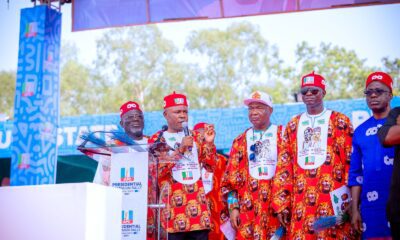





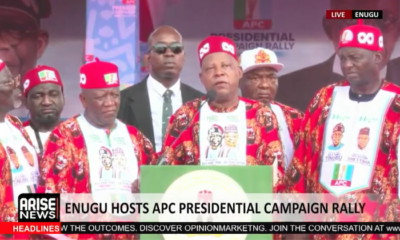


…As five S’East governors file behind President
The South East has unveiled the “Enugu Declaration”, throwing its full weight behind President Bola Tinubu’s re-election, stressing that collaboration and strategic alliances remain the region’s surest path to the Nigerian presidency.
The Declaration was unveiled by the Governor of Enugu State, Dr. Peter Mbah, who described it as symbolic since the capital of the defunct Eastern Region had historically served as a profound ground for forging political alliances.
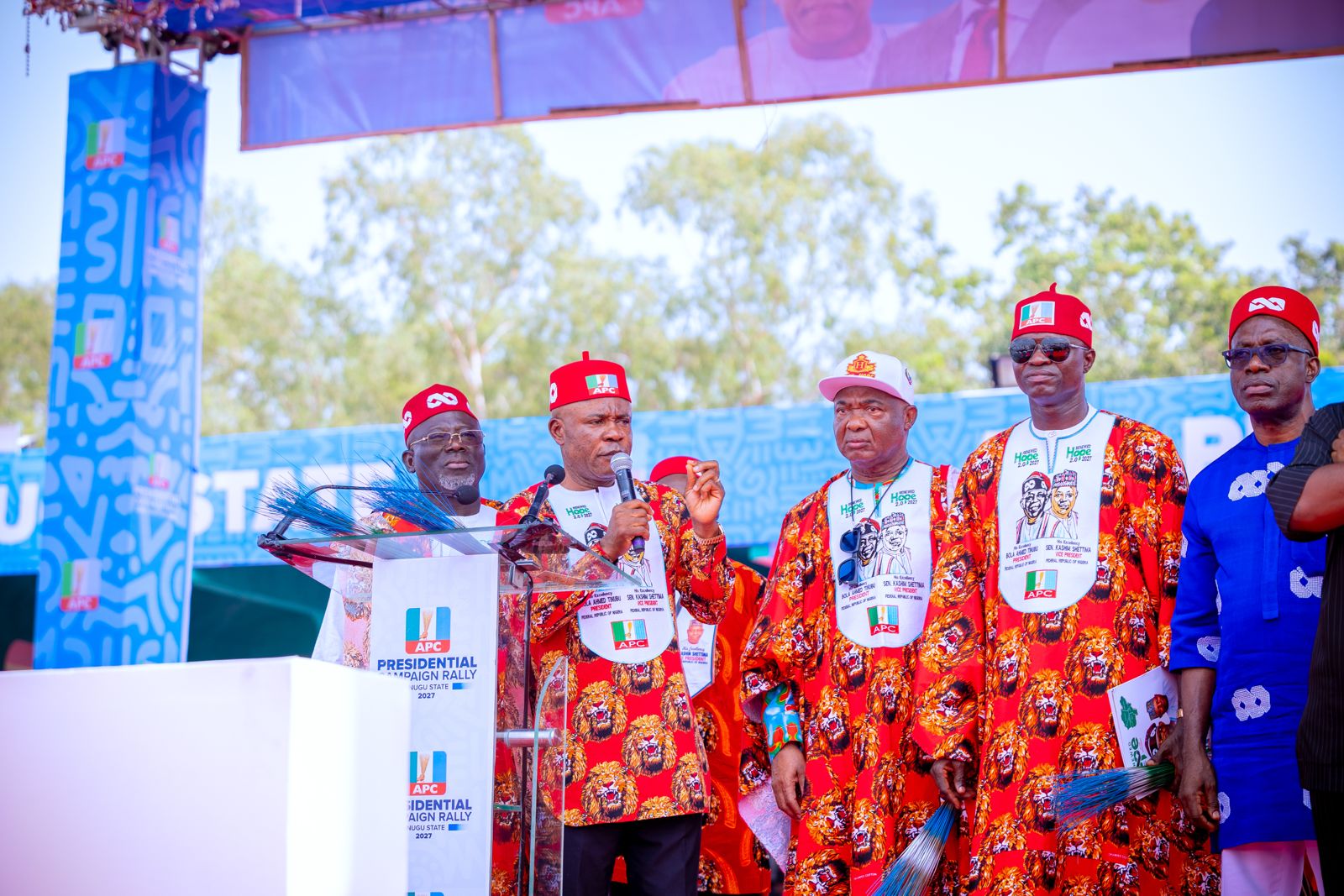
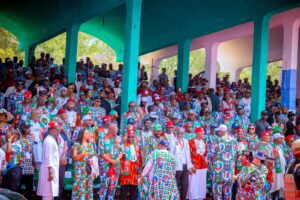
The people made their stand known when President Tinubu took his re-election campaign to the region, where an unprecedented crowd of supporters, party faithful and political stakeholders from across the South East on Saturday thronged Michael Okpara Square, Enugu, in a show of solidarity never witnessed before by the President or the All Progressives Congress (APC) in Igboland ahead of any presidential election.
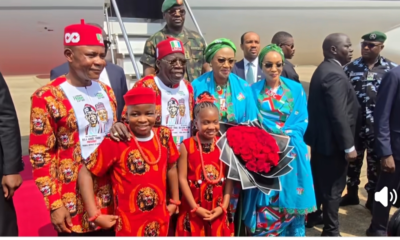
In addition to the massive turnout, the rally also witnessed an unusually strong convergence of political leaders, with Governors Peter Mbah of Enugu, Hope Uzodimma of Imo, Francis Nwifuru of Ebonyi and Chukwuma Soludo of Anambra participating in the presidential rally, while Abia State Governor, Dr. Alex Otti, was on hand at the Akanu Ibiam International Airport to welcome the President and also participated in a brief airport reception where Tinubu was conferred with the chieftaincy title, Nwanne Di Na Mba.
Also present were the wife of the President, Oluremi Tinubu; Vice President Kashim Shettima and his wife, Nana Shettima; President of the Senate, Senator Godswill Akpabio; Delta State Governor, Sheriff Oborevwori; Deputy President of the Senate, Barau Jibrin; Deputy Speaker of the House of Representatives, Benjamin Kalu; former Imo State Governor, Rochas Okorocha; former Abia State Governor, Orji Uzor Kalu; former Governor of Enugu State and Nigerian Ambassador to Greece, Ifeanyi Ugwuanyi; billionaire businessman, Prince Arthur Eze; Minister of Works, Dave Umahi; Minister of Innovation, Science and Technology, Kingsley Udeh, SAN; Minister of Foreign Affairs, Bianca Ojukwu; APC National Chairman, Prof. Nentawe Yilwatda; and the Director-General of the APC Presidential Campaign Council, Senator Abdulaziz Yari, among other political heavyweights and members of the Igbo intelligentsia.
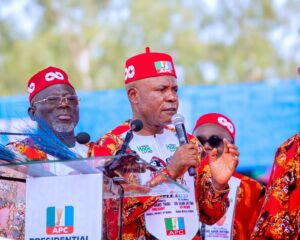
The presence of the governors and other political heavyweights gave the gathering a significance beyond an ordinary party rally, as speakers repeatedly emphasised the need for the South East to build political bridges across the country as a pathway to achieving its long-standing aspiration of producing a Nigerian president.
Delivering the message, Governor Mbah said the Enugu Declaration was a commitment by the South East to embrace strategic collaboration and support Tinubu’s re-election in recognition of the benefits of political alliances.
He said the South East had historically benefited from political collaborations and alliances with other regions, adding that the time had come for the people to renew their commitment to that political tradition.
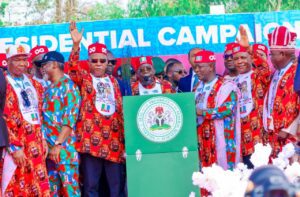
“This is for us in the South East a defining moment. A moment that we have to make a decision to renew our hope and our commitment to the Nigeria Project. A moment to choose stability, to choose progress, and to choose growth. And we know the leader who guarantees us that transformation – President Bola Ahmed Tinubu.
“We, the Igbo, understand the value of collaboration. We have benefited largely from collaboration. We are doing this because we know what collaboration has done for us as Ndi Igbo. We know we have not been at the bottom of the pecking order of this country because of collaboration right from the First Republic. Our forebears knew when it’s politically expedient to collaborate. So, as Ndi Igbo, we build businesses and trade beyond our boundaries. We also build relationships beyond our boundaries. And we know the value of those relationships. We know what it feels like to struggle. We know what it feels like to pick ourselves up and begin again.
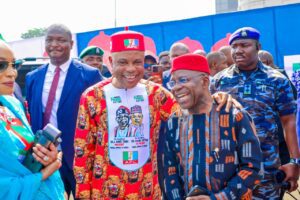
“So, we will, once again, embrace collaboration. On 16th January 2027, we will come out and vote massively for APC! Vote the President. Vote our senators. Vote our House of Representatives members. And repeat the same on 6th February for the governors and members of the State Houses of Assembly. It will be APC all the way. Let us choose progress. We cannot afford to go back to our dark past of political isolation. We must navigate forward,” Mbah said.
He described Tinubu’s economic reforms and infrastructure interventions as critical to the development of the South East, particularly the increased funding available to state governments and the ongoing rehabilitation of major federal roads in the region.
The governor cited the Enugu-Onitsha Expressway, Enugu-Port Harcourt Road, Owerri-Onitsha Road, the construction of the Eke Obinagu Flyover in Enugu, the ongoing dualisation of the Makurdi-Enugu Road, other federal road projects and the creation of the South East Development Commission as evidence of the renewed attention being given to the South East.
He also highlighted his administration’s massive investments in education, healthcare, transport, agriculture, water and infrastructure, including 268 Smart Green Schools, 260 Type-2 Primary Healthcare Centres and thousands of classrooms, which were made possible by President Tinubu’s reforms, such as the removal of the fuel subsidy.
Vice President Shettima, in his remarks, described the South East as a region with enormous industrial potential and intellectual capacity, but said its aspiration to the presidency of Nigeria could only be fully realised through strategic partnerships with other parts of Nigeria.
He declared that Tinubu was the South East’s strongest political ally, citing his history of building alliances across ethnic, religious and geopolitical boundaries.
“The South East has no friend, no ally, no believer in its potential and no advocate of its interest like His Excellency, President Bola Ahmed Tinubu,” Shettima said.
The Vice President, who also addressed the gathering in Igbo, argued that Nigeria’s political structure and constitution made strategic alliances indispensable to winning presidential elections.
“Our ethnic identities are an inheritance of birth, but our citizenship is a covenant that binds us as a nation,” he stressed.
He added: “No section of this country can win a presidential election in isolation. The most consequential electoral victories in our history have involved negotiation. Political power in a federation as diverse as ours is never self-allocated. It is earned through negotiations, through reciprocal concessions, through strategic alliances and through extraordinary sacrifices.”
Shettima cited the political history of former President Muhammadu Buhari, who had always polled over 11 million votes, mostly in the North, arguing that his eventual electoral victory in 2015 became possible after he built a strategic alliance with the South West.
He urged the South East to similarly cultivate political relationships across the country rather than approach national elections solely from the standpoint of ethnic sentiment.
He maintained that the APC had become a pan-Nigerian political platform capable of accommodating the aspirations of all parts of the country.
Senate President Akpabio also reinforced the message of political collaboration, praising the intelligence, resourcefulness and political wisdom of the Igbo.
Akpabio, who described himself as a “son of the soil” and an in-law to the people of Enugu, said the South East should use its political influence to build relationships with other regions in preparation for its future presidential aspiration.
He made a strong case for an eight-year presidency for the South East when the opportunity eventually comes, warning against political arrangements that would limit the region to a four-year presidential tenure.
“When it is the turn of Ndigbo, Nigeria will support the South East for eight years. What did I say? I said Nigeria will support you for eight years,” he declared.
Governor Uzodimma, Governor Nwifuru and Deputy Speaker of the House of Representatives, Ben Kalu, among other speakers, pledged the region’s support for Tinubu’s re-election, saying the President had demonstrated an unusual commitment to the political and economic inclusion of the Igbo.
They said Tinubu was the most qualified among the presidential contenders, citing his political experience, pan-Nigerian disposition and his record of building national alliances.
Meanwhile, speaking at the rally, Tinubu announced his approval of the Eastern Rail Line project and the 400km Gas Pipeline, assuring the zone that he was already working with the Enugu State Governor, Peter Mbah, to ensure the realisation of the projects.
According to him, the Eastern Rail Line would connect the South East with the South South states and the North, thereby assuaging the hard feelings over the deliberate exclusion of the South East from the national rail project.
“The Eastern Gas Pipeline is approved. We will connect you. Connect the East, connect the South, connect the North. It is our honest promise for development,” he assured.
He urged Nigerians, particularly APC supporters in the South East, to obtain their Permanent Voter Cards and mobilise for the party’s candidates in the forthcoming elections.
“Do you have your PVC? You must go out and vote. Vote APC for President; vote APC for governors and legislators,” the President told the mammoth crowd.
He specifically canvassed support for Mbah in Enugu and Nwifuru in Ebonyi, praising their performances in education, healthcare and infrastructure.
Tinubu said his administration would continue to invest in education, agriculture, infrastructure and electricity, describing education as a critical weapon against poverty.
“Your children are going to school. Education is a weapon against poverty. We cannot build a nation of prosperity without investing in our youths. We will invest in all of you,” he said.
The President also promised interest-free financial support for farmers and pledged to expand infrastructure and electricity access across the country.
In a symbolic show of support for the party’s candidates, Tinubu, through Vice President Shettima, presented APC flags and brooms to the governorship candidates in Abia, Enugu and Ebonyi states, including Governor Mbah and Governor Nwifuru, urging them to sustain their campaigns and work towards electoral victory.
The President urged the electorate to vote for APC candidates at all levels, stressing that the party had a development agenda for the country.
The campaign visit was also marked by the commissioning of the completed section of the Enugu-Onitsha Expressway and the Eke Obinagu Flyover, two major infrastructure projects expected to improve connectivity and ease transportation within Enugu and across the region.
Meanwhile, another major highlight of the one-day visit was the conferment of the prestigious chieftaincy title of “Nwanne Di Na Mba of Enugu State” on him by the Chairman of the Enugu State Traditional Rulers Council, His Royal Majesty, Igwe Samuel Asadu, together with other members of the council.
Asadu said the honour was in recognition of the bonds of brotherhood, solidarity and shared identity between President Tinubu and the people of Enugu State.
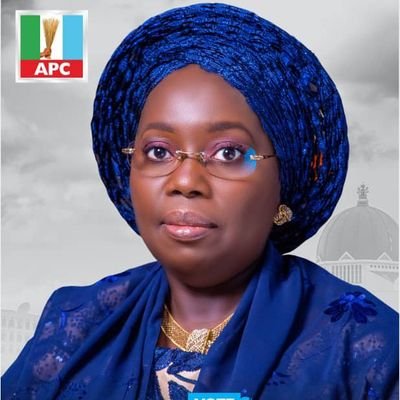
Senator Idiat Adebule, who represents Lagos West Senatorial District in the National Assembly, has reportedly died, barely 24 hours after celebrating her 56th birthday.
Adebule, a former Deputy Governor of Lagos State, was reportedly pronounced dead by medical personnel at a private hospital in the Government Reserved Area (GRA), Ikeja, Lagos, where she was receiving treatment after falling ill.
A source disclosed that the senator was admitted to the hospital following an illness but died despite medical attention.
Her reported death comes a day after she marked her 56th birthday in Lagos State.
Adebule, who is a member of the All Progressives Congress (APC), was seeking re-election for a second term in the Senate.
Further details surrounding her death were still emerging as of the time of filing this report.
More details to follow.
…Reiterate Ban on Sale, Possession, Transportation of Explosives
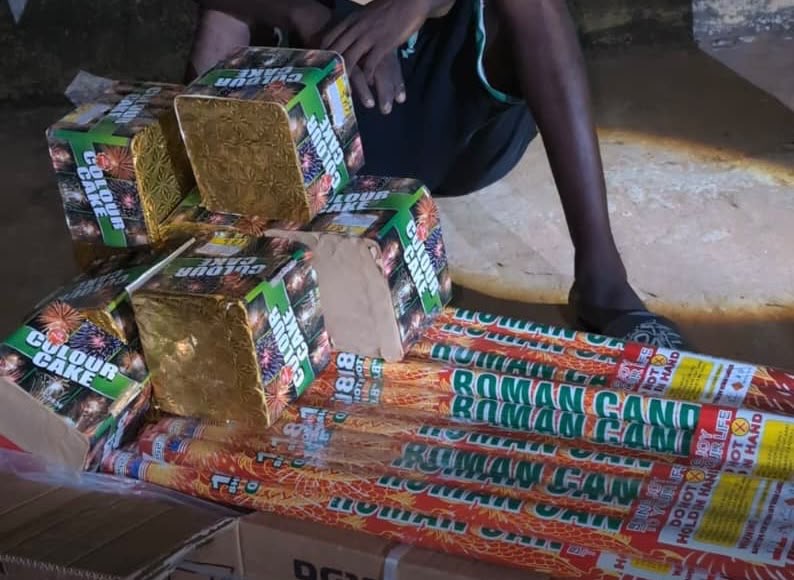
The Anambra State Police Command has arrested a 28-year-old man and impounded a truck loaded with firecrackers, popularly known as bangers or knockouts, in Onitsha as part of security measures ahead of the yuletide and electioneering period.
The Command said the arrest and seizure were carried out on November 27, 2026, by operatives of the Violent Crime Response Unit (VCRU), Onitsha Sector.
The suspect, identified as Moses Dolor, and the impounded truck have been taken into police custody for further investigation.
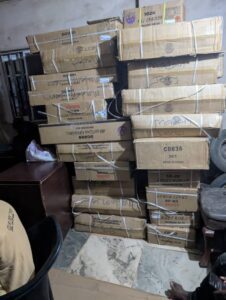
The impounded Bangers
The development comes as the police intensified security operations to prevent activities capable of threatening public safety during the festive season and the forthcoming political activities.
In a statement issued on Saturday by the Police Public Relations Officer, SP Tochukwu Ikenga, the Commissioner of Police, Anambra State Command, CP Nnanna Oji Ama, reiterated the ban on the use, sale, possession, distribution and transportation of social explosives across the state.
The police commissioner warned that the indiscriminate use of bangers and other explosive crackers posed serious threats to public safety, particularly during festive celebrations and electioneering activities.
According to him, such explosives could trigger fire outbreaks, cause injuries, create unnecessary panic and complicate security operations, especially in crowded places, residential neighbourhoods and public gatherings.
He consequently urged residents, particularly youths, parents, traders, event organisers and community leaders, to desist from purchasing, selling, possessing, transporting or using prohibited explosive materials.
The commissioner also called on residents to embrace peaceful and responsible celebrations, remain vigilant and promptly report suspicious movements, activities or the stockpiling of prohibited explosives to the nearest police station.
The Command assured residents of its commitment to sustaining proactive security operations and protecting lives and property throughout the yuletide and electioneering period.
It also appealed to members of the public to cooperate with security agencies in maintaining peace, safety and public order across the state.
-
 News10 hours ago
Tinubu Approves Eastern Gas Pipeline, Rail Line, Pledges Better Power Supply to South-East
-
News24 hours ago
2027: Enenche Leads Obi, Makinde, Dino Melaye, Others in Prayers for Peaceful Elections
-
News2 days ago
Davido, Patoranking, Zoro, Cubana Chief Priest Join Anyi Chuks As He Unveils Five-Point Agenda, Promises 180,000 Jobs In Ebonyi
-
News3 days ago
‘They Shot Me Five Times’ — NDC Supporter Recounts Attack on Omo-Agege’s Campaign Team in Delta
-
News1 day ago
Tinubu to Meet Southeast Leaders in Enugu Ahead of APC Presidential Campaign Rally
-
News1 day ago
23-Year-Old Nurse Found Dead in River as Former Boyfriend, Taxi Driver Face Murder Charges
-
News1 day ago
2027: Obi, Kwankwaso Draw Mammoth Crowd in Aba as NDC Campaign Gathers Momentum
-
Features3 days ago
Ebonyi Will Rise Again: Odii’s Vision of Economic Renewal, Jobs and Inclusive Development