News
‘Fake agency’ boss, Nwabueze, fights back with appointment letter

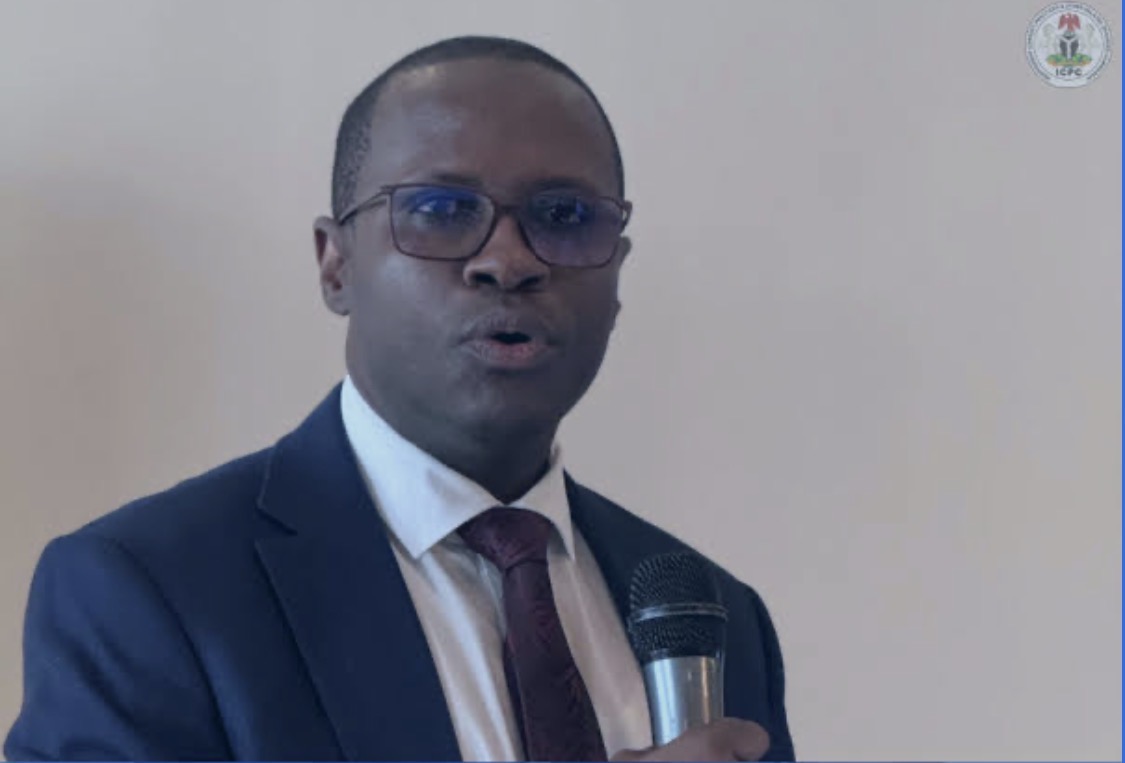
The National Coordinator and Executive Director of the National Brands Development and Made in Nigeria Special Project Office, George Nwabueze, has denied the allegation of running a “fake agency” in the country.
Nwabueze, who spoke on Saturday, noted that he oversaw an office which was under the supervision of the Office of the Secretary to the Government of the Federation.

He noted that the office had been in existence for 16 years.
The Independent Corrupt Practices and other related offences Commission had on Friday said the President had ordered Nwabueze’s arrest for leading and promoting the outfit, which it tagged as a fake federal agency.
The ICPC said the accused was running it with the collaboration of senior public servants in the Office of the Secretary to the Government of the Federation.

But responding to our correspondent, the embattled executive director said, “Made in Nigeria Special Project Office is a project office in the OSGF. We don’t know where fake agency comes from. A programme that has been in the SGF’s office since 16 July 2010 was just discovered yesterday (Friday). After 16 years; Nigeria is a funny country.”
Nwabueze spoke while responding to our correspondent’s enquiries on LinkedIn, where he had earlier posted his appointment letter to rebuff ICPC’s claim of illegality.
The letter, dated October 3, 2025, was purportedly issued by the Office of the Secretary to the Government of the Federation.
It was referenced OSGF/MIN/59310/11/205 and signed by the Permanent Secretary, Political and Economic Affairs Office, Nadungu Gagare.
The letter, addressed to “Hon. George Buchi Nwabueze, National Coordinator, Made in Nigeria Project Office, OSGF, Three Arms Zone, Abuja,” conveyed the approval of his appointment as National Coordinator/Executive Director of the Made in Nigeria Project Office under the OSGF.
According to the document, the appointment was for a five-year tenure beginning from July 2025 and was renewable.
“I am directed to formally convey the approval of your appointment as National Coordinator/Executive Director of the Made in Nigeria Project Office under the Office of the Secretary to the Government of the Federation,” the letter stated.
It added that the appointment followed “a careful evaluation of your commitment, contribution, and capacity in delivering on the mandate of the Special Project Office.”
The document listed Nwabueze’s responsibilities to include the supervision and development of programmes, projects and policies; supervision of regional and state coordinators across the 36 states; and organisation of exhibitions, trade expos, economic summits and other promotional initiatives aimed at promoting indigenous products and services.
It further stated that the project was to operate temporarily from Room B53, Ground Floor, within the OSGF complex.
“Please note that this appointment is at the pleasure of the Secretary to the Government of the Federation, and in line with the objectives of the Made in Nigeria initiative under the Renewed Hope Agenda,” the letter said.
Efforts to engage Nwabueze further on the matter proved abortive as he declined response.
Special status request
Also, another document shared on Saturday on Linkedin by Nwabueze showed that his office sought to be granted the status of a Special Project.
The document, dated April 17, 2025, was signed by the Permanent Secretary, Political and Economic Affairs Office, Gagare, and addressed to the Secretary to the Government of the Federation.
It was referenced PS-PEAO/2025/008/4.
The document, titled, ‘A proposal for the Made-in-Nigeria Project to be granted Special Project status’, stated that the initiative had been operating for about five years and had promoted Nigerian-made products and services locally and internationally.
It claimed that the project had organised economic forums and trade exhibitions in several parts of the world and contributed positively to the Nigerian economy, particularly in the area of foreign direct investment.
The document listed increased employment opportunities, economic growth and poverty reduction among the expected benefits of granting the project special status.
According to the proposal, the initiative would also contribute to Gross Domestic Product growth by supporting local industries and encouraging domestic production.
It further stated that the project would reduce importation by encouraging Nigerians to consume locally made products, thereby reducing dependence on imported goods, conserving foreign exchange and improving the country’s trade balance.
The document added that the initiative aligned with the Federal Government’s efforts to diversify the economy, reduce dependence on crude oil and promote the non-oil sector.
The Permanent Secretary subsequently invited the SGF to note that granting the project special status would enhance its credibility and performance and enable it to meet its mandate and responsibilities.
However, the proposal made clear that the activities of the project were to be reviewed and operational modalities developed.
A fake agency?
The ICPC chairman, Dr Musa Aliyu, SAN, had identified the National Brands Development and Made-in-Nigeria Special Project Office as one of the outfits uncovered during the commission’s investigation into the alleged fictitious Presidential Foreign Intervention Promotion Council.
Aliyu, while briefing State House correspondents in Abuja, said investigators discovered the office while probing the PFIPC and what he described as procedural weaknesses within the public service.
According to him, the office had been allocated space within the OSGF premises without presidential authorisation.
He identified the promoter of the outfit as Prince George Buchi Nwabueze, alleging that he operated under different variations of his name and had the backing of some senior public servants in the OSGF.
The ICPC had described the outfit as part of the structures uncovered during its investigation into the alleged PFIPC.
However, documents released by Nwabueze appear intended to challenge the allegation that the project office had no official backing.
One of the reports shared on the LinkedIn page of the organisation documented a stakeholders’ engagement in Nasarawa State involving Governor Abdullahi Sule.
In the report, the governor was heard saying the state had domesticated the Federal Government’s Made-in-Nigeria initiative and captured it in its 2026 budget.
“For us in Nasarawa State, we have since domesticated this initiative of the Federal Government in our solemn commitment to promote local contents and have value for resources abound in our dear state,” Sule was quoted as saying.
“I’m happy to inform you that we did not only domesticate this project, but we also accord special attention to its operationalisation by including it in our 2026 budget,” he added.
The report also quoted the National Coordinator of the Made in Nigeria Project as saying the initiative was domiciled in the OSGF and was responsible for promoting the national brand.
Nwabueze was further heard saying the decision had been taken to locate a National Brand Processing and Packaging Centre in Nasarawa State.
The organisation’s website also identified “Nwabueze George” as “Executive Director, National Coordinator,” linking the position to the person named in the ICPC investigation.
Checks on the organisation’s website showed a structure featuring national, zonal and state coordinators.
At the national level, the organisation listed Dr Bassey B. Unaowo as Special Assistant to the Permanent Secretary on Political and Economic Affairs in the OSGF, while Dr Hajara Njidda Amoni was listed as Director, National Administration.
The organisation also listed zonal directors and coordinators across several states.
It maintained social media accounts on platforms including Instagram, Facebook, X and LinkedIn under the handle “@pmainpro.”
Office shut for months, says OSGF official
However, a staff member of the OSGF told Sunday PUNCH that the office had been shut for months.
“It was not operating as an agency but I know was under investigation… The office was shut months ago,” the source said.
The development leaves questions over the status of the project office, particularly the conflicting claims over its authorisation and relationship with the OSGF.
While the ICPC maintains that the office was illegally allocated space within the OSGF without presidential authorisation, documents released by Nwabueze show an appointment letter purportedly issued by the OSGF formally appointing him to head the project office.
The OSGF spokesman, Christopher Ugwuegbulam, when contacted, asked our correspondent to write a letter to his office before a response could be obtained.
Efforts to reach the ICPC spokesman, John Odey, proved abortive as of the time of filing the report, as calls to his number indicated that it was not reachable.
Sunday PUNCH gathered that the police had yet to be officially briefed about the suspect.
Credible sources in the police force told our correspondent that a manhunt would only be launched after a formal briefing on the matter. (Sunday PUNCH)











News
UBA Commences Comtempt Proceedings Against WEMPCO Directors over Alleged Disobidence of Court Order
The Federal High Court, presided over by Honourable Justice Aluko, has granted an application by United Bank for Africa (UBA) Plc for substituted service of Form 49 on directors of Wempco named as alleged contemnors in the case of UBA v. Wempco.
The application forms part of proceedings seeking to determine whether the named individuals disobeyed an order of the court and whether they should be committed to prison for contempt.
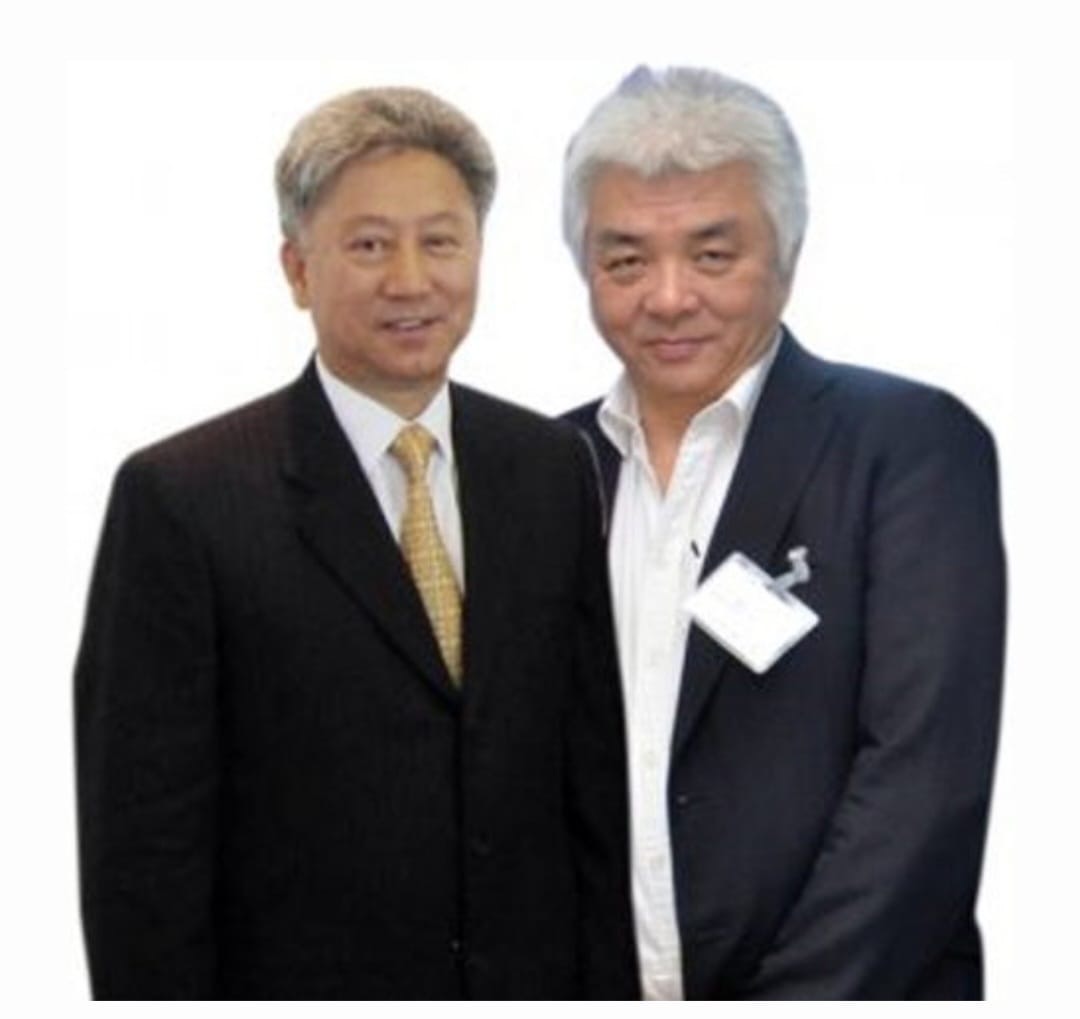
The directors named as alleged contemnors are Lewis Shui Ngor Tung, Phillip Shui Chei Tung, M.A. Ola Yusuf, Tung Lawrence Blake, Aali Aare Hadji Tokunbo, Paul Shui Po Tung, Tung Robert, C.L. Ip and Taiwo Alli.
In advancing the application, counsel to UBA argued that service of Form 49 on the alleged contemnors was necessary to enable them to appear before the court and show cause why an order of committal should not be made against them.
He also argued that the Directors of Wempco and some members of staff took illegal steps in an attempt to disobey the Order of Court.
The court’s decision to grant substituted service provides a procedural step towards bringing the notice to the attention of the individuals concerned in accordance with the court’s directions.
Form 49 is a notice requiring an alleged contemnor to show cause why an order of committal to prison should not be made against them for alleged disobedience of a court order.
The Federal High Court had earlier made an Order of Mareva Injunction and appointed a Receiver/Manager over some of the Assets of Wempco following the indebtedness of Wempco to UBA in the sum of N61,445,695,993.76 (Sixty One Billion FourHundred and Forty-Five Million Six Hundred and Ninety Five Thousand, Nine Hundred and Ninety Three Naira, Seventy Six Kobo).

A Lagos State High Court has granted interim preservative orders, including a Mareva injunction, in favour of United Bank for Africa (UBA) Plc in a dispute involving the alleged diversion of petroleum products valued at $242 million.
The orders, granted last Thursday by Justice K. A. Jose, followed allegations by UBA that Vitol SA, a Switzerland-based energy trading company, wrongfully released cargoes of petroleum products consigned to the bank in the bills of lading.
UBA’s lead counsel, Bode Olanipekun, SAN, urged the court to grant the interim orders to preserve assets and prevent the dissipation of funds pending the determination of the substantive dispute.
In her ruling, Justice Jose granted three of the prayers sought by the bank, including requests to restrain dealings with assets and funds up to the disputed amount.
“Prayers 1–3 are granted as prayed against the 2nd Respondent only,” the judge ruled.
The application was brought pursuant to Order 43 Rule 1 of the High Court of Lagos State (Civil Procedure) Rules 2019 and the Lagos State High Court Practice Direction No. 2 of 2019.
In the substantive proceedings, UBA is seeking to establish the liability of Vitol SA and the owners of the vessels over alleged conversion, misrepresentation and negligence arising from the non-delivery of the petroleum products.
The bank also cited 34 financial institutions and public agencies, including commercial banks, merchant banks, microfinance banks, the Nigerian Ports Authority and the Nigeria Customs Service, in connection with the application.
In an affidavit supporting the application, UBA’s Group Head of Recoveries and Remedial Management, Anthony Chilaka, stated that the bank had issued a letter of credit in favour of Vitol SA to facilitate petroleum products transactions.
According to the affidavit, the cargoes were transported to Nigeria, and the masters of the vessels issued several bills of lading.
UBA alleged that Vitol subsequently endorsed the bills of lading “to the order of” the bank and handed over the original documents to it.
The bank maintained that the endorsement entitled it to take possession of the cargoes upon completion of the voyages.
However, Chilaka stated that UBA had not received the gasoil despite the completion of the voyages.
“The applicant has not been given possession of the gasoil despite completion of the voyage,” the affidavit stated.
UBA alleged that the cargoes were instead diverted for the use of another party, arguing that the failure to deliver the products amounted to conversion and negligence.
The bank further contended that the respondents had obligations arising from the transactions and the endorsement of the shipping documents but failed to fulfil them.
UBA also alleged that cargoes linked to the transactions were diverted to other parties after the completion of their voyages rather than delivered to the bank as stipulated in the shipping documents.
The allegations are expected to be determined in the substantive proceedings.
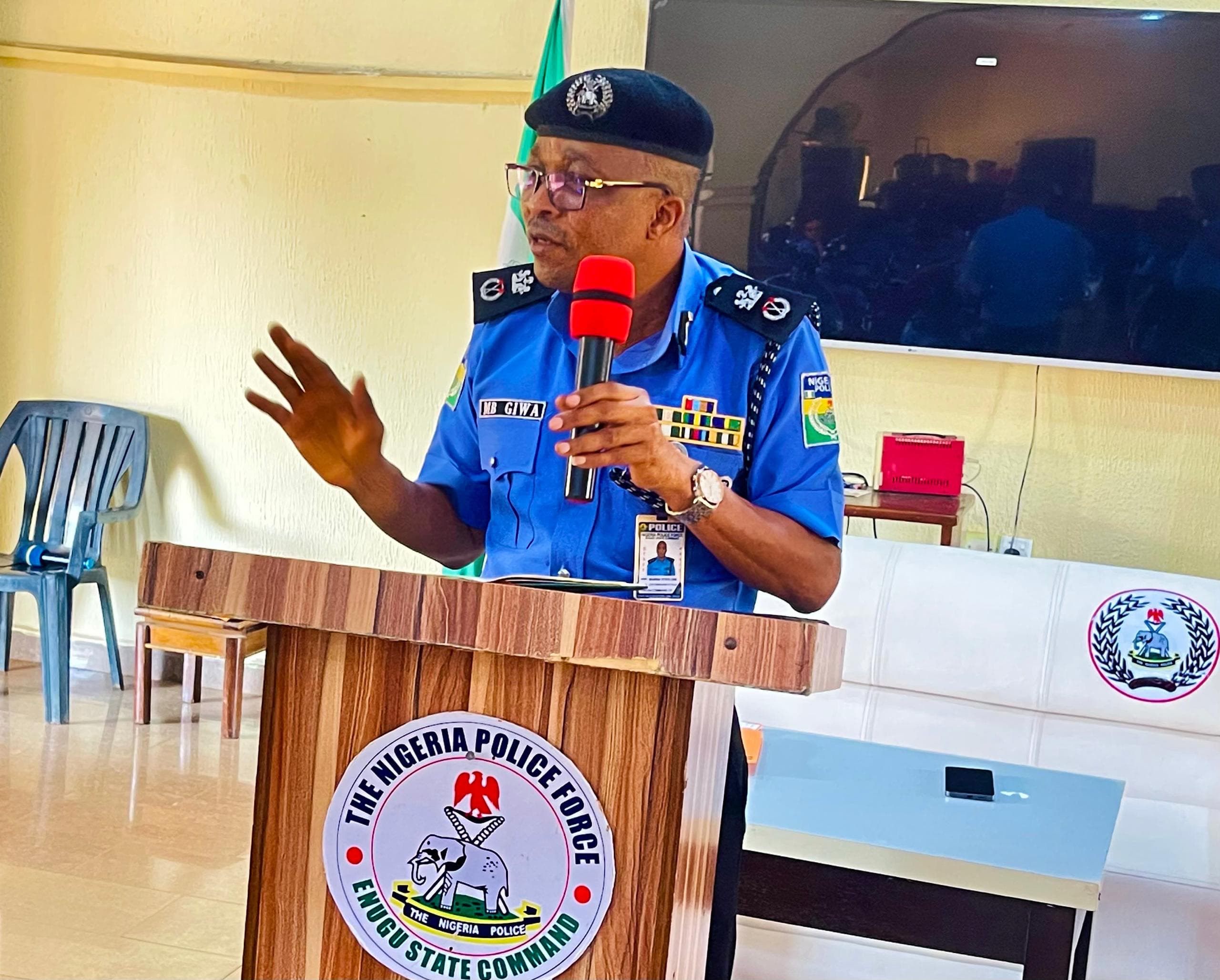
The Commissioner of Police in Enugu State, Mr Mamman Giwa, has warned police officers against degrading treatment of citizens, extortion and other forms of unprofessional conduct.
Giwa gave the warning on Wednesday during an emergency conference with senior officers at the Senior Police Officers’ Mess, Agbani Road, Enugu.
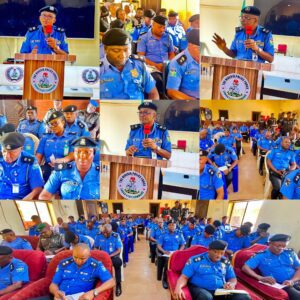
He also directed senior and supervisory officers to strengthen oversight of personnel and improve security management for political and election-related activities ahead of the 2027 General Elections.
The commissioner said the conference followed directives issued by the Inspector-General of Police, Mr Olatunji Disu, during a virtual strategic meeting with senior officers on October 20.
According to him, the I-G emphasised professionalism, compliance with the Nigeria Police Force’s social media policies, adapting policing to contemporary realities, respectful treatment of citizens, and effective management of political activities and election security.
“It is clear that officers cannot effectively discharge their policing responsibilities without treating citizens with respect and conducting their duties in accordance with extant laws and established professional standards,” Giwa said.
He charged senior officers to take responsibility for the conduct of personnel under their supervision, warning that any officer found engaging in misconduct would face the consequences.
The conference also featured a health talk on the Ebola virus, focusing on its symptoms and preventive measures.
Those in attendance included Deputy and Assistant Commissioners of Police, Area Commanders, Divisional Police Officers, heads of formations, tactical and operational units, and heads of various sections of the Enugu State Police Command.
-
 Features1 day ago
Kogi’s Kidnapping Crisis: Why Do Forests Remain Safe Havens for Criminals Under Ododo’s Watch?
-
News1 day ago
Kidnappers kill seven-year-old boy after ransom demand
-
News2 days ago
“It’s not debatable, we can’t go back,” Mbah Backs Tinubu on Fuel Subsidy Removal
-
News2 days ago
Mbah: Enugu Now Produces 120 Million Litres of Water Daily, Expands Agricultural Investment
-
Politics2 days ago
Mike Igini: Politicians Infiltrate Agencies Responsible for Election Personnel as Electoral Laws Go Unenforced
-
Politics7 hours ago
2027: Atiku, Obi, Duke, Others in Talks on Single Opposition Candidate – Coalition
-
News6 hours ago
Macron Postpones Planned Visit to Nigeria Until 2027
-
News4 hours ago
Enugu CP Orders Probe into Death of Izuchukwu During Police Raid