




Connect with us

Politics

WHEN PRIVACY BECOMES CONTENT: The Dangerous Normalisation of Leaked Private Conversations

Published

on

Senator Akpabio and Sandra C. Duru
Spread the love

By Ken Harries, Esq.

There is a point at which political contestation ceases to be an argument about ideas and becomes an assault on the very boundaries that make civil society possible. That point is reached when a private telephone conversation is allegedly recorded, extracted from its original context and released into the public domain as political ammunition.

The latest controversy surrounding an audio recording purported to be a telephone conversation between Senator Godswill Akpabio and Sandra C. Duru, a.k.a. Professor Mgbeke, therefore deserves to be examined beyond the personalities involved. It raises a much larger question: What happens to a society when private conversations become raw material for public propaganda?

Recent reports indicate that Sandra Duru released a nine-minute audio recording on social media and presented portions of it as a private conversation involving the Senate President. Yet, significantly, the recording has not been independently authenticated, and questions remain about the identity of the voices, the circumstances in which the conversation was recorded, and whether the excerpts constitute the complete conversation. Those uncertainties are not minor technicalities; they are at the heart of responsible public communication.

PRIVACY IS NOT A POLITICAL LUXURY

Maduka College Advert

Nigeria’s Constitution is unequivocal in recognising privacy as a fundamental right. Section 37 guarantees and protects the privacy of citizens, including their homes, correspondence and telephone conversations. That constitutional safeguard does not disappear because the individuals involved are politicians, public officials, activists or controversial personalities. Indeed, public office should never be interpreted as a wholesale surrender of personal privacy.

The Nigeria Data Protection Act 2023 reinforces this principle by establishing a legal framework for protecting personal information and regulating its processing. Among its stated objectives are the protection of fundamental rights and freedoms, the safeguarding of personal data, and the requirement that personal data be processed in a fair, lawful and accountable manner.

The central question, therefore, is not whether an audio recording can generate political excitement; it obviously can. The question is whether private communication can be captured, processed, edited, reproduced and disseminated for political purposes without lawful justification, proper authorisation or regard for the rights of the people whose voices and personal information are involved. That is a much more serious question.

THE CYBER DIMENSION CANNOT BE IGNORED

The Cybercrimes (Prohibition, Prevention, etc.) Act, as amended in 2024, also contains provisions concerning unlawful interception of non-public computer communications and judicially authorised interception of electronic communications. The legislation defines interception broadly enough to include listening to or recording communication data in specified circumstances. But legal precision matters, particularly when criminal liability is being discussed.

It would be premature for commentators to declare, without establishing the facts, that the mere existence or publication of this particular audio automatically constitutes a criminal offence under the Cybercrimes Act. If, however, the evidence establishes that a private electronic communication was intercepted or obtained without lawful authority, the circumstances could raise serious questions under the applicable constitutional, data-protection and cybercrime frameworks. That is precisely why an independent investigation matters: the law should determine the legality, not social media.

PUBLIC INTEREST IS NOT A BLANK CHEQUE

There is another important distinction that the Nigerian public must begin to make. A matter involving a public official may be of public interest without every private conversation involving that official becoming public property. Public interest is not the same thing as public curiosity.

A genuine public-interest disclosure ordinarily requires more than the ability to attract clicks, outrage or political engagement. It requires consideration of authenticity, context, provenance, relevance and the legitimate rights of the people involved. A fragment of an alleged private conversation, detached from the circumstances in which it occurred and presented to millions of people without independent authentication, can easily become something very different from responsible whistleblowing.

It can become narrative engineering, particularly when selected material is used to encourage the public towards a predetermined interpretation. When such narrative engineering is repeatedly used to shape public perception, it begins to resemble propaganda rather than public accountability.

THE MORAL QUESTION

There is also a moral dimension that no statute can completely capture. Politics is already a theatre of suspicion, rivalry and competing narratives. If every private conversation is potentially a future weapon, trust disappears from public life. People stop speaking candidly, officials become afraid of legitimate conversations, and citizens become unwilling to engage public figures.

Political communication then gradually degenerates into a marketplace where the most sensational fragment—not necessarily the most truthful account—commands the greatest attention. This is where the conduct surrounding the dissemination of private conversations raises profound ethical questions.

A society that normalises the conversion of private conversations into political weapons risks producing a culture in which nothing is private, context is disposable and reputation is collateral damage. That is not democratic accountability; it is the erosion of the ethical architecture upon which democratic accountability depends.

THE PROBLEM WITH THE “MERCHANT OF PROPAGANDA” MODEL

There is a growing phenomenon in digital politics in which controversy itself becomes a political commodity. The objective is no longer necessarily to establish facts, but to generate a continuous stream of allegations, recordings, screenshots, insinuations and counter-allegations until the public becomes emotionally exhausted and truth becomes indistinguishable from repetition.

The danger is particularly acute when the communicator becomes both the source of the allegation and the narrator of the evidence. That model creates an obvious credibility problem because the public is effectively being asked to accept not merely the allegation but also the interpretation supplied by the person disseminating it.

That is why independent verification is indispensable. A recording should be authenticated, its provenance established, its full context examined and any editing disclosed. The circumstances of its acquisition should also be investigated. Where there are allegations of unlawful interception or misuse of personal data, the appropriate regulatory and law-enforcement authorities should be allowed to do their work.

FREEDOM OF EXPRESSION HAS RESPONSIBILITIES

Freedom of expression is indispensable to democracy, but so is the right to privacy. These principles should not be presented as enemies. Responsible journalism, legitimate whistleblowing and public-interest disclosure have their place, but none of them should become convenient labels for every unauthorised exposure of private communications.

The democratic answer to disputed conduct is evidence, investigation and due process—not digital vigilantism. If the recording is authentic and contains evidence of wrongdoing, the proper response is to submit the evidence to the appropriate institutions and allow the facts to be tested. If it is unauthorised, manipulated, selectively edited or misleadingly presented, those facts should also be established through proper investigation. Either way, the truth deserves a process more rigorous than a Facebook post.

THIS IS BIGGER THAN AKPABIO

The most important lesson from this episode should not be about Senator Godswill Akpabio alone; it should be about the Nigeria we are creating. Today, it may be a conversation involving a Senate President. Tomorrow, it could be a judge, journalist, businessman, civil servant, academic, clergy member or ordinary citizen.

If the principle becomes that anyone who possesses a private recording is entitled to publish it whenever politically convenient, then privacy ceases to be a right and becomes merely a temporary privilege enjoyed by those who have not yet been recorded. That is a dangerous trend with implications extending far beyond the personalities involved in the present controversy.

The constitutional guarantee of privacy cannot be selectively defended, data protection cannot become a slogan deployed only when convenient, and cybercrime legislation cannot be invoked selectively. Political communication cannot be allowed to become a free-for-all in which reputations are tried and convicted on social media before evidence is examined.

LET THE LAW SPEAK

There is, therefore, a compelling case for the relevant authorities to establish the facts surrounding any purported private telephone recording now circulating. Who made the recording? How was it obtained? Was consent given? Was the communication intercepted? Was it edited? Who first disseminated it, and for what purpose? What personal data were processed? Was there a lawful basis for that processing? And does the dissemination violate any applicable constitutional, statutory or judicial protection? Those are questions for evidence, not conjecture.

There is, however, a broader principle worth defending: private communication should not become political ammunition merely because it can generate attention. A democracy requires trust, evidence, restraint and respect for the law. Public accountability is strengthened, not weakened, when allegations are subjected to verification and established processes rather than determined by the velocity of social-media circulation.

The real moral deficit in contemporary public discourse is not that people disagree. It is that the boundaries between legitimate scrutiny and intrusion can become dangerously blurred when private material is circulated without adequate attention to authenticity, context, provenance and applicable law. Once society becomes indifferent to those boundaries, everyone—not merely public officials—has reason to be concerned about the future of privacy.

• Ken Harries, Esq., is an Abuja-based Development Communication Strategist.

Politics

We’re ready for 2027 polls, INEC declares, assures neutrality as PVC collection begins Friday

Published

on

Spread the love

…Says ‘INEC has no preferred candidate, no favoured political party’

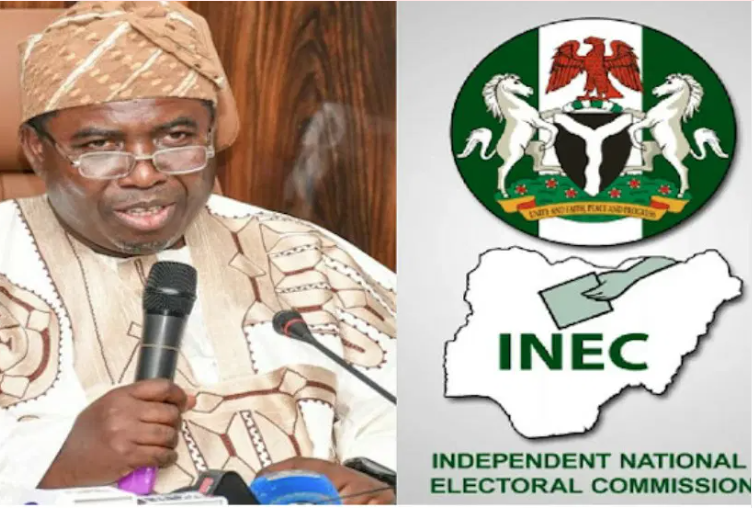
Chairman of the Independent National Electoral Commission, INEC, Prof. Joash Amupitan, SAN, says the Commission is fully prepared to conduct credible 2027 general elections and will remain neutral with no preferred candidate or party.

Amupitan stated this on Thursday in Lagos while delivering the keynote address at the 10th Annual Conference of the Guild of Corporate Online Publishers, GOCOP, themed “2027 Elections: Trust, Transparency and Shared Responsibilities.”

He said the 2027 election cycle would begin with Presidential and National Assembly elections on Saturday, January 16, 2027, followed by Governorship and State Houses of Assembly elections on February 6, 2027, adding that with 98 days to the first poll, INEC has made extensive progress on its timetable.

According to him, INEC issued a Revised Timetable and Schedule of Activities on February 26, 2026, containing 14 critical statutory activities and is now concluding the ninth.

The timetable, he said, had been operationalised across 23 headquarters departments, 36 state offices and the FCT, and 774 local government offices covering over 176,000 polling units.

Maduka College Advert

Amupitan, represented by Lagos State Resident Electoral Commissioner, Professor Ayonami Salami, disclosed that Nigeria’s voter register had hit a historic 103 million after a three-phase Continuous Voter Registration, CVR, exercise.

Phase I, from August 25 to December 10, 2025, captured 2,611,266 new voters; Phase II, January 5 to April 17, 2026, captured 4,121,835; while Phase III, May 11 to July 26, 2026, captured 3,867,997.

He said the Commission had concluded display of the preliminary register for claims and objections and is finalising synchronisation through its Automated Biometric Identification System, ABIS, to eliminate duplicates.

The INEC chairman announced that nationwide collection of Permanent Voter Cards, PVCs, using the new Printable PVC technology, would commence on Friday, October 9, 2026, at local government and registration area centres.

He appealed to GOCOP members to use their platforms to mobilise citizens to collect their cards.

On technological preparedness, Amupitan said the Bimodal Voter Accreditation System, BVAS, has undergone hardware optimisation, extended battery calibration and software hardening to eliminate impersonation, while a nationwide audit and fresh procurement of devices are ongoing.

He said INEC has enhanced its result integrity architecture through the eEC8A system, which digitises polling unit result sheets, Form EC8A, at the polling unit immediately after counting, cryptographically signs and transmits it to a public portal for end-to-end visibility.

The system, he noted, was tested in recent off-cycle elections in the FCT, Ekiti and Osun.

The Commission, he added, has embedded AI auditing tools and multi-layered firewalls in partnership with Google and Microsoft to guard against cyber intrusions and Distributed Denial-of-Service attacks.

Amupitan said early procurement of non-sensitive materials has commenced and distribution to states is ongoing, while new operational pick-up vehicles have been acquired to address transportation challenges in difficult terrains, riverine and border communities. A centralised operational schedule is now tracking material movement and storage in real time.

He said INEC had instituted Zonal Readiness Assessments across the six geopolitical zones, with South-West and North-West already completed, to audit infrastructure, logistics and emergency response. He warned staff against partisanship.

“To the voter in a local ward, INEC is not the Chairman in Abuja; INEC is you,” he told field officers, stressing that under Section 26 of the Electoral Act 2026, every official must take an oath of absolute neutrality, with partisanship or carelessness attracting dismissal and prosecution.

To boost welfare, Amupitan said the Consolidated Election Management Body Salary Structure, CEMBSS, took effect on January 1, 2026, with a 150 percent increase in state offices’ operational overheads from July 1, 2026.

He described trust as a currency earned through consistent and verifiable execution, not through pronouncements or public relations, noting that Africa’s largest democracy must set standards for West Africa at a time of disinformation, political violence and shrinking civic space.

The INEC chairman proposed a three-point pact with GOCOP for 2027: a dedicated Digital Media Fact-Verification channel for real-time confirmation of field reports; strict self-regulation by GOCOP against members publishing unverified polling unit results, altered sheets or incendiary commentary; and a strategic partnership on voter education for the PVC collection exercise.

He cautioned online publishers against clickbait economics, fake news and AI-generated deepfakes, saying unverified claims of fraud cause enduring damage to public confidence that retractions cannot repair.

Paying tribute to former GOCOP President and Publisher of The Eagle Online, the late Mr. Dotun Oladipo, Amupitan described him as a patriot and champion of ethical online publishing who helped platform INEC stories without hindrance.

“INEC has no preferred candidate, no favoured political party, and no institutional interest other than protecting the sacred and uncoerced will of the Nigerian voters,” he declared.

Continue Reading

Politics

INEC to politicians on 2027 polls: Your ambitions not worth blood of Nigerians

Published

on

INEC Chairman, Professor Joash Amupitan SAN
Spread the love

• Vows arrests, sanctions for violence, hate speech, vote-buying

•  Sets to track illegal campaign spending

•  As voter register tops 103m, 57,000 new BVAS acquired, PVC collection begins Friday

The Independent National Electoral Commission, INEC, has warned politicians that their ambitions were not worth the blood of Nigerians, vowing arrests, sanctions and prosecution against parties, candidates and agents who resort to violence, hate speech and vote-buying during the 2027 general election.

INEC Chairman, Professor Joash Amupitan SAN, gave the warning at a strategic workshop for editors, organised by the Nigerian Guild of Editors, NGE, in collaboration with the commission, in Abuja yesterday.

“As electioneering intensifies across the country, I must sound a clear note of warning to all political parties, candidates, and campaign managers: INEC will not stand by and allow political competition to devolve into violence, intimidation, or inflammatory rhetoric.
“Democracy thrives on the clash of ideas, not the clash of weapons or the proliferation of hate speech,” he stated.

Amupitan said the commission had put machinery in place to track offenders, adding that “through the Inter-Agency Consultative Committee on Election Security, ICCES, we have activated an early-warning tracking framework to log incidents of political violence, thuggery and dangerous campaign rhetoric.

“Any political party or candidate implicated in inciting violence, disrupting rivals’ rallies or deploying armed thugs will face direct statutory sanctions and swift prosecution. No political office in this country is worth the blood of a single Nigerian.’’

Maduka College Advert

Departing from his prepared speech, the chairman said he had just been shown evidence of the kind of conduct he was warning against.

“Just before I was invited to come and speak, somebody shared with me… a person, an NDC candidate in Kano State who was campaigning yesterday with a gun in his hands, brandishing the gun, and so on and so forth.

“Another person was threatening that with AK-47s, they will kill all of us in the commission. So, that is what elections have turned into in Nigeria of today,” Amupitan lamented.

He appealed for restraint, saying “let us not forget our role as citizens of Nigeria to be patriotic because election is a periodic process for the election of leaders every four years”.

Vote-buying

On vote-buying, the chairman also announced a crackdown on money politics, stressing that the integrity of the ballot box was fatally compromised when a citizen’s vote was treated as a commodity for sale.

“The commission is taking an uncompromising stance against vote-buying in all its forms ahead of the 2027 general election,” he said.

He disclosed that the commission was working with the Federal Ministry of Justice, the Economic and Financial Crimes Commission EFCC, the Independent Corrupt Practices and Other Related Offences Commission, ICPC, and the Nigerian Financial Intelligence Unit NFIU.

103m registrants

On the voter register, Amupitan said Phase I of the Continuous Voter Registration, CVR, which ran from August 25, 2025, to December 10, 2025, registered 2,611,266 voters, while Phase II, from January 5 to April 17, 2026, registered 4,121,835.

According to him, Phase III, from May 11 to July 26, 2026, registered 3,867,997, which together amount to over 10.6 million new registrants.

57,000 new BVAS

On technology, Amupitan said the commission had acquired 57,000 new Bimodal Voter Accreditation System, BVAS, devices “for optimal performance.”

He said the enhanced eEC8A system digitised polling unit result sheets, authenticated them cryptographically and uploaded them directly from polling units to the INEC Result Viewing Portal, IReV.

Amupitan said Form eEC8A would halt manipulation of votes at the polling unit level before the figures were entered into the BVAS and transferred to IReV.

Bulletproof vests, cars

He disclosed that at the commission’s North-West zonal engagement in Kaduna State, staff from Zamfara, Sokoto and other states asked for bulletproof vests and vehicles because of insecurity in parts of those states. He said the commission might secure bulletproof vehicles for staff in flashpoints, noting that the commission had completed physical readiness audits and staff engagements in the South-West and North-West zones, covering state office facilities, safe storage, security command protocols and logistics networks, adding that the other four geopolitical zones would follow.

Speaking on the issue of staff welfare, he said the commission had “recently introduced the Consolidated Election Management Body Salary Structure, CEMBSS, accompanied by a 150% increase in state office operational overheads effective July 1, 2026. ‘’We are working on the cash backing to ensure immediate implementation,’’ he added.

In his remarks, NGE President, Mr Eze Anaba, said the partnership was timely as the country approached another round of elections.

“Elections are not merely about casting ballots; they are about trust. They are about citizens believing that their votes will count, that the process will be transparent and that the institutions responsible for conducting elections will act fairly and professionally,” he said.

Anaba said the media had a critical role in building and sustaining that trust, noting that “as editors, we determine, to a significant extent, what information reaches the public, how it is presented and the context in which it is understood. With that responsibility comes an obligation to uphold accuracy, fairness, balance and the public interest,” he said.

He acknowledged that the media could carry the responsibility alone.

“At the same time, we recognise that the media cannot perform this responsibility effectively without credible, timely and accessible information from the electoral management body,” he said.

Anaba, who warned of the environment in which both sides operate, said:  “In an environment increasingly polluted by misinformation, disinformation, manipulated content, deepfakes and partisan narratives, the relationship between INEC and the media must therefore be one founded on openness, mutual respect and regular engagement.’’ (Vanguard)


Continue Reading

Editorial

Peter Obi’s Full Profile

Published

on

Peter Obi
Spread the love

PETER Obi releases his full profile as more Nigerians prevail on him to do so.

NAME : Mr. Peter Gregory OBI, (CON).

CONTACT DETAILS

*22 Niger Drive, GRA, Onitsha, Anambra State, Nigeria

*Tel: 08034051000

*E-mail: poanambra@gmail.com

DATE OF BIRTH :    19th July 1961,

PLACE OF BIRTH:   Onitsha, Nigeria

NATIONALITY:          Nigerian

MARITAL STATUS:    Married with two children

EDUCATIONAL INSTITUTIONS ATTENDED

· Christ the King College, Onitsha (W.A.S.C.)

. University of Nigeria, Nsukka (B.A. Philosophy)

· Lagos Business School, Nigeria (Chief Executive Program)

· Harvard Business School, Boston, U.S.A. (Mid to Mid Marketing)

· Harvard Business School, Boston, U.S.A. (Changing the Game)

· London School of Economics (Financial Mgmt/Business Policy)

· Columbia Business School, New York, U.S.A. (Marketing Mgmt )

· Institute for Management Development, Switzerland (Senior Executive Program)

· Institute for Management Development, Switzerland (Break-Through Program for CEOs)

· Kellogg Graduate School of Management, U.S.A. (Advanced Executive Program)

· Kellogg School of Management U.S.A. (Global Advanced Mgmt Program)

. Oxford University: Said Business School, (Advanced Mgmt& Leadership Program)

. Cambridge University: George Business School (Advanced Leadership Program)

PREVIOUS POSITIONS

· Governor, Anambra State of Nigeria (2006-2014)

· Honorary Special Adviser to the President on Finance (till May, 2015)

· Member, Presidential Economic Management Team (till May, 2015)

· Vice-Chairman, Nigeria Governors’ Forum (2008-2014)

· Chairman, South-East Governors’ Forum (2006-2014)

. Former Chairman: Board of Securities and Exchange Commission (SEC)

· Former Chairman: Fidelity Bank Plc.

· Former Chairman: Guardian Express Mortgage Bank, Ltd.

· Former Chairman: Future Views Securities, Ltd.

· Former Chairman: Paymaster Nigeria Plc.

· Former Chairman: Next International (Nigeria) Ltd

· Former Director: Guardian Express Bank Plc.

· Former Director: Chams Nigeria Plc.

· Former Director: Emerging Capital Ltd

· Former Director: Card Centre Plc

MEMBERSHIP OF PROFESSIONAL ASSOCIATIONS/ORGANIZATIONS

· Member, Nigerian Economic Summit Group (NESG)

· Member, Nigerian Chartered Institute of Bankers

· Member, British Institute of Directors (IOD)

MEMBERSHIP OF FEDERAL GOVERNMENT COMMITTEES

In my capacity as the Governor of Anambra State, I served as a member of:

*Federal Government Committee on Minimum Wage

*Federal Government Committee on Negotiation with Labour on Subsidy

*Federal Government Committee on Mass Transit

*Federal Government Committee on Natural Resource

*National Economic Council Committee on Power Sector Reform

*National Economic Council Committee on Sharing of MDGs Funds

*National Economic Council Committee on Accurate Data on Nigeria’s Oil Import and Export

*Agricultural Transformation Implementation Council

*Sub-Committee on Needs Analysis of Public Universities in Nigeria

*National Economic Council Review Committee on the Power Sector

AWARDS AND RECOGNITIONS

2015: Golden Jubilee Award from Catholic Archdiocese of Onitsha for outstanding contribution to quality healthcare delivery in St. Charles Borromeo Hospital in particular and Anambra State in general, on the occasion of the Golden Jubilee celebration of the hospital.

*2014: Nigerian Library Association Golden Merit Award for remarkable improvement of libraries in Anambra State, exemplified by our Government’s construction of the Kenneth Dike Digital State Library, remarkable upgrade of the Onitsha Divisional Library, and provision of library facilities in secondary schools across the State.

*2014: Champion Newspaper Most Outstanding Igbo Man of the Decade.

* 2014 The Voice Newspaper (Holand) Achievers Award for Outstanding Example in Leadership and Governance.

*2013: Silver Bird Man of the Year (with Governor Babatunde Fashola of Lagos State).

*2012: Business Hallmark Newspaper Man of the Year.

*2012: The Golden Award on Prudence – by the Methodist Church of Nigeria as the Most

Financially Prudent Governor in Nigeria.

* 2012: Leadership and Good Governance Award by The Ezeife Leadership Foundation Award for restoring peace and harmony to Anambra State.

* 2012: Best Performing Governor on Immunization in South-East Nigeria – by Bill & Melinda Gates Foundation.

* 2012: Outstanding Financial Planner and Manager – by the Church of Nigeria, Anglican Communion for my resourcefulness and creativity in governance.

*2011: Zik Leadership Prize.

*2010: ICT Governor of the Year – by the West Africa ICT Development Award.

*2009: Champion Newspaper Nigeria’s Most Trustworthy Governor Award.

*2009: Thisday Newspaper Most Prudent Governor in Nigeria.

*2007: The Sun Newspaper Man of the Year Award.

**The Nigerian MDGs Office/UNDP Best Governor in the Implementation of the MDGs in Nigeria

INTRODUCTION OF CONSTITUTIONAL AND OTHER MAJOR CHANGES IN NIGERIAN POLITICS

*He was the first gubernatorial candidate in Nigeria to legally challenge to its logical conclusion, his governorship electoral victory that was denied him. He won in the Courts and reclaimed his mandate.

*He was the first Governor in Nigeria to legally challenge his wrongful impeachment and was reinstated by the Courts.

*He was the first Governor in Nigeria to seek the interpretation of tenures of Governors when INEC allowed elections to take place in Anambra State when his tenure had not expired; the election already concluded was cancelled and he was allowed to complete his tenure.

*He was the first Governor to serve a 2nd term in both the new and old Anambra State, that is, almost 40 years after creation of the State.

*He was the first Governor, whilst still in Office, to be appointed a Special Adviser to the President.

*He was the first serving Governor to be appointed into the Presidential Economic Management Team.

*He was among the first Governors to be honoured with a National Award in 2011, while still in office.

*Though the only Governor whose political party was in government in only one State,  he was elected Vice-Chairman of the Nigeria Governors’ Forum twice.

*Though the only non-PDP Governor in the South-East (made up of 5 States), he was elected by the other 4 PDP Governors as their Chairman for 8 years rather than the usual one year.

FUNDAMENTAL ACHIEVEMENTS AS GOVERNOR OF ANAMBRA STATE (PARTIAL LISTING)

1. Anambra was the first State to commence Sub-Sovereign Wealth savings, the first of its kind in Sub-Saharan Africa. At a time many other Governors were leaving huge debts, I left the equivalent of $500 million Dollars in investment as well as local and foreign currency, including $156 million in Dollar-denominated bonds.

2. For the first time in the history of Anambra State, Ambassadors and High Commissioners of notable countries such as United Stated, Britain, Russia, European Union, South Africa, Belgium, Israel, the Netherlands, Canada, among others, visited the State. Before my tenure, Anambra was practically a pariah state blacklisted by the Diplomatic Corps and international development partners.

3. Development partners such as UNDP, UNICEF, the World Bank, DFID, the European Union etc., which hitherto were not in Anambra State started working with the State. Anambra was consistently adjudged one of the best states in development partnership and commitment to reforms for good governance.

4. He was recognised as Best Governor by the Millennium Development Goals Office (OSSAP-MDGs) and the UNDP in the implementation of their programmes in Nigeria.

5. The Nigerian Debt Management Office (DMO) rated Anambra as the least indebted state in Nigeria. In spite of visible and measurable achievements recorded in various sectors, the State under him did not borrow or raise bonds for her various projects.

6. The Senate of the Federal Republic of Nigeria rated Anambra State as the most financially stable state in the country.

7. The State’s ground-breaking return of schools to their original owners – Voluntary Agencies (Churches) on 1st January 2009, and subsequent partnership with the Agencies in Education, saw the State move from 24th position out of 36 States to Number One in National Examination Council (NECO) and West African Examination Council (WAEC) examinations for three consecutive years. This made the World Bank to commission a study, led by the renowned Prof. Paul Collier of Oxford University, on this revolutionary partnership and phenomenal achievement.

8. The State also entered into strategic partnership with the Churches in the Health sector. This symbiotic relationship resulted in a tremendous boost to health care because of the services offered by health institutions owned by Voluntary Agencies, while the State restored grants to the agencies and made available to them more than 50 million Dollars in various types of support.

10. Through partnership with the Church in the Health sector, his Government funded the transformation of -:

a: Iyienu Hospital, Ogidi;

b: Our Lady of Lourdes Hospital, Ihiala;

c: St Charles Borromeo Hospital, Onitsha;

d: Holy Rosary Hospital, Waterside, Onitsha; and

e: St. Joseph Hospital, Adazi-Nnukwu.

His Government also built the Joseph Nwilo Heart Centre in St. Joseph, Adazi-Nnukwu, where heart operations are now being performed.

11. His Government won the Bill and Melinda Gates Foundation (1 Million dollars) as the best-performing state in immunisation in the South-East. With complementary funding from our Government, they used the money to build 10 Maternal and Child Care Centres across the State, particularly in rural communities, in partnership with the Churches.

12. The State was the first to procure and distribute more than 30,000 computers to secondary schools, including 22,500 from HP. The Managing Director for Personal Systems Group HP Inc, Mr. FabriceCampoy described the deployment as the biggest  of such projects in the Middle-East and Africa.

13. Anambra State Government provided Microsoft Academies to more than 500 secondary schools, which the Head of Microsoft in Nigeria (Mr. Ken Span) described as the biggest such deployment in Africa so far.

14. The State provided Internet access to more than 500 secondary schools, which the CEO of Galaxy Backbone (Mr. Gerald Ilukwe) characterized as incomparable to any in the country.

15. More than 700 buses were provided to secondary schools in the State by our Government.

16. Boreholes were provided in schools all over the State.

17. Numerous classrooms were built in all the 177 communities of the State.

18 As part of the efforts to turn around the economy of the State, a number of companies were attracted to build their facilities in the Anambra State. A case in point is SABMiller, the 2nd largest brewery in the world, which built their first Green Field facility in the State, which is today one of the most successful facilities they operate globally.

19. A number of other companies followed the SABMiller initiative and were all supported and encouraged under our Government; a good example is INNOSON Motor Manufacturing Company, from which our government bought more than 1,000 vehicles.

20. Anambra State for the first time started close collaboration with recognized government security agencies (the Police, Army, Navy, Department of State Security, Civil Defence, among others), offering them various types of support including provision of more than 500 security vehicles. The improvement in security was phenomenal, such that the former IG of Police (Abubakar Mohammed) lauded Anambra State for not witnessing any bank robbery in my last three years in office.

21. To further enhance security, Anambra State provided at least one security vehicle to each of all the 177 communities in the State as well as various organizations such as markets and Churches.

22. His Administration conceived and built, from scratch, the first state-owned Teaching Hospital, Chukwuemeka Odumegwu-Ojukwu teaching Hospital, Awka.

23. His Government commenced the planned development of the Igbariam Campus of the ChukwuemekaOdumegwu-Ojukwu University, including the fencing, construction of internal roads, electrification, construction of the Faculty of Law, Auditorium, Administrative Block, Faculty of Agriculture, Management Building, among others).

24. His Government attracted the World Bank support on erosion – National Erosion and Watershed Management Project (NEWMAP) – to Anambra State.

25. His Government was the first to do Poverty Mapping in Nigeria, as a guide for the effective implementation of our poverty-alleviation strategies.

26 His Government, for the first time, undertook the aerial mapping of Awka as well as the production of Structure Plans for Awka Capital Territory, Onitsha and Nnewi.

27. During his tenure and with his Government’s support, Anambra State became an oil producing State.

28. He built the first Secretariat Complex to house State Government Ministries that were hitherto scattered around the State.

29. His government commenced the development of the ‘Three Arms Zone’ comprising Government House/Governor’s Lodge, Legislative Building/Speakers Residence, and Judiciary Building with Chief Judge’s Residence.

30. By the end of his tenure in 2014, more than twelve (12) health institutions, including two hospitals, had secured accreditation; when we took off in 2006, no health institution in Anambra State was duly accredited.

31. Anambra State was the first to undergo national peer review, which scrutinised State Governments for good governance, through the State Peer Review Mechanism (SPRM), an initiative of the Nigerian Governors’ Forum in collaboration with the DFID.

Continue Reading

Trending

Maduka College Advert