News
US Sanctions: Kano Deputy Gov, Buba Galadima, Idahosa, Kwankwasiyya defend Kwankwaso

• Want ex-Kano governor removed from list
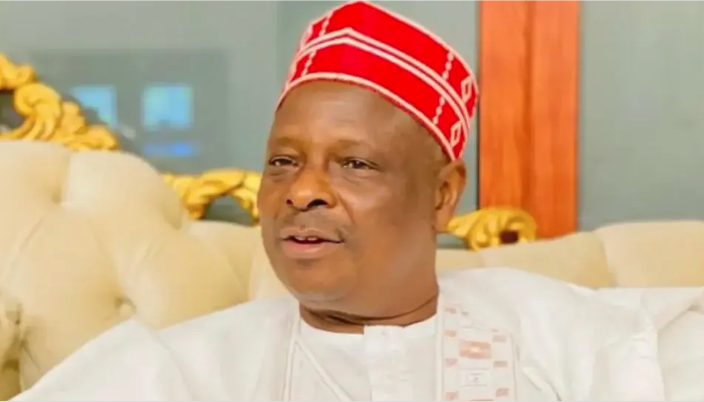
There was a groundswell of opinion within the political spectrum yesterday demanding the removal of former Kano State Governor, Senator Rabiu Kwankwaso, from a so-called United States sanctions list, with his associates describing his inclusion on the list as politically motivated and unjustifiable.
Kano State Deputy Governor, Aminu Gwarzo; elder statesman, Buba Galadima; Kwankwaso’s running mate in the 2023 presidential election, Bishop Isaac Idahosa; and key figures within the Kwankwasiyya movement insisted that he had committed no offence warranting punitive action.

Gwarzo urged the U.S. Congress to remove Kwankwaso from the proposed bill that sought to impose sanctions on him over alleged religious persecution, describing the claims against the former presidential candidate as unfounded and misleading.
The proposed Nigeria Religious Freedom and Accountability Act of 2026, sponsored by U.S. Reps. Riley Moore and Chris Smith, seeks sanctions against Fulani militias and includes Kwankwaso among individuals cited over alleged religious persecution.
Discover more
newspaper
Newspaper
In a statement, his spokesperson, Ibrahim Shuaibu, quoted Gwarzo as saying the allegations against Kwankwaso were “unfounded, misleading, and inconsistent with the verifiable public record of his life and service”.

The Kano State deputy governor stated, “Kwankwaso has held several senior political positions over more than three decades, serving as Deputy Speaker of Nigeria’s House of Representatives, two-term Governor of Kano State, Minister of Defense, Senator, and, most recently, a presidential candidate.
“At no time has he been indicted, prosecuted, or credibly accused of religious persecution, extremism, or human rights violations.”
Gwarzo challenged those behind the allegations to identify the “real perpetrators” rather than defame an “attitude” politician and democrat. He stated that Kwankwaso had consistently opposed violence, extremism, and terrorism.
The statement said Kwankwaso maintained constructive engagement with Christian leaders and minority communities during his time in office and consistently promoted peaceful coexistence.
It also cited his 2023 presidential ticket with Idahosa, a Catholic priest, as evidence of his commitment to religious inclusion and national balance.
The deputy governor called on U.S. lawmakers to “reject this recommendation outright” and remove Kwankwaso’s name from the proposed legislation. He suspected that the inclusion of Kwankwaso in the bill might have been influenced by individuals seeking to settle personal scores or his political rivals.
Kwankwaso “remains a nationalist, a democrat and a statesman whose public service has been anchored on justice, unity and inclusive governance”, the statement added.
Galadima, a chieftain of New Nigeria Peoples Party (NNPP), also blamed Kwankwaso’s addition to the sanctions list on politics and those thinking the former governor of Kano State had a vice presidential aspiration.
Galadima, who spoke on Arise Television’s Morning Show, described the claims as unfair, stressing that Kwankwaso’s integrity as a peaceful Nigerian is being unjustly attacked.
Galadima maintained that Kwankwaso did not establish Sharia law in Kano. He said the law was enacted by Kano State House of Assembly amid public pressure at the time. He added that Kwankwaso was among the last governors in northern Nigeria to implement Sharia.
Galadima stated, “I think that it is most unfair to Kwankwaso. Most unfair to his person and most unfair to his integrity as a peaceful Nigerian. The matter came offshore, that is in the US, and we wonder where did they get that story. Kwankwaso was the victim of Sharia.
“Sharia law was established in Kano, and it was not established by Kwankwaso, it was promulgated by the House of Assembly of Kano under pressure. And people should remember that during the pressure for Sharia, Kwankwaso was reluctant.
‘’He was about the last governor in Nigeria to do a Sharia law. Ibrahim Shekarau used that platform of religion and Sharia, that he was coming to perfect Sharia and Kwankwaso was not doing anything as the governor of Kano.
“So, how can anybody in his right senses accuse Kwankwaso, who was a loser during that Sharia debacle in Nigeria, of promulgating Sharia? How about those that started it
Kwankwasiyya Movement declared that the allegations made against Kwankwaso on claims of “severe religious freedom violations” were totally unfounded, misleading, and inconsistent with the verifiable public record of his life and service.
The movement said it was deeply concerned that an opposition political leader with a longstanding national profile, who had consistently spoken on issues of governance and security, would be isolated in a matter of such gravity without transparent and verifiable findings.
It rejected the proposed bill before the United States Congress, titled, “The Nigeria Religious Freedom and Accountability Act 2026 (HR 7457),” which referenced the name of Kwankwaso.
A statement by spokesperson of Kwakwansiyya Movement, Habibu Mohammed, stressed that for over 30 years, the senator had served Nigeria at the highest levels, as Deputy Speaker of the House of Representatives, two-term Governor of Kano State, Minister of Defence, Senator of the Federal Republic, and presidential candidate.
Mohammed said throughout the period, Kwakwanso was never indicted, prosecuted, or credibly accused of religious persecution, extremism, or human rights violations.
The Kwakwansiyya Movement said the constitutional development of Sharia-based legal systems in certain northern Nigerian states was neither unique to Kano State nor the initiative of one individual.
Discover more
Newspaper
newspaper
The statement said, “Multiple states adopted similar legal frameworks within the ambit of Nigeria’s federal constitution, legislative processes, and judicial safeguards. These systems remain subject to constitutional oversight and appellate review.
“To single out Senator Kwankwaso while similar constitutional arrangements exist across several states raises serious questions about the basis, consistency, and evidentiary standard behind such a recommendation.”
Archbishop-Designate and Founder/Presiding Bishop of God First Ministries International, also known as Illumination Assembly, Isaac Idahosa, called on the United States Congress to reconsider the proposed visa ban reportedly targeting Kwankwaso.
In a letter yesterday, addressed to members of the U.S. Congress in Washington D.C., Idahosa expressed concern over what he described as inaccurate information used in recommending Kwankwaso for inclusion in the visa restriction.
Idahosa, who served as Kwankwaso’s running mate in the 2023 presidential election, vouched for the former governor’s character, describing him as a committed public servant with a long record of inclusive governance.
“As his former running mate, I attest to Sen. Kwankwaso’s commitment to public service and inclusive governance,” Idahosa stated, adding that Kwankwaso has never been linked to religious extremism, violence, or riots either in public office or private life.
The cleric highlighted Kwankwaso’s political career, stating that he has served in several high-profile roles, including Deputy Speaker of the House of Representatives, two-term Governor of Kano State, minister, senator, and presidential candidate.
He also stressed that Kwankwaso had consistently promoted interfaith dialogue and peaceful coexistence among Nigerians, maintaining that he would not have accepted to run alongside him if he held extremist views.
Idahosa further cited the 2003 political events during the Sharia debate under former President Olusegun Obasanjo, stating that Kwankwaso supported Obasanjo, a Christian, over his kinsman, late former President Muhammadu Buhari, a decision, he said, cost Kwankwaso his re-election bid as governor.
According to him, the move demonstrated Kwankwaso’s commitment to national unity above personal political interests.
The cleric also defended Kwankwaso’s stance on national security, describing it as cautious and responsible rather than extremist.
He stated that many Nigerians were surprised by the reported visa ban proposal and urged U.S. lawmakers to conduct a thorough review to ensure fairness and accuracy.
Idahosa condemned individuals, allegedly, behind petitions against the former governor, describing Kwankwaso as “one of Nigeria’s finest liberal politicians”.
He warned that any decision based on inaccurate information could undermine trust in international information channels and efforts to support Nigeria.
He appealed to the U.S. Congress to reconsider the alleged decision in the interest of justice and fairness.



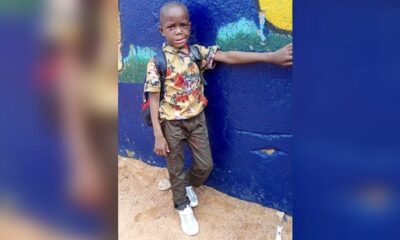

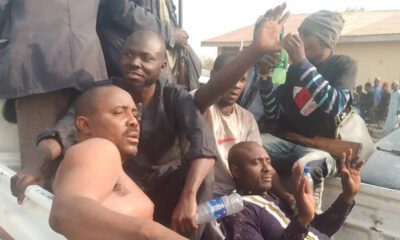





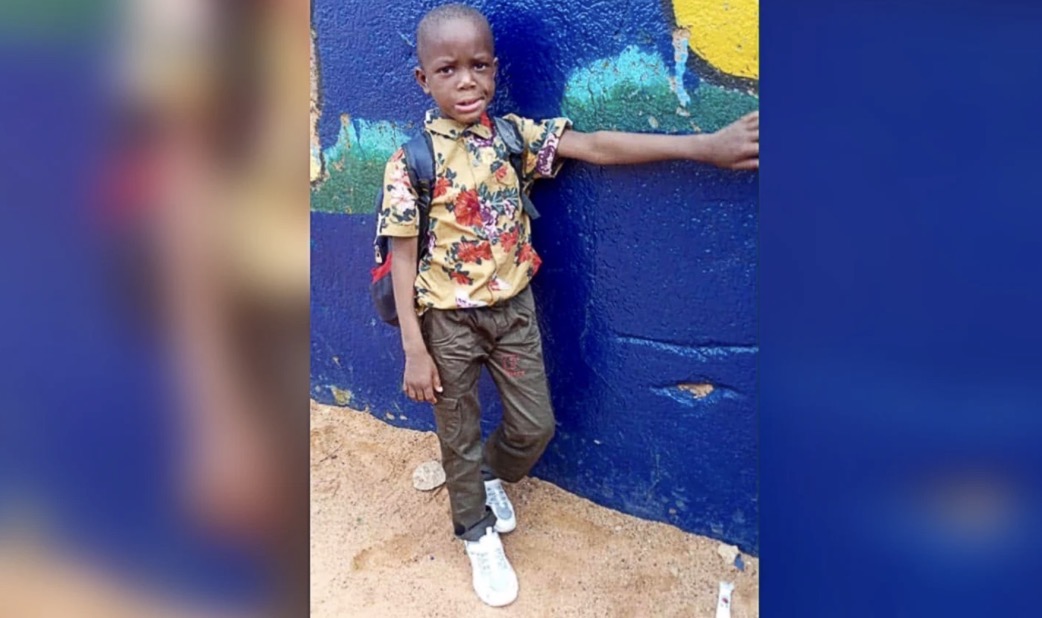
A seven-year-old boy, Abdullahi Rabi’u, has been found dead hours after suspected kidnappers abducted him in the Majema area, along Ring Road in Jos North Local Council of Plateau State and demanded a N2.5million ransom.
The boy was reportedly abducted on Monday evening after being sent on an errand to a neighbour’s house.
Narrating the incident, his uncle, Sukairaj Danladi Me Gado, said Abdullahi delivered the message but failed to return home, prompting the family to search for him.
He said their efforts to locate the boy proved unsuccessful until Tuesday morning, when the family received a call from an unidentified number.
According to him, the caller demanded N2.5million as ransom and informed the family that the boy had been kidnapped.
Me Gado said the family had agreed to pay the ransom in the hope of securing the child’s release.
However, their hopes were shattered later on Tuesday when they learnt that his body had been found in a narrow passage near their residence.
The discovery plunged the family and residents of the neighbourhood into mourning.
The grieving uncle expressed sorrow over the killing and alleged that the perpetrators might be familiar with the neighbourhood.
He called on security agencies to investigate the incident, apprehend those responsible and ensure they were brought to justice.
Efforts to obtain the reaction of the Plateau State Police Command were unsuccessful, as its spokesman, SP Alfred Alabo, did not respond to journalists’ inquiries as of press time. (Guardian)
…Says “We’ve delivered good governance to Enugu”
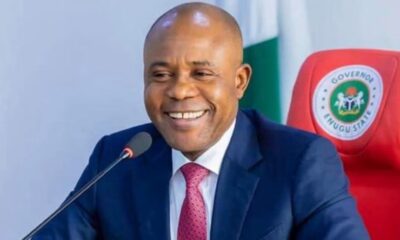
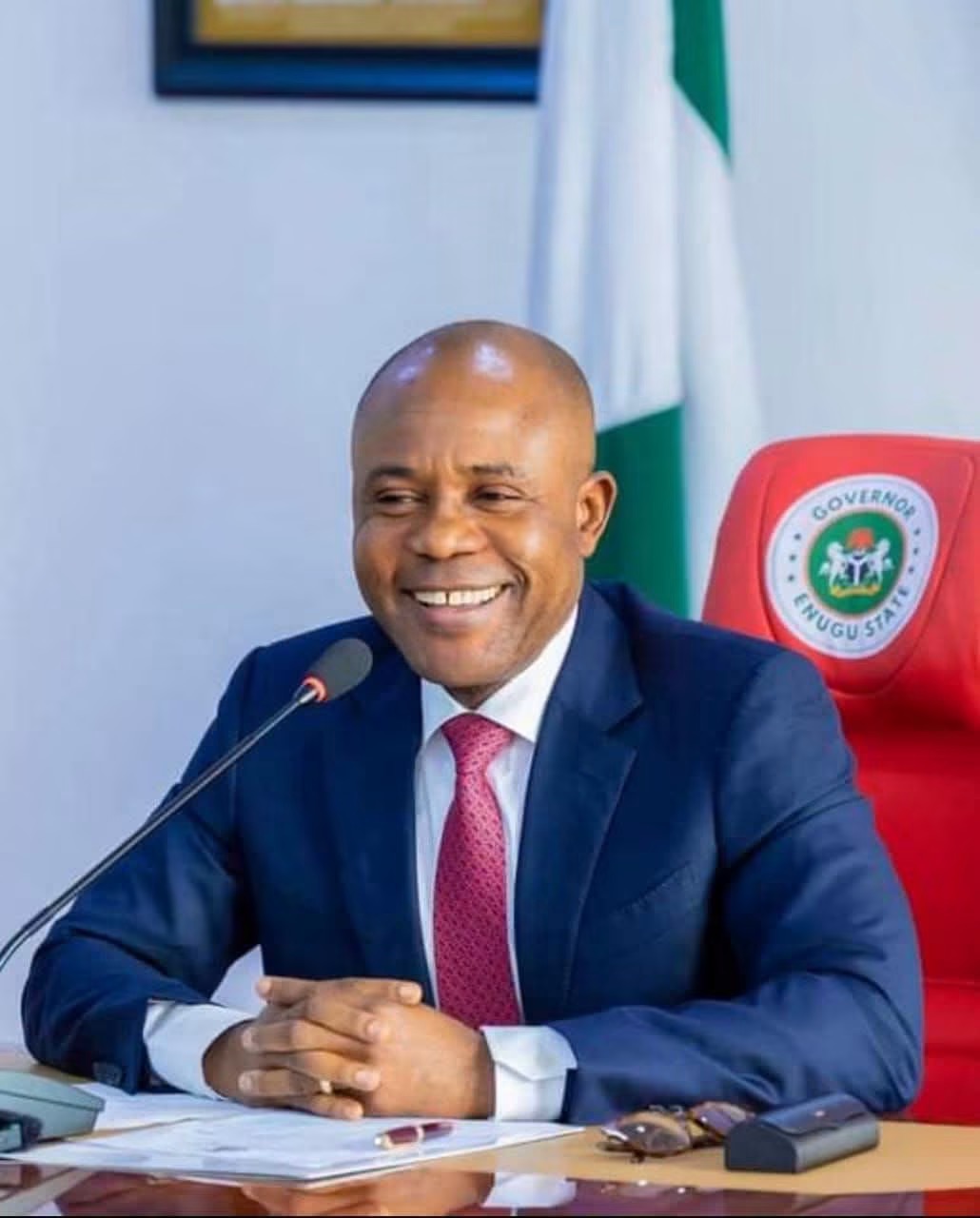
Governor of Enug State, Dr. Peter Mbah, has doubled down in his support for the removal of fuel subsidy by President Bola Tinubu’s administration, saying it was undebatable and inconceivable for anyone to imagine a return to the old order.
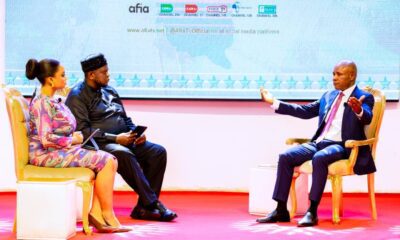
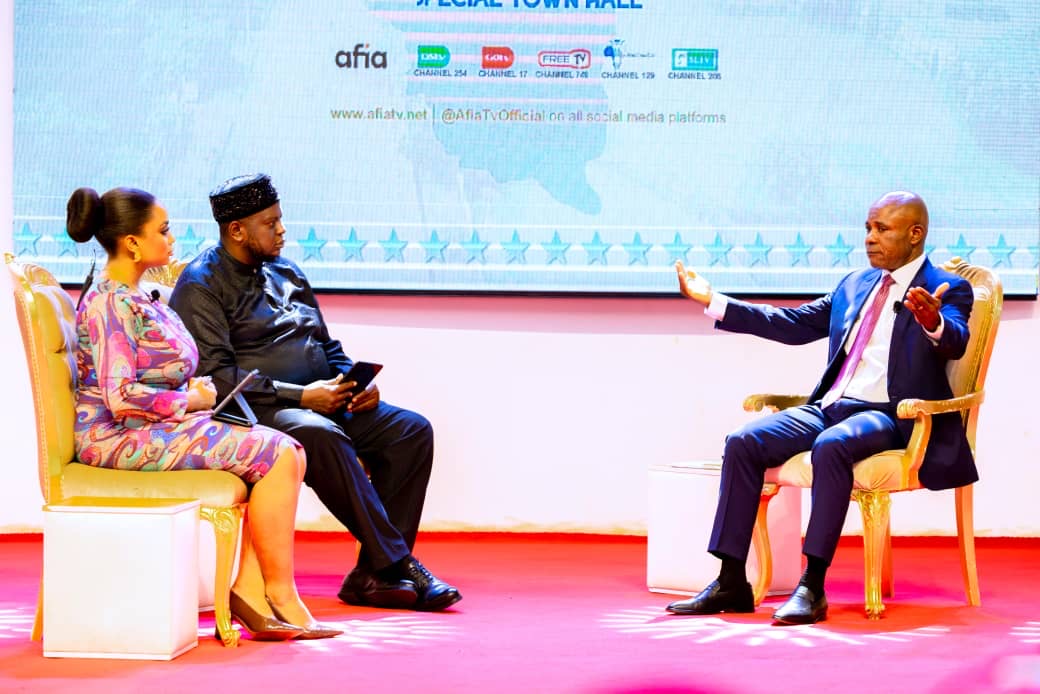
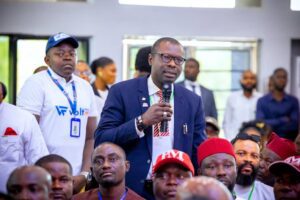
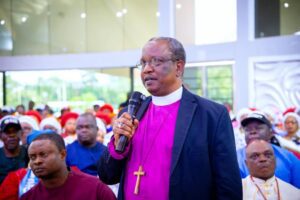
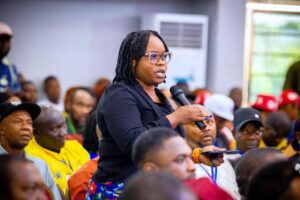
Mbah spoke at the “Meet the Candidates” town hall meeting organised by Afia TV in Enugu on Wednesday, where he also said that his administration had delivered good governance to the people of the state across all sectors.
He described it as a pathetic misconception of the country’s situation and the direction it was headed for anyone to talk about the reintroduction of fuel subsidy.
“If you reintroduce fuel subsidy today, we will lose ten times whatever we are currently trying to gain in terms of the removal of subsidy. The poverty rate that you are going to experience will be very high because the naira would be automatically devalued.
“We cannot go back to subsidy. And I do not think it is in the interest of the country for us to even debate that.
“Again, we should not even debate it because we do not want to send a signal to prospective investors that we are contemplating it. That would take us back. It is going to create panic in the system. It is going to get investors to pull back.
“Those that are coming in today to invest in that sector will become jittery. So, it is not even a subject to debate. It is something that we have moved on from, and we should be thinking about how to ensure that the natural benefits cascade to the households, create jobs and generate wealth for our people,” he said.
He said the nation should focus on how to further encourage private capital to flow, noting the growth the nation had experienced in the stock exchange space.
He added that Tinubu’s policies had stabilised the macro indicators, thus encouraging foreign direct investment.
“You can see quite a lot of funds coming into our country, not just portfolio investments, but also direct investments. It is also going to strengthen because the macro indicators are right,” he stated.
Mbah maintained that whereas fuel subsidy removal enables the government to target the less privileged, fuel subsidy as earlier practised benefited the rich more.
“By the way, I do not think the subsidy we practised before the President removed it was even the right one for the country because even the people we were looking at benefiting from it were only insignificantly benefiting from it. It was largely beneficial to our wealthy folks.
“But now, you can almost notice that the government is doing that in targeting the poor, using proceeds from subsidy removal. The government is aggressive on cash transfers. There is also the programme where the government is targeting 1,000 persons per ward across the entire country to be able to provide seed capital for them to become productive,” he added.
Meanwhile, on his stewardship so far, Mbah said his administration had kept faith with the people of Enugu State, delivering good governance across all sectors in line with his campaign manifesto.
He said the people of the state only needed to imagine where the state was before his inauguration as governor and where it is currently headed.
“Let us imagine the Enugu we knew four years ago. Let us just imagine an Enugu without Hotel Presidential. Let us imagine an Enugu without the International Conference Centre. Let us imagine an Enugu without Enugu Air. Let us imagine Enugu without the transport terminals, the 268 Smart Green Schools, 260 Type 2 Primary Healthcare Centres.
“You do not want them to imagine an Enugu without the International Hospital. You do not want them to imagine an Enugu without the CNG buses, the Nigergas. I think the list is endless.
“But I even think that we can stretch that imagination further because the work ahead will be more profound. Just imagine an Enugu where our children are receiving education that prepares them for the world because they have been imbued with evolving 21st-century skills. Imagine again an Enugu where you do not have any part of the city with an unpaved road.
“Also, imagine an Enugu in four years’ time that generates 660 megawatts of electricity; where we are able to provide 24-hour power supply; where you cannot come into your house and have the light off; and where people can run their businesses for a whole week without worrying about the cost of diesel. Just imagine an Enugu where you generate electricity and the people of Enugu are buying that at 120 naira because they own the coal that feeds the power plant.
“Imagine an Enugu where you now have to ride, not just on our CNG buses, but you have the monorail that can take you from point A to point B. Imagine an Enugu where you can fly from here to the United Kingdom, to the United States and other parts of the world,” he charged the electorate.
He urged the people to keep faith with the journey of greatness, growth and development, defending the gains of his first term and guaranteeing the promises of his second term by working for his re-election.
“If these imaginations capture our fancy, then we have a duty to fight for it. We do have a duty to continue to make sure that the bar does not come down and that the standard we have set in Enugu is sustained,” he concluded.
By Tony Edike
Enugu State Governor, Peter Mbah, has said the state has increased its daily water production capacity from two million litres to 120 million litres, while intensifying efforts to ensure reliable water supply reaches households across Enugu metropolis.
Mbah disclosed this during a town hall meeting held at the International Conference Center in Enugu on Wednesday , where he addressed issues relating to water supply, agricultural development, regional security cooperation and the state’s economic prospects.
The governor explained that although the state had significantly expanded its water production capacity, ageing pipelines, burst pipes, encroached water corridors and other infrastructure challenges had slowed the distribution of water to some communities.
According to him, the state initially needed about 80 million litres of water daily to ensure adequate supply to homes across Enugu metropolis, against the two million litres being produced when his administration took office.
He said the government began procuring critical equipment before his inauguration to accelerate the implementation of its 180-day water supply commitment.
“We front-loaded the procurement because some of the items we needed to procure were long-lead items,” Mbah said, explaining that some equipment, particularly large pumps, required several months to manufacture and deliver.
He added that the government also reactivated the Ninth Mile water scheme, which had remained dormant for years, contributing to the increase in production capacity.
However, Mbah said the expansion exposed weaknesses in the existing distribution network, including brittle pipes that had exceeded their design life, asbestos pipes and sections of the pipeline network obstructed by buildings.
He said the government decided against demolishing citizens’ buildings along affected pipeline routes, opting instead to develop new distribution networks.
According to the governor, Enugu metropolis has been divided into 14 zones, with work ongoing to extend water supply to the last mile.
He said the government had also procured horizontal drilling equipment to enable underground pipe installation without unnecessarily cutting open roads.
“We have a buffer of over 50 per cent to serve the entire city of Enugu. What we’re now dealing with is making sure that the water gets to the last mile,” he said.
Mbah assured residents that his administration remained committed to resolving the water supply challenge, adding that he received daily briefings on progress in the sector.
Enugu Opens Up Agricultural Sector to Investors
The governor also highlighted his administration’s agricultural development initiatives, saying the state was creating opportunities for commercial farming, mechanisation and agro-processing.
He disclosed that Enugu had more than 167,000 hectares of land available as a land bank for commercial agricultural investments, with some communities voluntarily making land available for farming and wealth creation.
Mbah said the government was engaging investors across different parts of the state and had established a tractor assembly plant to support agricultural mechanisation.
He added that the state had more than 60,000 farmers in its database, cultivating over 80,000 hectares of land, with the coordinates of their farms documented.
According to him, the government recently distributed more than 60,000 bags of fertiliser free of charge to farmers, alongside other farming tools, improved seedlings and handheld tractors.
He said the interventions were aimed at increasing agricultural productivity and helping smallholder farmers transition from subsistence farming to mechanised agriculture.
Mbah further disclosed that the government was constructing agro-transformation centres across the state’s three senatorial zones, in addition to a special agro-processing zone intended to support large-scale agricultural production and processing.
He also announced that an integrated livestock facility capable of accommodating more than 20,000 cattle was under construction around the Obollo and Eha-Amufu axis, while Enugu was among three states selected for a federal government integrated poultry project.
The governor said the agricultural initiatives were designed not only to increase food production but also to encourage processing, attract private investment and create employment.
Security: Mbah Cites Federal Support, Regional Intelligence Sharing
On security, Mbah said Enugu State had benefited from its relationship with the Federal Government, particularly through support for security operations and improved collaboration among security agencies.
Responding to concerns about insecurity along interstate border areas, including flashpoints connecting Enugu with neighbouring states, the governor said intelligence sharing and regional cooperation had improved.
He disclosed that the establishment of the state’s Distress Response Squad received approval from the Federal Government.
Mbah also said the state was working closely with the Nigerian Army, Police, Department of State Services, Nigerian Air Force and Nigeria Security and Civil Defence Corps to strengthen security operations.
According to him, although regional collaboration might not always be reflected in a single physical command centre, intelligence sharing and cooperation among security agencies had increased.
He maintained that Enugu’s relationship with the Federal Government had brought benefits beyond security, including opportunities to attract national events, conferences and other activities to the state.
Enugu Repositioning Itself as Regional Hub
The governor said Enugu was regaining its position as a regional hub after years in which it was increasingly being displaced by other locations.
He cited the hosting of national conferences and activities, including the National Council on Agriculture and other major events, as evidence of renewed interest in the state.
Mbah said the return of such activities was creating opportunities for local businesses and residents through increased economic activity.
He argued that reconnecting Enugu to national economic and institutional networks was essential to sustaining its regional importance.
Mbah Defends Federal Economic Reforms
The governor also defended the Federal Government’s economic reforms, arguing that stabilising the macroeconomic environment was necessary to attract private investment and stimulate growth.
He cited Nigeria’s foreign reserves, which he put at about $58 billion, and what he described as improved foreign exchange stability as indicators of progress.
Mbah said allowing the foreign exchange market to respond to market forces had helped address pressures that previously contributed to the depletion of the country’s reserves and weakened confidence in the naira.
He argued that economic stability would encourage private capital to enter the economy, leading to job creation, increased earnings and a reduction in poverty.
According to him, the reforms required political courage and should be assessed by their impact on economic indicators and growth.
“We are on the right path, and I can tell you from the numbers we’re seeing and the growth we are witnessing now, we are seeing the light at the end of the tunnel,” he said.
The governor maintained that the benefits of economic stabilisation would become more evident as investment increased and economic activity expanded.
He said the state government would continue pursuing its infrastructure, agricultural and security initiatives as part of efforts to improve living conditions and strengthen Enugu’s economic position.
-
 News3 days ago
FG confirms Ebola case in FCT, identifies 44 contacts
-
Features18 hours ago
Kogi’s Kidnapping Crisis: Why Do Forests Remain Safe Havens for Criminals Under Ododo’s Watch?
-
News2 days ago
“It’s not debatable, we can’t go back,” Mbah Backs Tinubu on Fuel Subsidy Removal
-
News3 days ago
Afenifere leader, Fasoranti, dies at 100
-
News2 days ago
Mbah: Enugu Now Produces 120 Million Litres of Water Daily, Expands Agricultural Investment
-
News17 hours ago
Kidnappers kill seven-year-old boy after ransom demand
-
News3 days ago
APC Campaign Council Denies Plot to Assassinate Atiku, Says Security Intact
-
Politics2 days ago
Mike Igini: Politicians Infiltrate Agencies Responsible for Election Personnel as Electoral Laws Go Unenforced