News
2027: Group to hold first Igbo political summit in April, targets 20m voters

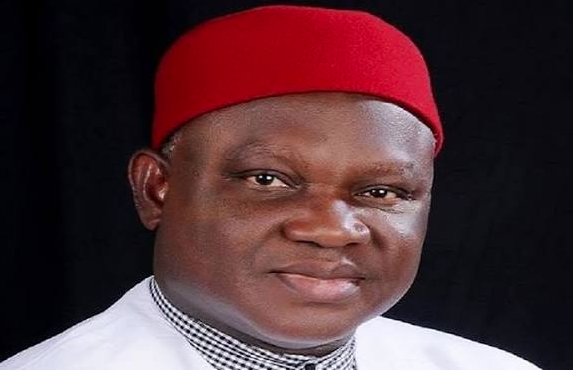
The summit likened to the Ahiara Declaration which took place over 56 years ago before the commencement of Nigeria-Biafra Civil War, according to the Convener/ National Chairman of IAD, Chief Chekwas Okorie, will take place in Enugu.
He said that the first ever Igbo Political Charter would be unveiled during the summit.

Okorie, who addressed the press on behalf of the group in Enugu on Wednesday, disclosed that part of the agenda of the non-partisan organisation, is to mount a “robust campaign to persuade every person with the voters card to actively participate in all democratic processes wherever they reside.”
He said: “We resolved to reset the Igbo political engagement in Nigeria by establishing the Igbo Agenda Dialogue, IAD, which was inaugurated on the 27th of August 2025.
“The IAD is a non-partisan socio-political and pro democracy Organization of the Igbo people in Nigeria and the Diaspora. It’s motto is ONE FOR ALL, ALL FOR ONE (Madu nwe Oha, Oha nwe Madu).

“The IAD is designed to be the IGBO political grid structured in the form of Nigeria’s electricity grid. Cognizant of the fact that Igbo people have a massive network of associations, unions, professional groups, etc, in Nigeria and in the diaspora.”
Igbo communities existing in all the 196 countries of the world will serve as a central grid to connect Igbo groups, associations and unions globally for effective communication, feedback and coordinated action,” Okorie added.
The IAD leader noted that the organisation was determined to mount “a robust and sustained political education of our people to appreciate and accept that we can restore our relevance and respect in the country’s democratic space without begging anybody to do for us what God has already given us the power to do for ourselves.”
He regretted that during the 2023 general elections, only 11.5 million the Igbo people registered, while actually on 2.2 million voters participated in the Presidential Election with over 9.3 million refusing to participate in the process.
Lamenting the lack of interest by some south-easterners to participate in the electoral process, Okorie said that IAD would mobilise Ndigbo so that in the forthcoming general elections, over 20 million people will register to vote.
“The South East geopolitical zone should return an impressive figure of at least 20 million registered voters before the 2027 general election,” he said.
Okorie, who announced his withdrawal from active partisan politics, said that he is now focused on leading a pro-democracy pressure group, which would reach out to Ndigbo to shun their indifference to participate in the political process going forward.
“We have undertaken to reach out and constructively engage our aggrieved young men and women to persuade them on the benefits of deploying democratic tools to achieve our legitimate objectives and aspirations in Nigeria.”
Okorie who expressed belief that Igbos were marginalised after the civil war by not adhering to the declaration of Reconciliation, Reconstruction and Rehabilitation, known as 3Rs, thereby forcing the people especially the youths to loose confidence while some took to agitation for a separate state from Nigeria.
He noted that the year 2026 will mark about 56 years after the Nigerian Civil War ended in 1970, lamenting that the effects of the conflict are still evident across Igbo land due to the failure to fully implement the Federal Government’s post-war policy of “No Victor, No Vanquished.”
Therefore, as part of efforts to broker peace and reconciliation, Okorie called on President Tinubu to effect the release of the IPOB leader, Nnamdi Kanu.
“We appeal to President Ahmed Tinubu to collaborate with us in this noble and patriotic venture by ordering the release of Mazi Nnamdi Kanu and other prisoners of conscience as a new year gesture to the Igbo people,” he appealed.
Fielding questions from journalists, Chief Okorie said that the adoption of President Tinubu for 2027 presidential election by South East governors and some Igbo leaders was a miscalculation, in short he said that they were not thinking properly and were misguided.
“Igbo leaders were not thinking properly by adopting President Tinubu as sole candidate for 2027. Tinubu will not take the governors serious. I have known him, Tinubu too well,” he said saying that a politician of Tinubu’s calibre who is verse in politics will not pay much heed to the avowed adoption.
He said that when the time comes, the people will know who to vote for and called on Ndigbo to come out en masse for the forthcoming voter registration.









…Sen. Nnamani, Nwobodo, Dr. Nnamani, Chime, Ugwuanyi, Prof. Nnaji, Arthur Eze, Frank Nweke, Madueke, others get advisory roles
…Udeh, Nwoye, Utazi, Egumgbe, Ben Collins Ndu, Onyia, others head 51 Directorates
…Council to be inaugurated on Tuesday
The Enugu State Chapter of the All Progressives Congress (APC), on Monday, unveiled the party’s Campaign Council ahead of the 2027 general elections.
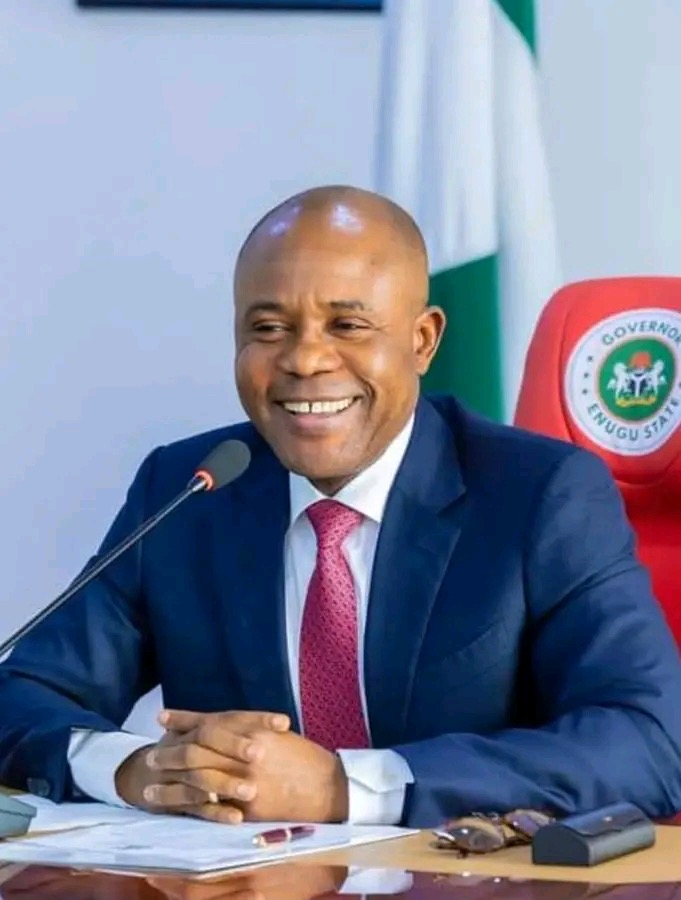
The Campaign Council, comprising 51 Directorates, is chaired by the Governor of the state, Dr. Peter Mbah, while the Deputy Governor, Barr. Ifeanyi Ossai; Deputy National Chairman, APC (South); Speaker, Enugu State House of Assembly, Hon. Uchenna Ugwu; and the Chairman of the party in the state, Dr. Martin Chukwunweike, are Vice Chairmen.
The list signed by Chukwunweike and the Secretary of Enugu APC, Hon. Chukwudi Nnadozie, also has Chief Charlie Mbah as the Director-General of the Campaign Organisation and Dr. Eric Oluedo as the Secretary-General.
Deacon Okey Ogbodo, Dr. Dan Shere, and Hon. S.K.E. Udeh-Okoye are Deputy Campaign DGs for Enugu East Senatorial District, Enugu North Senatorial District, and Enugu West Senatorial District, respectively.
Barr. Steve Oruruo is the Campaign Spokesperson and Director of the Public Communication Committee, with Dr. Austin Okolie as co-spokesperson and Dr. Malachy Agbo as Secretary.
Mazi Uche Anichukwu and Dan Nwomeh, both drawn from the Governor’s media team, head the Directorate of New Media and Strategic Communication and the Directorate of Mainstream Media, respectively. Dr. Collins Ogbu is the Secretary of the former, while Dr. Reuben Onyishi is the Secretary of the latter.
Barr. Victor Udeh leads the Administration Directorate, while Dr. Ben Nwoye and Arc. Uche Nwatu are the Director and Co-Director of the Fundraising Committee, respectively.
Former Chief of the Naval Staff, Vice Admiral Ikechukwu Ogalla (Rtd.), chairs the Security Directorate, while former Inspector General of Police, Ogbono Onovo (Rtd.), is the Secretary.
The Minister of Innovation, Science and Technology is in charge of the Directorate of Government Appointees Coordination (Federal and State), with Prof. Chidiebere Onyia as Secretary, while former Speaker of the Enugu State House of Assembly, Rt. Hon. Eugene Odoh, heads Inter-Party Affairs.
Senator Osita Ngwu, Senator Ikeje Asogwa, and Senator Kelvin Chukwu are Coordinators of the Campaign Council in Enugu West, Enugu North, and Enugu East, respectively.
Meanwhile, in their co-signed statement, Chukwunweike and Nnadozie said the size of the Campaign Council was a reflection of “the conviction that every community, ward, local government area, professional group, support organisation, youth body, women’s group, elder, party faithful and person of goodwill must be seen, heard and meaningfully engaged.”
“Appointment into the campaign structure is therefore not merely an honour; it is a call to duty, accountability and measurable contribution,” they stated.
The Council will be inaugurated at the International Conference Centre, Enugu on Tuesday, October 27, 2026.
All members of the Campaign Council are to be seated before 3pm.
CLICK LINK BELOW TO SEE FULL LIST:
APC ENUGU CAMPAIGN COUNCIL COMPOSITION-1
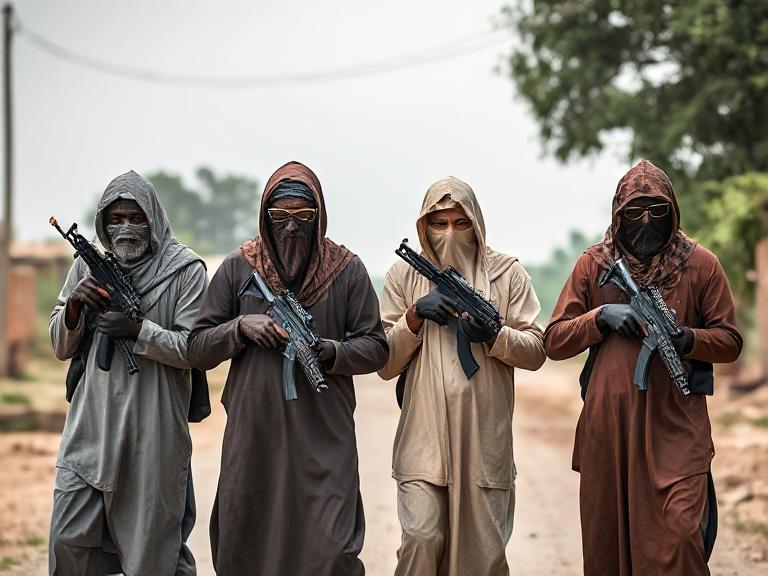
Tension has gripped parts of Kwara State following the reported abduction of members of the Iru Ekun Security Group, a security outfit spearheaded by Yoruba nation agitator Sunday Adeyemo, popularly known as Sunday Igboho.
The assailants reportedly abducted the security operatives and forced them to renounce their activities of protecting communities in the state.
According to reports, the abducted members pleaded for their release and were compelled to renounce their community protection activities.
The Iru Ekun Security Group was established to protect Yoruba communities in Kwara State against terrorist attacks and kidnappings.
The reported abduction has sparked fear among residents who rely on the group for protection against insecurity in their communities.
As of the time of filing this report, Igboho had yet to issue a statement on the reported abduction of the security group members.
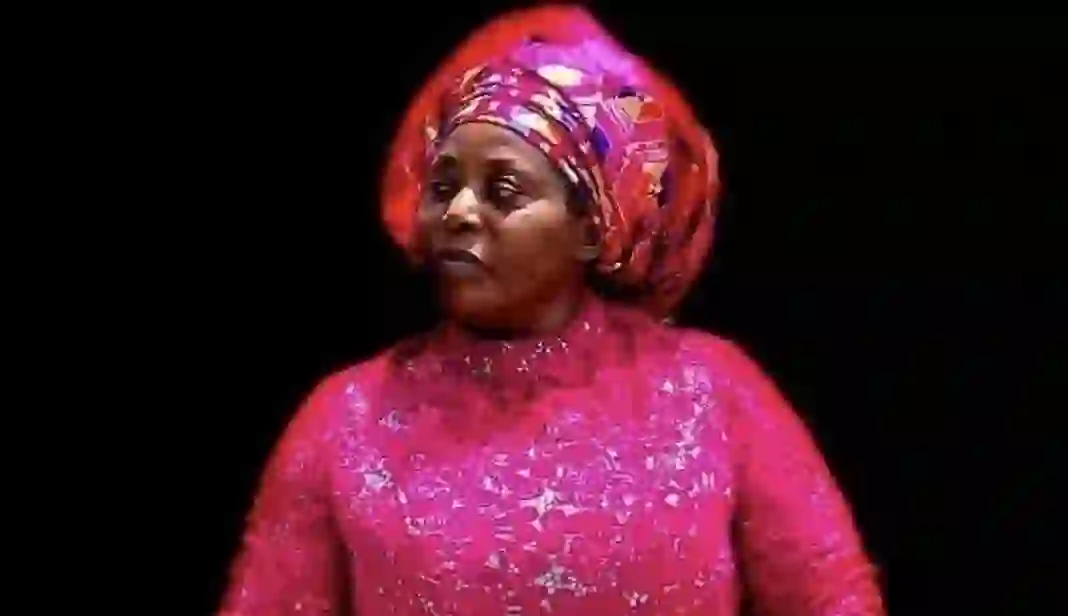
Fidelia Ezinwanne Chigbogu, the immediate elder sister of the late Senator Ifeanyi Ubah, has died at the age of 61.
Mrs Chigbogu, fondly called “Darling” by her husband, reportedly slumped and died on Sunday morning in Lagos while preparing to attend church.
Her husband, Chudi Chidinma Chigbogu, a native of Nnewi in Nnewi North Local Government Area of Anambra State, described her death as a devastating shock, saying she had shown no signs of illness before the incident.
“It was like a shock to me because, even as I am talking to you now, I never believed it,” he said.
Narrating the circumstances surrounding her death, Mr Chigbogu said the family had experienced an electrical incident the previous Thursday when their electricity meter exploded and burnt their changeover room.
He said they had contacted officials of the electricity distribution company, who promised to visit on Monday to replace and relocate the meter.
“We were busy waiting for them. My wife said she would give testimony in church on Sunday, and we were preparing for that,” he said.
According to him, his wife woke up on Sunday morning without any apparent health complaints and was preparing to leave for church when the incident occurred.
“That Sunday morning, she woke up. There was nothing like a headache, nothing like fever, nothing. She finished bathing and was preparing to go to church. She usually leaves home between 7 a.m. and 7:30 a.m. because of the roles she plays in the church,” he said.
Mr Chigbogu explained that he was washing his car because of dust when he became concerned that his wife had not come downstairs.
“I went to wash the car because of dust. Around 8 a.m., I called my son and said, ‘Why has mummy not come down? Go and check.’
“Only for the boy to go and start screaming that he called his mummy and she did not answer. He lifted her hand, and her hand dropped,” he recounted.
He said he immediately rushed upstairs and found his wife lying unresponsive on the bed.
“I called her names, no way. I alerted neighbours, and we carried her to six hospitals. Anywhere we went, they would take me aside and say I didn’t bring her on time, that she had passed on.
“I said no, it was not possible, until we got to Navy Hospital, where they refused to admit her,” he said.
Mr Chigbogu said prayers continued at their home for several hours as the family struggled to come to terms with the tragedy.
He recalled that around 4 p.m., someone told him she had seen his wife in a vision, moving swiftly without looking back, which she interpreted as a sign that the deceased had made it to heaven.
“That was when I changed my mind and allowed an ambulance to come. She left here after 6 p.m. and got to the village around 7 a.m. the next day,” he said.
Describing his late wife, Mr Chigbogu said she was a natural leader, peacemaker and philanthropist who played a significant role in her family, church and community.
“Aside from calling her Darling, I called her many names because she was a leader. No matter the case in the family, she would settle it.
“She is the founder of a women’s group, played a very big role in the church and was known for her charitable work. Before her passing, she was working on her orphanage.
“Even though she is no more, I will not let her down. I will make sure that project comes to pass,” he said.
On her family background, Mr Chigbogu said her parents had seven children—three boys and four girls—and that his late wife was the second daughter.
He added that she was also one of the trustees of the Ubah family.
-
 Features2 days ago
Mmesoma Umeorini: When Love Turns Deadly, and a Young Woman Pays With Her Life
-
Features2 days ago
Why Igbos Celebrate New Yam Festival Worldwide: The History, Cultural Significance and Lessons For The Younger Generation
-
News1 day ago
BREAKING: Tension as Video Shows Islamic Group Members Allegedly Calling for AK-47 to Kill Christians in Enugu, Jos
-
News2 days ago
Kogi Police Probe Alleged Murder-Suicide Involving Two Officers
-
News18 hours ago
Ifeanyi Ubah’s Elder Sister, Fidelia Chigbogu, Dies Suddenly at 61
-
News2 days ago
NCDC Reports Two Suspected Ebola Cases as Contacts Rise to 53
-
News2 days ago
Enugu Traders Pledge Support for Mbah’s Second Term, Cite Market Reforms
-
News17 hours ago
Terrorists Abduct Sunday Igboho’s Iru Ekun Security Group Members in Kwara