News
Buhari believed Aso Rock gossip I planned killing him – Aisha


Former First Lady, Aisha Buhari, has narrated how her husband, the late President Muhammadu Buhari “began locking his room” following gossips in Aso Rock that she (Aisha) planned to kill him.
The ex-First Lady also said the health crisis that forced Buhari, to take 154 days of medical leave in 2017 began with a broken feeding routine and mismanaged nutrition.

She argued that Buhari’s illness was not a mysterious ailment or poisoning.
Her account of the health crisis appeared in a new 600-page biography, ’From Soldier to Statesman: The Legacy of Muhammadu Buhari’, authored by Dr. Charles Omole, launched at the State House on Monday.
The 22-chapter book chronicles his early life in Daura, Katsina state, until his final hours in a London hospital in mid-July 2025.

According to the book, Mrs Buhari had long supervised her husband’s meals and supplements at specific hours, a regimen she said helped “a slender man with a long history of malnutrition symptoms” maintain strength.
“Elderly bodies require gentle, consistent support,” she recalled, adding, “He doesn’t have a chronic illness. Keep him on schedule.”
It read, “According to Aisha Buhari, her husband’s 2017 health crisis did not originate as a mysterious ailment or a covert plot. It started, she says, with the loss of a routine; ‘my nutrition,’ she describes it, a pattern of meals and supplements she had long overseen in Kaduna before they moved into Aso Villa.”
The former First Lady convened a meeting with close staff, including the physician, Suhayb Rafindadi; the CSO, Bashir Abubakar; the housekeeper, and the SSS DG to explain the plan.
She said, “Daily, cups and bowls with tailored vitamin powders and oils, a touch of protein here, a change to cereals there.”
“When the Presidency’s machinery took over our private lives, she explained the plan: daily, at specific hours, cups and bowls with tailored vitamin powders and oil, a touch of protein here, a change to cereals there. Elderly bodies require gentle, consistent support,” Omole narrated.
However, the routine frayed.
“Then came the gossip and the fearmongering. They said I wanted to kill him,” the book quotes her as saying.
“My husband believed them for a week or so,” she said, revealing that the President began locking his room, changed small habits, and crucially, “meals were delayed or missed; the supplements were stopped.”
“For a year, he did not have lunch. They mismanaged his meals,” she added.
The deterioration culminated in Buhari’s two extended medical trips to the United Kingdom, totalling 154 days in 2017, during which he ceded authority to Vice President Yemi Osinbajo.
Upon return, he admitted to being “never so ill” and having received blood transfusions.
Buhari’s absences “sparked rumours, speculation, and even conspiracy theories,” Omole wrote.
Mrs Buhari debunked stories of plots to poison her husband.
Her contention, Omole noted, is that “loss of a routine, ‘my nutrition,’ was the genesis of the crisis.”
In London, doctors prescribed an even stronger regimen of supplements, he explained.
Initially, Buhari “was frightened and not taking them as prescribed. So she took charge of his welfare, slipping hospital-issued supplements into his juice and oats,” it read.
The former First Lady described the turnaround as swift, noting, “After just three days, he threw away the stick he was walking with. After a week, he was receiving relatives.”
“‘That,’ she says, ‘was the genesis, and also the reversal of his sickness,’” the book stated.
According to Omole, critics said Buhari’s reliance on UK hospitals exposed the failure of Nigeria’s health system.
A “more compassionate perspective,” he wrote, recognises that a man in his 70s may require specialised care “not readily available in Nigeria” after “decades of underinvestment.”
He also noted Buhari’s habit of handing power to his deputy during absences, which, he said, ensured “institutional propriety, even during personal health crises.”
The book also revealed a climate of mistrust around the Presidency.
Mrs Buhari alleged surveillance, the bugging of the President’s office with listening devices and playback of private conversations, saying, fear and conscience “contributed to taking his life.”
She refuted the long-held rumour that Buhari had a body double, popularly known as “Jibril of Sudan,” as absurd, arguing that poor strategic communication in government allowed simple, banal developments to metastasise into conspiracies. (PUNCH)




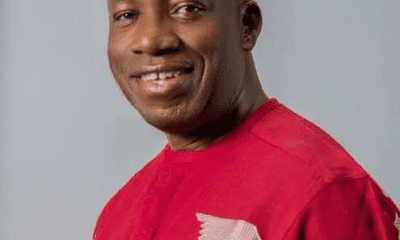




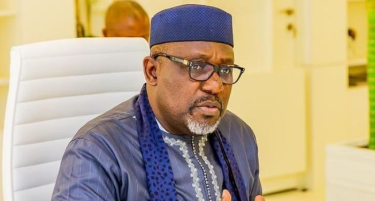
Former Imo State Governor, Senator Rochas Okorocha, was arrested by the Nigeria Police Force (NPF) on Monday night.
The Nigeria Police Force Public Relations Officer, CSP Aniete Iniedu, confirmed the development to Channels Television.
Okorocha, who was arrested at REIZ Continental Hotel in central Abuja, was, however, released on bail by the NPF following an hour of interrogation over allegations of criminal conspiracy, forgery and impersonation.
CSP Iniedu, who confirmed the arrest and subsequent release on bail to our correspondent, noted that the former governor was asked to return to the Force Headquarters on Tuesday for further interrogation as investigations into the allegations continue.
The arrest reportedly followed Okorocha’s failure to honour previous police invitations in connection with the ongoing investigation.
He was initially invited to the Force Headquarters on September 2, but the appointment was rescheduled to September 8 at the request of his lawyers, a date he reportedly failed to honour.
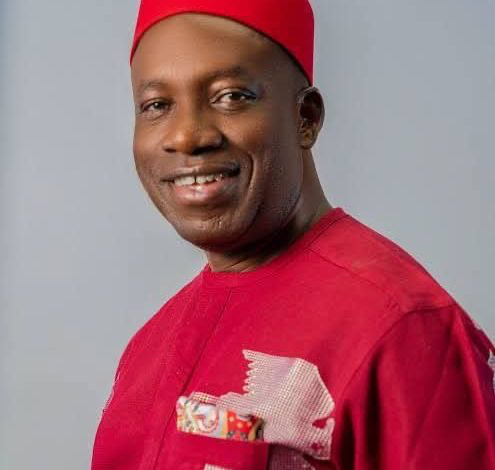
Anambra State Governor, Prof. Chukwuma Soludo, has been appointed a member of the All Progressives Congress (APC) 2027 Presidential Campaign Council list released last night.
This is despite the fact that he is the National Leader of the opposition All Progressives Grand Alliance (APGA).
Similarly, Federal Capital Territory (FCT) Minister Nyesom Wike, the National Leader of the opposition Peoples Democratic Party (PDP) and Osun State Governor, Senator Ademola Adeleke of the opposition Accord Party (AP), are on the expanded and all-inclusive team headed by President Bola Ahmed Tinubu.
Other members include Presidential Adviser on Policy and Coordination, Hadiza Bala Usman, former Ogun State Governor Ibikunle Amosun, former Lagos State Governor Akinwunmi Ambode, Aviation Minister Festus Keyamo, and former House of Representatives member Patrick Obahiagbon.
Also named as members are former Osun APC governorship candidate Bola Oyebamiji, former National Legal Advisers Dr. Muiz Banire and Babatunde Ogala, Chief Ayiri Emami, Victor Giadom, Magnus Abe, and former Ogun State Governor Gbenga Daniel.
The list, according to a report by The Nation, reflects inter-party cooperation and harmony based on the shared vision of propelling the country to the horizon of progress.
The report quoted a statement by APC National Secretary, Senator Ajibola Basiru, as saying that the campaign council will be inaugurated tomorrow in Abuja.
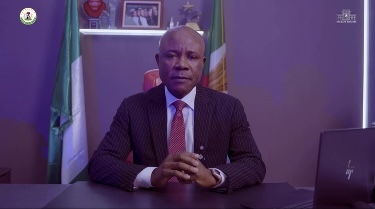
Enugu State Governor, Dr Peter Mbah, has called for a thorough and impartial police investigation into the recent violence surrounding a political gathering in the state, assuring that anyone found responsible will face the law regardless of political affiliation.
Mbah, in an address to the people of Enugu State, expressed concern over reports of violence, particularly a shooting incident that left a citizen injured.
The governor said his immediate concern was the welfare of those injured, residents who experienced fear during the incident, and families affected by the violence.
He assured the victims and affected residents that their safety and well-being remained a priority for his administration.
“I know how much our people value the peace and security we have worked so hard to establish in Enugu. Incidents such as these cause anxiety and deserve our full attention,” the governor said.
Mbah stressed that every citizen, irrespective of political affiliation, must be able to exercise their political rights without fear, intimidation or violence.
He reiterated the state government’s commitment to protecting lives, upholding the law and ensuring that justice was served without favour.
The governor also stated that, in view of the preliminary findings regarding the incident, he expected the police to conduct a comprehensive and impartial investigation to establish the circumstances surrounding the violence and identify those responsible.
According to him, anyone found culpable would be held accountable through the appropriate legal process, irrespective of their political connections.
“The Enugu State Government has made its position clear regarding allegations of involvement in this violence,” Mbah stated, reaffirming his administration’s responsibility to maintain peace and security across the state.
The incident has raised concerns over political tolerance and the safety of citizens participating in political activities in Enugu State.
The governor’s call for an impartial investigation underscores the need for the relevant security agencies to establish the facts surrounding the shooting and ensure that those responsible are brought to justice.
He concluded his address by thanking the people of Enugu State and praying for God’s continued blessings upon the state.
-
 News3 days ago
Why UK varsities are cancelling Nigerians’ admission — Report
-
News2 days ago
2027: Enugu Accuses Opposition of Plotting to Import Armed Thugs, Bandits
-
News2 days ago
Alleged Magistrate Court Order To Arrest Araraume, Okorocha Is Fake, Non-Existent — Imo First Group
-
News2 days ago
Benue APC Delegation Involved in Ghastly Accident En Route to Rally
-
News2 days ago
2027: Over 30,000 Enugu Teachers Endorse Mbah, Tinubu, List Welfare, Increased Education Funding
-
News3 days ago
Why men with braids, tattoos were banned from mosque, Ogun Chief Imam clarifies
-
News3 days ago
Man stabs wife in Anambra community, kills himself with poison
-
News3 days ago
EFCC recovers $105,000 for US-based businesswoman