Connect with us
Maduka University Advert

News

Tariff: EERC, SEECA, ANED, Mainpower lock horns over ₦160/kWh Order

Published

on

Spread the love
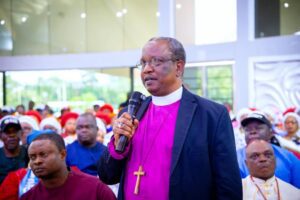
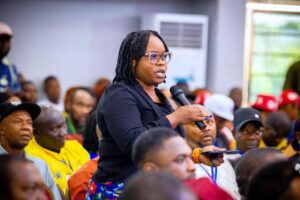
Enugu Electricity Regulatory Commission (EERC), on  Thursday held a public hearing on the petition filed by MainPower Electricity Distribution Limited, which is seeking a review of the Commission’s Tariff Order issued in July 2025.

The event, which took place at the International Conference Centre (pICC), Enugu, brought together major stakeholders in the state’s power sector, including representatives of the Association of Nigerian Electricity Distributors (ANED), consumer advocacy groups, and regulatory officials.

Speaking at the occasion, the Chief Executive Officer of the Enugu Electricity Regulatory Commission,  Chijioke Okonkwo, outlined the historical and regulatory context that led to the current tariff structure.

He recalled that following the enactment of the Electricity Act, 2023, which empowered states to regulate electricity generation, transmission, and distribution within their territories, Enugu State therefore established its own regulatory framework.

Okonkwo pointed out that  the Enugu State government first prepared a policy document which led to the passage of the Enugu State Electricity Law, specifically designed for the benefit of Enugu citizens. “Pursuant to that law, commissioners for the Enugu Electricity Regulatory Commission were appointed, enabling the state to formally seek regulatory transfer from the Nigerian Electricity Regulatory Commission (NERC).”

According to him, Enugu officially assumed full regulatory responsibility for electricity services on October 22, 2024, after a six-month transition period approved by NERC.

He explained that part of the transition process required the creation of MainPower Electricity Distribution Limited, a subsidiary that took over the assets, liabilities, and operations of the Enugu Electricity Distribution Company (EEDC) within the state.

“We subsequently licensed MainPower and issued it a tariff order governing electricity operations in Enugu State,” Okonkwo said, pointing out, “That order, issued on July 18, 2025, and effective August 1, 2025, was the result of extensive assessment and fair consideration of the company’s assets and liabilities.”

Maduka College Advert

He said the ₦160 per kilowatt-hour tariff was “prudently determined” after examining various cost parameters, including customer numbers and distribution efficiency.

“However, MainPower later petitioned against the order, expressing disagreement with some of the assumptions and parameters used,” he said. “We considered it inappropriate to amend the order unilaterally and instead opted for this public hearing in line with our business rules — to ensure transparency, fairness, and public participation.”

In his presentation, the Managing Director, Mainpower Electricity Distribution Limited.Dr. Ernest Mupwaya,  argued that the EERC did not follow due process in issuing the July 18, 2025 tariff order.

The company maintained that the Commission ignored its own business rules by releasing a tariff order without a bilateral agreement between both parties and by “cherrypicking numbers” that did not reflect operational realities.

“An independent audit firm, KPMG, reviewed the process and confirmed that the parameters used by EERC were wrong,” Mupwaya said.

“We urge the Commission to adopt the actual data presented to it, rather than assumptions, to ensure a fair and sustainable tariff framework.”

The firm claimed that the current ₦160/kWh tariff was inconsistent with prevailing costs in the national electricity market and was unsustainable for its operations.

Siding Mainpower that EERC’s was arbitrary, Barr. Sunday Oduntan, Chief Executive Officer of the Association of Nigerian Electricity Distributors (ANED), cautioned against setting tariffs below the actual cost of energy supplied to the state.

“In this industry, we are distributors, not generators,” Oduntan noted. “We buy electricity from those who produce it, and there is always a landing cost associated with that product.”

He explained that while the Electricity Act 2023 allows states to regulate electricity within their borders, they must still respect market realities when sourcing power from the national grid.

“Until Enugu begins generating its own electricity — for instance, from coal — it cannot fix arbitrary prices for a product that comes from outside its borders,” he said. “The cost must reflect the true landing cost, which the NERC currently calculates at about ₦209 per kilowatt-hour for Band A customers.”

Oduntan warned that setting tariffs below cost could reintroduce the burden of subsidies.

“If the cost price is higher than the regulated price, we must ask who pays the shortfall — are we going back to the era of subsidy?” he queried.

Touched by high electricity tariff, the South-East Electricity Consumers Association (SEECA), in its submission to the Commission, strongly opposed MainPower’s petition, insisting that the ₦160/kWh tariff should be retained.

In a memorandum signed by its Enugu State Chairperson, Patience Ifebuche Chukwu, SEECA argued that the EERC followed due process and provided fair hearing before issuing the tariff order.

“Records show that before the Tariff Order was made, a series of meetings and submissions were held between EERC and MainPower,” SEECA stated. “Fair hearing is not an automatic principle to be invoked at convenience. A party that had the opportunity to be heard cannot later claim denial.”

The association dismissed MainPower’s claim of ₦1.3 billion monthly losses, countering that electricity consumers had endured greater hardships due to erratic power supply, estimated billing, and poor service delivery.

“Consumers have suffered loss of lives, spoiled goods, and business closures. These losses far outweigh any purported loss claimed by the petitioner,” the group said, calling for the abolition of the controversial Band classification system, which it described as “discriminatory.”

SEECA recommended that if any review must be done, the tariff should not exceed ₦165/kWh.

On the way forward, the EERC said the submissions made at the public hearing would be thoroughly reviewed before any final decision is taken on the petition.

Mr. Okonkwo reaffirmed the Commission’s commitment to balancing the interests of both operators and consumers through fair, transparent, and evidence-based regulation.

“Our goal,” he said, “is to ensure that operators receive fair value for their services while consumers get commensurate value for every naira they pay. Whatever decisions we make will be guided by fairness, transparency, and sustainability.”


News

Burkina Faso releases 11 Nigerian officers after Abuja claims the aircraft was en route to Portugal

Published

on

Spread the love

Burkina Faso has released the 11 Nigerian military officers who were detained after their Nigerian Air Force (NAF) C-130 aircraft made what authorities described as an unauthorised landing in Bobo-Dioulasso on Monday.

According to Business Insider, the officers — two crew members and nine military passengers — were allowed to return to Nigeria after Burkinabè authorities completed preliminary security checks amid suspicions that the team may have been linked to Nigeria’s involvement in the Benin coup response.

The Nigerian government had maintained that the landing was purely a technical emergency while the aircraft was en route to Portugal. However, Burkina Faso countered this explanation, saying the aircraft violated national protocols by entering its airspace without permission.

Territorial Administration Minister Emile Zerbo said the unexpected arrival of the aircraft triggered an immediate and heightened security response.

“The aircraft flew into Burkina Faso without clearance,” Zerbo stated, noting that defence and intelligence units were deployed promptly to assess the situation.

The Alliance of Sahel States (AES) — comprising Burkina Faso, Mali, and Niger — issued a joint statement late Monday describing the incident as a confirmed “airspace violation” and an “unfriendly act.” The bloc further announced that its air forces had been placed on maximum alert with orders to neutralise any aircraft that breached AES-controlled airspace.

Maduka College Advert

Despite the strong language, Burkinabè security officials told the BBC that the Nigerian officers were questioned, cleared, and later permitted to leave.

The Nigerian Air Force, in its own account, stressed that a technical fault necessitated the diversion and that the emergency landing followed standard international aviation safety procedures. While the NAF confirmed its personnel were safe and treated respectfully, it did not directly acknowledge their detention.

The episode comes amid worsening relations between Nigeria and the AES governments. Burkina Faso, Mali, and Niger — all under military rule — have repeatedly accused Nigeria of overstepping in regional security matters, particularly in Benin, where Nigeria has coordinated responses to coup attempts.

The three Sahel states formally withdrew from ECOWAS earlier this year, alleging political interference and the bloc’s inability to effectively tackle jihadist violence. Since then, they have strengthened military ties within the AES, distanced themselves from Western partners such as France, and expanded security cooperation with Russia.

In a related development, Niger has imposed new restrictions on goods entering from Nigeria, citing growing security concerns and suspicion over Nigerian military activities across the Sahel.

“For security requirements, all goods originating from Nigeria must be unloaded and inspected at the entry offices before any transit formalities,” announced Colonel Mohamed Yacouba Siddo in a Tuesday directive.

SaharaReporters had earlier revealed that Burkina Faso’s junta detained the 11 Nigerian officers and impounded the NAF C-130 after its emergency landing — an incident now adding to the escalating tension between Abuja and the Sahel military regimes.

Continue Reading

News

Senate approves Tinubu’s request to deploy troops to Benin for peace mission

Published

on

The Nigerian Senate
The Nigerian Senate
Spread the love
The Senate on Tuesday approved President Bola Ahmed Tinubu’s request to deploy Nigerian troops to the Republic of Benin on a peace mission aimed at restoring democratic order and stability.

The resolution followed the Senate’s consideration of the President’s request in the Committee of the Whole during plenary.

Tinubu had, in a letter read on the floor by Senate President Godswill Akpabio on Tuesday, urged the Senate to approve the troop deployment to help restore governance following a recent coup attempt in Benin.

The President had initially deployed members of the Nigerian Armed Forces on Sunday to assist in restoring democracy after a group of soldiers attempted a coup.

In the letter titled, “Deployment of Nigerian troops to the Republic of Benin for a peace mission”, Tinubu cited Section 5(5), Part 2 of the 1999 Constitution (as amended) and stated that, following consultation with the National Defence Council, he sought the Senate’s consent for the deployment.

“This request is made further to a request received from the Government of Benin Republic for the exceptional and immediate provision of air support by the Armed Forces of the Federal Republic of Nigeria.

“The Distinguished Senate may wish to note that the Government of the Republic of Benin is currently faced with an attempted unconstitutional seizure of power and disruption and destabilization of democratic institutions.

Maduka College Advert

“The situation as reported by the Government of Benin requires urgent external intervention.

“The Distinguished Senate considers the close ties of brotherhood and friendship which exist between Nigeria and the Republic of Benin, as well as the principles of collective security upheld within ECOWAS.

“It is our duty to provide the support as requested by the Government of the Republic of Benin.”

After reading the letter, Akpabio committed the President’s request for consent to the Committee of the Whole for immediate action.

Continue Reading

News

Rivers Governor Fubara finally dumps PDP for APC

Published

on

Fubara suspends Rivers LGA caretaker committee boss
Rivers State Governor, Siminalayi Fubara
Spread the love
Rivers State Governor, Siminalayi Fubara, has officially left the Peoples Democratic Party (PDP) to join the ruling All Progressives Congress (APC).

Announcing his defection on Tuesday evening, Fubara said the move was made “in the interest of the people of Rivers State” and in appreciation of the “overwhelming support” the state has received from President Bola Ahmed Tinubu.

According to him, President Tinubu personally gave his approval for the move, clearing the path for Fubara’s official entry into the ruling party.

His switch to the APC comes on the heels of several closed-door meetings with the President and the recent defection of 17 members of the Rivers State House of Assembly, fueling expectations that the governor would eventually align with the APC as part of a broader peace arrangement.

Continue Reading

Trending

Maduka College Advert