News
Nigeria @65: The worst is over, hope rising for Nigeria – Tinubu


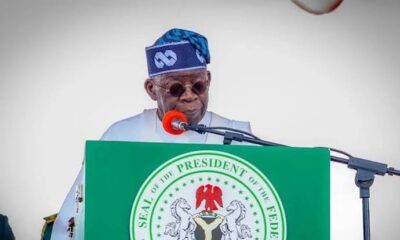
President Bola Tinubu on Wednesday assured Nigerians that the country’s “worst days are over.”
He declared that his economic reforms are beginning to deliver results and that hope is rising for a more prosperous nation.

Delivering his national broadcast to mark the country’s 65th Independence anniversary, Tinubu said his administration had chosen “the path of tomorrow over the comfort of today” since coming into office in May 2023, and that Nigerians are now beginning to see tangible results.
“I am pleased to report that we have finally turned the corner. The worst is over, I say.
“Yesterday’s pains are giving way to relief. I salute your endurance, support, and understanding.

“I will continue to work for you and justify the confidence you reposed in me to steer the ship of our nation to a safe harbour,” the President said.
Tinubu hailed the resilience of Nigerians, saying the country had survived a civil war, military rule and political crises, and is still striving to build “a more perfect union.”
He described the 65th anniversary as a moment for reflection on the sacrifices of the nation’s founding fathers and the progress achieved since Independence in 1960.
The President highlighted achievements in education and healthcare, noting that Nigeria has grown from just two tertiary institutions at Independence to 274 universities, 183 polytechnics and 236 colleges of education by 2024.
Tinubu defended his economic reforms, including the removal of fuel subsidies and the unification of foreign exchange rates, which he said ended decades of distortions and rent-seeking.
According to him, these difficult decisions freed resources for investment in infrastructure, education, healthcare and social programmes.
He argued, “In resetting our country for sustainable growth, we ended the corrupt fuel subsidies and multiple foreign exchange rates that created massive incentives for a rentier economy, benefiting only a tiny minority.
“Our administration has redirected the economy towards a more inclusive path, channelling money to fund education, healthcare, national security, agriculture, and critical economic infrastructure.”
The President reeled out a list of 12 economic milestones achieved in the last two years and four months in office.
He said Nigeria’s GDP grew by 4.23 per cent in the second quarter of 2025, the fastest in four years, while inflation had declined to 20.12 per cent, the lowest level in three years.
The President added that non-oil revenue had risen sharply, debt service costs had reduced, foreign reserves had increased to $42.03bn, and the tax-to-GDP ratio had grown to 13.5 per cent.
He also noted that Nigeria had posted trade surpluses for five consecutive quarters, with manufactured exports up by 173 per cent and non-oil exports now representing 48 per cent of total trade.
Oil production, he said, had recovered to 1.68 million barrels per day, while local refining had restarted for the first time in four decades, alongside the export of aviation fuel.
Tinubu argued that the naira had grown more stable. He also boasted of improvements in credit ratings, a booming stock market, and the Central Bank’s first interest rate cut in five years as evidence of renewed investor confidence.
The President said his government was investing heavily in security to consolidate economic gains.
“They are winning the war against terrorism, banditry and other violent crimes. We see their victories in their blood and sweat to stamp out Boko Haram terror in the North-East, IPOB/ESN terror in the South-East and banditry and kidnapping,” he said, adding that peace had returned to hundreds of communities and thousands of displaced persons had gone back home.
He also promised to prioritise food security and agricultural production to lower food costs.
“We must build the roads we need, repair the ones that have become decrepit, and construct the schools our children will attend and the hospitals that will care for our people. We have to plan for the generations that will come after us,” Tinubu said.
Addressing young Nigerians, the President described them as the “greatest assets of this blessed country,” highlighting initiatives such as the Nigeria Education Loan Fund, which has already benefited over 500,000 students, and credit schemes like Credicorp and YouthCred that provide loans for housing, devices and resettlement.
He added that the government was pushing ahead with the $600m iDICE programme, backed by international development partners, to support the digital and creative sectors.
Under the social investment programme, Tinubu said N330bn had been disbursed to eight million households.
He also cited significant progress in transport infrastructure, including rail, roads, airports, and seaports, with major projects such as the Lagos-Calabar Coastal Highway and the Eastern Rail Project underway.
Tinubu acknowledged the pain of reforms but urged Nigerians to remain patient.
“I have always candidly acknowledged that these reforms have come with some temporary pains.
“The biting effects of inflation and the rising cost of living remain a significant concern to our government.
“However, the alternative of allowing our country to descend into economic chaos or bankruptcy was not an option,” he said.
The president concluded his third Independence Day address with a call for productivity and national unity, saying, “Let us be a nation of producers, not just consumers. Let us farm our land and build factories to process our produce.
“Let us patronise ‘Made-in-Nigeria’ goods. I say Nigeria first. Let us pay our taxes. Finally, let all hands be on deck.
“With Almighty God on our side, I can assure you that the dawn of a new, prosperous, self-reliant Nigeria is here.”



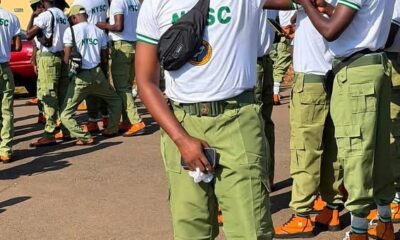







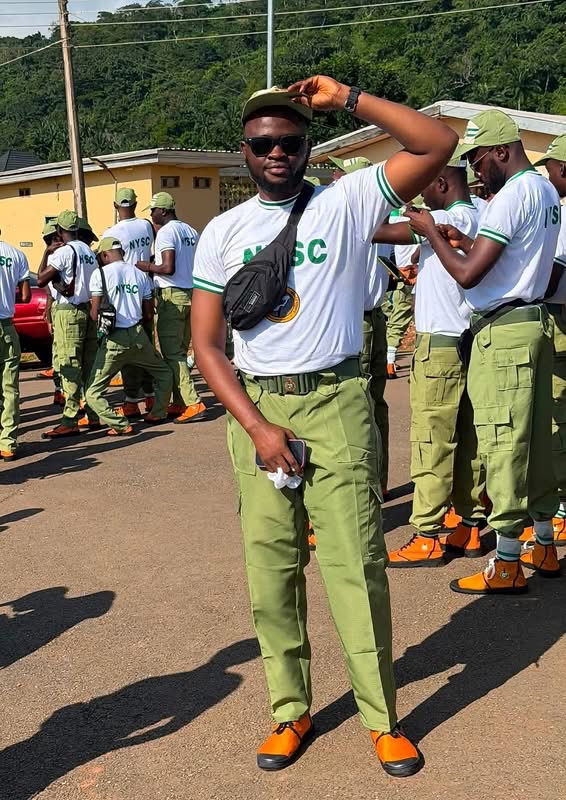
The Senate on Thursday called for an investigation into the circumstances surrounding the death of a corps member, Etimbuk Daniel, at an NYSC orientation camp in Enugu.
The resolution followed a motion of urgent public importance moved by Sen. Aniekan Bassey (APC-Akwa Ibom North-East) during plenary.
Bassey said the Senate received with shock and profound grief the news of Daniel’s death while undergoing the mandatory National Youth Service Corps (NYSC) programme in Enugu.
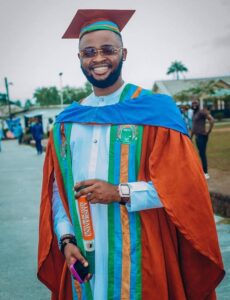
Etimbuk Daniel
He described the deceased as an outstanding student leader and former Students’ Union Government (SUG) president of Akwa Ibom State University who had embarked on national service.
Bassey expressed concern over reports that Daniel died following complications from a minor headache after allegedly experiencing delays in receiving adequate medical attention at the camp’s clinic.
He said the incident raised concerns about healthcare services in NYSC orientation camps, particularly the availability of qualified medical personnel, functional facilities and effective emergency referral systems.
The senator said the reported lapses highlighted the need to review healthcare delivery in orientation camps to prevent similar tragedies and protect corps members.
He emphasised that the government had a constitutional responsibility to safeguard citizens’ welfare, adding that young graduates mobilised for national service deserved adequate medical care throughout their service.
Bassey said Daniel’s death had plunged his family, the Akwa Ibom State University community and the entire state into mourning.
Seconding the motion, Sen. Mohammed Monguno (APC-Borno North) supported the call for an investigation, emphasising the importance of establishing the circumstances surrounding Daniel’s death and ensuring accountability.
The Senate observed a minute of silence in honour of the deceased and prayed that God would grant his family the strength to bear the loss.
It also called for a thorough investigation to establish the facts surrounding Daniel’s death and determine whether negligence contributed to the incident.
The Senate directed its committees on Police, Judiciary, Human Rights and Legal Matters, Youth Development, and Health to investigate the matter alongside the Nigeria Police Force and the Department of State Services (DSS).
Deputy Senate President Barau Jibrin, who presided over the proceedings, thanked Bassey for bringing the matter before the Senate and urged the relevant committees to conduct a thorough investigation. (NAN)
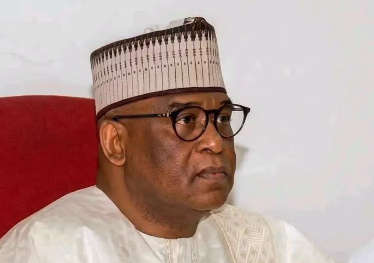
Senator Abdul Ningi has recounted how his colleague, Bello Mandiya, reportedly died after slipping in his bathroom and hitting his head, with his body discovered about 72 hours later in his Abuja residence.
Ningi, who represents Bauchi Central Senatorial District, said neighbours discovered Mandiya’s lifeless body after a foul smell began emanating from his apartment and residents became concerned about his prolonged absence.
Speaking during a Senate plenary session, Ningi said he was in Saudi Arabia when he received a telephone call from his son informing him of Mandiya’s death.
He said his son was among those who discovered the former lawmaker’s body on Monday, September 7, 2026.
Recounting the events leading to the discovery, Ningi said a colleague had last seen Mandiya at about 11am on Friday, September 4, before the former senator returned to his residence, where he lived alone.
According to him, Mandiya was preparing to attend the Friday congregational prayer when he reportedly slipped and hit his head after bathing.
“He brought out his cap, his phones, and put them on the bed, and went into the bathroom to take his bath,” Ningi said.
“After taking his bath, when he was out of the bathroom, then he slipped and knocked his head in the bathroom.”
Ningi said nobody realised what had happened until the stench from Mandiya’s apartment began spreading to neighbouring properties.
“For 72 hours, Mr President, nobody knew where Bello Mandiya was,” he told the Senate.
He said the chief imam of Apo also raised the alarm after noticing that Mandiya, who regularly joined other Muslims for the five daily prayers, had been absent for three consecutive days.
The combination of the imam’s concern and the foul smell prompted residents to investigate the apartment.
Ningi said those who went to the residence eventually broke open the door and found Mandiya’s body in the bathroom.
“And there lies Bello Mandiya in the bathroom, lifeless. Seventy-two hours, and that’s a simple tragedy,” he said.
Expressing sadness over the circumstances of his colleague’s death, Ningi said the incident highlighted the uncertainty of life, noting that nobody could predict when death would come.
He also expressed condolences to Mandiya’s family, the people of Katsina State and the constituents he represented in the Senate.
Before his election to the Senate, Mandiya served as chief of staff to former Katsina State Governor Aminu Bello Masari.
He was elected in 2019 on the platform of the All Progressives Congress to represent Katsina South Senatorial District and served in the ninth National Assembly until 2023. He also chaired the Senate Committee on Water Resources.
Mandiya’s death prompted tributes from political leaders and former colleagues, who remembered him for his contributions to public service in Katsina State and at the national level.
Ningi, who said he had known Mandiya since 2002, described the loss as a reminder that political office, wealth and social status could not shield anyone from the fragility of life.
“There is nothing permanent about anything. Nothing permanent about our position, nothing permanent about our wealth,” he said.
He prayed for Allah to grant the deceased eternal rest and give his family the strength to bear the loss. (Daily Trust)
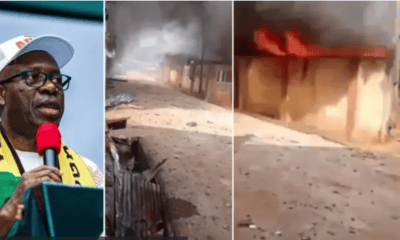
Suspected political thugs have attacked the secretariat of the Nigeria Democratic Congress (NDC) in Ikpoba-Okha Local Government Area of Edo State, destroying property at the facility.
The attack, reported on Wednesday, October 14, comes barely a week after NDC complained of a similar incident in Enugu.
A video circulating on social media showed damage to property within the Edo secretariat, although no casualties had been reported as of the time of filing this report.
In the footage, a woman accused the ruling All Progressives Congress (APC) of being responsible for the attack, linking the incident to the earlier violence in Enugu, which is being investigated by the police.
“The last one happened in Enugu, where one person allegedly died. Now they have brought it to Edo. APC, your end is here,” she said.
Her allegation against the APC has not been independently verified, while the identities of those responsible for the attack remain unknown.
The reported incident follows growing concerns over political violence ahead of the 2027 general elections.
The earlier incident in Enugu had prompted Governor Peter Mbah to demand an impartial police investigation, warning that anyone found responsible would face prosecution regardless of political connections.
It was not immediately clear whether security agencies had commenced an investigation into the Edo attack or identified any suspects.
-
 News1 day ago
2027: Why I wont attend every campaign rally – Tinubu
-
Features1 day ago
Aguleri/Umuoba Anam Crisis: The Bloody Battle Between Close Neighbours
-
News1 day ago
EFCC probes Atiku over alleged corruption committed as Vice President
-
News8 hours ago
How Senator Mandiya died after bathroom fall in Abuja Home – Ningi
-
News6 hours ago
Senate fumes over death of NYSC Corps member at Enugu Camp, orders probe
-
News1 day ago
‘Anyone who attempts suicide and fails will go to jail,’ says Akpabio
-
Features3 days ago
Enugu Political Flashpoint: Mbah orders Impartial Probe as NDC Incidents Trigger Controversy
-
News3 days ago
BREAKING: Soludo, Wike, Adeleke, others appointed member of APC Presidential Campaign Council