Connect with us

News

Israel-Iran war: 330,000 flee Tehran, oil price drops 4%

Published

on

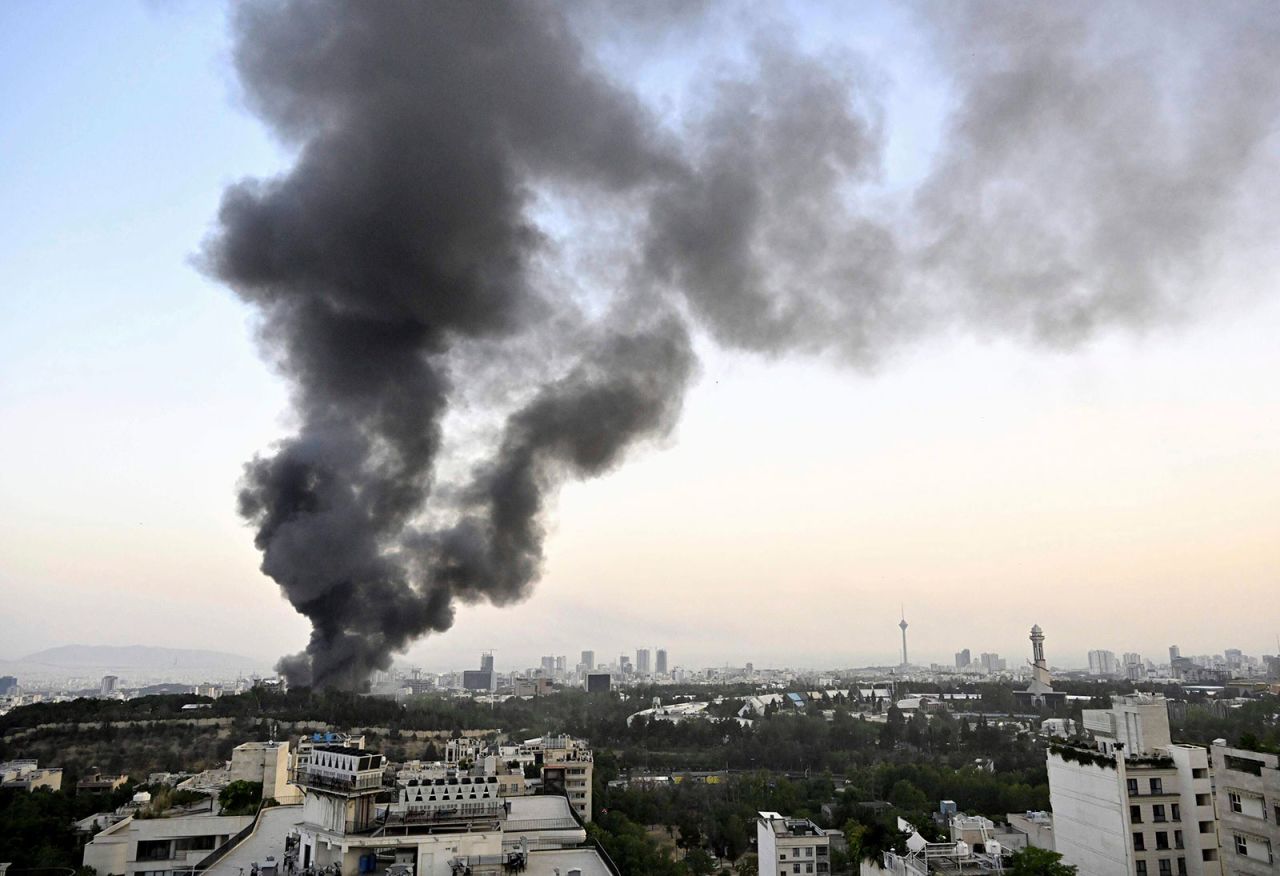
Black smoke billows from the headquarters of Iranian state television in Tehran following an Israeli attack on June 16, 2025. Kyodo/AP
Spread the love

• Iran seeks ceasefire as Israel targets more military facilities

In a dramatic turn of events yesterday, the Islamic Republic of Iran signalled its willingness to pursue a ceasefire in its ongoing war with Israel, even as heavy Israeli air raids continued to pound critical targets in and around Tehran, including the headquarters of Iran’s state television.

Witnesses described a deafening explosion followed by chaos in surrounding neighborhoods. “All we could see was smoke and broken glass,” said a Tehran resident. “People were running, children were screaming. We thought it was the end.”

The ongoing bombardment has triggered a mass evacuation of over 330,000 residents from the capital, with local authorities designating “red zones” around critical military and nuclear installations.

Meanwhile, the international markets reacted swiftly to signs of possible de-escalation, with global oil prices falling by nearly 4% yesterday afternoon, after trending upward earlier in the day.

Traders appear encouraged by reports of Iran’s diplomatic outreach and a potential pause in hostilities.
Financial analysts noted that while the risk of full-scale regional war has not been eliminated, “the prospect of a ceasefire—however tentative—has calmed fears of prolonged disruption to oil supply routes through the Strait of Hormuz.”

Iran’s diplomatic overtures, according to credible media reports, are being channeled through Gulf Arab states—namely Qatar, Saudi Arabia, and Oman—which have been quietly engaging both Tehran and Tel Aviv in a bid to de-escalate a rapidly expanding conflict.

Maduka College Advert

However, Tehran has made it clear that any potential truce is contingent on the United States staying out of the battlefield.

Despite its appeal for dialogue, Iran is still absorbing heavy losses. Israeli warplanes, under the banner of “Operation Rising Lion,” launched a fresh wave of attacks Monday morning, targeting missile stockpiles, suspected nuclear infrastructure, and notably, the national broadcasting complex of Islamic Republic of Iran Broadcasting (IRIB) in central Tehran.

The strike on IRIB dealt a symbolic and psychological blow to the regime, effectively knocking off national broadcasts for several hours and sending shockwaves through the capital.

Long queues formed at fuel stations, roads were choked with fleeing families, and emergency shelters filled to capacity as panic gripped the city.

Military sources believe the Israeli strikes have severely degraded Iran’s air defense systems, rendering its ability to counter further incursions increasingly ineffective.

The assessment has lent urgency to Iran’s move to explore diplomatic channels while projecting continued strength on the battlefield.

According to media reports, Iran is proposing an immediate ceasefire followed by a structured return to nuclear negotiations, facilitated by regional mediators.

In exchange, it is suggesting a temporary freeze on uranium enrichment, expanded IAEA monitoring, and a halt to ballistic missile testing.

However, Tehran insists that Washington must refrain from any military involvement or coercive tactics.
Inside Israel, Prime Minister Benjamin Netanyahu remains unmoved by Iran’s truce initiative, vowing that military operations would not cease until Iran’s “nuclear and missile threat is neutralized.”

Speaking during a press briefing yesterday, Netanyahu said: “This is not the time for half-measures. We will finish what we started.”

U.S. President Donald Trump, who continues to exert influence on the crisis, added his voice to the calls for caution.

In a separate address yesterday, he warned against escalation, stating: “If this continues, we risk World War III.”

Trump also reportedly rejected Israeli overtures for U.S. support in a covert operation to assassinate Iran’s Supreme Leader Ayatollah Ali Khamenei, warning that such a move could lead to an uncontrollable spiral of violence across the Middle East.

The war, now in its fourth day, erupted after Iran allegedly launched a cyberattack on Israeli nuclear command systems, prompting Israel to retaliate with a series of aerial strikes.

Since then, Iran has fired more than 150 missiles into Israel, targeting cities like Tel Aviv and Haifa. While Israel’s Iron Dome and David’s Sling systems have intercepted the majority of these projectiles, dozens have slipped through, causing civilian casualties and infrastructural damage.

So far, official reports indicate that 24 Israelis and 224 Iranians have died, with hundreds more injured on both sides. Hospitals in Tel Aviv and Tehran are overwhelmed, and both nations remain under strict emergency conditions.

Amid the military escalation, diplomatic activities have intensified behind the scenes. Sources say Oman has prepared a draft peace framework that includes a phased withdrawal of forces, mutual de-escalation pledges, and the establishment of a multinational monitoring mechanism under the auspices of the United Nations.

Meanwhile, the United Nations and European Union have welcomed Iran’s gesture, with U.N. Secretary-General António Guterres calling for “an immediate and unconditional ceasefire to prevent further civilian suffering.”

Despite the glimmer of hope, the situation on the ground remains perilous.

Israeli jets continue to hover over Iranian airspace, and Tehran has not officially ordered a halt to its retaliatory missile operations. As the war teeters on the edge of broader conflagration, the next 48 hours may determine whether diplomacy prevails—or the Middle East descends deeper into conflict. (Vanguard)

News

950 rights activists, journalists, unionists killed, disappeared in 2025 — UN

Published

on

Spread the love

United Nations, has said that preliminary data indicates that no fewer than 950 human rights defenders, journalists and trade unionists were killed or forcibly disappeared worldwide in 2025.

The figure was contained in the latest global dataset documenting attacks on rights defenders titled: “Human Rights Count.”

It was published by the Office of the High Commissioner for Human Rights, OHCHR.

According to the data, one human rights defender, journalist, or trade unionist is killed or disappeared every 10 hours.

“Every 10 hours, a human rights defender, journalist or trade unionist is killed or disappeared,” the report stated, adding: “Every hour, a child dies in armed conflict.

“One in five people have experienced discrimination in the past year.”

Maduka College Advert

Projected totals for 2025 indicate that at least 743 defenders were killed and 202 disappeared, with no sign of reversal in the upward trend.

At least 37,163 civilians lost their lives in 2025, from a record high of 48,011 in the preceding year.

It said: “Every 14 minutes, a civilian dies in armed conflict. Nearly one in five people worldwide indicate that they have experienced discrimination in the past 12 months.”

OHCHR lamented that violence against human rights defenders has reached record levels, with at least 5,995 killed since 2015.

According to the UN rights agency, violence against human rights defenders has reached record levels, with at least 5,995 killed since 2015.

It said the number of human rights defenders who were murdered or disappeared in 2025 was more than double the number a decade ago.

According to the report, attacks against human right defenders have reached record levels over the past year.

OHCHR regretted a surge in attacks on defenders, civilian deaths in conflicts, patterns of discrimination worldwide and the state of institutions tasked with protecting universal human rights.

According to the UN High Commissioner for Human Rights, Volker Türk, behind every data point is a real life lived or lost.

Turk said: “These new global human rights data show that discrimination, violence and exclusion are systemic and continue to affect those already at the margins.”

Continue Reading

News

IPoB reshuffles leadership as Nnamdi Kanu dissolves DoS

Published

on

NFIU exposes financing channels of IPOB, terror groups
Spread the love
The Indigenous People of Biafra, IPoB, has announced a major restructuring of its leadership hierarchy, with its leader, Nnamdi Kanu, dissolving the third administration of the group’s Directorate of State, DoS, and inaugurating a new leadership team.

In a statement issued Wednesday from Langerfeld, Germany, IPoB said Kanu approved the dissolution of the outgoing administration and appointed United States-based Mazi Chris Nwaogu as the new Head of the Directorate of State.

According to the statement, Nwaogu is to assume immediate responsibility for the administration, coordination, and day-to-day management of the organisation’s affairs under Kanu’s authority.

The group explained that the Directorate of State, established in 2012, serves as the administrative arm of IPOB.

Previous heads of the body were Dr Justin Akujieze, Mazi Uchenna Asiegbu, and Chika Edoziem, who led the third administration from 2017.

IPOB said the decision followed what it described as a review of the performance of the outgoing leadership during a critical period in the movement’s history.

The statement cited concerns over the welfare of detained members, internal disagreements, organisational cohesion, communication challenges, and the need for renewed strategic direction as factors behind the leadership change.

Maduka College Advert

“The dissolution of the third administration is ultimately not an act of vengeance but an act of organisational renewal,” the statement said.

The group maintained that the new leadership has been mandated to rebuild confidence within the organisation, strengthen internal unity, improve communication structures, and focus on the welfare of members.

As part of the reorganisation, IPOB announced the establishment of an Elders Advisory Council, which it said would function as a strategic advisory body between the group’s leader and the Directorate of State.

The newly constituted Directorate includes Mazi Solomon Egbo as Deputy Head of DOS; Nwada Ogwu Nnennaya Anya I. as Head of Finance and Budget Planning; Mazi Chigozie Okekenta as Coordinator of Coordinators; Dr. Chukwudi Nwogwugwu as Head of Medical and Welfare Planning; and Barrister Ikechukwu Onuoha as Head of Media.

IPOB also retained Comrade Emma Powerful as Spokesperson and Media and Publicity Secretary, while naming representatives for Africa, Europe, North America, Asia, and the Middle East.

In addition, the organisation announced several national appointments, including coordinators for Germany, Italy, and Switzerland.

The statement further directed all IPOB officers, coordinators, and unit heads worldwide to establish contact with the group’s headquarters in Germany for further directives.

IPOB also announced the reinstatement of previously suspended or expelled officers, stating that affected individuals had been reintegrated into the organisation pending further administrative review.The group urged members and supporters to remain united and committed as the new administration assumes office.“The day-to-day affairs of the Indigenous People of Biafra shall henceforth be piloted by Mazi Chris Nwaogu and his team in accordance with the directives and vision of Onyendu Mazi Nnamdi Kanu,” the statement added.

The leadership changes come amid ongoing efforts by the pro -Biafra group to re-organise its structures and activities both within Nigeria and across its international chapters.

Continue Reading

News

26-year-old Lawyer dies while celebrating Ghana’s World Cup victory over Panama

Published

on

Spread the love
A 26-year-old lawyer, Sara Araba Tettey, has tragically died while celebrating Ghana’s World Cup victory over Panama.

Tettey, a newly qualified lawyer and alumna of the Faculty of Law at Kwame Nkrumah University of Science and Technology (KNUST), was among millions of Ghanaians rejoicing over the Black Stars’ triumph when tragedy struck.

According to reports, she suffered a cardiac arrest while watching the match with friends at Standard Hostel, a private student hostel located at Bomso near the KNUST campus in Kumasi.

Witnesses immediately rushed her to the KNUST Hospital, where medical personnel reportedly spent about 45 minutes administering Cardiopulmonary Resuscitation (CPR) in a desperate attempt to save her life. Sadly, all efforts proved unsuccessful, and she was pronounced dead.
Tettey had only recently been called to the Ghana Bar, making her sudden death even more heartbreaking for family, friends, colleagues, and members of the legal community.

News of her passing has spread rapidly across the country, casting a shadow over what had been a moment of national celebration. While Ghanaians continue to celebrate the Black Stars’ victory, many are also mourning the loss of a promising young professional whose life was cut short.

The tragic incident has once again highlighted the importance of emergency preparedness and rapid medical response during large public and social events.

What should have been a day remembered solely for Ghana’s sporting success has instead become a day marked by both celebration and sorrow.

Maduka College Advert
Continue Reading

Trending

Maduka College Advert