News
Workers’ rights collapse globally, ITUC raises fresh alarm
Workers’ rights are in free fall across every continent, according to the 2025 International Trade Union Confederation (ITUC) Global Rights Index, with Europe and the Americas recording their worst scores since the Index began in 2014.
Just seven countries now have the top rating of 1 for their respect for workers’ rights, compared with 51 — or one in three — rated 5 and 5+.
If the current trend continues, no country will hold a rating of 1 within the next 10 years.
Key findings include: Three out of five global regions saw conditions worsen; the Americas (3.68) and Europe (2.78) recorded their worst scores on record. Europe continued a rapid deterioration from 1.84 in 2014 — the biggest decline seen in any region worldwide over the past 10 years, only seven out of the 151 countries surveyed (fewer than 5%) earned a top-tier rating of 1 — down from 18 a decade ago. The 10 worst countries for workers are: Bangladesh, Belarus, Ecuador, Egypt, Eswatini, Myanmar, Nigeria (NEW), the Philippines, Tunisia, and Türkiye. The worst region in the world for working people is the Middle East and North Africa, with an average rating of 6.8. Deaths of trade unionists were recorded in Cameroon, Colombia, Guatemala, Peru, and South Africa, 87% of countries violated the right to strike; 80% violated the right to collective bargaining, and Workers’ access to justice was restricted in 72% of countries — the worst level ever recorded.
ITUC General-Secretary, Luc Triangle said: “The 2025 ITUC Global Rights Index exposes the outcomes of the betrayal of the system built after World War II, founded on democracy, trade union rights, and justice.
Governments have collaborated in decades of deregulation, neo-liberalism, and neglect, leading to the collapse of workers’ rights. This has disenfranchised millions and paved the way for extremism, authoritarianism, and the billionaire coup against democracy that now threatens democracy itself.

“If this pace of decline continues, in 10 years, there will be no country left in the world with the highest rating for its respect for workers’ rights. This is a global scandal, but it is not unavoidable; it is a deliberate decision that can be reversed.
“That is why the ITUC is exposing the coordinated attack by the ultra-rich and their political allies to rig economies against working people. It is not inevitable that workers’ rights will worsen in the 2026 Rights Index.
“Together, through strong, independent unions and a democracy that delivers for all, we can reclaim power, rebuild economies that serve people — not corporations — and demand international institutions that are accountable to those they were created to protect. Our movement is fighting every day for this future — and next year’s Index must show the beginning of real change.”
Other key findings: In 12 countries, conditions have deteriorated so severely — due to conflict and the corresponding collapse of the rule of law — that they now hold the lowest-possible rating of 5+. These countries are Afghanistan, Burundi, Central African Republic, Haiti, Libya, Myanmar, Palestine, Somalia, South Sudan, Sudan, Syria, and Yemen. Only three countries saw their ratings improve in 2025: Australia (2), Mexico (3), and Oman (3). Seven countries received worse ratings: Argentina (4), Costa Rica (4), Georgia (4), Italy (2), Mauritania (5), Niger (4), and Panama (4). 75% of countries excluded workers from the right to establish or join a trade union, 74% of countries impeded the registration of unions, 45% of countries restricted free speech and assembly. Workers were arrested and detained in 71 countries, and workers experienced violence in 40 countries.
The 2025 ITUC Global Rights Index is being released on 2 June to coincide with the start of the International Labour Conference (ILC) at the International Labour Organization in Geneva, Switzerland — the world’s parliament for work.
ITUC priorities at the ILC include: Tackling rights violations through the Committee on the Application of Standards and the implementation of Article 33 measures concerning Myanmar, Advancing protections in the platform economy, addressing biological hazards at work, and promoting innovative pathways to formalise informal work by
The violations exposed in the 2025 Index will contribute to this work.
The ILC will include a special session on the 2025 ITUC Global Rights Index at 13:30 CEST on 10 June. The session will feature testimonies from trade union representatives from some of the worst countries in the world for working people, as well as remarks from Luc Triangle, ITUC General-Secretary, and Paapa Danquah, ITUC Legal Director.
The ITUC Global Rights Index is a comprehensive review of workers’ rights in law, ranking 151 countries against a list of 97 indicators derived from ILO Conventions and jurisprudence. As such, it is the only database of its kind. Violations are recorded each year from April to March.

News
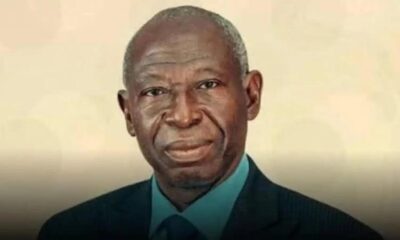
Ex-CEO, Ajaokuta Steel Company, Chief (Prof.) Atanmo, passes on at 86 years
A former Chief Executive Officer (CEO), of the Ajaokuta Steel Company, Ajaokuta, Kogi Statae, High Chief (Prof.) Philip Nwabueze Chinedu Atanmo, has passed on, to the great beyond, at the age of 86 years.
Prof. Atanmo, who was appointed in 1993 by the defunct General Ibrahim Badamasi Babangida administration, had equally served as the General-Manager (Technical Services) at the Delta Steel Company, Aladja, and was appointed as Pro-Chancellor, Federal University of Agriculture, Makurdi, Benue State, adjunct professor at the Anambra State University, where he served as the Dean Faculty of Engineering, and subsequently, a lecturer Faculty of Engineering, Chukwuemeka Odumegwu Ojukwu University, in Anambra State.
According to his son, Engr. Chinedu Atanmo (jnr), the late sage, attended St. Philip Primary School, Akpogwe, Ogidi, Anambra State and Denis Memorial Grammar School, Onitsha, before proceeding to the University of Connecticut, United States of America, where he obtained a Bachelor and Masters Degrees in Electrical and Metallurgical Engineering with Distinction, before obtaining a Doctor of Philosophy (PhD) in Metallurgical Engineering from Case Western University, Cleveland, Ohio, USA.
A prolific engineer and scholar, Prof. Atanmo held three (3) US patents and authored over 100 technical publications in his lifetime.
After his retirement from the Ajaokuta Steel Company, he was elected a member of the Constitutional Conference in 1997, during the late General Sani Abacha’s administration.
He was later to become the Vie-President of Ohanaeze Ndigbo, Anambra State Chapter, before he passed on.
He reportedly died 21st March, 2026 of Cardio-Plumunary Arrest, according to a death certificate issued by Dame Irene Memorial Hospital, Irefi Oraifite, Anambra State.

He will be buried on Saturday, 6th day of June, 2026 in his country home, opposite St. Philip’s Anglican Church, Akpakogwe, Ogidi, Idemili-North Local Government Area, Anambra State.

News
‘Why are we still borrowing after subsidy removal?’ – Sanusi queries FG
Emir of Kano, Muhammadu Sanusi II, has raised fresh concerns over the Federal Government’s growing debt profile, questioning the rationale for continued borrowing despite the removal of petrol subsidy.
Speaking during an interview published by News Central TV on Friday, the former Governor of the Central Bank of Nigeria said key reforms such as subsidy removal and exchange rate liberalisation were necessary, but warned that poor sequencing and weak fiscal discipline could undermine their benefits.
Sanusi criticised Nigeria’s longstanding dependence on foreign refining, describing it as a structural flaw that persisted while local refining capacity remained underutilised.
“I have always said the subsidy regime was unsustainable. We cannot continue supporting foreign refineries. We’re an oil-producing country. Keeping refineries open abroad while we’re not doing our own,” Sanusi said.
He, however, welcomed recent progress in domestic refining, noting a shift from heavy importation of petroleum products to export activity.
“Today, we have a situation where we have our own domestic refinery. We’re not importing petroleum products. We’re even exporting to Europe, and this is very good for the economy,” he added.

Despite supporting the reforms in principle, Sanusi questioned the timing and broader policy coordination, suggesting that critical measures may not have been implemented in the right order.
He said, “Artificial exchange rates, especially when you’re printing money, cannot work. There was going to be a devaluation.
“For me, removing subsidy or liberalising exchange rates, these are good interventions. Were they done at the right time? Those are certain questions. Were there other things that should be done that have not been done? These are other issues.”
The former apex bank chief argued that implementing exchange rate liberalisation in a loose monetary environment contributed to the naira’s sharp depreciation.
“It’s not enough to say, oh, they removed subsidy. You had to. When you get to a point where 100% of your revenue goes into debt service, you cannot continue. Where is the money going to come from?
Related News
Nigeria’s reforms are real; without fixing the plumbing, money will keep leaking
Tinubu reform programme: Utomi got it wrong
Rising costs: IMF warns of tough times for Nigerians
“However, if you decide to remove subsidy and liberalise exchange rates in an environment of very loose monetary conditions, before you have tightened money supply, the Naira drops to a bottomless pit. That was a timing issue.”
Sanusi further challenged the government’s continued borrowing, insisting that savings from subsidy removal should translate into fiscal consolidation rather than increased debt.
His remarks come amid reports that the Federal Government has increased its 2026 borrowing plan by ₦11.31 trillion, pushing total projected borrowing to ₦29.20 trillion.
President Bola Tinubu also recently sought Senate approval for a fresh $516 million loan to finance the Sokoto–Badagry Superhighway project.
“We’ve removed the subsidy. We’re now spending it. What we should not see is fiscal consolidation. You cannot remove wastages and continue borrowing. I’ve said this before. You need to see the benefits.
“If you’re not paying the subsidy and you’ve got the money, why are we still borrowing and borrowing? What are we borrowing for?” Sanusi questioned.

News
Chinese Envoy hails Mbah’s investment drive, Enugu’s investment opportunities and environment
…Says Enugu–China direct flight possible in the near future
The Consul General of the People’s Republic of China in Nigeria, Yan Yuqing, has applauded Governor Peter Mbah’s bold economic vision and investor-friendly policies.
Yuqing described Enugu State as a rising hub of “vitality, livability, and opportunity” with strong prospects for deeper China-Nigeria economic cooperation.
The envoy gave the commendation at Government House, Enugu, where she led a delegation of top executives from leading Chinese companies to a high-level meeting with Mbah.

She said the visit underscored growing bilateral engagement between Nigerian and China, which also spotlighted Enugu’s evolving status as a preferred destination for foreign direct investment, FDI.
The Chinese envoy particularly praised Mbah’s strategic focus on infrastructure, technology, and human capital development, noting that the administration’s blueprint aligns with global best practices and emerging investment trends.

“The governor’s vision for Enugu is both inspiring and practical. His commitment to infrastructure, technology, and human capital development provides a solid foundation for sustainable growth. We are confident that Enugu will become a major destination for Chinese investors.”
This was even as she stated that initial doubts as to possibility of a direct flight from Enugu to China had been cleared, having seen Mbah’s bold vision and efforts in positioning Enugu as an economic and aviation hub.

“So, at that time I thought, a straight flight to China, is it possible? But now, especially after our discussion, I think that it is not a dream. It’s a reality. And maybe in the near future, we can realise it,” she said.
According to the Consul General, the relationship between China and Nigeria has continued to strengthen, especially following the elevation of bilateral ties to a comprehensive strategic partnership in 2024, expressing optimism that Enugu would play a significant role in advancing this cooperation.
She also highlighted the presence of major Chinese corporations in Nigeria and indicated China’s willingness to expand collaboration in key sectors including infrastructure, digital economy, vocational education, and cultural exchange.
Yuqing further revealed that discussions were ongoing regarding possible sister-city agreements between Enugu and select Chinese cities, a development expected to foster closer economic and cultural integration.
She expressed delights at the cleanliness of Enugu city, describing it as quite livable.
Addressing the delegation, Mbah reaffirmed that Enugu remains open and ready for international partnerships, particularly with Chinese investors and airlines.
He emphasised that the state had deliberately created a safe, clean, and business-friendly environment capable of supporting large-scale investments.
“We are open to partnerships with Chinese airlines and investors. Enugu is safe, clean, and business-friendly,” the governor said, adding that ongoing reforms were designed to ensure ease of doing business and long-term returns for investors.
He further disclosed that plans were already underway to establish direct international flight routes between Enugu and major Chinese cities, including Guangzhou, as part of broader efforts to deepen trade and economic exchanges.
“With the concessioning of the Akanu Ibiam International Airport and our plan to build a modern cargo terminal, direct flights from Enugu to China are possible within a shorter time. This will significantly enhance trade, logistics, and investment flows,” Mbah stated.
The governor described the New Enugu Smart City as a flagship initiative aimed at redefining urban living and investment standards in Nigeria.
According to him, the project would feature world-class infrastructure, including underground electricity systems, central sewage networks, fiber-optic connectivity, piped water, and gas pipelines.
In a move to further strengthen cultural and economic ties, Mbah proposed the establishment of a Chinatown District in Enugu, assuring the Chinese delegation of government support, including land allocation and policy backing.
“We expect major Chinese companies to site their headquarters here and operate from Enugu. Our relationship with China is warm and expanding, and we want to deepen it through concrete investments,” he said.
The governor also highlighted ongoing collaboration between Chinese firms and the Nigerian government, particularly the role of CCCC in the construction of Enugu Smart City and the CCECC in rail infrastructure development.
Beyond infrastructure, Mbah pointed to successful industrial partnerships already taking root in the state, citing the example of the Haier Group, which partnered with the Enugu State Government to establish manufacturing facility in Enugufor producing digital devices, solar equipment, and household appliances.
According to him, the partnership goes beyond production to include technology transfer and workforce development, with local technicians being trained to take over operations in the near future.
He assured investors of the government’s readiness to continue to de-risk investments and provide the necessary support to ensure profitability and growth.

-
News2 days agoOjukwu was fighter for justice, Man of ideas — Bianca
-
The suspect
The suspectNews3 days agoBoko Haram suspect makes explosive claim, says ‘top soldier’ behind Abuja terror attacks
-
News21 hours ago36 serving military officers to be arraigned for coup plot against President Tinubu
-
News1 day agoNMA suspends President, Bala Audu
-
News1 day agoCorps member beaten to death by Benue vigilantes
-
News1 day agoOAU medical student collapses, dies before final exam
-
News14 hours agoGunmen kill traditional ruler, wife, son, two others in Benue
-
News2 days agoPower Minister Adelabu tenders resignation letter