News
ECOWAS Court dismisses suit seeking creation of 6th South-East State

The ECOWAS Court has dismissed a suit filed by a Non-Governmental Organisation (NGO) against Nigeria over the non-creation of a sixth state in the South-East geopolitical zone, unlike other zones.
The suit was brought by the Incorporated Trustees of the Prince and Princess Charles Offokaja Foundation under suit number ECW/CCJ/APP/32/23.

The NGO argued that Nigeria’s failure to establish a sixth state in the South-East geopolitical zone was discriminatory towards its people and undermined the country’s geopolitical structure.
In delivering judgment, the ECOWAS Court ruled that the creation of states within the Federal Republic of Nigeria falls under the constitutional prerogative of the country.
The court unanimously dismissed the application, emphasising that Nigeria’s decision not to create an additional state in the South-East did not violate its obligations under regional and international human rights instruments.

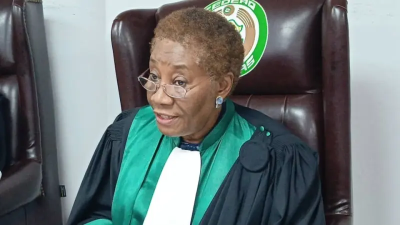
Presiding Judge, Justice Dupe Atoki, further stated that the South-East zone had adequate representation within Nigeria’s governance structure, and there was no evidence of discriminatory intent or effect in the current geopolitical arrangement.
She added that the mere creation of an additional state does not necessarily guarantee developmental outcomes, as the applicant had claimed.
The court also noted that the applicant failed to establish a causal link between the absence of a sixth state and the alleged violations of the right to development.
“The Respondent State has not breached its obligations under Article 19 or Article 22 of the African Charter on Human and Peoples’ Rights, nor under Article 26 of the International Covenant on Civil and Political Rights,” the court stated.
The applicant, registered under Nigerian law, had filed the suit under Article 19 of the African Charter on Human and Peoples’ Rights and Article 26 of the International Covenant on Civil and Political Rights.
The NGO further argued that the alleged imbalance deprived the South-East of developmental benefits, including infrastructure, revenue allocations, and employment opportunities, in violation of Article 22 of the African Charter.
A second applicant, a Switzerland-based non-governmental organisation, was earlier removed from the proceedings due to a lack of jurisdictional basis.
The three-member panel, presided over by Justice Atoki, also included Justice Edward Asante as Judge Rapporteur and Justice Gbéri-Bè Ouattara as a member.
NAN




Ahead of the 2027 general elections, the National Chairman of the All Progressives Congress (APC), Prof. Nentawe Yilwatda, has apologised to aggrieved members over perceived wrongs during the party’s internal primaries, saying the National Working Committee (NWC) takes responsibility for such actions.
Yilwatda, who made the disclosure on Thursday in Ibadan during the launch of the APC governorship candidate campaign office in Ibadan, appealed to members who felt hurt, injured, prevented or excluded in any form to forgive the party and remain united ahead of the 2027 general elections.
He said the responsibility extended beyond Oyo State, stressing that the committee that conducted the party’s primaries was constituted by the national leadership and therefore, any mistake committed by it amounted to a mistake by the party.
“This is not for Oyo State alone. Anywhere anybody made a mistake in a state, it is our mistake because the committee was set up by us and they are representing us.
“If anybody is hurt, if anybody is injured, if anybody is prevented or excluded in any form or the other, we take responsibility. On TV, before Nigerians, we take responsibility of all that has happened. I appeal to everybody that we are sorry,” he said.
The APC national chairman urged members at polling units, wards and local government areas across the country to regard the matter as an internal family affair.
Yilwatda assured that the party was taking Oyo State seriously because of its strategic importance and large voting population, second only to Lagos.
Speaking, the APC governorship candidate in Oyo State, Senator Sharafadeen Alli, commended the party’s National Chairman, Prof. Nentawe Yilwatda, for fulfilling his promises to the state within two days.
Alli expressed appreciation to Yilwatda for honouring the invitation to meet with governorship aspirants and stakeholders, saying the achievements recorded within the period surpassed what the stakeholders had been able to accomplish.
He said the promises made when the national chairman invited the aspirants had now been fulfilled.
“We cannot thank you enough for what you have come to do. What you have achieved successfully in two days, we have not been able to accomplish,” Alli said.
He assured the national chairman that the party in Oyo would continue to do the needful.
Earlier, mammoth crowd of members and supporters of the All Progressives Congress (APC) gathered in Ibadan on Thursday as the party’s national chairman, Professor Nentawe Yilwatda, officially inaugurated the party’s governorship campaign office in Dandaru, along the Total Garden-Mokola Road, Ibadan.
The inauguration formed part of activities marking the APC National Chairman’s two-day official visit to Oyo State, which commenced on Wednesday, August 19, 2026.
Party members from across the 33 local government areas of the state converged on the venue to witness the official inauguration of the campaign office and welcome the national chairman.
The campaign office will serve as the secretariat of the APC governorship candidate in Oyo State, Senator Sharafadeen Alli.
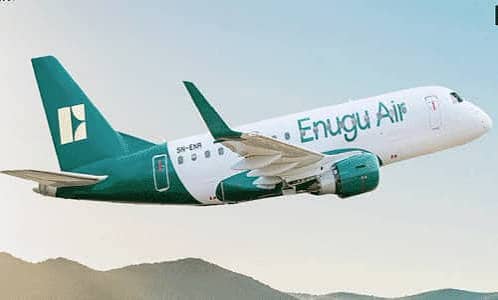
The African Airlines Association (AFRAA) has admitted Enugu Air as Member, extending the Association’s membership base in Nigeria’s fast-growing domestic aviation market and reaffirming AFRAA’s commitment to supporting the continued development of African carriers across the continent.
This was announced by AFRAA in Nairobi on Wednesday, making Enugu Air the 50th Member of the association, joining the AFRAA airline fraternity, collectively representing more than 85 per cent of total international traffic carried by African airlines.
Speaking on the occasion, AFRAA Secretary General, Mr. Abdérahmane Berthé, said, “We are delighted to welcome Enugu Air into the AFRAA fraternity.
“As a state-backed carrier serving Nigeria’s rapidly expanding domestic market, Enugu Air represents the kind of homegrown investment that is vital to building resilient air connectivity across our continent.
“We look forward to supporting the airline through the IOSA certification process and to its continued growth within the AFRAA membership, as we work together to advance the cause of unified African skies.”
Reacting to the development, the CEO of Enugu, Capt Tolu Ita, described the admission into AFRAA as a major milestone in the airline’s short history.
“We are honoured to join the AFRAA fraternity. This membership underscores Enugu Air’s commitment to safe, reliable, and affordable air travel for Nigerians while contributing to the vision of a unified African aviation market.
“We look forward to collaborating with fellow AFRAA members and leveraging the association’s support as we grow our network and pursue IOSA certification,” Tolu stated.
Founded on July 7, 2025, Enugu Air commenced commercial operations with a fleet of Embraer E170/E190/E195 aircraft.
The airline, which has its headquarters in Enugu and operates from the Akanu Ibiam International Airport, currently serves nine domestic destinations including Enugu, Abuja, Lagos, Port Harcourt, Kano and Benin City.
As part of the airline’s growth strategy, Enugu Air plans to expand further across Nigeria and, in subsequent phases, to launch regional and international routes across Africa, Europe, and beyond.
As part of its growth strategy, Enugu Air plans to expand further across Nigeria and, in subsequent phases, to launch regional and international routes across Africa, Europe, and beyond.
The admission of Enugu Air aligns with AFRAA’s strategic priorities and strengthens the voice of the association. Nigeria, as Africa’s most populous nation and one of its fastest-growing economies, remains central to the realization of a truly integrated African aviation market.
Meanwhile, founded in Accra, Ghana, in April 1968, and headquartered in Nairobi, Kenya, AFRAA’s mission is to promote, serve African Airlines and champion Africa’s aviation industry.
The association envisions a sustainable, interconnected and affordable air transport industry in Africa, where African airlines become key players and drivers of African economic development.
AFRAA membership cuts across the entire continent and includes all the major intercontinental African operators.
The association’s members represent over 85% of total international traffic carried by African airlines.
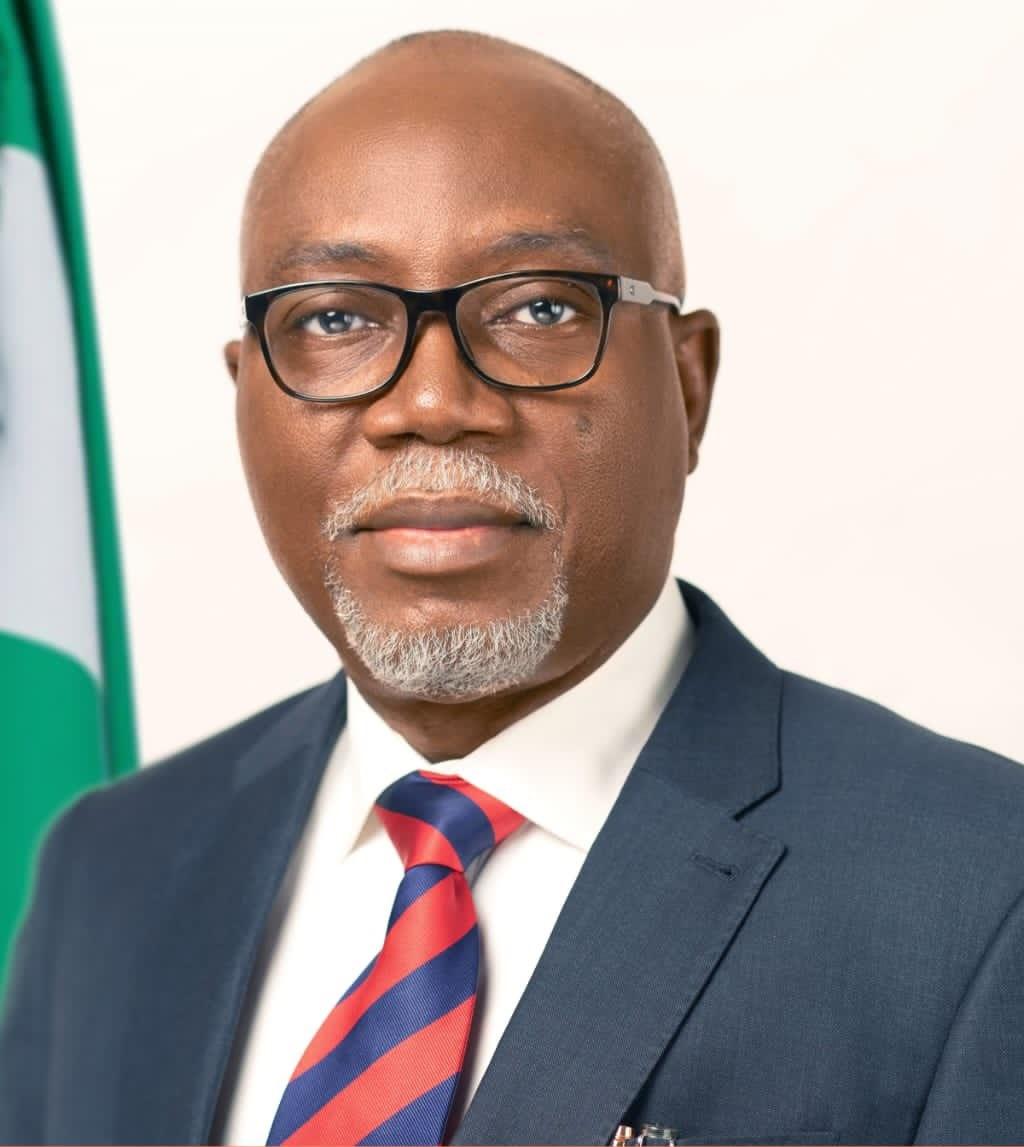
Ondo State Governor, Lucky Aiyedatiwa, has approved a fresh round of appointments involving a commissioner, three Special Advisers and 1,000 other aides.
The appointments comprise 90 Senior Special Assistants and 910 Special Assistants, with the governor saying the move is intended to reinforce his administration and improve its reach across the state.
Erelu Taibat Yemi Oloruntoba, from Akoko North-West Local Government Area, has been nominated as Commissioner for Special Duties. Her nomination has been transmitted to the state House of Assembly for consideration and confirmation.
The governor also appointed Hon. Abimbola Fajolu as Special Adviser on Environment, Chief Ade Adeniyi as Special Adviser on Rural and Community Development, and Mr Muyiwa Ogunyemi as Special Adviser on Transport.
Among those named as Senior Special Assistants are Erelu Toyin Ogungbure, Women Mobilisation (South); Bidemi Obayangbon, Forestry; Gboluge Olufunmi Alex, Community Engagement (South); Hon. Akin Adeniyi, Community Engagement (Central); and Obayan Theophilus Ayodeji, Community Engagement (North).
Others include Kelvin Solomon, Students Affairs; Adeolu Iwakun, Volunteer Services; Samson Job Bazuaye, Oil and Gas; Fade Ojamomi, Youth Empowerment and Job Creation; Sam Adepoju, Public Engagement; and Alhaji Samad Orijeminiyi, Scholarship.
Also appointed are Victor Omodara, Grassroots Mobilisation; Abayomi Adefolalu, Photography; and Alhaji Abdukadiri Adenoyi, Prince Nzuoma Egbulefu and Alhaji Garba Goni, all for Non-Indigenes.
-
 News2 days ago
BREAKING: Gunmen attack Adeleke’s convoy in Osogbo shortly after receiving Certificate of Return
-
International2 days ago
Canada invites 1,000 candidates to apply for permanent residence
-
Uncategorized2 days ago
2027: Obi unfolds agenda as campaigns begin
-
News2 days ago
Lagos shuts churches over noise pollution
-
News2 days ago
Two shot as police attempt to arrest suspects in Anambra
-
News2 days ago
Why I won’t apologise to Okpebholo — Davido
-
News2 days ago
Even if Tinubu appoints Seyi as INEC chairman, he’ll be defeated in 2027 — Dalung
-
News2 days ago
Access Bank asks court to recover N1.3bn stolen by Yahoo Boys