News
Inside story of how military vehicle fell into the hands of Zamfara bandits


Credible local security sources in the North-Western state have informed PRNigeria that the terrorists did not forcefully seize the military vehicle.
Instead, the sources explained that the APC became stuck in a marshy area while troops responded to a distress call after a failed high-level reconciliatory meeting between bandits and locals in Zurmi. The troops were forced to abandon the vehicle temporarily and return to their base for reinforcement and a suitable vehicle to tow the APC.

Recall that an online amateur video showed Bello Turji and his gang celebrating their recent capture of an Armoured Personnel Carrier (APC) belonging to the Nigerian Army. The footage also displayed the gang boasting about their acquisition of a significant cache of ammunition.
However, one of the sources, with substantial evidence to support his assertion, narrated to PRNigeria how the military vehicle got into the hands of Turji’s bandits.
He said: “This is what happened. The Nigerian military was alerted by a distress call about a high-level reconciliatory meeting between Balleri banditry gang and some Zamfara locals in the Zurmi axis. But by the time the Baleri boys arrived at the meeting venue, they were attacked by another group also invited to the truce meeting.

“The meeting was called to resolve the differences between the locals and the bandits, similar to the same truce working in the Shinkafi area where there is relatively peaceful coexistence.
“So, it was in the process that troops swung into action. Unfortunately, the APC vehicle they boarded to the area became stuck in a marshy area. As a result, they could not move. Therefore, they had to temporarily abandon the military vehicle, return to their base for adequate reinforcement, and bring in another truck that could tow the APC.
“So, the military APC was not captured by Bello Turji and his terrorists. They only took over the vehicle after noticing that troops had withdrawn for formidable reinforcement to avoid being ambushed. You know it would be foolhardy for the troops to remain with their stranded vehicle. Their adversaries could easily launch a deadly ambush attack. So, the reports that Bello Turji captured a military vehicle in Zamfara yesterday were baseless,” the source said.
PRNigeria gathered that the incident occurred on Thursday evening.



By Tony Edike
A life stitched together with music, courage, generosity and the enduring lesson that love is worth more than wealth
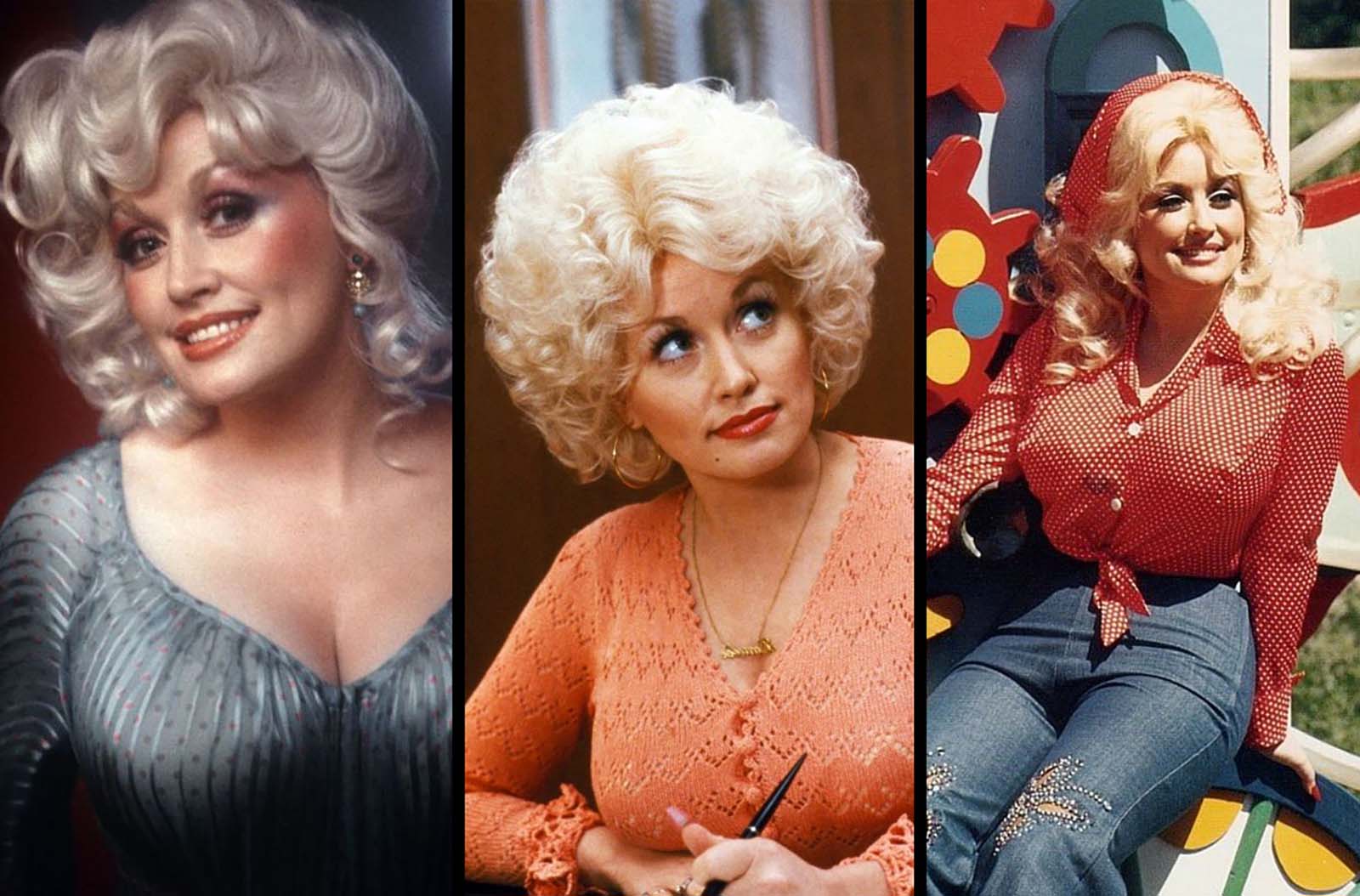
Dolly Parton came from a place where there was not much money, but there was music, faith, family and love.
She left that place and became one of the most recognisable women in the world.
Yet, somehow, she never truly left it behind.
Dolly Parton, the country music legend, songwriter, actor, entrepreneur and philanthropist, died on 25 August 2026 at the age of 80 after a brief battle with cancer. Her death brought an outpouring of grief from admirers, fellow artists and generations of people whose lives had been touched by her music and generosity.
But perhaps the best way to understand Dolly was not through the rhinestones, the fame, the awards or the fortune.
Perhaps it was through a coat.
A simple coat made by her mother.
In “Coat of Many Colors,” Dolly transformed a childhood memory into one of the most enduring lessons in popular music. Her mother, unable to afford an expensive coat, stitched together scraps of fabric to make one for her daughter. At school, the little girl was mocked because of what she wore.
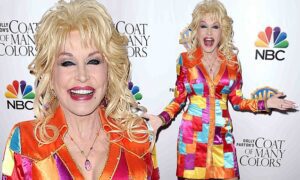
Dolly Parton wearing her Coat of Many Colours
But Dolly did not remember that coat as a symbol of shame.
She remembered it as a symbol of love.
Her mother had made it for her.
And that distinction says almost everything about Dolly Parton.
The world saw rags.
Dolly saw love.
The world saw poverty.
Dolly saw the richness of having a mother who cared enough to make something with her own hands.
The world saw something to laugh at.
Dolly found a story worth singing.
That was her extraordinary gift: the ability to take the ordinary, the painful and the humble and turn it into something beautiful.
The lesson in the coat
There is a lesson in that song that reaches far beyond country music.
It tells us not to measure people by what they wear, what they own, where they come from or how much money they have.
It teaches us that humiliation does not have to become defeat.
Dolly Parton
It teaches us that our beginnings do not have to determine our destination.
And, perhaps most importantly, it teaches us to recognise the value of the people who loved us when we had nothing to offer them.
Dolly never appeared ashamed of her humble beginnings. Instead, she carried them with her.
She remembered the mountains of Tennessee. She remembered her family. She remembered poverty. She remembered her mother’s hands.
And she turned those memories into songs that travelled around the world.
That is why her success was never simply about becoming famous.
It was about becoming something bigger than fame.
From the mountains to the world
Born into a large, poor family in rural Tennessee, Dolly Parton rose from circumstances that could easily have limited her ambitions. Instead, she became a prolific songwriter whose catalogue stretched into the thousands, a country music pioneer whose songs crossed genre and national boundaries, an actor whose performances became part of popular culture, and a formidable businesswoman.
Songs such as “Jolene,” “9 to 5” and “I Will Always Love You” became cultural landmarks.
But numbers alone cannot explain Dolly Parton’s impact.
She did something more difficult.
She made people feel understood.
She could sing about heartbreak without bitterness, ambition without arrogance and poverty without shame.
She could make millions laugh while reminding them of the struggles that millions quietly endure.
And beneath the wigs, sequins, humour and larger-than-life personality was a woman who understood the dignity of ordinary people.
She gave her success away
Dolly Parton’s generosity was not an accessory to her fame. It was part of her identity.

Dolly …gave her success away
Through the Dollywood Foundation and its Imagination Library, she helped put books into the hands of children around the world. The programme has distributed more than 300 million books, reflecting her lifelong belief in the transforming power of reading and education.
She also supported healthcare, education, disaster relief and medical research, including a $1 million donation toward COVID-19 vaccine research.
In that sense, the little girl in the coat of many colors never disappeared.
She simply grew up and acquired the means to make sure that other children had opportunities she had once lacked.
Dolly knew what it meant to have little.
And when she had much, she remembered.
That may be one of the greatest measures of a person’s character.
A legacy beyond music
Dolly Parton’s death leaves a remarkable space in American culture and in the wider world.
She was a country star, but she belonged to more than country music.
She was an actor, but her influence reached beyond film.
She was a businesswoman, but her greatest enterprise may have been the lives she changed.
She was a philanthropist, but she never seemed to regard generosity as a performance.
She was Dolly.
Funny. Glamorous. Sharp. Warm. Ambitious. Unapologetically herself.
And, beneath it all, deeply connected to the people and places that made her.
Her passing is therefore not simply the death of a celebrity.
It is the end of a remarkable human story.
A story that began in poverty and travelled through music to the whole world.
A story about a woman who refused to be defined by what she did not have.
A story about someone who understood that success is most meaningful when it becomes an opportunity to lift others.
The coat remains
In the end, perhaps Dolly Parton’s most important message was never complicated.
Love your people.
Remember where you came from.
Do not be ashamed of humble beginnings.
Do not measure human worth by possessions.
And when life gives you the opportunity to help someone else, do it.
The coat her mother made from scraps could easily have been remembered as an emblem of poverty.
Instead, Dolly turned it into an emblem of love.
She took something the world might have considered worthless and made it priceless.
Perhaps that is what she did with her entire life.
She took humble beginnings and made them beautiful.
She took pain and made music.
She took success and turned it into service.
She took her story and gave it to the world.
Dolly Parton has left the stage, but the music remains.
The books remain.
The kindness remains.
The lessons remain.
And somewhere, in the hearts of millions who heard her sing about a little girl wearing a coat her mother made for her, the colours remain bright.
A coat of many colors.
A life stitched together with love.
A legacy that will not wear out.
May God grant the soul of Dolly Parton eternal peace.
• Edike is Publisher/CEO, The Advocate Newspaper Nigeria
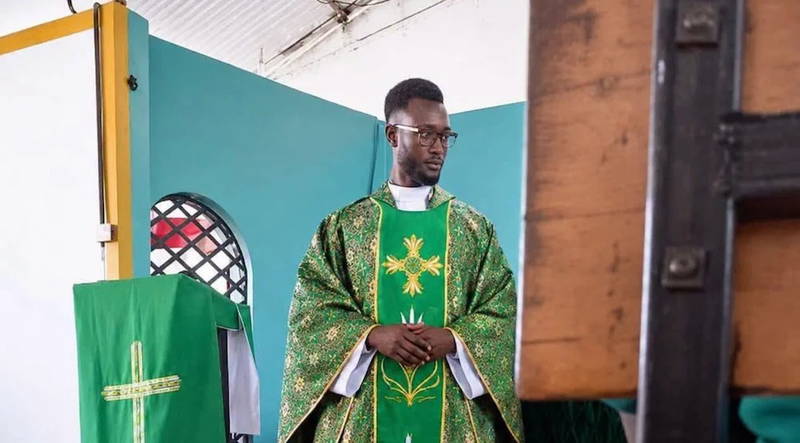
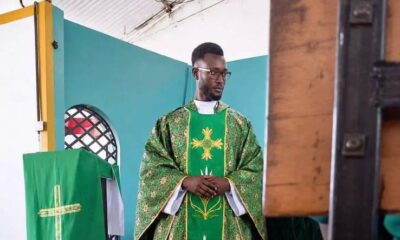
A married father of two has been exposed in Kenya for allegedly posing as a Catholic priest and conducting religious activities in several parishes in Turkana County.
The man, identified as Jones Bogonko Onchonga, reportedly gained access to the Catholic Diocese of Lodwar by allegedly presenting forged church documents to support his claim of being an ordained priest.
According to Kenyan publication Tuko, Onchonga reportedly celebrated Mass and took part in other religious activities at various Catholic worship centres, including St Augustine Cathedral in Kalokol, St Thomas Chapel and St Mary’s Lodaraja.
His alleged impersonation came to light after photographs surfaced showing him celebrating Mass alongside the Bishop of Lodwar, Rt. Rev. John Mbinda, C.S.Sp.
The discovery reportedly prompted concern among members of the Catholic community, leading the Diocese of Lodwar to clarify his status.
In a statement signed by Bishop Mbinda, the Diocese distanced itself from Onchonga and stated that he has no priestly authority or official position within the Catholic Church.
The Diocese also cautioned parishioners and members of the public against allowing him to perform priestly or other religious duties.
Onchonga has been charged with identity theft under Article 382 of Kenya’s Penal Code, an offence that carries a possible prison term of up to three years upon conviction.
He initially pleaded guilty to the impersonation charge when he appeared before Chief Magistrate Evanson Ngigi on August 14.
However, he later changed his plea to not guilty when he appeared before Magistrate Michael Lokitam on August 17.
According to the charge sheet, Onchonga allegedly posed as a duly ordained Catholic priest between July 31 and August 12 in Turkana Central Sub-County.
He is accused of falsely presenting himself to Bishop Mbinda and officials of the Catholic Diocese of Lodwar as a priest authorised to hold church meetings a and administer the sacraments.
He remains in custody after failing to meet the bail terms set by the court. The conditions include a KSh100,000 ($773.10) bond with a surety or KSh50,000 ($386.25) cash bail.
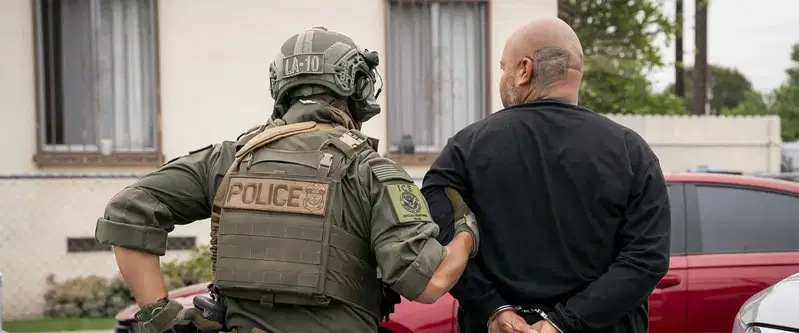
The United States Department of Homeland Security has added 10 Nigerians to its “Worst of the Worst” register, a database highlighting immigrants arrested by Immigration and Customs Enforcement over alleged criminal offences.
The latest names were published on the official DHS website and include individuals linked to cases involving fraud, identity theft, drug offences, assault, conspiracy and offences involving children.
The 10 Nigerians listed in the latest update are:
Temitope Bashua — Wire fraud, identity theft and fraud — Allenwood, Pennsylvania
Ojehoro Lewis — Cruelty towards a child — Conroe, Texas
Osemudiamen Kingsley Oziegbe — Wire fraud — Louisville, Kentucky
Daniel Oworen — Dangerous drugs — Conroe, Texas
Raymond H. Ekevwo — Wire fraud — Oxford, Wisconsin
Franklin Dikeocha — Sex offence against a child – fondling — Dallas, Texas
Johnson Ogunlana — Fraud and identity theft — White Deer, Pennsylvania
Chukwuemeka Okorocha — Wire fraud, dangerous drugs, possession of a weapon and aggravated assault involving a non-family gun — Allenwood, Pennsylvania
Tunde Korede — Conspiracy — Allenwood, Pennsylvania
Chukwuemeka Chinye — Larceny from a banking-type institution, fraud, larceny, identity theft and conspiracy — Pollock, Louisiana
DHS said the register was established to draw attention to immigrants it describes as the “worst of worst criminal aliens” arrested by ICE.
“Every day, the patriots of ICE are working to target the worst of the worst criminal illegal aliens from our country. Just yesterday, ICE arrested murderers, pedophiles, kidnappers, and other violent criminals to make America safe again,” said Secretary of Homeland Security Markwayne Mullin.
“Under President Trump’s leadership, there will be no safe haven for illegal aliens, including in sanctuary cities which put illegal aliens over their own citizens. We will never apologize for arresting and deporting illegal aliens, because that’s how we protect American lives.”
The department said the latest immigration enforcement actions were part of the Trump administration’s deportation policy.
“Under DHS leadership, the hardworking men and women of DHS and ICE are fulfilling President Trump’s promise and carrying out mass deportations – starting with the worst of the worst – including the illegal aliens you see here,” the department said.
The latest publication comes after DHS released another list in July containing 124 Nigerians arrested by ICE and identified on the same register.
The July list featured Nigerians associated with a range of criminal offences, although the department did not provide specific deportation dates for those individuals
-
 News2 days ago
Gunmen abduct 15 NYSC Corps members in Kogi
-
News1 day ago
US publishes fresh names, photos of 10 Nigerians to be deported
-
News3 days ago
BREAKING: NLC General Secretary, Ugboaja, is dead
-
News1 day ago
FG orders closure of first River Niger bridge for one week
-
News2 days ago
Gunmen kill APC chairman in Kogi, abduct another
-
News3 days ago
Tinubu meets APC Governors at Presidential Villa
-
News2 days ago
How doctors unlawfully removed kidneys of over 10 youths — VDM’s Lawyer reveals
-
News13 hours ago
Married father of two exposed for posing as Catholic priest