News
EFCC rescued Nigeria from collapse – Ojogbane, Ex-Top Prosecutor

• says EFCC remains most fairest organisation in Nigeria
An ex-top prosecutor of the Economic Financial Crimes Commission (EFCC) and a fellow of the National Institute for Security Studies, Mr Jonson Ojogbane has said EFCC remains a key stabilizer without which Nigeria would have long collapsed.
Speaking in Abuja, the Principal Partner of Signature Law Firm, who recently retired from the services of EFCC after 20 years, maintained that despite the many allegations levelled against the Commission, “the system would have collapsed by now” if EFCC was not on the scene.
“As much as I do not want to act as the spokesperson of EFCC, I can tell you that without the EFCC when it came on board in 2003, Nigeria would have failed by now. There was no agency like the EFCC.
“Before that time, everything was done with impunity. People did whatever they wanted. the only organisation that is feared in Nigeria up till tomorrow is EFCC.
“People always say the government use EFCC as whipping dogs but the question we should ask is, if the government used them to fight opponents as has been alleged, did the opponent do anything wrong?
“Did they steal money? Were they corrupt? Were they laundering money? Should they be left because they’re opponents of the government?

“I rose from the middle of EFFCC to the top and my experience has been that EFCC is one of the fairest organisations in Nigeria. We have problems no doubt but let’s not forget that many notable Nigerians have been convicted by the EFCC.
“ A lot of Nigerians don’t do their research before they start criticising. Governors have gone to prison and spent time because of our work.
“Recently the Supreme Court affirmed the conviction of former Bank PHB Boss, Francis Atuche. We prosecuted the case all the way.
“The High Court gave him 12 years and his partner got 10 years. The Court of Appeal affirmed the decision and reduced their sentence from 12 to 6 and 10 to 8. The Supreme Court has affirmed this decision.
“The problem is that EFCC doesn’t even speak of its many successes. Without EFCC as I said before the system would have collapsed by now.
“Remove EFCC from the scene and there would be no government. There will be nothing left. The system before 2003 was completely compromised beyond description.
“I put my own life out there, in the last 20 years, and I can’t regret a single day.
“Before EFCC came on board, Nigeria was already being backlisted across countries. People did not want to deal with Nigerians but today it has reduced drastically.
“It was so bad before that fraudsters could bring foreigners to the Central Bank of Nigeria (CBN) and dupe them. They brought Brazilian bankers to CBN, and set up the place.
“Nwude posed as CBN governor inside the CBN building. Nigeria at that time was too compromised. EFCC has done a whole lot.
“We are not there yet and we’re not perfect but every orgnanisation has that. Corruption can never be eliminated but it can be managed.
“The difference between other countries and Nigeria is that when they steal, the money does not go out it remains within. Nigerians steal money and it goes out. The way things were within the circumstances of the Nigerian state was terrible.
“There’s a lot of pressure on the Commission but it’s not giving up. If we leave things to the police and other agencies, it will collapse over our heads. We must all support the EFCC.”



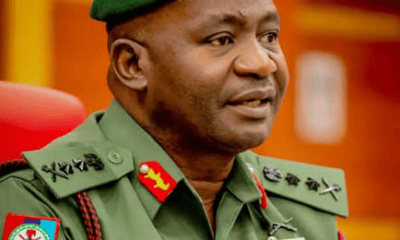






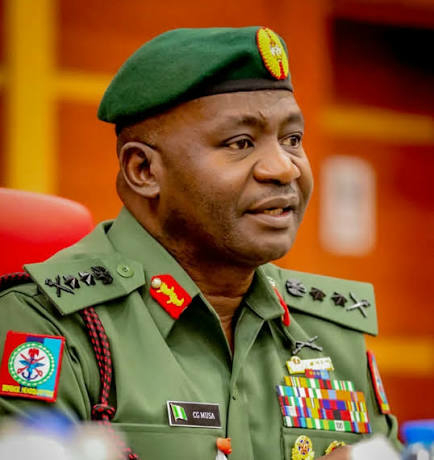
The Minister of Defence, Christopher Musa, has disclosed that the Federal Government increased the minimum monthly salary of Nigerian soldiers from N49,000 to N100,000 as part of ongoing efforts to improve the welfare of military personnel.
Musa made the disclosure during an interview with News Central on Wednesday ahead of the station’s NC Exclusive programme scheduled for Friday.
He described the development as one of the welfare improvements introduced by the current administration for military personnel.
“When they started, a soldier was collecting N49,000 monthly. We tried so hard, now he’s collecting N100,000,” the minister said.
For decades, concerns over poor salaries, inadequate accommodation, delayed benefits and rising living costs have dominated discussions on military welfare.
Musa also dismissed allegations that soldiers were being poorly fed, describing claims circulating on social media as misleading.
Referring to a viral video involving a military officer identified as Justice Crack, he alleged that the footage was deliberately manipulated to create a false impression about the quality of meals served to troops.
“The soldier’s food was okay. There was meat; there was all this. But he told them to pull out those things and make it look as if those things were not there,” he said.
The minister’s remarks come as the Federal Government continues to pursue a mix of welfare reforms, increased security spending and renewed military operations aimed at improving the effectiveness of troops battling insecurity across the country.
But calls persist for greater investment in equipment, intelligence gathering and personnel welfare.
Musa maintained that Nigeria’s defence allocation remains inadequate to meet the enormous demands placed on the Armed Forces.
Responding to a question on whether the current defence budget was sufficient, he replied, “It’s not enough.”
He noted, however, that the government would continue investing in the welfare and operational capacity of the military to enable personnel to respond more effectively to the country’s security challenges.
The minister also advocated tougher punishment for kidnappers, calling for the introduction of the death penalty to discourage the growing wave of abductions across the country.
According to him, existing sanctions have failed to deter perpetrators.
“I think we should do that. There must be deterrence. The laws are soft, and that’s why people take advantage.If they know once you commit an offence, there must be punishment,” he said.
Speaking on the recent abduction of schoolchildren in Oyo State, Musa alleged that the kidnappers were attempting to pressure the military into releasing some of their commanders currently in custody.
Describing the incident as unfortunate, he said the abductors had resorted to using innocent children as bargaining tools.
“It’s a very sad event. Unfortunately, bad things do happen. For whatever reason, they are looking for leverage because we have some of their commanders with us, and they feel taking these kids and holding them to ransom will make us release their commander,” he said.
He further claimed that the kidnappers had threatened to kill the victims should security forces move closer to their hideout.
“They are now threatening that if we come any closer, they’re going to kill all the kids,” the minister added.

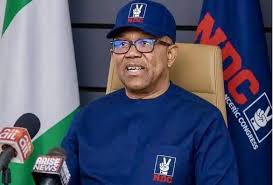
Njiko Igbo Forum, an affiliate of Ohanaeze Ndigbo, has issued a stern warning ahead of the 2027 general elections, cautioning that it will be catastrophic should anything happen to Mr Peter Obi.
It could be recalled that Obi, on Wednesday, raised the alarm that his life was under threat.
The presidential candidate of the Nigeria Democratic Congress, NDC, raised fears that he may not be alive in 2027 to be part of the election.
However, in a statement issued on Thursday, Rev Dr Okechukwu Christopher Obioha, Leader, Njiko Igbo Forum Nigeria, he warned that should anything happen to Obi or he was not in the ballot, the reaction and result would be very catastrophic.
Obioha said the caution was part of the decision taken during an emergency meeting held today, Thursday, in Enugu.
The Forum said, “That we have seen the viral video made by His Excellency, Mr Peter Gregory Obi, speaking on a number of issues, he expressed serious concern that his life is in danger.
“For him to have gone to the extent of saying he might not be alive before the 16th of January 2027, speaks volumes both in our polity and in the country at large.
“We have seen him in the past, spoke about the federal government trying to frustrate and targeting him not to be in the ballot.
“We have also observed over a period of time that the presidency or the federal government led by President Tinubu does not want Peter Obi to be in the ballot.”
While drawing the attention of the Presidency, Nigeria and the world to those allegations, Njiko Igbo Forum declared that “if anything happens to Mr Peter Gregory Obi or finally his name is not in the ballot for the 16th January, 2026 presidential election, the reaction and result will be very catastrophic and may adversely affect the continued unity in diversity of this country Nigeria.”
It further stated that the Igbo had been very quiet, pushed to the wall, segregated against, marked out everywhere, chased about and even tried to take their possessions.
Njiko Igbo Forum cautioned that keeping quiet does not mean the Igbo are cowards.
It said the ruling government should not forget that for any democracy to thrive, there must be a viral opposition in the polity.
“There is no reason, for what we have seen in the process or polity in trailing Peter Obi and going to an extent of chasing him through all the political parties and now wanting to kill him.
“This outcry by Mr Peter Gregory Obi, must not be taken lightly and request as a matter of urgent National importance, that an urgent investigation panel be constituted to verify Mr Peter Obi’s allegations.
“We are strongly stating again that, nothing should happen to Mr Peter Gregory Obi.
“Yes, Chief Awolowo said, before Nigeria he was of the Yoruba Nation. The same way we are saying before Peter Obi is of Nigeria, he is of the Igbo.
“Mr Peter Gregory Obi will live and become the President of the Federal Republic of Nigeria in 2027,” it declared.
The United States of America has announced an updated deportation list featuring 124 Nigerians.
This was disclosed in a statement released on the website of the US Department of Homeland Security (DHS) on Wednesday.
The DHS claimed that these individuals have been placed on what it described as its “worst-of-the-worst” criminal register.
While the names and photos have been made public, the timeline for deportations remains undisclosed.
However, the US immigration authorities explained that the deportations are part of ongoing immigration enforcement, stressing that those listed were convicted of serious crimes, but declined to provide details about the offences or when deportations would take place.
The statement read: “The U.S. Department of Homeland Security is highlighting the worst of worst criminal aliens arrested by the U.S. Immigration and Customs Enforcement (ICE).
“Under DHS leadership, the hardworking men and women of DHS and ICE are fulfilling President Trump’s promise and carrying out mass deportations – starting with the worst of the worst – including the illegal aliens you see here.”
The website then listed: “Sunday Adediora, Sunday Kunkushi, Mkpouto Etukudoh, Marcus Unigwe, Olaniyi Ojikutu, Boluwaji Akingunsoye, Ejike Asiegbunam, Emmanuel Mayegun Adeola, Bamidele Bolatiwa, Ifeanyi Nwaozomudoh, Aderemi Akefe, Solomon Wilfred, Chibundu Anuebunwa, Joshua Ineh, Usman Momoh, Oluwole Odunowo, Bolarinwa Salau, Oriyomi Aloba.”
Others are Oludayo Adeagbo, Olaniyi Akintuyi, Talatu Dada, Olatunde Oladinni, Jelili Qudus, Abayomi Daramola, Toluwani Adebakin, Olamide Jolayemi, Isaiah Okere, Benji Macaulay, Joseph Ogbara, Olusegun Martins, Kingsley Ariegwe, Olugbenga Abass, Oyewole Balogun, Adeyinka Ademokunla, Christian Ogunghide, Christopher Ojuma, Olamide Adedipe, Patrick Onogwu, Olajide Olateru-Olagbegi and Omotayo Akinto.
There are also Kenneth Unanka, Jeremiah Ehis, Oluwafemi Orimolade, Ayibatonye Bienzigha, Uche Diuno, Akinwale Adaramaja, Boluwatife Afolabi, Chinonso Ochie, Olayinka A. Jones, Theophilus Anwana, Aishatu Umaru, Henry Idiagbonya, Okechukwu Okoronkwo, Daro Kosin, Sakiru Ambali, Kamaludeen Giwa, Cyril Odogwu, Ifeanyi Echigeme, Kingsley Ibhadore, Suraj Tairu, Peter Equere, Dasola Abdulraheem, Adewale Aladekoba, and Akeem Adeleke.
Also listed were Bernard Ogie Oretekor, Abiemwense Obanor, Olufemi Olufisayo Olutiola, Chukwuemeka Okorie, Abimbola Esan, Elizabeth Miller, Chima Orji, Adetunji Olofinlade, Abdul Akinsanya, Elizabeth Adeshewo, Dennis Ofuoma, Quazeem Adeyinka, Ifeanyi Okoro, Oluwaseun Kassim, Olumide Bankole Morakinyo, Abraham Ola Osoko, Oluchi Jennifer and Chibuzo Nwaonu.
The latest action is part of the sweeping immigration enforcement measures introduced by the administration of US President Donald Trump after his return to office on January 20, 2025.
On his first day back in office, Trump signed a series of executive orders declaring illegal immigration a national emergency and directing federal agencies to intensify border security and accelerate the removal of undocumented migrants.
One of the orders, titled: “Protecting the American People Against Invasion, instructed immigration authorities to prioritise the arrest and deportation of removable migrants, particularly those considered threats to public safety and national security.”
Defending the policy, the DHS said the administration was delivering on Trump’s campaign promise to carry out mass deportations, beginning with what it described as the “worst of the worst” criminal offenders.
The department said officers of the US Immigration and Customs Enforcement had been directed to intensify operations nationwide against non-citizens convicted of serious crimes.
White House Press Secretary Karoline Leavitt has also defended the crackdown, saying the administration remained committed to enforcing immigration laws and removing undocumented immigrants with criminal records in line with President Trump’s immigration agenda.Executive Branch
Official US immigration data indicate that Guatemala has recorded the highest number of deportees since the renewed crackdown began, followed by Honduras, Mexico and El Salvador, reflecting the administration’s focus on migrants from Latin America.
The US has also expanded deportation flights to countries across Africa, Asia and the Caribbean as enforcement operations continue.
Nigeria has also come under increased scrutiny by the Trump administration. In June, Washington imposed partial visa restrictions on Nigerian citizens, citing concerns over identity management, information sharing, visa overstay rates and security screening.Demographics.
The PUNCH
-
 News2 days ago
Ex-Minister Uche Nnaji set for arraignment as ICPC files six criminal charges over alleged certificate forgery
-
News1 day ago
I might not be alive to contest in 2027 – Peter Obi raises alarm over threats to his life
-
News2 days ago
Enugu Police impound 195 vehicles for Registration and Number Plate violations
-
News3 days ago
DSS releases Nnamdi Kanu’s doctor, Aghaji
-
News3 days ago
Tiktoker, Peller, arraigned in court for threatening and videoing police officers on duty; granted 500k bail
-
News2 days ago
Senate asks FG to scrap Terrorists’ Rehabilitation Programme
-
News3 days ago
PFIPC: Adeyemi’s father arrested as police intensify forgery probe
-
News6 hours ago
US releases identities and photos of 124 Nigerians set for deportation