News
Economic Crisis: Huge job losses as 16 multinationals exit Nigeria

As Nigeria battles an economic crisis sparked by the government’s twin policies of petrol subsidy removal and unification of FX windows, United Kingdom-based Diageo joined about 15 other multinational companies that have exited the country in the past three years.
Diageo is the latest to announce its departure on Tuesday, June 11 when it said it will sell its 58.02% stake in Guinness Nigeria to Tolaram.

Diageo joins others like Kimberly-Clark, manufacturers of Huggies and Kotex brands of diapers; US-based Procter and Gamble (P&G); GlaxoSmithKline (GSK); Unilever and Sanofi-Aventi Nigeria, who are either exiting completely or reducing their exposure in a country facing its worst cost-of-living crisis in decades.
Unilever Nigeria announced its exit from the home care and skin cleansing markets in Nigeria in November 2023, saying it did so “to find a more sustainable and profitable business model.”
Procter & Gamble was the last to announce its exit from the country the same year.

Similar reasons given by these and other companies include high energy costs, currency depreciation, insecurity etc.
The Federal Government itself acknowledged these challenges in an interview granted by Minister of Finance, Wale Edun on Channels Television’s Sunday Politics programme, where he said “lack of a liquid foreign exchange market was the major reason why some multinational companies exited Nigeria,” explaining that the inability of the exiting multinationals to access foreign exchange was a major impediment to their operations in the country.
Weighing-in, the Director-General of Nigeria Employers’ Consultative Association, NECA, Adewale Oyerinde, disclosed that at least 15 multinationals have either divested or partially closed operations in the country in the last three years.
Oyerinde, in his assessment, stated: “Over 15 organisations, with a combined value-chain staff strength of over 20,000 employees, have either divested or partially closed operations,” lamenting that this has “dire consequences not only for organised businesses but also for labour, government revenue and the households; massive job losses across sectors, which would continue to create insecurity challenges”.
Oyerinde added, “When NECA examined the exit of prominent companies like GSK, Sanofi, Procter & Gamble, Nampak, and others, who had been doing business in Nigeria for decades and were huge employers of labour, it was worried about the ripple effect on the broader business ecosystem.
“Within the value chain, numerous enterprises serve as suppliers to these major corporations, and their sustainability is significantly compromised when the primary businesses they cater to face extinction.
“The survival prospects of these secondary businesses are at stake, and their employees are also at risk, as the departure of the main clients could lead to their demise. The crisis within the value chain deserves more attention than it currently receives”.
Other sectoral group leaders and analysts maintain that the continuous exit of multinational firms would dampen Nigeria’s $1trn GDP target of President Bola Tinubu’s administration.
The President had, at the 29th Nigeria Economic Summit in Abuja, told business leaders and Nigerians that Nigeria’s economy can grow to $1 trillion by 2026.
Analysts believe the persistent exit of multinational companies from the country is set to impact negatively on this target.
Data from the National Bureau of Statistics (NBS) revealed that the performance of the GDP in the first quarter of 2024 was driven mainly by the services sector, which recorded a growth of 4.32 per cent and contributed 58.04 per cent to the aggregate GDP, whereas the nominal GDP growth of the manufacturing sector in the first quarter of 2024 was recorded at 8.21 per cent (year-on-year), 9.64 per cent points lower than the figure recorded in the corresponding period of 2023.
Real GDP growth in the manufacturing sector in the first quarter of 2024, on its part, was 1.49 per cent (year-on-year), lower than the same quarter of 2023.
Reacting to this, President of the Manufacturers Association of Nigeria (MAN), Otunba Francis Meshioye said, “MAN expects the government to frontally address insecurity, improve electricity supply, promote fiscal sustainability and ensure policy consistency.
“Among other priorities, the fiscal authority must also lend supportive measures by adequately incentivising the manufacturing sector and other productive sectors.
“This is very important to boost non-oil export earnings in addition to the increase in oil export proceeds occasioned by increased oil production, rising global oil prices and the coming on stream of the Dangote Refinery”.
Director-General of Lagos Chamber of Commerce and Industry (LCCI), Dr. Chinyere Almona, also speaking on the issue, said: “Over the last few months, there has been a consistent increase in exit plans or a reduction in involvement in the Nigerian market by the multinationals, and this trend is worrisome.
“We have seen the likes of Unilever Nigeria, GlaxoSmithKline, and recently now Guinness Nigeria Plc.
“In Nigeria, lingering foreign exchange scarcity, poor power supply, port congestion, multiple taxation, insecurity, and poor infrastructure, among others, have taken a toll on many businesses in the country.”
The chamber recommended that the government should implement measures to stabilise and ensure the availability of foreign exchange for businesses, particularly those operating in dollar-denominated environments, also imploring the government to create a more flexible and transparent foreign exchange policy to address scarcity issues.
“Further, the Chamber urges the government to engage multinational corporations and the business community to understand their challenges and gather input and feedback on policy decisions to collaboratively develop solutions that will forestall the exodus of businesses from Nigeria. The CBN should prioritise the stability of the country’s currency and adopt the right policy mix to ensure price stability,” Almona said.
National President of the Association of Small Business Owners of Nigeria, ASBON, Femi Egbesola, maintained that multinationals are among the companies that contribute largely to the country’s GDP and earnings.
“We cannot be talking of growing our economy when the real investors are leaving. Assuming they are leaving and the indigenous ones are increasing, it would have been a different thing. But that is not the case. You make income as a nation when you have investments and investors,” he said.
However, since the coming of the Tinubu administration, Tinubu and Edun, among others, have been speaking on efforts being put in place towards revamping the economy, encouraging Foreign Direct Investment (FDI) and also making local industries vibrant and competitive.
Whether the assurances of Edun, who, on the Channels Television’s Sunday Politics programme, said, “recent executive orders signed by President Bola Tinubu have improved the investment climate … and also disclosed that tax reform proposals aimed at simplifying doing business for local and foreign manufacturers are being considered as part of an Economic Stabilization Package,” would stem the flow of multinationals exiting the country, only time will tell. (Sunday Vanguard)



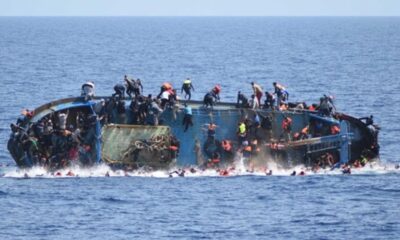







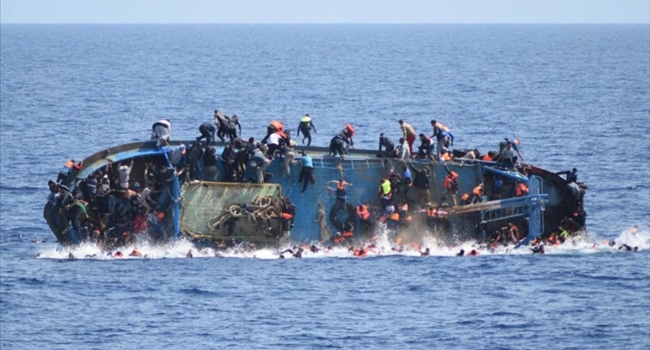
Six mourners are reportedly missing after a boat carrying more 70 people capsized on the Buruku River in Buruku Local Government Area of Benue State on Saturday.
The incident reportedly occurred around 11am as the mourners, who were from neighbouring Gboko Local Government Area, were returning from a burial ceremony.
The Chairman of Buruku Local Government Area, Raymond Zege, confirmed the incident, saying the boat’s engine reportedly developed a fault while it was on the river.
According to him, the occupants struggled to manoeuvre the boat and remain afloat before another boat arrived to rescue them.
He said the boat was overloaded and the occupants reportedly panicked as they encountered water waves, causing the vessel to sink.
Zege said, “There are over 70 people on board but we have not seen about six persons.”
The chairman also expressed concern over compliance with safety measures among commuters using the river crossing, noting that authorities had provided life jackets but enforcement had been difficult because some passengers complained that wearing them was uncomfortable.
Meanwhile, the Commissioner for Marine and Blue Economy, Denis Iyaghigba, said preliminary reports indicated that a strong water current swept the boat into an abandoned barge at a corner of the river, causing it to overturn.
Iyaghigba urged families and members of the public to remain calm while authorities continued efforts to establish the facts and locate those still missing.
He said he had directed boat operators and their union downstream to mobilise and support the ongoing search and rescue operation.
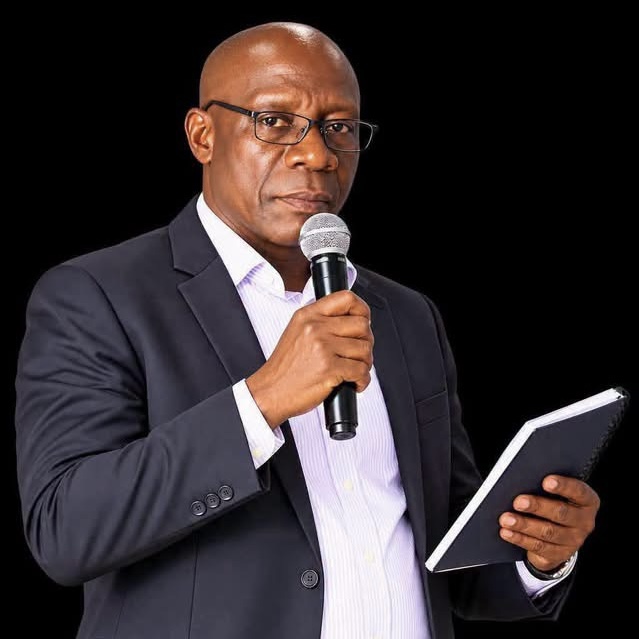
A funeral ceremony in Aleto, Eleme Local Government Area of Rivers State, reportedly turned tragic on Friday after a pastor collapsed and died while delivering a sermon on the certainty of death.
The cleric was identified as Deacon Steve Eyo, the Resident Pastor of the Redeemed Christian Church of God (RCCG), Aleto.
He was preaching before more than 300 mourners when he suddenly collapsed as he was concluding his message.
Eyo’s sermon was titled “The Certainty of Death and Hope Beyond.”
According to eyewitness accounts cited by multiple local news outlets, he began preaching at about 1:10 p.m., speaking about the inevitability of death and urging those present to live their lives with the awareness that nobody knows when death will come.
In illustrating his message, the pastor reportedly compared life to going to the market, explaining that some people leave early while others remain until later, just as some people die young while others live longer.
About 15 minutes into the sermon, at approximately 1:25 p.m., Eyo reportedly collapsed while rounding off his message.
His sudden fall initially confused some mourners, with eyewitnesses saying some thought the pastor was demonstrating the suddenness of death as part of his sermon.
The situation quickly became clear, however, as church ministers, choir members and others rushed to his aid.
People at the scene reportedly prayed for him while individuals with medical knowledge attempted to administer first aid.
He was subsequently taken to a nearby medical facility in the same ambulance that had been hired to convey the remains of the deceased person whose burial was taking place.
He was reportedly confirmed dead at the hospital, after which his remains were taken to a mortuary.
The circumstances surrounding Eyo’s death have not been publicly established in the reports reviewed, and no specific medical cause of death was disclosed.
However, the timing of the incident has left mourners and members of the Aleto community deeply shocked because of the subject of his final sermon.
According to eyewitness accounts, Eyo had urged the congregation to “number your days and prepare, for it can happen anytime” shortly before he collapsed.
The incident transformed what had begun as a solemn farewell for one deceased person into another moment of mourning, as attendees were confronted with the sudden death of the minister delivering the funeral sermon.p pm
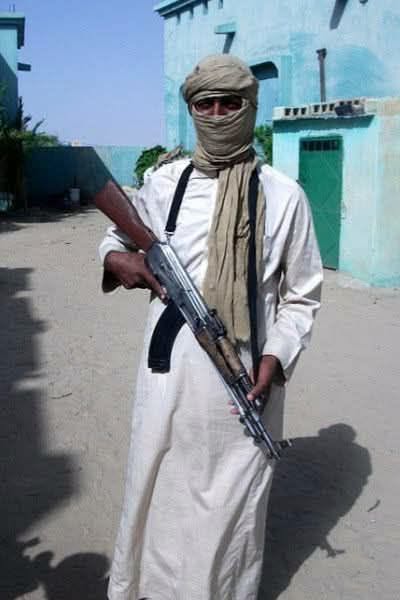
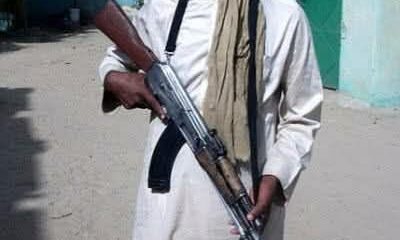
Mahmoud Adam, a suspected militant allegedly linked to deadly attacks on Christian communities in Nigeria’s Middle Belt, has reportedly been arrested in Plateau State.
The arrest was disclosed in an exclusive report published on Friday by the US-based Daily Caller, which identified Adam as an alleged secret leader of the Fulani Ethnic Militia (FEM) operating in Plateau State and surrounding parts of the Middle Belt.
According to the report, Adam was arrested in the early hours of September 12 at his compound in Plateau State, where he was known as a prominent Fulani community leader.
A former US intelligence officer with expertise in Islamist terrorism reportedly confirmed Adam’s alleged role in FEM, while Nigerian journalist Masara Kim of Truth Nigeria was also cited as having reported evidence allegedly linking him to deadly attacks in Plateau State.
The Daily Caller said information from a whistleblower indicated that Adam had previously established contacts with senior Nigerian military figures and had allegedly received high-value gifts from military officers.
The report also alleged that a serving senator had intervened in 2024 to secure Adam’s release following an earlier arrest.
The senator, Shehu Buba, has previously denied allegations of links to criminal networks. Separate reports said photographs showing Buba and Adam together have emerged, prompting calls for further investigation.
The Daily Caller reported that Adam was previously released from custody several days after his 2024 arrest following the alleged intervention.
Photographs cited by the publication reportedly show Adam meeting a Nigerian major general in 2023. According to the account accompanying the photographs, the military officer handed over five motorcycles to Adam and associates as part of efforts described as aimed at restoring peace in Plateau State.
The latest arrest comes amid renewed security concerns in Plateau State, where several communities have experienced deadly attacks in recent weeks. Local reports have linked some of the violence to armed groups, although attribution for individual attacks remains subject to confirmation by security authorities.
Reports of Adam’s arrest have also generated reactions in the United States. US Representative Riley Moore welcomed the reported arrest, describing it as evidence of increased US-Nigeria security cooperation, while the circumstances surrounding the allegations against Adam remain subject to official investigation and clarification.
As of the latest reports, the Nigerian security agencies had not publicly released a detailed statement outlining the charges against Adam or the evidence being relied upon in the investigation.
-
 News17 hours ago
NYSC Abduction: Families panic over N950m ransom demand
-
News1 day ago
I fought to save passengers, says Flydubai pilot
-
News1 day ago
How I killed my girlfriend after HIV dispute — Suspect
-
News2 days ago
NYSC members, other travellers ‘abducted’ along Owerri-Onitsha Expressway
-
News7 hours ago
Tragedy as RCCG pastor collapses, dies during sermon at funeral in Rivers
-
News2 days ago
Police confirm NYSC members among abducted passengers on Owerri-Onitsha Road, rescue 10
-
Features14 hours ago
Mbah Lists Projects Driving Enugu’s Revenue Growth, Says Less Than 13% Comes From Taxation
-
News3 days ago
We can’t erase decades-long problems in 4 years, says Tinubu