• Declares those calling for subsidy return as regressive voices
•Insists Nigeria was in a dark place, like a sick patient when he took over
• Says nation at turning point, foundation now repaired
•Pledges to focus more on lowering cost of living
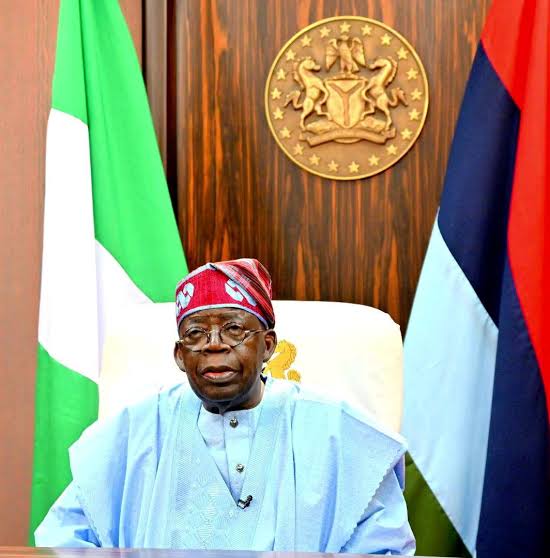
President Bola Tinubu, this morning, acknowledged the hardship faced by millions of Nigerians since the commencement of his administration’s economic reforms, but argued that the problems confronting the country were accumulated over decades and could not be erased within four years.
In his Independence Day address delivered to commemorate the 66th anniversary of the country’s independence, Tinubu said his administration inherited an economy in a deeply distressed state and had been compelled to take difficult decisions to correct what he described as long-standing distortions.

The president, who said Nigeria has now reached a turning point, declared that the period of economic emergency treatment was over and that the country had entered what he described as an “age of prosperity”, following what he said was the repair of the foundations of the economy.
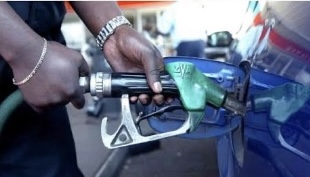
He also took a swipe at those advocating a return to petrol subsidies, describing them as “influential but regressive voices” and warning Nigerians against abandoning the reforms in favour of arrangements that, according to him, had merely concealed the underlying weaknesses of the economy.
“We cannot erase in four years what accumulated over generations. But we can change its course. We can build an economy that steadily lifts people out of poverty while ensuring that those who remain vulnerable are not abandoned along the way,” he emphasised.

The president’s address, titled: “From Reform to Prosperity,” came as Nigerians mark 66 years of independence today, amid continuing concerns over the cost of living, food prices, jobs and household purchasing power.
Since Tinubu assumed office in May 2023, the cost of living has risen sharply, with the removal of petrol subsidy being one of the most immediate shocks to households.
The product, which sold for about N195 per litre when he took office, has risen to around N1,500 per litre, representing an increase of more than 650 per cent.
Besides, the naira has suffered a steep depreciation under the administration’s foreign-exchange reforms. The dollar, which traded at about N460 around the time Tinubu assumed office, subsequently rose to around N1,500, significantly increasing the cost of imported goods, raw materials, medicines, machinery, school fees and other dollar-denominated expenses.
In the same vein, transportation costs have surged, while electricity has added another layer to the burden.
In April 2024, the federal government approved an increase in the Band A electricity tariff from about N68 to N225 per kilowatt-hour, an increase of more than 200 per cent for affected customers.
But looking back at Nigeria’s post-independence journey, Tinubu said the country had endured war, military rule, economic crises, insecurity and political upheaval, but had survived because of the resilience and determination of its people.
He said the promise of independence had always extended beyond the raising of the national flag, stressing that the founding generation had sought a country in which Nigerians would have the freedom to shape their destiny and enjoy opportunity, dignity and a better life.
According to him, the promise of Nigeria had for too long been undermined by policy choices that postponed difficult decisions and allowed economic distortions to deepen.
“For too long, the promise of Nigeria was undermined by choices that postponed difficult decisions and allowed deep economic distortions to grow.
“By 2023, poverty was rising, and hope was nearly gone. The country’s situation was darker than ever. We had no choice but to act,” he stressed.
Using the analogy of a cancer patient, Tinubu said his administration inherited a country that required painful but necessary treatment rather than temporary relief.
He explained: “Nigeria was like a sick patient who receives the terrible news that he has cancer. His doctor explains that the treatment will be difficult and painful, but that it offers a strong prospect of recovery.
“The patient has a choice. He can begin treatment, endure its discomfort and fight the disease. Or he can ask only for morphine, dull the pain and leave the cancer to spread.
“For too long, Nigeria’s leaders chose morphine while praying for a miracle that never came. They focused on symptoms while allowing the disease to take hold deep within the fabric of our society.
“We spent enormous sums sustaining inefficient arrangements that were never intended to last. We hid from difficult truths and passed the consequences from one generation to the next.”
Tinubu said his administration therefore chose to confront the underlying problems rather than continue with policies that merely softened their immediate consequences.
According to him, when his administration assumed office, it resolved to do things differently, choosing to excise the cancer that has plagued the nation for too long.
“The reforms that followed were difficult. The side effects were real. Yet, we must never confuse the medicine with the disease. Our reforms did not create the weaknesses in our economy. They confronted them,” the president pointed out.
Tinubu also threw jabs at those calling for a return to subsidy arrangements, arguing that the country could not afford to reverse the changes introduced by his administration.
“Now, as certain influential but regressive voices would have us abandon the treatment and return ourselves to the abuse of addictive subsidies, we must resist their siren song. We must remember why we began this journey and how far we have already come,” he said.
Tinubu, who assumed office in May 2023, said the reforms had begun to produce measurable improvements in the economy, arguing that the country is now in a stronger position to pursue broad-based prosperity.
“Three and a half years later, the evidence that Nigeria’s economic outlook has improved is undeniable. Our economy has grown by over 4 per cent this year. Both oil and non-oil sectors have contributed to the renewed period of stable growth.
“Oil theft is down. Inflation has fallen substantially from its peak. Our foreign reserves have been rebuilt, our foreign exchange market has stabilised, and in 2025 this country recorded its highest revenue from non-oil exports in its history, exceeding $6 billion. This is real money being made by real Nigerian businesses,” he maintained.
He said the changes had also attracted the attention of international observers, multilateral institutions and investors, insisting that the private sector was already responding to what he described as improved economic stability and resilience.
“My fellow Nigerians, we have reached a turning point. The emergency treatment is over. The foundation has been repaired. The central economic task before us has changed. For three years, our overriding purpose was to correct our nation’s course. Now, our purpose is simple: shared and widespread prosperity,” he stated.
The president said the next phase of his administration would focus less on correcting macroeconomic distortions and more on lowering the cost of living, expanding production, creating jobs and increasing opportunities for Nigerians.
He explained that prosperity, in his view, should not be measured merely by the size of the economy or headline economic statistics, but by the effect of economic growth on households and businesses.
“When I speak of prosperity, I do not speak merely of a larger economy, abstract numbers or better statistics. I mean something much more personal. I mean a Nigeria in which the farmer can cultivate his land safely, produce more at lower cost, and earn a decent return for his labour.
“A Nigeria in which factories have reliable power, businesses can obtain credit, and young people can find productive work. A Nigeria in which food and transportation are affordable, education is within reach, and hard-working families can look towards the future with confidence. This is the promise we must now fulfil,” he explained.
On the immediate challenge of the rising cost of living, Tinubu said the administration would concentrate on reducing the cost of production and transportation, arguing that lower costs across the economy would eventually translate into cheaper goods for consumers.
“Our priority is to bring down the cost of living. We will achieve this by lowering the cost of producing and moving the things Nigerians consume,” he said.
He listed mechanised irrigation, dry-season farming, access to seeds and fertiliser, agricultural mechanisation, storage and transportation among the measures being pursued to increase food production and reduce post-harvest losses.
He added that investments in roads, railways and ports were intended to connect farms and factories more efficiently to markets.
“Our logic is simple. When a farmer produces more cheaply, when fewer crops are lost between the farm and the market, when a manufacturer spends less on electricity, when a truck reaches its destination faster, and when the business environment fosters fair competition, all those savings will ultimately find their way into the price of goods in the market,” he said.
The president also placed job creation and industrialisation at the centre of the next phase of his economic programme, particularly against the backdrop of Nigeria’s rapidly growing youth population.
“Prosperity requires more than cheaper goods. It requires productive work. Nigeria is a young country. Millions of young Nigerians enter adulthood every year with talent, energy and ambition. Our responsibility is to ensure that this great demographic strength becomes an engine of production rather than a source of despair.
“We are therefore placing jobs, enterprise, and industrial growth at the heart of our government’s policies,” he stated.
Tinubu said the government would deploy Nigeria’s gas resources to support industrial development, help revive factories, expand digital connectivity and invest in skills required by employers.
He said the administration’s ambition was to see more goods produced in Nigeria and more Nigerian businesses competing in international markets.
“I want to see more Nigerians making things. I want to see more Nigerian farms feeding our cities and supplying our factories. I want to see Nigerian businesses selling Nigerian goods to the whole world. I want young Nigerians building unicorns and creating opportunities for others here at home,” he said.
Acknowledging that the economic reforms had not eliminated the immediate difficulties confronting many households, the president said the government was conscious of the millions of Nigerians who still struggled to meet basic needs.
“I am also conscious that millions of our fellow citizens cannot wait for tomorrow. Some Nigerian families still struggle today for the next meal, the next school fee, the next medical bill, or simply enough money to get to work,” he said.
Tinubu maintained that the hardship predated his administration, arguing that it was the accumulated consequence of decades of weak productivity, infrastructure deficits, limited opportunities and institutional shortcomings.
“Their circumstances did not begin with the reforms of the last three years. Their struggle is the accumulated consequence of decades of low productivity, inadequate infrastructure, insufficient opportunity and institutions that too often failed those who needed them most,” he said.
He said the federal government would therefore continue to strengthen social protection programmes for vulnerable Nigerians, including the National Social Register, while expanding access to education financing and consumer credit.
Tinubu cited the Nigerian Education Loan Fund (NELFUND) as part of the government’s effort to ensure that children from low-income households were not prevented from pursuing higher education because of their parents’ financial circumstances.
He also highlighted the Consumer Credit Corporation (CREDICORP) saying it was providing working Nigerians with access to financing for vehicles, solar systems, digital devices and other essential assets.
“These programmes are not substitutes for prosperity. They are a bridge to aid our nation’s citizens on their path towards it. Our objective is not to manage poverty more efficiently,” he said. “We will defeat it,” he enthused.
The president acknowledged that achieving that objective would take time and require sustained economic expansion and the creation of millions of productive opportunities.
“It will take time. It will require discipline. It will require sustained growth year after year and the creation of millions of productive opportunities across our country,” he said.
Tinubu also pointed to the payment of salaries and pensions, reforms to the national pension system and increased attention to primary healthcare and basic education as part of measures intended to cushion vulnerable Nigerians.
He argued that the country was now undertaking the battle against poverty from a stronger economic foundation than it had in previous years.
“But for the first time in decades, we embark on this task from a position of strength; with an economy whose fundamental direction has been corrected. We confronted the difficult choices we faced and have laid the foundations for lasting prosperity. Rather than fail the promise of a better future for our children, the time has come for us to build that future.”
The president, therefore, called on Nigerians to look beyond the difficulties of the reform period and support the country’s next phase of development.
“The age of reform has done its work. Now begins the age of prosperity. An age in which the promise of this great nation must finally become the lived experience of Nigerians from all walks of life,” he said.
The Nigerian leader urged his compatriots not to reverse course, using a biblical reference to describe the country’s passage through the period of economic adjustment.
“Nigeria has corrected its course. We have passed through our own Red Sea. This is not the time to look back. Let us go forward together, with faith in ourselves, faith in our country, and faith that the sacrifices we have made will yield their reward.
“The Promised Land before us is a Nigeria of abundance and opportunity; a nation where prosperity is broadly shared, where every child can dream beyond the circumstances of his birth, and where our country’s immense promise is finally reflected in the lives of our people.” Thisday