


Connect with us

News

NERC announces new prices for single, three phase meters

Published

on

DisCos raise meter prices by 28.03%, second in 4 months
Prepaid Meters
Spread the love

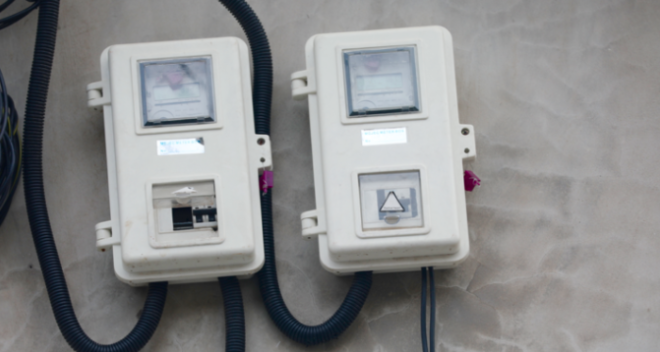
The Nigerian Electricity Regulatory Commission (NERC) has adjusted the price of a single phase meter from N58,661.69 to N81,975.16.

It also adjusted the price of three phase meter from N109,684.36 to N143,836.10.

The adjustments were contained in the  ORDER NO: NERC/2024/040 that the commission’s Chairman, Engr. Sanusi Garba and Commissioner Legal and Licensing Compliance, Barrister Dafe Akpeneye issued on Monday.

The title of the order is “The  deregulation of meter prices for meters deployed under the Meter Asset Provider Scheme.”

The Chairman and Commissioner said the Meter Asset Provider and National Mass Metering Regulations (the “Regulations”) provide for the metering of end-use customers of successor electricity distribution licensees (“DisCos”). Section 8(1 )(c) of the Regulations provides that “the cost of single phase and three phase meters for MAPs, inclusive of all other associated costs of installation and warranties shall continue to be at the regulated rates approved by the Commission”.

Maduka College Advert

NERC said the Meter Asset Providers (MAPs) and Local Meter Manufacturers Associations (LMMAs) have requested a further review of meter prices in consideration of significant changes in NGN/USD foreign exchange rate and inflation rate since the last price review in September 2023 and the significant changes in these macroeconomic variables has constrained their ability to supply meters at the approved regulated price.

Garba and Akpeneye said the  commission has noted the need for the efficient pricing of meters to respond more quickly to changes in macroeconomic parameters, particularly exchange rates.

According to them: “The Commission has further taken cognisance of the constraints/challenges faced by MAPs and LMMAs and therefore approved the deregulation of prices of meters deployed under the MAP scheme with effect from 1 May 2024.”

NERC said, “the commission hereby orders: with effect from 1 May 2024, all prices of meters under the MAP scheme shall be determined through a competitive bidding process with customers provided with a choice of authorised vendors.

“The combined effects of sections 8(1 )(c), 8(1 )(d), 16(1 )(h), 31 and 32(1 )(b) of the Regulations on the regulated pricing of meters deployed under the MAP scheme is hereby derogated.

“The cost of prices of meters deployed under the MAP scheme is HEREBY DEREGULATED to enable end use customers acquire meters from MAPs.”

NERC noted that the choice is based on competitive open market prices determined from transparent bidding frameworks.

The order noted that all MAP permits holders are henceforth eligible to provide services and transact for the provision of meters and metering services with any DisCo in the Federal Republic of Nigeria with their existing permit.

According to the commission, the lifting of the restriction on permitting to operate in all DisCos is subject to the mandatory requirement for MAPs to comply with the associated DisCo specific requirements/specifications.

The commission added that all DisCos shall ensure the effective and seamless integration of smart meters deployed by MAPs with the DisCo’s head-end systems and meter data management systems.

It further noted that all DisCos shall provide a publicly accessible online portal on their website where prospective MAPs can view the DisCo’s technical specifications and commercial terms for participation as a MAP within its network area.

Garba and Akpeneye said all  DisCos are required to conduct a thorough test and confirmation of specifications for new meters proposed by a prospective MAP and concluded no later than 20 working days from the date the proposed MAP fulfils all the requirements specified on the online portal to participate within its network area.

News

Inferno razes Abuja building materials market, destroys goods worth millions

Published

on

Spread the love
A fire outbreak has destroyed shops and goods reportedly worth millions of Naira at Eda Plaza, a building materials market located opposite Chida Hotel in Jabi, Abuja.

An eyewitness was quoted by the Nigerian Television Authority NTA as stating that the alarm was raised around 3am on Sunday when his brother-in-law, who owns two shops and a packing store within the affected plaza, received a distress call from a colleague at the market.

National Public Relations Officer and Head, Corporate Services at the Federal Fire Service, Deputy Controller of Fire Paul Abraham, who confirmed the incident said a distress call about the fire, identified as the Eda Plaza fire, was received at 2:46am.

He said the Federal Fire Service, alongside the Federal Capital Territory FCT Fire Service, turned out with appliances from its Wuse, Interior Ministry, and Garki stations to battle the blaze, and that a stop message was issued at 10:14am, signaling that the fire had been brought under control.

Abraham added that investigations into the remote and immediate causes of the fire were currently underway.

Earlier, the eyewitness said there were no casualties in the incident.

Maduka College Advert

He said, “We were at home this morning, as early as 3 am, and my brother-in-law received a call from one of his colleagues here in the plaza that the plaza was on fire. So we had to rush down there. On getting here, we discovered that the situation was so bad”.

By the time they arrived at the scene, the eyewitness said, the fire had already spread extensively, leaving only one of his brother-in-law’s two shops standing.

“In this plaza, my brother-in-law had two shops and a packing store. Unfortunately, only one of the shops was saved. The other shop and the packing store were totally damaged by the fire,” he added.

The eyewitness put the value of roofing materials lost in the blaze at over N20 million, lamenting that some of the destroyed materials had been freshly installed the night before the incident.

“Over here, you see some of the roofs that we still have here. We are talking about a roof that is worth over N20 million lost in this fire,” he said, adding, “Because the other shop, we had roofs that were just restocked last night. And then the packing store also, we had roofs that were just restucked last night.”

Notwithstanding the heavy losses recorded, the eyewitness said he was consoled that the incident claimed no casualties.

“In our situation, we give thanks to God that no life was lost in this situation,” he said. (Vanguard)

Continue Reading

News

Why Tinubu embarked on three-week Europe vacation — Presidency

Published

on

President Bola Tinubu
Spread the love

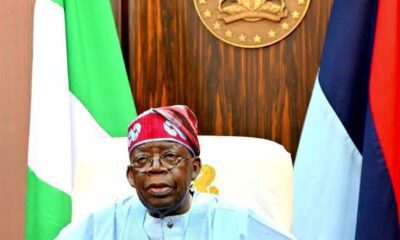
The Presidency has said that President Bola Tinubu embarked on a three-week vacation to ‘refuel’ after months of intense engagement with state matters.

Special Adviser to the President on Media and Public Communications, Sunday Dare, stated this while addressing newsmen on Sunday.

According to him, the President had spent the past six to seven months handling state matters, including decisions on security and the economy, ahead of the campaign season for the 2027 elections.

“The President has had several months—six, seven months—of being engaged with state matters. We’ve seen monumental changes, monumental decisions taken with our security, with our economy and so many other things as pertains to the running of the affairs of this country,” he said.

The presidential aide further said that the campaign season had begun and would involve several months of intense political activities, although governance would continue.

Maduka College Advert

“And at this point, the campaign season has just started. We have four, five months of serious campaigning. Of course, governance will still continue,” Dare said.

Dare noted that the leave was important for the President to rest and prepare for the campaign season, adding that Tinubu would remain engaged with government affairs while abroad.

Tinubu begins three-week leave

President Bola Tinubu has begun a three-week vacation as part of his annual leave.

This was disclosed in a statement by the Special Adviser on Information and Strategy, Bayo Onanuga, on Sunday.

The statement said Tinubu will depart Abuja on Sunday (today) for Europe. His first stop will be London, United Kingdom.

According to the statement, President Tinubu is expected to return home after the working vacation to join the hectic campaigns for the January 2027 election.

Continue Reading

News

NELFUND, South-East, The Hypocrisy And Nonchalance

Published

on

Spread the love

By Samson Ezea

The Nigeria Education Loan Fund (NELFUND), the Federal Government of Nigeria’s institutional framework for providing interest-free student loans to Nigerians who need financial support to access higher education and skills training, is a welcome development, no matter how one views or interprets it, particularly as it concerns the South-East region and the manner in which the scheme has fared in the region.

It is an axiomatic fact that, for many years, the cost of tertiary education in Nigeria has created significant financial barriers for students, particularly those from low-income families. The idea behind a national student-loan system was to ensure that lack of money would not prevent a qualified Nigerian from pursuing higher education.
Before NELFUND, Nigeria had the Nigerian Education Bank framework, but the Federal Government eventually moved towards a dedicated student-loan system.

The major objective was to create a sustainable mechanism through which students could obtain financial support for their education and repay the loans later when they become economically productive.

The major breakthrough came under President Bola Ahmed Tinubu in June 2023, when the Student Loans (Access to Higher Education) Act, 2023 was enacted to provide interest-free loans to Nigerians seeking higher education. President Tinubu signed the original Student Loan Bill into law on June 12, 2023, amidst commendations, mixed feelings and scepticism, all of which were expected whenever governments introduce new laws, programmes and policies.

Maduka College Advert

The policy initiative was presented as a means of ensuring that no Nigerian student would be forced to abandon tertiary education simply because of an inability to pay school fees.
However, the 2023 law was not immediately operationalised in its original form. Several issues were identified concerning governance, eligibility, administration, application procedures, funding and repayment. This eventually led to the 2024 repeal and re-enactment of the law, giving birth to NELFUND as we know it today.

The Federal Government and the National Assembly subsequently reviewed the 2023 legislation, and President Tinubu signed the Student Loans (Access to Higher Education) (Repeal and Re-enactment) Act, 2024, on April 3, 2024. This is the legislation that established NELFUND in its current institutional form.

The 2024 Act introduced several significant changes, including:
Establishing NELFUND as a body corporate capable of entering contracts and legally administering and recovering student loans.
Giving NELFUND responsibility for providing loans for tuition, institutional charges and upkeep.
Extending support beyond conventional university education to vocational and skills-acquisition programmes.
Removing the previous family-income threshold.
Removing the requirement for a guarantor.
Creating a Board of Directors and a professional management structure headed by a Managing Director.
Establishing a funding mechanism that includes 1% of taxes, levies and duties collected by the Federal Inland Revenue Service (FIRS) accruing to the Federal Government.

From Legislation to Actual Student Loans

Following the 2024 Act, NELFUND moved from being primarily a legislative framework to an operational institution. The NELFUND student-loan portal was launched on May 24, 2024, and applications subsequently commenced for students in tertiary institutions across Nigeria. Loan disbursement commenced in February 2025, according to NELFUND’s official timeline.

The fundamental philosophy behind the scheme is simple: access to education first, repayment later. Rather than requiring students to have the money before entering or remaining in school, NELFUND provides financial support to enable eligible students to continue their education. The loans are interest-free, with repayment generally commencing when beneficiaries become gainfully employed and begin earning an income.
As beneficial, helpful and laudable as this policy programme is, particularly considering its potential to promote human capital development and unhindered access to higher education, it appears not to have received the level of awareness, campaigns, sensitisation and enlightenment it deserves across the country, especially in the South-East region.

This raises serious questions about the role of political leaders, clergymen, academics, parents, state governors, heads of tertiary institutions and National Assembly members in ensuring that their people take advantage of opportunities provided by the Federal Government.

Whether this situation is intentional, conspiratorial, hypocritical, political or simply an act of negligence is, to me, immaterial. What matters is that the money available under the scheme is Nigerian money. It is our collective patrimony. It does not belong to any particular geopolitical zone, political party, religion or ethnic group. It is our national cake, and every qualified Nigerian student has a legitimate right to benefit from it.

Why, therefore, is access to NELFUND apparently so low among students in South-East tertiary institutions?
Why are some South-East leaders, heads of tertiary institutions, lecturers, parents, clergymen and even students not talking sufficiently about the scheme or encouraging their children, wards and relatives to take advantage of it?
I know many people may wonder why I am writing in this manner. I am doing so out of genuine shock, disappointment and concern over what I witnessed recently.

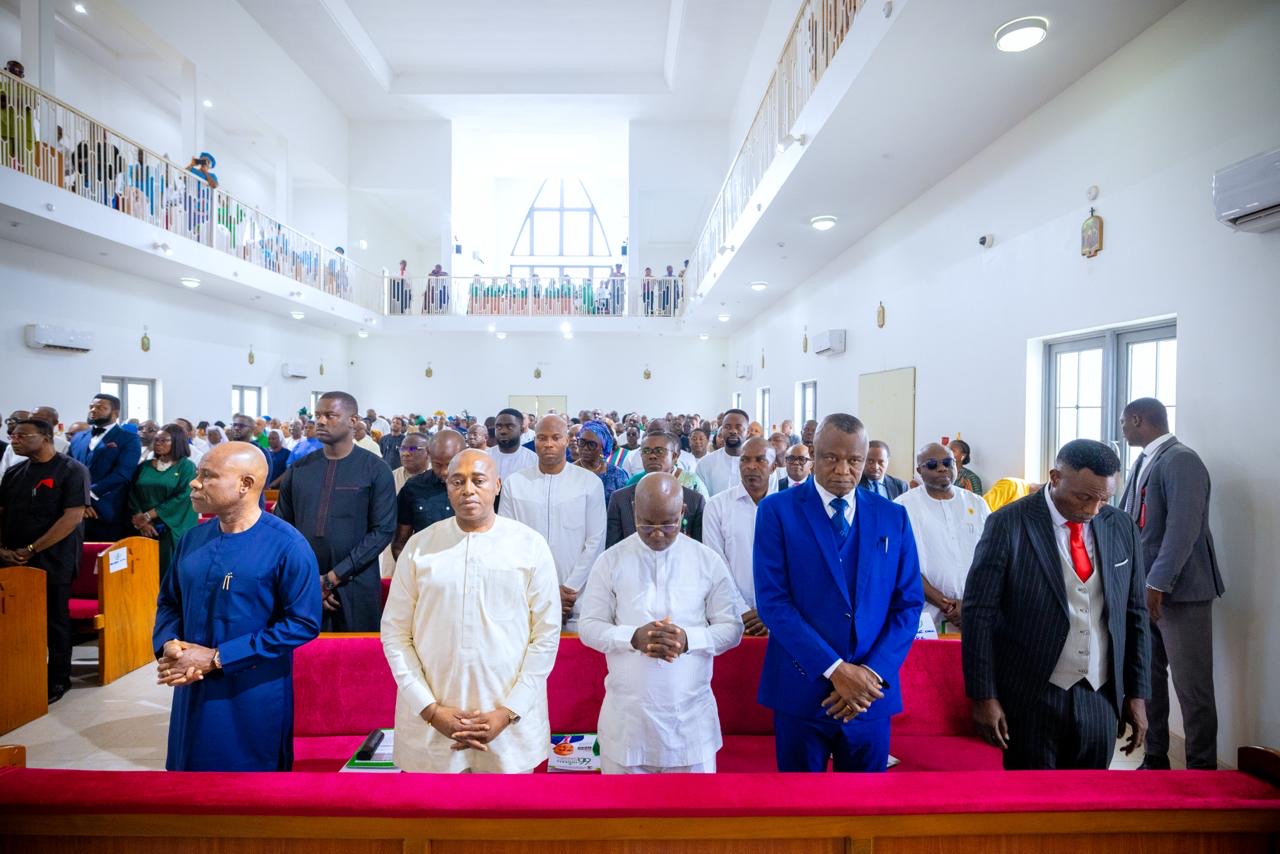
I was privileged to accompany my boss, Senator Ikeje Asogwa, and other members of the National Assembly Joint Senate Committee on Tertiary Institutions and TETFund and the House of Representatives Committee on Student Loans, Scholarships and Higher Education Financing to the South-East National Sensitisation Programme on the Nigerian Education Loan Fund (NELFUND) at the Moot Auditorium, University of Nigeria, Enugu Campus (UNEC).
The event brought together heads and leaders of tertiary institutions in the South-East, undergraduates, NELFUND officials and other stakeholders.

It was an incisive, interactive, expository, informative and revealing engagement.
What shocked me most was the revelation by one of the South-East senators, Senator Tony Nwoye, representing Anambra North Senatorial District, that the South-East region reportedly ranks lowest among Nigeria’s six geopolitical zones in the number of students accessing the NELFUND student loan.

According to the figures presented by Senator Nwoye and attributed to NELFUND, the reported figures were:
North-West — 450,000 beneficiaries
North-East — 378,103
South-West — 360,000
North-Central — 324,908
South-South — 198,000
South-East — 108,000

If these figures are accurate, then the situation is not only disappointing, but also calls for urgent intervention.
Senator Nwoye, visibly concerned by the development, challenged heads of tertiary institutions, clergymen, parents and students to embrace the policy. He reminded stakeholders that the fund belongs to Nigerians and is not the property of any political party, religion or ethnic group.His frustration was palpable.

Also speaking, the Chairman of the Senate Committee on Tertiary Institutions and NELFUND, Senator Dandutse Muntari Mohammed, appealed to stakeholders and students to embrace the scheme. He also disclosed that, as part of efforts to ensure adequate funding for NELFUND, l that proceeds from recovered assets and unclaimed dividends, among other sources, be channelled towards funding student loans.

I was deeply shocked by these revelations.
What is even more troubling is that I have yet to see any compelling reason why the South-East, despite its reputation for educational advancement and high literacy levels, should be at the bottom of the table in accessing an educational opportunity of this nature.

Since that event, I have been trying to understand why awareness and access to NELFUND appear to be relatively poor in the South-East, despite the potential relief the scheme can provide to students, parents and guardians.
I recently spoke with a cousin of mine studying at a federal university in the North-West. I asked him if he knew about NELFUND.
He said yes.
I asked whether he had ever benefited from it.
He told me that he had applied once and received upkeep support, while his institution’s charges were also covered, amounting to about ₦490,000 in total.
I then asked him why he had stopped accessing the scheme.
His response surprised me.
He said he was afraid that having a student loan could somehow affect his ability to travel overseas after graduation or create an obligation that could “hang over” him.

I had to educate him that such a fear, without evidence, should not prevent him from accessing a legitimate educational support programme. I asked him whether he believed that all the thousands of Nigerian students benefiting from NELFUND would automatically be prevented from travelling abroad after graduation.

The fundamental point is that a loan is a financial obligation, not a criminal record.
Students should, however, understand the terms and conditions of any loan they accept and comply with the applicable repayment requirements after graduation and employment.

I reminded him that the fund is Nigerian money, not APC money, not President Tinubu’s personal money, and certainly not Hausa, Igbo or Yoruba money.

It is a national student-loan programme established to support eligible Nigerian students.
There are undoubtedly many students across the South-East who may harbour similar misconceptions or simply lack adequate information about the scheme.

That is why our parents, political leaders, traditional and religious leaders, academics, university administrators, media practitioners and other stakeholders must urgently take the message of NELFUND to every corner of the region.

The politics and hypocrisy surrounding the avoidance or discouragement of our students from accessing NELFUND cannot benefit anyone.
It is time for the South-East to wake up from this apparent slumber and face reality.
We must stop viewing every policy of the Federal Government through the prism of partisan politics.
If a policy is good for our people, we should embrace it. If it has shortcomings, we should demand improvements. If there are legitimate concerns, we should raise them constructively.

But rejecting an opportunity simply because it was introduced by a government or political party we do not support is not leadership; it is self-inflicted deprivation.
NELFUND should not be regarded as an APC programme or a Bola Tinubu programme. It is a national policy designed to address a national problem.
The South-East cannot, on the one hand, complain about marginalisation and lack of opportunities while, on the other hand, failing to take advantage of opportunities that are already available to its students.
There is nothing wrong with scrutinising government policies. There is everything wrong with allowing political resentment, misinformation or indifference to prevent our children from accessing legitimate opportunities.
NELFUND is also, in many respects, more accessible than traditional scholarship programmes, which often have limited slots and stringent eligibility requirements.

A student-loan programme can potentially reach a much larger number of students who may otherwise struggle to finance their education.
And let us be honest: even in many developed countries, students take educational loans to finance their studies and repay them after graduation when they secure employment. What should matter is whether the terms are fair, transparent and sustainable.
South-East governors, members of the National Assembly, commissioners, local government leaders, university administrators, lecturers, religious leaders, traditional rulers, media organisations, student unions, parents and community organisations must intensify sensitisation about NELFUND.

Our universities and other eligible institutions should not merely wait for students to stumble upon information about the scheme. They should actively educate them about the application process, eligibility requirements, benefits and repayment obligations.
Our political leaders should put politics aside, when the welfare and future of our children are involved.
Our parents should ask questions.
Our students should seek information.
Our media should report the opportunities and also interrogate the challenges.
And our religious and community leaders should use their enormous platforms to educate young Nigerians.

The objective should not be to promote President Tinubu or any political party. The objective should be to ensure that no qualified South-East student misses an educational opportunity, because of ignorance, misinformation or unnecessary political sentiment.
The South-East has historically distinguished itself through education, enterprise, intellectual capacity and an extraordinary determination to succeed. It would therefore be a painful contradiction for a region celebrated for valuing education to rank last in accessing a national student-loan programme designed to make education more accessible.

We cannot continue to complain that our people are being excluded, while simultaneously failing to take advantage of opportunities available to them.
Education is too important to become a casualty of politics.
If NELFUND has weaknesses, let us expose them and demand reforms. If there are legitimate concerns about repayment, let us seek clarification and better safeguards. If students are inadequately informed, let us educate them. But let us not reject the opportunity itself because of who introduced it.
The question should no longer be “Who introduced NELFUND?”
The question should be:
“How can our children benefit from it?”
The fund belongs to Nigeria. The opportunity belongs to Nigerian students. The future belongs to our children.

Let us therefore put aside hypocrisy, misinformation, partisan sentiments and nonchalance.
Let the South-East wake up. Let our leaders speak. Let our institutions sensitise. Let our parents encourage. Let our students apply.
Because when politics ends, it is our children who will have to live with the consequences of the opportunities we either embraced or rejected today.
NELFUND is not about APC. It is not about PDP. It is not about North or South. It is about Nigerian students, Nigerian education and the future of Nigeria.

Our children must not be allowed to lose tomorrow because their parents and leaders failed to recognise the opportunity available to them today.

Ezea, Director, Media To Senator Ikeje Asogwa writes from Independence Layout, Enugu State

Continue Reading

Trending

Maduka College Advert