THE SUNDAY DISCOURSE
By Tony Edike
As political defections, internal party crises and leadership struggles reshape Nigeria’s political landscape, the inability of opposition parties to organise a credible alternative raises troubling questions about democratic accountability, the future of multiparty politics and the welfare of millions of citizens.
Nigeria’s democracy faces a fundamental contradiction. While the country operates a multiparty political system in which citizens are constitutionally entitled to choose their leaders, the political forces expected to hold the ruling class accountable are struggling to organise themselves into a coherent and credible opposition.
The consequences extend beyond party headquarters, political rallies and the ambitions of presidential aspirants. They reach the markets where traders struggle with rising costs, the homes where families worry about feeding their children, the communities threatened by insecurity and the streets where unemployed young people search for opportunities that remain elusive.
When government policies produce hardship, citizens naturally look towards the opposition for scrutiny, alternative proposals and political accountability. Yet what happens when the opposition itself is weakened by factional disputes, defections, personal ambitions and an inability to agree on a common direction?
That question has become increasingly urgent as Nigeria approaches the 2027 general elections.
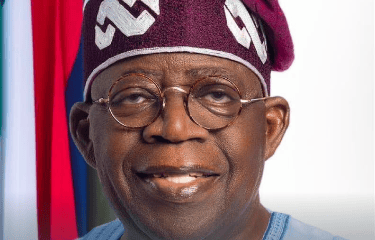
The ruling All Progressives Congress (APC), under President Bola Ahmed Tinubu, is preparing for another electoral contest, while several opposition parties are grappling with internal divisions and negotiations over possible cooperation. Recent reporting by Channels Television on October 17, 2026, highlighted the contrast between the APC’s expanding political alliances and the continuing consultations among opposition parties seeking a framework for cooperation ahead of the elections.
The challenge is no longer simply whether Nigeria has opposition parties. It is whether those parties can develop the organisation, credibility and public confidence required to hold the government accountable and offer voters a convincing alternative.
The roots of Nigeria’s opposition crisis
Nigeria’s opposition problem did not begin with the Tinubu administration. It is rooted in a political culture in which parties frequently function more as vehicles for acquiring political power than as institutions built around clearly defined ideologies, policy commitments and long-term national development programmes.
Since the return to democratic rule in 1999, political parties have often been shaped by powerful individuals, influential financiers, regional calculations and negotiations among political elites.
In such an environment, disagreements over leadership or the distribution of political positions can quickly threaten the survival of an entire party. When a powerful politician loses control of a party structure, the response is often to defect, establish a faction or negotiate a new political arrangement rather than submit to transparent internal competition.
This weakness is particularly damaging to opposition parties. A ruling party may retain considerable institutional advantages, access to an established political network and the influence associated with incumbency. An opposition party, by contrast, must persuade voters that it can govern differently while simultaneously building the organisation required to compete.
When its leaders spend more time fighting one another than interrogating government policies, the ruling party benefits from a political environment in which its opponents struggle to sustain a coherent challenge.
The crisis within the Peoples Democratic Party (PDP), which governed Nigeria from 1999 to 2015, illustrates this difficulty. The party’s internal disputes and the movement of prominent members to other platforms have weakened its position as a major opposition institution. Similar leadership and organisational challenges have affected other opposition platforms.
The Guardian, in its October 15, 2026 report on the PDP crisis ahead of 2027, highlighted the implications of factionalisation, defections and leadership disputes for the choices available to voters.
The lesson is clear: a party cannot effectively hold the government accountable nationally if it cannot establish discipline, resolve internal disagreements and maintain confidence among its own members.
Why politicians abandon the opposition
One of the most visible features of Nigerian politics is the movement of politicians from opposition parties to the ruling party, particularly as elections approach.
Such defections are often announced with claims of political realignment, development, unity or a desire to support the government of the day. Politicians may also argue that joining the ruling party will improve their ability to attract projects and opportunities for their constituencies.
However, repeated defections raise an important question about the strength of Nigeria’s political institutions.
If party loyalty is constantly subordinated to the search for political advantage, parties become unstable and voters struggle to identify what distinguishes one platform from another.
The problem is not that politicians must remain permanently in one party. Freedom of political association is a legitimate democratic principle, and individuals may leave parties over genuine disagreements. The concern arises when defections become a substitute for internal democracy, ideological consistency and accountability to the electorate.
A democracy needs politicians who can disagree with the government, challenge its decisions and propose alternatives without feeling compelled to join the ruling party to remain politically relevant.
When too many influential figures abandon opposition platforms, those platforms lose organisational capacity, experienced personnel, financial support and public visibility. Their remaining members may become increasingly discouraged, creating a cycle in which every departure makes the next one easier.
Ultimately, the electorate bears the cost when political competition weakens.
The danger of a dominant ruling party
A strong ruling party is not inherently undemocratic. Governments need sufficient political support to implement policies, pass legislation and fulfil their electoral mandates.
The danger emerges when dominance becomes so extensive that effective scrutiny and competition begin to deteriorate.
A functioning democracy requires more than periodic elections. It requires a legislature capable of examining government decisions, opposition parties capable of presenting alternatives, courts able to adjudicate disputes independently, journalists able to investigate public affairs and citizens able to organise peacefully.
Without these checks, poor policies may persist for too long, public expenditure may receive inadequate scrutiny and those entrusted with public resources may face weaker political pressure to explain their decisions.
Opposition parties therefore perform a public service even when they do not control government. They can expose inconsistencies in official claims, demand explanations for public spending, scrutinise appointments and challenge policies whose consequences disproportionately affect vulnerable citizens.
But opposition must also be responsible. Criticising every government decision without examining the evidence, spreading unverified allegations or promising unrealistic solutions does not strengthen democracy. It merely replaces meaningful scrutiny with political noise.
Nigeria needs an opposition that is both critical and credible: one that can identify failures, acknowledge legitimate achievements and explain how proposed alternatives would work.
Economic hardship and the accountability question
For millions of Nigerians, political debates are ultimately judged by their consequences for daily life.
The cost of food, transportation, electricity, housing, education and healthcare shapes how citizens experience government. Insecurity, unemployment and the difficulties confronting small businesses further influence public confidence in political leadership.
The Tinubu administration’s economic reform programme, including the removal of the petrol subsidy and changes to foreign-exchange arrangements, has generated extensive public debate over economic adjustment, inflationary pressures and the distribution of costs and benefits.
Supporters of the reforms argue that they address longstanding structural distortions and could improve public finances over time. Critics question the speed and social consequences of implementation and argue that relief measures have not adequately protected vulnerable households.
These competing arguments should be examined through evidence, measurable outcomes and the lived experiences of Nigerians.
The responsibility of the opposition is to move beyond slogans and establish a serious public examination of the reforms. How have they affected household purchasing power? What has happened to employment, wages, agricultural production and small businesses? Which social-protection measures have reached intended beneficiaries? What should be changed, and how would proposed changes be financed?
Such questions matter because hardship alone does not automatically produce an effective political alternative. Voters need to understand not only what opposition parties believe the government has done wrong but also what they would do differently, how quickly their proposals could deliver results and what trade-offs might arise.
Without that level of policy detail, political criticism risks becoming an expression of public frustration without a practical route to improvement.
Why the opposition keeps missing opportunities
The opposition’s difficulties can be traced to several interconnected weaknesses.
First, personal ambition often overwhelms collective purpose.
Political leaders may agree that the country needs change but disagree over who should lead that change. Negotiations then become contests over candidacies, influence and political positions rather than discussions about a common national programme.
Second, ideological differences remain poorly defined.
Nigerians should be able to distinguish parties by their approaches to taxation, education, healthcare, industrialisation, security, social welfare and the management of public resources. Where parties offer similar slogans but few clearly differentiated policies, political competition becomes a contest of personalities.
Third, internal democracy remains a challenge.
Disputed primaries, opaque candidate-selection processes and leadership struggles weaken trust within parties. Candidates who believe they have been unfairly excluded may defect, litigate or undermine the eventual nominee.
Fourth, opposition activity is often too concentrated around elections.
Effective opposition requires continuous engagement with communities, legislative scrutiny, policy research, public education and monitoring of government performance. Parties that become visible only during election campaigns surrender much of their opportunity to build enduring relationships with citizens.
Fifth, opposition parties struggle to convert public dissatisfaction into a coherent programme.
Economic hardship and dissatisfaction with government do not necessarily translate into support for any particular alternative. Citizens may distrust the opposition, remember the shortcomings of previous administrations or question whether new political coalitions represent genuine reform.
A credible opposition must therefore earn public confidence rather than assume that dissatisfaction with the ruling party will automatically benefit its rivals.
The 2027 test: Can political rivals agree on a common framework?
Recent consultations among opposition parties suggest that some leaders recognise the danger posed by fragmentation.
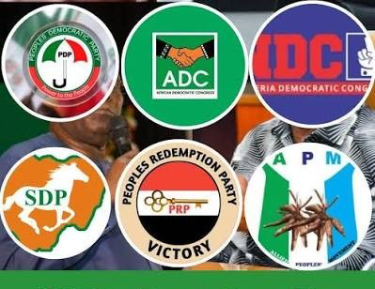
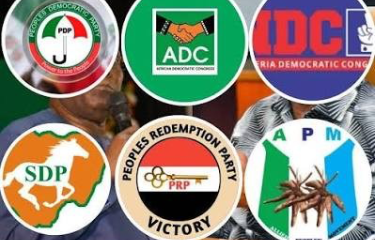
According to Vanguard on October 14, 2026, six parties—the African Democratic Congress (ADC), Allied Peoples Movement (APM), Nigeria Democratic Congress (NDC), Social Democratic Party (SDP), PDP and Peoples Redemption Party (PRP)—were involved in consultations with presidential aspirants on possible cooperation ahead of the elections.
However, the existence of discussions does not guarantee agreement, and agreement among political leaders does not automatically translate into support from their respective voters.
The opposition must resolve several difficult questions.
Can its parties agree on transparent rules for cooperation? Will they support common positions on major national issues? Can they manage disagreements over presidential and legislative nominations without destroying the coalition? How will they protect the autonomy of participating parties while coordinating their efforts?
Most importantly, will their cooperation be built around a national programme or simply around the shared desire to defeat the ruling party?
A coalition formed primarily to distribute political offices may struggle to survive after an election. A coalition built around measurable public commitments has a stronger basis for accountability, regardless of the election’s outcome.
Opposition leaders should also recognise that a single presidential candidate is not the only possible form of cooperation. Depending on the applicable electoral laws and the decisions of the parties, coordination may include common policy commitments, agreements on legislative priorities, joint monitoring of elections and cooperation on protecting votes.
Where a common candidate is pursued, the selection process must be transparent, lawful and sufficiently credible to secure the acceptance of participating parties and their supporters.
A consensus imposed by powerful individuals without broad acceptance could reproduce the same internal problems the coalition is trying to overcome.
What must the opposition do differently?
The approaching election provides an opportunity for Nigeria’s opposition parties to address the structural weaknesses that have repeatedly undermined their political relevance.
1. Put the national interest ahead of individual ambition
Opposition leaders must recognise that no individual politician owns the votes of party members or the support of the Nigerian people.
Where a common electoral arrangement is considered necessary, leaders should establish clear rules for selecting candidates and resolving disputes before negotiations reach their most contentious stage.
A credible process should include agreed criteria, independent oversight where appropriate, transparent communication and a commitment by participants to respect the outcome.
The objective should be to build a durable political arrangement rather than a temporary alliance that collapses when an individual loses a nomination.
2. Develop a practical national recovery programme
Opposition parties need a detailed, costed and publicly accessible programme addressing the issues that most directly affect citizens.
Such a programme should explain their proposed approaches to:
- Cost of living: Measures to improve food affordability, household purchasing power and access to essential services.
- Employment and industrialisation: Policies to support manufacturing, agriculture, small businesses and productive investment.
- Electricity: A credible plan to improve generation, transmission, distribution and the affordability of power.
- Education and healthcare: Funding priorities, measurable service-delivery targets and plans to improve access and quality.
- Security: Strategies for intelligence-led policing, community safety, conflict prevention and accountability for security agencies.
- Public finance: Transparent budgeting, responsible borrowing, procurement reforms and the publication of measurable expenditure outcomes.
Every major promise should be accompanied by an explanation of its cost, financing, implementation timetable and expected results.
Nigerians deserve policies that can be examined, challenged and measured—not merely declarations of good intentions.
3. Rebuild from the wards and communities
Political strength cannot be sustained through Abuja meetings alone.
Opposition parties need functioning ward, local government and state structures capable of listening to residents, documenting local problems and communicating policy proposals.
In communities across Enugu State and the wider South-East, for example, political engagement should address electricity, road infrastructure, agricultural productivity, healthcare, education, security and the constraints confronting small businesses.
The same principle applies throughout the federation: political parties should demonstrate that they understand local concerns while presenting a coherent national vision.
Community engagement must be continuous, not activated only when politicians require campaign crowds.
4. Make internal democracy non-negotiable
A party that cannot manage its own internal competition will struggle to convince the public that it can govern a complex country fairly.
Opposition parties should establish transparent membership records, credible primaries, clear disciplinary procedures and mechanisms for resolving disputes before they escalate into prolonged litigation.
Party constitutions should be respected, and leadership positions should not become permanent possessions of political patrons.
Candidates who emerge through credible processes are better placed to build legitimacy among party members, although a fair nomination process alone cannot guarantee electoral success.
5. Present a credible new generation of leadership
Nigeria’s political future should not be restricted to a recurring contest among familiar political figures.
Parties should create meaningful opportunities for younger Nigerians, women, professionals, entrepreneurs, community organisers and people with demonstrable records of public service.
This should not mean selecting candidates simply because they are young or popular on social media. Integrity, competence, experience, policy understanding and accountability must remain central considerations.
The country needs political institutions capable of discovering and developing talent rather than depending indefinitely on a small circle of powerful individuals.
6. Protect the credibility of the electoral process
Political competition is meaningful only when voters can exercise their rights and have their votes accurately counted and reported.
Opposition parties should invest in voter education, accredited polling-unit agents, lawful election observation, reliable incident reporting and the preservation of evidence needed to challenge genuine irregularities.
They should engage the Independent National Electoral Commission (INEC) on electoral preparedness and insist on transparent, consistent application of the law.
Any allegations of electoral malpractice should be supported by verifiable evidence and pursued through lawful channels.
Equally, opposition leaders must discourage political violence, intimidation, misinformation and attempts to undermine confidence in legitimate electoral procedures without evidence.
Protecting the vote is a democratic responsibility shared by political parties, electoral institutions, security agencies, the media, civil society and citizens.
7. Establish a permanent opposition accountability mechanism
Opposition parties should not wait for election campaigns before examining government performance.
They can publish periodic assessments of federal and state budgets, track major infrastructure projects, investigate implementation gaps through lawful means and explain how public policies affect citizens.
Where they control state governments or local institutions, they should apply the same standards to their own administrations.
This is crucial. An opposition that condemns a practice nationally but tolerates it where its own members exercise power undermines its credibility.
Consistency between criticism and conduct is one of the foundations of public trust.
The role of Nigerians: Citizens must demand more than political change
Although opposition parties carry substantial responsibility, Nigeria’s democratic weaknesses cannot be blamed on politicians alone.
Citizens also have a role in strengthening accountability by demanding evidence, examining policy proposals, attending public meetings, monitoring elected representatives and rejecting political violence.
Voters should ask every candidate difficult questions: What are your priorities? How will you finance them? What will you accomplish in your first year? How will citizens verify your progress? What consequences will follow if you fail to deliver?
Political parties should not be permitted to escape scrutiny simply because they oppose the government of the day.
The media also has a responsibility to examine the records, claims and proposals of all major political actors. Political reporting should go beyond rallies, defections and campaign personalities to investigate policy consequences, campaign financing, public expenditure and the practical implications of competing programmes.
Civil society organisations, professional associations, traditional institutions and community groups can contribute by promoting informed public debate and demanding transparency from political leaders.
The ultimate objective should be to make every government answerable to the people, regardless of the party in power.
Can Nigeria prevent the erosion of multiparty democracy?
The concentration of political influence in a dominant party can become a serious democratic concern when opposition institutions lose the ability to scrutinise government effectively or compete on fair terms.
However, the existence of a dominant party does not automatically mean that Nigeria has become a one-party state. The more important questions concern the freedom of political association, the fairness of electoral competition, the independence of democratic institutions and the ability of citizens to choose among credible alternatives.
Opposition parties must take responsibility for their own failures, including internal conflicts and poor organisation. At the same time, the government and relevant institutions have a responsibility to uphold the rules that permit genuine political competition.
A democratic system should not depend on the goodwill of a ruling party to remain accountable. It should contain institutional safeguards that apply regardless of which political organisation controls the executive or legislature.
The judiciary, electoral authorities, legislature, media and civil society must all be able to perform their lawful functions without improper interference.
The remedy, therefore, lies in strengthening institutions as well as improving the quality of political leadership.
Conclusion: The opposition must offer more than a promise to replace the APC
As Nigeria approaches the 2027 general elections, the opposition faces a test that extends beyond the fate of individual politicians and political parties.
Its task is to demonstrate that it can organise itself democratically, resolve disputes peacefully, develop practical policies and sustain accountability beyond election day.
The APC administration, like any government, should be judged through evidence of its policies, performance, costs and consequences for Nigerians. Opposition parties should be judged by the quality of the alternatives they offer, the integrity of their internal processes and their willingness to submit their own records to scrutiny.
A change of government, by itself, cannot guarantee better governance. Without stronger institutions, transparent public finance, accountable leadership and sustained citizen participation, the same weaknesses can survive under a different political platform.
But neither can a democracy function properly when opposition parties are too divided, disorganised or distrusted to provide meaningful scrutiny.
The central question for 2027 is therefore not simply whether the opposition can wrest power from the ruling party. It is whether Nigeria’s political system can produce genuine competition in which parties must earn public confidence through credible policies, democratic conduct and measurable commitments.
For the opposition, the opportunity is to transform political fragmentation into principled cooperation and public frustration into a serious programme of reform. For the ruling party, the responsibility is to demonstrate that its policies and performance can withstand scrutiny. For the electorate, the task is to demand evidence and accountability from every contender.
Ultimately, the strength of Nigeria’s democracy will not be measured solely by which party wins the next election, but by whether the political system gives citizens a meaningful choice, protects their votes and compels those in power to govern in the public interest.