News
16 governors endorse state police, submit reports to FG

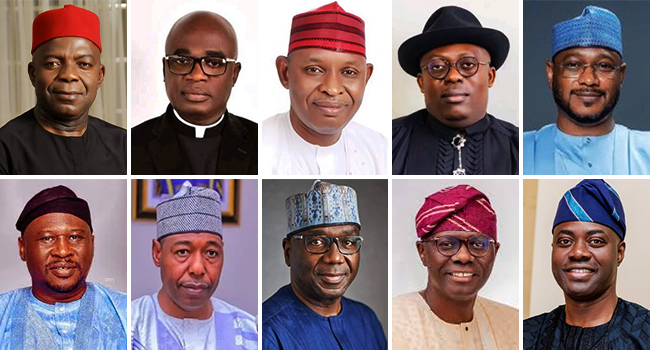
Sixteen state governors have submitted reports expressing their supports for establishing state police to the National Economic Council.
They also recommended changes to the constitution to allow for the creation of state police.

The reports were amongst documentations received at the 140th NEC meeting presided over by Vice President Kashim Shettima at the Aso Rock Villa, Abuja on Thursday.
Special Adviser to the Vice President on Media and Communications, Stanley Nkwocha, revealed this in a statement he signed Thursday titled, ‘NEC endorses take-off of $617M i-DICE programme across states.’
According to the statement, NEC is still awaiting reports from 20 states. It expressed confidence that others would support.

NEC was established by the provisions of section 153(1) and Paragraphs 18 & 19 of part I of the Third Schedule of the 1999 Constitution (as amended). Its membership comprises the 36 state governors, the Governor of the Central Bank and other co-opted government officials.
Chaired by the Vice President, NEC meets monthly to execute its mandate of “advising the President concerning the economic affairs of the Federation, and in particular on measures necessary for the coordination of the economic planning efforts or economic programmes of the various Governments of the Federation.”
Disclosing discussions at Thursday’s NEC, the Vice-President’s spokesman, Nkwocha said, the “Secretary to NEC (Mr Nebeolisa Anako) made a presentation on submissions by states on the state policing initiative. Reports have been received by 16 states on the establishment of State police. 20 states have yet to send in report. All states across the country expressed their support for the establishment of state police for the following reasons.
“States made presentations in support of the creation of state police. States recommended changes in the constitution and the current policing structure to enable the operationalisation of the initiative.”
However, no details were given about the specific states. The Vice President’s spokesperson had affirmed that the total number would be presented at the next NEC meeting even as “the compilation is still going on”.
This comes weeks after the Federal and state governments, on February 16, 2024, resolved to develop modalities to create state police to tackle the country’s security crisis.
Abduction wave
The nation has been wracked by waves of abductions, attacks by suspected bandits and other violent crimes, reviving calls for the establishment of a multi-level policing system, including state police.
Bandits have in recent times abducted 495 persons in Kaduna, Sokoto and Borno states.
On March 7, over 280 pupils and teachers of Government Secondary School and LEA primary School at Kuriga, Kaduna State, were kidnaped.
The terrorists reportedly invaded Kuriga in Chikun Local Government Area, Kaduna, shooting at their targets before whisking away the pupils and teachers from both schools.
A day earlier, the United Nations confirmed the abduction of at least 200 internally displaced persons from their camp in Ngala Local Government Area of Borno State.
The UN resident and humanitarian coordinator in Nigeria, Mohamed Fall, in a statement said the abductees, including women, boys and girls, were captured while fetching firewood. Fall added that the terrorists released some older women and children below 10 years.
On March 9, bandits reportedly kidnapped no fewer than 15 Tsangaya students at Gidan Bakuso area of Gada Local Government Area in Sokoto State.
On March. 14, at least 17 Nigerian soldiers were killed while on a peace-keeping mission to douse clashes between Okuoma and Okoloba communities in Ughelli South Local Government Area of Delta State.
On February 20, bandits kidnapped over 26 travellers along the Gusau-Sokoto highway. They were said to have blocked the road around Kwaren Kirya village under Maru Local Government Area of Zamfara State and abducted travellers from a Toyota 18-seater bus and a Volkswagen golf vehicle.
At President Tinubu’s meeting with the governors last February, the Federal Government and states agreed to recruit a yet-to-be-disclosed number of forest rangers and invest in more training to “keep our forests and our borders safe,” said the Information Minister, Mohammed Idris, when he briefed State House Correspondents after a meeting between Tinubu and the 36 state governors.
“The Federal Government and the state governments are mulling the possibility of setting up state police,” said Idris, adding that “this is still going to be further discussed.”
He explained, “A lot of work must be done in that direction. But if our government and the state governments agree to the necessity of having state police, this is a significant shift.”
“Like I said, more work needs to be done in that direction. A lot of meetings will have to happen between the federal government and subnationals to see the modalities of achieving this,” Idris noted.
On February 20, 2024, a bill proposing the creation of state police successfully passed the second reading at the House of Representatives.
The legislation titled, ‘A bill for an Act to alter the constitution of the Federal Republic of Nigeria, 1999, to provide for the establishment of State Police and related matters,’ was slated for a second reading before the end of this week.
Backed by 13 House members, the bill gained the majority’s favour in the Green Chamber, with many lawmakers arguing that the security challenges take preeminence over concerns about political victimisation by state governors.
Meanwhile, the Presidency has said although President Bola Tinubu has given his nod for the creation of state police outfits and forest guards, Governors would ultimately determine the success of both moves.
It also said it expects the re-opening of the Nigeria-Niger border to fight the illegal influx of arms roaming the Sahel from the conflict in Libya.
Speaking exclusively with our correspondent on the issue, a presidency official who did not want to be named said, “The President told the state governors to discuss it further at the state level. A committee was set up for that. We have not heard from the committee yet. Don’t also forget that simultaneously, the national assembly is considering inserting state policing in the constitution. So, there is a consensus around state policing.
“As for the forest guards, work is going on with it. There are existing forest guards in several states, but they are under the states’ ministries of agriculture. The goal now is to strengthen their capacity by arming them properly and recruiting more people.
“Still, it all falls in the hands of states to strengthen the forest guards. That is where we are now.”
Another Presidency official who spoke on condition of anonymity said the opening of the Nigeria-Niger border was part of efforts to stall the proliferation of the small arms and light weapons non-state actors use for their enterprise.
“What I know is this: some people have linked our security problems to the situation in Libya. The Libya conflict has led to the flow of arms to Nigeria. We share a long border with Niger. And many arms are flowing into the country.
“Our borders with our Sahelian neighbours are largely ungoverned. So, there are many arms in the hands of this bandit.
“We had to make peace with Niger because of this. It was an attempt to appease Niger. We share the same border. If we are not at peace with them, they may ignore the arms flowing in. Even the food shortage we are talking about, many goods come from Niger to Nigeria. We exacerbated things when we shut the border,” the official said.
In a similar development, the Nigeria Governors’ Forum, in a communique its issued at the conclusion of its virtual meeting, and signed by its Chairman, Kwara State Governor AbdulRahman AbdulRasaq, dated Wednesday and made available to the press on Thursday, emphasised the importance of incorporating State policing as a crucial amendment in the ongoing 1999 Constitutional Amendment process to address a fundamental flaw in the national security framework.
The communique read in part “The Forum commiserated with the Governor of Delta State, H.E Sheriff Oborevwori, over the communal clash between Okuama in the Ughelli South Local Government Area and Okolaba in the Bomadi Local Government Area of Delta State, and which led to the death of many including 16 military personnel. While condemning the heinous act, members observed a minute of silence for the souls of the departed.
“Members reviewed the progress of the National Minimum Wage Committee and ongoing multi- stakeholder engagements towards agreeing on a fair minimum wage.
“Members urged the NMWC to consider the current realities, individual State peculiarities and consequential impact on the capacity of the government as well as private sector employers to pay. Members also emphasized the need for proposals to be data- driven and evidence-based.
“The Forum highlighted the need for State policing as a critical amendment in the ongoing 1999 Constitutional Amendment proceedings to correct a fundamental flaw in the national security architecture.”
The debate for creating state police in Nigeria primarily stems from the centralised nature of the Nigerian Police Force, which many security pundits perceive as inadequate for addressing the unique security challenges across the country’s diverse regions.
Proponents argue that the outfit would bring law enforcement closer to the communities they serve, enhance the effectiveness of policing, and allow for more localised control over security matters.
However, opponents fear that state police could lead to the abuse of power, particularly in states with strong political control, potentially exacerbating regional tensions and undermining national unity.
PUNCH









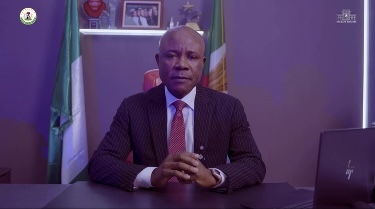
Enugu State Governor, Dr Peter Mbah, has called for a thorough and impartial police investigation into the recent violence surrounding a political gathering in the state, assuring that anyone found responsible will face the law regardless of political affiliation.
Mbah, in an address to the people of Enugu State, expressed concern over reports of violence, particularly a shooting incident that left a citizen injured.
The governor said his immediate concern was the welfare of those injured, residents who experienced fear during the incident, and families affected by the violence.
He assured the victims and affected residents that their safety and well-being remained a priority for his administration.
“I know how much our people value the peace and security we have worked so hard to establish in Enugu. Incidents such as these cause anxiety and deserve our full attention,” the governor said.
Mbah stressed that every citizen, irrespective of political affiliation, must be able to exercise their political rights without fear, intimidation or violence.
He reiterated the state government’s commitment to protecting lives, upholding the law and ensuring that justice was served without favour.
The governor also stated that, in view of the preliminary findings regarding the incident, he expected the police to conduct a comprehensive and impartial investigation to establish the circumstances surrounding the violence and identify those responsible.
According to him, anyone found culpable would be held accountable through the appropriate legal process, irrespective of their political connections.
“The Enugu State Government has made its position clear regarding allegations of involvement in this violence,” Mbah stated, reaffirming his administration’s responsibility to maintain peace and security across the state.
The incident has raised concerns over political tolerance and the safety of citizens participating in political activities in Enugu State.
The governor’s call for an impartial investigation underscores the need for the relevant security agencies to establish the facts surrounding the shooting and ensure that those responsible are brought to justice.
He concluded his address by thanking the people of Enugu State and praying for God’s continued blessings upon the state.

Enugu APC urges NDC to apologise for observing a minute silence
All Progressives Congress (APC) has picked holes in the reaction of the Nigeria Democratic Congress (NDC) to the position of the Enugu State Government on the airport and party secretariat incidents involving the NDC at the weekend.
The party said that “persons and institutions that lay claim to integrity should be able to admit their mistakes, confess their transgressions, and apologise to the people.”
The Enugu NDC had, at a press conference addressed by its State Party Chairman, Emmanuel Chukwujekwu Nebo, in Enugu faulted some of the positions of the Enugu State Government on the weekend incident as were marshalled by the Secretary to the Enugu State Government (SSG), Prof. Chidiebere Onyia, on Sunday.
Principally, the NDC claimed that it had only planned an airport reception for its governorship candidate, Chinyeaka Ohaa, not a ‘Grand Statewide Campaign Flag-off’ at the airport as stated by the government.
The party added that it notified various law enforcement agencies of its plans and made payments to the Federal Airports Authority of Nigeria (FAAN).
On the alleged shooting at NDC’s state secretariat, the party said that the NDC was “still verifying the final medical status of all injured persons.”
However, responding to NDC, the state Publicity Secretary of Enugu State chapter of the APC, Chief Uche Obute, insisted the NDC must tender unreserved apologies to the people of Enugu and Nigerians in general “for lying to them for political gains.”
“The question is: since the NDC was still verifying the final medical status of person or persons injured in their party fracas, how come they declared and observed a minute’s silence to mourn the living?
“The answer is simple: it was true to the factionalised Enugu NDC’s pattern to orchestrate violence among themselves and attribute it to Enugu APC to extract cheap political capital.
“It is also a validation of the commonly held view among the people that the Enugu State NDC and their governorship candidate, Chinyeaka Ohaa, would stop at nothing in their quest for power,” Obute said.
The party’s spokesman equally faulted NDC’s claim that it only planned to hold an airport reception, not a mega rally.
Supporting the party’s position with a screenshot of a Facebook post by NDC’s governorship candidate, Chinyeaka Ohaa, Obute said, “Promotional materials and posts by Ohaa clearly read, ‘Grand Statewide Campaign Flag-off 2026. Date: Saturday, 10th October 2026; Venue: Akanu Ibiam International Airport, Enugu; Time: 9:00am,’” he added.
The party commended the Governor Peter Mbah Administration for upholding the freedom and democratic rights of the good people of Enugu State, irrespective of political affiliation.
“Rather than stoking political tension to undermine the security and peace built by the Mbah Administration, we advise the Enugu opposition parties to present their manifestoes and campaign on them,” he stated.
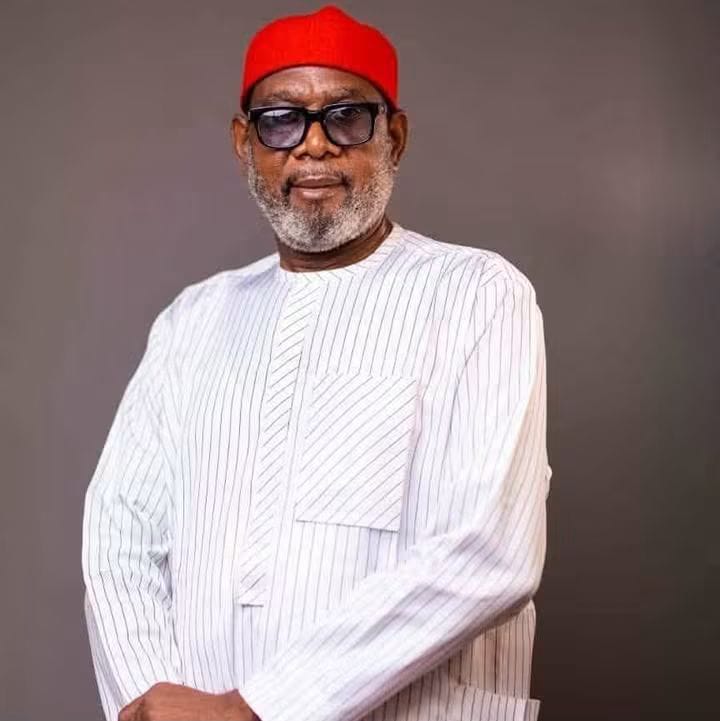
Hon. Chief Barrister Lucky Chukwu, Senior Special Assistant on Public Affairs to Enugu State Governor Peter Mbah, has died
His death was announced in October 2026 by the office of his younger brother, Senator Kelvin Chukwu, who represents Enugu East Senatorial District.
Lucky Chukwu was an elder brother of the late Labour Party senatorial candidate, Oyibo Chukwu, and Senator Kelvin Chukwu, a former member of the Enugu State House of Assembly.
He was appointed Senior Special Assistant on Public Affairs to Governor Mbah in August 2026, having previously been involved in political activities in the state.
Following his elder brother’s death, Senator Kelvin Chukwu suspended his political activities and engagements for one week to mourn the loss.
The senator’s office announced the temporary suspension in a statement issued on October 11, 2026.
The death is another loss for the Chukwu family, which had earlier lost Oyibo Chukwu, who was the Labour Party’s candidate for the Enugu East Senatorial District in the 2023 general election before he was assassinated during the campaign.
Following Oyibo Chukwu’s death, Kelvin Chukwu emerged as the Labour Party’s replacement candidate and went on to win the senatorial election.
-
 News2 days ago
Why UK varsities are cancelling Nigerians’ admission — Report
-
News3 days ago
US asks American business executives to be wary of insecurity, corruption, detention risk in Nigeria
-
News1 day ago
2027: Enugu Accuses Opposition of Plotting to Import Armed Thugs, Bandits
-
News2 days ago
Alleged Magistrate Court Order To Arrest Araraume, Okorocha Is Fake, Non-Existent — Imo First Group
-
News2 days ago
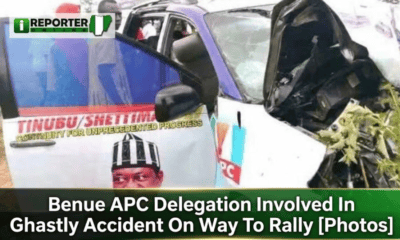
Benue APC Delegation Involved in Ghastly Accident En Route to Rally
-
News2 days ago
2027: Over 30,000 Enugu Teachers Endorse Mbah, Tinubu, List Welfare, Increased Education Funding
-
News2 days ago
Why men with braids, tattoos were banned from mosque, Ogun Chief Imam clarifies
-
News3 days ago
Petrol hits N1,900/litre as depot prices surge despite NNPC cut