News
Corruption greatest killer of Nigeria’s economy – Monarchs


Emir of Kaura Namoda, Zamfara state, Sanusi Mohammed and Eze of Umuofor Kingdom, Imo state, Abdulfatah Chimeze yesterday said that corruption is one of the greatest killers of the Nigerian economy.
The monarchs said this in Ilorin, Kwara state during a walk to commemorate this year’s international anti-corruption day.

Ilorin zonal office of the Economic and Financial Crimes Commission (EFCC) organised the walk.
Alhaji Mohammed, a retired major, described corruption as one of the factors that kill the nation’s economy.
He said that all hands should be on deck in the fight against the menace.

Eze Chimeze defined corruption as a mindset, adding that unless it is changed, the clamored fight against corruption might remain elusive.
Earlier, EFCC admitted that only professionalism, due adherence, and commitment to the rule of law would ensure Nigeria’s contribution to economic growth.
The commission added that an increase in professionalism means zero tolerance for all forms of arbitrariness.
Aside from regaining the people’s confidence, it would also restore investors’ confidence in the nation’s economy, it added.
“Only through professionalism and adherence to the rule of law will the Commission be able to contribute to economic growth by restoring investors’ confidence in our economy, Executive Chairman EFCC, Mr. Ola Olukayode said.
Olukoyede said, “Our focus makes it imperative for us to create conducive environments for job creation, the opening of investment space across the country, and improvement on our international image.”
Represented by the commission’s Ilorin zonal commander, Michael Nzekwe, the EFCC boss said the Commission is determined to work with the corruption prevention template recommended by the United Nations Convention Against Corruption (UNCAC 20) to fight corruption and other seeming threats to the nation’s economy.
“In driving this prevention focus, the commission under my watch will prioritise these focal areas: collaboration and synergy with local and foreign law enforcement agencies, professionalism, and strict adherence to the rule of law as the absolute minimum in all activities of the commission.
“I want every EFCC operative to be more diligent and resourceful on our assigned tasks. My leadership will punish infractions traceable to unethical practices. We will ensure that the right things are done at all times,” he assured.
For EFCC, he described this year’s anti-corruption event as a special occasion as it offers the agency the opportunity to review its works, engage with stakeholders, and consider fresh perspectives to consolidate the gains of the fight against economic and financial crimes and other forms of corrupt practices.
Describing corruption as a threat to the growth and development of individuals and all nations, he said: “no one is immune to the contagion of corruption which is why nations are united in finding solutions to this common ailment.”
He said the theme of the 2023 International Anti-Corruption Day: UNCAC @ 20: Uniting the world against corruption is a tribute to the revolutionary impact which the United Nations has had in mobilising and directing global action against corruption.
“UNCAC, through its resolutions and interventions has become the fulcrum of the global resistance against corruption,” adding that “successful anti-corruption models across the world are built on the recommendation of UNCAC.”
In a remark, Kwara State Youths Commissioner Yinusa Lade urged youths to shun cybercrime by embracing its many empowerment programs.
He enjoined them to see other opportunities in Governor Abdulrahman Abdulrazaq’s government rather than engaging in acts inimical to the nation’s growth.
He however urged all to see and regard the fight against corruption as an article of faith to be sung at all times.








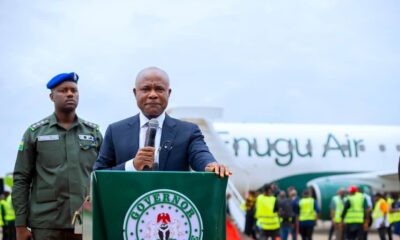




The Nigeria Security and Civil Defense Corps (NSCDC) has deployed no fewer than 2,527 personnel for the Enugu State Local Government Elections scheduled for Saturday, Sept. 26.
The Commandant of NSCDC Enugu State Command, Dr Elijah Willie, told newsmen on Thursday in Enugu that those deployed included uniformed and plain cloth officers and men.
Willie noted that the Corps would strategical deploy seven vehicles for the Area Commanders, four additional van trucks, other vehicles for operational support staff for monitoring, while the commandant vehicular team would be on duty.
According to him, the command is ready for the council elections and we have been preparing ahead of time for it.
He said, “I have met the Corps management staff, Area Commanders, Divisional Corps Officers, head of special squad units and heads of departments on the election for sometime now.
“They have been briefed and oriented on their roles and responsibilities.
“We have developed an operational modules for the election, having received that of the police.
“The command will extend the same operational modules and its instructions down to officers and men in divisional areas and wards in order to ensure all officers and men work according to instruction.
“The command also directed officers and men to be firm carrying out their election duties while being civil and ensure due respect for human rights.”
He revealed that due to the council polls, the command and sister security agencies had been raiding criminal black spots and flashpoints in the state to ensure the state remained calm during the election.
The commandant urged residents to feel free and come out to exercise their franchise, while voting for the candidate of their choice without fear or favour.
“The NSCDC and other sister security agencies are assuring residents of a peaceful, violence-free and fair election as we are highly prepared to ensure a hitch-free and successful election.
“Miscreants are also warned to steer clear of the state and the election as there will be no room or space for them to operate.
“They should also be reminded that their activities are being tracked with statewide technology that will easily spot them out,” he said.
Willie noted that the NSCDC had also put in place other vintage security measures for the election, which might not be appropriate for the press.
It would be recalled that the Enugu State Independent Electoral Commission (ENSIEC) had scheduled a statewide elections into the 17 Chairmanship and 260 Ward Councillorship positions in the state on Saturday, Sept. 26.
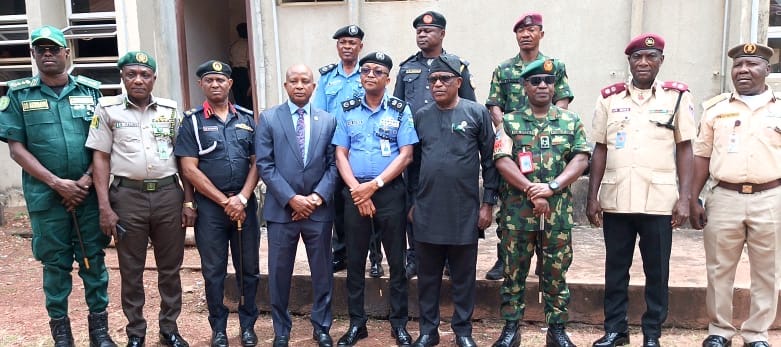
Security agencies in Enugu State have assured residents of the state of a peaceful, hitch-free and credible Local Government Election upcoming on Sept. 26.
Speaking on behalf of other security agencies after a security meeting on the elections on Thursday, the state Commissioner of Police, Mr Mamman Giwa, said that the election security arrangement had been concluded.
Giwa noted that the security agencies had put in place firm and robust strategies to ensure a peaceful, hitch-free and credible election on Sept. 26.
He said that the security agencies had made robust plans to take care of flashpoints and ensure no miscreant do anything to violate electoral rules.
According to him, we have planned to give the residents of Enugu State a very successful and peaceful election that they will be proud of.
“We have put our heads together to come out with formidable strategies for the conduct of the election.
“Our officers and men from various security agencies will be everywhere to ensure safety for all residents and people come out to cast their vote without fear or favour.
“The security agencies have vowed to ensure peace before, during and after the election and respond swiftly to any perceived incident that will be a threat to the election,” he said.
The commissioner said that so far there had been no threat to the election, while the security agencies had deployed adequate intelligence to ensure any threat is taken care of proactively.
Giwa urged those who would want to protect their votes after going to the ballot to do it with civility and decorum, while respecting electoral rules.
Speaking, the Executive Chairman of Enugu State Independent Electoral Commission (ENSIEC), Prof. Christian Ngwu, said that ENSIEC was “very ready” for the election after “due and proper” arrangement.
Ngwu said that security agencies had assured residents adequate security with all their officers and men on ground before, during and after the election.
“They have assured the commission to deal decisively with any threat or persons that intend to cause trouble or create problem for election officials or electorate.
“We are anticipating a successful, hitch-free, transparent and credible election on Saturday.
“ENSIEC want eligible voters to come out en masse with their voters cards to cast their votes and elect their preferred candidates,” he said.
It would be recalled that ENSIEC had scheduled polls for the 17 Chairmanship and 260 Ward Councillorship positions in the state for Sept. 26.
The chairman also urged electorate to be free to defend their votes, adding,: “But you should not cause any trouble while doing that”.
The other security agencies that attended the meeting included: Nigerian Army, Nigerian Air Force, Nigerian Navy, the Nigeria Security and Civil Defense (NSCDC) and Department of State Security (DSS).
The rest are: the Federal Road Safety Corps (FRSC), Nigeria Correctional Service, Nigeria Immigration Service, Nigeria Customs Service, Federal and State Fire Service and the Forest Guard among others.

Former Deputy Speaker of the House of Representatives and Chairman of the Governing Board of the South-South Development Commission, SSDC, Chibudom Nwuche, has urged the Federal Government to grant amnesty to repentant cultists and militant youths in the Orashi area of Rivers State who are willing to lay down their arms and embrace peaceful and productive lives.
Nwuche also called for the rehabilitation, reorientation and reintegration of such youths into society, saying the initiative would help restore peace and security to the troubled communities.
The Orashi area comprises Ahoada East, Ahoada West, Abua/Odual and Ogba/Egbema/Ndoni local government areas of the state.
Nwuche made the appeal through his representative, Chief Kingdom Ajugo, at the commencement of the 2026 Upata Folklore, Ele, at Ula Upata, Ahoada East Local Government Area, on Tuesday.
He expressed concern over the deterioration of security in Ahoada and other parts of the Orashi region, saying the area had witnessed killings and various forms of criminality.
He recalled the gruesome killing of the then Divisional Police Officer, DPO, late CSP Bako Amgbashim, whom he described as a dedicated, intelligent and gallant police officer.
According to him, several appeals have been made to Rivers State government for an amnesty programme for repentant youths in the area, with no action taken.
Nwuche, therefore, appealed to the federal government, particularly the Office of the National Security Adviser, ONSA, headed by Mallam Nuhu Ribadu, to consider an amnesty programme for repentant cultists and violent youths.
He said the programme should include proper rehabilitation, reorientation and reintegration measures to enable beneficiaries become productive members of society.
He also appealed to youths still involved in cultism, kidnapping, robbery and other criminal activities to abandon violence and embrace legitimate livelihoods.
Related News
2027: APC govs divided over Wike, Uzodimma, AbdulRazaq’s feud
Nigeria must process agro commodities to boost export earnings — Stakeholders
Fish import bill drops 14% to N167bn in Q2’26 – NBS
“Those who are still carrying guns and killing our people indiscriminately should stop and accept amnesty and be ready to be reintegrated into society,” he said.
Nwuche said the predominantly farming and trading Ekpeye people should be able to carry out their legitimate businesses without molestation, harassment or fear.
He said hundreds of Ekpeye people had lost their lives to cultism and related violence over the years, declaring that the situation must end.
He urged traditional rulers, community leaders, government and the people to work together to restore peace, insisting that Ekpeye land could no longer be allowed to become a haven for criminals.
Urges Ekpeye unity
Nwuche also urged Ekpeye traditional rulers to provide exemplary leadership and work together to advance the interests of the people.
He appealed to the people of Upata to support their monarch, Eze (Dr.) Felix E. Otuwarikpo, Eze Igbu Upata III, and preserve the cultu ral heritage of the kingdom.
He described the annual Upata Folklore as an important platform for promoting unity, culture and hospitality among the people.
The monarch had earlier declared the 2026 celebration open, describing it as an enduring tradition through which the people celebrate their culture and heritage following the harvest season.
Use your votes wisely in 2027
On politics, Nwuche urged the people of Ekpeye to vote wisely in the 2027 general elections, saying they should support politicians who had demonstrated commitment to the development of the area.
“We have seen and known all those seeking our votes, and I will therefore urge you not to waste your votes but to support those who have shown attention and developed Ekpeye land,” he said.
Nwuche also spoke in support of President Bola Tinubu’s second-term bid and the political platform associated with FCT Minister and former Rivers State governor, Nyesom Wike.
He said he would, at the appropriate time, tour Ekpeye and the wider Orashi region to mobilise support for the political coalition led by Wike.
He recalled projects executed during Wike’s tenure as Rivers State governor, saying they remained significant to the development of Ekpeye land.
The event attracted traditional rulers, chiefs, community leaders, women and youth groups, students and representatives of Ahoada East and Ahoada West local governments. It featured cultural displays, traditional dances, goodwill messages and presentation of gifts to the monarch, chiefs and participants.
-
 Politics3 days ago
WHEN PRIVACY BECOMES CONTENT: The Dangerous Normalisation of Leaked Private Conversations
-
News3 days ago
UK excludes Nigerian, Ghanaian-trained teachers from teaching qualification list
-
News2 days ago
Nigerian cleric flees after body found buried in Cameroon church
-
Opinion3 days ago
Who is in Charge of Nigeria?
-
Business3 days ago
Enugu Air Launches New Website
-
News3 days ago
Kidnapped female Police officer found dead in Ebonyi
-
News1 day ago
NSCDC arrests truck driver, two others for pipeline vandalism in Abuja
-
News1 day ago
ADC: Tinubu, Shettima’s absence leaves Nigeria in constitutional crisis