Connect with us

News

Tinubu’s nepotistic appointments unconstitutional,  undemocratic, HURIWA fumes

Published

on

Spread the love

Adedeji is to “serve in an acting capacity for 90 days before his subsequent confirmation as the substantive chairman of FIRS for a term of four years in the first instance.”

In a statement by Emmanuel Onwubiko, the group noted that “with a little over 100 days on the saddle, the President’s appointments have shown he appears to have special consideration for people from his South-West region, especially those with links to Lagos State”.

The rights group wrote: “If President Tinubu’s appointment of new services sparked new hope and drew deserved plaudits in that it recognised the nation’s diversity, his subsequent appointments curiously depart from that template.

That the disastrous, previous administration of General Muhammadu Buhari, rtd, towed a visionless, divisive path, in the overwhelming tribalistic appointments it made, should never excuse this course that fundamentally degrades the legitimate dream of a new, progressive, inclusive Nigerian state.

Today, the stakes are extremely high and Nigerians are mindful that a failure to achieve democratic stability, through a meritorious, transparent, inclusive governance process may imperil the country’s future as a coherent state. Mere political rewards and seeming ethnic nationalism should not drive the national journey. It is a perilous, avoidable option

Maduka College Advert

The Human Rights Writers’ Association of Nigeria (HURIWA), strongly believes that this is the wrong path to thread, especially against the background of deep mistrust, misery, political and economic dislocations brazenly birthed by the predecessor administration. We believe that like Caesar’s Wife, the Tinubu administration ought to be above suspicion.

We recall here that the central driving mantra and foundational philosophy on which the ruling All Progressives Congress sold its presidential candidate Asiwaju Bola Ahmed Tinubu, now President, to Nigerians, was “Renewed Hope.” Nigerians bought into it and voted the Asiwaju and APC to power because it deeply resonated with the populace. But what is the reality?

Key appointments traversing the nation’s crucial security, judicial and economic sectors are now unabashedly cornered by the South-West region. A quick, non-exhaustive check-list would include: Petroleum Minister: Bola Tinubu; Chief of Staff: Femi Gbajabiamila; Minister of Justice: Lateef Fagbemi; Minister of Finance and the Coordinating Minister of the Economy, Mr. Wale Edun; Acting Governor of the Central Bank of Nigeria (CBN), Mr. Folashodun Shonubi who now gives way to a substantive CBN boss Olayemi Cardoso.

Others include: Minister of Marine & Blue Economy: Bunmi Tunji-Ojo; Minister of Communication, Innovation & Digital Economy: Bosun Tijan; simultaneously, the Chairman of Senate Committee on ICT, Afolabi Salisu, and that of House of Representatives, Adedeji Olajide Odidiomo are both from the South-West; Minister of Power: Adebayo Adelabu; Minister of Transport: Adegboyega Oyetola; Minister of Solid Minerals: Dele Alake; Chief of Army Staff: General Taoreed Lagbaja; Police IG: Kayode Egbetokun; Comptroller-General Customs: Adewale Adeniyi; Comptroller-General Immigration: Adepoju Carol Wura-Ola; FIRS Chairman: Zacchaeus. Adedeji, et cetera.

With the unveiling of the second batch of President Tinubu’s ministerial list and addition of more names the President finally assembled 48 persons that would serve in his cabinet.

The President ‘selected’ his men and women from across the length and breadth of Nigeria. But there’s no cause for cheer in the South-east geopolitical zone because, once again, the zone was shortchanged.

An analysis of the president’s ministerial spread shows that the South-east is the only zone without a zonal representation in the ministerial appointments. President Tinubu barely accommodated the South-east in his cabinet to satisfy the Constitution of the Federal Republic of Nigeria which made it mandatory that each of the 36 states and Abuja must have a minister each.

After complying with the constitutional provision, Tinubu has additional 12 ministerial slots to allocate because of the size of his cabinet, which of course, was his own making. That is where the zonal allocation of ministers comes in.

North-west, the zone with the largest number of states, got seven ministerial slots while North-east, North-central, South-west and South-south received six slots each. The South-east was left with five ministers, just to fulfill constitutional righteousness.

Yet, in his distribution of the extra ministerial slots, Tinubu gave additional three ministers each to North-west and South-west zones, making it a total of 10 and nine ministers for the zones, respectively.

Each of North-east, North-central and South-south were given two extra ministers, making it a total of eight for each of these favoured zones. In fact, the South-south zone received yet another additional ministerial slot yesterday when the name of the immediate past Minister of State for Labour, Festus Keyamo, surfaced in Tinubu’s ministerial list.

Sadly, the South-east was stuck with its five constitutionally mandatory numbers of ministers. No addition. No zonal representation. Just a paltry 10.4 per cent of the 48 names in Tinubu’s prospective ministers.

RIWAIn his zonal distribution of his extra ministerial slots, Tinubu was obviously persuaded by the number of votes he received in each zone during the 2023 presidential poll. However, denying the entire South-east a share of the zonal ministerial representation cannot be considered a smart political decision on the part of Mr. President.

Though Tinubu did not get the quantum of votes he had expected in the South-east, his party, the All Progressives Congress (APC) controls two states – Ebonyi and Imo out of five states in the zone, representing 40 per cent. This should have provided for Tinubu a source of comfort and renewed hope for high yielding political outing in future – certainly not a shabby treatment for a zone with equal stake like others, in the Nigeria project.

Strangely, against all logic of national inclusiveness and the imperative of taking the right first steps of building a promised new Nigeria anchored on “Renewed Hope,” the President Tinubu administration is threading the old, dodgy path, in violation of the constitutionally guaranteed principle of federal character, however craftily shrouded in subterfuge.

As a preeminent and prominent good governance-oriented human rights organisation sworn to fight corruption and human rights abuses in Nigeria and on the continent, the Human Rights Writers’ Association of Nigeria, (HURIWA), totally rejects this governance course.

This unfolding pro-ethnic gambit is surprisingly provoking pushbacks from regional organisations, including the ‘favored’ South-West.

Some S/West APC stakeholders under the aegis of South West APC Support Groups (SASG) earlier in the day alleged that states in the zone are being sidelined in the appointments of presidential aides announced so far, as only the ‘Lagos boys’ are snatching the slots.

In a statement signed by its national coordinator, Otunba Dele Fulani, the SASG expressed worry that the trend might be extended to ministerial and board appointments for MDAs if not addressed immediately.

Besides Ohanaeze Ndigbo’s shrill objections against its zone’s alleged peripheralisation by the Tinubu administration, the Arewa Economic Forum also recently accused President Tinubu of ethnic bias in the selection of appointees into crucial economic sectors.

“We are afraid to state that a situation whereby the appointees in crucial economic sectors are not only from the Southwest but also connected to the Lagos axis suggests a deliberate ‘Yorubanisation’ and ‘Lagoslisation’ of the polity,” chairman of the forum Ibrahim Shehu Yahaya, recently said.

HURIWA contends that the several foreign trips President Tinubu has embarked on since assuming Nigeria’s presidency ought to provoke a fundamental re-examination of the probable subsisting provincial garbs he may be donning and ethno-nationalistic philosophy he has internalised as a regional champion before ascending to the national stage.

The G20 Summit, France outing, ECOWAS exposure and the current UNGA trip should impact the President and force a rethink on the flawed course he is threading so early in his tenure.

HURIWA believes that the time to backtrack from his pro-ethnic appointments, embrace an emergent new Nigeria and hence, Renewed Hope, is now.


News

Troops rescue Widow of late Major General Rabe Abubakar

Published

on

Spread the love

Troops of the Nigerian Army’s 17 Brigade have rescued Mrs. Abubakar, the widow of the late Major General Rabe Abubakar, who was abducted by bandits shortly before the retired senior military officer died in captivity.

According to military sources, the rescue operation was carried out in Tunga Village, where troops encountered the armed bandits holding her captive. During the exchange, the kidnappers reportedly shot Mrs. Abubakar before fleeing as soldiers advanced on their position.

The troops immediately secured the area, rescued her and administered emergency first aid.

Military authorities said Mrs. Abubakar sustained gunshot wounds and was bleeding when she was rescued. She is currently receiving medical treatment.

The rescue comes days after the burial of Major General Rabe Abubakar, whose death while in captivity sparked widespread outrage and renewed concerns over insecurity in parts of the country.

Following Major General Abubakar’s death, the Defense Headquarters’ Joint Task Force North West, under Operation Fansan Yamma, launched a major offensive operation, codenamed Operation Clean Sweep III, targeting terrorists and bandits operating in Matazu Local Government Area and neighbouring communities in Katsina State.

Maduka College Advert

According to the military, the operation commenced on 14 June 2026 to locate and neutralise those responsible for the attack, dismantling criminal networks, and restoring security across the affected communities.

Continue Reading

News

Popular Businessman dies in captivity despite ₦5 million ransom payment

Published

on

Alhaji Bala Sani Kawo
Spread the love

Residents of Dandume Local Government Area of Katsina State have been thrown into mourning following the killing of a prominent businessman and farmer, Alhaji Bala Sani Kawo, by suspected bandits despite the payment of a N5 million ransom for his release.

Kawo was reportedly abducted alongside one of his workers on June 11 near Dantakari town in Dandume LGA when armed men intercepted them and whisked them away into a forest.

Sources close to the family disclosed that the kidnappers later contacted relatives of the victim and informed them that he was ill while in captivity. They subsequently demanded N5 million as a condition for his release.

According to the source, the family raised the money and delivered it to the abductors as instructed. However, after receiving the ransom, the criminals reportedly directed family members to a designated location where Kawo’s lifeless body was discovered.

The killing has sparked grief across the community, with residents lamenting the loss of a businessman widely known for his contributions to agriculture and his role in providing employment opportunities for many youths in the area.

The incident comes amid renewed security concerns in Katsina State and follows the recent death of a former Director of Defence Information, Major-General Rabe Abubakar, who reportedly died while being held captive by terrorists.

Maduka College Advert

In response to rising insecurity in the North-West, troops of the Joint Task Force North West under Operation FANSAN YAMMA have launched a fresh offensive against terrorist and bandit groups operating in parts of Katsina State.

The task force’s Media Information Officer, Lieutenant Colonel Aliyu Danja, said in a statement on Monday that the operation, code-named “Clean Sweep,” commenced on June 14 as part of efforts to dismantle criminal enclaves and restore security in the region.

Continue Reading

News

Over 50 Bandit Attacks Recorded in a Week as FG Spends N57.78bn on Security

Published

on

Spread the love

The Federal Government spent N57.78bn on security-related projects and operations in the first four months of 2026, despite worsening insecurity across the country, with no fewer than 98 criminal incidents including 51 attacks and abductions recorded nationwide in just one week.

Data obtained from the Open Treasury Portal showed that the spending, which covered defence equipment procurement, security infrastructure, military barracks, police facilities and other security-related projects, represented a 127.97 per cent increase from the N25.35bn spent during the corresponding period of 2025.

The expenditure comes amid persistent attacks by terrorists, bandits, kidnappers and armed criminals across several states, raising concerns among security experts over the effectiveness of government efforts to tackle the crisis.

Analysis of the Treasury Portal data showed that N57.78bn had been spent as of April 2026 from a total security allocation of N4.66tn, indicating that only 1.24 per cent of the approved budget had been utilised within the first four months of the year.

The largest share of the expenditure, N21.39bn, was spent on defence equipment procurement, accounting for about 37 per cent of total security spending during the period.

Another N14.16bn was spent on security equipment, while N5.84bn went to the construction and provision of military barracks. The government also spent N5.17bn on police stations and barracks, N3.26bn on rehabilitation of defence equipment, N2.39bn on defence facilities and N2.16bn on repairs of military barracks.

Maduka College Advert

For routine operations, N3bn was spent on security services, while N320.94m was disbursed as security votes.

However, no expenditure was recorded under the military operations budget line tagged “Operation Lafiya Dole and Other Operations of the Armed Forces,” despite a N500m provision in the 2026 budget.

Similarly, no funds had been released for the kitting of Armed Forces personnel, although N2.53bn was earmarked for the programme.

A year-on-year comparison showed that spending on defence equipment rose from N9.48bn in the first four months of 2025 to N21.39bn in 2026, while military barracks construction increased from zero to N5.84bn.

Despite the increase in spending, budget implementation remained low across most security projects, with many critical programmes recording execution rates below three per cent.

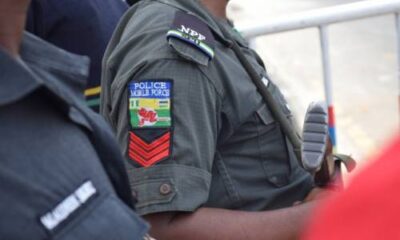
The spending figures emerged as a police security report obtained by The PUNCH revealed that at least 98 criminal incidents were recorded across Nigeria within the last seven days.

The report showed that the incidents comprised 37 homicide cases, 27 banditry attacks, 24 kidnappings, eight armed robbery incidents and two terrorism-related attacks.

The incidents were reported across Kaduna, Katsina, Zamfara, Kebbi and several other states, involving mass abductions, attacks on rural communities and kidnappings along major highways.

Among the most disturbing incidents was the abduction of 39 residents in Zamfara State after they reportedly travelled into the Fadama Forest to negotiate peace with a notorious bandit leader, Jimo Smally.

In Katsina State, bandits blocked the Katsina-Kankara highway and intercepted a commercial vehicle carrying 11 passengers. Police later rescued nine victims, while the driver and another passenger remained missing.

Reacting to the development, security analyst, Lekan Jackson-Ojo, described the situation as the worst insecurity crisis in Nigeria’s history.

“This is the highest level of insecurity in the military and political history of the Federal Republic of Nigeria,” he said.

“It is an indirect pronouncement that Nigeria is an unsafe territory now. We are having a battered economy, and there is no economy anywhere in the world that thrives under insecurity.”
Jackson-Ojo said the country had suffered unprecedented security losses in recent months.

“During the civil war, I did not remember if a general died. In the war between Ukraine and Russia, a general has not lost his life. In the war between Iran, America and Israel, a general has not lost his life. But within the past three months, we have lost almost four generals — and there is no reprisal attack,” he stated.

The analyst also criticised the reintegration of repentant terrorists into society.

“I’ve never heard it anywhere in the world that terrorists who have terrorised, damaged and killed will be integrated back into society. To me, I think the government is totally helpless — total incapability, lack of political will. Something, or many things are wrong now,” he added.

He further lamented what he described as the political elite’s preoccupation with electoral activities rather than security challenges.

“What preoccupies our political class is campaign, campaign, campaign and campaign. This is a sad situation,” he stressed.

Another security analyst, Chidi Omeje, argued that the military remained overstretched despite increased government spending.

“The military, on their own, are completely overstretched. You can count almost over 30 terrorist operations in this country where military guys are deployed,” he said.

“One MRAP alone is almost N100 billion. If you put an aircraft in the sky to do an operation, do you know how much it costs for just one hour? By the time you put that N56 billion in dollars, it amounts to nothing.”

According to him, military operations alone would not solve Nigeria’s security challenges.

“Unless we are able to deal with the root causes, we will keep going in circles. Most of the issues are born out of bad governance, wrong prioritisation, corruption and pervasive poverty, which has made people see crime and criminality as an option for survival,” Omeje said.

He also blamed porous borders and instability across the Sahel region for worsening insecurity in Nigeria.

“From Mali to Burkina Faso to Nigeria — those places are the epicentre of terrorism. Nigeria is an attractive destination because we have porous borders and poor border management,” he stated.

Omeje urged the government to take decisive action.

“The government seems almost clueless about how to go about this matter. They are paid to find solutions — so they must find solutions,” he said.

The latest figures suggest that while the Federal Government has significantly increased security spending compared to last year, insecurity remains widespread, with violent attacks continuing across the country and a large portion of budgeted security funds yet to be utilised. (PUNCH)

Continue Reading

Trending

Maduka College Advert