
Connect with us

News

Minister Momoh and Ogbuku: Guardians of NDDC’s Integrity

Published

on

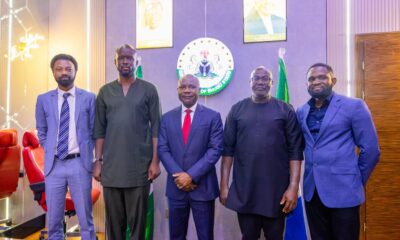
• Dr. Samuel Ogbuku, MD of NDDC and Engr. Abubakar Momoh, Minister of Niger Delta Development
Spread the love

By John Mayaki

The urgent need for national attention to address the absence of development and the decay of infrastructure in the oil-rich Niger Delta region cannot be overstated. This is precisely why the Niger Delta Development Commission (NDDC) was established with the crucial mission of driving progress and development in the area. However, over time, this agency has seemingly lost credibility.

Now, two prominent figures have stepped forward as staunch defenders of the agency’s integrity. Hon. Engr. Abubakar Momoh, the Minister of Niger Delta Development, and Dr. Samuel Ogbuku, the Managing Director of the NDDC, have taken on the mantle of guardians, determined to combat the perception of a corruption-ridden commission.

These two leaders, with their unwavering commitment and resolute spirit, have accepted the challenge to dispel any notion of the NDDC as a cesspool of corruption. In the spotlight, they understand the critical importance of upholding transparency, accountability, and ethical conduct within the organization.

Minister Abubakar Momoh, who heads the ministry overseeing the NDDC, has declared an end to the era of tolerating corruption within the commission. He said the era before the Samuel Ogbuku’s leadership of the NDDC, it is understandable. His pledge to depart from the shadows of malfeasance and embrace transparency is not mere rhetoric but a resounding call to action. He stands ready to tread where others might fear to step, and his determination to restore the NDDC’s tarnished image remains unwavering.

The voice of the Minister resonates with unwavering commitment. With steadfast determination, he stands as a guardian, shielding the integrity of the Niger Delta Development Commission (NDDC) from the scourge of corruption.

Maduka College Advert

In his solemn pledge, Minister Momoh proclaims the end of an era of tolerance for corruption within the NDDC. He signifies a departure from the shadows of malfeasance and embraces transparency and accountability. He declares his readiness to tread into uncharted territory, where others might hesitate. With vigilant eyes from both the public and the nation focused on the organization, his determination to restore its tarnished image remains resolute.

Having traversed the landscapes of Rivers and Bayelsa States and witnessed the yet-to-be completed and deteriorating state of the East West Road firsthand, Minister Momoh’s heart resonates with a call to action. The dire state of vital infrastructure serves as a poignant reminder of the pressing needs of the Niger Delta region. His commitment to champion the realization of this road project underscores its pivotal role as a catalyst for regional development.

The renaming of the agency, transitioning from “Niger Delta Affairs” to “Niger Delta Development,” carries profound significance. It signals a shift in focus, from mundane administrative affairs to the pursuit of genuine development by President Bola Tinubu. This transformation aligns with the evolving mission of the NDDC and signifies a commitment to bring about meaningful change.

The minister’s assurance that the NDDC will undergo a transformation under his leadership typifies a man who embodies hope for a brighter future in the Niger Delta. His words reverberate through the annals of policy-making, promising an era marked by accountability, progress, and prosperity for a region that has long yearned for change.

As the minister’s unwavering resolve takes root, it symbolizes the enduring spirit of leadership and transformation in the pursuit of a better future for the Niger Delta and its people. His words offer a glimpse into the potential for a region once plagued by corruption to rise anew, guided by the spirit of integrity and development.

The Minister is not alone in this resolve – Dr. Samuel Ogbuku, as the Managing Director, also reinforces this commitment. His sagacious counsel reminds all stakeholders of the importance of refraining from casting doubt on the institution he leads. He understands that in today’s global landscape, transparency and credibility are the bedrock of successful collaborations. Doubt, whether founded or unfounded, can tarnish the NDDC’s reputation and hinder its ability to deliver on its promises.

Samuel Ogbuku, a prominent figure in the intricate landscape of Niger Delta politics, stepped into the spotlight with his appointment as the CEO of the Commission. Hailing from Bayelsa State, his ascent to a leadership role within the NDDC mirrors the complex dynamics of power and influence.

Ogbuku’s appointment occurred during the tenure of former President Muhammadu Buhari in December 2022. However, as political tides shifted and President Bola Ahmed Tinubu assumed office, the NDDC board faced dissolution. In an unexpected turn of events, Ogbuku was reappointed to serve his full term, a decision that elicited diverse reactions across the political spectrum.

While some advocated for his removal to accommodate loyalists of the new president, Ogbuku’s continued leadership garnered support from influential quarters. Rivers State Governor, Sir, Siminalayi Fubara, and Governor Douye Diri of Bayelsa State, in particular, commended President Tinubu for this reappointment. Diri’s endorsement underscored Ogbuku’s significance as an “illustrious son” of the Niger Delta region, indicating that his leadership was perceived as beneficial for addressing the region’s challenges.

Ogbuku’s narrative serves as a compelling illustration of the intricacies and shifting dynamics of political appointments, as well as the delicate equilibrium of regional interests. In this ever-evolving landscape, his tenure as CEO of the NDDC stands as a testament to the complexities of governance in Nigeria’s Niger Delta region.

Ogbuku, the man who imparts sagacious advice, wants people to refrain from casting doubt on the institution he leads. His words carry the weight of wisdom, for they illuminate a fundamental truth in the sphere of public service and international cooperation.

In our modern global landscape, transparency and credibility have become the cornerstones of successful collaborations. The NDDC, entrusted with the formidable mission of propelling progress and development in the Niger Delta region, cannot afford to bear the stain of skepticism or uncertainty. Aspersions, whether founded or baseless, cast upon it can reverberate through the corridors of perception, tarnishing its reputation.

The significance of preserving an untarnished image for institutions like the NDDC cannot be overstated. In an interconnected world where partnerships with international organizations, governments, and donors play a pivotal role in shaping regional development, credibility emerges as the most valuable asset. Skepticism can discourage potential allies, sowing seeds of doubt about the NDDC’s ability to deliver on its commitments.

Dr. Ogbuku’s counsel serves as a poignant reminder that nurturing trust and confidence in the NDDC’s operations is not solely an internal concern but a prerequisite for attracting the support and collaboration essential for fulfilling its ambitious goals. The Niger Delta region, with its distinct challenges and opportunities, necessitates a robust, esteemed, and trusted institution to steer its transformation.

In essence, Ogbuku’s words resound as an appeal for unity of purpose and an unwavering commitment to transparency. They underscore the profound interconnection between perception and reality, emphasizing that building a positive reputation stands as an indispensable facet of the N DDC’s mandate. As it endeavors to unlock the region’s potential and enhance the well-being of its people, the NDDC’s image assumes the role of a guiding beacon, lighting the path toward fruitful partnerships and sustainable development.

Together, Minister Abubakar Momoh and Dr. Samuel Ogbuku embody the spirit of guardianship and accountability within the NDDC. Their actions and words echo a profound truth: safeguarding the integrity of the interventionist agency is not just a matter of internal concern but a prerequisite for attracting the support and collaboration necessary for achieving the ambitious goals set forth for the Niger Delta region.

In this shared endeavor, they exemplify leadership’s resilience and the enduring commitment to a brighter future for the Niger Delta and its people. They illuminate a path forward, where the NDDC’s image serves as a beacon, guiding the way toward fruitful collaborations, sustainable development, and an agency free from the shadows of corruption.

News

DHQ confirms abducted General’s death, vows crackdown on terrorists

Published

on

Rtd Major General Rabe Abubakar
Spread the love

THE Defence Headquarters (DHQ) has confirmed the death of retired Maj.-Gen. Rabe Abubakar, while in captivity after being abducted by terrorists.

The Director of Defence Information, Maj.-Gen. Samaila Uba, disclosed this in a statement on Saturday in Abuja, and expressed the Armed Forces of Nigeria’s (AFN) deep sorrow over the tragic loss.

Uba said the military withheld public comments on the retired general’s abduction to avoid jeopardising ongoing rescue efforts mounted by the armed forces and other security agencies.

He said every available operational resources was deployed in the bid to secure the safe release of the former military spokesman before his death.

“The DHQ regrets to announce the passing of retired Maj.Gen. Rabe Abubakar, who tragically lost his life in captivity following his abduction,” he said.

“We extend our heartfelt condolences to the family of the late senior officer, his associates and Nigerians at large over the painful loss,” he said .

Maduka College Advert

He described Abubakar as a distinguished officer who served the nation with honour and professionalism in several strategic appointments during his military career.

“The deceased served as spokesman for various military formations and later as Director of Defence Information, where he played a significant role in projecting the activities and operations of the military.

“He also made notable contributions to counter-insurgency operations, the professional development of military personnel and other national security initiatives.

“His commitment to duty and the unity of Nigeria remains a shining example for all personnel of the Armed Forces of Nigeria,” he said.

Uba said that the unfortunate incident had further strengthened the resolve of the military to intensify operations against terrorists, bandits and other criminal elements threatening national security.

He added that ongoing operations across the country had already been reinforced in response to the growing wave of abductions and violent attacks, including the incident involving the retired general.

“The DHQ reiterates its determination to dismantle terrorist networks and restore lasting peace and security across the country.

“The military remains committed to defending Nigeria’s sovereignty, protecting citizens and ensuring that those responsible for acts of terrorism are brought to justice.

“We assure Nigerians that the Armed Forces will not relent until peace and security are restored and those responsible for terrorist activities across the nation are held to account,” he said. (NAN)

Continue Reading

News

Ex-Minister, Uche Nnaji speaks on alleged ICPC arrest order against him

Published

on

Spread the love

Former Minister of Innovation, Science and Technology, Chief Uche Geoffrey Nnaji, has dismissed as ‘false and misleading’ media reports which claimed that a court ordered his arrest in connection with the allegation of certificate forgery.

Nnaji said that the publication was part of a sustained media campaign aimed at tarnishing his reputation.

In a statement issued on Saturday by his spokesperson, Dr. Robert Ngwu, Nnaji maintained that he is neither in hiding nor under investigation by any law enforcement agency, insisting that neither he nor his legal team has received any invitation, summons, warrant, or correspondence from the Independent Corrupt Practices and Other Related Offences Commission (ICPC).

The statement accused the Premium Times of attempting to subject the former minister to a “media trial” amid growing political interests surrounding his future aspirations.

It reads: “Statement on the Latest Premium Times Publication Concerning Chief Uche Geoffrey Nnaji

“Our attention has been drawn to yet another PREMIUM TIMES publication alleging that a court has ordered the arrest of former Minister of Innovation, Science and Technology, Chief Uche Geoffrey Nnaji.

Maduka College Advert

“We wish to state unequivocally that Chief Nnaji is not in hiding and has never evaded any law enforcement agency.

“As a former Minister of the Federal Republic of Nigeria, his residence in Asokoro, Abuja, where he has lived for nearly two decades, is well known to public authorities. His residence in Independence Layout, Enugu, has likewise been publicly known since 1990. It is this long-standing visibility, accessibility, and connection to the people that earned him the name “Nwakaibie.”

“We further wish to make it abundantly clear that neither Chief Uche Geoffrey Nnaji nor his legal team, led by Chief Wole Olanipekun, SAN, has received any invitation, summons, warrant, or correspondence whatsoever from the ICPC. No such process has been served at his Abuja or Enugu residences, both of which have been publicly known for decades.

“It is equally important to remind the public that Chief Nnaji is already before the Federal High Court in Suit No. FHC/ABJ/CS/1909/2025 a case he personally filed to clear his name and obtain a judicial determination of issues relating to his academic records. Central to that case is his request for the release of his official academic transcript, a document every graduate is ordinarily entitled to obtain from his or her university. “

The statement further said that contrary to the narrative being promoted by the media, Chief Nnaji was not dragged before the courts, explaining that the former minister “voluntarily approached the judiciary as the Applicant/Plaintiff, seeking the preservation and release of his transcript and relevant records.“

“That matter remains pending before the court and has not been judicially determined,” it added, claiming that “the latest report must also be viewed within the context of a prolonged and extraordinary media focus on Chief Nnaji.”

The statement pointed out that when the media previously contacted Chief Nnaji’s representatives regarding an alleged ICPC “manhunt,” a response was promptly provided denying the claim and requesting supporting evidence.

“Chief Nnaji remains committed to due process, transparency, and the rule of law. He remains confident that facts, not sensational headlines will ultimately prevail. As our people say, “Ezi Okwu Ga-Apụta Ije” the truth will always come to light,” the statement further said.

Continue Reading

News

How MKO Abiola died – Obasanjo, Abdulsalami give details

Published

on

Spread the love

Former President Olusegun Obasanjo and former Head of State Gen. Abdulsalami Abubakar (retd.) have provided insights into the circumstances surrounding the death of Chief MKO Abiola, the presumed winner of the annulled June 12, 1993 presidential election.

Speaking at the public presentation of three books in honor of Abubakar’s 84th birthday, Obasanjo disclosed that Abubakar was actively working to secure Abiola’s release prior to his sudden death in detention.

“Your next move was how to get MKO Abiola released, and you kept me regularly informed, and also related messages to the family. Kola was already in Abuja to pick up his father when the unexpected happened. I remember you telling me on the telephone, ‘our man is dead,’” Obasanjo recounted.

Obasanjo described Abubakar as “a great military leader, an officer and a gentleman, a patriot, a nationalist and a peacemaker.”

He acknowledged Abubakar’s role in stabilizing the nation after the death of Gen. Sani Abacha in June 1998, highlighting how he managed the ensuing political crisis surrounding Abiola’s continued detention.

“You sagaciously managed the seeming confusion and uncertainty that followed Abacha’s death. You emerged from the cloud and carefully proceeded to untangle the nation,” Obasanjo stated, praising Abubakar for facilitating Nigeria’s swift return to democratic governance.

Maduka College Advert

In a related account, Abdulsalami Abubakar dismissed claims that MKO Abiola was poisoned, emphasizing that an autopsy conducted by pathologists from four countries attributed his death to natural causes.

“I do not believe Abiola was poisoned. The family requested an autopsy and we assembled American, British, Nigerian, and Canadian pathologists to conduct it. The autopsy report attributed his death to natural causes,” Abubakar stated in his autobiography, ‘Call of Duty.’

He elaborated on how Abiola collapsed during a meeting with a visiting American delegation on July 7, 1998, revealing that Abiola had been managing pre-existing medical conditions, including hypertension and a heart ailment.

Abubakar recounted the moments leading up to Abiola’s death, where he described Abiola’s distress during a meeting with U.S. officials.

“A doctor arrived within 10 minutes and called for immediate hospital attention. We all helped to put him in a car, but unfortunately, at the end of their efforts, it was not possible, and he died,” he recalled.

Abubakar emphasized that allowing the American delegation to see Abiola was crucial in avoiding speculation about a cover-up regarding his death.

As both former leaders reflected on the legacy of MKO Abiola, they underscored the significance of his struggle for democracy in Nigeria, with Obasanjo attributing Abubakar’s leadership to the country’s eventual transition to civilian rule on May 29, 1999.

Continue Reading

Trending

Maduka College Advert