News
NERC may okay tariff hike as electricity subsidy hits N2.8tn


There are strong indications the Federal Government may consider the request by power distribution companies for a review of their tariff, as the government spending on electricity subsidy has risen to N2.8tn.
A new report by the Nigerian Electricity Regulatory Commission, obtained by our correspondent in Abuja on Sunday, indicated that past hikes in electricity tariffs by Discos saved the government from paying additional N1tn in subsidy to power firms annually.

The July 2023 NERC report was titled, ‘Overview of the Nigeria Electricity Supply Industry.’
Providing an update on the country’s tariff review journey, the commission stated that “between January 2020 and January 2023, tariff increased from 55 per cent of cost recovery to 94 per cent.
It added, “Without the tariff reviews that commenced in 2019, subsidies payable by the government would have grown to about N1tn per annum by 2023. Service-Based Tariff was instrumental in the transition to cost-reflective levels.”

On subsidy payable, the NERC stated that subsidy (tariff shortfall) paid by the Federal Government between 2015 and 2022 rose to N2.8tn in December last year.
It added that between January and April this year, subsidy on electricity gulped N57bn, adding that the Service-Based Tariff scheme help in reducing the amount spent by the government on power subsidies.
“Annual subsidy reduced from N528bn in 2019 to N144bn in 2022. Subsidy in 2023 year-to-date (January to April 2023) stood at N57bn.
“Service-Based Tariff was instrumental to the reduction of tariff subsidy. The financial burden of tariff subsidies between 2015 and 2022 stood at NGN2.8tn,” the NERC stated.
The yearly hikes in power tariffs by the Federal Government through the NERC have been targeted at ending subsidies on electricity.
On Friday 11 power distribution companies in Nigeria had applied for the review of electricity tariffs so as to incorporate the changes in Nigeria’s macroeconomic parameters.
The report stated that the NERC disclosed this in a notice, as it said the Discos stated that their reasons for the rate review were premised on factors affecting the quality of service, operations and sustainability of the companies.
Meanwhile, some power distribution companies had announced on Sunday, June 25, 2023, that there would be a hike in tariff, projected to take effect from July 1, 2023.
The Discos, however, backtracked the next day after widespread criticisms, as they stated that the Nigerian Electricity Regulatory Commission had yet to approve the hike.
The development caused apprehension among power users at the time, as many prepaid consumers rushed to buy more electricity units in their meters, while anticipating a possible hike in tariff.
It was, however, observed on Saturday, being July 1, 2023, that the Discos did not raise the tariff, an indication that they had yet to get the approval of the power sector regulator.
But in the regulator’s notice, as contained in The PUNCH’s report on Friday, it said, “Pursuant to Section 116 (1) and 2(a&b) of the Electricity Act 2023 and other extant rules, the 11 successor electricity distribution companies have filed an application for rate review with the Nigerian Electricity Regulatory Commission.
“The request for rate review is premised on the need to incorporate changes in macroeconomic parameters and other factors affecting the quality of service, operations and sustainability of the companies.”
However, speaking on the requests by Discos for tariff, on Sunday, a senior official at the NERC stated that the commission would ask the power firms to further state why they were bent on having a hike in tariff during the proposed meeting.
“If you study their (Discos) Performance Improvement Plan, the number of transformers they are supposed to buy, did they buy it? And what is the justification for this increase they are asking for?
“How many transformers, lines, meters, etc, are they bringing on? How many customers are they going to migrate from four hours to eight hours, from eight hours to 10 hours, etc?
“These are the justification for rate increase. Although they may likely argue about the increase in foreign exchange rates, but they should know that the price of gas has reduced.
“So, they will need to let us know some of these things,” the NERC official, who pleaded not to be named, due to lack of authorisation, stated.
In the notice published on the NERC website, the commission invited “the general public for comments on the rate review applications by the distribution licensees.”
It stated that “interested stakeholders are advised to review and take into consideration the excerpts of the rate review applications filed with the commission by the respective licensees.”
‘Subsidies should stop’
Commenting on the development, energy economists stated that it was high time that all forms of subsidy on energy energy were stopped by the Federal Government.
“Energy is holistic. It is not like what we have done in the past, which is to treat petroleum and oil as very different from electricity, and to talk about energy and power and not talk about it in a holistic sense.
“So any country that is successful in this area is dealing with energy as a whole and recognising that the hydrocarbons are so useful and important because they are sources of energy.
“So when talking about electricity and trying to divorce it from the rest, you’re going to fail,” the President, Nigeria Association for Energy Economics, Prof. Yinka Omorogbe, stated.
She explained that electricity should not be treated like an elite product, stressing that it served as a commodity for everyone in any country, adding that “everybody has a right to electricity.
Consumers oppose hike
However, power consumers said they were opposed to any move by the government or Discos to hike tariffs, stressing that subsidy on electricity should remain, since subsidy on Premium Motor Spirit, popularly called petrol, was removed in May.
“Nigerians have not been able to cope with the fuel subsidy removal that was done recently and you are talking of power tariff review. Petrol sells for N540/litre in Abuja. It sells for N600 and above in parts of Calabar, Rivers and Bayelsa, and you talking about power tariff hike?
“Nobody is comfortable. Nigerians are not comfortable. Nobody will accept this kind of rise in energy cost. If the Federal Government will re-introduce the policy of paying the market shortfalls, then it will be better for consumers.
“Because if they go the way they are going, it will be disastrous, for we heard that some Discos are asking for as high as N300 per unit of electricity,” the National Secretary, Nigeria Electricity Consumer Advocacy Network, Uket Obonga, told our correspondent.
He said though tariff review should be based on the service delivered to consumers, the Discos were neither delivering nor implementing capital projects as they promised.
Obonga said, “The NERC that is now going about sending notices, does it have a mechanism in place to measure the hours of electricity supplied by the Discos? How do they measure it? Apart from that, when you say Service-Based Tariff, it is not only tied to time, in terms of the number of hours of supply?
“It is equally tied to the quality of electricity supply. Now, who measures the quality of electricity supplied to Nigerians? There is also the issue of CAPEX, capital expenditure. We still have cases where the Discos are no longer involved in metering, rather they push the meters through Meter Asset Provider agents to sell and collect money.
“Their Vesting Contracts on CAPEX and others, are they keeping to it? Are you aware that for evey tariff rate there is a percentage that goes for CAPEX for the Discos? Are they really executing capital projects?”
The NECAN official went ahead to ask, “Have you seen it in any report of NERC where it is stated clearly that the Discos executed considerable amount of capital projects for which they had earlier demanded for an increase in tariff? (PUNCH)




Youths in Tambuwal Local Government Area of Sokoto State have reportedly attacked and set fire to some offices belonging to the All Progressives Congress (APC) amid growing anger over insecurity and worsening economic conditions.
The youths reportedly took to the streets to protest the security challenges affecting communities in the area, as well as the rising cost of living and other difficulties facing residents.
During the protest, some APC offices were vandalised and reportedly set ablaze, while major roads were blocked, disrupting the movement of motorists and other road users.
Video footage from the incident showed a large crowd of youths gathered on a major road, with some of them involved in the destruction of properties.
The development has raised concerns over the growing frustration among residents in parts of Sokoto State, particularly communities affected by attacks and other criminal activities.
The protest came shortly after reports of renewed threats by terrorists operating in neighbouring Zamfara State.
Residents of Talata Mafara Local Government Area had reportedly been given a seven-day deadline by terrorists to provide ₦50 million, 50 cattle and 50 sheep or risk another attack.
The terrorists reportedly entered an open market in the area and issued the demands to residents. The threat followed several attacks allegedly carried out by the group against communities in the area.
Residents had blamed the repeated attacks on what they described as inadequate action by the government and security agencies.
According to residents, the terrorists had previously attacked communities, taken over farmlands and rustled cattle belonging to villagers without facing enough resistance from security forces.
The latest threat has therefore caused renewed fear among residents, who said the attackers had become increasingly bold in their activities.
The situation is also linked to a deadly attack on communities in Sauna Ward, Talata Mafara, in July.
Terrorists reportedly killed 22 farmers who were working on their farmlands during the attack.
The attackers were said to have travelled in large numbers on motorcycles after crossing the Anka–Mayanchi highway. They reportedly moved through communities including Ruwan Gora, Zauren Gora, Tulluwa, Unguwar Shanu, Tsangaya and Tundun Namali before reaching Sauna.
The journey reportedly covered nearly 50 kilometres as the attackers moved through several communities.
Residents said the attack occurred during the day, starting at about 2pm and continuing until around 5pm.
The terrorists were also reportedly involved in cattle rustling during the incident, although the exact number of animals taken was not immediately known.
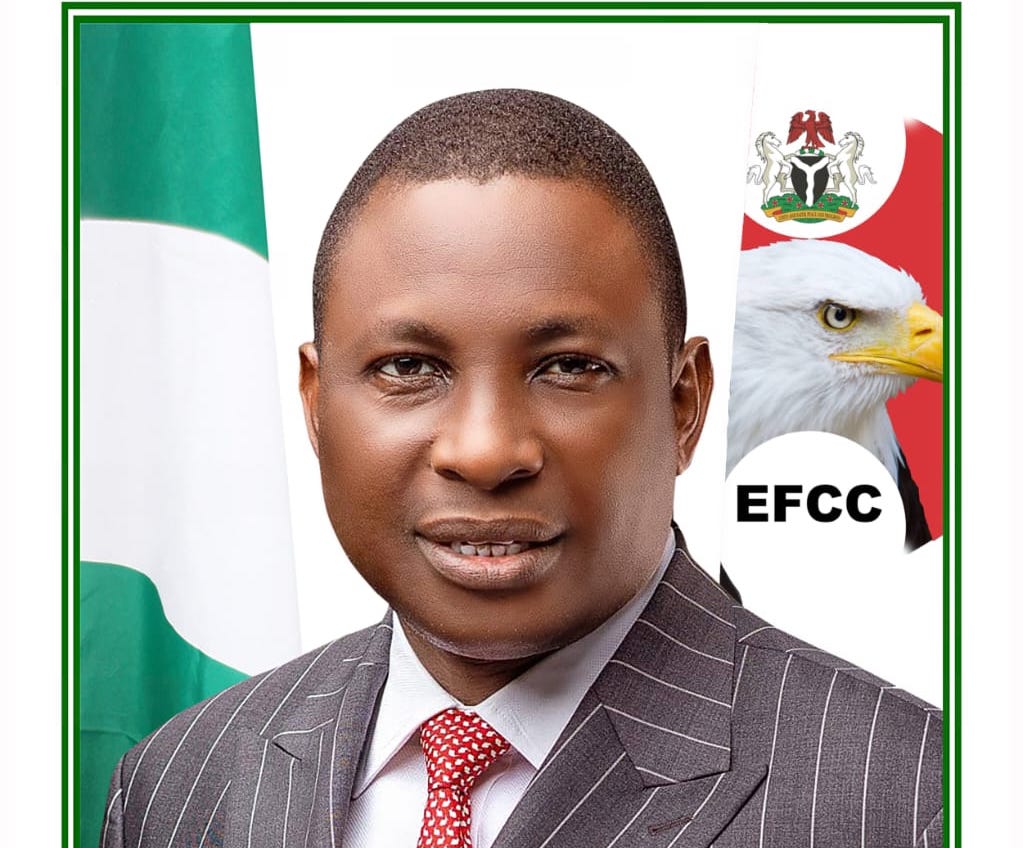
Despite the Executive Chairman of the Economic and Financial Crimes Commission (EFCC), Ola Olukoyede, championing a zero-tolerance policy on internal corruption, a senior managerial officer in the rank of Assistant Commander (ACE) of the Commission has been accused of extensive corruption, abuse of office, obstruction of justice, and unexplained wealth.
The allegations are contained in a six-page petition submitted to the EFCC Chairman on July 9, 2026, by the Network for Justice Association of Nigeria (NJAN), a copy of which PRNigeria obtained.
The petition comes amid heightened scrutiny of alleged misconduct within the anti-graft agency, including a separate investigation involving a sectional head over a reported $400,000 corruption allegation.
Olukoyede has repeatedly emphasised internal cleansing as essential to the credibility of the Commission’s anti-corruption campaign, with the EFCC sanctioning and dismissing personnel found culpable of fraud, misconduct and other breaches.
However, the latest petition raises serious allegations against a senior officer reportedly close to the Commission’s leadership and whose monthly remuneration is said to be between N800,000 and N900,000.
The petition, signed by NJAN President, Adedeji Sunday Ajala, was also copied to the Attorney-General of the Federation, Director-General of the Department of State Services (DSS), Chairman of the Independent Corrupt Practices and Other Related Offences Commission (ICPC), and Chairman of the Code of Conduct Bureau (CCB).
NJAN listed 21 allegations against the officer, ranging from abuse of office and extortion to interference with investigations, unauthorised access to financial intelligence and acquisition of assets allegedly inconsistent with his legitimate income.
PRNigeria has not independently established the allegations, and the petition did not provide evidence of any conviction or formal finding of wrongdoing against the officer.
According to the petition, individuals who supplied some of the information requested anonymity because of alleged fears of victimisation within the Commission. NJAN, however, maintained that the claims were based on what it described as “consistent accounts and observable patterns” capable of being independently verified.
One of the central allegations is that the officer presents himself as the “lifeline” of the EFCC Chairman and allegedly invokes his purported closeness to the leadership to wield influence within the Commission.
The petitioners alleged that the officer sometimes bypasses established operational procedures by obtaining approvals directly from the Chairman without routing matters through relevant supervisory channels, including the Head and Director of Operations.
They further claimed that the officer allegedly demands as much as 10 per cent of sums involved in some petitions before investigations commence and, in certain instances, secures approval for petitions without subjecting them to the Commission’s normal vetting process.
Another allegation concerns the purported acquisition of confidential banking information. NJAN alleged that the officer works with contacts in the financial sector to obtain information on individuals and companies, which is subsequently used for extortion rather than legitimate investigation and prosecution.
The group also accused the officer of holding undisclosed meetings with high-profile suspects inside and outside EFCC premises, where unofficial settlements and “soft landings” were allegedly negotiated.
The petition claimed that some of the alleged encounters were recorded and could be investigated. Among the most serious accusations are claims that the officer received substantial sums in local and foreign currencies through proxies in exchange for favourable treatment of suspects.
The petition also alleged that some individuals were falsely informed they had been placed on security watchlists to extract money from them. It further accused the officer of conspiring with politicians to use EFCC processes against political opponents, including alleged interference with administrative bail in return for financial inducements.
The petitioners also urged scrutiny of the officer’s assets, which they claim are far beyond his legitimate earnings. They cited luxury vehicles, duplexes allegedly acquired through a construction firm, and Dubai properties reportedly purchased through a real estate company.
NJAN alleged that over $1 million in cash was used for some of the overseas acquisitions, including a purported $300,000 transaction in June 2026 — claims PRNigeria has not independently verified.
The petition further questioned the officer’s frequent business-class trips to the United States and alleged ownership of property there, calling for checks on immigration and financial records. A poultry business linked to the officer was also flagged for investigation over suspicions that it may serve as a front for trade-based money laundering, though the petition cited no formal findings by any competent authority.
NJAN also alleged that the officer maintains relationships with influential political and business figures whose interests could intersect with his official duties. In one instance, the petition claimed that a prominent South-East businessman allegedly engaged the officer to influence a case before the Commission, including a reported visit to the businessman’s Abuja residence on June 1, 2026, where an undisclosed sum in USD was allegedly paid to suppress a matter.
The petition similarly alleged contacts with political figures in northern Nigeria, including individuals reportedly linked to cases under the officer’s purview. It warned that, if proven, such relationships could compromise the EFCC’s credibility, weaken public confidence in anti-corruption enforcement and demoralise officers who carry out their duties professionally.
They consequently called on Olukoyede to institute an independent and comprehensive investigation into the allegations, secure relevant documentary and electronic evidence, protect potential witnesses and take appropriate action where wrongdoing is established.
“A thorough investigation and decisive action will reinforce public confidence in the Commission’s commitment to accountability and send a clear message that no officer, regardless of rank or influence, is above the law,” the petition stated.
When contacted, EFCC spokesperson Dele Oyewale told PRNigeria that the Commission maintains a strict zero-tolerance stance on internal corruption. He said over 40 staff members were recently dismissed following thorough, independent investigations.
Oyewale said internal disciplinary reviews are continuous but noted that he was not yet aware of the latest petition specifically targeting the officer. (PRNigeria)
…seeks an order of mandamus to compel release of original certificates
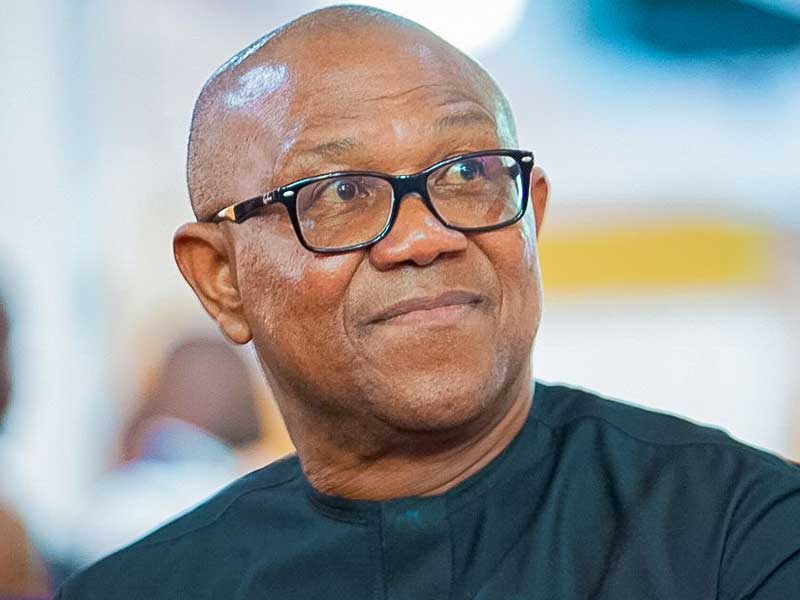
The credentials of the presidential candidate of the Nigerian Democratic Congress (NDC), Mr. Peter Obi, appear to be under scrutiny, as three separate suits before the Federal High Court in Abuja seek to compel the release of his original certificates.
The legal actions are seeking orders of mandamus against the West African Examinations Council (WAEC), the University of Nigeria, Nsukka (UNN), and the National Youth Service Corps (NYSC), compelling them to make available to an applicant copies of certificates issued to the NDC candidate.
The suits, filed by a chieftain of the Labour Party (LP), Mr. Abayomi Arabambi, were predicated on the alleged refusal of the affected federal institutions to release details of Mr. Obi’s academic record in their custody, in line with the provisions of the Freedom of Information (FOI) Act, 2011.
While the suit against WAEC, marked FHC/ABJ/CS/2064/2026, and the one against NYSC, marked FHC/ABJ/CS/2063/2026, were filed on September 1, the action against UNN, marked FHC/ABJ/CS/2144/2026, was filed on September 9.
The plaintiff, through his team of lawyers led by Mr. Anderson Asemota, said he is not asking the court to determine whether the certificates the NDC presidential flag-bearer attached to the Form EC 9 he submitted to the Independent National Electoral Commission (INEC) for the 2027 presidential election were “genuine or forged,” but is only seeking disclosure of the respondents’ official records “from which the status and particulars of the certificates may be ascertained.”
Arabambi told the court that he had written separately to the institutions demanding information concerning the certificates he believed they had issued to Obi.
He said his requests were not attended to, nor was there any explanation from the respondents as to why the information he sought could not be released.
According to the plaintiff, the information he is seeking is in the public interest and serves “purposes of transparency and accountability concerning persons seeking public office.”
Specifically, he is praying the court to compel WAEC, through an order of mandamus, to release to him a Certified True Copy (CTC) of WAEC Certificate No. SC042560, issued to Obi Gregory Onwubuase in June 1978.
The plaintiff is also praying the court to compel UNN to release to him the university’s certificate register, academic records, graduation records, Senate/degree-award records, and other existing official records relevant to Certificate No. D000198, insofar as such records exist.
“The applicant is not asking this court, in this proceeding, to pronounce that Certificate No. D000198 is genuine or forged.
“Rather, to ascertain what the university’s own official records disclose concerning the certificate,” he added.
Likewise, he urged the court to order NYSC to grant him access to official records relating to “NYSC Certificate No. 203495, stated to have been issued to Obi, Gregory Peter-Onwubuase (Mr.), on May 1, 1986,”
as well as the release of “any official record, certificate, document, or other material upon which the said Certificate No. 203495 was predicated, based, or issued, insofar as the same is in the custody, possession, or control of the respondents.”
“The request further sought information concerning the manner in which the name ‘Peter-Onwubuase’ appears in the relevant NYSC records.”
Court processes revealed that while WAEC, on August 11, declined the plaintiff’s request, citing the provisions of Sections 14(1)(a) and 14(2)(a) and (b) of the Freedom of Information Act, 2011, both UNN and NYSC neither granted the request nor gave any reason for refusing the application.
Consequently, the plaintiff is asking the court to declare that “the refusal of the respondents to furnish the applicant with the requested information, as communicated in its letter dated 11th August 2026, and in reliance on Section 14(1)(a) and Section 14(2)(a) and (b) of the Freedom of Information Act, 2011, is erroneous.”
He wants the court to declare that the request he made pursuant to the provisions of the FOI Act, 2011, was valid and ought to have been granted by the affected institutions.
He applied for: “An order of mandamus compelling the respondents to communicate to the applicant the result of a verification of the particulars of Certificate No. D000198 from the university’s existing official records, including whether the said certificate and/or its particulars appear in those records.”
“An order of mandamus compelling the respondents to communicate to the applicant the result of their verification of Certificate No. 203495 as disclosed by their official records.”
“An order directing the respondents, if they contend that any part of the requested information is exempt from disclosure, to identify the particular information withheld and the precise statutory provision relied upon for the refusal, and to disclose all severable non-exempt portions.”
Also, “an order pursuant to Section 25 of the Freedom of Information Act directing disclosure of the requested information where this Honourable Court finds that the respondents are not authorised to deny access, have no reasonable grounds for denying access, or that the public interest in disclosure outweighs the interest served by withholding it.”
Meanwhile, no date has been fixed for the hearing of the suits. (Vanguard)
-
 News1 day ago
2027: Obi’s credentials under probe as LP chieftain sues WAEC, UNN, NYSC
-
Editorial2 days ago
60 Years After: The Enduring Legacy Of Sir Odumegwu Ojukwu
-
News2 days ago
More hardship for Nigerians as petrol, diesel prices rise again
-
News1 day ago
Four rescued, one feared dead as uncompleted building collapses in Enugu
-
News21 hours ago
Senior EFCC Officer faces allegations of abuse of office and unexplained wealth
-
Politics3 days ago
APC welcomes mass defection, promises full integration of 10,000 new members
-
Politics1 day ago
2027: Tinubu, Atiku, Obi, 15 others make INEC final presidential candidates’ list
-
News2 days ago
Ex-PDP chairman, Bamanga Tukur, dies at 90