Connect with us

Education

37 newly approved private universities get FG’s licences

Published

on

National Universities Commission
Spread the love
The federal government on Friday, presented operational licences to the 37 newly approved private universities in the country.

Recall that the Federal Executive Council, FEC, had on May 15,2023, approved the registration of 37 private universities in Nigeria.

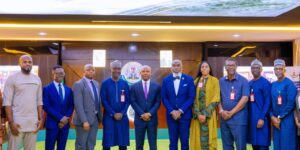
The presentation of the licences was carried out by the National Universities Commission, NUC, at its headquarters in Abuja.

With the development, the number of private universities operating in the country is now 147, according to the Executive Secretary of the commission, Prof. Abubakar Rasheed.

The NUC boss, who also said the country now has a total of 264 universities, noted that investment in tertiary education was a requirement for human capital development in Nigeria.

According to him, access to university education remained a challenge due to the high demand and increasing number of secondary school graduates.

Maduka College Advert

He said: “The Nigerian statistics of high demand of tertiary education is grossly inadequate. Statistics put the number of enrollment in tertiary institutions at 2.23 million which is about 12 per cent of the total population of 220 million.”

He challenged the proprietors of the newly established universities to ensure that the motive for creating the universities were not for money but for a higher and noble goal.

Rasheed said: “In establishing universities, you don’t expect to get financial rewards. If your main motive is to make money, then you are in a wrong place. You are here to pay back to humanity. The establishment of private universities is in dire need of passion from people, so that passion should drive you.”

While charging the proprietors of quality assurance in the universities, the NUC boss assured of the commission’s support and cooperation to grow the university system.

Speaking at the occasio, the Permanent Secretary, Federal Ministry of Education, Mr David Adejo, said the federal government was committed to public private partnership, especially in education sector which gave rise to the new universities.

According to him, the gross total enrollment ratio stands at 12 per cent so there is a gap between demand and supply and as long as this gap exists, government will continue to welcome proposals for university’s enrollment by credible group.

He said the government would ensure that quality assurance and minimum standards in those universities were not compromised.

The new universities were listed as: Rayhaan University, Kebbi state, Muhammad Kamalu-Deen University, Kwara state, Sam Maris University, Ondo….state and Aletheia University, Ago-Iwoye, Ogun state; Lux Mundi University, Abia state, Maduka University, Enugu state, Peaceland University, Enugu state, Amadeus University, Abia state, Vision University , Ogun state, Azman University, Kano state, Huda University, Zamfara state, Franco British International University, Kanuna and Canadian University of Nigeria, FCT.

Others are Miva Open University, FCT, Gerar University of Medical Sciences, Ogun state, British Canadian University, Cross River state, Hensard University, Bayelsa State,…Phoenix University, Nasarawa State Wigwe University, Rivers state and Hillside University of Science and Technology, Ekiti state.

Also, are the University of the Niger, Anambra state Elrazi University of Medical Sciences, Kano state, Venite University, Ekiti state,…Shanahan University, Anambra state, the Duke Medical University, Cross River state, Mercy Medical University, Osun State, Cosmopolitan University, FCT, Iconic Open University, Sokoto State, West Midland Open University, Oyo State and Amaj University, FCT are in the list.

Others are: Prime University, FCT, El-Amin University, Niger state, College of Petroleum and Energy Studies, Kaduna state, Jewel University, Gombe, Nigerian University of Technology and Management, Lagos State, Al-Muhibbah Open University, FCT and Al-Bayan University, Kogi state.


Education

Digital Economy Boost: NCC Leases Digital Industrial Park, Learning Centre to Enugu State Gov’t

Published

on

Spread the love

…NCC’s CEO lauds Mbah’s Smart Schools, infrastructural, digital capacity initiatives

In a major boost to President Bola Tinubu’s digital economy agenda, the Nigerian Communications Commission (NCC) and the Enugu State Government, on Tuesday, sealed a strategic 15-year lease of the agency’s Digital Industrial Park and Learning Centre to the Enugu State Government.

The move would see the Enugu State Government take over and optimise the facilities located in the state capital as the Enugu Talent City and Artificial Intelligence (AI) Institute in line with the digital economy drive of the Governor Peter Mbah Administration.

Speaking during the lease agreement signing ceremony at Government House, Enugu, the Executive Vice Chairman/CEO of NCC, Dr. Aminu Maida, said the arrangement fully aligned with the Renewed Hope Agenda of the President Bola Tinubu Administration, and its ambition to grow Nigeria into a $1 trillion economy driven by productivity, innovation and private sector growth.

Maida stressed that Mbah had shown a clear agenda to build Enugu State into a digital economic powerhouse through deliberate investment in education, infrastructure, innovation and digital capacity, maintaining that the Mbah Administration was well positioned to advance the objectives for which these facilities were established.

Maduka College Advert

“Our expectation is that this partnership will support Enugu’s ambition to become a leading destination for digital services, artificial intelligence, startup incubation, outsourcing, research and technology-enabled enterprise.

“We also expect these facilities to become spaces where young people acquire relevant skills, entrepreneurs transform ideas into viable businesses and local enterprises connect to opportunities beyond Enugu and Nigeria.

“These facilities were conceived as platforms for innovation, entrepreneurship and human capital development. They were designed to deepen digital skills, support startups, attract investment, create jobs and position Nigeria as a competitive destination for business process outsourcing, knowledge process outsourcing and other technology-enabled services.

“In essence, they were built not merely as physical assets, but as platforms for developing the people and enterprises that will power Nigeria’s digital economy.

“So, for us at the NCC, completing physical infrastructure is only the beginning. Buildings alone do not create innovation. People do. Ideas do. Entrepreneurs do. And partnerships bring all these elements together,” he said.

The NCC boss also commended Governor Mbah’s investment in Smart Green Schools, saying he was building an economy prepared for the future.

“Physical infrastructure is essential to development, but infrastructure alone cannot deliver lasting prosperity. This is what makes the Smart Green Schools initiative significant. It recognises that preparing our children for tomorrow must begin today. Technology-enabled schools, digital learning facilities, robotics and artificial intelligence laboratories demonstrate an understanding that education must evolve alongside technology. That is leadership with the future in mind.

“Investment in education and skills raises productivity, expands economic opportunity and strengthens the ability of individuals and businesses to create value.

“This is even more important today. Artificial Intelligence is reshaping industries. Automation is changing the nature of work. Digital technologies are transforming how governments serve citizens and how businesses operate,” he concluded.

Speaking, Governor Peter Mbah commended President Tinubu for recognising the centrality of the digital economy to the $1 trillion economy he seeks to build, as well as for understanding that much of that growth would come from the states.

He noted that AI would contribute about $20 trillion to the global economy by 2030, saying, “It is not a space you want your young ones to be missing.”

“We also believe that our talents, our brightest talents, should not be exported in person. We believe that they should export their talents outside the country from here, and that is why we see huge benefits in these assets in terms of job creation and opportunities for our young people.

“We are also looking at transforming the Digital Bridge Institute into a world-class AI institute. We will also transform the Digital Industrial Park. If you have followed the news, we have already taken steps, working with some teams from Qatar, to make sure that it becomes a certification centre for AI on the continent.

He said the NCC would not regret its decision to temporarily hand over the facilities to Enugu State.

“I am sure that a few years down the line, we can come back here and be very proud of the decision we made today to activate these assets and to make sure that they are productive,” he concluded.

Earlier in his remarks, the Special Adviser to the Enugu State Governor on Digital Economy and Micro, Small and Medium Scale Enterprises (MSMEs), Arinze Chilo-Ofia, thanked the FG and NCC for the confidence reposed in Enugu State to activate and optimise the two strategic assets and ensure the realisation of the objectives for which they were conceived and built.

Continue Reading

Education

JAMB announces sale of 2026 UTME, Direct Entry Forms

Published

on

Spread the love

The Joint Admissions and Matriculation Board (JAMB) has announced the sales of registration forms for the 2026 Unified Tertiary Matriculation Examination (UTME) and Direct Entry (DE) admissions for the 2026/2027 academic session.

JAMB stated this in a post on its X handle on Tuesday night.

“UTME is open to suitably qualified candidates for admission into Nigerian tertiary institutions for the 2026/2027 academic session,” the photo statement signed by its Registrar, Ishaq Oloyede, read.

“Registration commences January 2026 and closes March 2026 (exact dates to be announced by JAMB),” the post read, disclosing that the UTME examination is scheduled to hold in April 2026.

Maduka College Advert

“The period of registration for UTME candidates, including those from foreign countries, is from Monday, 26th January, 2026 to Saturday, 28th February, 2026,” the statement read in part.`

According to JAMB, candidates must have obtained their National Identification Number (NIN) before registration.

The agency said, “Only candidates who will not be less than 16 years old by 30th September, 2026 are generally eligible to apply/be considered.”

But it clarified that, “Candidates less than 16 years old by 30th September, 2026 will have to undergo an intensive evaluation to determine their eligibility for a waiver. Such must have scored not less than 80% in each of UTME/ALEVEL, PUTME, SSCE, and in the exceptional candidate assessment.”

“The UTME results of the underage candidates will be released only at the conclusion of the complete evaluation process,” JAMB said.

For Direct Entry candidates, the “Sale of 2026 Direct Entry (DE) application documents and E-PIN vending would commence from Monday, 2nd March, 2026, and end by Saturday, 25th April, 2026, and would only be at the Board’s State and Zonal Offices.”

“The 2026 UTME will commence on Thursday, 16th April, 2026 and end on Saturday, 25th April, 2026,” JAMB wrote. “Mock-UTME (optional) shall hold on Saturday, March 28th, 2026.”

Continue Reading

Education

Enugu Leads Nigeria’s Shift to Smart Green Schools

Published

on

One of the New Enugu Smart Green Schools
Spread the love

•  Mbah: Africa’s Future Sovereignty begins in the Classroom

…New model equips children for evolving workplace

… Acknowledges teething challenges, but resolved to deliver

… Justifies 33% budgetary allocation to education

Enugu State, on Monday, ushered in a new epoch in its history and the life of the state’s children, as it officially began the transition from existing primary and junior secondary schools to Smart Green Schools, Governor Peter Mbah’s signature initiative in the South East state.

In a broadcast to usher in the new era Monday morning, Governor Mbah said the shift from old school structures and learning by memorisation to world-class infrastructure and experiential learning had become imperative to equip Enugu children with knowledge and skills to compete in the global economy, stressing that “we are no longer a state waiting to be saved – we are a state shaping the future on our own terms.”

“Africa today is the youngest continent in the world. More than 60% of our people are under the age of 25. By 2050, our population will reach 2.5 billion, and one in every three young people on earth will be an African. This is a stark reminder that our future will be built by young hands.

Enugu Smart Green School

“This is not just a statistic; it is a summons. It means that the destiny of African nations rests on what we nurture in the minds and hearts of our children.

Maduka College Advert

“If we raise them well and leave them opportunity, when they inherit tomorrow; when they own it; they will shape it and defend it. If we fail them, no amount of slogans will save us,” he stated.

Mbah said his administration’s slogan, “Tomorrow is here,” was not just a catchphrase for Enugu, but “a covenant with that future,” adding that Africa’s sovereignty rests on the quality of its human capital.

“It is the recognition that the sovereignty of our state, of Nigeria, and indeed of Africa, will be determined by the strength of our young people – their ability to think critically, to innovate, and to act with integrity.

“Our sovereignty begins in the classroom. It begins with how we choose to welcome the child into the world. And this takes time, care – and investment,” he said.

Citing his personal experience where he had to journey from “the slums of Port Harcourt, where every day was a struggle and nothing was guaranteed,” Mbah said education and resilience were his “passport to a life of possibility.”

He, however, maintained that Enugu children did not have to go through such ordeals on account of economic circumstances, insisting that education must be treated as a public right.

“At home and at school, when a community receives and educates each child as a whole human being, it is akin to public service at the deepest level.

“The habits a child rehearses – attention, curiosity, patience, empathy, self-belief – become the civic habits of our culture. A school day shaped by rhythm, responsibility, and care quietly trains the nervous system for self-regulation and the social muscle for cooperation.

“Those capacities later show up as lower violence, stronger communities, and a public square that can tolerate disagreement without tearing itself apart.

“The school, then, is not just a service; it is a commons where the human village renews itself,” he added.

Noting that the Smart Green Schools represent the most personal and transformative project of his leadership, he explained, “They are not only schools – they are my promise of a new society; my covenant with the Enugu child. In them, Tomorrow Is Here finds its truest form.

“Each of the 260 schools is designed as a complete ecosystem for learning. ‘Smart’ means integrating technology, critical thinking, and problem-solving into every subject. Each has about 25 digitally-connected modern classrooms, ICT centres, robotics and AI labs, e-libraries, and spaces for experiential learning.

“They are ‘green’ because they have renewable energy sources and smart farms where children plant, grow, and harvest, learning agriculture not as theory but as practice.

“And they are inclusive. Every child is provided with free uniforms, books, meals, and tablets. Each school has its own medical clinic, reliable water systems, and community halls that anchor the school in village life. Housing for teachers is on-site so that the best educators live within the communities they serve, ensuring continuity of care and commitment.

“Smart Green Schools are not just an investment in classrooms, but in the soul of our people. The habits a child rehearses, of curiosity and collaboration, become the civic habits of the culture. A generation raised in schools of innovation will build an economy of innovation. A generation raised in classrooms of fairness will create a politic of justice.

“So, those buildings are beyond mere bricks; we see in them children eagerly looking forward to the future.”

He said that while a child could pass through six years of schooling and still be limited to memorising theories on a chalkboard under the old system of learning, “in the new model, the classroom is a creativity hub; learning becomes experiential; theory meets practice, and knowledge is translated into tangible skills; children are able to put into practice what they have learnt.”

The governor, however, acknowledged some challenges in building the 260 new schools simultaneously, but restated his administration’s resolve to see the initiative through.

“This journey has not been easy. We know that every Smart Green School is not yet complete. There have been setbacks, delays, and challenges to overcome.

“While some schools will open today, some will open next week, and yet some more in a fortnight.

“We do not claim perfection. What we do claim is resolve.

“We set out with a bold vision, and boldness sometimes requires a little more time. But by all means, every school shall be open this term. No school’s academic calendar will be interrupted. We have planned for every contingency.

“Make no mistake: we will deliver. Because attending a Smart Green School – even if it means waiting a few more weeks – is worth it. It is the transformation of a lifetime for our children, and we ask for your patience as we finish the work. We’re doubling down on our commitment,” he assured.

He urged the communities to protect the schools as if they were their own children.

“These schools are a once-in-a-lifetime opportunity to bring world-class education home to Enugu. Cherish them. Defend them. Guard them as a community. Take shared responsibility for our future, which is walking in on two small feet every time a child enters these gates.

“Support the teachers – the custodians and guardians of our future farmers, entrepreneurs, nurses, artists, engineers, lawyers, and leaders.

“They are the cornerstone of this transformation. Equipment and buildings matter, but machines do not teach; people do,” he stated.

He added that his administration has invested in continuous professional development, in mentorship programmes, and in the tools teachers need to deliver child-centred and competency-based learning.

Mbah insisted that his administration’s investment of 33 percent of the state’s budget in education was worth it, as “the wealth of human potential is the truest capital of our society.”

Continue Reading

Trending

Maduka College Advert