News
3,000 Nigerian millionaires fall on hard times — Report













‘I will sign the death warrant, even if it is my father, I will sign it. If I see this paper today, I will sign it, and I will even supervise the killing’ — says the governor
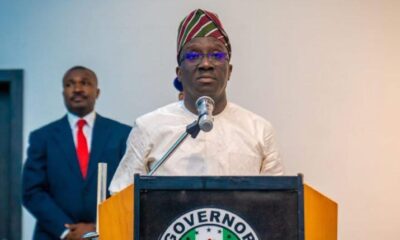
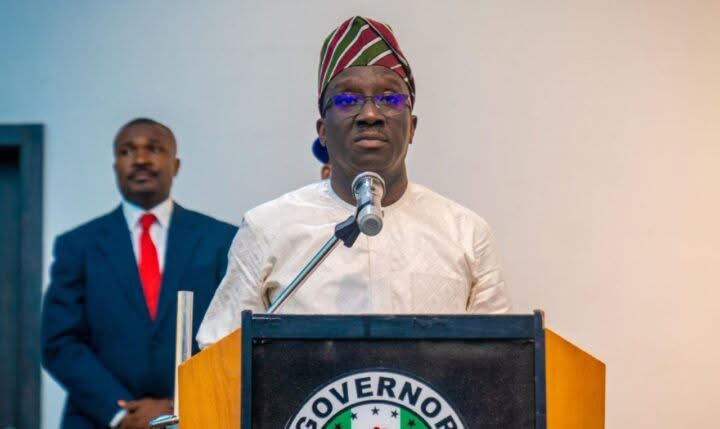
Edo State Governor, Monday Okpebholo, has declared that he is prepared to approve the execution of anyone convicted of kidnapping in the state, insisting that his administration will not show mercy to perpetrators of the crime.
The governor also threatened to personally supervise the execution of convicted kidnappers, stressing that nobody, irrespective of family ties or social status, would be spared if found guilty under the law.

Okpebholo made the declaration during an interview with journalists in Benin City, where he spoke on his administration’s achievements, security strategies and efforts to improve the welfare of residents.

He maintained that he would not hesitate to sign a death warrant for a convicted kidnapper, even if the individual were his own father or another close relative.

The governor disclosed that he had contacted the state Attorney-General to establish the documentation and legal procedures required to execute some individuals already convicted of kidnapping.
However, he explained that the affected convicts had appealed their sentences, adding that his administration would respect the judicial process before taking any further action.
“I will sign the death warrant, even if it is my father, I will sign it. If I see this paper today, I will sign it, and I will even supervise the killing. We won’t just leave them to go like that. We will get to wherever they stop; we will take them from there. We will not spare anybody,” he declared.
Okpebholo also defended his administration’s tough security measures, including the demolition of properties allegedly used as hideouts by criminal gangs.
According to him, the measures have helped reduce cult-related killings and restored normalcy to several communities, allowing social and commercial activities to thrive.
On infrastructure, the governor highlighted ongoing road construction and rehabilitation projects, alongside efforts to improve public education and healthcare delivery.
He specifically mentioned road projects linking Auchi, Ewu and Ekpoma, describing them as part of his administration’s commitment to extending infrastructure development to communities that had suffered years of neglect.
The governor further maintained that his administration was focused on practical governance and prudent management of public resources, insisting that his performance in office, rather than personal wealth, would define his legacy.
He reaffirmed his commitment to fulfilling his campaign promises and ensuring that infrastructure, essential services and development initiatives reach communities across Edo State.

Tension enveloped the headquarters of The Fountain of Life Church in Ilupeju, Lagos, on Sunday following the deployment of heavily armed police officers to the premises amid an escalating leadership crisis involving Senior Pastor Jimmy Odukoya and some members of the church’s Board of Trustees.
The presence of the armed policemen reportedly created an atmosphere of uncertainty among worshippers, with questions arising over who would preside over the church’s regular Sunday service.
The development comes against the backdrop of a deepening disagreement between Odukoya and a faction of the church’s trustees over his continued leadership of the ministry, founded by his late father, Pastor Taiwo Odukoya.
The dispute has reportedly degenerated into a legal battle, with both sides seeking judicial intervention over the leadership, control and administration of the church.
In the latest twist, Jimmy Odukoya approached the Federal High Court in Lagos on Friday, challenging his reported removal as senior pastor and questioning the legality of decisions allegedly taken by some members of the Board of Trustees.
The suit was instituted by Odukoya alongside the Incorporated Trustees of The Fountain of Life Church, with his sister, Tolu Odukoya, and seven other church leaders listed as defendants.
Those named in the suit include Pastors Rotimi Okpaise, Tobi Enuha, Gbenga Onabanjo, Fred Ohiani and Akin Osinbajo, as well as Biodun Balogun and Biodun Awosika.
Among the issues submitted for the court’s determination is the validity of meetings allegedly held by some members of the Board of Trustees on January 22, February 28 and November 16, 2026, and the resolutions purportedly adopted at the meetings.
Odukoya is also seeking the court’s interpretation of whether the trustees have the constitutional authority to remove him as senior pastor without complying with the procedures prescribed by the church’s governing constitution.
The leadership tussle has raised questions about the future direction, governance and administration of the prominent Lagos-based ministry, as the legal battle between the contending parties continues.
As of press time, The Advocate could not independently establish whether the church’s Sunday service held as scheduled. The police authorities had also yet to publicly explain the reason for the deployment of armed officers to the church premises.

• Critics question legality of arming local security operatives, warn against possible political misuse ahead of polls
The inauguration of more than 200 personnel of a community-based security outfit, known as Neighbourhood Watch, by the Chairman of Ohaozara Local Government Area of Ebonyi State, Engr. Osborne Umahi, has sparked controversy amid concerns over its legality, composition and possible political implications ahead of the 2027 general elections.
The development has generated mixed reactions, with residents and social commentators questioning the authority of a local government council to establish and arm a security outfit, particularly as preparations for the 2027 elections gather momentum.
The personnel were inaugurated on Friday at the council headquarters in Obiozara.
Osborne is the son of the Minister of Works and former Governor of Ebonyi State, David Umahi.
Speaking at the ceremony, the council chairman said the initiative was designed to strengthen grassroots security, protect lives and property, and complement the efforts of conventional security agencies, particularly during the Christmas and New Year festivities.
He charged the newly inaugurated personnel to discharge their duties with discipline, commitment and professionalism, warning them against any conduct capable of undermining public confidence in the outfit.
Umahi stressed the importance of respecting the rule of law and maintaining effective collaboration with established security agencies to ensure the safety of communities across the local government area.
He also assured the personnel of his administration’s commitment to their welfare, provision of a conducive working environment and necessary operational infrastructure.
The chairman subsequently announced Mr Amos Eze of Umunaga Ward as the Leader and Commander of the Neighbourhood Watch.
According to him, the outfit, comprising more than 200 personnel, would work alongside existing security institutions to promote peace and protect residents, businesses and property throughout Ohaozara.
However, the initiative has attracted criticism from social commentators, who have raised questions about the legal basis for its establishment, the training of its personnel, the nature of weapons reportedly issued to them and the possibility of political interference.
A social critic, Mr Nwoba Chika Nwoba, criticised the development in a social media post, questioning the constitutional authority of a local government council to establish and arm such a security outfit.
He wrote: “This is not a good beginning. Does a local government have the constitutional authority to establish a security outfit and arm them, moreover as election is two months away?”
Nwoba further expressed fears that the outfit could be deployed to intimidate political opponents and undermine the credibility of the 2027 general elections.
He also alleged that the personnel could be used for partisan political activities, although no evidence was presented to substantiate the allegation.
Another social media commentator, Mr Idaga, questioned the type of firearms reportedly issued to the operatives, arguing that personnel without adequate and coordinated security training should not be allowed to handle sophisticated weapons.
“My interest is the type of guns those guys are armed with. People without coordinated security training have no business being armed with the type shown in this optic,” he wrote.
Similarly, another commentator, Mr Kelvin, expressed concern over the implications of arming civilians, drawing a connection between the development and the ongoing national debate over the establishment of state police.
He argued that if civilians could be equipped with sophisticated firearms without adequate training and oversight, the introduction of state police could present additional security challenges.
The controversy has renewed calls for clarification on the legal framework governing the establishment, recruitment, training, supervision and arming of community-based security outfits, as well as their operational relationship with conventional security agencies.
With the 2027 general elections approaching, concerns are also mounting over the need to ensure that local security initiatives are not turned into instruments of political intimidation or partisan interests.
Stakeholders are therefore expected to demand greater transparency and accountability from the authorities, particularly regarding the weapons, operational guidelines and oversight mechanisms governing the newly inaugurated outfit.
-
 News3 days ago
BREAKING: Enugu Billionaire, Ferotex Boss Festus Oshaba-Onuh Feared Dead in Road Accident
-
News2 days ago
Gunmen Machete Football Legend Segun Odegbami in Abeokuta Home Attack
-
News3 days ago
Festus Onu’s Death: Enugu APC Campaign Council Suspends Activities
-
News3 days ago
Anambra Billboard Saga: Onyima Challenges Soludo Govt to Cite Law Behind Umeh’s Billboard Removal
-
News2 days ago
2027: Obi Urges Nigerians to ‘Sacrifice One Day for Nigeria to Be Good Again’
-
News3 days ago
EFCC Arraigns Socialite Over Alleged ₦603.4m NNPC Appointment Scam
-
Editorial2 days ago
FAKE DRUGS: Nigeria’s Deadly Trade in Human Lives Must End
-
News3 days ago
Rev Chidi Okorafor Emerges New Assemblies of God General Superintendent