Politics
Alleged Anti-Party: Enugu APC accuses Foreign Affairs Minister of using FG palliatives to campaign for PDP, LP

The All Progressives Congress (APC) Enugu state chapter has accused the Foreign Affairs Minister, Geoffrey Onyeama of anti-party activities.
The APC alleged that the Minister worked against the party as well as the president-elect, Asiwaju Ahmed Bola Tinubu during the just concluded general elections.

The Advocate reports that Onyeama and other chieftains of APC in the state had disagreed with the Ugochukwu Agballah-led executive of the party and were not visible during the party’s campaigns before the elections.
The state publicity secretary of the party, Chief Michael Ezeanyanwu, who spoke to journalists in Enugu on Wednesday, alleged that Onyeama and his Special Assistant, Flavour Eze used federal government palliatives like Cooking Stove, rice and garri to influence Enugu electorate to vote against the party during the 2023 elections.
Ezeanyanwu stated that the minister used his political pressure group, KWUSIKE, to distribute the materials to political opponents and party members loyal to him, to influence them against the APC.

The party chieftain alleged that Onyeama worked for the Labour Party during the presidential and National Assembly elections while he supported the Governorship candidate of the Peoples Democratic Party (PDP) during the governorship and state Assembly elections.
The party shared a video and picture evidence showing the Minister’s SA, Eze, addressing a gathering and making live call to the governorship candidate of the PDP, Peter Mbah while he put the phone on speak-out just to prove to him that he was working for him.
The publicity secretary stated that as if sabotaging the party during the election was not enough, the Minister has continued to use his SA to sponsor negative publications and childish blackmail against the state chairman of the party, Agballah.
“All the divisive and hate online stories against Chief Uche Nnaji the governorship candidate of APC and The Hon Ugochukwu H Agballah are being sponsored by Mr Flavour Eze the SA to Chief Geoffrey Onyeama.
“Mr Flavour Eze was also accused by Mr Ben Nwoye former chairman of APC as the sole engineer of all the crisis that undermined his 8 year regime when Mr Flavour Eze using Onyeama as a front sponsored Mr Okey Ogbodo as factional chairman of APC
“Onyeama an otherwise cool headed man has been unable to reign in his obviously power hungry SA. No one knows if Onyeama is his PA or the other way round. The refusal of the no nonsense current chairman to cut a deal with Mr Eze is driving him crazy,” he said.
The Enugu APC chieftain said that APC members in the state were horrified as they watched the Minister and his PA, organize rallies at the eve of the elections where they openly campaigned against the presidential candidate of APC, Asiwaju Bola Ahmed Tinubu; the governorship candidate of APC in the state, Chief Uche Nnaji and other candidates of the party in a mindless and mischievous gambit to frustrate the leadership of the party in the state.
“You will recall that the genesis of the current face-off between Onyeama and the state working committee of the party led by Barr Ugochukwu Agballah started during the presidential convention in Abuja last year when the Minister’s insistence that his PA, Flavour Eze must be made a delegate was resisted by the party as it was against the Electoral Act which forbids political appointees from being delegates.
“After the presidential primaries, the Minister vowed to bring the state chairman of the party, Agballah, down just like he did to former chairman of the party, Ben Nwoye, who he never gave a breathing space throughout his term as chairman”.
The APC chieftain maintained that at the run up to the governorship election, Onyeama and his PA not only campaigned for political opponents but also tried to poison the mind of the electorate against APC by spreading false narratives that the party hates Ndigbo.
The APC chieftain recalled that not a few party faithful in Enugu state are happy with Flavour Eze’s high handedness and treachery as PA to Foreign Affairs Minister.
He alleged that during the 2019 presidential election, Flavour Eze similarly made deal with the PDP government using the Minister’s name to deliver votes in Enugu West Senatorial Zone for President Buhari.
“He pocketed the accruing financial benefits from the deal and the Minister failed even in his polling unit”.
The APC publicity secretary said that Minister Onyeama has begun to sponsor negative publications against the state chairman of the party in order to muddle the water and prevent the public and national leadership of the party from looking into his anti-party roles and others like him, against the party during the just concluded general elections.
The party spokesperson said the party has begun the task of reviewing the outcome of the elections and the role played by moles like Onyeama and Flavour in bringing the party down and that at the appointed time disciplinary actions will be taken against such deviants.





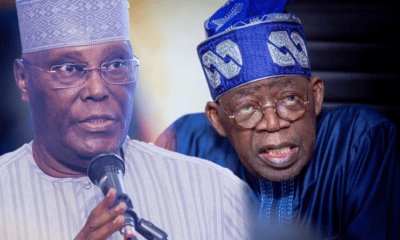


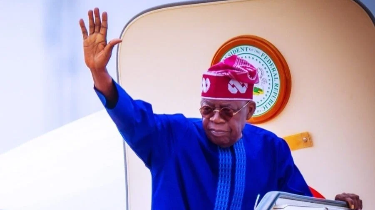



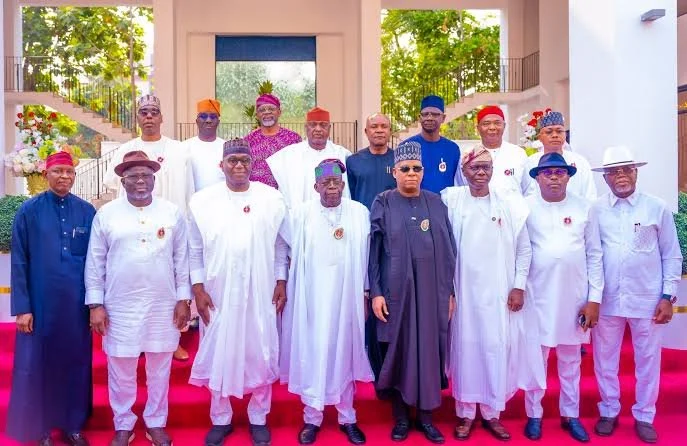
President Bola Tinubu on Thursday held closed door talks with governors elected on the platform of the All Progressives Congress, otherwise known as the Progressives Governors‘ Forum, at the Aso Rock Presidential Villa, Abuja.
Thursday’s meeting is the latest in a back-to-back series of engagements with governors and top chieftains of the party at Aso Rock to resolve the crisis trailing the controversial Presidential Campaign Council list released by the party last Saturday, August 23, 2026.
The governors marched to the President’s office shortly before 4:00pm on Thursday, after emerging from a separate session of the National Economic Council chaired by Vice President Kashim Shettima.
The consultations, which began since Wednesday, were aimed at reviewing and reworking the PCC list which has continued to generate controversy since its release.
The ruling party had faced severe backlash over the inclusion of some controversial party chieftains, particularly those currently facing corruption charges.
It was also alleged that some key sections of the party were not carried along in the drafting of the PCC list.
Multiple party sources, who spoke with The PUNCH on Thursday, said the meeting, which initially held from around 4pm to 11pm on Wednesday, could not be concluded.
Consequently, the meeting continued on Thursday after the regular NEC meeting.
As of press time on Thursday, The PUNCH could not confirm the extent of the changes made to the list.
However, sources close to the APC governors and party heavyweights said the list had been reviewed.
One of the sources said the initial list had been deleted from the party’s X handle and that a new list would be posted as soon as the President approves the deliberations at the meeting and the proposed changes.
“The list is part of the main agenda of the meeting. You can notice that the other controversial list has been deleted from the Twitter handle of the party,” a top source close to the APC governors said.
Also speaking on the list, another top party chieftain said, “Can you believe that the party was not carried along in the formation of the list? The President’s Special Adviser on Political Matters and a few persons in the Presidency came up with the list.
“You can see the backlash that has trailed it. The President is handling the matter, and it is believed that some changes will be made after the two-day meeting.”
Meanwhile, further findings by our correspondent showed that the party would double down on social intervention programmes ahead of the January 2027 poll.
It was learnt that this was part of the ruling party’s plan to reach out to Nigerians and ameliorate the suffering of the masses.
The APC had recently released the complete membership list of its 2027 Presidential Campaign Council.
As earlier reported, President Bola Tinubu will chair the council, with Vice President Kashim Shettima and APC National Chairman, Professor Nentawe Yilwatda, serving as vice chairmen I and II respectively. Senator Abdulaziz Yari was named Director-General, while Imo State Governor, Hope Uzodimma, will serve as Secretary.
The expanded list, numbering 223 entries, adds directorates covering finance, extractive industries, education, manufacturing and MSMEs, support group coordination, faith-based mobilisation, protocol, labour union relations, special duties, stakeholders’ mobilisation, community support, digital operations, grassroots engagement, and welfare.
Following series of controversies that trailed the list, the Special Adviser to the President on Media and Public Communication, Sunday Dare, said later that adjustments would made to the list where necessary.
Dare said the list remained valid because the campaign structure was not yet complete, with several subcommittees still to be constituted.
“As it is with every other list, there’s a room for subcommittees. Those subcommittees have not been formed, and so many other names will come into that subcommittee,” he said.
Dare also referred to a statement issued by the APC, insisting that the party had not withdrawn the list.
“But of course, there will be adjustments. The list is not cast in stone, just like every other list,” he added.
Asked whether the expected changes amounted to a review of the council, Dare drew a distinction between the two terms, saying the changes would only be made where necessary.
“Not a review, just adjustments where necessary,” he said.
Explaining the distinction, Dare said a review would amount to a broader overhaul of the existing structure.
“Review is wholesale, this is not wholesale,” Dare said.
He added that the planned subcommittees would provide room for more party members and political stakeholders to be accommodated within the campaign structure. (PUNCH)
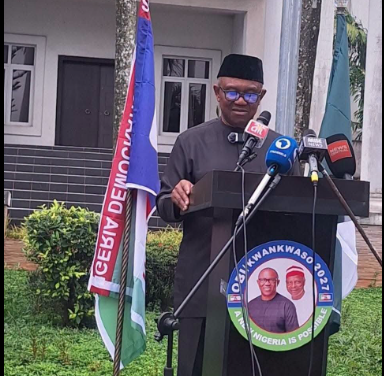
Presidential candidate of the Nigeria Democratic Congress (NDC), Peter Obi, has said Nigeria must move from an economy driven by consumption and imports to one built around production, investment and job creation.
Obi made the declaration on Friday while outlining his economic agenda for the 2027 presidential election, saying the country had the resources, population and entrepreneurial capacity required to build a more productive economy.
He said the key question for any government should be whether Nigerians were actually becoming better off.
“Are Nigerians better off than they were four years ago? Can they afford food, education, and healthcare? Can businesses produce, expand, and create jobs?” Obi asked.
He said his administration, if elected, would place agriculture, manufacturing, agro-processing, technology, construction, energy, creative industries and services at the centre of economic development.
According to him, Nigeria must “produce more of what we consume, process more of what we produce, and compete more effectively in global markets.”
Obi said his economic plan would include improving agricultural productivity through better security for farming communities, irrigation, rural roads, storage facilities, finance and market access.
He also promised to strengthen manufacturing and agro-processing to enable Nigeria to export more finished products and derive greater value from its natural resources.
The former Anambra State governor said government must also create conditions that allow entrepreneurs to invest, employ workers and expand without unnecessary regulatory and infrastructure barriers.
He stressed that public finances would be managed with greater discipline, insisting that government spending must have clear purposes and measurable results.
“Every naira should have a clear purpose, and major public investments should have measurable outcomes,” he said.
Obi also identified Nigeria’s large and growing young population as an economic opportunity rather than a burden, saying government must invest in education, technical training and human capital to enable young Nigerians to contribute productively to the economy.
He said the country’s economic objective should not simply be growth in statistical terms, but an economy capable of producing more, creating jobs, generating wealth and improving living standards.
“The goal is not growth for its own sake, but an economy that produces more, employs more people, creates wealth, and improves living standards,” he said.
Obi, who is campaigning alongside former Kano State governor Rabiu Kwankwaso, said their different governing experiences had led them to a common conclusion that Nigeria must invest in its people and manage public resources responsibly.
He urged voters to examine the records and proposals of all presidential candidates as the 2027 campaign progresses.
MY ADDRESS TO MARK THE COMMENCEMENT OF THE 2027 PRESIDENTIAL AND NATIONAL ASSEMBLY CAMPAIGNS
21 August 2026
Dear Compatriots,
Members of the Press,
Distinguished ladies and gentlemen,
Wednesday, 19 August 2026, marked the official start of the campaign period for the 2027 Presidential and National Assembly elections.
There is no doubt that this is a defining moment for our democracy. This moment gives Nigerians the opportunity to assess the records, ideas, and plans of those seeking their mandate to lead their country at a time of grave uncertainty in our rapidly changing world.
I consider myself quite privileged to be one of those seeking your mandate to deal with these challenges facing our country.
I enter this contest with one firm conviction: Nigeria can work, and Nigeria must work.
Nigeria faces several serious challenges. Some of them are indeed of existential proportions.
According to the IMF, 63%, or over 140 million Nigerians, live at or below the national poverty line, while humanitarian agencies estimate that 35 million people will need food assistance during the 2026 lean season. About 3.6 million Nigerians remain internally displaced, largely because of conflict and insecurity. Each year, millions of young people enter the labour market, yet too many struggle to find productive opportunities. Weak infrastructure, unreliable power, insecurity, and the excessive cost of doing business continue to burden households and constrain enterprise.
These are more than statistics. They reflect the daily realities of Nigerian families, farmers, workers, students, and businesses.
Yet I do not believe Nigeria lacks the ability to overcome these challenges. We have the people, resources, market, talent, and enterprise. What we must do now is turn these strengths into security, productivity, and shared prosperity.
LEADERSHIP MUST DELIVER RESULTS
My successful private-sector experience, studies in institutions of repute on policy and business matters, and my service as Governor of Anambra State have shaped my understanding of public leadership. Government must manage resources responsibly, set clear priorities, and measure the outcomes of its decisions. Public office is not a reward; it is a responsibility to the people.
In Anambra, I prioritised the foundations of long-term development: education, healthcare, infrastructure, fiscal discipline, and institutional capacity. I do not present that record as perfect, but as an experience from which Nigerians can draw their own conclusions.
Senator Rabiu Musa Kwankwaso brings a different but complementary governing experience.
As Governor of Kano State, he focused strongly on education, technical training, scholarships, infrastructure, and human-capital development. His administration’s investments in education and skills showed an understanding that the people are a state’s most important long-term resource.
Our experiences are different, but our conclusion is the same: Nigeria must invest in its people and manage public resources with discipline.
BUILDING AN ECONOMY THAT WORKS
Nigeria needs more than reactive reforms. We must focus on the questions that matter:
Are Nigerians better off than they were four years ago? Can they afford food, education, and healthcare? Can businesses produce, expand, and create jobs? Can young people find productive work? Can farmers work safely and get their produce to market?
These are the measures that matter.
With your mandate, our economic agenda will put production, investment, enterprise, and human capital at the centre of how we lead.
We will raise agricultural productivity by securing farming communities, expanding irrigation, improving rural roads and storage, and linking farmers to finance and markets. We will also strengthen manufacturing and agro-processing so Nigeria can export more finished goods and capture greater value from its resources.
We will create a business environment where entrepreneurs can invest, hire, and grow without unnecessary regulatory or infrastructure barriers.
And we will manage public finances responsibly. Every naira should have a clear purpose, and major public investments should have measurable outcomes.
The goal is not growth for its own sake, but an economy that produces more, employs more people, creates wealth, and improves living standards.
SECURITY IS THE FOUNDATION
No nation can prosper when its people cannot live, farm, travel, or do business safely. Insecurity has displaced millions of Nigerians and continues to disrupt agriculture, education, trade, and investment. Our response must therefore be comprehensive.
We must improve intelligence gathering and coordination among security agencies, strengthen policing and border management, and make better use of technology. We must also support lawful community-based systems that identify threats early and enable effective responses.
The imperative of decentralising security management, but with strong systems of coordination between the levels, is critical to our plans.
Security policy must also address the conditions that make vulnerable young people susceptible to criminal recruitment. Farmers cannot produce food if they cannot reach their farms safely. Children lose the chance to learn when they cannot attend school safely. Businesses cannot create jobs when they cannot move goods securely.
FROM CONSUMPTION TO PRODUCTION
Nigeria, with a population now above two hundred million and projected to continue growing rapidly, has one of Africa’s largest domestic markets and labour forces. That is an opportunity we must seize to turn the future of our country around.
Nigeria cannot import its way to prosperity. We will produce more of what we consume, process more of what we produce, and compete more effectively in global markets.
We will deploy our experiences in public funds management, the private sector, and the civil service to turn our population into productive human capital, our natural resources into value-added industries, and our domestic market into an engine for investment and enterprise.
Agriculture, manufacturing, technology, construction, energy, creative industries, and services all have important roles to play. Nigeria does not lack opportunities; what it needs are the systems that enable its people to turn those opportunities into prosperity.
OUR YOUNG PEOPLE ARE OUR GREATEST ASSET
I reject the idea that Nigeria’s young population represents a burden. It represents an enormous opportunity, but only if we prepare young Nigerians to participate productively in the economy.
We will improve basic education, strengthen universities, and expand technical and vocational training. Nigeria needs doctors, engineers, scientists, and lawyers, as well as technicians, mechanics, builders, nurses, farmers, programmers, manufacturers, artisans, and entrepreneurs. Our goal is to secure a high demographic dividend from our youth bulge.
HEALTH IS HUMAN CAPITAL
A productive economy requires a healthy population, yet Nigeria’s health indicators remain deeply concerning. According to available data, Nigeria’s primary healthcare system is very poor, with infant and maternal mortality among the worst globally. We will strengthen healthcare, improve maternal and child health, expand access to essential medicines, and equip healthcare workers to serve effectively.
EVERY REGION MUST BECOME PRODUCTIVE AND PROSPER
Nigeria’s diversity is an economic strength. Each region has distinct assets, and national policy must unlock those assets while connecting them to one productive economy.
The North-West can expand agriculture, livestock, irrigation, agro-processing, and manufacturing while strengthening education and security.
The North-East can speed up reconstruction, restore livelihoods, and expand agriculture, education, enterprise, and regional trade.
The North-Central can strengthen food production and processing while developing its mineral resources responsibly.
The South-West can build on its strengths in manufacturing, technology, finance, trade, and the creative economy.
The South-East can expand its entrepreneurial and industrial strength through better infrastructure, stronger connectivity, and greater access to investment.
The South-South can derive greater value from oil and gas while expanding maritime services, fisheries, agriculture, and other productive sectors, supported by stronger environmental protection.
The Federal Capital Territory must demonstrate what efficient urban planning, transportation, housing, sanitation, security, and public services can achieve.
Every region must produce. Every region must contribute. Every region must benefit.
A DIFFERENT STANDARD OF GOVERNANCE
Sustainable development requires more than reactive reform. Reform is not the goal; better lives are. The World Bank’s April 2026 Nigeria Development Update makes clear that Nigeria’s challenge is to turn economic reform and stabilisation into improved livelihoods, stronger human capital, wider opportunities, and inclusive growth. We will pursue practical reforms that deliver lasting results, combining fiscal discipline with productive investment, as Senator Kwankwaso and I have demonstrated.
We will cut wasteful spending while protecting investments that create jobs and expand productive capacity. We will raise public revenue without stifling businesses and invest in education, healthcare, security, and infrastructure because they are foundations for future prosperity, not costs to defer. We will also build institutions that endure beyond any single administration. That is the standard by which every government should be judged.
Fellow Nigerians,
The campaign period gives every citizen an opportunity to join the national conversation. I urge Nigerians to examine each candidate’s record and proposals, ask tough questions, and demand evidence behind every promise.
We should debate ideas without hatred, compete without violence, and disagree without weakening the bonds that unite us. When Nigerians make their choice, that choice must be respected.
Democracy does not end on election day. Citizens must continue to demand transparency, accountability, and results from those entrusted with the mandate to govern.
Nigeria’s challenges are real, but so are its opportunities. We have the people, resources, enterprise, and creativity to build a safer, more productive country. Our task is to turn these possibilities into results. We have the credentials, experience, and record to collaborate with Nigerians on this transformative journey.
Our journey will be harder if we do not unite as one people and one nation. A united Nigeria, guided by shared purpose and a commitment to fairness, justice, and equity, will make transformation easier, strengthen our institutions, and help us hold our leaders accountable.
Finally, the 2027 election must be guided by capacity, competence, compassion, character, and commitment. Our campaign will focus on the urgent concerns of Nigerians and not on ethnicity or religion. Nigerians must reject and disregard any campaign driven by propaganda, ethnicity, religion, elitism, or cronyism.
As my team and I travel across the country, we will listen to Nigerians, understand their needs and concerns, and assure them that we have the competence, character, and compassion to lead and reset Nigeria for the benefit of all.
Nigerians deserve leaders who will engage them, listen to their concerns, and present clear solutions to unite the country, defeat insecurity, pull people out of poverty, drastically reduce hunger and the number of out-of-school children, improve education and healthcare, and build growth that serves everyone, especially the most vulnerable. Every candidate must be willing to present their credentials, defend their records, and subject their vision to open scrutiny.
No candidate should hide behind the high walls of power, send proxies or surrogates to the hustings, and expect Nigerians to entrust them with the leadership of the country. Every candidate seeking the presidency must have the courage to come before the people, answer their questions, defend their records, and subject their vision to public scrutiny.
True leadership requires presence and empathy. No one can lead from the front without standing with communities across Nigeria devastated by banditry, criminality, terrorism, and flooding. You cannot truly lead people you are unwilling to visit, listen to, and understand.
Today, I make this clear commitment: my running mate and I will take our message directly to Nigerians. We will listen to them, understand their concerns, and engage them openly. We will not delegate this duty to proxies. We will answer questions, defend our record and character, and present our plan to rebuild Nigeria. Any presidential candidate who lacks the resolve to travel across the country, meet the people, and respond to their questions lacks the capacity to govern it.
I commit to commencing the journey of resetting Nigeria by uniting it, securing it on the path of economic and inclusive growth, and moving our country from consumption to production.
A New Nigeria is possible.
God Almighty bless Nigeria. -PO
-
 News3 days ago
Gunmen abduct 15 NYSC Corps members in Kogi
-
News2 days ago
US publishes fresh names, photos of 10 Nigerians to be deported
-
News2 days ago
FG orders closure of first River Niger bridge for one week
-
News1 day ago
Married father of two exposed for posing as Catholic priest
-
Sports2 days ago
Kipyego, Aberu win Enugu City International Marathon
-
News3 days ago
Gunmen kill APC chairman in Kogi, abduct another
-
Entertainment1 day ago
Dolly Parton: The Coat of Many Colors She Left for the World
-
News3 days ago
How doctors unlawfully removed kidneys of over 10 youths — VDM’s Lawyer reveals