News
Old Banknotes: Atiku accuses APC Govs of provoking anarchy

…says Govs inciting comments emboldening people to attack banks
•Protesting youths set banks, IBEDC, INEC offices ablaze in Ogun

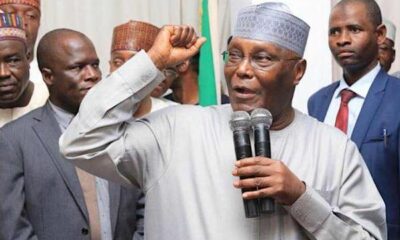
The Presidential candidate of the Peoples Democratic Party (PDP), Atiku Abubakar, has accused governors of the All Progressives Congress (APC) of preparing the ground for anarchy in the country through their virulent utterances and outright confrontation posture over the naira redesign project of the Central Bank of Nigeria (CBN).
In a statement by his Special Assistant on Public Communications Mr. Phrank Shaibu, the PDP candidate, sympathised with Nigerians over the hardship they were facing over the naira scarcity, which was having unintended consequences.
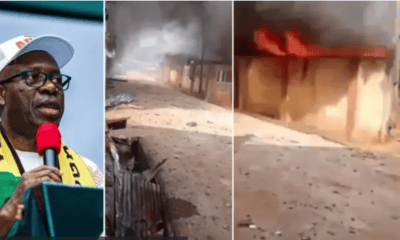
Atiku’s accusation came as the ancient town of Sagamu, headquarters of Sagamu Local Government, area of Ogun State was yesterday morning, thrown into chaos as angry youths protesting the scarcity of the new naira notes attacked branches of four commercial banks and other public facilities in the town.

Following the nationwide broadcast by President Muhammadu Buhari, directing the recirculation of the old N200 and that the N500 and N1,000 should cease to be legal tender, the Kaduna State Governor, Nasir el Rufai made a counter broadcast directing the people of Kaduna to ignore the presidential broadcast and continue to do business with the old notes. He cited the Supreme Court interim injunction as reason.
Also following Rufai’s footsteps, was Kano State Governor, Abdullahi Ganduje who threatened that: “Any bank that refuses to accept old N500 and N1,000 notes will be destroyed. We will not tolerate such disobedience from any financial institution operating within our jurisdiction,”
Governor Ganduje further disclosed that the space of the destroyed banks would be used for building schools.
“We will convert the space of the destroyed banks into schools that will provide quality education for our children,” he had threatened.
Governor of Ogun State, Dapo Abiodun, also threatened that, “the Ogun State Government will be revoking the Certificate of Occupancy, of any corporation or store that rejects old naira notes from members of the public in the State in exchange for goods and services.”
Also, Governor Bello Matawalle of Zamfara had ordered the arrest of anyone who refuses to accept the old N500 and N1,000.
But Bayelsa State Governor, Senator Douye Diri and his Osun State counterpart, Senator Ademola Adeleke, yesterday sued for calm following the raging controversy over the naira redesign policy.
Adeleke also warned against hoarding of new naira notes by commercial banks, calling on the CBN to sanction financial institutions involved in such anti-people activities.
Atiku, however, said the inciting comments by some APC governors wherein they threatened to shut banks rejecting the old notes had emboldened rioters to burn down commercial banks.
He said Abiodun, who had threatened to revoke the certificate of occupancy of banks rejecting the old notes, was acting like a dictator, and this had evoked rebellious actions.
Atiku stated, “The president made it clear that the old N1,000 and N500 notes are no longer legal tender. Those who are dissatisfied with the President’s proclamation should go to court rather than resort to self-help. Two wrongs do not make a right.
“Governor Dapo Abiodun, who is the number one citizen of Ogun State, ought to know better. However, he has been threatening to revoke the C of O of banks that obey the President’s proclamation. This act of defiance has evoked rebellion, hence the riots and burning of banks in Sagamu, Abeokuta, and Mowe”.
Atiku, in the statement by his aide, knocked the All Progressives Congress (APC) chapter in Ogun State for distributing old notes to voters ahead of the election as seen in viral videos.
He added, “In viral videos all over social media, agents of Governor Abiodun could be seen sharing the old notes in envelopes branded with the governor’s picture, convincing the supporters that the notes remain legal tenders contrary to the CBN policy.
“It is obvious that Governor Abiodun’s concern has nothing to do with the pains of the people. It is only because of the inability of his party to buy votes. If we may ask, where did the APC in Ogun State get the old notes that are no longer in circulation? These are funds that were stashed for vote buying.”
He also noted that Governor Godwin Obaseki of Edo State had accused APC chieftain, Adams Oshiomhole, of sponsoring the riots in Benin, which he said was clear evidence that the APC was behind the riots.
“Oshiomhole is one of the biggest critics of the naira redesign policy. It is not surprising that Governor Obaseki, who is the chief security officer of the state, has established that Oshiomhole is behind the riots. The APC really needs to stop provoking these riots,” the statement added.
Shaibu also knocked Kaduna State Governor, Nasir ell-Rufai; and Abdullahi Ganduje of Kano State for trying to provoke civil disobedience in their states.
He said, “The APC and their governors do not love the masses. Their only grouse is their inability to buy votes because of this policy. Nigerians must not be deceived by these unscrupulous politicians.”
Atiku’s aide called on the Nigeria Police Force, the Department of State Services, and other security agencies to infiltrate the ranks of those staging riots with a view to identifying their sponsors.
He said the ultimate goal might be to force the Independent National Electoral Commission to postpone the election on the grounds of insecurity.
“With elections less than five days away, the ultimate goal of the sponsors of these riots may be the postponement of elections. We commend the military and the police so far for curbing some of these riots.
“However, we call on them to go a step further by identifying their sponsors” he said
Angry Youths set Banks, IBEDC, INEC offices ablaze in Ogun
At Sagamu, the headquarters of Sagamu Local Government, area of Ogun State, the violent protesters attacked branches of Union Bank, Keystone Bank, Polaris Bank and Access Bank. While branches of Keystone and Union banks, were burnt, the protesters, attacked branches of Polaris and Access banks.
Other public facilities burnt, were the office of the Independent National Electoral Commission (INEC), located within the Sagamu Local Government Secretariat while furniture and other property of the local government, were also burnt.
In addition, it was gathered that the protesters, also burnt the Sagamu office of the Ibadan Electric Distribution (IBEDC) while they also made bonfire on Sagamu/ Lagos/Benin Expressway.
The protest which was said to have begun in front of the palace of the Akarigbo of Remoland, Oba Babatunde Ajayi, spread to other parts of the town.
The angry youths had last Friday barricaded the Mowe axis of the Lagos-Ibadan expressway in protest of the naira scarcity.
A youth leader in the town, Kayode Segun-Okeowo, described the act as a, “motivated destruction and not a protest.”
“This is not a protest. I’m a comrade and understand the ABC of protest. It’s motivated to cause destruction.
“Those behind this must be stopped,” he said in a telephone interview.
He also confirmed that two commercial banks have been set on fire.
Meanwhile, the Akarigbo of Remo, Oba Babatunde Ajayi, has called for calm.
A statement signed by the Oba read: “Appeal to all to remain calm and peaceful as we continue to engage the Federal Government.
“This policy is not from the state or local government. Therefore, the destruction of lives and properties will only compound an already bad situation.
“I urge our people to continue to accept the old notes in line with the Supreme Court ruling. No person who accepts the old notes would lose out. I can assure you of that, and please hold on to that promise.”
Reacting to the situation, the Police Public Relations Officer (PPRO), for Ogun State Command, Abombola Oyeyemi, said normalcy has been restored in greater parts of the town.
Oyeyemi, said the Commissioner of Police for the State, Frank Mba, was personally leading police teams and some military men to tackle the situation.



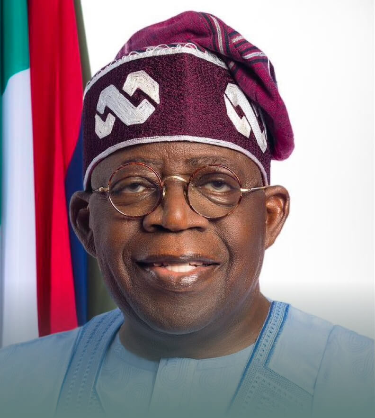
President Bola Tinubu has directed heads of security agencies to rescue all abducted persons and ensure that no terrorist or bandit camp remains anywhere in Nigeria, the Minister of Defence, Gen. Christopher Musa (retd.), said on Thursday.
Musa, who spoke to State House correspondents after a security meeting presided over by the President at the Presidential Villa, Abuja, said Tinubu also asked the service chiefs and other security heads to guarantee a safe environment for Nigerians to vote in the elections scheduled for January.
The minister said the meeting was convened to brief the President on the security situation ahead of the polls, with all heads of security agencies in attendance.
“The directive from the President is: all of us must go all out to fish out and rescue all those that have been abducted, kidnapped, wherever they are.
“There shouldn’t be any camp of any terrorists or bandits anywhere in Nigeria,” he stated.
Musa said Tinubu made it clear that he wanted a free, fair and credible election, and assured political parties that the security forces would not take sides.
Musa stated, “Mr President made it very clear he wants a free, fair and credible election. We must do everything possible to ensure that the country is safe and secure for the citizens to go out and vote.
“We are going to ensure that we give everybody the opportunity to go and serve, so they have nothing to worry about, nothing to be afraid of, and nobody is going to intimidate them for whatever reasons.”
He added that it was “important for all other political parties to understand that the security forces are going to be neutral.”
The minister rejected suggestions that underage persons were being recruited into the armed forces, saying the concern related to the use of children by terrorists.
According to Musa, “There is nobody that is underage that is being brought here. I think the discussion that was made was that the accusation was on the terrorists using underage.
“We know that we don’t have control over what they do, and that’s why we need to understand that we must not allow them to remain wherever they are.”
On efforts to boost the capacity of the security forces, Musa cited increased recruitment, training and procurement.
He said Tinubu would soon inaugurate about 10 newly acquired aircraft and helicopters.
“Mr President is coming to commission a set of new aircraft and helicopters that have been bought.
“I think almost about 10 of them in number, and to show Nigerians that despite the economic issue, the issue of security is on the front burner of Mr President’s view,” he announced.
He pointed to the recent salary increase for members of the armed forces and said improvements for the police, other agencies and pensioners were being addressed.
“Nobody is going to be left behind,” he said.
On August 4, Tinubu approved salary increases of between 30 and 80 per cent for about 250,000 armed forces personnel, effective September 1.
Privates to staff sergeants got the highest rise, at 80 per cent, while officers above the rank of colonel got 30 per cent. The yearly salary bill rose from N660bn to N924bn.
In October 2025, the Defence Ministry said 24 aircraft, including 10 AW109 Trekker attack helicopters and M-346 fighter jets, were being built for Nigeria by Leonardo in Italy, for delivery in four batches.
The minister urged Nigerians to support the security agencies, including by reporting wrongdoing by security personnel.
He argued, “Security is everybody’s responsibility. It’s not only for members of security forces. Everyone has a role to play.
“Whatever you see that is going wrong, even with our members that are not doing what is right, please don’t hesitate to report. Action will be taken.”
The meeting was attended by the National Security Adviser, Nuhu Ribadu; the Minister of Police Affairs, Ibrahim Gaidam; the Minister of State for Defence, Bello Matawalle; and the Special Adviser to the President on Homeland Security, Maj Gen Adeyinka Famadewa (retd.).
Others present were the Chief of Army Staff, Lt Gen Waidi Shaibu; the Chief of Naval Staff, Vice Adm Idi Abbas; the Chief of Air Staff, Air Marshal Sunday Aneke; the Chief of Defence Intelligence, Lt Gen Emmanuel Undiandeye; the Inspector-General of Police, Olatunji Disu; the Director-General of the National Intelligence Agency, Mohammed Mohammed; and the Director-General of the Department of State Services, Adeola Ajayi.
Thursday’s meeting comes 90 days before Nigerians head into the January 2027 general elections, with the presidential poll scheduled for January 16.
Impeccable sources familiar with the discussions held at the meeting told our correspondent that the President ordered the deployment of forest guards in all reclaimed territories from terrorists and bandits, to prevent them from reoccupying areas from where the military had dislodged them.
The sources also said the council discussed the designation of power facilities as critical national assets, following repeated vandalism, and that the President asked for a review of possible restrictions to stem the risk of Ebola entering Nigeria.
One of the sources said the military, by the nature of its operations, clears areas and moves on, often leaving retaken swaths of land open for reoccupation by terrorists.
“The President has directed that we deploy forest guards to hold the grounds that the military has taken. The military does not hold ground. They simply clear the place and move.
“When the military clears the place, these insurgents, they run. And once we take it, we can’t stay there, so they come back.
“The plan now is to deploy forest guards to hold some of these territories,” one high-ranking official stated.
However, the official did not say how many guards would be deployed, in which states, or when.
The Presidential Forest Guards Initiative, coordinated by the Office of the National Security Adviser, was launched in May 2025.
It was conceived in February 2024 after a meeting with state governors, who were asked to recruit between 2,000 and 5,000 guards each.
On December 10, 2025, Tinubu directed the NSA, Nuhu Ribadu, to begin the “immediate training, arming, and deployment of additional forest guards nationwide.”
The President said, “We need all the forces we can utilise.”
On December 27, 2025, more than 7,000 guards graduated after three months of training and were deployed in seven states including Borno, Sokoto, Yobe, Adamawa, Niger, Kwara and Kebbi.
Ribadu described them as a “force multiplier” and said they would “identify hot spots” in forests.
He stated that the Department of State Services and the National Park Service will handle operational coordination.
After the May 15, 2026 abduction of pupils and teachers in Oriire Local Government Area of Oyo State, the Federal Government said Tinubu had approved the recruitment of 1,000 more guards for the state.
In August, the programme grew to 10 states, with over 2,000 more trained in Kaduna, Edo and Kogi, reportedly bringing the total to about 9,000.
On February 19, 2016, the Chief of Defence Staff, Gen Olufemi Oluyede, inaugurated Operation Savannah Shield in Kwara, vowing that forests and ungoverned spaces “will no longer serve as safe havens” for terrorists.
Another official familiar with Thursday’s deliberations said the council discussed attacks on electricity infrastructure.
“Because of the problems of vandalism of power facilities, we are already working to designate it as a critical national asset. It was brought up at the meeting to be designated.
“It has to be designated before we can now take appropriate action on it,” the official said.
On June 24, 2024, Tinubu signed the Critical National Information Infrastructure Order, which listed power generation and distribution among 13 sectors and tasked the NSA with protecting them.
In October 2024, vandalism of the Shiroro–Kaduna line plunged about 17 northern states into darkness.
Tinubu at the time said the government would no longer tolerate sabotage of public utilities and ordered security cover for repair crews.
A third source said the council also reviewed the Ebola outbreak in Central Africa, which he said was rising.
According to the official, “We looked into this Ebola crisis. We have to look at it because it’s rising. Beyond what we’re doing now, the President said we have to look at it and see whatever restrictions we might need to make to safeguard Nigerians. We cannot afford to fold our arms.”
When pressed for specific measures to be taken by the Federal Government, the official declined to speak. (Punch)
Faith
BREAKING: Anglican Church Places Archbishop Ibezim on Six-Month Leave, Bars Him From Church Duties
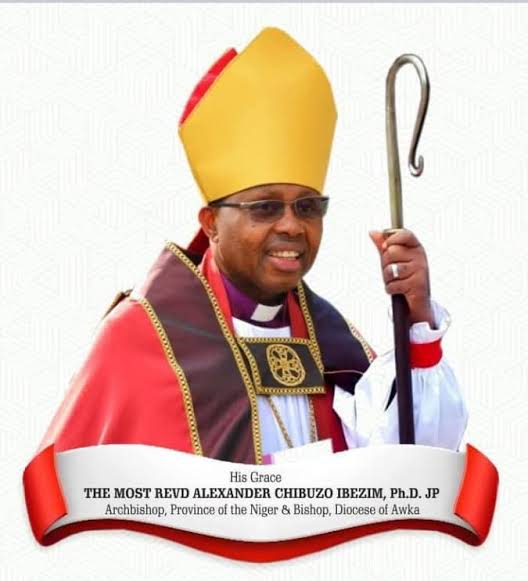
Primate appoints Bishop Ezeofor to oversee Awka Diocese, Province of the Niger amid investigation
The Church of Nigeria (Anglican Communion) has directed the Archbishop of the Province of the Niger and Bishop of the Diocese of Awka, Most Rev. Alexander C. Ibezim, to proceed on six months’ leave with immediate effect amid investigations into allegations and recent developments within the diocese.
The Primate of the Church of Nigeria, Most Rev. Henry C. Ndukuba, announced the decision in a letter dated Tuesday, October 13, 2026, while appointing the Bishop of the Diocese of Aguata, Rt. Rev. Samuel Ezeofor, as Supervising Bishop of the Diocese of Awka and Coordinating Bishop of the Province of the Niger during Ibezim’s absence.
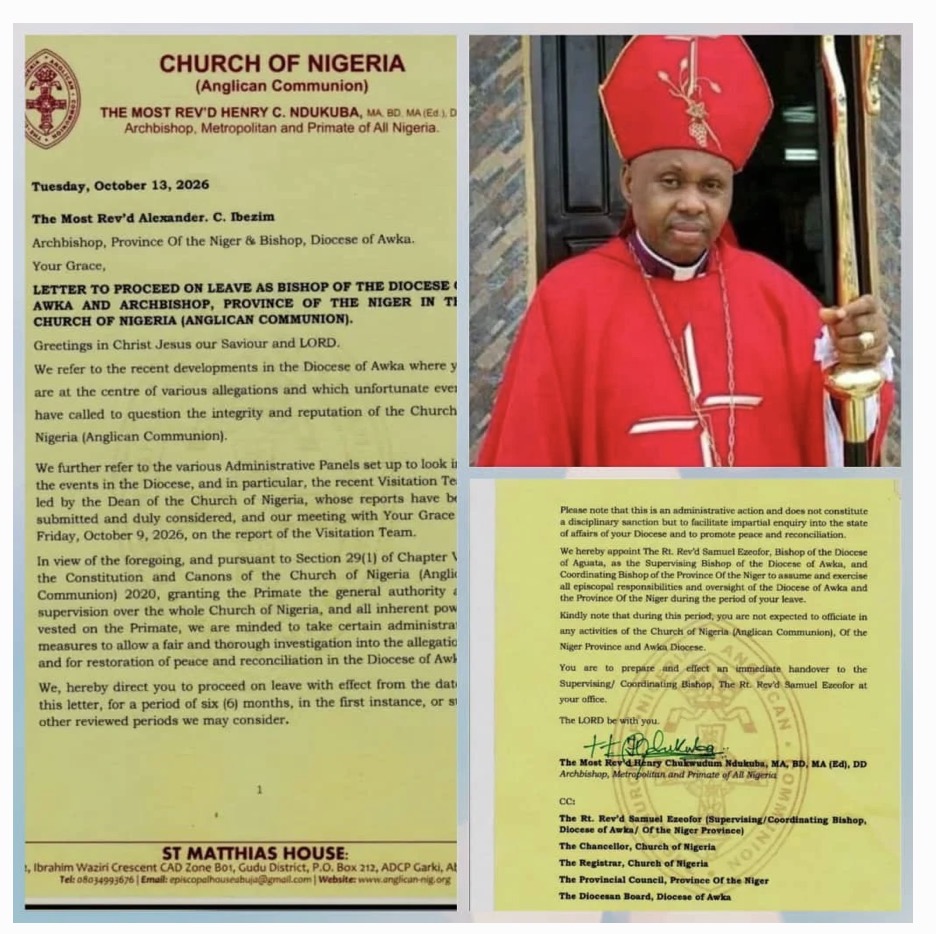
Screenshot
In the letter addressed to Ibezim, Ndukuba said the decision followed developments in the Diocese of Awka that had raised concerns about the integrity and reputation of the Church of Nigeria.
He referenced administrative investigations into the matter, particularly the report of a visitation team led by the Dean of the Church of Nigeria, which had been submitted and considered by the church leadership.
The Primate also cited a meeting with Ibezim on Friday, October 9, during which the visitation team’s report was discussed.
According to the letter, the directive was issued pursuant to Section 29(1) of Chapter V of the Constitution and Canons of the Church of Nigeria (Anglican Communion), 2020, which provides for the Primate’s general authority and supervisory powers over the church.
Ndukuba explained that the administrative measure was intended to facilitate a fair and thorough investigation, while creating an opportunity to restore peace and promote reconciliation within the Diocese of Awka.
He stressed that the leave should not be interpreted as a disciplinary sanction but as an administrative arrangement designed to allow an impartial inquiry into the issues affecting the diocese.
The letter stated that the leave would last for an initial period of six months, subject to any revision the church leadership might consider necessary.
During this period, Ezeofor will assume episcopal responsibilities and oversee the affairs of both the Diocese of Awka and the Province of the Niger.
Ibezim was also directed not to officiate at any activities of the Church of Nigeria (Anglican Communion), the Province of the Niger or the Diocese of Awka throughout the period of his leave.
The Primate further instructed the archbishop to make immediate arrangements to hand over his responsibilities to Ezeofor at his office before departing.
Copies of the letter were sent to Ezeofor, the Chancellor and Registrar of the Church of Nigeria, the Provincial Council of the Province of the Niger and the Diocesan Board of the Diocese of Awka.
Background to the controversy
Although the letter did not disclose the specific allegations against Ibezim or provide details of the visitation team’s findings, reports have linked the controversy to allegations that the archbishop sold church lands valued at more than ₦2 billion without authorisation.
The allegation reportedly triggered a legal and ecclesiastical dispute, alongside speculation that the Economic and Financial Crimes Commission (EFCC) was seeking to arrest the archbishop.
The development followed a petition dated July 28 and submitted to the EFCC’s Enugu Zonal Directorate by Chief G. Tagbo (SAN) of Ike Ike Associates on behalf of Echezona Onuigbo, a member of St. Faith Cathedral, Awka.
However, an arrest was reportedly restrained by the Anambra State High Court sitting in Awka following an order granted by Justice F. I. Aniukwu in response to a motion ex parte dated September 4, 2025. The application was filed by Ibezim through his counsel, B. E. I. Nwofor (SAN).
The controversy also reportedly resulted in the removal of the Chancellor of the Diocese of Awka, Hon. Justice O. J. Okeke (retd.), by the archbishop.
The circumstances surrounding the allegations and the outcome of the church’s ongoing investigation remain unclear, as the Primate’s letter did not disclose the details of the findings or specify the allegations under investigation.
The six-month leave and the appointment of Ezeofor mark a significant administrative development in the leadership of the Diocese of Awka and the Province of the Niger as the church seeks to address the issues and restore stability.
The letter:
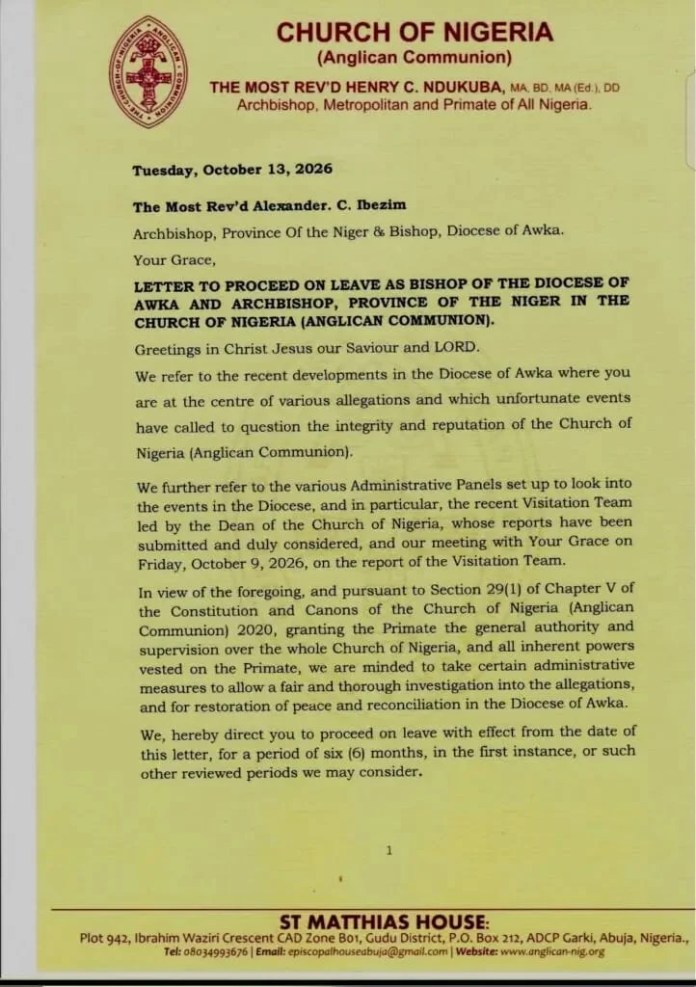
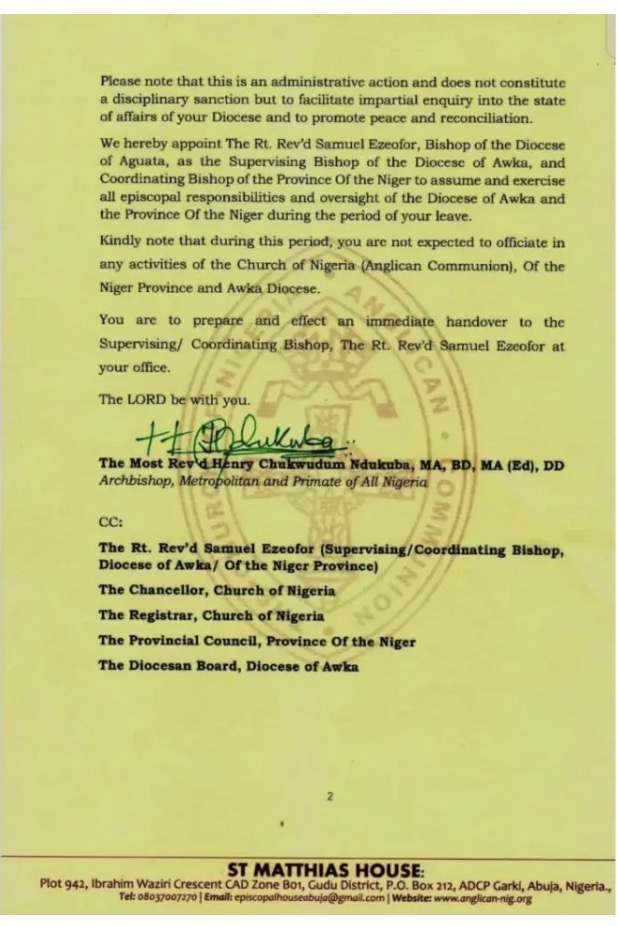
Screenshot
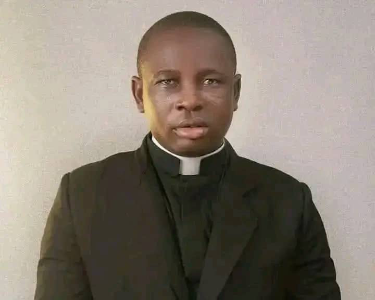
Gunmen have abducted a Catholic priest, Rev. Fr. John Inalegwu Otache, in Benue State, triggering a security operation to secure his safe release.
Fr. Otache, the Parish Priest of St. Margaret’s Parish, Ajegbe-Awume, in Ohimini Local Government Area, was reportedly kidnapped on Tuesday, October 13, 2026, while returning from Otukpo along the Otobi Amejo-Ajegbe Road.
The abduction is said to be the second reported kidnapping involving a priest serving at the parish.
Confirming the incident, the spokesperson of the Benue State Police Command, DSP Aondogu Orchia, said tactical teams had been deployed to track down the kidnappers and rescue the priest.
Meanwhile, the Catholic Bishop of Otukpo Diocese, Most Rev. Michael Ekwoyi Apochi, has appealed to the public to intensify prayers for the safe and unharmed return of the abducted cleric.
The police have commenced efforts to locate the perpetrators and secure the priest’s release.
-
 Faith6 hours ago
BREAKING: Anglican Church Places Archbishop Ibezim on Six-Month Leave, Bars Him From Church Duties
-
News24 hours ago
Senate fumes over death of NYSC Corps member at Enugu Camp, orders probe
-
News1 day ago
How Senator Mandiya died after bathroom fall in Abuja Home – Ningi
-
News2 days ago
2027: Why I wont attend every campaign rally – Tinubu
-
Features2 days ago
Aguleri/Umuoba Anam Crisis: The Bloody Battle Between Close Neighbours
-
News2 days ago
EFCC probes Atiku over alleged corruption committed as Vice President
-
Politics1 day ago
2027: I can bet my life Obi will humiliate Soludo in Anambra – Momodu
-
News2 days ago
‘Anyone who attempts suicide and fails will go to jail,’ says Akpabio