News
New naira scarcity: Sokoto, Zamfara, Katsina border residents trade in CFA

Residents of border communities in states including Sokoto, Zamfara, Katsina, Adamawa and Kwara have opted for the CFA franc following the scarcity of the new naira notes across the country.
The residents, including traders and commercial drivers, are also rejecting the old naira notes, insisting that customers who do not have the new redesigned currency must pay for goods and services with CFAs.

The CFA franc is the legal tender in eight West African countries of Benin, Burkina Faso, Côte d’Ivoire, Guinea-Bissau, Mali, Niger, Senegal and Togo, which make up the West African Economic and Monetary Union, otherwise known as the Union Économique et Monétaire Ouest Africaine.
Findings by The PUNCH indicated that businessmen and traders in the Zurmi and Shinkafi local government areas of Zamfara State, which border the Niger Republic, prefer the franc to the naira.
Investigation revealed that traders in the two LGAs had been selling their commodities in CFA due to fear that they might not get the new naira notes.

A cattle dealer, Musa Shehu, said he stopped receiving the Nigerian currency since the Central Bank of Nigeria announced the deadline for the swap of the N1,000, N500 and N200 notes.
He stated, “I have since stopped receiving the old naira notes because I don’t have an account and I can’t go to the bank.”
A trader in Shinkafi town, who shuttles between Nigeria and Niger Republic, explained that most of his customers paid with the CFA.
“I cannot collect old naira notes and give out my commodities to any customer. But I will collect new naira notes and CFA because I am afraid of losing my money if the time for the exchange expires,’’ the trader, who spoke on condition of anonymity, said.
A grain seller in Dada village in Zurmi Local Government, Muhammadu Isa, disclosed that he stopped selling grains in the Nigerian currency after the CBN’s policy on new naira notes was unveiled.
He said that he sold only to those who possessed CFAs to avoid losing money as ‘’my father did in 1983 when the naira notes were hurriedly changed by the then Major General Muhammadu Buhari regime.’’
Isa explained that his late father lost all his money when Buhari changed the national currency in 1983.
The grain trader insisted that he would not accept the old naira notes as there was no bank or Point of Service terminal in his community where he could withdraw the new currencies.
“You see since our people and those from the Niger Republic are coming to buy the grains with the CFA, I see no reason why I should collect old naira notes. If anybody wants to buy grains from me, he must pay in CFA or forget it. I will not collect old naira notes because I don’t know what to do with them after the expiration of the deadline,” he noted.
In a related development, commercial drivers who ply the Niger Republic from Zurmi and Shinkafi LGAs have also stopped collecting the old notes.
They justified their decision with the argument that the CFA was the only legal tender accepted by the people along the Nigeria-Niger borders.
A driver, Alhaji Hamisu, stated that passengers had to pay in CFA if they wanted to travel to the Niger Republic or return to Nigeria ‘’because the old naira notes are unacceptable as legal tender.’’
Hamisu said, “I have on several occasions refused to collect the old naira notes from my passengers because I have no time to go to the bank or PoS to get the new notes.
“Another problem is that you can’t buy fuel with the old naira notes in Niger republic; as such, no commercial driver on cross-border journeys will agree to take the old notes from passengers.
“I was almost stranded in Malbaza town in Niger Republic when I wanted to buy fuel with the old naira notes because we have been doing so before the change of the Nigerian currency.
“I went to the filling station as usual and bought 30 litres of fuel and brought out the old notes but the fuel attendant told me that he would not accept the notes.
“I pleaded with him but he was not ready to collect the money from me. I was lucky as one of the commercial drivers, who is also my friend, came to buy fuel and he had enough CFAs. I bought the CFA from him and settled the fuel attendant.”
Sokoto border traders
Also, our correspondent discovered that border communities in Sokoto State preferred to sell their products in CFA due in part to the non-availability of the new notes and the continuous loss of naira value.
Speaking with The PUNCH, Mallam Sidi Isa, who trades in cattle in Illela, a border community with the Niger Republic, said he preferred the franc because of the introduction of the new naira notes and the cashless policy.
Also speaking, Mr Jamiu Ola, a motor mechanic, argued that the CFA holds more value than the naira.
“I prefer CFA due to the fact that it is hardly devalued unlike our own naira which has been devalued,” he added.
A businessman, Mallam Haruna Abdulazeez, stated, “I shifted my business to the Niger Republic when I realised I can’t cope with the economy of this country anymore.
“If I buy goods from Nigeria and take same to Niger Republic, I make profits due to the value after the exchange. Even if you take sachet water there, you will make your profits due to the exchange rate.”
A Sokoto resident, Muhammad Auwal, submitted that the CFA holds more value than the naira, hence his preference for foreign currency.
“I normally exchange my naira for CFA as it is not reasonable for someone to keep naira at home due to loss of value,’’ he declared.
Adamawa cattle dealers
Speaking in an interview, the Chairman of Mubi International Cattle Market in Adamawa State, Jafaru Hamman, lamented the scarcity of newly redesigned naira notes, adding that the difficulties in getting the currency had affected commerce at the border communities.
The problem, according to him, is that most traders in Mubi are accustomed to cash transactions and the cashless policy may take time to get mass support.
Commenting on the decision of Adamawa communities to opt for the franc over the naira, a cattle dealer, Jafaru Hamman, explained that even before the CBN policy, some traders were using the West African CFA in business transactions.
He, however, noted the volume of trade in foreign currency was minimal before the introduction of the new naira redesign policy.
Jafaru said the development had made it increasingly difficult for most traders to get the new currency, thereby stifling their business operations.
According to him, as the deadline for the naira swap draws closer and the old currency is facing rejection, traders are faced with either accepting the CFA for their transactions or halting their business activities.
He said, “They (Traders) are collecting the naira but since it became increasingly difficult to get new notes, they resorted to collecting CFA. The traders have also refused to accept the old notes. If they come to sell their cattle, if you give them the old notes they will reject it.
‘’They would rather return with their cattle than accept the old notes. Nobody is seeing the new notes because they are scarce. Don’t forget that many of these traders don’t have bank accounts to accept transfers because our business is purely based on cash.’’
Katsina traders lament
The situation is not different at the cattle markets in Dankarma, Jibia and Maiadua, all in border communities in Katsina state.
Findings showed that trading was being carried out in these markets in both naira and CFA before the CBN policy.
But the naira notes scarcity had forced the majority of cattle dealers and traders to carry out all transactions in CFA.
However, a few traders accept electronic money transfers from those considered regular customers.
Mallam Ahmadu Ousseini who sells cattle and camels at Maiadua Kara International market, said he carried out most of his transactions in CFA because his customers said they could not get the new naira notes.
Ouseini said. “We accept naira and CFA here at Kara market. But in the past three weeks, I only accepted CFA for my transactions. There are a few customers I still accept cash transfers from as I have a PoS. When we conduct business in the CFA, we gain as the CFA is slightly higher (in value) than the naira.
“It is our customers who source for the CFA which they pay us. There are even those who help us change money in the market but they too cannot get the new naira notes now. This has made us transact business majorly in the CFA.”
Hajiya Bilikisu Ahmed, who is resident in the area but goes to sell cows in Lagos and other South-West cities, explained that the currency scarcity was affecting her business badly.
Ahmed stated, “I buy (cattle) from the dealers at Dankarma and Jibia with the naira. Occasionally, I exchanged my naira notes with the CFA in any of the cattle markets. But now, the scarcity of the new naira notes has worsened the matter.
‘’On Wednesday when I wanted to buy some cattle at Dankarma, I lost N3,000 on the N20,000 I exchanged for the CFA. The situation is compounded by the network challenges in many banks in Katsina. But I collected money from some of my customers down South, especially in Lagos and no matter the situation, I have to deliver to them, otherwise, they may not patronise me again.”
The cattle dealers further complained that the CBN policy had reduced the volume of cows being brought into the market in Borno State.
Recounting his pain, Mohammed Ali, a trans-border cattle merchant in Maiduguri, said, “I used to buy about 20 heads of cattle at Mada (a Cameroon market across the border from Gamboru in Borno State) and sell at least 15 weekly in the Maiduguri market.
“My problems as a cattle merchant are three: the CFA in the Cameroon market, which used to exchange at N560 per CFA, is now N680 per CFA, and in a few instances it is even more. The old naira notes are scarce and the new notes are nowhere to be found.’’
“In this situation, the majority of us have suspended the trade because we deal in hard cash, and it is not available; the sellers of the cattle across the border also deal in hard cash. They don’t accept bank transfers; they don’t even have bank accounts,” Ali explained.
Speaking further, he added, “By my estimates, between 500 to 700 heads of cattle arrive here daily from Chad and Cameroon to meet the number on the ground that has not been sold; but today (Monday, January 30), only about 50, according to what I saw, arrived.
“I sold only one cow today, and that is even on credit; the buyer said he could only pay by the end of February,’’ he lamented.
The chief cattle dealer of Bama, Mohammed Gwamna, said the situation had forced him to stop his cattle business.
“I have suspended the trade, whether trans-border or within the Nigerian border markets. The reason: if you go to the Cameroonian market with N1 million, you have to part with N100,000 to get it changed to CFA or new naira notes to enable you to buy the cattle, otherwise, the sellers will not even look at you.”
Stressing that the naira redesign policy had eroded his business and other people’s livelihoods, Gwamna observed that the cattle population in Maiduguri markets had reduced by about 80 per cent.
He added, “By my estimate, this difficult situation has slashed the cattle population in this market by about 80 per cent, because most of us can’t even go to Gubio, Monguno and Gaidam (cattle markets in Borno and Yobe) to buy talk less of Cameroon, Niger or Chad markets because we can’t source the new naira notes. Without the new notes, nobody will even answer your greetings,” he lamented.
Another trader, Abba Ali, noted, “At Monguno, Ngala, Gubio (in Borno State) and Kukareta and Gaidam (in Yobe State), cattle will not be sold to you if you do not brandish new naira notes; and in Cameroon, you must show CFA; and both are not easy to find. This is the situation,” he complained.
“Hitherto, sometimes between 20 and 30 trailers offload cattle daily in this market; but today (Monday, January 30), according to what I have seen so far, only two trailers offloaded,” he observed.
In Ipokia, a border town in Ogun state, traders were said to have been travelling to the Benin Republic to exchange the new currency with CFAs after selling their wares.
A youth leader in Ipokia, Deji Mawuntin, bemoaned the hardship the residents of Ihunbe, Ilara, Oja-Odan and others were going through to get the new notes.
He accused unnamed bank workers of selling the new currencies to racketeers in the Benin Republic.
He noted, “The bankers are selling new naira notes to Beninese and Nigerians are going there to exchange it with CFAs. People have called the DSS operatives to beam their searchlight on these bank officials.”
In Kwara State, in Chikanda, a border town between Nigeria and the Benin Republic, a trader, Alhaji Bashir Mohammed, said he preferred taking CFA as new naira notes were not easily available.
He said, “Since the change from old naira notes to new notes, there has been a shortage of the new notes, we are not getting the new notes, so it is easier to get the CFA than the naira notes, that is why we are accepting the CFA in exchange for our goods.”
Another trader, Mrs Mariam Hassan, who trades in Garri, local rice, beans and yam flour, said that the traders in the border towns were accepting CFA in exchange for their goods.
Mariam who is based in Yashikira in the Baruten local government area of Kwara State said that the traders made more profits when they accepted CFA.
The CBN spokesman, Osita Nwanisobi, had yet to respond to questions on the displacement of the naira by CFA in parts of the country as of the time of filing this report.
But the Managing Director, Cowry Asset Management Limited, Johnson Chukwu, described the move as the logical thing to do in face of the scarce availability of the new notes.
Also, the Chief Executive Officer of the Centre for the Promotion of Private Enterprises, Dr Muda Yusuf, noted that this was natural due to the lack of enough new notes for people to run their businesses in border regions.
PUNCH




The Senate on Thursday called for an investigation into the circumstances surrounding the death of a corps member, Etimbuk Daniel, at an NYSC orientation camp in Enugu.
The resolution followed a motion of urgent public importance moved by Sen. Aniekan Bassey (APC-Akwa Ibom North-East) during plenary.
Bassey said the Senate received with shock and profound grief the news of Daniel’s death while undergoing the mandatory National Youth Service Corps (NYSC) programme in Enugu.

Etimbuk Daniel
He described the deceased as an outstanding student leader and former Students’ Union Government (SUG) president of Akwa Ibom State University who had embarked on national service.
Bassey expressed concern over reports that Daniel died following complications from a minor headache after allegedly experiencing delays in receiving adequate medical attention at the camp’s clinic.
He said the incident raised concerns about healthcare services in NYSC orientation camps, particularly the availability of qualified medical personnel, functional facilities and effective emergency referral systems.
The senator said the reported lapses highlighted the need to review healthcare delivery in orientation camps to prevent similar tragedies and protect corps members.
He emphasised that the government had a constitutional responsibility to safeguard citizens’ welfare, adding that young graduates mobilised for national service deserved adequate medical care throughout their service.
Bassey said Daniel’s death had plunged his family, the Akwa Ibom State University community and the entire state into mourning.
Seconding the motion, Sen. Mohammed Monguno (APC-Borno North) supported the call for an investigation, emphasising the importance of establishing the circumstances surrounding Daniel’s death and ensuring accountability.
The Senate observed a minute of silence in honour of the deceased and prayed that God would grant his family the strength to bear the loss.
It also called for a thorough investigation to establish the facts surrounding Daniel’s death and determine whether negligence contributed to the incident.
The Senate directed its committees on Police, Judiciary, Human Rights and Legal Matters, Youth Development, and Health to investigate the matter alongside the Nigeria Police Force and the Department of State Services (DSS).
Deputy Senate President Barau Jibrin, who presided over the proceedings, thanked Bassey for bringing the matter before the Senate and urged the relevant committees to conduct a thorough investigation. (NAN)
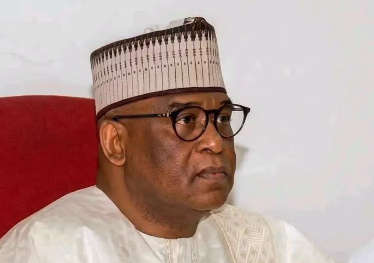
Senator Abdul Ningi has recounted how his colleague, Bello Mandiya, reportedly died after slipping in his bathroom and hitting his head, with his body discovered about 72 hours later in his Abuja residence.
Ningi, who represents Bauchi Central Senatorial District, said neighbours discovered Mandiya’s lifeless body after a foul smell began emanating from his apartment and residents became concerned about his prolonged absence.
Speaking during a Senate plenary session, Ningi said he was in Saudi Arabia when he received a telephone call from his son informing him of Mandiya’s death.
He said his son was among those who discovered the former lawmaker’s body on Monday, September 7, 2026.
Recounting the events leading to the discovery, Ningi said a colleague had last seen Mandiya at about 11am on Friday, September 4, before the former senator returned to his residence, where he lived alone.
According to him, Mandiya was preparing to attend the Friday congregational prayer when he reportedly slipped and hit his head after bathing.
“He brought out his cap, his phones, and put them on the bed, and went into the bathroom to take his bath,” Ningi said.
“After taking his bath, when he was out of the bathroom, then he slipped and knocked his head in the bathroom.”
Ningi said nobody realised what had happened until the stench from Mandiya’s apartment began spreading to neighbouring properties.
“For 72 hours, Mr President, nobody knew where Bello Mandiya was,” he told the Senate.
He said the chief imam of Apo also raised the alarm after noticing that Mandiya, who regularly joined other Muslims for the five daily prayers, had been absent for three consecutive days.
The combination of the imam’s concern and the foul smell prompted residents to investigate the apartment.
Ningi said those who went to the residence eventually broke open the door and found Mandiya’s body in the bathroom.
“And there lies Bello Mandiya in the bathroom, lifeless. Seventy-two hours, and that’s a simple tragedy,” he said.
Expressing sadness over the circumstances of his colleague’s death, Ningi said the incident highlighted the uncertainty of life, noting that nobody could predict when death would come.
He also expressed condolences to Mandiya’s family, the people of Katsina State and the constituents he represented in the Senate.
Before his election to the Senate, Mandiya served as chief of staff to former Katsina State Governor Aminu Bello Masari.
He was elected in 2019 on the platform of the All Progressives Congress to represent Katsina South Senatorial District and served in the ninth National Assembly until 2023. He also chaired the Senate Committee on Water Resources.
Mandiya’s death prompted tributes from political leaders and former colleagues, who remembered him for his contributions to public service in Katsina State and at the national level.
Ningi, who said he had known Mandiya since 2002, described the loss as a reminder that political office, wealth and social status could not shield anyone from the fragility of life.
“There is nothing permanent about anything. Nothing permanent about our position, nothing permanent about our wealth,” he said.
He prayed for Allah to grant the deceased eternal rest and give his family the strength to bear the loss. (Daily Trust)
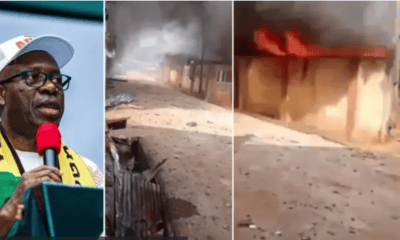
Suspected political thugs have attacked the secretariat of the Nigeria Democratic Congress (NDC) in Ikpoba-Okha Local Government Area of Edo State, destroying property at the facility.
The attack, reported on Wednesday, October 14, comes barely a week after NDC complained of a similar incident in Enugu.
A video circulating on social media showed damage to property within the Edo secretariat, although no casualties had been reported as of the time of filing this report.
In the footage, a woman accused the ruling All Progressives Congress (APC) of being responsible for the attack, linking the incident to the earlier violence in Enugu, which is being investigated by the police.
“The last one happened in Enugu, where one person allegedly died. Now they have brought it to Edo. APC, your end is here,” she said.
Her allegation against the APC has not been independently verified, while the identities of those responsible for the attack remain unknown.
The reported incident follows growing concerns over political violence ahead of the 2027 general elections.
The earlier incident in Enugu had prompted Governor Peter Mbah to demand an impartial police investigation, warning that anyone found responsible would face prosecution regardless of political connections.
It was not immediately clear whether security agencies had commenced an investigation into the Edo attack or identified any suspects.
-
 News1 day ago
2027: Why I wont attend every campaign rally – Tinubu
-
News15 hours ago
How Senator Mandiya died after bathroom fall in Abuja Home – Ningi
-
News13 hours ago
Senate fumes over death of NYSC Corps member at Enugu Camp, orders probe
-
Features2 days ago
Aguleri/Umuoba Anam Crisis: The Bloody Battle Between Close Neighbours
-
News1 day ago
EFCC probes Atiku over alleged corruption committed as Vice President
-
News2 days ago
‘Anyone who attempts suicide and fails will go to jail,’ says Akpabio
-
News3 days ago
BREAKING: Soludo, Wike, Adeleke, others appointed member of APC Presidential Campaign Council
-
Features3 days ago
Enugu Political Flashpoint: Mbah orders Impartial Probe as NDC Incidents Trigger Controversy