Politics
Obi and the Road to Chatham House

By Valentine Obienyem
Chatham House in Central London is a place where the best rub minds in a rarefied atmosphere. It has continued to host personalities interested in governing states, where their knowledge about policy and emerging developmental trends are gauged. This is what informs a question session even after a written speech has been delivered.

As I contemplate Obi’s road to Chatham House, I remember an Igbo folk song about a crooked man, who married a crooked wife, beget crooked children and walked along crooked paths, so that everything about him was crooked. Crookedness is what defines the nature of men Obi is contesting against. They represent the jejune Nigeria of the past that Nigerians, young and old, are queuing behind Obi to supplant from the Nigerian political field for their colossal damage to the nation.
In their characteristic crookedness, they planned to embarrass Obi in London. Who else read an open letter that was widely circulated on social media platforms? The letter was a warning to Mr. Obi not to visit London, not to talk of Chatham House. Checks proved the authenticity of the contents of the letter.
Some people who performed woefully guessed rightly that if allowed, Obi would shine. Steeped in crookedness and mischief, they tried to stop him. However, they failed mournfully because they were dealing with a man whose life is defined by integrity.

After all was said and done, Obi was in London at Chatham House on Monday, the 16th of January, 2023. His performance proved that those who wanted to stop him did not have the moral force to do so.
As he was being introduced by Dr. Alex Vines, the Director of African Programme, his confidence and looks bespoke a mind serene, erect, and firm. Kingsley Anajemba (Aluta Panorama), who came all the way from Manchester and seated beside me asked a question: “I hope our man will bubble with ideas as usual ?”
Now, let us recall Obi’s performance at Chatham House, where he inhaled cold and exhaled wisdom. His speech was an interesting narrative, not fatiguing and in strange tongues, but a clear and flowing stream, sparkling now and then with substance of governance.
He built the speech around the theme of the engagement: “Nigeria’s 2023 Elections: a Vision for Policy Change and Institutional Reforms.” He could be relied on to say something whenever he spoke.
Obi started with the foundations of the problems of the country by tracing the roots thus: “The Nigerian state is captive to an elite gang-up and a rentier political economy that has concentrated political power in the hands of those who came to power and influence mainly through their own contrivances and not through the affirmation of the people, and therefore, do not have the incentive to serve the people’s interest. It is the capture of the State that has led to the problems she faces on all fonts. On the insecurity and economic fronts, he said: “We have alarming insecurity that has led to loss of many lives and properties, significant decline in food and economic output, immense trauma that has compromised the mental health of communities, and in some cases, irredentist pressures and disaffection with the Nigerian project. The economy is in crisis with a troubling debt profile worsened by oil theft of proportion once hard to even imagine, two economic recessions in six years and a lamentable power sector that significantly constrains manufacturing and social life.”
The continued economic decline of Nigeria has led to widespread poverty in the realm. Using statistics, Obi explained to the audience how poor Nigerians are: “How did we (Nigeria) plunge into such economic decline that we have overtaken India as home to the biggest pool of the absolute poor in the world? While the poverty rate in India is about 16%, that of Nigeria is about 63% with about 133 million Nigerians classified as multi-dimensionally poor.”
Peter Obi was evidently appalled by what could be termed the mutation of morals and manners among politicians, when he spoke of the need to maintain ethical standards and introducing positive values into governance by exploiting one’s rich upbringing. His words: “In many ways, this is at the heart of my remarks today which are deeply rooted in my upbringing, particularly my mother’s counsel that I live a life of positive impact and manage both personal and public resources most prudently for sustainable/inclusive growth and development of the society. It is the principle that guided my stewardship as Governor of Anambra State, Nigeria and led to our much-commended performance with some priced awards to show for it. Some of the awards were for outstanding accomplishment in key Millennium Development Goals (MDGs) now Sustainable Development Goals (SDGs). It is the same counsel and principle that is guiding and motivating me to offer to serve in a New Nigeria!”
On what could be regarded as the second part of his speech, Obi introduced his running mate, and an economist respected for his suave resourcefulness, Sen. Datti Ahmed. The business of restoring the glory of Nigeria would be a joint effort. Obi gave a little insight, including the colour of their Cabinet: “Senator Yusuf Datti Baba-Ahmed, my running mate, and I are committed to a new politics that starts with the ethics of servant-leaders and anchored on the marriage of clean hearts and skillful hands.”
Noting what disunity has done to the country, and that the strongest incentive to cohesiveness is internal unity, Obi expressed his commitment: “To secure Nigeria, end banditry and insurgency, and unite our dear nation to manage our diversity, such that no one is left behind”.
On insecurity, he implied that bad times accentuate that phenomenon. The arm ready to strike is always held back by the abundance and watchfulness of the Police. Here, he promises far-reaching reforms. He hopes to achieve it “by pursuing a robust reform of the security governance structure with a strong coordinating mechanism that assures that all levels of government – Federal, State, and Local (with 3-level policing structure) – are aligned with strong collaboration with partners from both the private sector and development groups to provide the required services and deliver results for every Nigerian. Once this is done, it is also important to have a single, clear, coherent, and consistent communication system to keep the government accountable, citizens engaged and involved in the development process. It is important for institutions to be able to provide strong leadership, coordination capability, partner and engage collaboratively with all relevant stakeholders in an environment that mutually reinforces values.”
Peter Obi is not happy with Nigeria’s mono-economy. He laments the criminality of subsidy and oil theft as resting on the fact that as Nigeria is today, only oil flows in her economic arteries. He consequently insists that he “will move Nigeria from a country of rent-seekers sharing Oil receipts and consuming conspicuously, to one that produces, based on vast factor endowments whose value-chains can move us towards a high employment economy.”
He foresees an agricultural revolution too, and dreams of a country in which agriculture shall be given the attention it deserves as one of the pivots around which the shift from consumption to production shall rotate. Hear him: “The second plank of my policy thrust is to ‘Shift emphasis from consumption to production by running a production-centered economy that is driven by an agrarian revolution and export-oriented industrialization’. With about 70 million hectares of arable land, we will pursue an agricultural revolution through proper segmentation of Nigeria to activate and harness the factor endowments of different parts of the country for both rapid and mechanized agricultural development and as a pillar for Nigeria’s other sectoral development and industrialization. We will incentivise and invest in agro-cluster and industrial cluster development across our geo-resource zones to take advantage of agglomeration and scale effects particularly in North-West, North-East and North-Central regions of Nigeria. We will dredge both Rivers Niger and Benue, build dams and massively support the planting of economic trees across the country for local usage, poverty elimination, export and revenue generation.”
Obi is a product of the rule of law. He was the first person to assume office as a State Governor through the court process to retrieve his stolen mandate. It was also through the courts that he returned from impeachment and had his full tenure. His marriage to the rule of law always plays a key part in his political life. As President, he says he would “Restructure the polity through effective legal and institutional reforms to entrench the rule of law, aggressively fight corruption, reduce cost of governance, and establish an honest and efficient civil service“.
The world talks in terms of Artificial Intelligence, robotics and all the marvels of the time. Here, the world has left us behind, but the Obi/ Datti presidency will be desirous of catching up. In his words, “The fourth plank of our governance priorities is to ‘Leapfrog Nigeria into the 4th Industrial Revolution through the application of scientific and technological innovations to create a digital economy’. Building on the gains of the agriculture-led manufacturing and export, we will pursue the development of knowledge and skills to leverage on the emerging disruptive digital technologies, automation, Internet of Things (IoT), artificial intelligence, robotics, virtual reality, block chain technology, biotechnology and data science – all of which are at the heart of the fourth industrial revolution.”
Understanding the effect of transportation and power on economies of the world, and how the comatose state of both militate against economic development in Nigeria, he offered a blueprint: “The fifth plank of our governance priorities is to ‘Build expansive infrastructure for efficient power supply, rail, road and air transportation, and pipeline network, through integrated public-private partnerships, and entrepreneurial public sector governance.’ Our solution to the perennial power problem in Nigeria is a comprehensive one that covers transmission, distribution, generation and financing as detailed in our Manifesto. However, we will immediately complete the $2.3 billion Nigeria-Siemens network improvement deal to achieve 7,000 MW stable capacity by the end of this year (2023), 11,000 megawatts by 2024, and 25,000 megawatts by 2025. We will support local manufacturing capacity of power technologies and encourage and expand local R&D in universities, training centres, and workshops through which many jobs swill be created.”
As the Governor of Anambra State, education was among Obi’s strongest points. He would replicate what he did in Anambra at higher levels. Here, he did not speak in tongues: “Our 6th priority programme is to ‘Enhance the human capital of Nigerian youths for productivity and global competitiveness through investment in education and research, quality healthcare, and entrepreneurship education.’ The World Bank’s Human Capital Development Index ranks Nigeria 168 out of 173 countries. To move Nigeria right to the top bracket of the index, we will pursue a Marshall plan-type programme on education that incorporates compulsory technical and vocational skills, sports, entrepreneurship, programming, and digital skills from the primary to the secondary level. In line with this commitment to transform our educational sector, we will prioritize the funding of this critical sector. Our tertiary institutions will be remodelled to serve as hubs or centres for research, development, and commercialisation of ideas for the quick industrialization of Nigeria.”
Governing a State is quite different from governing a country; as the latter deals with external relations and international diplomacy. It is not as simple as we imagine. Many factors affect this, which prompted one man to say that nations weigh words by counting guns. But Nigeria has to start from the basics, hence Obi said: “Finally, our 7th priority is to conduct an Afro-centric diplomacy that protects the rights of Nigerian citizens abroad and advances the economic interests of Nigerians and Nigerian businesses in a changing world”.
After the speech came question time. I think it was more of a debate as exciting and as fascinating as a tournament. Obi’s agile intellect grasped the questions hungrily. All the questions asked were expertly answered. He was never at a loss for an illuminating comparison or arresting phrase.
The moment they asked him about security and how he would tackle it, it was easy to see how worried the issue has agitated him. This was confirmed by a worried look that darkened and ridged his face around the rubicund nose. Who is not worried about the spate of insecurity in the country?
After his own appearance, Obi and his team went into meetings, evaluating what was done and reviewing all questions. He held six meetings with other groups the same day.
On the contrary, after his own appearance at Chatham House, the old man of strange tongues entertained his entourage in bibulous hilarity. Watching his dance steps, one would think he had discovered a hidden truth. By such indulgences, he provides raw materials for his “abuse” as he called it only to turn around and complain about the caricatures of satirists.
By his every step, Obi has proved his preparedness for the job. Age being on his side, he would absorb readily, unlike others, the drain the arduous task of governance will make upon his resources of body, mind and will. More than others he understands the country and her problems better. More still, he has never been part of the problem. This is why each time he speaks about Nigeria, he is so plain and truthful that they affect that catharsis of emotion that even set some crying. Many cried at Chatham House.
From his speech, all we can do now is to console Nigerians and inform them that with Obi and Datti in the race, promising meteors have entered and are poised to alter the political orbit.



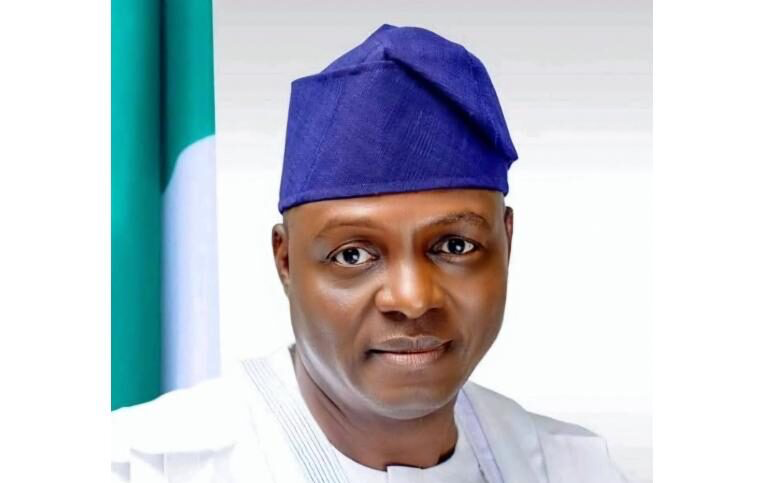
The National Chairman of the All Progressives Congress (APC), Professor Nentawe Goshwe Yilwatda, has charged members of the party’s Presidential Campaign Council to unite national and grassroots structures, communicate the achievements of President Bola Ahmed Tinubu’s administration and mobilise Nigerians for his re-election in 2027.
Speaking at the inauguration of the APC Presidential Campaign Council, Professor Yilwatda described the assignment as a collective responsibility requiring effective coordination, discipline, strategic communication and sustained engagement with Nigerians.
In a statement signed by his Special Adviser on Media and Information Strategy, Abimbola Tooki, he said the party’s campaign must be anchored on the administration’s record, an honest acknowledgement of prevailing challenges and a credible vision for the country’s future.
According to him, the administration’s economic reforms and investments in roads, power, gas, railways, ports, agriculture and digital connectivity must be clearly communicated to Nigerians, with emphasis on their impact on productivity, employment, commerce and national development.
“Our responsibility is to explain what has been achieved, what is progressing and what remains to be done. We must demonstrate how these reforms and investments will translate into practical improvements in the lives of Nigerians,” he said.
The APC National Chairman emphasised that the success of the campaign would depend on the effective collaboration of national leaders, governors, legislators, state chapters, local government structures and ward members to ensure that the party’s message reaches every community.
He also underscored the importance of women, youths and persons with disabilities, calling for their meaningful participation and leadership in the campaign process.
“Our women are indispensable to party organisation and community mobilisation. Our youths must be engaged as partners in shaping Nigeria’s future, while persons with disabilities must enjoy full, accessible and inclusive participation in our democratic process,” he stated.
Professor Yilwatda urged party members to approach the assignment with confidence, while warning against complacency.
“Confidence is not complacency. It is the determination to prepare thoroughly, work together and earn the trust of the people,” he said.
He noted that the APC would seek Nigerians’ support for President Tinubu’s re-election in 2027 by presenting evidence of progress, explaining the administration’s policies and outlining the work that remains to be done.
He stressed that the campaign must directly address citizens’ concerns about the cost of living, security, employment, education, healthcare, agricultural productivity and economic opportunities.
The National Chairman also called for issue-based and peaceful political engagement, recognising the legitimate role of the opposition in a democratic society.
“The APC will present its case with confidence, defend its record with facts and trust Nigerians to make their choice through a credible democratic process,” he said.
Professor Yilwatda reaffirmed the commitment of the APC National Working Committee to working closely with the Presidential Campaign Council and all party structures to achieve their shared objectives.
He charged members to remain united and focused, declaring that the party had a vision to communicate, a future to build and the confidence of Nigerians to earn.
“One mission, one responsibility: to work together, communicate effectively and earn the mandate of Nigerians for President Bola Ahmed Tinubu in 2027.”
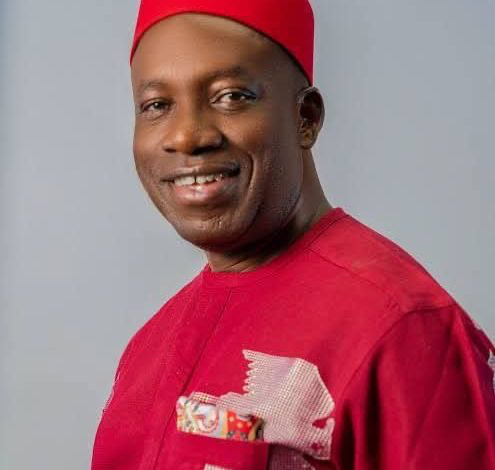
Anambra State Governor, Prof. Chukwuma Soludo, has been appointed a member of the All Progressives Congress (APC) 2027 Presidential Campaign Council list released last night.
This is despite the fact that he is the National Leader of the opposition All Progressives Grand Alliance (APGA).
Similarly, Federal Capital Territory (FCT) Minister Nyesom Wike, the National Leader of the opposition Peoples Democratic Party (PDP) and Osun State Governor, Senator Ademola Adeleke of the opposition Accord Party (AP), are on the expanded and all-inclusive team headed by President Bola Ahmed Tinubu.
Other members include Presidential Adviser on Policy and Coordination, Hadiza Bala Usman, former Ogun State Governor Ibikunle Amosun, former Lagos State Governor Akinwunmi Ambode, Aviation Minister Festus Keyamo, and former House of Representatives member Patrick Obahiagbon.
Also named as members are former Osun APC governorship candidate Bola Oyebamiji, former National Legal Advisers Dr. Muiz Banire and Babatunde Ogala, Chief Ayiri Emami, Victor Giadom, Magnus Abe, and former Ogun State Governor Gbenga Daniel.
The list, according to a report by The Nation, reflects inter-party cooperation and harmony based on the shared vision of propelling the country to the horizon of progress.
The report quoted a statement by APC National Secretary, Senator Ajibola Basiru, as saying that the campaign council will be inaugurated tomorrow in Abuja.
Politics
We’re ready for 2027 polls, INEC declares, assures neutrality as PVC collection begins Friday
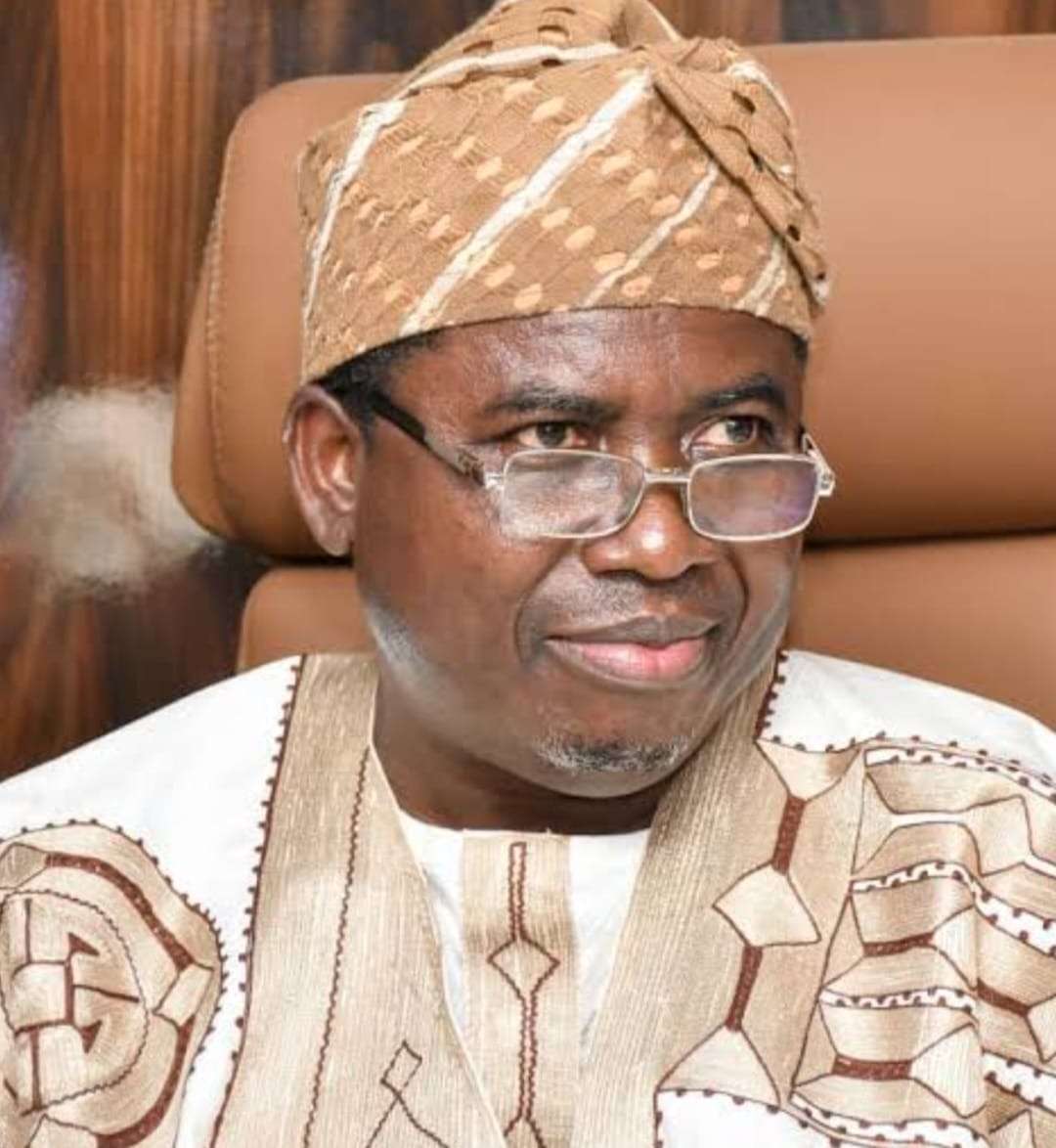
…Says ‘INEC has no preferred candidate, no favoured political party’
Chairman of the Independent National Electoral Commission, INEC, Prof. Joash Amupitan, SAN, says the Commission is fully prepared to conduct credible 2027 general elections and will remain neutral with no preferred candidate or party.
Amupitan stated this on Thursday in Lagos while delivering the keynote address at the 10th Annual Conference of the Guild of Corporate Online Publishers, GOCOP, themed “2027 Elections: Trust, Transparency and Shared Responsibilities.”
He said the 2027 election cycle would begin with Presidential and National Assembly elections on Saturday, January 16, 2027, followed by Governorship and State Houses of Assembly elections on February 6, 2027, adding that with 98 days to the first poll, INEC has made extensive progress on its timetable.
According to him, INEC issued a Revised Timetable and Schedule of Activities on February 26, 2026, containing 14 critical statutory activities and is now concluding the ninth.
The timetable, he said, had been operationalised across 23 headquarters departments, 36 state offices and the FCT, and 774 local government offices covering over 176,000 polling units.
Amupitan, represented by Lagos State Resident Electoral Commissioner, Professor Ayonami Salami, disclosed that Nigeria’s voter register had hit a historic 103 million after a three-phase Continuous Voter Registration, CVR, exercise.
Phase I, from August 25 to December 10, 2025, captured 2,611,266 new voters; Phase II, January 5 to April 17, 2026, captured 4,121,835; while Phase III, May 11 to July 26, 2026, captured 3,867,997.
He said the Commission had concluded display of the preliminary register for claims and objections and is finalising synchronisation through its Automated Biometric Identification System, ABIS, to eliminate duplicates.
The INEC chairman announced that nationwide collection of Permanent Voter Cards, PVCs, using the new Printable PVC technology, would commence on Friday, October 9, 2026, at local government and registration area centres.
He appealed to GOCOP members to use their platforms to mobilise citizens to collect their cards.
On technological preparedness, Amupitan said the Bimodal Voter Accreditation System, BVAS, has undergone hardware optimisation, extended battery calibration and software hardening to eliminate impersonation, while a nationwide audit and fresh procurement of devices are ongoing.
He said INEC has enhanced its result integrity architecture through the eEC8A system, which digitises polling unit result sheets, Form EC8A, at the polling unit immediately after counting, cryptographically signs and transmits it to a public portal for end-to-end visibility.
The system, he noted, was tested in recent off-cycle elections in the FCT, Ekiti and Osun.
The Commission, he added, has embedded AI auditing tools and multi-layered firewalls in partnership with Google and Microsoft to guard against cyber intrusions and Distributed Denial-of-Service attacks.
Amupitan said early procurement of non-sensitive materials has commenced and distribution to states is ongoing, while new operational pick-up vehicles have been acquired to address transportation challenges in difficult terrains, riverine and border communities. A centralised operational schedule is now tracking material movement and storage in real time.
He said INEC had instituted Zonal Readiness Assessments across the six geopolitical zones, with South-West and North-West already completed, to audit infrastructure, logistics and emergency response. He warned staff against partisanship.
“To the voter in a local ward, INEC is not the Chairman in Abuja; INEC is you,” he told field officers, stressing that under Section 26 of the Electoral Act 2026, every official must take an oath of absolute neutrality, with partisanship or carelessness attracting dismissal and prosecution.
To boost welfare, Amupitan said the Consolidated Election Management Body Salary Structure, CEMBSS, took effect on January 1, 2026, with a 150 percent increase in state offices’ operational overheads from July 1, 2026.
He described trust as a currency earned through consistent and verifiable execution, not through pronouncements or public relations, noting that Africa’s largest democracy must set standards for West Africa at a time of disinformation, political violence and shrinking civic space.
The INEC chairman proposed a three-point pact with GOCOP for 2027: a dedicated Digital Media Fact-Verification channel for real-time confirmation of field reports; strict self-regulation by GOCOP against members publishing unverified polling unit results, altered sheets or incendiary commentary; and a strategic partnership on voter education for the PVC collection exercise.
He cautioned online publishers against clickbait economics, fake news and AI-generated deepfakes, saying unverified claims of fraud cause enduring damage to public confidence that retractions cannot repair.
Paying tribute to former GOCOP President and Publisher of The Eagle Online, the late Mr. Dotun Oladipo, Amupitan described him as a patriot and champion of ethical online publishing who helped platform INEC stories without hindrance.
“INEC has no preferred candidate, no favoured political party, and no institutional interest other than protecting the sacred and uncoerced will of the Nigerian voters,” he declared.
-
 News2 days ago
Mbah orders impartial Police Probe into Enugu political violence, vows accountability
-
Features2 days ago
Enugu Political Flashpoint: Mbah orders Impartial Probe as NDC Incidents Trigger Controversy
-
News2 days ago
BREAKING: Soludo, Wike, Adeleke, others appointed member of APC Presidential Campaign Council
-
News8 hours ago
2027: Why I wont attend every campaign rally – Tinubu
-
News2 days ago
Rochas Okorocha arrested, released after one-hour Interrogation — Police
-
News1 day ago
Alleged $1bn arms fraud: Funds given to Defence Ministry, not military — Gen. Buratai
-
News2 days ago
Enugu APC demands NDC apology over minute’s silence
-
News9 hours ago
EFCC probes Atiku over alleged corruption committed as Vice President