Connect with us

Politics

People criticising Obasanjo endorsing Obi will be shocked — LP

Published

on

Spread the love

The Labour Party has reacted to claims by the opposition that the endorsement of the presidential candidate of the LP, Peter Obi, by former president Olusegun Obasanjo, was worthless.

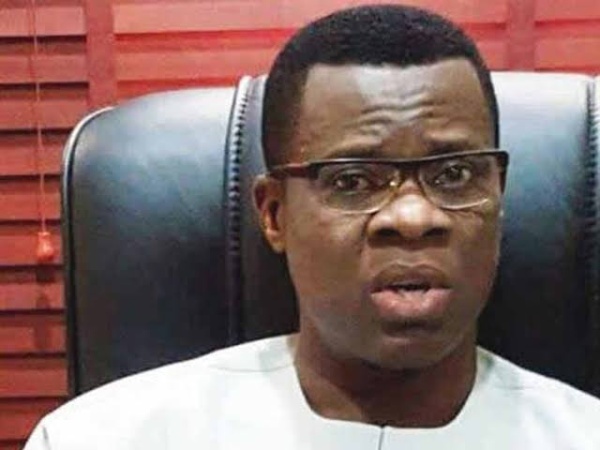
The Spokesperson of the Obi-Datti Presidential Campaign Council, Yinusa Tanko, told Saturday PUNCH, that those who said so would be shocked.

He disclosed these on the backdrop of the recent backlash on Obasanjo’s statements at the Nigeria Leadership series, a digital event organised by the Africa Leadership Group on Thursday. The event was monitored by our correspondent.

Obasanjo said at the ALG event that he would neither be joining the campaign train of Obi nor would he be mobilising other former presidents and statesmen for him.

The former president also stressed that he endorsed Obi because he felt that he had an edge over other presidential candidates in the areas of character, track record, vision, and physical and mental ability.

Maduka College Advert

Taking a cue from a viral video of a preacher who asked his congregation to vote for people whose values they would like to have in their children, Obasanjo asked Nigerians to vote for the presidential candidate whose values they would want their children to emulate in the future.

In response to criticism of Obasanjo’s endorsement, Tanko said that his endorsement shows that he is a patriot who was willing to bring the country “out of the woods,” and transform it by making sure that power does not reside with corrupt and reportedly unhealthy persons.

When asked whether Obasanjo has not taken further steps to promote his choice, Tanko said, “He has been more obedient than any other person, so anybody cannot undermine the contribution of Obasanjo. The simple fact that he is determined to take Nigeria out of the woods, he reached out.  You will be surprised by the level of reaching out that Obasanjo has done. He has reached out to a lot of Nigerians and they are working very hard to ensure that Peter Obi gets all the support he needs.”

He also noted the same people who are trying to diminish the weight of Obasanjo’s endorsement were also “jostling, and struggling,” before his endorsement letter to make sure he endorsed them.

While reacting to the statement that Obasanjo could not win his ward for Obi at the general elections, Tanko said, “They will be so shocked with regards to winning his ward, this is somebody that connects both local and international communities. He is known for his vision, determination, doggedness, and love for Nigeria. He has spoken and the country is already shaking. If he is not that important why would his words make so much tremour nationwide, especially when he is talking to the Nigerian Youth–they appreciate and respect his words. They are ready to go.”

Politics

No politician can kill any opposition party in Nigeria – PDP replies Umahi

Published

on

David `Umahi
Spread the love

The Peoples Democratic Party, PDP, in Ebonyi State has said that no politician can kill any opposition party in Nigeria.

The party also condemned a statement attributed to the Minister of Works and former governor of the state, David Umahi, in which he reportedly said he had “killed PDP” and would “unalive” the party if it attempted to regain political relevance ahead of the 2027 general elections.

It described the alleged remark as disturbing and inappropriate in a democratic environment, insisting that no individual politician, regardless of political position or influence, has the power to determine the existence or political participation of a registered political party.

The PDP Publicity Secretary in Ebonyi State, Prince Darlington Peter Onwe, stated this in a statement issued on Saturday in Abakaliki, against the backdrop of the emerging political activities ahead of the 2027 governorship election in the state.

Onwe said the alleged comment was particularly concerning because it was reportedly made in response to a question on whether Umahi supported the PDP governorship candidate, Ifeanyi Chukwuma Odii.

Maduka College Advert

According to him, a political disagreement over a candidate or party should ordinarily be addressed through political arguments, policy differences and competing programmes rather than language capable of being interpreted as threats.

He said, “The PDP is a political organisation, not an individual. It cannot be killed or unalive by any politician.

“Our party belongs to millions of Nigerians who believe in democracy, constitutional governance and the right of citizens to organise and contest elections.

“If Senator Umahi disagrees with the PDP or does not support our candidate, he is entitled to his political position. But disagreement must not be expressed in language that can reasonably be interpreted as a threat against the existence of a political party or the people associated with it.”

The opposition party consequently called on the minister to clarify what he meant by the phrase, “we will unalive it”, arguing that Nigerians deserved political competition based on ideas, records and programmes.

The PDP further said political parties were institutions that could outlive individual politicians, adding that its political history demonstrated that politicians could change platforms without determining the survival of the organisations they left.

The party also urged political leaders in Ebonyi to exercise restraint in their public statements, particularly as political activities intensify ahead of the 2027 elections.

It recalled that previous election cycles in the state had been characterised by allegations of political intimidation and confrontation, stressing that such experiences made responsible political communication essential.

The statement said, “Democracy requires that political parties and candidates be allowed to campaign, organise and seek the votes of citizens without fear.”

The PDP maintained that Odii and other members of the party had the constitutional right to participate in the 2027 electoral process, insisting that no politician could determine whether citizens exercised their political rights.

The party said it would continue to pursue its political objectives through peaceful and constitutional means, while calling on its members and supporters to remain calm and law-abiding.

It also urged security agencies and relevant institutions to pay attention to public statements that could heighten political tension ahead of the 2027 general elections.

“Elections are decided by the people, not by declarations that one politician has killed or will kill a political party. The ballot belongs to the people of Ebonyi State,” the party said.

The PDP challenged Umahi and other political actors in the state to engage the electorate on policies, development programmes and their respective records in governance rather than rhetoric that, in the party’s view, could deepen political apprehension.

The party’s position comes amid heightened political mobilisation in Ebonyi ahead of the 2027 governorship election, with the PDP expected to intensify its grassroots organisation and campaign activities.

Continue Reading

Politics

I left Anambra debt-free, Obi insists as NDC, OK Movement tackle Soludo

Published

on

Nigeria Democratic Congress presidential candidate, Peter Obi
Spread the love

The presidential candidate of the Nigeria Democratic Congress, Peter Obi, has insisted that he did not borrow money or issue bonds on behalf of Anambra State during his eight years as governor.

Obi, who spoke on Arise TV’s Prime Time programme on Thursday, said his administration left office in March 2014 without owing salaries, gratuities, pensions or contractors whose jobs had been executed, certified and verified.

The former governor was responding to questions over recent allegations by the Anambra State Government that his administration left outstanding debt and other liabilities for successive governments to service.

“Let me categorically state again: I, Mr Peter Obi, did not approach any financial institution to borrow money or issue bonds on behalf of Anambra State in the eight years I was in government.

“On the day I left office, the government of Anambra State, which I headed, was not owing any salary, gratuity, or pension to those scheduled to be paid by the state government.

Maduka College Advert

We were not owing any contractor or supplier who executed his job, certified and verified—not one,” he said.

Obi said the loans being attributed to his administration were not funds he personally obtained from financial institutions, arguing that some of the funding arrangements were supported by the Federal Government.

“I didn’t go to obtain it. But what I’m saying, assuming that your father left you with an inheritance of N100m, and suddenly somebody comes up and says your father is owing N10m. Are you going to go to the market and say your father left you with debts? Unless there’s another thing, you’ll be unfair,” he said.

He explained that the Federal Government had selected Anambra, Ekiti and Bauchi states to receive concessionary multilateral support because of their performance in education.

“There’s a difference between I went to the bank to borrow money, then the Federal Government sees, ‘Oh, this state is doing well in education.’ They selected Anambra, Ekiti, and Bauchi and said, ‘These three states are doing well. Why don’t we give them a concessionary multilateral support to help them?’”

Obi said the funding, which involved the World Bank, was not obtained by Anambra from a commercial bank.

“Yes, and the World Bank,” Obi said, when the interviewer asked whether the funding was a decision by the Federal Government to provide support.

“To support us. Not that we go to the World Bank and say give me this, not that we go to any commercial bank. And to even make it more… when it came, if you look at State Education Programme Investment Project (SEPIP), you will see that the drawdown was well after I left office.”

He added that even if the entire amount in question had been drawn down, there would have been sufficient funds left to cover it.

“I’ve assumed the whole and said even if that was the case, there was enough left to pay it, and the state will still be at the best financial standing,” he said.

Obi further argued that undrawn funds under a loan facility should not be regarded as debt incurred by the government.

“Even if I had gone to a bank and borrowed money—even if I had gone to a bank and borrowed money, but I did not spend the money, you cannot call it debt I left.

“Assuming I have gone to the bank and said, ‘Bank A, borrow me loan, Give me a loan of N10 billion. And they gave me a loan of 10 billion Naira, and I only drew down 500 million; you cannot now say I’m owing 10 billion because you know the amount. That’s why I said it is not proper public sector accounting.”

To support his position, Obi cited former Debt Management Office Director-General, Abraham Nwankwo, who he said served for 10 years.

He said Nwankwo had invited him to chair his send-off ceremony and publicly stated that Obi was the only governor in Nigeria who never visited his office to seek approval to borrow money.

“To even confirm this: the then DG… Abraham Nwankwo, who was DG of Debt Management Office, served for 10 years. The day he left office, at his send-off party, he invited me as the chairman, and he announced to everybody at that party that the reason why he made me chairman is that I was the only governor in Nigeria who never came to his office for approval to borrow money,” he said.

The dispute followed recent criticism from the Anambra State Government, which has alleged that Obi left outstanding external loans and other liabilities.

The state government recently challenged Obi to quit the 2027 presidential race, accusing him of leaving outstanding external loans and salary, pension and gratuity arrears, and of breaking earlier pledges on debt and timely payment of workers.

Through its New Media Office and Commissioner for Information and Value Reorientation, Dr Law Mefor, the state alleged that eight external borrowings contracted during Obi’s tenure left an outstanding balance of about N127.4 billion (from $123.77 million) as of June 30, 2026, which continues to be serviced from federal allocations.

It also referenced salary arrears, including at the Water Corporation, and disputed Obi’s claim of leaving more than N2.13 billion in an ecological fund account.

Obi had previously vowed to stop campaigning if it was proven he left the state in debt or with unpaid certified contractor obligations.

NDC, OK Movement tackle Soludo

The NDC and the Peter Obi-backed OK Movement have criticised Anambra State Governor, Prof Chukwuma Soludo, over his continued attacks on Obi as the political battle ahead of the 2027 presidential election intensifies.

The NDC National Publicity Secretary, Osa Director, described Soludo’s attacks on Obi as a distraction, alleging that the Anambra governor was acting at the behest of unnamed political interests.

Director disclosed this in an exclusive phone interview with The PUNCH.

He said, “This is more like a distraction that Obi is having. Soludo is the man on the spot right now, apparently doing someone’s bidding to destroy his own brother. He seems to be taking this too far, and it is very petty of him.”

The Director-General of the OK Movement, John Ughulu, in an exclusive interview with our correspondent, also urged Soludo to focus on governing Anambra State rather than making Obi the centre of his political attacks.

Ughulu said the movement respected Soludo’s decision to support President Bola Tinubu and the APC in 2027, but argued that political differences should not turn into a continuous campaign against Obi.

He said, “We believe Soludo should focus his energy and attention on the task of governing Anambra State and delivering on the mandate entrusted to him by the people.

“Obi left office as governor 12 years ago. The people of Anambra are mature and capable of assessing the records of previous administrations and comparing them with the realities they experience today. They do not need political actors to tell them how to evaluate the past.

“We equally respect Prof Soludo’s political choice to support President Bola Tinubu and the APC in the 2027 presidential election. Every Nigerian has the constitutional right to support the candidate or political platform of his or her choice.

“However, political disagreement should not become a continuous campaign against another individual.”

According to him, Obi’s growing popularity across the South-East and other parts of the country was a political reality that should be countered with stronger policies and programmes rather than personal attacks.

The OK Movement DG added that since Soludo was not a presidential candidate in 2027, there was little value in turning the election into a permanent contest with Obi.

He said, “The growing popularity of Peter Obi across the South East and other parts of Nigeria is a political reality that cannot be wished away. The appropriate response to popularity in a democracy is to present a stronger vision, policies and programmes, not personal attacks.

“The OK Movement has deliberately instructed its members and supporters not to be distracted by unnecessary or divisive exchanges. Our focus remains on issues that matter to Nigerians: good governance, economic development, security, institutional accountability, equity, justice and competent leadership.

“Soludo is not a candidate in the 2027 presidential election. If his political objective is to support the APC presidential campaign, he is entitled to do so. But there is little value in allowing the politics of 2027 to become a permanent contest with Peter Obi.

“We therefore encourage him to concentrate on the development of Anambra and allow the people to make their own independent assessment of every political leader and administration.

“The OK Movement will continue to promote issue-based politics, peaceful democratic engagement and responsible political discourse. We will not be distracted. Nigeria will be OK.”

Continue Reading

Politics

WHEN PRIVACY BECOMES CONTENT: The Dangerous Normalisation of Leaked Private Conversations

Published

on

Senator Akpabio and Sandra C. Duru
Spread the love

By Ken Harries, Esq.

There is a point at which political contestation ceases to be an argument about ideas and becomes an assault on the very boundaries that make civil society possible. That point is reached when a private telephone conversation is allegedly recorded, extracted from its original context and released into the public domain as political ammunition.

The latest controversy surrounding an audio recording purported to be a telephone conversation between Senator Godswill Akpabio and Sandra C. Duru, a.k.a. Professor Mgbeke, therefore deserves to be examined beyond the personalities involved. It raises a much larger question: What happens to a society when private conversations become raw material for public propaganda?

Recent reports indicate that Sandra Duru released a nine-minute audio recording on social media and presented portions of it as a private conversation involving the Senate President. Yet, significantly, the recording has not been independently authenticated, and questions remain about the identity of the voices, the circumstances in which the conversation was recorded, and whether the excerpts constitute the complete conversation. Those uncertainties are not minor technicalities; they are at the heart of responsible public communication.

PRIVACY IS NOT A POLITICAL LUXURY

Maduka College Advert

Nigeria’s Constitution is unequivocal in recognising privacy as a fundamental right. Section 37 guarantees and protects the privacy of citizens, including their homes, correspondence and telephone conversations. That constitutional safeguard does not disappear because the individuals involved are politicians, public officials, activists or controversial personalities. Indeed, public office should never be interpreted as a wholesale surrender of personal privacy.

The Nigeria Data Protection Act 2023 reinforces this principle by establishing a legal framework for protecting personal information and regulating its processing. Among its stated objectives are the protection of fundamental rights and freedoms, the safeguarding of personal data, and the requirement that personal data be processed in a fair, lawful and accountable manner.

The central question, therefore, is not whether an audio recording can generate political excitement; it obviously can. The question is whether private communication can be captured, processed, edited, reproduced and disseminated for political purposes without lawful justification, proper authorisation or regard for the rights of the people whose voices and personal information are involved. That is a much more serious question.

THE CYBER DIMENSION CANNOT BE IGNORED

The Cybercrimes (Prohibition, Prevention, etc.) Act, as amended in 2024, also contains provisions concerning unlawful interception of non-public computer communications and judicially authorised interception of electronic communications. The legislation defines interception broadly enough to include listening to or recording communication data in specified circumstances. But legal precision matters, particularly when criminal liability is being discussed.

It would be premature for commentators to declare, without establishing the facts, that the mere existence or publication of this particular audio automatically constitutes a criminal offence under the Cybercrimes Act. If, however, the evidence establishes that a private electronic communication was intercepted or obtained without lawful authority, the circumstances could raise serious questions under the applicable constitutional, data-protection and cybercrime frameworks. That is precisely why an independent investigation matters: the law should determine the legality, not social media.

PUBLIC INTEREST IS NOT A BLANK CHEQUE

There is another important distinction that the Nigerian public must begin to make. A matter involving a public official may be of public interest without every private conversation involving that official becoming public property. Public interest is not the same thing as public curiosity.

A genuine public-interest disclosure ordinarily requires more than the ability to attract clicks, outrage or political engagement. It requires consideration of authenticity, context, provenance, relevance and the legitimate rights of the people involved. A fragment of an alleged private conversation, detached from the circumstances in which it occurred and presented to millions of people without independent authentication, can easily become something very different from responsible whistleblowing.

It can become narrative engineering, particularly when selected material is used to encourage the public towards a predetermined interpretation. When such narrative engineering is repeatedly used to shape public perception, it begins to resemble propaganda rather than public accountability.

THE MORAL QUESTION

There is also a moral dimension that no statute can completely capture. Politics is already a theatre of suspicion, rivalry and competing narratives. If every private conversation is potentially a future weapon, trust disappears from public life. People stop speaking candidly, officials become afraid of legitimate conversations, and citizens become unwilling to engage public figures.

Political communication then gradually degenerates into a marketplace where the most sensational fragment—not necessarily the most truthful account—commands the greatest attention. This is where the conduct surrounding the dissemination of private conversations raises profound ethical questions.

A society that normalises the conversion of private conversations into political weapons risks producing a culture in which nothing is private, context is disposable and reputation is collateral damage. That is not democratic accountability; it is the erosion of the ethical architecture upon which democratic accountability depends.

THE PROBLEM WITH THE “MERCHANT OF PROPAGANDA” MODEL

There is a growing phenomenon in digital politics in which controversy itself becomes a political commodity. The objective is no longer necessarily to establish facts, but to generate a continuous stream of allegations, recordings, screenshots, insinuations and counter-allegations until the public becomes emotionally exhausted and truth becomes indistinguishable from repetition.

The danger is particularly acute when the communicator becomes both the source of the allegation and the narrator of the evidence. That model creates an obvious credibility problem because the public is effectively being asked to accept not merely the allegation but also the interpretation supplied by the person disseminating it.

That is why independent verification is indispensable. A recording should be authenticated, its provenance established, its full context examined and any editing disclosed. The circumstances of its acquisition should also be investigated. Where there are allegations of unlawful interception or misuse of personal data, the appropriate regulatory and law-enforcement authorities should be allowed to do their work.

FREEDOM OF EXPRESSION HAS RESPONSIBILITIES

Freedom of expression is indispensable to democracy, but so is the right to privacy. These principles should not be presented as enemies. Responsible journalism, legitimate whistleblowing and public-interest disclosure have their place, but none of them should become convenient labels for every unauthorised exposure of private communications.

The democratic answer to disputed conduct is evidence, investigation and due process—not digital vigilantism. If the recording is authentic and contains evidence of wrongdoing, the proper response is to submit the evidence to the appropriate institutions and allow the facts to be tested. If it is unauthorised, manipulated, selectively edited or misleadingly presented, those facts should also be established through proper investigation. Either way, the truth deserves a process more rigorous than a Facebook post.

THIS IS BIGGER THAN AKPABIO

The most important lesson from this episode should not be about Senator Godswill Akpabio alone; it should be about the Nigeria we are creating. Today, it may be a conversation involving a Senate President. Tomorrow, it could be a judge, journalist, businessman, civil servant, academic, clergy member or ordinary citizen.

If the principle becomes that anyone who possesses a private recording is entitled to publish it whenever politically convenient, then privacy ceases to be a right and becomes merely a temporary privilege enjoyed by those who have not yet been recorded. That is a dangerous trend with implications extending far beyond the personalities involved in the present controversy.

The constitutional guarantee of privacy cannot be selectively defended, data protection cannot become a slogan deployed only when convenient, and cybercrime legislation cannot be invoked selectively. Political communication cannot be allowed to become a free-for-all in which reputations are tried and convicted on social media before evidence is examined.

LET THE LAW SPEAK

There is, therefore, a compelling case for the relevant authorities to establish the facts surrounding any purported private telephone recording now circulating. Who made the recording? How was it obtained? Was consent given? Was the communication intercepted? Was it edited? Who first disseminated it, and for what purpose? What personal data were processed? Was there a lawful basis for that processing? And does the dissemination violate any applicable constitutional, statutory or judicial protection? Those are questions for evidence, not conjecture.

There is, however, a broader principle worth defending: private communication should not become political ammunition merely because it can generate attention. A democracy requires trust, evidence, restraint and respect for the law. Public accountability is strengthened, not weakened, when allegations are subjected to verification and established processes rather than determined by the velocity of social-media circulation.

The real moral deficit in contemporary public discourse is not that people disagree. It is that the boundaries between legitimate scrutiny and intrusion can become dangerously blurred when private material is circulated without adequate attention to authenticity, context, provenance and applicable law. Once society becomes indifferent to those boundaries, everyone—not merely public officials—has reason to be concerned about the future of privacy.

• Ken Harries, Esq., is an Abuja-based Development Communication Strategist.

Continue Reading

Trending

Maduka College Advert